Angels in Islam
Angels (mala'ikah) are beings created from light who hold a central place in Islamic theology. Belief in them is one of the six articles of faith; the Quran describes them as servants of God who transmit revelation, record deeds, and act in death and the afterlife.
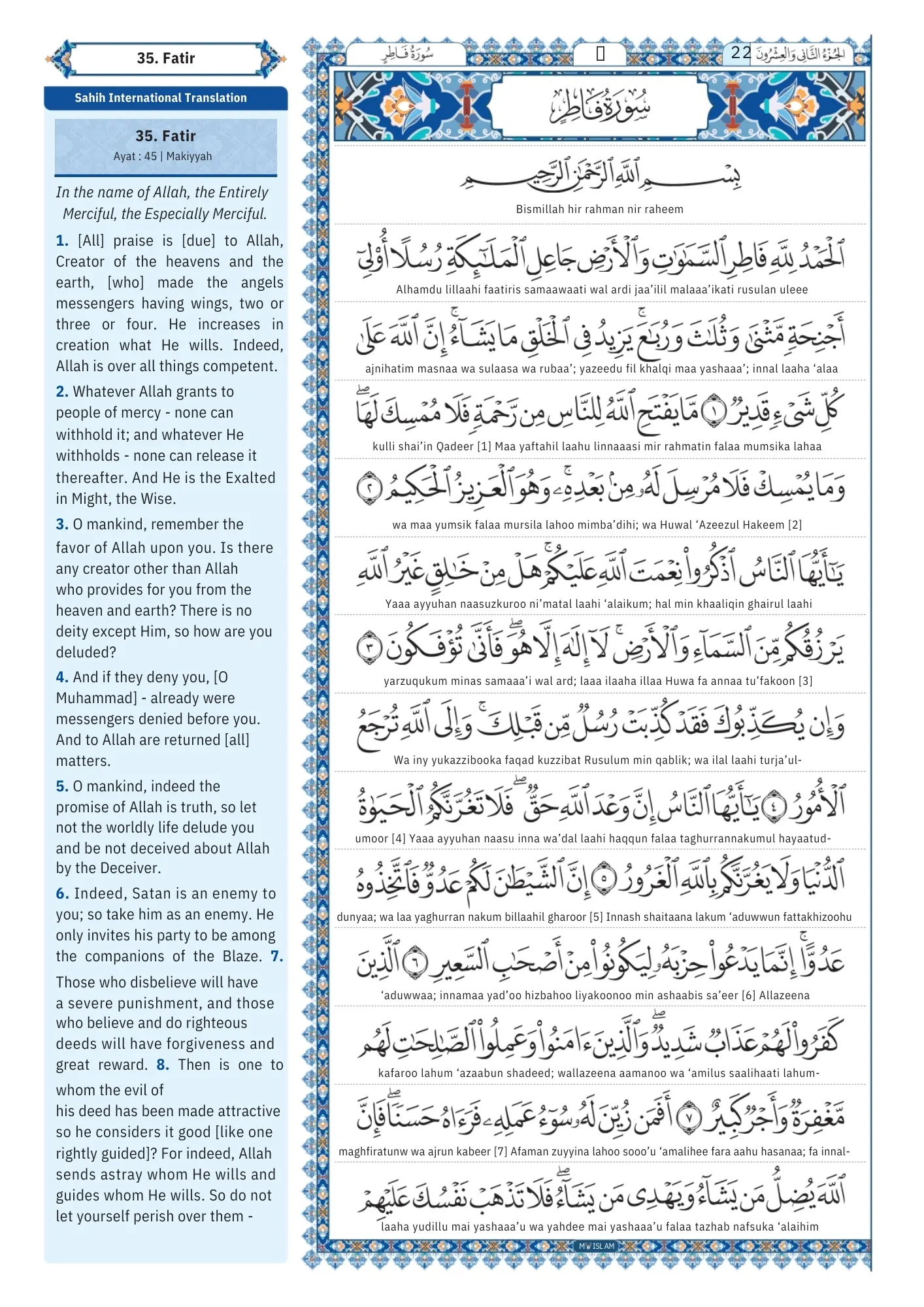
Angels (Arabic: ملائكة, mala'ikah, singular malak) are spiritual beings who occupy a central place in Islamic theology and cosmology. The Quran describes them as servants of God created to carry out divine commands — transmitting revelation, sustaining the natural order, recording human deeds, and playing essential roles in death, resurrection, and judgment. Belief in angels (al-iman bil-mala'ikah) is one of the six articles of Islamic faith, listed alongside belief in God, His scriptures, His messengers, the Day of Judgment, and divine decree. This doctrinal status means that acknowledging the existence and role of angels is not optional for a Muslim believer — it is a foundational commitment, as central to Islamic faith as belief in the prophets or the revealed books.
The Quranic Foundation
The Quran mentions angels in dozens of contexts, and the picture that emerges is consistent: angels are beings entirely subordinate to God, created to serve His purposes, incapable of disobedience, and possessed of knowledge and power far beyond human capacity but strictly bounded by divine will. The Quran states directly: "They do not disobey Allah in what He commands them, but do what they are commanded" (Quran 66:6). This absolute obedience is not presented as a limitation but as a defining characteristic — angels are what they are precisely because they do not deviate.
The Quran also records a significant moment in the narrative of creation: when God announced to the angels His intention to place a vicegerent (khalifah) on earth, the angels expressed concern — "Will You place upon it one who causes corruption therein and sheds blood, while we declare Your praise and sanctify You?" (Quran 2:30). God replied that He knew what they did not. This exchange is theologically important: it establishes that angels have knowledge and can raise questions, but that their knowledge is limited and their role is ultimately to submit to divine wisdom rather than to second-guess it. The same passage goes on to describe God teaching Adam the names of all things — a knowledge the angels did not possess — and commanding the angels to prostrate before Adam. They did so, with the exception of Iblis, who refused. The Quran's treatment of Iblis is complex: in some verses he is described as a jinn rather than an angel, which has led to theological discussion about his original nature. What is clear is that the episode establishes the distinction between the angels' perfect obedience and the capacity for refusal that characterizes other created beings.
A prophetic tradition preserved in Sahih Muslim states that "the angels were created from light, the jinn were created from smokeless fire, and Adam was created from what has been described to you." This hadith provides the most direct statement about angelic nature in the classical sources, and it became the standard formulation in Islamic theology: angels are beings of light, distinct in their very substance from humans and jinn.
What the Hadith Add to the Quranic Account
The Quran establishes the existence, obedience and functions of the angels but says almost nothing about their substance. The hadith supply that, and a small number of reports have carried most of the doctrinal weight.
Their Substance
Aisha reported the Prophet saying: "The angels were created from light, the jinn were created from a smokeless flame of fire, and Adam was created from what has been described to you" (Sahih Muslim 2996).
The report is brief and its structure is the point. It sets three orders of created being alongside one another and distinguishes them by their material, which is why the classical theologians treated angels and jinn as distinct categories rather than as varieties of a single class of unseen creature — a distinction with consequences, since the jinn are described in the Quran as morally accountable and capable of disobedience while the angels are not. The reference to Adam's substance is deliberately elliptical, deferring to the Quranic descriptions of clay and dust.
Belief in Them as an Article of Faith
Belief in the angels is not presented as an inference from the Quran's mention of them but as a required article. In the Hadith of Gabriel the Prophet defined faith as belief in God, His angels, His books, His messengers, the Last Day, and the divine decree (Sahih Muslim 8). The angels stand second in that list, immediately after God — a placement the commentators connect to their role in transmitting revelation, since the books and messengers that follow them in the list depend on that transmission.
The Transmission of the Divine Command
One of the fullest accounts of angelic function in the hadith literature explains the shooting stars. An Ansari Companion reported that a meteor flared while they were sitting with the Prophet at night, and he asked what they used to say about such a thing before Islam. They answered that they had taken it to mean a great man had been born or had died. He told them it signified neither.
Rather, when God decrees a matter, the bearers of the Throne glorify Him; then those of the heaven nearest them, and so on until the glorification reaches the lowest heaven. Those nearer the Throne-bearers ask them what their Lord has said, and are told; and the enquiry passes downward in the same way until it reaches the lowest heaven. In that process the jinn snatch what they can overhear and carry it to their associates — and when the angels see them, they strike at them with these meteors. What the jinn convey is sometimes correct, but they alloy it with falsehood and additions (Sahih Muslim 2229).
Aisha transmitted the corresponding point about diviners: asked about them, the Prophet said they were nothing; told that some of what they said came true, he answered that this was a word of truth snatched by a jinn and poured into the ear of its associate, with which they then mix a hundred lies (Sahih al-Bukhari 7561).
Two things follow from these reports that matter for the doctrine. The angels are described as a hierarchy through which command descends rather than as a set of independent agents. And their function includes guarding that transmission, which is the frame within which the Quran's own references to the heavens being guarded are read.
Their Relation to Human Beings
Abu Hurayrah reported that when God created Adam He sent him to greet a company of the angels and to listen to their reply, telling him it would be his greeting and that of his descendants. Adam said al-salamu alaykum, and they answered al-salamu alayka wa rahmatullah — adding "and the mercy of God" to what he had said (Sahih al-Bukhari 3326).
The report is the origin, in the tradition's own account, of the Muslim greeting; and the detail that the angels added to Adam's words rather than merely returning them is the one the commentators dwell on.
Jibril and the Transmission of Revelation
The angel most prominently featured in the Quran is Jibril (Gabriel), who is identified as the bearer of divine revelation to the prophets. The Quran refers to him by several names — Jibril, Ruh al-Amin (the Trustworthy Spirit), and Ruh al-Qudus (the Holy Spirit) — and his role in transmitting the Quran to Prophet Muhammad is described explicitly: "Say: Whoever is an enemy to Gabriel — it is he who has brought it down upon your heart by permission of Allah, confirming what was before it and as guidance and good tidings for the believers" (Quran 2:97).
The first encounter between Jibril and the Prophet, described in the hadith literature and referenced in the Quran's opening verses of Surah al-Alaq, took place in the Cave of Hira during the month of Ramadan. The Prophet, who had been in the habit of retreating to the cave for contemplation, was suddenly seized and commanded to recite. The experience was overwhelming — the Prophet returned home trembling, and his wife Khadijah wrapped him in a cloak and reassured him. This moment, described in detail in the biographical sources, marks the beginning of twenty-three years of revelation during which Jibril served as the intermediary between God and the Prophet.
The Quran describes Jibril appearing to the Prophet in his true angelic form on two occasions — once near the horizon, and once near the Lote Tree at the boundary of the heavens during the Night Journey. These descriptions convey the immensity of the angelic form: a being of such magnitude that the Prophet saw him filling the horizon. In most of his appearances, however, Jibril came in human form, sometimes resembling a companion of the Prophet named Dihya al-Kalbi. The hadith literature records that Jibril would visit the Prophet regularly, reviewing the Quran with him, and that in the final year of the Prophet's life they reviewed the entire text twice — a detail that later tradition interpreted as a sign that the revelation was complete.
Jibril's role was not limited to the Prophet Muhammad. The Quran describes him as the bearer of revelation to earlier prophets as well, and specifically mentions his role in the annunciation to Mary: "He said: I am only the messenger of your Lord to give you news of a pure son" (Quran 19:19). This continuity — the same angel serving as the vehicle of divine communication across the prophetic tradition — is theologically significant. It means that the Quran, the Torah, and the Gospel all came through the same divine messenger, a point the Quran makes in its insistence that the same God sent the same essential message through a succession of prophets.
Mikail, Israfil, and the Angel of Death
Beyond Jibril, the Quran names two other angels explicitly: Mikail (Michael), mentioned alongside Jibril in 2:98, and Malik, the guardian of Hell, named in 43:77. The broader tradition, drawing on hadith and early Islamic scholarship, identifies several other major angels by name and function.
Mikail is associated in the tradition with the distribution of sustenance and the management of natural phenomena — rain, wind, and the provision of food. The Quran's mention of him alongside Jibril in the context of divine messengers suggests his importance, though his specific functions are elaborated more in the hadith literature than in the Quran itself.
Israfil is the angel charged with blowing the trumpet (sur) that will signal the end of the world and the resurrection. The Quran describes the trumpet blast in several places — "And the Trumpet will be blown, and whoever is in the heavens and whoever is on the earth will fall dead except whom Allah wills. Then it will be blown again, and at once they will be standing, looking on" (Quran 39:68) — though it does not name the angel responsible. The identification of Israfil as the trumpet-bearer comes from the hadith literature and became standard in Islamic eschatological thought. The tradition describes two blasts: the first causing universal death, the second causing universal resurrection for the Day of Judgment.
The Angel of Death (Malak al-Mawt) is mentioned in the Quran without being named: "Say: The angel of death will take you who has been entrusted with you. Then to your Lord you will be returned" (Quran 32:11). Later tradition gave him the name Azrael, though this name does not appear in the Quran or the most authoritative hadith collections. The Quran describes the moment of death differently depending on the state of the dying person — for the righteous, the angels come with greetings of peace; for the wrongdoers, the angels come harshly. This differentiation reflects the broader Islamic understanding that the experience of death is not uniform but is shaped by the moral state of the individual.
The Recording Angels and the Unseen Witnesses
One of the most theologically significant categories of angels in Islamic thought is the recording angels (kiraman katibin, the noble scribes), described in the Quran: "But indeed, appointed over you are keepers, noble and recording; they know whatever you do" (Quran 82:10-12). Every human being, according to this doctrine, is accompanied by two angels who record their deeds — one on the right recording good deeds, one on the left recording bad deeds. These records will be presented on the Day of Judgment as evidence.
The theological implications of this doctrine are considerable. It means that human actions are never truly private — they are witnessed, recorded, and preserved. This awareness is intended to function as a moral check: the believer who knows that every deed is being recorded is more likely to act with integrity even when no human observer is present. The Quran returns to this theme repeatedly, describing the Day of Judgment as a day when "every soul will come, with it a driver and a witness" (Quran 50:21) — the driver and witness being the angels who accompanied that person through life.
The guardian angels (hafazah) are a related category, described in the Quran as beings who protect humans by divine command: "For each one are successive angels before and behind him who protect him by the decree of Allah" (Quran 13:11). The tradition elaborates that these angels guard humans from harms they are not destined to suffer, withdrawing when the decreed harm arrives. This doctrine of angelic protection is connected to the broader Islamic understanding of divine decree — the angels do not override God's will but implement it.
Munkar, Nakir, and the Grave
The hadith literature describes two angels, Munkar and Nakir, who question the deceased in the grave after burial. According to this tradition, the soul returns to the body after burial, and the two angels come to ask three questions: Who is your Lord? What is your religion? Who is your prophet? The righteous answer correctly and experience the grave as a place of peace; those who cannot answer experience it as a place of constriction and punishment. This doctrine of the barzakh — the intermediate state between death and resurrection — is elaborated extensively in the hadith literature and became a standard element of Islamic eschatological belief.
These accounts are drawn from hadith rather than from the Quran directly, and classical scholars were careful to note the distinction. The Quran affirms the existence of an intermediate state and the reality of post-death experience, but the specific details of the questioning angels come from the prophetic traditions. This distinction matters for understanding the different levels of certainty that Islamic theology assigns to different doctrinal claims.
The Throne-Bearers and the Cosmic Hierarchy
The Quran describes angels surrounding and bearing the divine Throne (arsh): "Those who carry the Throne and those around it exalt Allah with praise of their Lord and believe in Him and ask forgiveness for those who believe" (Quran 40:7). This image of the Throne surrounded by angels engaged in continuous praise is one of the Quran's most vivid cosmological descriptions, and it establishes a hierarchy in which the angels closest to the Throne occupy the highest rank.
Classical Islamic theology developed a detailed angelology that organized angels into ranks and categories based on their proximity to God and the nature of their functions. The muqarrabun (those brought near) are the highest-ranking angels, closest to the divine presence. Below them are the angels of the various heavens, the angels responsible for natural phenomena, and the angels assigned to individual humans. This hierarchical picture drew on the Quranic descriptions but also reflected the influence of earlier cosmological traditions — the Neoplatonic concept of a hierarchy of spiritual beings descending from the divine source had entered Islamic thought through the translation movement, and while Islamic theology was careful to maintain the absolute distinction between God and creation, the hierarchical organization of the angelic realm shows the influence of these broader intellectual currents.
Angels in Islamic Theology
The doctrine of angels serves several important theological functions in Islam. Most fundamentally, it affirms the reality of the unseen (al-ghayb) — the dimension of existence that lies beyond human perception. The Quran opens with a description of the believers as "those who believe in the unseen" (Quran 2:3), and the angels are the most prominent inhabitants of that unseen realm. Belief in angels is thus inseparable from the broader Islamic commitment to a reality that transcends the materially observable world.
The doctrine also provides the mechanism for revelation. If God communicates with prophets through angels — specifically through Jibril — then the authenticity of the Quran depends in part on the reliability and faithfulness of the angelic messenger. The Quran's insistence that Jibril transmitted the revelation faithfully and without distortion is a claim about the integrity of the entire revelatory process. This is why the Quran addresses those who might be hostile to Jibril specifically: to reject the messenger is to reject the message.
The recording angels connect the doctrine to Islamic ethics and eschatology. The knowledge that deeds are being recorded and will be presented on the Day of Judgment is one of the primary motivations for righteous behavior in Islamic moral thought. It is not merely that God knows what humans do — it is that this knowledge is being systematically preserved in a form that will be produced as evidence at the final reckoning.
Angels and the Abrahamic Tradition
Islamic angelology shares significant common ground with Jewish and Christian traditions, which is not surprising given the Quran's explicit acknowledgment that Islam stands in continuity with the earlier Abrahamic revelations. The names Jibril and Mikail correspond to the Gabriel and Michael of Jewish and Christian scripture; the role of Gabriel as the bearer of divine messages to prophets and to Mary is consistent across all three traditions; the concept of recording angels and guardian angels has parallels in Jewish and Christian thought.
Islamic theology, however, is careful to maintain its own framework. The Quran corrects what it presents as distortions in earlier traditions — including the pre-Islamic Arab practice of describing angels as daughters of God, which the Quran explicitly rejects (Quran 37:150; Quran 43:19). The Islamic doctrine of angels is grounded in the Quran and the prophetic traditions, and while it shares structural similarities with earlier Abrahamic angelology, it is understood by Muslim theologians as the authentic and uncorrupted version of a doctrine that all three traditions share.
Legacy in Islamic Thought
The doctrine of angels has been a subject of sustained theological reflection throughout Islamic intellectual history. The great theologians of the classical period — al-Ash'ari, al-Maturidi, al-Tahawi — all addressed angelology as part of their systematic treatments of Islamic creed (aqidah). Al-Tahawi's Aqidah, one of the most widely accepted statements of Sunni belief, affirms belief in angels as a doctrinal requirement and describes their nature in terms drawn from the Quran and hadith.
The philosophers of the Islamic golden age engaged with angelology from a different angle. Al-Farabi and Ibn Sina, drawing on Neoplatonic cosmology, identified the angels with the Intellects of the celestial spheres — a philosophical reinterpretation that generated considerable theological controversy. Ibn Rushd and later thinkers debated the relationship between the philosophical concept of separate intellects and the theological concept of angels. These debates reflect the broader tension in Islamic intellectual history between the philosophical tradition inherited from Greece and the theological tradition grounded in revelation — a tension that was never fully resolved but that produced some of the most sophisticated theological thinking in the medieval world.
For ordinary Muslim believers across the centuries, the doctrine of angels has functioned primarily as a source of moral awareness and spiritual comfort: the awareness that deeds are witnessed and recorded, and the comfort of knowing that divine protection and care are mediated through beings whose sole purpose is to serve God and, in doing so, to serve His creation.
References and Further Reading
Primary Islamic Sources
- Quran, Surah Al-Baqarah (2:30-33) — God's announcement to the angels of the creation of Adam and the command to prostrate
- Quran, Surah Al-Baqarah (2:97-98) — Jibril as the bearer of revelation; enmity toward Jibril equated with enmity toward divine message
- Quran, Surah Al-Tahrim (66:6) — angels described as never disobeying Allah's commands
- Quran, Surah Al-Infitar (82:10-12) — the noble recording angels (kiraman katibin) who witness and record human deeds
- Quran, Surah Al-Sajdah (32:11) — the Angel of Death described as entrusted with taking souls
- Quran, Surah Al-Zumar (39:68) — the two blasts of the trumpet (Israfil) at the end of the world and the resurrection
- Quran, Surah Ghafir (40:7) — the Throne-bearers praising Allah and interceding for believers
- Sahih Muslim 2996 — Aisha: "The angels were created from light, the jinn were created from a smokeless flame of fire, and Adam was created from what has been described to you." The canonical reference is 2996; the number 7134 sometimes cited belongs to the deprecated USC-MSA scheme
- Sahih Muslim 8; Sahih al-Bukhari 50 — the Hadith of Gabriel, in which belief in the angels is named among the articles of faith, standing second after belief in God
- Sahih Muslim 2229 — the descent of the divine command through the ranks of the heavens beginning with the bearers of the Throne, the jinn's snatching of overheard fragments, and the meteors with which the angels strike at them
- Sahih al-Bukhari 7561 — Aisha's report on diviners: a word of truth snatched by a jinn, with which a hundred lies are mixed
- Sahih al-Bukhari 3326 — Adam sent to greet the angels, and their addition of "and the mercy of God" to his greeting
Classical Islamic Sources
- Al-Tahawi, Abu Ja'far. Al-Aqidah al-Tahawiyyah. 9th–10th century CE. Canonical Sunni creedal text affirming belief in angels as a doctrinal requirement.
- Ibn Taymiyyah, Taqi al-Din. Al-Aqidah al-Wasitiyyah. 13th–14th century CE. Concise treatment of angelic belief within Sunni theology.
- Ibn Kathir, Ismail. Al-Bidayah wa'l-Nihayah. Damascus, 14th century CE. Includes a dedicated section on the creation of angels, their ranks, and their roles.
- Al-Suyuti, Jalal al-Din. Al-Haba'ik fi Akhbar al-Mala'ik (The Arrangement of Reports about Angels). 15th century CE. One of the most comprehensive classical compilations of Quranic and hadith material on angels.
- Ibn Hajar al-Asqalani. Fath al-Bari (Explanation of Sahih al-Bukhari). 15th century CE. Extensive scholarly commentary on hadith relating to angelic nature and function.
Academic and Scholarly Sources
- Wensinck, A.J. The Muslim Creed: Its Genesis and Historical Development. Cambridge: Cambridge University Press, 1932. Classic study of Islamic creedal literature and the doctrine of the six articles of faith.
- Netton, Ian Richard. Allah Transcendent: Studies in the Structure and Semiotics of Islamic Philosophy, Theology and Cosmology. London: Routledge, 1989. Includes analysis of cosmological hierarchy and angelic beings.
- Winter, Tim (ed.). The Cambridge Companion to Classical Islamic Theology. Cambridge: Cambridge University Press, 2008. Contextualizes the doctrine of angels within Islamic creedal development.
- Watt, W. Montgomery. Islamic Philosophy and Theology. Edinburgh: Edinburgh University Press, 1985. Traces the theological debates about angelic nature in relation to divine sovereignty.
Further Reading
- Al-Ghazali. The Remembrance of Death and the Afterlife (Ihya Ulum al-Din, Book 40). Translated by T.J. Winter. Cambridge: Islamic Texts Society, 1989. Includes discussion of the roles of angels in death, the grave, and resurrection.
- Murata, Sachiko. The Tao of Islam: A Sourcebook on Gender Relationships in Islamic Thought. Albany: State University of New York Press, 1992. Explores cosmological dimensions of Islamic angelology including the hierarchy of spiritual beings.
Mentioned In
1 article references this topic
More from Foundational Beliefs
The Quran (Al-Qur'an)
The Quran is the scripture of Islam, held by Muslims to be the speech of Allah revealed to Prophet Muhammad over some twenty-three years. It comprises 114 surahs and, in the Egyptian standard edition, 6,236 verses.
Ashura: The Tenth of Muharram
Ashura is the tenth day of Muharram, the first month of the Islamic calendar. Sacred for its connection to Prophet Musa's deliverance and transformed by the martyrdom of Imam Husayn at Karbala in 680 CE, it is observed across all Islamic traditions.
Eid al-Adha - The Festival of Sacrifice
Eid al-Adha, the Festival of Sacrifice, commemorates Prophet Abraham's willingness to sacrifice his son in obedience to Allah. Celebrated during Hajj on the 10th of Dhul-Hijjah, Muslims sacrifice animals and distribute meat to family, friends, and the poor.
Five Pillars of Islam (Arkan al-Islam)
The Five Pillars of Islam are the five obligatory acts of Muslim practice: the shahada, the five daily prayers, the zakat, the fast of Ramadan, and the pilgrimage to Mecca for those able to make it. They are named together in the Hadith of Gabriel.