Islamic Medicine
Islamic medicine was among the most significant traditions of the medieval world. Building on Greek, Persian, and Indian foundations, its physicians developed the public hospital, produced the era's most comprehensive medical encyclopedias, and transmitted a transformed practice to Europe.
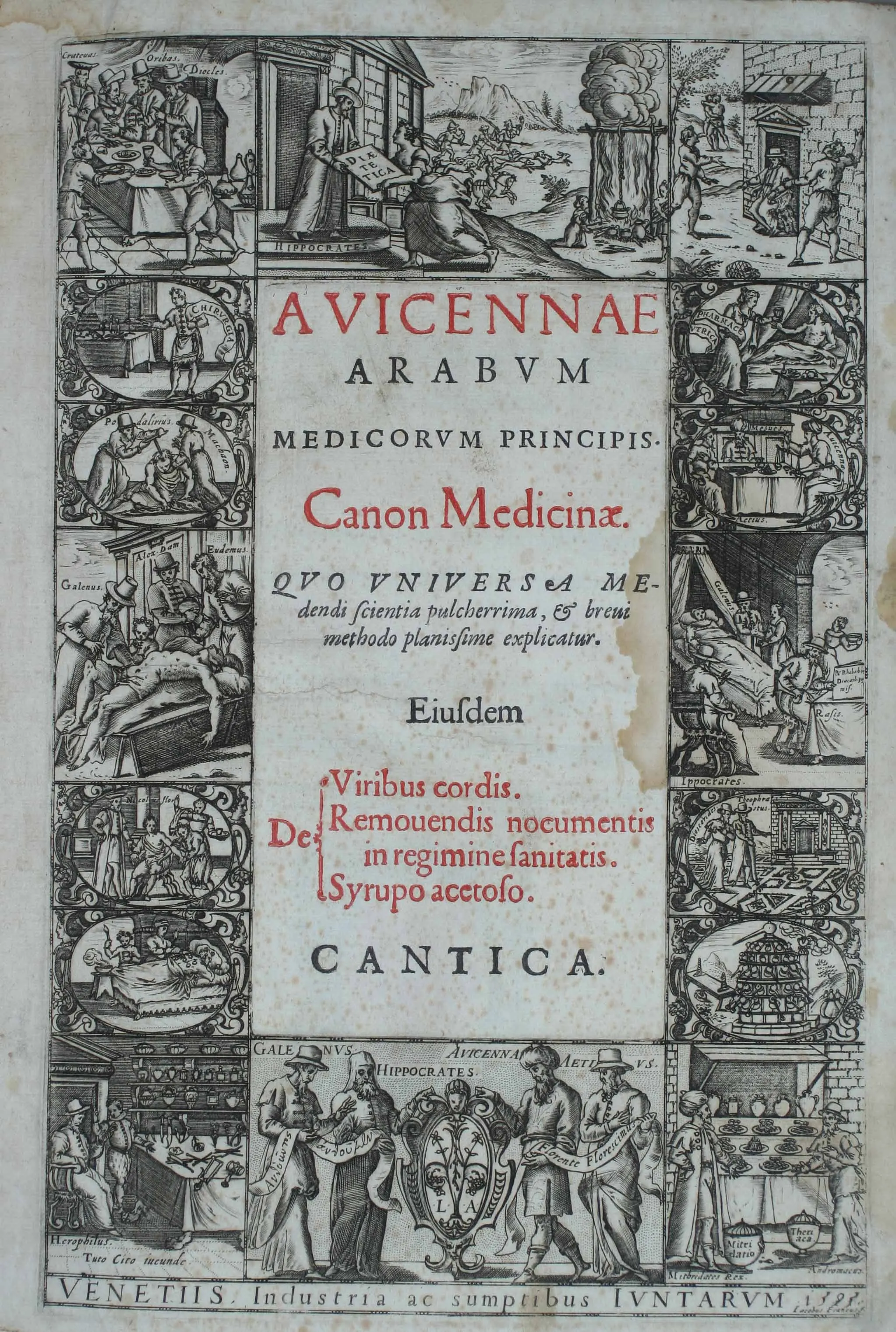
Islamic medicine was one of the most significant intellectual and practical traditions of the medieval world. Over roughly five centuries -- from the great translation movement of the eighth and ninth centuries through the height of the Islamic Golden Age -- Islamic physicians built on the medical knowledge of Greece, Persia, and India, corrected and extended it through systematic clinical observation, created the hospital as a public institution of a kind the ancient world had not known, and produced medical encyclopedias that dominated medical education in both the Islamic world and medieval Europe for centuries. The tradition they created was not merely a preservation of ancient knowledge but a genuine intellectual achievement -- a transformation of medicine from a collection of inherited techniques into a systematic discipline grounded in observation, classification, and the careful testing of treatments.
The Greek Inheritance and Its Limits
To understand what Islamic medicine achieved, it is necessary to understand what it inherited. The dominant medical tradition of the ancient world was Greek, and its most systematic expression was the work of Galen of Pergamon (129-216 CE), a physician of extraordinary productivity who synthesized the Hippocratic tradition with Aristotelian natural philosophy into a comprehensive medical system. Galen's system was built on the theory of the four humors -- blood, phlegm, yellow bile, and black bile -- whose balance or imbalance determined health and disease. He wrote extensively on anatomy, physiology, pharmacology, and clinical practice, and his works became the authoritative reference for medicine in the late Roman and Byzantine worlds.
Galen's system was impressive in its scope and internal consistency, but it had significant limitations. His anatomical knowledge was based largely on the dissection of animals rather than humans, which led to errors that would not be corrected for centuries. His pharmacological knowledge, while extensive, lacked systematic principles for testing drug efficacy. And his clinical approach, while sophisticated, did not emphasize the kind of careful case-by-case documentation that would allow physicians to learn systematically from their experience.
The Islamic medical tradition inherited Galen's system, took it seriously, and then went beyond it -- correcting its errors, extending its methods, and developing new approaches that Galen had not imagined.
The Translation Movement: Building the Foundation
The foundation of Islamic medicine was laid by the great translation movement of the eighth and ninth centuries, centered at the House of Wisdom in Baghdad under the patronage of the Abbasid Caliphate. The translation movement was a systematic effort to acquire, translate, and master the intellectual heritage of Greece, Persia, and India, and medicine was one of its primary concerns.
The most important figure in the medical translation movement was Hunayn ibn Ishaq (809-873 CE), a Nestorian Christian physician from al-Hira who became the most productive and most methodologically sophisticated translator of the age. Hunayn translated the complete medical corpus of Galen -- some sixteen major treatises -- into Arabic and Syriac, along with works by Hippocrates, Dioscorides, and other ancient physicians. His translations were distinguished by their accuracy and by his understanding that a translation was only as good as the translator's knowledge of the subject: he brought genuine medical expertise to his work, not merely linguistic competence.
Hunayn also wrote on the methodology of translation itself, leaving behind a remarkable letter in which he described his approach to translating Galen's works -- how he sought out multiple manuscripts to compare variant readings, how he evaluated the reliability of different sources, and how he handled passages where the Greek was obscure or corrupt. This methodological self-consciousness was unusual for the period and reflects the intellectual seriousness with which the House of Wisdom approached its work.
Beyond translation, Hunayn made original contributions to medicine. His Ten Treatises on Ophthalmology was the first systematic treatment of eye diseases in any language, describing the anatomy of the eye, the causes of various conditions, and their treatments. It remained the standard reference work on the subject for centuries.
The translation movement also brought Persian and Indian medical knowledge into Arabic. Persian physicians had developed sophisticated traditions of their own, and Indian medicine -- particularly the Ayurvedic tradition -- contributed important knowledge about drugs and their properties. The synthesis of these multiple traditions, made possible by the translation movement, gave Islamic physicians access to a broader range of medical knowledge than any previous civilization had possessed.
The Bimaristan: A New Kind of Institution
One of the most significant contributions of Islamic civilization to the history of medicine was the development of the bimaristan -- the hospital -- as a public institution of a kind the ancient world had not known. Greek and Roman medicine had no equivalent: the ancient world had temples of healing, military hospitals, and private physicians, but no institution that provided systematic medical care to the general public regardless of social status or ability to pay.
The first Islamic hospitals were established in Baghdad in the early ninth century under the Abbasid Caliphate, and the institution spread rapidly across the Islamic world. By the tenth century, major cities including Damascus, Cairo, and Cordoba had hospitals of considerable sophistication. The most famous was the Adudi Hospital in Baghdad, founded in 981 CE, which employed twenty-four physicians and had separate wards for different conditions.
What made the Islamic hospital genuinely new was not merely its scale but its principles. It was a public institution, funded by waqf (charitable endowment) -- a form of Islamic charitable trust that provided a sustainable financial foundation independent of royal patronage. It provided free care to all patients regardless of religion, ethnicity, or social status. It had separate wards for different conditions -- men and women, different diseases, convalescent patients -- allowing for specialized care. It employed a staff of physicians, surgeons, pharmacists, and nurses. And it served as a center for medical education, where students learned by observing and treating actual patients under the supervision of experienced physicians.
This last function -- the integration of medical education with clinical practice -- was particularly significant. The Islamic hospital created a model of medical training that combined theoretical knowledge with practical experience in a way that had no precedent. Students who trained in hospitals learned not just what the textbooks said but how diseases actually presented, how treatments actually worked, and how to make clinical judgments in the face of uncertainty. This model of clinical education, developed in the Islamic world, eventually influenced the development of European medical education.
The hospital also served as a site for systematic clinical observation. Physicians who worked in hospitals saw large numbers of patients with similar conditions, which allowed them to identify patterns, test treatments, and develop more reliable clinical knowledge than any individual physician working in private practice could accumulate. This institutional basis for clinical observation was one of the factors that made Islamic medicine more empirically grounded than its Greek predecessors.
Al-Razi: The Empirical Physician
The physician who most fully embodied the empirical spirit of Islamic medicine was al-Razi (854-925 CE), known in the Latin West as Rhazes, who served as chief physician of the main hospital in Baghdad and produced the most comprehensive medical encyclopedia of the medieval period. Al-Razi's approach to medicine was characterized by meticulous clinical observation, systematic documentation of cases, and a willingness to correct Galen when his own observations contradicted the ancient authority.
His most celebrated single contribution was his treatise on smallpox and measles -- the first accurate clinical description of these two diseases as distinct conditions with different causes, courses, and treatments. Before al-Razi, the two diseases were often confused or treated as variants of the same condition. Al-Razi observed large numbers of patients with both conditions, documented their symptoms in detail, and identified the specific features that distinguished one disease from the other. The treatise was translated into Latin and reprinted in Europe more than forty times between 1498 and 1866.
His encyclopedic work al-Hawi (The Comprehensive Book of Medicine) was the most ambitious medical compilation of the medieval period -- a work of approximately twenty-three volumes that presented the full range of medical knowledge organized by disease and body system, with al-Razi's own clinical observations alongside the views of Greek, Persian, and Indian authorities. What distinguished al-Hawi from earlier encyclopedias was its method: al-Razi did not simply summarize the authorities but evaluated them, noting where his own clinical experience confirmed or contradicted their positions. This critical, empirical approach was his most important methodological contribution.
Ibn Sina: The Systematic Synthesizer
Where al-Razi's strength was empirical richness, Ibn Sina (980-1037 CE), known in the Latin West as Avicenna, brought systematic organization and theoretical clarity. His Al-Qanun fi al-Tibb (The Canon of Medicine), completed around 1025 CE, was a medical encyclopedia of approximately one million words organized with a systematic clarity that no previous medical work had achieved. It synthesized the full range of Greek and Islamic medical knowledge into a coherent system, organized according to underlying principles so that each piece of information had a clear place in a coherent whole.
The Canon was divided into five books covering the theoretical foundations of medicine, a materia medica of more than 760 drugs, diseases of specific organs from head to foot, conditions affecting the whole body, and compound drugs. Its organizational logic made it an ideal teaching text: a physician using the Canon could not only find the treatment for a specific condition but could understand why that treatment was appropriate -- what principles of physiology and pathology it was based on.
Ibn Sina's medical theory built on the humoral framework inherited from Galen but refined and extended it through careful clinical observation. His observations on contagion were particularly significant: he recognized that certain diseases could be transmitted through water and soil, recommended quarantine for tuberculosis, and described how diseases could spread through populations. These observations did not constitute a germ theory in the modern sense, but they reflected a careful empirical attention to the patterns of disease transmission that was unusual for his time.
The Canon was translated into Latin by Gerard of Cremona in the twelfth century and became the primary medical textbook in European universities from the thirteenth century onward. It was printed in more than thirty editions in Europe between 1473 and 1600 and remained on the curriculum of some European medical schools into the seventeenth century.
Al-Zahrawi and the Development of Surgery
Surgery was the area of Islamic medicine where the gap between ancient knowledge and Islamic achievement was perhaps most dramatic. Greek surgery had been limited in scope and technique; Islamic surgery, particularly in the work of al-Zahrawi (Albucasis, c. 936-1013 CE), became a sophisticated discipline with specialized instruments and systematic procedures.
Al-Zahrawi, who worked in Cordoba under the Umayyad caliphate of al-Andalus, wrote al-Tasrif -- a thirty-volume medical encyclopedia whose surgical section was the most comprehensive treatment of surgery in the medieval world. He described more than two hundred surgical instruments, many of which he designed himself, with detailed illustrations showing their construction and use. He described procedures for bladder stones, cataracts, tumors, dental surgery, obstetrics, and many other conditions. His work on the use of catgut for internal sutures -- a technique that remained standard until the development of synthetic sutures in the twentieth century -- was particularly significant.
Al-Tasrif was translated into Latin by Gerard of Cremona and became the standard surgical reference in European medical schools for centuries. Al-Zahrawi's influence on European surgery was direct and acknowledged: the Italian surgeon Roger of Salerno, writing in the twelfth century, drew heavily on al-Zahrawi's work, and the surgical tradition he helped establish shaped European surgery through the Renaissance.
Pharmacology: The Systematic Study of Drugs
Islamic medicine made substantial contributions to pharmacology that went beyond the compilation of drug lists. The tradition of systematic pharmacological knowledge began with Dioscorides' De Materia Medica, which described approximately six hundred plants and their medicinal uses. Islamic physicians translated, expanded, and systematized this knowledge, adding hundreds of new drugs from Persian, Indian, and African sources and developing principles for evaluating drug efficacy.
Al-Razi's pharmacological work established principles for testing drug efficacy that anticipated later methodological developments: he recognized the importance of testing drugs on simple rather than complex conditions, of observing the time and manner of their action, and of distinguishing between a drug's primary effects and secondary consequences. Ibn Sina's Canon described more than 760 drugs with their properties, preparation, and therapeutic uses, organized alphabetically for easy reference.
Al-Biruni contributed a major pharmacological encyclopedia, Kitab al-Saydana (The Book of Pharmacy), that described drugs from multiple traditions -- Arabic, Persian, Greek, Indian, and Syriac -- with careful attention to the different names used for the same substance in different languages, a practical problem that had caused significant confusion in earlier pharmacological literature.
The Islamic pharmacological tradition also contributed to the development of chemistry as applied to medicine. Jabir ibn Hayyan's chemical work, which established systematic methods for preparing and purifying substances, had direct applications in pharmacy, and the integration of chemical and medical knowledge was a distinctive feature of Islamic science.
Transmission to Europe and the Legacy
The transmission of Islamic medicine to medieval Europe was one of the most consequential intellectual transfers in history. It occurred primarily through the translation movement centered in Toledo, Spain, and in Sicily, where Arabic-speaking scholars and Latin-speaking scholars worked together to render Islamic medical texts into Latin.
Gerard of Cremona (c. 1114-1187 CE), working in Toledo, translated Ibn Sina's Canon, al-Razi's al-Hawi, al-Zahrawi's surgical section of al-Tasrif, and dozens of other Arabic medical works into Latin. These translations transformed European medical education: the Canon became the primary medical textbook in European universities from the thirteenth century onward, and al-Zahrawi's surgical work became the standard surgical reference. European physicians who had previously relied on fragmentary and incomplete versions of Greek medical knowledge now had access to the full range of Islamic medical achievement.
The influence of Islamic medicine on European practice extended beyond the texts. The hospital model -- the bimaristan -- influenced the development of European hospitals, which began to develop more systematic approaches to patient care and medical education in the twelfth and thirteenth centuries. The pharmacological knowledge transmitted through Arabic texts expanded the European pharmacopoeia significantly. And the empirical approach to clinical medicine that al-Razi had exemplified -- the systematic observation and documentation of cases -- influenced the development of European clinical practice.
The Islamic medical tradition also shaped the development of European medical education through the curriculum of the great medieval universities. At Salerno, Montpellier, Bologna, and Paris, students studied Ibn Sina's Canon alongside the works of Hippocrates and Galen. The Canon's systematic organization made it an ideal teaching text, and its influence on European medical education persisted for centuries after the development of modern anatomy and physiology had begun to supersede its specific content.
Legacy
Islamic medicine's legacy in the history of knowledge is substantial and specific. It preserved and transmitted the Greek medical tradition at a time when much of it had been lost in Western Europe. It extended that tradition through systematic clinical observation, producing more accurate descriptions of diseases and more reliable treatments than the ancient authorities had provided. It created the hospital as a public institution -- one of the most significant social innovations of the medieval world. And it transmitted a transformed medical tradition to Europe, providing the foundation on which European medicine developed from the twelfth century onward.
The physicians of the Islamic world -- al-Razi, Ibn Sina, al-Zahrawi, Hunayn ibn Ishaq, and many others -- were not merely custodians of ancient knowledge but genuine contributors to the advancement of medicine. Their emphasis on careful observation, their willingness to correct ancient authorities when clinical experience contradicted them, and their development of systematic methods for organizing and transmitting medical knowledge were contributions of lasting significance. The Islamic Golden Age that produced them was, among other things, a golden age of medicine -- a period when the systematic study of disease, treatment, and the human body reached heights that would not be surpassed until the development of modern medicine in the nineteenth century.
References and Further Reading
Primary Islamic Sources
- Quran, Surah Ash-Shu'ara (26:80) — "And when I am ill, it is He who cures me."
- Quran, Surah Al-Isra (17:82) — "And We send down of the Quran that which is healing and mercy for the believers."
- Sahih al-Bukhari, Book of Medicine (Kitab al-Tibb), Hadith 5678–5688 — The Prophet's guidance on illness and treatment.
- Sahih Muslim, Book of Greetings (Kitab al-Salam), Hadith 2204 — "There is no disease that Allah has created, except that He also has created its treatment."
- Ibn Sina (Avicenna). Al-Qanun fi al-Tibb (The Canon of Medicine). Translated by O. Cameron Gruner. London: Luzac, 1930. [Original c. 1025 CE]
- Al-Razi, Abu Bakr. Kitab al-Hawi fi al-Tibb (The Comprehensive Book on Medicine). Hyderabad: Dairat al-Ma'arif al-Uthmaniyyah, 1955–1970. [Original c. 925 CE]
- Al-Razi, Abu Bakr. Kitab al-Judari wa al-Hasbah (Treatise on Smallpox and Measles). London: Sydenham Society, 1848. [Original c. 910 CE]
Classical Islamic Sources
- Ibn Abi Usaybi'a. Uyun al-Anba fi Tabaqat al-Atibba (Sources of Information on the Classes of Physicians). Beirut: Dar al-Thaqafah, 1965. [Original c. 1270 CE]
- Al-Zahrawi, Abu al-Qasim. Al-Tasrif li-man Ajiza an al-Ta'lif (The Method of Medicine — including surgical techniques). [Original c. 1000 CE]
- Ibn al-Nafis, Ala al-Din. Sharh Tashrih al-Qanun (Commentary on the Anatomy of the Canon — describing pulmonary circulation). [Original c. 1242 CE]
- Ibn Zuhr (Avenzoar). Kitab al-Taysir fi al-Mudawat wa al-Tadbir (Book of Simplification on Therapeutics). [Original c. 1162 CE]
Academic and Scholarly Sources
- Pormann, Peter E., and Emilie Savage-Smith. Medieval Islamic Medicine. Washington DC: Georgetown University Press, 2007.
- Savage-Smith, Emilie. "Medicine." In Encyclopedia of the History of Arabic Science, edited by Roshdi Rashed, Vol. 3. London: Routledge, 1996.
- Ullmann, Manfred. Islamic Medicine. Edinburgh: Edinburgh University Press, 1978.
- Dols, Michael W. Medieval Islamic Medicine: Ibn Ridwan's Treatise "On the Prevention of Bodily Ills in Egypt." Berkeley: University of California Press, 1984.
- Fancy, Nahyan. Science and Religion in Mamluk Egypt: Ibn al-Nafis, Pulmonary Transit and Bodily Resurrection. London: Routledge, 2013.
- Conrad, Lawrence I. "The Arab-Islamic Medical Tradition." In The Western Medical Tradition, edited by Lawrence I. Conrad et al. Cambridge: Cambridge University Press, 1995.
Further Reading
- Al-Khalili, Jim. The House of Wisdom. New York: Penguin Press, 2011.
- Turner, Howard R. Science in Medieval Islam. Austin: University of Texas Press, 1997.
- Hill, Donald R. Islamic Science and Engineering. Edinburgh: Edinburgh University Press, 1993.
- Saliba, George. Islamic Science and the Making of the European Renaissance. Cambridge: MIT Press, 2007.
- Hamdard Laboratories — the Unani institution that carried this medical tradition into the twentieth century
Mentioned In
2 articles reference this topic
More from Islamic Golden Age
Al-Kindi
Abu Yusuf al-Kindi (c. 801–873 CE) was the first major Islamic philosopher and one of the most wide-ranging minds of the Abbasid era. Working at Baghdad's House of Wisdom, he pioneered the synthesis of Greek philosophy with Islamic thought across many sciences.
Al-Razi
Abu Bakr al-Razi (854–925 CE), known in the Latin West as Rhazes, was the greatest clinical physician of the medieval Islamic world. His observations on smallpox and measles, his encyclopedia al-Hawi, and his chemistry shaped Islamic and European medicine for centuries.
Bukhara
Bukhara, known across the Islamic world as Bukhara-i-Sharif (Noble Bukhara), was among the most important cities of Islamic civilization. Capital of the Samanid dynasty and a major Silk Road center, it produced scholars such as Imam al-Bukhari and Ibn Sina.
Ibn Sina
Ibn Sina (980-1037 CE), known in the Latin West as Avicenna, was the most influential physician and philosopher of the medieval Islamic world. His Canon of Medicine dominated medical education for six centuries, while his philosophical works shaped both Islamic and European thought.