Al-Ghazali
Abu Hamid al-Ghazali (1058–1111 CE) was among the most influential thinkers in Islamic history. His Ihya Ulum al-Din synthesized law, theology, and mysticism, while his critique of Aristotelian rationalism and account of spiritual crisis remain landmarks of medieval thought.
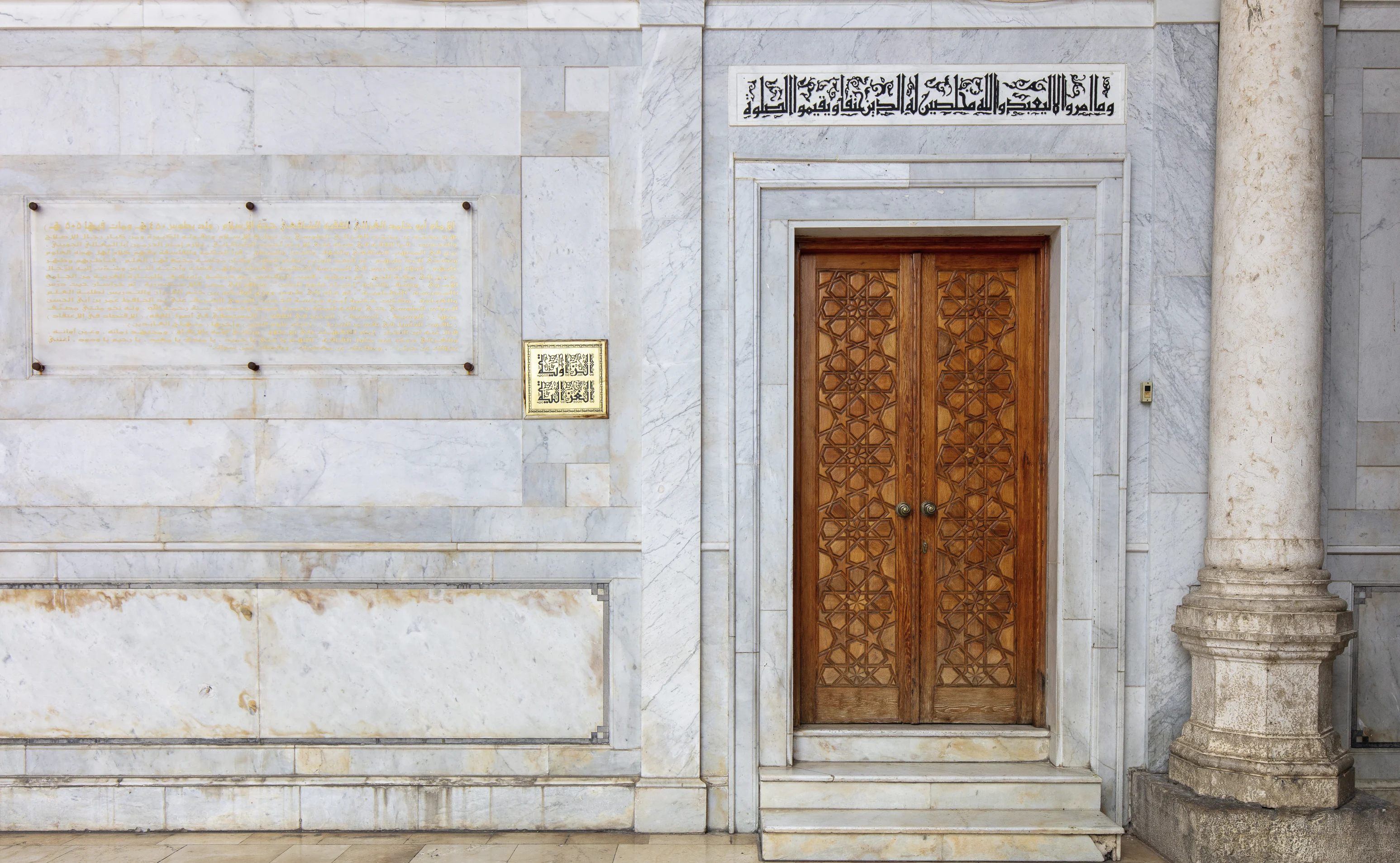
Abu Hamid Muhammad ibn Muhammad al-Ghazali (c. 1055/1058–1111 CE / c. 448–505 AH), known in the Latin West as Algazel, stands as one of the most consequential thinkers in the history of Islam. His birth year is not securely established: the later medieval Muslim historians give 1058 or 1059, which remains the conventional date, but Frank Griffel has argued from remarks about his own age in al-Ghazali's letters and autobiography that he was born in 1055 or 1056. Both datings are in current scholarly use, and this article reports the difference rather than choosing between them. In a career that combined extraordinary intellectual achievement with a dramatic personal crisis and spiritual transformation, he reshaped the relationship between Islamic law, theology, and mysticism in ways that are still felt today. His masterwork, Ihya Ulum al-Din (The Revival of the Religious Sciences), is among the most widely read books in the Islamic world after the Quran itself. His philosophical critique of Aristotelian rationalism, his autobiographical account of doubt and recovery, and his integration of Sufi spirituality into orthodox Islamic practice all mark him as a figure of the first importance — one whose influence on Islamic civilization is genuinely comparable to that of Augustine or Aquinas in the Christian tradition.
What makes al-Ghazali particularly remarkable is the arc of his life. He rose to the most prestigious academic position in the Islamic world, then abandoned it at the height of his fame to wander in spiritual retreat for years. He returned not diminished but transformed, producing in his later years the works that would define his legacy. His life is a study in the tension between intellectual mastery and spiritual authenticity — a tension he resolved, at great personal cost, in favor of the latter.
Historical Context: Persia and the Seljuk World
Al-Ghazali was born into a world of remarkable intellectual vitality and political turbulence. The Seljuk Empire, a Turkic dynasty that had swept across Central Asia and Persia in the mid-eleventh century, now controlled the heartlands of the Islamic world from Central Asia to Anatolia. The Seljuks were Sunni Muslims who positioned themselves as defenders of the Abbasid Caliphate in Baghdad against the Shia Fatimid Caliphate in Cairo, and they invested heavily in Sunni religious and educational institutions as a form of ideological consolidation.
The most visible expression of this investment was the Nizamiyyah network of madrasas, founded by the great Seljuk vizier Nizam al-Mulk in the 1060s and 1070s. These institutions, established in Baghdad, Nishapur, and other major cities, were the most prestigious centers of Islamic learning in the world, attracting the finest scholars and offering generous salaries to those who taught there. They represented a deliberate effort to standardize and strengthen Sunni Islamic education at a moment when the faith faced both external challenges from the Crusades and internal challenges from Ismaili Shia missionaries.
It was into this world — intellectually rich, politically charged, and religiously contested — that al-Ghazali was born and educated. The questions he would spend his life addressing — the relationship between reason and revelation, the proper role of philosophy in Islamic thought, the nature of authentic religious knowledge — were not merely academic. They were urgent questions for a civilization trying to define itself.
Early Life and Education
Al-Ghazali was born in Tabaran-Tus, in the Khorasan region of northeastern Persia (present-day Iran, some fifteen miles north of modern Mashhad). The classical biographers offer two explanations of his name, and the matter has never been settled: either it derives from ghazzal, a spinner of wool, referring to his father's trade, or from Ghazala, a village near Tus. The medieval sources themselves disagree, and modern scholarship has not resolved it.
His father, by the traditional account, was a wool merchant with scholarly inclinations who died while al-Ghazali and his brother Ahmad were young children, entrusting both boys to a Sufi friend with instructions to spend what inheritance remained on their education. Ahmad (c. 1060–1123 or 1126) went on to become a well-known preacher and Sufi author in his own right, so the household's later reputation rests on two brothers rather than one. This early exposure to Sufi piety left an impression on al-Ghazali, though its full significance would not become apparent until much later in his life.
Al-Ghazali received his initial education in Tus, studying the traditional Islamic sciences — Quranic recitation, Arabic grammar, and the basics of Islamic jurisprudence. He then traveled to Jurjan, a nearby city, to continue his studies, and later to Nishapur, the intellectual capital of Khorasan and one of the great centers of Islamic learning in the eleventh century. In Nishapur, he came under the tutelage of al-Juwayni (d. 1085 CE), known as Imam al-Haramayn (the Imam of the Two Holy Sanctuaries), who was the most distinguished theologian of his generation and the head of the Nizamiyyah Madrasa in Nishapur.
Under al-Juwayni, al-Ghazali received a comprehensive education in Islamic theology (kalam), jurisprudence (fiqh), and philosophy. Al-Juwayni was himself a sophisticated thinker who engaged seriously with philosophical arguments, and he recognized in his student an exceptional mind. Al-Ghazali mastered the Ashari school of theology — the dominant school of Sunni theological rationalism — and became deeply familiar with the works of the Islamic philosophers, particularly al-Farabi and Ibn Sina, whose Aristotelian-influenced systems he would later subject to sustained critique.
This period matters for a reason that al-Ghazali's own later account obscures. In his autobiography he presents his engagement with philosophy as beginning only after his appointment in Baghdad, but al-Juwayni's own works already show the influence of Ibn Sina, and modern scholarship treats it as almost certain that al-Ghazali first encountered falsafa here, in Nishapur, as a student. The point is not incidental: it bears on whether he came to philosophy as a mature jurist assessing a rival system, which is how he presents it, or absorbed it during his formation, which is what the evidence suggests.
Al-Juwayni died in 1085 CE, and al-Ghazali left Nishapur. He made his way to the court of Nizam al-Mulk, the powerful Seljuk vizier who was then at the height of his influence. The vizier's court was itself a kind of intellectual salon, attracting scholars, poets, and administrators from across the Islamic world. Al-Ghazali impressed Nizam al-Mulk with his learning and debating skills, and the vizier became his patron.
Rise to Prominence: Baghdad and the Nizamiyyah
In 1091 CE, Nizam al-Mulk appointed al-Ghazali as a professor at the Nizamiyyah Madrasa in Baghdad — the most prestigious academic position in the Islamic world. He was in his mid-thirties. The appointment placed him at the center of Islamic intellectual life, in the capital of the Abbasid Caliphate, teaching hundreds of students and engaging with the leading scholars of his generation. It also placed him in an unusual double position: already a confidant of the Seljuk sultan and his court at Isfahan, he now became closely connected to the caliphal court in Baghdad as well. He was, on any reckoning, the most influential intellectual of his time.
His years in Baghdad were extraordinarily productive. He had already made his name as a competent author of legal works; he now lectured on jurisprudence and theology, wrote prolifically, and engaged in the debates that animated Islamic intellectual life. In his autobiography he describes devoting two years to mastering the philosophical systems of al-Farabi and Ibn Sina, followed by a third year writing his refutation of them. That account should be read with care. It is apologetic in purpose — it answers critics who alleged that he had studied philosophy before his religious training was complete — and the evidence of his earlier education tells against it. Griffel's assessment is that the Incoherence may have been decades in the making rather than the product of a three-year programme in Baghdad.
The political context of these years was turbulent. In 1092 CE, Nizam al-Mulk was assassinated by an Ismaili agent, and the Seljuk sultan Malik Shah died shortly afterward. The political instability that followed affected the intellectual climate of Baghdad, and al-Ghazali found himself increasingly troubled — not only by external events but by an internal crisis that was building within him.
The Philosophical Challenge: Tahafut al-Falasifah
Around 1095 CE al-Ghazali published what became his most famous philosophical work, Tahafut al-Falasifah (The Incoherence of the Philosophers), a critique of the Islamic Aristotelians and above all of Ibn Sina. Twenty positions are examined: sixteen drawn from the philosophers' metaphysics (ilahiyyat) and four from their natural science (tabi'iyyat).
The title has misled readers for centuries, and the nature of the argument needs stating precisely, because the popular characterisation of the book as an attack on reason is the reverse of what it does. Al-Ghazali's target is not philosophical reasoning but the philosophers' claim to have demonstrated their conclusions. The falasifa, he complains at the outset, hold that their method of demonstrative proof (burhan) is superior to knowledge drawn from revelation and its rational interpretation, and that conviction has led a group among them to disregard Islamic law. His response is to take each of the twenty positions and show that the arguments offered for it fall short of demonstration — that they rest on premises accepted within the school rather than established by reason. The charge he levels is therefore taqlid, uncritical repetition of the founders' doctrines: the accusation the philosophers habitually directed at the theologians, turned back on them.
The consequence, easily missed, is that the Incoherence "refutes" a number of positions whose truth al-Ghazali accepted, and to some of which he subscribed in his later works. In those cases the point is only that they are true but undemonstrated. This is why modern scholarship no longer reads the book as an anti-philosophical pamphlet. Griffel's assessment is that the Tahafut is itself a work of philosophy, and that al-Ghazali's acceptance of demonstration is what opened the way for Avicennan logic and metaphysics to be absorbed into Sunni theology rather than excluded from it.
The longest and most substantial of the twenty discussions is the first, on the pre-eternity of the world. Here al-Ghazali goes beyond his usual method: he denies not only that the philosophers have demonstrated an eternal world but that an eternal world is possible at all, drawing on arguments developed by the sixth-century Christian critic of Aristotle John Philoponus — known in Arabic as Yahya al-Nahwi — against the possibility of an infinite series of past events. Those arguments had entered Arabic discussion of creation in the ninth century, so al-Ghazali is working within an established line rather than inventing one.
At the close of the book al-Ghazali asks whether the twenty positions conflict with the religious law. Most are wrong, he says, but raise no serious religious difficulty and should be classed as innovations (bid'a). Three are both wrong and religiously intolerable: that the world has no beginning and is not created in time; that God's knowledge extends to classes of beings but not to individuals and their circumstances; and that human souls, once separated from bodies, never return to them. On these, he holds, revelation states the opposite and overrules an unfounded claim, and the teachings are moreover liable to lead the public into disregarding the law. He then appends, in his capacity as a jurist, a brief legal ruling declaring that anyone who publicly teaches these three positions is an unbeliever and an apostate, and may lawfully be killed. The ruling is part of the book's own text and is recorded here because it belongs to the historical record; it also stands in a real tension with the more restrained position he took in later works, discussed below.
A philosophical response came, a century later, from Ibn Rushd (Averroes) in his Tahafut al-Tahafut (The Incoherence of the Incoherence). Ibn Rushd denied that al-Ghazali's book was philosophy at all, a judgement Western readers long accepted at face value, in part because Ibn Rushd's reply was available in Latin from the early fourteenth century and in accessible English from 1954, while a complete English translation of the Tahafut itself appeared only in 1997. The exchange became one of the defining debates of medieval philosophy, read in the Islamic world and, through two Latin translations of Ibn Rushd's reply titled Destructio destructionum, in European universities into the sixteenth century.
Historians have sometimes characterized al-Ghazali as the thinker who killed Islamic philosophy. The claim does not survive contact with what followed. Philosophy continued in the Islamic east and in al-Andalus, and the more accurate account is that al-Ghazali changed its institutional location: by conceding the authority of demonstration while denying that the falasifa had achieved it, he made Avicennan philosophy something theologians had to master rather than something they could dismiss.
The Reports of Philosophy and the Latin "Algazel"
Alongside the Incoherence, al-Ghazali produced works reporting the philosophers' teachings without endorsing them. Two survive. One is a nearly complete fragment of a long book, its title lost, in which he copies or paraphrases passages from the philosophers into a connected account of their metaphysics. The other is Maqasid al-Falasifah (The Doctrines, or Intentions, of the Philosophers), a loose Arabic adaptation of the sections on logic, metaphysics and natural science in Ibn Sina's Persian Danishnama-yi Ala'i.
Maqasid al-Falasifah is conventionally described as a preparatory study for the Tahafut, and the description does not hold up. The two works use different terminology, and the Maqasid presents its material in ways that do not support the criticism made in the Tahafut; only its short introduction and closing statement connect the two, and those were almost certainly written or added after the Incoherence was published. The likelier account is that the Maqasid was an independent project, retro-fitted with a disclaimer.
That disclaimer is where the work's afterlife becomes interesting. Translated into Latin in the third quarter of the twelfth century by Dominicus Gundisalvi of Toledo, working with a collaborator known as Magister Iohannes, it circulated as Summa theoricae philosophiae — and the translators omitted both the introduction and the closing statement identifying the contents as an uncommitted report. The version European readers had therefore concealed what it was. "Algazel" was taken for a faithful Avicennan and a skilled compendiast of Avicenna's system, and in that character he became a principal Latin source on Arabic philosophy for Albert the Great and Thomas Aquinas.
It is worth resisting the easy conclusion that this was simply a Latin blunder. Arabic manuscripts exist that attribute a closely similar text to al-Ghazali with no mention that its teachings are a report, the oldest produced at Maragha in the early thirteenth century. The Hebrew tradition, which did make the work's reporting character clear, nonetheless read al-Ghazali as far closer to falsafa than Arabic Sunni scholarship allowed; over seventy-five manuscripts of the Hebrew versions survive, and by the fifteenth century the text may have displaced Ibn Rushd as the most widely used Jewish source for Aristotelian natural science. Moses Narboni, writing in the fourteenth century, proposed that al-Ghazali had written the Incoherence precisely in order to license publishing the Maqasid. The suspicion that he was more of a philosopher than he admitted is thus not a modern invention, and not only a Latin one.
The Refutation of Ismailism
Soon after the Incoherence, al-Ghazali turned the same method of boundary-drawing on a second movement. Fada'ih al-Batiniyya (The Scandals of the Esoterics) is his critique of the Ismaili Shia, whose missionaries were active in Iraq and Iran and whose challenge was, in this period, more immediately political than the philosophers' — the work was written for the Abbasid caliph al-Mustazhir, and is sometimes known by his name.
The Ismaili argument he sets out to answer was an epistemological one, and a shrewd one. Sunni theological reasoning, the Ismaili propagandists held, only appears rational: it submits God's word to judgements that are in fact arbitrary, as the endless disputes among Sunni theologians demonstrate. Since every rational proof can be met by an opposing rational proof of equal force — the doctrine of takafu' al-adilla, the equivalence of proofs — certainty can come only from the divinely guided word of the Imam. Al-Ghazali's reply is what makes this episode important for his intellectual development rather than merely for its polemic: the theologians dispute among themselves, he answers, because they are unfamiliar with the technique of demonstration. It is against the Ismailis, as much as against the philosophers, that he presses the Aristotelian notion of burhan into service for Sunni theology.
His treatment of Ismaili doctrine itself requires a plain statement of what modern scholarship has found. Al-Ghazali attributes to the Ismailis a belief in two gods; this is not their teaching. His information about their cosmology was limited, appearing to derive largely from the Persian writings of the earlier Ismaili philosopher Nasir-i Khusraw, and he was unaware of the schism that had by then separated the movement in Iraq and Iran from its Fatimid centre in Cairo. The assessment of recent scholarship on the Ismaili sources, reported by Griffel, is that the attribution of dualism is better understood as deliberate misrepresentation drawing on an established genre of anti-Ismaili polemic than as simple misunderstanding. On the basis of that supposed dualism, together with their denial of bodily resurrection, al-Ghazali declared them unbelievers and apostates. The judgement is part of his record; so is the fact that the premise it rested on was false.
Reason, Revelation, and the Boundaries of Islam
The two refutations amount to a single project: establishing where the limits of Islam lie. In Faysal al-Tafriqa bayna al-Islam wa al-Zandaqa (The Decisive Criterion for Distinguishing Islam from Clandestine Unbelief) al-Ghazali states the criterion in general form, and the result is markedly narrower than the ruling appended to the Incoherence. Only teachings violating the fundamental doctrines (usul al-aqa'id) constitute unbelief, and these are three: the oneness of God, the prophethood of Muhammad, and the Qur'anic descriptions of life after death. Everything else is to be tolerated, including error and including innovation. Some teachings may be correct notwithstanding their philosophical provenance, and should then be accepted; each is to be judged on its own merits. Notably, the pre-eternity of the world — the first of the three positions on which the Incoherence had pronounced unbelief — does not appear among the fundamentals here, and the subject is not raised in the later work at all.
The rule al-Ghazali derives for handling apparent conflicts between reason and scripture proved to be one of his most durable contributions. A valid demonstration, he held, is never wrong; and since neither a sound demonstration nor revelation can be false, they cannot genuinely conflict. Where a demonstration establishes something contrary to the literal sense of a revealed text, the scholar must read the text figuratively (ta'wil) as a symbol of a deeper meaning. He gives as examples the passages ascribing to God a hand or a throne, which he takes demonstration to exclude in their literal sense. The rule has a strict limit in the other direction: where the outward meaning is not disproved by a valid demonstration, figurative interpretation is not permitted.
Almost all later Muslim theologians of rationalist temper accepted this rule. It also drew a sharp objection from Ibn Taymiyya (1263–1328), who rejected the priority it gives reason over the revealed text in cases of conflict, observed that al-Ghazali's own arguments against God sitting on a throne are not in fact demonstrative, and denied that reason and revelation can conflict at all — the appearance of conflict, on his account, arises from subjecting revelation to premises it does not accept. Ibn Rushd, from the opposite direction, accepted the rule and disputed its application: Aristotle, he held, had already demonstrated the world's pre-eternity, which by al-Ghazali's own criterion should make it acceptable, and there is no Qur'anic passage unambiguously asserting creation in time. Al-Ghazali was aware of the latter point and rested the doctrine instead on the consensus (ijma) of the theologians.
Causality and the Seventeenth Discussion
The seventeenth of the twenty discussions in the Incoherence is the passage on which al-Ghazali's philosophical reputation now largely rests, and it is the source of the claim that he denied causality outright. Its actual purpose is narrower: he wants to compel the philosophers to concede that the miracles reported in the Qur'an are possible, since a philosopher who accepts revelation's authority must then accept that they occurred.
The discussion opens with a sentence that has been quoted for nine centuries: the connection between what is habitually taken to be a cause and what is habitually taken to be its effect is not necessary; with any two things that are not identical and do not imply one another, the existence or non-existence of one does not follow of necessity from the existence or non-existence of the other; their connection is due to God's prior decree, who creates them side by side, not to a necessity in themselves that cannot be separated. He then extends the point: it lies within divine power to create satiety without eating, or death without a wound to the neck, or the continuation of life after such a wound — possibilities the philosophers deny.
Two things are commonly misread here. The first is that al-Ghazali is denying causal connection. He is not: he is denying that the connection is necessary. His argument in the first of the discussion's four parts is that observation establishes only that effect occurs with cause, never that it occurs through it and that no other cause is involved. Whether the connection exists is a separate question, and one he holds observation cannot settle either way. Where he does reject a position outright, it is the view that the proximate cause alone suffices — a view he attributes to materialists who deny the world has a maker, and, in the matter of human acts, to the Mu'tazilites. Discussing the standard example of fire touching cotton, he writes that the agent of the combustion is God, whether through the mediation of the angels or without mediation. Mediated causation is thus explicitly on the table.
The second misreading concerns what necessity means in the dispute. Al-Ghazali and Ibn Sina were working with different accounts of the modal terms, a point established in the scholarship of Taneli Kukkonen and Blake Dutton. Ibn Sina follows the Aristotelian model on which possibility is tied to actuality across time: since "fire causes cotton to combust" was, is and always will be true, it is necessarily true. Al-Ghazali's Ash'ari inheritance had developed something closer to the modern notion of alternative states of affairs — al-Juwayni's Aqida Nizamiyya argues that anyone looking at a building grasps immediately that its height, form and date of construction are actualised possibilities that could have been otherwise. On that understanding, a connection can be contingent because an alternative is conceivable, even if it never was and never will be different. Al-Ghazali nowhere requires that any causal connection actually vary. What he is asserting against Ibn Sina is that this world is the contingent effect of God's free choice among alternatives, not the necessary effect of God's nature.
How he thought physical processes actually work is a question he appears deliberately to have left open, and this is the most contested point in modern interpretation of him. The seventeenth discussion offers two distinct answers. The first denies natures and causal connections altogether: God creates each event immediately, and what we call causation is His unvarying custom (ada), which He may omit to follow when confirming a prophet. The second — Michael Marmura named it al-Ghazali's "second causal theory" — accepts natures and unchanging causal connections, and argues instead that human knowledge of nature is far from complete, so the miracles the philosophers deny may have natural causes unknown to us. He illustrates this with Moses's staff becoming a serpent: wood decays into earth, earth feeds plants, plants feed herbivores, herbivores are eaten by snakes, and the philosophers cannot rule out an unknown catalyst that runs the sequence quickly.
Marmura held that al-Ghazali remained an occasionalist throughout, using causal language loosely or tactically. More recent work, notably Griffel's and Edward Moad's, argues that he regarded occasionalism and secondary causation as co-possible, on the ground that neither observation nor revelation decides between them. The evidence cited includes a passage in the twentieth discussion where al-Ghazali says of two such explanations that "both of these are possible for us", and the fact that after the Incoherence he wrote works with a plainly occasionalist cosmology and others, including the thirty-fifth book of the Ihya and Mishkat al-Anwar, in explicitly causal language. In a work completed shortly before his death he was still treating the question of whether God creates through mediation as one that cannot be settled.
What is not in doubt is that he took the order of this world to be stable. Once God chose to create this world rather than another, He also chose not to alter the rules governing it. In the thirty-first book of the Ihya, having described the orderly succession of created things as God's sunna, al-Ghazali quotes the Qur'an: "you will find no change in God's way" (Quran 33:62; Quran 48:23), and elsewhere adds that we should not suppose God will ever change it. Miracles, on this account, are extraordinary occurrences written into the plan from the beginning rather than interruptions of it. The practical upshot is one Griffel puts bluntly: if God's custom never breaks, an occasionalist universe and one governed by secondary causes are indistinguishable from the inside.
The Spiritual Crisis (1095 CE)
In 1095 CE, at the height of his fame and influence, al-Ghazali experienced a crisis that he would later describe in his autobiography, Al-Munqidh min al-Dalal (Deliverance from Error), as a complete collapse of his certainty. The crisis was both intellectual and spiritual. Intellectually, he found himself unable to be certain of anything — not of the reliability of his senses, not of the validity of rational demonstration, not even of the most basic logical principles. He fell into a state of radical skepticism that lasted, he says, for nearly two months.
But the crisis was not merely philosophical. Al-Ghazali had come to recognize a gap between his intellectual knowledge and his spiritual state. He knew a great deal about Islam — about its law, its theology, its philosophy — but he lacked the inner certainty and spiritual transformation that he believed true faith required. He was, as he put it, teaching others about the path to God while himself standing at the beginning of that path. He had been motivated, he confessed, not purely by love of God but by the desire for fame and the pleasures of academic prestige. Reading Sufi literature, he says, brought him to a conclusion that reframed everything else: that correct theological convictions are by themselves of no help in the afterlife, and that only actions determine what follows death.
The Munqidh presents this as a sudden rupture, and the drama of that telling has shaped every subsequent account. Griffel's reconstruction from the wider evidence gives a slower and more specific picture. Al-Ghazali had begun altering how he lived roughly two years before he left Baghdad, under the influence of the same Sufi reading, and the conclusion he reached was concrete rather than merely interior: the ethical standard required of a religious life is not compatible with service to sultans, viziers and caliphs, because to live off the wealth of the military and political elite is to share in the oppression by which it was obtained, and so to put one's own prospects in the next world at risk. That is a professional objection to his own post, not a mystical episode, and it explains what he did next better than the account of a two-month collapse does.
The crisis manifested physically. He lost the ability to speak — his tongue would not form the words he needed to lecture. He became unable to eat. He consulted physicians, who told him that his condition had no physical cause. He recognized that the illness was of the soul, not the body.
The resolution came not through rational argument but through what al-Ghazali describes as a light that God cast into his heart — a direct experience of certainty that could not be achieved through reason alone. This experience convinced him that the kind of knowledge he had been pursuing was insufficient, and that the path to genuine understanding of God required not only intellectual study but spiritual practice and direct experience.
Years of Wandering: Damascus, Jerusalem, and Mecca
In the autumn of 1095 CE, al-Ghazali left Baghdad. He told his family and colleagues that he was going on pilgrimage to Mecca, but his actual destination was Damascus, where he intended to begin a period of spiritual retreat. He left behind his position, his salary, his students, and his reputation — everything that had defined his public life.
In Damascus, al-Ghazali spent nearly two years in spiritual practice. He lived simply, spending his days in prayer, meditation, and the study of Sufi texts. He practiced the spiritual disciplines recommended by earlier Sufi masters — fasting, night vigils, constant remembrance of God (dhikr) — seeking the direct experience of God that he had come to believe was the only genuine form of religious knowledge. He lived for a time in the Umayyad Mosque, one of the great mosques of the Islamic world, and later in a small cell attached to it.
From Damascus, al-Ghazali traveled to Jerusalem, where he visited the Dome of the Rock and the Al-Aqsa Mosque, spending time in prayer and contemplation at these sacred sites. He then traveled to Hebron, and it was there, at the tomb of Abraham, that he did the thing which gave the whole withdrawal its shape: he swore an oath never again to serve political authorities or to teach in a school funded by the state. This was a binding undertaking with practical consequences, not a gesture. He went on teaching, but at small private schools (zawiya, plural zawaya) supported by private donations rather than by rulers — the institutional form of the objection he had reached in Baghdad.
He then traveled to Mecca and Medina, where he performed the Hajj pilgrimage in 1096 and visited the tomb of the Prophet Muhammad. These journeys through the sacred geography of Islam were not merely pious tourism; they were part of a deliberate program of spiritual formation, connecting him to the prophetic tradition and to the community of believers across time.
After completing the pilgrimage, al-Ghazali returned by way of Damascus and Baghdad to his hometown of Tus, where he founded a small private school and a Sufi convent (khanqah), teaching a limited circle and writing. He declined invitations to return to public life, including one from the Seljuk vizier Fakhr al-Mulk to take up the Nizamiyyah Madrasa in Nishapur — a refusal his oath in any case required of him.
The Great Synthesis: Ihya Ulum al-Din
It was during this period of retreat and reflection — roughly between 1096 and 1106 CE — that al-Ghazali composed his masterwork, Ihya Ulum al-Din (The Revival of the Religious Sciences). The work is vast: four quarters of ten books each — forty books in all — covering virtually every aspect of Islamic life from the performance of ritual prayer to the ethics of commerce, from the nature of God to the stages of spiritual development.
Its method is worth describing, because it explains the book's authority. Each chapter proceeds by assembling the relevant Qur'anic verses first, then the prophetic reports, then the sayings of the early Muslims, and only then al-Ghazali's own analysis. The Ihya is in this sense a work of applied hadith scholarship as much as of spirituality, and its argument is that the inward disciplines it prescribes are already required by the revealed sources rather than added to them. This is what allowed it to be received as orthodox instruction rather than as mystical speculation — though the density of its hadith citation also drew criticism, and later scholars including al-Iraqi undertook to verify its reports and identified a number as weak.
The Ihya is organized around four quarters, each containing ten books. The first quarter deals with acts of worship (ibadat) — prayer, fasting, pilgrimage, and the recitation of the Quran. The second deals with social customs (adat) — eating, marriage, commerce, and friendship. The third deals with the vices that destroy the soul — pride, envy, anger, and attachment to the world. The fourth deals with the virtues that save it — repentance, patience, gratitude, love of God, and the contemplation of death.
What makes the Ihya revolutionary is not its coverage — earlier scholars had written on all these topics — but its integration. Al-Ghazali shows how the external practices of Islamic law are connected to internal spiritual states, and how those spiritual states are connected to theological understanding. A Muslim who performs the ritual prayer (salah) correctly but without attention and sincerity is, in al-Ghazali's view, missing the point of the prayer. The law is not an end in itself but a means to the cultivation of the soul's relationship with God.
This integration of law and spirituality was al-Ghazali's most lasting contribution to Islamic thought. Before him, Islamic law (fiqh) and Islamic mysticism (tasawwuf) had often been treated as separate, even competing, domains. Orthodox scholars sometimes viewed Sufi practices with suspicion, fearing that the emphasis on inner experience might lead to the neglect of legal obligations. Al-Ghazali demonstrated that authentic Sufism was not opposed to Islamic law but was its spiritual fulfillment — that the inner and outer dimensions of Islam were not in tension but were complementary aspects of a single path.
It is worth being clear that this was not offered as a conciliation between two respected parties. The Ihya attacks al-Ghazali's own professional class directly, questioning the competence and independence of the jurists and their seriousness about the next world. Traditional Sunni ethics, as he characterises it, confines itself to determining and teaching the rules of the law, and those who practise it on those terms are "scholars of this world" (ulama al-dunya) who cannot guide anyone toward the hereafter. Coming from the recent holder of the most prestigious chair in Sunni Islam, this was a considerable provocation, and it helps explain the opposition he later met.
The Ethics of Character
What al-Ghazali puts in place of a purely rule-following ethics is an ethics of character traits (akhlaq, singular khulq). Praiseworthy actions are the effect of praiseworthy dispositions, and it is the disposition that determines a person's standing in the next life. Human nature at birth he takes to be deficient, and only sustained effort develops it; the discipline required he calls riyadat al-nafs, the training of the soul, using the image of a young horse that must be broken in, schooled and well treated. Virtue is acquired by habituation — repeated action, forced at first, becoming second nature.
A specific consequence follows, and it distinguishes his position from a simple asceticism. Al-Ghazali rejects the aim of extinguishing dangerous affections such as anger or sexual desire. These belong to human nature and cannot be given up; disciplining the soul means bringing them under the control of reason and holding them at equilibrium. Behind this stands the Aristotelian idea that human beings have a potential for rationality which education, religion and law exist to help realise. He encountered this line of ethics through Muslim philosophers such as Miskawayh (d. 1030) and through scholars like al-Raghib al-Isfahani (d. c. 1025), who worked to make philosophical categories usable in religious scholarship — and nowhere in the Ihya does he identify these origins. In his autobiography he goes further and states that the ethics of the philosophers and that of the Sufis are the same, adding, consistently with his general view that philosophical insight derives ultimately from earlier revelation, that the philosophers took their ethics from mystics of earlier religions.
The same ethics appears in the slightly earlier Mizan al-Amal (The Scale of Action) and in the Persian Kimiya-i Sa'adat (The Alchemy of Happiness), and it is joined there and in al-Maqsad al-Asna — his commentary on the divine names — to the idea of becoming like God. The names, on his reading, name states the believer should be striving toward, so that virtue is motivated not only by promised reward but by likeness to God.
Prophecy, Inspiration, and the Friends of God
The Ihya and the works around it also carry a philosophical psychology, taken over from Ibn Sina and turned to a purpose Ibn Sina did not intend. Avicennan psychology distinguishes several faculties of the soul, present in all people but in widely differing strength, and explains prophecy as the possession of three of them to an extraordinary degree: the capacity to acquire theoretical knowledge without study, the capacity to represent it in symbols and to see future events, and the capacity to produce effects outside one's own body.
Al-Ghazali adopts the scheme and uses it to place the Sufi masters. If prophets have these faculties at full strength and ordinary people at minimal strength, the "friends of God" (awliya) stand between the two, endowed with inspiration (ilham), which resembles prophecy without being it. Inspiration thereby becomes, in his epistemology, one of the principal sources of human knowledge. The departure from Ibn Sina is real and consequential: for Ibn Sina, prophets reach the same knowledge philosophers reach by demonstration, whereas for al-Ghazali prophets and the awliya have access to knowledge that reason cannot reach at all.
Determinism and the Water-Clock
The thirty-fifth book of the Ihya, on divine unity and trust in God, contains the most systematic statement of his cosmology, and it is uncompromisingly determinist. God creates and determines everything, including human actions; God is the only true agent or efficient cause. Every event follows a plan eternally present in God's knowledge — a knowledge that does not change when the world changes, and in which events stand in relations of before and after without there being past, present or future.
Human action is fitted into this scheme by a chain: the act is caused by the person's volition, the volition by a motive, the motive by the person's convictions and knowledge, and that knowledge by experience, revelation, and the books they have read. People have the impression of free will; in reality, on al-Ghazali's account, their actions are compelled by causes within and outside them. God is "the one who makes the causes function as causes" (musabbib al-asbab).
In two later works he illustrates creation with a water-clock. Its maker must first design it, then build it, then keep it running by a supply of water carefully measured, since only the right quantity produces the intended result. The three stages correspond to judgement (hukm), decree (qada) and predestination (qadar): God designs the universe in His timeless knowledge, brings it into being at a moment, and sustains it with a measured supply of existence. He also followed Ibn Sina in holding that this is the best of the possible worlds — "there is in possibility nothing more wondrous than what is" — a sentence that generated centuries of argument among later theologians about what exactly it claims. On one point, however, he parted from Ibn Sina firmly: God's will is genuinely free, distinct from His essence, and in creating He chooses among alternatives. God's will is the undetermined determiner of everything else.
Legal Theory: al-Mustasfa and the Five Necessities
Al-Ghazali's contribution to legal theory is easily overshadowed by the Ihya and the Tahafut, and it is arguably the most widely applied thing he did. It is set out chiefly in al-Mustasfa min Ilm al-Usul (The Distillation of the Science of Legal Method), written after his return to teaching, and it begins from a position that sounds restrictive. Holding to the Ash'ari view, al-Ghazali denies that human reason can determine whether an act is good or bad: when we judge that lying is bad we are in fact registering our collective interest, and confusing benefit with moral value. Good acts are those rewarded in the next life and bad acts those punished, and only revelation can tell us which is which. Jurisprudence is accordingly the science of extracting general rules from the Qur'an and the sunna, using logic and other rational instruments to do so.
From that starting point he arrives at something expansive. God revealed the law, al-Ghazali argues, with a purpose (maqsad): to advance human benefit in this world as well as the next, so that the law aims at an environment in which individuals can flourish and live piously. He identifies five essential components of wellbeing in this world — religion, life, intellect, offspring and property — and holds that whatever protects these "five necessities" (al-daruriyyat al-khamsa) counts as public benefit (maslaha) and should be advanced, while whatever damages them should be prevented. The jurist's task includes safeguarding them.
He was among the first Muslim jurists to introduce maslaha into legal method in this way, and the implication, as Felicitas Opwis has shown, is far-reaching: a public benefit not mentioned in the revealed texts (maslaha mursala) is treated as a valid ground of legislation. The five necessities became a standard framework in later Sunni legal theory, and the associated vocabulary of the purposes of the law (maqasid al-shari'a) has had a second life in modern Islamic legal thought.
The Ihya also gave legitimacy to Sufi practice within orthodox Islam in a way that no previous work had achieved. Because al-Ghazali was himself a master of Islamic law and theology — not a marginal figure but the most respected scholar of his generation — his endorsement of Sufi spirituality carried enormous weight. His influence on later Sufi masters, including Rumi and Ibn Arabi, was profound.
Return to Teaching and Final Years
In 1106 CE, at the opening of the sixth century of the Islamic calendar, al-Ghazali returned to teaching at the state-funded Nizamiyyah Madrasa in Nishapur. This meant breaking the oath he had sworn at Hebron, and he knew it. To his followers he justified the step on two grounds: the extent of theological confusion among ordinary Muslims, and pressure from the authorities at the Seljuk court. The timing was not incidental. Al-Ghazali understood himself as one of the renewers (muhyi) of religion whom a prophetic report says God will raise at the head of every century — the report is transmitted by Abu Hurayrah in Sunan Abu Dawud 4291, graded sahih by al-Albani, with Abu Dawud himself noting a variant chain that stops short of the Prophet — and the year 500 AH was the moment at which such a claim could be made. Kenneth Garden's study of this phase argues that the Ihya should be read as the programme of that renewal rather than as a private devotional work, which fits both the vow and its breaking into a single project.
The return was contested. His teaching at Nishapur, and the Ihya above all, drew opposition, including the charge that his doctrines showed the influence of falsafa — an accusation with obvious force against the author of the Tahafut, and, as the Ihya's Avicennan psychology and ethics show, not a baseless one. He was summoned to answer for himself before the Seljuk governor Sanjar, who acquitted him of all charges and backed his teaching. He used the occasion to ask again to be released from his obligations at the Nizamiyyah. The request was refused.
He was nonetheless back in Tus by 1109 CE, at the small school and Sufi convent he had founded there, and he taught at that zawiya until the end. He died in Tus in December 1111 CE. His age at death depends on which birth year is accepted: fifty-three on the traditional dating, fifty-five or fifty-six on Griffel's.
The account of his death comes from his brother Ahmad, transmitted by Abd al-Ghafir al-Farisi (d. 1134), whose biographical notice is the earliest surviving source on al-Ghazali's life and was preserved by later biographers including al-Subki. Ahmad reported coming to him on the final morning and finding him at the dawn prayer; that afterwards al-Ghazali asked for his burial shroud, kissed it, laid it over his eyes, and said "I obey willingly"; and that he then stretched out and died before sunrise. Accounts of a scholar's last hours are a recognised genre in this literature and are shaped by it, but this one has an unusually short chain and is reported by the person present.
Major Works
Tahafut al-Falasifah (The Incoherence of the Philosophers, c. 1095 CE) — Systematic philosophical critique of al-Farabi and Ibn Sina, targeting twenty positions and arguing that three constitute unbelief. One of the most important works in medieval philosophy.
Ihya Ulum al-Din (The Revival of the Religious Sciences, c. 1096–1106 CE) — Al-Ghazali's masterwork. Four volumes, forty books, synthesizing Islamic law, theology, and mysticism into a comprehensive vision of Islamic life. Remains one of the most widely read books in the Islamic world.
Al-Munqidh min al-Dalal (Deliverance from Error, c. 1108 CE) — Autobiographical account of his intellectual and spiritual journey, from early education through crisis to resolution. One of the most compelling works of medieval autobiography in any tradition.
Maqasid al-Falasifah (The Doctrines of the Philosophers, c. 1094 CE) — An uncommitted report of the logic, metaphysics and natural science of Ibn Sina, adapted from his Persian Danishnama-yi Ala'i. Long described as a preparatory study for the Tahafut, a characterisation current scholarship rejects. Translated into Latin without the passages identifying it as a report, it circulated as Summa theoricae philosophiae and led European readers to take al-Ghazali for an Avicennan philosopher.
Fada'ih al-Batiniyya (The Scandals of the Esoterics, c. 1095 CE) — Critique of Ismaili Shia doctrine, written for the caliph al-Mustazhir and hence also known as al-Mustazhiri. Significant for introducing Aristotelian demonstration into Sunni theology's defence of itself, and notable for attributing to the Ismailis a dualism they did not hold.
Al-Iqtisad fi'l-I'tiqad (The Middle Path in Belief, c. 1095 CE) — His systematic statement of Ash'ari theology, and the point of reference for assessing how far his later works depart from the school.
Mizan al-Amal (The Scale of Action, c. 1095 CE) — Work of virtue ethics, closely related to the ethical books of the Ihya, drawing on the philosophical tradition of character formation.
Kimiya-i Sa'adat (The Alchemy of Happiness) — A Persian work covering much of the ground of the Ihya in shorter and more accessible form; the principal vehicle of his influence among Persian readers.
Al-Maqsad al-Asna fi Sharh Ma'ani Asma Allah al-Husna (The Highest Goal in Explaining the Meanings of God's Beautiful Names) — Commentary on the divine names, treating them as states the believer should strive toward, and the fullest statement of his theme of likeness to God.
Mishkat al-Anwar (The Niche of Lights, c. 1105 CE) — A mystical interpretation of the Light Verse of the Quran (Quran 24:35), exploring the nature of divine illumination and the stages of spiritual knowledge. Written in explicitly causal rather than occasionalist language, which is part of why his position on causality remains contested.
Faysal al-Tafriqa bayna al-Islam wa al-Zandaqa (The Decisive Criterion for Distinguishing Islam from Clandestine Unbelief) — Limits unbelief to the violation of three fundamental doctrines: divine oneness, the prophethood of Muhammad, and the Qur'anic account of the afterlife. Everything else, including error and innovation, is to be tolerated. Markedly narrower than the ruling appended to the Tahafut.
Al-Mustasfa min Ilm al-Usul (The Distillation of the Science of Legal Method, c. 1109 CE) — His mature work of legal theory, and the source of the doctrine of the five necessities and of the treatment of public benefit that shaped later Sunni jurisprudence.
A caution belongs with any list of this kind. A large number of works circulate under al-Ghazali's name whose attribution is doubtful or false, including several with alchemical, occult or extreme esoteric content, and a text on astronomy and cosmology preserved mainly in Hebrew whose ascription to him is questionable. The titles above are those securely his; claims about "al-Ghazali's views" drawn from the wider pseudonymous corpus should be treated with suspicion.
Legacy and Enduring Influence
Al-Ghazali's influence on Islamic civilization is difficult to overstate. Within a generation of his death, the Ihya had become a standard text in Islamic education, and it has remained so ever since. He is revered throughout the Sunni Muslim world as Hujjat al-Islam — the Proof of Islam — a title that reflects the community's recognition of his role in defending and articulating Islamic doctrine.
His integration of law and spirituality transformed Islamic religious life. By demonstrating that Sufi practice was not a deviation from orthodox Islam but its deepest expression, he opened the door for the great flowering of Sufi orders (tariqas) that would characterize Islamic civilization from the twelfth century onward. The major Sufi orders that formed from the twelfth century onwards — among them the Qadiriyya associated with Abdul Qadir Gilani, the Naqshbandiyya and the Shadhiliyya — operated within the settlement al-Ghazali had helped establish, in which spiritual discipline was understood as the interior dimension of legal obligation rather than an alternative to it. The extent of his direct influence on individual later figures varies and should not be overstated: Rumi knew his work and the Ihya was read in his father's circle, while Ibn Arabi cites him comparatively little and developed a metaphysics of a quite different character.
His philosophical work had equally far-reaching consequences, though not the ones usually attributed to it. The Tahafut al-Falasifah forced Islamic philosophers to engage more carefully with the relationship between their systems and Islamic doctrine, and the debate it sparked with Ibn Rushd became one of the defining intellectual exchanges of the medieval world. Through Latin translations — of Ibn Rushd's reply, and of the Maqasid stripped of its disclaimers — both reached European universities, where they fed the scholastic debates between faith and reason.
Within Islam the effect ran the other way from the one the book's reputation suggests. By conceding that demonstration yields certainty and then denying that the falasifa had achieved it, al-Ghazali obliged theologians to learn the philosophers' instruments in order to use them, and the result was the absorption of Avicennan logic and metaphysics into kalam. The Maqasid itself became the nucleus of a new Arabic genre, hikma, devoted to presenting and then improving Ibn Sina's system: al-Abhari's Hidayat al-Hikma and al-Katibi al-Qazwini's Hikmat al-Ayn in the thirteenth century, and at greater length Fakhr al-Din al-Razi's al-Mulakhkhas and al-Mabahith al-Mashriqiyya in the twelfth. None of these were translated into Latin, which is one reason European scholarship long mistook the state of philosophy in Islam after 1100 for a collapse. His rule for resolving apparent conflicts between reason and revelation was likewise adopted by nearly all later Muslim theologians of rationalist temper, and remained a live question centuries afterward, as Ibn Taymiyya's sustained objection to it shows.
Historiographical Note
Three difficulties recur in writing about al-Ghazali, and readers of any account of him should know about them.
The first is the status of Al-Munqidh min al-Dalal. It is the source of nearly everything the tradition believes about his inner life, and it is not a diary. It was written more than a decade after the events it narrates, for an audience that included critics who had accused him of studying philosophy prematurely and of drawing on it in the Ihya, and its account of when and how he came to falsafa is shaped by the need to answer them. Its narrative of a sudden crisis is also difficult to reconcile with evidence that he had been changing how he lived for about two years beforehand. The Munqidh remains indispensable; it is testimony from an interested party rather than a neutral record.
The second is his position on causality, treated above. The dispute between Marmura's reading, on which al-Ghazali was consistently an occasionalist, and the more recent readings of Griffel and Moad, on which he held occasionalism and secondary causation to be co-possible and declined to choose, is unresolved. It turns on the interpretation of a small number of passages, and any confident statement of "al-Ghazali's theory of causality" is taking a side in a live argument.
The third concerns the corpus. A substantial body of pseudonymous work travels under his name, and the Latin and Hebrew traditions read the genuine Maqasid as a statement of his own views rather than as a report. Positions attributed to al-Ghazali in secondary literature are therefore worth tracing to a securely attributed work before being relied on.
Al-Ghazali's autobiography, Deliverance from Error, stands as one of the great works of medieval introspective writing. His account of intellectual doubt, spiritual crisis, and recovery resonates across religious traditions and has been compared to Augustine's Confessions in its psychological depth and its influence on subsequent religious autobiography.
In the modern Islamic world, al-Ghazali's work has taken on new significance as Muslims grapple with the challenges of modernity. His insistence that authentic religious life requires both intellectual rigor and spiritual depth, his critique of knowledge pursued for prestige rather than for God, and his demonstration that Islamic law and Islamic spirituality are complementary rather than competing — all of these themes speak directly to contemporary concerns. He remains, more than nine centuries after his death, one of the most widely read and most deeply influential thinkers in the Islamic tradition.
References and Further Reading
Primary Islamic Sources
- Quran, Surah al-Nur (24:35) — the Light Verse ("Allah is the Light of the heavens and the earth...") — the subject of al-Ghazali's mystical treatise Mishkat al-Anwar and a central Quranic text in his spiritual philosophy
- Quran, Surah al-Baqara (2:286) — "Allah does not burden a soul beyond that it can bear" — frequently cited by al-Ghazali in his discussion of spiritual trials and the mercy of God
- Quran, Surah al-Zumar (39:9) — "Are those who know equal to those who do not know?" — cited in al-Ghazali's defense of Islamic scholarship and the pursuit of genuine knowledge
- Sahih al-Bukhari, Book of Knowledge, Hadith 71 — "Whoever Allah wishes good for, He grants him understanding of the religion" — foundational to al-Ghazali's epistemology
- Sahih Muslim, Book of Faith, Hadith 8 — the Hadith of Jibril defining Islam, Iman, and Ihsan — the organizational spine of the Ihya' Ulum al-Din
- Sahih al-Bukhari 6416, Kitab al-Riqaq — "Be in this world as though you were a stranger or a traveller" (Ibn Umar), a hadith given its own chapter heading by al-Bukhari and central to al-Ghazali's treatment of detachment in the Ihya. An earlier version of this article cited Jami' at-Tirmidhi 2340 for these words; that reference is incorrect — Tirmidhi 2340 is a different report, from Abu Dharr, on the definition of zuhd, which Tirmidhi himself calls gharib, whose transmitter Amr ibn Waqid he notes as munkar al-hadith, and which is graded da'if. It is not used here.
- Sunan Abu Dawud 4291, Kitab al-Malahim — God raising at the head of every hundred years one who renews the religion for the community (Abu Hurayrah), graded sahih by al-Albani, with Abu Dawud's own note of a variant chain stopping short of the Prophet. The report al-Ghazali understood himself to be answering when he resumed public teaching in 500 AH.
Classical Islamic Sources
- Al-Ghazali, Abu Hamid. Ihya' Ulum al-Din (Revival of the Religious Sciences). 4 vols. Beirut: Dar al-Ma'rifa, n.d. [Original c. 1096–1106 CE]
- Al-Ghazali, Abu Hamid. Tahafut al-Falasifah (The Incoherence of the Philosophers). Edited by Sulayman Dunya. Cairo: Dar al-Ma'arif, 1961. [Original c. 1095 CE]
- Al-Ghazali, Abu Hamid. Al-Munqidh min al-Dalal (Deliverance from Error). Edited by Jamil Saliba and Kamil Ayyad. Beirut: Dar al-Andalus, 1967. [Original c. 1108 CE]
- Al-Ghazali, Abu Hamid. Mishkat al-Anwar (The Niche of Lights). Edited by Abu al-Ala 'Afifi. Cairo: al-Dar al-Qawmiyya, 1964. [Original c. 1105 CE]
- Al-Subki, Taj al-Din. Tabaqat al-Shafi'iyya al-Kubra. Edited by Mahmud Muhammad al-Tanahi. Cairo: Hajr, 1992. [Original c. 1370 CE] Contains the primary classical biography of al-Ghazali.
Academic and Scholarly Sources
- Watt, W. Montgomery. Muslim Intellectual: A Study of al-Ghazali. Edinburgh: Edinburgh University Press, 1963.
- Griffel, Frank. Al-Ghazali's Philosophical Theology. Oxford: Oxford University Press, 2009.
- Fakhry, Majid. A History of Islamic Philosophy. New York: Columbia University Press, 2004.
- Al-Ghazali. Deliverance from Error (Al-Munqidh min al-Dalal). Translated by R.J. McCarthy. Louisville: Fons Vitae, 1980.
- Smith, Margaret. Al-Ghazali the Mystic. London: Luzac & Co., 1944.
Further Reading
- Garden, Kenneth. The First Islamic Reviver: Abu Hamid al-Ghazali and his Revival of the Religious Sciences. Oxford: Oxford University Press, 2014. The fullest study of the Ihya as a public programme of religious renewal and of the Nishapur controversy before the governor Sanjar.
- Opwis, Felicitas. Maslaha and the Purpose of the Law: Islamic Discourse on Legal Change from the 4th/10th to 8th/14th Century. Leiden: Brill, 2010. On al-Ghazali's introduction of public benefit and the five necessities into legal method.
- Griffel, Frank. "Al-Ghazali." Stanford Encyclopedia of Philosophy. Stanford University. Survey of the life, the two refutations, the ethics of the Ihya, and the debate over causality, with full bibliography.
- Nakamura, Kojiro. Ghazali on Prayer. Tokyo: University of Tokyo Press, 1973.
- Marmura, Michael E. "Al-Ghazali's Second Causal Theory in the 17th Discussion of His Tahafut." In Islamic Theology and Philosophy, edited by M.E. Marmura. Albany: SUNY Press, 1984. The statement of the reading on which al-Ghazali remained an occasionalist throughout.
- Moosa, Ebrahim. Ghazali and the Poetics of Imagination. Chapel Hill: University of North Carolina Press, 2005.
Mentioned In
39 articles reference this topic
and 27 more articles
More from Islamic Golden Age
Bukhara
Bukhara, known across the Islamic world as Bukhara-i-Sharif (Noble Bukhara), was among the most important cities of Islamic civilization. Capital of the Samanid dynasty and a major Silk Road center, it produced scholars such as Imam al-Bukhari and Ibn Sina.
Islamic Golden Age
The Islamic Golden Age (8th-13th centuries CE) represents the pinnacle of Islamic civilization, characterized by unprecedented achievements in science, mathematics, medicine, philosophy, literature, and the arts, centered in Baghdad, Córdoba, Cairo, and other major Islamic cities.
Algebra
Algebra takes its name from the Arabic al-jabr, an operation described by al-Khwarizmi in his ninth-century treatise that established the discipline. Building on Babylonian, Greek, and Indian traditions, his framework for solving equations later shaped European science.
Ferghana Valley: The Pearl of Central Asia
The Ferghana Valley, birthplace of Babur and crossroads of Central Asian civilizations, has served as a crucial center of trade, culture, and Islamic learning for over a millennium.