Imam Hasan
Al-Hasan ibn Ali (625–670 CE) was the eldest grandson of Prophet Muhammad, son of Ali and Fatimah, and briefly caliph after his father's assassination in 661 CE. His negotiated settlement with Muawiyah, which ended the first Islamic civil war, was among the era's most consequential acts.
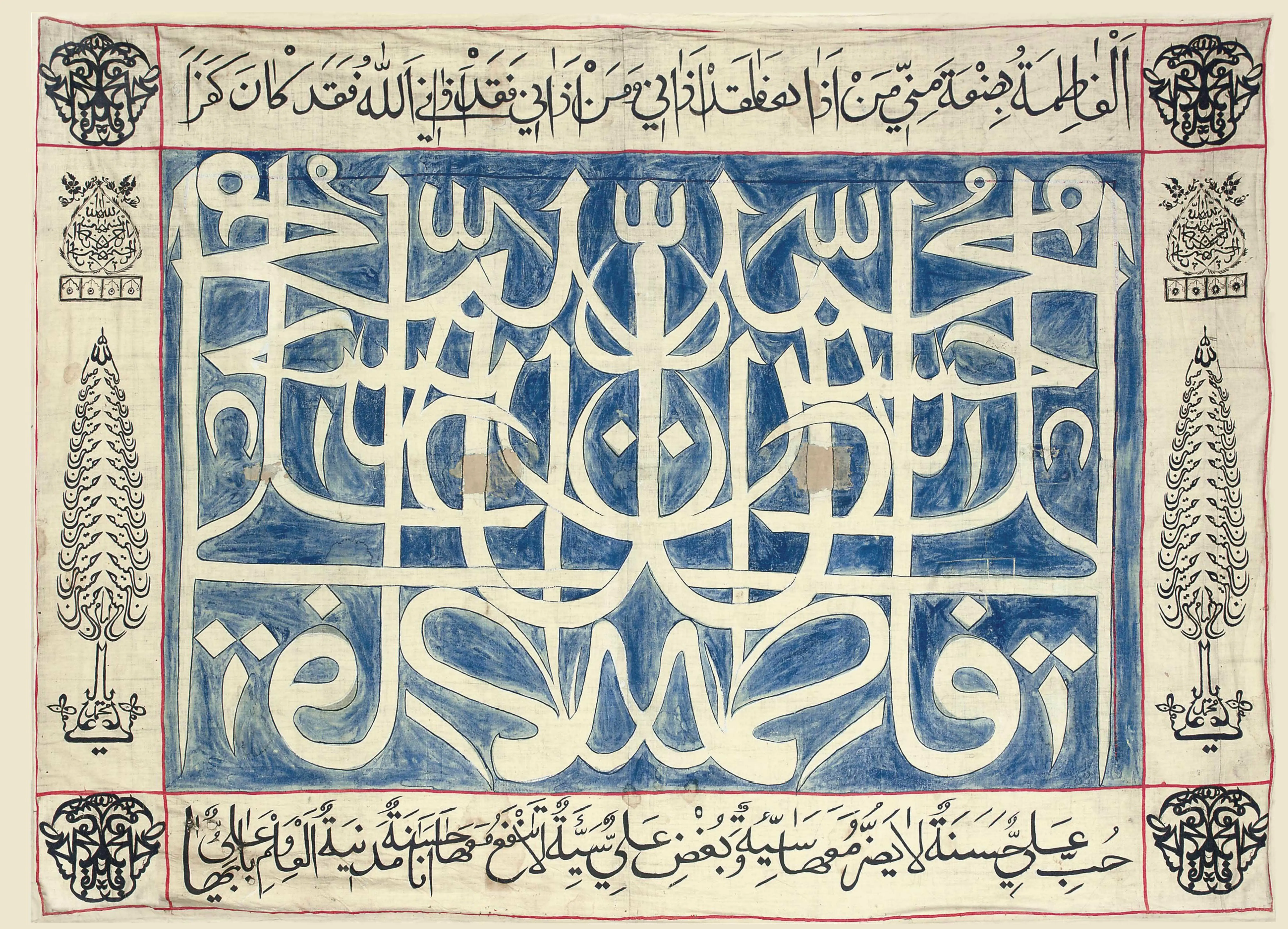
Al-Hasan ibn Ali ibn Abi Talib (625-670 CE / 3-50 AH) was the eldest grandson of Prophet Muhammad, the son of Ali ibn Abi Talib and Fatimah bint Muhammad. He is one of the most significant figures in early Islamic history, revered across Islamic traditions for his lineage, his character, and the circumstances of his brief caliphate. His negotiated settlement with Muawiyah ibn Abi Sufyan in 661 CE, which ended the first Islamic civil war, was one of the most consequential and most debated decisions of the early Islamic period.
Family and Lineage
Birth and the Prophet's Joy
Hasan was born in Medina in 625 CE (Ramadan 3 AH), approximately fifteen months after the Hijra. He was the first child born to Ali ibn Abi Talib and Fatimah bint Muhammad, and thus the first grandchild of Prophet Muhammad ﷺ. The Prophet's joy at Hasan's birth was profound and visible to the community. He personally performed the aqiqah (sacrifice on the occasion of birth), named the child — choosing the name "Hasan" (meaning "beautiful" or "good"), a name that had not been common among the Arabs before — and recited the adhan (call to prayer) in the newborn's ear.
The naming was itself significant: in pre-Islamic Arab society, children were typically given names by their fathers. The Prophet's personal naming of his grandson, overriding the paternal prerogative, indicated the special relationship between grandfather and grandchild. Ali had initially considered other names — in some accounts, he wished to name the child Harb (war) — but submitted to the Prophet's choice. A similar pattern followed with the birth of Hussain approximately a year later.
The Prophet's Affection
The Prophet's love for Hasan and Hussain is among the most extensively documented aspects of his personal life, attested in numerous hadith preserved across all the major collections. The traditions paint a picture of a grandfather who was physically demonstrative in his affection, who interrupted the most solemn occasions to attend to his grandsons, and who expressed his love for them in terms that carried spiritual as well as personal significance.
Among the well-known traditions: the Prophet would carry Hasan on his shoulders during public gatherings; he would prolong his prostration in prayer when Hasan climbed on his back, not rising until the child descended of his own accord; he declared "Al-Hasan and al-Husayn are the masters of the youth of Paradise" (Jami' at-Tirmidhi 3768 — this report is not in Sahih al-Bukhari, to which it is often misattributed); he said "He who loves them loves me, and he who hates them hates me" (Sunan Ibn Majah); and he would kiss them and hold them in his lap, prompting a visiting Bedouin to remark in surprise that he had ten children and had never kissed one of them, to which the Prophet replied: "What can I do for one from whose heart God has removed mercy?"
Most significantly for the subsequent history, the Prophet is reported to have said specifically of Hasan: "This son of mine is a master (sayyid), and Allah will make peace through him between two great factions of Muslims" (Sahih al-Bukhari, Hadith 2704). This prophecy — that Hasan would be a peacemaker who would reconcile two great groups of Muslims — became the lens through which Sunni tradition understood the Treaty of Hasan and Muawiyah: not as a surrender but as the fulfillment of a prophetic promise.
The Ahl al-Bayt
Hasan and his family are referred to in Islamic tradition as the Ahl al-Bayt — the People of the House — a term that carries immense theological weight across all Islamic traditions. The Quranic verse known as the Verse of Purification (33:33) — "Allah only intends to remove from you the impurity, O People of the House, and to purify you with a thorough purification" — is understood by many scholars, particularly in the Shia tradition, to refer specifically to the Prophet, Ali, Fatimah, Hasan, and Hussain. The Hadith of the Cloak (hadith al-kisa), transmitted in Sahih Muslim, records that the Prophet gathered these under his cloak and declared them the Ahl al-Bayt. The verses immediately surrounding 33:33 are addressed to the Prophet's wives, and the scope of the term in the verse has accordingly been discussed at length by the exegetes, some including the wives and some confining it to those named in the hadith.
This designation placed Hasan within a family unit that the Islamic tradition regards with special reverence — a household purified by divine will and invested with spiritual authority. For Shia Muslims, this purification and the associated prophetic traditions establish the Ahl al-Bayt as the rightful spiritual and political leaders of the Muslim community. For Sunni Muslims, the Ahl al-Bayt are honored and loved without the specific claim of political leadership, but with a recognition of their unique spiritual status.
Childhood and Early Life
Growing Up in the Prophet's Household
Hasan spent the first seven years of his life in intimate proximity to his grandfather. The Prophet's mosque in Medina was the center of the community's life, and the chambers of his wives — including Fatimah's modest home nearby — opened onto its courtyard. Hasan grew up in this environment of constant worship, community gathering, and prophetic instruction. He witnessed the major events of the Medinan period from childhood: the aftermath of the battles, the arrival of delegations, the revelation of the Quran, and the daily conduct of the Prophet's life.
The Prophet's death in 632 CE (11 AH) came when Hasan was approximately seven years old — old enough to have formed lasting memories of his grandfather, to have absorbed something of his character and manner, and to carry forward the personal connection that would give his later testimony about the Prophet's life its special weight. The loss was compounded for the family by the death of Hasan's mother Fatimah, who survived the Prophet by only six months, dying of grief and illness in the same year.
The Years Under the Early Caliphs
The period of the first three caliphs — Abu Bakr (632-634 CE), Umar ibn al-Khattab (634-644 CE), and Uthman ibn Affan (644-656 CE) — constituted Hasan's formative years, spanning his childhood and young adulthood. During these twenty-four years, Hasan and his family lived in Medina, respected for their lineage but largely excluded from political power. Ali did not hold the caliphate, though he served as an advisor and was consulted on legal and religious matters.
Hasan received his education from the most authoritative sources available: his father Ali, who was among the most learned of the companions in Quranic exegesis, legal reasoning, and prophetic tradition; the senior companions who remained in Medina; and the general environment of the Prophet's city, where the memory of the Prophet was still fresh and the traditions of his practice were part of daily life.
During Umar's caliphate, Hasan and Hussain were included in the diwan (the register of stipends) and received generous allocations — equal to those given to the veterans of Badr, the highest category. This reflected Umar's recognition of their special status as the Prophet's grandsons, regardless of the political tensions between the Alid family and the caliphal establishment.
Character and Reputation
As Hasan grew to adulthood, he developed a reputation for qualities that set him apart: extraordinary generosity (he reportedly gave away half his wealth on three separate occasions, each time distributing it to the poor), physical resemblance to the Prophet (the traditions consistently note that Hasan, more than Hussain, resembled his grandfather in appearance), eloquence in speech, forbearance in the face of provocation, and a disposition toward peace and reconciliation rather than confrontation.
His generosity became legendary. The sources record that he would give away everything he possessed to those who asked, that he would host vast numbers of guests, and that he treated wealth as a means of service rather than as an end in itself. On one occasion, he is said to have heard a man praying to God for ten thousand dirhams; Hasan sent him the entire sum. This pattern of unlimited generosity, reminiscent of the Prophet's own practice, established Hasan's moral authority in the community and made him beloved among the poor.
Physical Appearance and Resemblance to the Prophet
The hadith literature consistently notes that Hasan bore a striking physical resemblance to his grandfather. Abu Bakr is reported to have said, looking at Hasan: "He resembles the Prophet, not Ali" — and Ali would smile in agreement. The companion Anas ibn Malik confirmed: "No one resembled the Prophet more than al-Hasan ibn Ali." This resemblance carried significance beyond the merely physical: in a community that revered the Prophet and sought connection to him, the grandson who looked like him was a living reminder of the beloved Messenger.
The sources describe Hasan as having a fair complexion, a broad face, and a dignified bearing. He inherited from his grandfather a presence that commanded respect without intimidation — a quality of authority grounded in character rather than force. When he spoke in public, his eloquence matched his appearance: he was among the most articulate men of his generation, capable of impromptu speeches that were later preserved and studied as examples of Arabic rhetoric.
Marriages and Family Life
Hasan ibn Ali was known for marrying many times — a fact that the sources record without censure but that has attracted comment from both sympathetic and hostile biographers. The classical sources record varying numbers of marriages, with some claiming he married and divorced frequently. Ali is reported to have said publicly: "Do not give your daughters in marriage to Hasan, for he is a man who divorces frequently" — though other versions present this as a protective statement rather than a criticism.
Modern historians have noted that the reports of Hasan's numerous marriages may be exaggerated by hostile sources (particularly Umayyad-era writers who wished to diminish his reputation), or alternatively that they reflect the social norms of Arabian aristocracy in which multiple marriages — sequential or simultaneous — were normal for men of high status. What is certain is that Hasan had numerous children through various wives, and his descendants (Hasanids) became one of the largest and most widely dispersed branches of the Prophet's family.
Among his known wives were Khawla bint Manzur al-Fazariyya, Ja'da bint al-Ash'ath (the one accused of poisoning him), Umm Ishaq bint Talha ibn Ubaydullah, and several others. His children included Hasan al-Muthanna, Zayd, Qasim, and others whose descendants carried the Hasanid lineage across the Islamic world.
Eloquence and Sermons
Hasan was celebrated for his eloquence — a quality he shared with his father Ali, whose sermons and sayings were later collected in the famous Nahj al-Balagha. Hasan's own speeches, particularly those delivered during his brief caliphate and in the aftermath of the treaty, were preserved by the traditionists and display a command of Arabic rhetoric, a depth of Quranic knowledge, and a moral clarity that earned respect even from his opponents.
His sermon after the treaty, addressed to the people of Kufa, is particularly notable. He defended his decision by arguing that war is justified only when it serves a legitimate purpose, that pointless bloodshed is a sin rather than a virtue, and that the preservation of Muslim lives takes priority over the satisfaction of factional ambitions. He reminded them of the Prophet's prophecy about his role as a peacemaker and declared that he had chosen to fulfill that prophecy rather than pursue a war that would benefit no one.
Another famous statement attributed to Hasan encapsulates his philosophy: "I chose what God chose for me over what you chose for yourselves." This assertion — that his decision was divinely guided rather than merely politically expedient — placed the treaty within a theological framework that elevated it above ordinary political calculation.
Hadith Narration
Hasan was a narrator of hadith from the Prophet, though his corpus was modest compared to the most prolific narrators. His narrations carried particular authority because of his childhood intimacy with the Prophet and his position as a member of the Ahl al-Bayt. Among the traditions he transmitted were the Prophet's personal supplications (du'a), his advice on matters of character and conduct, and his words regarding the family.
One of the most famous hadith transmitted through Hasan concerns the Prophet's advice on piety and doubt: "Leave that which causes you doubt for that which does not cause you doubt, for truth is tranquility and falsehood is doubt" (Jami’ at-Tirmidhi 2518, graded sahih). This tradition, widely cited in Islamic ethics, came through Hasan's direct narration from his grandfather and became a foundational text for the Islamic approach to moral decision-making.
Hasan also transmitted traditions concerning proper conduct, the etiquette of supplication, and the Prophet's manner of greeting and interacting with people. These narrations, while fewer in number than those transmitted by companions who spent more adult years with the Prophet, were valued for the intimacy of the family relationship that produced them.
The Caliphate of Ali and the Civil War
Ali's Accession and the First Fitna
When Ali ibn Abi Talib became the fourth caliph in 656 CE, following the assassination of Uthman ibn Affan by rebels who had besieged his house in Medina, Hasan was approximately thirty-one years old — a mature man of established reputation who stood firmly with his father. Ali's caliphate, however, was immediately contested. Muawiyah ibn Abi Sufyan, the powerful governor of Syria and Uthman's kinsman, refused to pledge allegiance until Uthman's killers were punished. Other senior companions — including Talha ibn Ubaydullah, Zubayr ibn al-Awwam, and Aisha bint Abu Bakr — raised an army and marched toward Basra, demanding justice for Uthman.
The first major civil war in Islamic history — the First Fitna — had begun, and it would consume the remaining five years of Ali's life and dominate the first months of Hasan's caliphate.
Hasan at the Battle of the Camel
Hasan participated in the Battle of the Camel (656 CE), in which Ali's forces confronted the army of Talha, Zubayr, and Aisha near Basra. This was a painful battle for the entire community — Muslims fighting Muslims, companions facing companions — and Hasan's presence on his father's side placed him squarely within the factional conflicts that would define the remainder of his public life. The battle ended in Ali's favor, with Talha killed and Zubayr assassinated while withdrawing, and Aisha returned to Medina with honor.
Hasan at the Battle of Siffin
The following year, Hasan was with his father at the Battle of Siffin (657 CE), the prolonged confrontation between Ali's forces and Muawiyah's Syrian army along the Euphrates. The battle was fought intermittently over several months, with periods of negotiation interspersed with fighting. When the Syrian troops raised copies of the Quran on their lances — calling for arbitration by the Book of God — Ali was pressured by a faction of his own army to accept arbitration, despite his and Hasan's belief that this was a stratagem.
The inconclusive arbitration that followed weakened Ali's position and emboldened Muawiyah's claim. More immediately, it produced the Kharijite movement — those who rejected both Ali and Muawiyah and who would eventually assassinate Ali. Hasan witnessed the gradual erosion of his father's political position during these years, and the experience shaped his own later calculation that continued fighting would bring more harm than good.
Ali's Assassination and Hasan's Accession
On 28 January 661 CE (19 Ramadan, 40 AH), Ali ibn Abi Talib was struck with a poisoned sword by Abd al-Rahman ibn Muljam, a Kharijite, while leading the dawn prayer in the mosque of Kufa. Ali died two days later from the wound, and the people of Kufa immediately turned to Hasan as his natural successor. Approximately forty thousand people pledged allegiance to Hasan as the new caliph — the fifth Rashidun caliph in Sunni reckoning, the second Imam in Shia tradition.
Hasan's accession was based on his lineage (grandson of the Prophet, son of the previous caliph), his personal qualities (widely respected for piety and wisdom), and the political reality that the Kufan base of support needed a leader from the Alid family to maintain cohesion. Yet from the very first days, Hasan faced a situation that made his caliphate precarious: Muawiyah controlled Syria, Egypt, and much of the empire's revenue; the Kufan army was demoralized after years of inconclusive fighting; and the political will for continued civil war was exhausted.
The Brief Caliphate and the Treaty
The Military Situation
Hasan's caliphate lasted approximately six to seven months (some sources say up to eight). During this period, he attempted to organize his forces for a potential confrontation with Muawiyah, who was already marching north from Syria with a fresh and disciplined army. But the military situation was dire. The Kufan troops, who had failed Ali repeatedly — refusing orders, fragmenting into factions, and providing unreliable support — proved no more dependable for his son.
When Hasan dispatched an advance force of 12,000 under Ubaydullah ibn Abbas (or, in some accounts, Qays ibn Sa'd) to confront Muawiyah's advance, a significant portion of the force defected to Muawiyah's side after receiving financial inducements. This mass defection demonstrated to Hasan the hopelessness of his military position: he could not trust his own army, and fighting with unreliable troops would lead not to victory but to unnecessary Muslim bloodshed.
The Assassination Attempt
Adding to the crisis, Hasan himself was attacked — a Kharijite sympathizer stabbed him in the thigh while he was traveling, inflicting a serious wound that required treatment and recovery. This attack, which some sources describe as an assassination attempt arranged by those who wished to prevent peace, demonstrated that Hasan's own life was in danger even from nominal supporters. The wound, while not fatal, weakened him physically and reinforced his conviction that the situation was untenable.
The Decision to Negotiate
Hasan's decision to negotiate with Muawiyah rather than fight was motivated by a clear-eyed assessment of the situation: his army was unreliable and fragmenting; Muawiyah's forces were disciplined and well-resourced; continued fighting would result in massive Muslim casualties without a realistic prospect of victory; and the community was exhausted by five years of civil war and desperate for peace.
The decision also reflected Hasan's character — his orientation toward reconciliation rather than confrontation, his prioritization of communal welfare over personal power, and the prophetic tradition that described him as a peacemaker. Whether one interprets his decision as courageous pragmatism (sacrificing personal ambition for the greater good) or as a failure of nerve (surrendering a legitimate claim under pressure), it is clear that Hasan made his choice deliberately and with full awareness of its consequences.
Hasan reportedly told those who criticized him: "By God, I did not submit this matter to Muawiyah except because I could not find supporters. Had I found supporters, I would have fought him day and night until God judged between us. But I knew the people of Kufa and their ways — they have been corrupted, and none of them can be trusted." This statement — blaming the Kufans rather than accepting any personal failure — placed responsibility for the outcome squarely on the unreliability of the Iraqi support base.
The Negotiation Process
The negotiations between Hasan and Muawiyah were conducted through envoys over a period of weeks. Hasan sent Abdullah ibn al-Harith to Muawiyah with his initial conditions; Muawiyah responded with counter-proposals; and the terms were refined through multiple exchanges. The process was not a simple surrender but a genuine negotiation in which Hasan secured significant concessions — particularly the amnesty for his supporters, the financial provisions for his family, and the commitment (however ultimately violated) that Muawiyah would not designate a successor.
Muawiyah, for his part, was willing to offer generous terms because a negotiated settlement served his interests better than a military victory that might produce ongoing resistance. A defeated Hasan would be a potential rallying point for future rebellion; a Hasan who had voluntarily transferred authority was a legitimizer of Muawiyah's rule. The treaty thus served both parties' interests — Hasan secured peace and protection; Muawiyah secured legitimacy and stability.
The Terms of the Treaty
The Treaty of Hasan and Muawiyah, concluded in 661 CE (41 AH), transferred political authority from Hasan to Muawiyah on specific conditions. The sources report the terms with some variation, but the following are generally agreed upon:
- Abdication: Hasan would relinquish the caliphate to Muawiyah
- Succession: Muawiyah would not designate a successor; after his death, the matter would return to consultation (shura) — or, in some accounts, would revert to Hasan himself
- Amnesty: Muawiyah would grant complete amnesty to all of Hasan's supporters and would not persecute anyone for their role in the civil war
- Governance: Muawiyah would govern according to the Quran and the Sunnah of the Prophet
- Financial provision: Hasan would receive the revenue of a specific region (variously reported) and/or a lump sum from the treasury
- Safety of the Ahl al-Bayt: The Prophet's family would not be cursed from the pulpits (a practice some Umayyad governors had introduced) and would be protected from harm
The treaty effectively ended the First Fitna and established the Umayyad Caliphate — the first hereditary dynasty in Islamic history. Its terms would later be violated by Muawiyah (who designated his son Yazid as successor, contrary to the agreement) — a violation that led directly to the tragedy of Karbala and Imam Hussain's martyrdom.
Reactions to the Treaty
The treaty was received very differently by different groups. Many of Hasan's Kufan supporters were furious, feeling betrayed. Some reportedly called him "the shame of the believers" — a remark that wounded Hasan but did not shake his conviction that peace was better than pointless bloodshed. Others, including his brother Hussain, reportedly disagreed with the decision but submitted to Hasan's authority as the head of the family.
Muawiyah, for his part, entered Kufa triumphantly and delivered a famous sermon in which he declared: "I did not fight you to make you pray, fast, perform pilgrimage, or give charity — you already do all these. I fought you to rule over you, and God has given me that." This frank admission that the war had been about political power rather than religion was noted by the historians and used by subsequent generations as evidence of the Umayyad dynasty's worldly motivations.
For the broader Muslim community, the treaty brought relief. After five years of civil war, the fighting was over. The community could return to the business of governance, commerce, and the spread of Islam. Whatever the legitimacy of the competing claims, peace was welcomed — and the Prophet's prediction that Hasan would be a peacemaker between two great factions was seen as fulfilled.
Life in Medina After the Treaty
Return to the Prophet's City
After the treaty, Hasan left Kufa — the city that had failed his father and himself — and returned to Medina, the city of his birth and of his grandfather. This return was both a personal choice and a political statement: by withdrawing from the Iraqi power center to the Prophet's city, Hasan signaled his disengagement from active politics while maintaining his moral and religious authority. In Medina, he was near the Prophet's grave, near the companions who remembered the founding era, and in the environment where his family's honor was most deeply rooted.
Religious Teaching and Scholarship
In Medina, Hasan devoted himself to religious teaching, the transmission of hadith, and the spiritual guidance of those who came to him. He was recognized as one of the foremost religious authorities of his generation — not only because of his lineage but because of his genuine learning, his eloquence, and his personal piety. Students came to him from across the Muslim world to learn the traditions of the Prophet, the interpretation of the Quran, and the principles of Islamic conduct. His narrations from the Prophet, transmitted through his father Ali and from his own childhood memories of his grandfather, were valued for their authenticity and their intimacy.
Among the traditions Hasan transmitted was a famous one concerning the Prophet's personal supplications, his manner of greeting, his conduct in the home, and his advice on matters of character and conduct. These narrations provided the community with a window into the Prophet's private life that only a family member could offer.
Hasan's religious authority also manifested in his role as a legal consultant. People brought their disputes and questions to him, seeking his judgment on matters of Islamic law and practice. His opinions, grounded in the example of the Prophet as he had witnessed it and in the teachings of his father, carried weight that few other scholars of his generation could match. He was, in effect, a living encyclopedia of prophetic practice — a man who had seen the Prophet, remembered him, and could testify from personal knowledge about his conduct.
Pilgrimage and Worship
The sources record that Hasan performed the Hajj pilgrimage on foot twenty-five times — walking from Medina to Mecca while his riding camels were led alongside him. This practice of walking the pilgrimage route (approximately 450 kilometers each way) was understood as an act of extraordinary devotion and humility — a man who could afford the finest transport chose instead to walk in the manner of the poorest pilgrims. The number twenty-five (preserved in multiple sources) indicates that Hasan made this demanding journey virtually every year of his adult life.
His worship more generally was characterized by intensity and consistency. He was regular in the night prayer (tahajjud), devoted to fasting (maintaining voluntary fasts beyond Ramadan), and meticulous in his adherence to the Sunnah of the Prophet in all matters of daily practice. His household was known as a place of worship and learning rather than of luxury, despite the financial resources available to him.
Extraordinary Generosity
Hasan's generosity in Medina became proverbial. The sources record that he gave away his entire wealth on at least three separate occasions, each time distributing everything he owned to the poor and starting over. On two occasions, he gave away half his possessions — shoes from his feet, the sandals from one foot and the other given to a beggar. His table was open to any who came, and his household fed the hungry without distinction.
Specific episodes of his generosity are recorded in the biographical literature. On one occasion, a slave girl presented him with a bouquet of flowers; he freed her immediately, saying: "I am ashamed before God to accept a gift from a human being without giving a greater one in return." When a Bedouin came to him in need, Hasan gave him fifty thousand dirhams and five hundred dinars, and apologized that this was all he had at hand. When he overheard a man asking God for ten thousand dirhams, he sent the man the entire amount without being asked.
His charity was not limited to money. He twice shared his property equally with the poor — giving away exactly half of everything he owned, down to splitting individual pairs of shoes between himself and a beggar. The biographical tradition uses a specific phrase to describe this: "He halved his wealth for God three times" (qasama malahu ma'a Allah thalathat marrat), indicating that these were not spontaneous one-time acts but a repeated pattern of systematic generosity.
This pattern earned him the title karim Ahl al-Bayt — the generous one of the Prophet's household — and it became a reference point for later Islamic ethical teaching on the virtue of giving. His approach to wealth — earning it through his stipend and other legitimate means, then distributing it immediately — reflected a deep conviction that property was a trust from God rather than a personal possession.
Forbearance and Moral Strength
Alongside his generosity, Hasan was renowned for his hilm — forbearance, clemency, the refusal to respond to provocation with aggression. The sources record numerous incidents in which he was insulted, challenged, or provoked by political opponents, and in each case responded with dignity and self-control rather than anger.
On one famous occasion, a Syrian man (a supporter of Muawiyah) encountered Hasan and began cursing him and his father Ali. Hasan listened in silence until the man finished, then smiled and said: "You are a stranger here, and you may have been misinformed about us. If you have a need, we will meet it. If you are hungry, we will feed you. If you need guidance, we will guide you." The man was so overcome by this response that he burst into tears and declared: "God knows best where to place His message. Yesterday you and your father were the most hated of people to me; today you are the most beloved."
This pattern of responding to hatred with kindness, to insult with generosity, was understood by the community as the inheritance of the Prophet's character — for the Prophet himself had taught that the strong man is not the one who wrestles, but the one who controls himself in anger.
Relationship with Muawiyah
Hasan's relationship with Muawiyah during the years after the treaty was characterized by mutual wariness. Muawiyah was aware of Hasan's moral authority and the danger that the Prophet's grandson, if he chose to reassert a political claim, could destabilize the Umayyad state. He therefore maintained a combination of financial generosity toward Hasan (fulfilling the treaty's financial provisions) and political surveillance.
Muawiyah reportedly sent provocative messages to Hasan on occasion, testing his patience and attempting to draw him into statements that could be used against him. Hasan responded with dignity and forbearance, neither giving cause for confrontation nor accepting humiliation. Their exchanges, preserved in the literary tradition, display Hasan's characteristic eloquence and self-possession — he maintained his family's honor verbally while holding to his commitment to peace in practice.
On one celebrated occasion, Muawiyah wrote to Hasan attempting to diminish him, and Hasan replied with a letter that the literary tradition has preserved as a masterpiece of restrained but devastating rhetoric — acknowledging the political reality without conceding moral inferiority, and reminding Muawiyah that legitimacy rests on virtue rather than power. These exchanges entered the Arabic literary tradition as examples of adab (polished discourse) and of the contrast between worldly authority and moral authority.
Muawiyah's Violation of the Treaty
The most serious tension arose when Muawiyah began the process of designating his son Yazid as his successor — a direct violation of the treaty's provision that succession would be determined by consultation after Muawiyah's death, or (in some accounts) that authority would revert to Hasan himself. This decision, taken gradually through a campaign of pressure and inducement directed at provincial governors and tribal leaders, transformed the caliphate from an institution based on consultation or merit into a hereditary monarchy.
Hasan reportedly protested this breach, and the sources record exchanges between the two men on the subject. Muawiyah's response was to accelerate the process while Hasan was still alive — some historians suggest this was precisely because he feared that after Hasan's death, the moral authority of the treaty's terms would be more difficult to ignore. The designation of Yazid, completed before Hasan's death according to some timelines and immediately after according to others, was the single most consequential violation of the treaty and the proximate cause of the crisis that would produce Karbala a decade later.
For the partisans of the Ahl al-Bayt, this violation proved what they had always suspected: that Muawiyah had never intended to honor the treaty's terms, and that the settlement was merely a tactic to consolidate power before establishing dynastic rule. For those who had supported the treaty as a genuine path to peace, the violation was a betrayal — not of Hasan alone but of the entire community that had accepted the settlement in good faith.
Death and Its Circumstances
The Question of Poisoning
Hasan died in Medina in 670 CE (50 AH) at approximately forty-five years of age. The circumstances of his death are among the most contested facts of early Islamic history. The majority of the sources — particularly those sympathetic to the Ahl al-Bayt — record that he was poisoned, with his wife Ja'da bint al-Ash'ath identified as the agent who administered the poison at the instigation of Muawiyah.
According to these accounts, Muawiyah promised Ja'da a large sum of money and marriage to his son Yazid if she poisoned Hasan. She administered the poison (some sources say in food, others in drink), and Hasan fell ill, suffering internal hemorrhaging. He lingered for some time — the sources record him vomiting blood and telling his brother Hussain that he had been poisoned multiple times but that this time it was fatal. Some accounts add that Hasan told Hussain who was responsible but forbade him from seeking revenge, saying: "If it is the one I suspect, God will take vengeance; if it is not, I would not wish an innocent person to be killed on my account."
The historicity of the poisoning is debated by modern scholars. Some accept the tradition as reliable, noting that Muawiyah had clear political motivation (Hasan's death removed the most obvious alternative to his dynastic plans) and that the multiplicity of sources reporting the poisoning gives it credibility. Others are more cautious, noting that attribution of poisoning to political rivals is a common trope in medieval historiography and that the specific identification of Ja'da as the agent may reflect later political narratives rather than historical fact. What is not disputed is that Hasan died relatively young and that his death was convenient for Muawiyah's dynastic ambitions.
Burial and the Controversy
Hasan's death was deeply mourned by the people of Medina. His brother Hussain wished to bury him beside the Prophet in the Prophet's mosque — a request that reflected both filial love and the family's conviction of their right to this honor. However, the burial was prevented by Marwan ibn al-Hakam, the Umayyad governor of Medina (and a future caliph himself), who argued that Uthman had not been buried there and that Hasan should not receive an honor denied to a previous caliph.
The confrontation nearly led to violence, with armed men on both sides, but Hasan himself had reportedly instructed before his death that if burial beside the Prophet was prevented, there should be no fighting over it — he should simply be buried in al-Baqi. Hussain, honoring his brother's wishes, backed down, and Hasan was buried in the Baqi cemetery, where his mother Fatimah and other family members already lay.
This burial dispute became a point of lasting grievance for the partisans of the Ahl al-Bayt, who saw in Marwan's obstruction yet another instance of Umayyad hostility toward the Prophet's family. The incident demonstrated that even in death, the political tensions of the early community pursued the members of the Prophet's household.
Significance in Islamic History
The Sunni Perspective
In Sunni Islam, Hasan is deeply revered as the grandson of the Prophet, as one of the "masters of the youth of Paradise," and as the fulfillment of the Prophet's prophecy about the peacemaker who would reconcile two great factions. His treaty with Muawiyah is interpreted positively — as an act of statesmanship and self-sacrifice that prioritized the community's welfare over personal power. The hadith in which the Prophet specifically predicted that "through him God will make peace between two great factions of Muslims" gives the treaty divine endorsement in Sunni understanding.
Hasan is counted as the fifth and final Rashidun caliph in some Sunni reckonings, completing the era of the rightly guided caliphs before the transition to Umayyad dynastic rule. His caliphate, though brief, is seen as legitimate, and his decision to abdicate is viewed not as weakness but as wisdom — the recognition that the greater good sometimes requires the sacrifice of the lesser.
The Shia Perspective
In Shia Islam, Hasan occupies the position of the second Imam — the second in the line of divinely guided leaders who hold spiritual and temporal authority over the Muslim community by divine right. His treaty with Muawiyah is understood not as a voluntary abdication but as a forced concession made under impossible conditions — betrayal by his own army, assassination attempts, and the realistic threat of annihilation. In Shia understanding, Hasan never relinquished his legitimate right to lead; he merely suspended its exercise in the face of circumstances that made it impractical.
The subsequent violation of the treaty's terms by Muawiyah (particularly the designation of Yazid as successor) is central to the Shia narrative: it proves that the Umayyads never intended to honor their commitments, and it sets the stage for the ultimate tragedy of Karbala, where Husayn would refuse to make the same accommodation that his brother had made.
The Prophet's Prophecy Fulfilled
Across both traditions, the connection between Hasan's actions and the Prophet's prediction is acknowledged. The hadith stating that "this son of mine is a master, and God will make peace through him between two great factions" is considered sahih (authentic) and is preserved in al-Bukhari. The two "great factions" are universally identified as the forces of Hasan (representing Ali's partisans) and the forces of Muawiyah (representing Syria and the Umayyad interest). The fulfillment of this prophecy gives Hasan's decision a theological dimension that transcends ordinary political calculation: it was not merely pragmatic wisdom but the enactment of a divine plan foretold by the Prophet himself.
Legacy
The Peacemaker and the Prince
Hasan ibn Ali occupies a distinctive place in Islamic history and memory. He was a man of distinguished lineage who lived through the most turbulent period of early Islamic history — the transition from the Prophetic era to the caliphate, the first civil war, the establishment of the Umayyad dynasty — and who made a decision at the most critical moment of his life that shaped the subsequent history of the Islamic world.
His legacy is irreducibly complex. To some he is the noble peacemaker who sacrificed personal power for communal welfare, fulfilling a prophetic prediction and demonstrating that Islam values peace above political ambition. To others he is the wronged Imam whose legitimate authority was usurped by force and treachery, and who accepted a flawed settlement only because the alternative was worse. Both perspectives acknowledge his sincerity, his piety, and his genuine concern for the Muslim community; they differ on how to evaluate the political outcome.
Hasan's Descendants
Hasan's descendants (known as Hasanids or sharifs) went on to play significant roles in Islamic history. Through his numerous children — the sources record many sons and daughters — Hasan established lineages that produced rulers, scholars, and religious leaders across the Muslim world. The Hasanid sharifs ruled in various regions, including the Hejaz (where the Sharifs of Mecca held power for centuries), Morocco (where the current royal family claims Hasanid descent), and parts of the Levant and North Africa.
The proliferation of Hasan's descendants across the Islamic world ensured that his memory remained alive and politically relevant long after his death. The Prophet's family, through both Hasan and Hussain, became a vast kinship network whose members claimed — and were often granted — special honor, exemption from certain taxes, and moral authority based on their descent from the Prophet's household.
The Contrast with Hussain
The lives of Hasan and Hussain present a profound contrast that the Islamic tradition has reflected upon for fourteen centuries. Both were grandsons of the Prophet, both faced the challenge of Umayyad power, both asserted the rights of their family. But they responded differently: Hasan chose peace and accommodation; Hussain chose resistance and martyrdom. Neither response was wrong in its context — Hasan faced an army he could not trust and a community exhausted by war; Hussain faced a demand for allegiance to a ruler he considered unfit and a community that had invited him to lead them.
The Islamic tradition honors both responses: Hasan as the peacemaker, Hussain as the martyr. Together they represent the full range of righteous responses to unjust power — accommodation when accommodation serves the greater good, and resistance when resistance is the only option that preserves one's integrity. The tragedy is that both responses ultimately failed to prevent the Umayyad consolidation of hereditary rule — the very outcome both brothers sought to avoid.
Questions for Islamic Political Thought
Hasan's treaty raises questions that Islamic political thought has engaged with ever since: Under what circumstances is it legitimate to surrender a rightful claim for the sake of peace? When does pragmatism become betrayal? What are the obligations of a legitimate leader toward followers who are unreliable? How should the community balance its desire for peace against its commitment to justice?
These questions do not yield simple answers, and the most careful treatments of Hasan's decision — whether in classical Islamic scholarship or modern academic analysis — have recognized their complexity. What remains clear is that Hasan made his choice with genuine conviction, that he bore its consequences with dignity, and that the Muslim community has continued to debate its meaning precisely because it touches on matters of permanent importance.
Historiographical Note
Classical Sources and Their Perspectives
The life of Imam Hasan is recorded in all the major classical sources: al-Tabari's Tarikh, al-Baladhuri's Ansab al-Ashraf, al-Dhahabi's Siyar A'lam al-Nubala, Ibn Sa'd's Tabaqat, and the various biographical dictionaries. The challenge for historians is that these sources reflect the sectarian positions of their authors and their eras. Pro-Alid sources (particularly those used by Shia scholars) emphasize Hasan's virtues, the treachery of Muawiyah, and the poisoning narrative. Pro-Umayyad sources (particularly those from Syrian scholarly traditions) tend to minimize Hasan's political significance and present the treaty as a recognition of Muawiyah's superior qualifications.
Al-Tabari, characteristically, presents multiple accounts from different perspectives without always adjudicating between them, leaving the reader to weigh the evidence. Ibn Sa'd provides biographical detail but within a framework that acknowledges the Sunni caliphal tradition. Al-Dhahabi, writing later, synthesizes earlier accounts with explicit evaluations of narrator reliability.
Modern Academic Treatments
Modern scholars have provided more analytical treatments. Wilferd Madelung's The Succession to Muhammad (1997) is the most detailed English-language study of the early succession conflicts, giving extensive attention to Hasan's caliphate and the treaty. Madelung tends to sympathize with the Alid claims and provides a critical reading of the sources that questions Umayyad-era narratives. Hugh Kennedy's The Prophet and the Age of the Caliphates (2004) situates Hasan within the broader political history of the early caliphate. S.H.M. Jafri's The Origins and Early Development of Shi'a Islam (1979) provides the Shia scholarly perspective with academic rigor.
The German scholar Laura Veccia Vaglieri's entry on Hasan in the Encyclopaedia of Islam remains a standard reference, providing a balanced assessment that acknowledges both the limitations of the sources and the historical significance of Hasan's decision. More recent scholarship has examined the treaty as an example of early Islamic political negotiation and has explored its implications for the development of Islamic theories of governance.
The Treaty as a Historical Turning Point
Historians consistently identify the Treaty of Hasan and Muawiyah as one of the pivotal moments of early Islamic history. It ended the first civil war, established the Umayyad dynasty, transformed the caliphate from a consultative institution into a hereditary one, and set the stage for the tragedy of Karbala that would permanently divide the Muslim community. Without the treaty, the early Islamic state might have continued in civil war, fragmenting into rival polities; alternatively, Ali's party might have prevailed or been decisively defeated. Either outcome would have produced a very different subsequent history.
The treaty also established a precedent — contentious but real — for the transfer of power through negotiation rather than warfare. Whatever one thinks of the outcome, the process itself (negotiation, specified terms, mutual obligations) represented a civilized alternative to the bloodshed that had preceded it and the bloodshed that would follow when Hussain refused to make the same accommodation a generation later.
Hasan in Islamic Spirituality
The Second Imam
In Shia Islam, Hasan is the second in the chain of twelve Imams (in Twelver Shi'ism) or of the Imams recognized by other Shia branches. His position as Imam is understood as a matter of divine appointment rather than political selection — God designated him, through the Prophet and through Ali, as the spiritual and temporal guide of the community. His treaty with Muawiyah does not diminish his Imamate; it merely represents a period in which the Imam's temporal authority was suspended while his spiritual authority continued uninterrupted.
In Shia devotional practice, Hasan is commemorated, honored in prayers and supplications, and invoked as an intercessor. His grave in al-Baqi (destroyed in 1925 by Wahhabi authorities who demolished the cemetery's structures) was for centuries a site of pilgrimage and prayer. The anniversary of his death is marked in Shia communities as an occasion for mourning and reflection.
The Master of the Youth of Paradise
Across all Islamic traditions, the Prophet's declaration that "Hasan and Hussain are the masters of the youth of Paradise" (sayyida shabab ahl al-janna) gives both grandsons an eschatological significance that transcends their political roles. In the next world, according to this hadith, Hasan and Hussain hold positions of leadership among the inhabitants of Paradise — a promise that guarantees their ultimate vindication regardless of the injustices they suffered in this world.
This eschatological dimension places Hasan's story within a framework larger than politics: whatever the worldly outcome of the treaty, whatever the manner of his death, his place in Paradise is secured by the Prophet's own word. For the community, this serves as a reminder that divine justice operates on a timeline larger than human history, and that the apparent triumph of the worldly over the righteous is never the final word.
References and Further Reading
Primary Islamic Sources
- Quran, Surah al-Ahzab (33:33) — the Verse of Purification referring to the Ahl al-Bayt, central to Hasan's religious significance
- Quran, Surah al-Shura (42:23) — "I ask of you no reward except love for my near relatives" — widely cited in relation to the Prophet's family
- Jami' at-Tirmidhi 3768 — "Al-Hasan and al-Husayn are the masters of the youth of Paradise," narrated from Abu Sa'id al-Khudri. This report is not in Sahih al-Bukhari, to which it is often misattributed
- Sahih al-Bukhari 3753 — the Prophet's description of Hasan and Husayn as "my two fragrant flowers from this world"
- Sahih al-Bukhari, Book of the Virtues of the Companions, Hadith 2704 — the Prophet's description of Hasan: "This son of mine is a master, and through him Allah will make peace between two great factions of Muslims" — the prophecy fulfilled by the Treaty of Hasan
- Sahih Muslim, Book of the Virtues of the Companions, Hadith 2422 — traditions on the Prophet's love for Hasan and Hussain
- Sunan al-Tirmidhi, Book of the Virtues of the Prophet's Family, Hadith 3782 — on Hasan's resemblance to the Prophet and his special status
Classical Islamic Sources
- Al-Tabari, Muhammad ibn Jarir. Tarikh al-Rusul wa al-Muluk (History), Vol. 18: Between Civil Wars. Translated by Michael Fishbein. Albany: State University of New York Press, 1992. [Original c. 915 CE]
- Al-Baladhuri, Ahmad ibn Yahya. Ansab al-Ashraf. Edited by Suhayl Zakkar and Riyadh Zarkali. Beirut: Dar al-Fikr, 1996. [Original c. 892 CE]
- Al-Dhahabi, Shams al-Din. Siyar A'lam al-Nubala. Edited by Shu'ayb al-Arna'ut. Mu'assasat al-Risala, 1981. [Original c. 1320 CE]
- Ibn Abd al-Barr, Abu Umar Yusuf. Al-Isti'ab fi Ma'rifat al-Ashab. Edited by Ali Muhammad al-Bajawi. Beirut: Dar al-Jil, 1992. [Original c. 1071 CE]
- Ibn al-Athir, Ali ibn Muhammad. Usd al-Ghaba fi Ma'rifat al-Sahaba. Beirut: Dar al-Fikr, 1989. [Original c. 1233 CE]
Academic and Scholarly Sources
- Madelung, Wilferd. The Succession to Muhammad: A Study of the Early Caliphate. Cambridge: Cambridge University Press, 1997.
- Kennedy, Hugh. The Prophet and the Age of the Caliphates. London: Longman, 2004.
- Jafri, S.H.M. The Origins and Early Development of Shi'a Islam. London: Longman, 1979.
- Levi Della Vida, Giorgio. "The 'Bronze Era' in Moslem Spain." Journal of the American Oriental Society 63, no. 3 (1943): 183–204.
- Sharon, Moshe. Black Banners from the East: The Establishment of the Abbasid State. Jerusalem: Magnes Press, 1983.
Further Reading
- Dixon, Abd al-Ameer Abd. The Umayyad Caliphate 65–86/684–705: A Political Study. London: Luzac, 1971.
- Hawting, G.R. The First Dynasty of Islam: The Umayyad Caliphate AD 661–750. London: Routledge, 2000.
- Lammens, Henri. Études sur le siècle des Omayyades. Beirut: Imprimerie Catholique, 1930.
Mentioned In
15 articles reference this topic
and 3 more articles
More from Prophetic Era
Al-Masjid al-Nabawi: The Prophet's Mosque
Al-Masjid al-Nabawi (the Prophet's Mosque) in Medina is the second holiest mosque in Islam. Founded by Prophet Muhammad in 622 CE after the Hijra, it served as the center of the early Muslim community and contains the Prophet's tomb beneath the Green Dome.
Battle of Hunayn
The Battle of Hunayn (630 CE) was fought a month after the conquest of Mecca between the Muslims and a coalition of the Hawazin and Thaqif tribes. A near-disastrous ambush was reversed into a decisive Muslim victory, followed by the siege of Ta'if and a generous distribution of captives and spoils.
Battle of Khandaq
The Battle of Khandaq (627 CE), also called the Battle of the Trench, was a twenty-seven-day siege of Medina by a coalition of some ten thousand Quraysh and allied tribes. On Salman al-Farsi's advice the Muslims dug a defensive trench, and the coalition withdrew without a decisive battle.
Battle of Uhud
The Battle of Uhud (March 625 CE) was the second major engagement between Medina's Muslims and the Meccan Quraysh. After an early Muslim advantage, archers left their posts, enabling a Qurayshi cavalry attack that wounded the Prophet, killed Hamza, and ended in a strategic draw.