Predestination (Qadar) in Islam
Predestination (Qadar) is the sixth article of Islamic faith, encompassing divine foreknowledge, the divine decree, and the relationship between God's sovereignty and human responsibility. It drove major early theological debates, producing the Ash'ari and Maturidi Sunni schools.
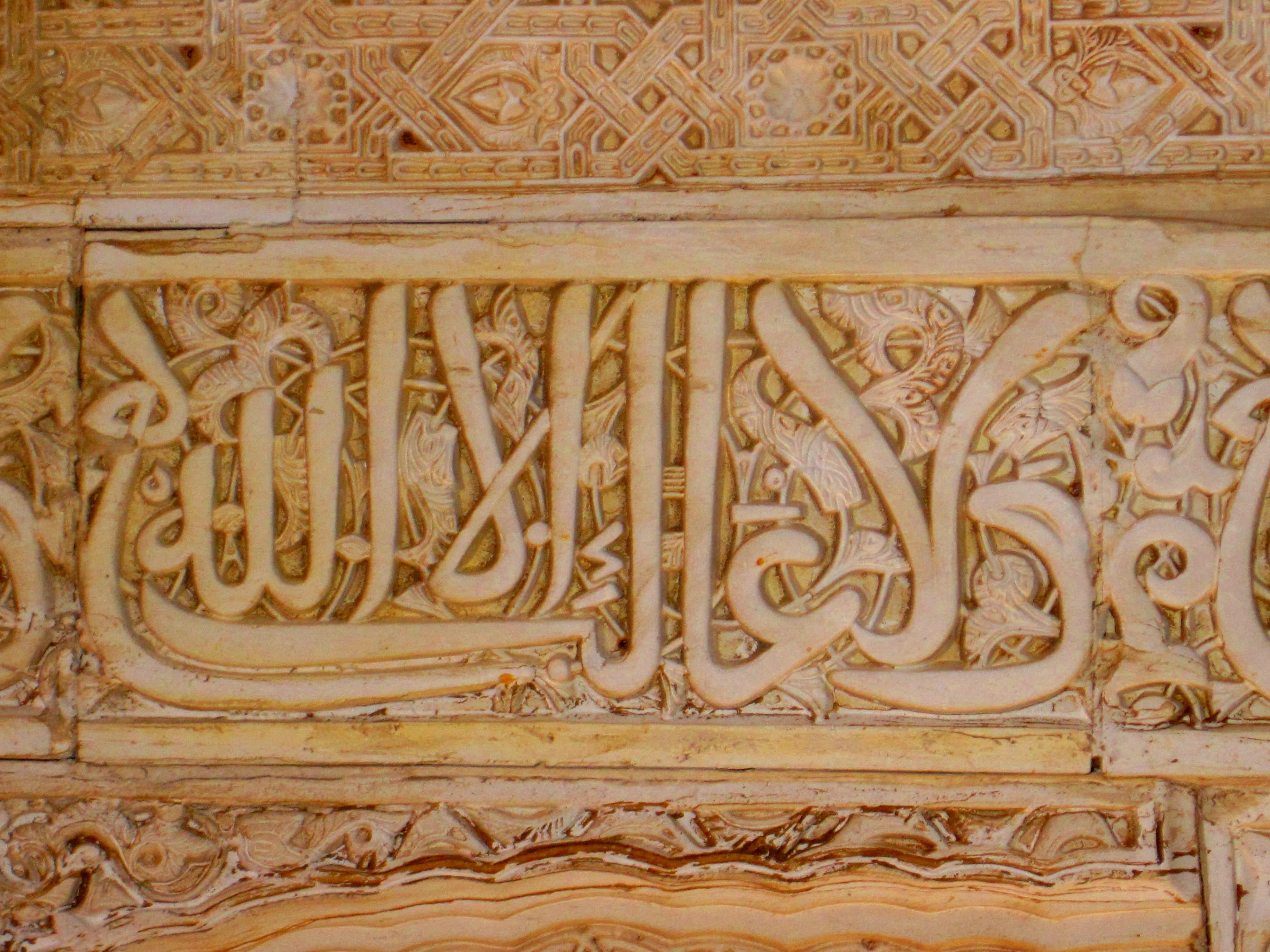
Predestination (Arabic: القدر, Qadar) is the sixth article of Islamic faith, completing the fundamental beliefs that define the Islamic worldview. The doctrine addresses one of the most enduring questions in religious thought: the relationship between divine omniscience and human moral responsibility. In Islamic theology, Qadar encompasses God's eternal foreknowledge of all events, the divine decree that governs creation, and the question of how human beings can be genuinely free and morally accountable if God knows and has decreed everything in advance. These questions generated some of the most important theological debates in early Islamic history and produced the major schools of Sunni theology that continue to shape Islamic thought today.
The Quranic Foundation
The Quran establishes the doctrine of divine foreknowledge and decree through numerous passages. God's knowledge is described as encompassing all things: "Not a leaf falls but that He knows it. And no grain is there within the darknesses of the earth and no moist or dry thing but that it is in a clear record" (Quran 6:59). The Quran also states that "Indeed, all things We created with predestination" (Quran 54:49) and that "No disaster strikes except by permission of God" (Quran 64:11).
At the same time, the Quran consistently holds human beings responsible for their choices. It describes people as choosing between belief and disbelief, between obedience and disobedience, and as being rewarded or punished accordingly. The Quran addresses God directly: "Your Lord does not wrong anyone" (Quran 18:49), and it repeatedly emphasizes that God does not burden a soul beyond what it can bear (Quran 2:286). The tension between these two sets of Quranic teachings -- divine sovereignty and human responsibility -- is the theological problem that the doctrine of Qadar attempts to resolve.
The hadith tradition reinforces both dimensions. The famous Hadith of Gabriel, preserved in Sahih Muslim, lists belief in divine predestination (al-qadar, both its good and its bad) as one of the six articles of faith. Another well-known hadith describes an angel recording each person's provision, lifespan, deeds, and whether they will be among the blessed or the wretched -- before they are born. Yet the same hadith tradition also records the Prophet saying "Work, for everyone will find easy that for which he was created" -- an injunction to effort that would be meaningless if human choices were not real.
The Hadith Foundation
The Quranic material on divine decree is extensive but largely non-technical. The framework within which the theologians worked — the writing of the decree, its priority to creation, and the relation between decree and human accountability — comes principally from a small number of hadith, and these are worth setting out before the schools that argued over them.
Belief in Qadar as an Article of Faith
The Hadith of Gabriel establishes qadar as a component of iman rather than an optional speculation. Asked what faith is, the Prophet answered: to believe in God, His angels, His books, His messengers, the Last Day, and to believe in the decree, "the good of it and the bad of it" (Sahih Muslim 8). Its placement there is why the subject could not simply be set aside as a matter on which Muslims might reasonably decline to hold a view, and why the early disputes about it were treated as disputes about the content of belief.
The Writing of the Decree Before Creation
Abdullah ibn Amr ibn al-As reported the Prophet saying that God ordained the measures of creation fifty thousand years before He created the heavens and the earth, and that His Throne was upon the water (Sahih Muslim 2653; also Jami' at-Tirmidhi 2156, graded sahih).
The temporal priority in that report is what the theologians drew on: the decree is not a running commentary on events but antecedent to the created order itself. A separate tradition, transmitted from Ubadah ibn al-Samit, has the Pen as the first thing created and commanded to write the decree of all that had been and would be. Its grading is disputed — Tirmidhi described the chain as gharib, al-Albani graded it weak, and other scholars have graded it sound — and it is recorded here with that disagreement noted rather than relied upon as settled.
The Dispute of Adam and Moses
The most-cited hadith in the entire debate is the account of Adam and Moses disputing, and it is in both Sahih collections through numerous chains. Moses reproached Adam as the father whose lapse caused humanity to be expelled from the Garden. Adam answered: "You are Moses, whom God chose for His message and to whom He spoke, and for whom He wrote the Torah with His own Hand. Do you blame me for a matter God decreed for me forty years before He created me?" The Prophet concluded: "So Adam got the better of Moses" — repeating it (Sahih al-Bukhari 6614; Sahih al-Bukhari 3409; Sahih al-Bukhari 4736; Sahih al-Bukhari 4738; Sahih al-Bukhari 7515; Sahih Muslim 2652; also Sunan Abu Dawud 4701, Jami' at-Tirmidhi 2134 and Sunan Ibn Majah 80, all graded sahih, and Muwatta Malik, Book 46).
A longer transmission in Muslim has Adam asking Moses how long before his creation Moses found that God had written the Torah, Moses answering forty years, and Adam then asking whether he had found in it the words "and Adam disobeyed his Lord and erred" (Sahih Muslim 2652).
This report has borne an enormous interpretive weight, and it is worth being precise about what it does and does not settle. It records a prophet declining to accept moral reproach for an act that had been decreed — and the Prophet endorsing that answer. It does not state that Adam bore no responsibility, since the Quran it quotes describes the act as disobedience and records Adam's repentance. The Ash'ari and Maturidi readings of the report, set out below, differ precisely over how to hold those two together, and the disagreement is a genuine one within the text rather than a departure from it.
Decree and the Obligation to Act
The practical objection — if everything is written, what is the point of acting — was put to the Prophet directly. Suraqa ibn Ju'shum asked whether action lies within what the Pen has already dried upon and what the decree has already determined, or whether it lies in something still open. The Prophet answered that it lies within what the Pen has dried upon, and added: "each person is facilitated toward that for which he was created" (Sunan Ibn Majah 91, graded sahih).
The answer is notable for refusing the escape the question invited. It does not soften the priority of the decree in order to preserve the motive for action; it affirms the decree and then locates action inside it. That structure — obligation undiminished by foreknowledge — is what the theological schools then attempted to render coherent, and it is the reason none of them was able to resolve the matter by simply denying one of its two terms.
The Four Levels of Qadar
Islamic theology traditionally analyzes the doctrine of predestination through four interconnected levels, each addressing a different aspect of the relationship between divine sovereignty and created reality.
The first level is divine knowledge (al-ilm): God's eternal and complete foreknowledge of all events, past, present, and future. This knowledge is understood as eternal -- not acquired through observation of events as they unfold, but present in the divine nature from before creation. The second level is divine writing (al-kitabah): the recording of all events in the Preserved Tablet (al-Lawh al-Mahfuz), the divine record that precedes creation. The Preserved Tablet is referenced in the Quran (Quran 85:21-22) and is understood as the comprehensive record of everything that will occur. The third level is divine will (al-mashee'ah): the principle that nothing occurs without God's permission and will. The fourth level is divine creation (al-khalq): the understanding that God is the creator of all things, including human actions and capacities.
These four levels together constitute the full doctrine of Qadar. The theological challenge is to explain how human beings can be genuinely free and morally responsible if God has foreknown, recorded, willed, and created everything that will happen. Different theological schools within Islam have answered this question in different ways.
The Early Debates: Qadariyya and Jabriyya
The theological debates about predestination began in the first Islamic century, within a generation of the Prophet's death. Two extreme positions emerged that the later mainstream schools would reject.
The Qadariyya -- a term derived from qadar but used in a specific technical sense -- were those who emphasized human free will to the point of denying or limiting divine foreknowledge of human actions. Their position was that God had given human beings genuine freedom, and that this freedom was incompatible with God having predetermined human choices. The Qadariyya were concerned that a strong doctrine of predestination would make God responsible for human sin and would undermine the basis for moral accountability. Their position was controversial from early on. A report describing the Qadariyya as "the Magians of this community" — a comparison to the Zoroastrian dualists who attributed evil to a separate divine principle — is transmitted in Sunan Abu Dawud, and it is frequently quoted in the polemical literature against them. Its chain is contested: a number of hadith critics grade it weak, while others accept it through corroborating narrations. It is recorded here as part of the controversy rather than as a settled prophetic judgement on the group, and the substance of the objection to the Qadariyya rests on argument rather than on this report.
The authentic material on qadar runs in a different register. The Hadith of Gabriel, in Sahih Muslim, establishes belief in the divine decree as an article of faith. A report in Sahih Muslim states that God wrote the destinies of creation fifty thousand years before creating the heavens and the earth, and a widely transmitted report in both Sahih al-Bukhari and Sahih Muslim describes the stages of human formation with the decree recorded during that process. These are the texts from which the doctrine is built, and none of them settles the question the schools went on to dispute: how a recorded decree is compatible with genuine human responsibility.
The Jabriyya -- from the Arabic root meaning "compulsion" -- took the opposite position, arguing that human beings have no real freedom at all and that all actions are directly caused by God. On this view, human beings are like feathers in the wind, moved entirely by divine power with no genuine agency of their own. The Jabriyya position was also rejected by the mainstream, because it seemed to make moral accountability meaningless and to make God the direct author of human sin.
Between these two extremes, the mainstream of early Islamic scholarship sought a position that preserved both divine sovereignty and human responsibility. This search produced the major theological schools of Sunni Islam.
The Mu'tazilite Position
The Mu'tazilite school of Islamic theology, which flourished in the eighth and ninth centuries, developed the most systematic defense of human free will within the Islamic tradition. The Mu'tazilites argued that divine justice (adl) required that human beings have genuine freedom: it would be unjust for God to punish people for actions they had no real choice in performing. They therefore maintained that human actions were genuinely created by human beings themselves, not by God -- a position that distinguished them sharply from the later Ash'ari school.
The Mu'tazilite position on free will was connected to their broader theological program, which emphasized the use of reason in theology and the compatibility of Islamic doctrine with rational principles. Their influence reached its height during the reign of Caliph al-Ma'mun, who made the Mu'tazilite position on the created Quran official state doctrine and imposed it through the Mihna inquisition. The failure of the Mihna and the subsequent discrediting of Mu'tazilite rationalism in Sunni circles meant that the Mu'tazilite position on free will also lost ground, though it remained influential in Shia theology.
The Ash'ari School: Kasb and Divine Sovereignty
The Ash'ari school, founded by Abu al-Hasan al-Ash'ari (874-936 CE) -- who had himself been a Mu'tazilite student before breaking with the school -- developed the most influential Sunni response to the predestination question. Al-Ash'ari's approach was to defend a strong doctrine of divine sovereignty while finding a way to preserve human moral responsibility.
The Ash'ari school developed the sophisticated concept of kasb (acquisition) to reconcile divine omnipotence with human moral responsibility. According to this theory, God creates all actions, including human actions, but humans "acquire" these actions through their will and intention, thus becoming morally responsible for them. This can be understood through an analogy: just as a person walking on a moving ship is genuinely walking (and responsible for where they step) even though the ship's movement is what ultimately carries them forward, humans genuinely choose their actions even though God is the ultimate creator of those actions. The Ash'ari scholars argued that this preserves both divine sovereignty (God creates everything) and human accountability (humans acquire responsibility through their choices).
Critics of this position have sometimes found it difficult to understand how acquisition differs from creation, but Ash'ari theologians maintained that the distinction is real and meaningful: God creates the power and capacity to act, while humans direct that capacity toward specific choices. This became the dominant theological position in Sunni Islam, particularly in regions influenced by the Shafi'i and Maliki schools of jurisprudence. The Ash'ari approach emphasizes that questioning divine decree is inappropriate, as God's wisdom transcends human comprehension, and what may appear unjust from a limited human perspective is perfectly just within the divine plan.
The Maturidi School: Genuine Free Will
The Maturidi school, founded by Abu Mansur al-Maturidi (853-944 CE) in Samarkand, offered a somewhat different approach to the predestination question, placing greater emphasis on human free will while still maintaining divine sovereignty. Maturidi scholars argued that humans possess genuine free will (ikhtiyar) that allows them to make real choices, and that God's foreknowledge of these choices does not negate their freedom. They distinguished between God's creative will (iradah takwiniyyah), which brings all things into existence, and His legislative will (iradah tashri'iyyah), which commands what is good and forbids what is evil.
According to this view, while God creates the capacity for human action and knows what choices will be made, humans genuinely choose between alternatives, and these choices are not predetermined in a way that would eliminate moral responsibility. The Maturidi position emphasizes that divine justice (adl) requires that humans have real freedom, as it would be unjust to punish people for actions they had no choice in performing. This school became particularly influential in regions following the Hanafi school of jurisprudence, including Central Asia, Turkey, and the Indian subcontinent.
The difference between the Ash'ari and Maturidi positions is subtle but significant. Both schools affirm divine sovereignty and human responsibility; they differ in how they understand the relationship between the two. The Ash'ari school tends to emphasize divine sovereignty more strongly and to explain human responsibility through the concept of acquisition; the Maturidi school tends to give more weight to genuine human freedom while still affirming that this freedom operates within the framework of divine knowledge and will.
The Traditionalist Position
A third major position within Sunni Islam is associated with the Hanbali school and with scholars like Imam Ahmad ibn Hanbal himself. The traditionalist approach was to affirm both divine sovereignty and human responsibility on the basis of the Quranic and hadith evidence, without attempting to resolve the apparent tension between them through philosophical analysis. Ahmad ibn Hanbal was suspicious of the kind of rational theology that the Mu'tazilites and later the Ash'aris practiced, and he preferred to accept the Quranic statements about divine decree and human responsibility as they stood, without trying to explain how they were compatible.
This approach -- sometimes called tafwid (entrusting the meaning to God) -- was not a refusal to think about the question but a principled methodological choice: the relationship between divine sovereignty and human freedom is a mystery that human reason cannot fully resolve, and the appropriate response is to affirm both on the basis of revelation and to leave the ultimate reconciliation to God's knowledge.
Effort, Trust, and the Practical Dimension
Whatever their theological differences, the major schools of Islamic thought agree on the practical implications of the doctrine of Qadar. The doctrine is not meant to encourage passivity or fatalism -- the hadith tradition explicitly warns against using predestination as an excuse for inaction. The Prophet's instruction to "tie your camel, then put your trust in God" captures the balance that Islamic theology seeks: human beings are responsible for making sincere efforts, taking appropriate precautions, and using the capacities God has given them, while trusting that the ultimate outcome is in God's hands.
This balance between effort (asbab, literally "causes" or "means") and trust (tawakkul) is one of the most practically important aspects of the doctrine. Al-Ghazali, writing in the eleventh century, devoted significant attention to this balance in his Ihya Ulum al-Din, arguing that genuine trust in God is not the abandonment of effort but the recognition that effort is itself a divinely ordained means through which God's decrees are fulfilled.
Legacy
The debates about predestination were among the most consequential in the history of Islamic thought. They produced the major schools of Sunni theology -- Ash'ari and Maturidi -- that continue to shape Islamic intellectual life today. They engaged some of the greatest minds in Islamic history, from the early Mu'tazilites through al-Ash'ari and al-Maturidi to al-Ghazali and Ibn Rushd. And they addressed questions -- about divine justice, human freedom, and moral responsibility -- that are not unique to Islam but are among the deepest questions that any religious tradition must face.
The Islamic tradition's engagement with these questions produced a rich and nuanced body of thought that resists simple summary. The doctrine of Qadar is not a simple assertion of fatalism, nor is it a simple assertion of human freedom. It is an attempt to hold together, in a coherent theological framework, the Quranic affirmations of divine sovereignty and human responsibility -- an attempt that has generated centuries of sophisticated debate and that continues to be a living question in Islamic theology.
The Practical Implications of Qadar
Predestination and Daily Life
The doctrine of predestination is not merely abstract theology — it has practical implications for how Muslims approach daily life, make decisions, and respond to both fortune and misfortune. The Islamic understanding holds that while God has decreed all things, human beings are still required to exert effort (tawakkul — trust in God — does not mean passivity but active engagement combined with submission to outcomes). The Prophet's teaching "Tie your camel, then rely on God" encapsulates this principle: one takes practical precautions while accepting that outcomes are ultimately in God's hands.
This framework provides comfort in adversity (what happened was God's decree and contains hidden wisdom) while maintaining motivation for action (one must still strive, plan, and work, because God's decree operates through human agency). The balance between these two aspects — acceptance and effort — is one of the central challenges of Islamic practical theology.
Predestination and Moral Responsibility
The reconciliation of divine predestination with human moral responsibility is perhaps the most philosophically challenging aspect of the doctrine. If God has decreed all actions, how can humans be held morally accountable? The dominant Sunni positions (Ash'ari and Maturidi) resolve this through the concept of kasb (acquisition): God creates all actions, but humans "acquire" them — choosing to perform them through their own will, which itself operates within God's creative power. This means that humans are genuinely choosing (and therefore morally responsible) even though their choices were foreknown and accommodated within God's comprehensive decree.
This solution has been criticized as philosophically problematic (how can a "choice" be genuine if the chooser's will is itself created by God?), but it has functioned as the mainstream Sunni position for over a millennium, providing a framework within which moral responsibility, legal obligation, and divine sovereignty can coexist. Its practical effect is to maintain the full force of Islamic moral and legal accountability — one cannot excuse wrongdoing by claiming "it was God's decree" — while simultaneously affirming that nothing occurs outside God's knowledge and power.
References and Further Reading
Primary Islamic Sources
- Quran, Surah Al-An'am (6:59) — "Not a leaf falls but that He knows it... all is in a clear register" — divine omniscience
- Quran, Surah Al-Qamar (54:49) — "Indeed, all things We created with predestination (qadar)"
- Quran, Surah Al-Taghabun (64:11) — "No disaster strikes except by permission of God"
- Quran, Surah Al-Baqarah (2:286) — "God does not burden a soul beyond that it can bear" — foundational verse on human moral capacity
- Quran, Surah Al-Buruj (85:21-22) — reference to the Preserved Tablet (al-Lawh al-Mahfuz)
- Sahih Muslim 8 — the Hadith of Gabriel, in which belief in the decree, "the good of it and the bad of it," is named among the articles of faith
- Sahih Muslim 2653; Jami' at-Tirmidhi 2156 (graded sahih) — Abdullah ibn Amr ibn al-As: God ordained the measures of creation fifty thousand years before He created the heavens and the earth, His Throne being upon the water
- Sahih al-Bukhari 3409, 4736, 4738, 6614, 7515; Sahih Muslim 2652 — the dispute of Adam and Moses, and Adam's answer: "Do you blame me for a matter God decreed for me forty years before He created me?" Also Sunan Abu Dawud 4701, Jami' at-Tirmidhi 2134, Sunan Ibn Majah 80 (all graded sahih) and Muwatta Malik, Book 46. The longer transmission at Sahih Muslim 2652 adds Adam's citation of the Quranic words "and Adam disobeyed his Lord and erred"
- Sunan Ibn Majah 91 (graded sahih) — Suraqa ibn Ju'shum's question whether action lies within what the Pen has dried upon, and the answer that it does, with the addition "each person is facilitated toward that for which he was created"
- The tradition of the Pen as the first created thing, commanded to write the decree, is transmitted from Ubadah ibn al-Samit outside the two Sahih collections. Tirmidhi described its chain as gharib; al-Albani graded it weak and other scholars have graded it sound. The disagreement is noted in the body and no argument here rests on it
Classical Islamic Sources
- Al-Ash'ari, Abu al-Hasan. Maqalat al-Islamiyyin (Theological Positions of the Muslims). 10th century CE. Documents the full range of early Muslim positions on divine decree and human freedom.
- Al-Maturidi, Abu Mansur. Kitab al-Tawhid. Samarkand, 10th century CE. Foundational text of the Maturidi school, including its distinctive position on human free will.
- Al-Ghazali, Abu Hamid. Ihya Ulum al-Din (Book of Trust in God, Book 35). Cairo: 12th century CE. Detailed discussion of the balance between reliance on divine decree (tawakkul) and human effort.
- Ibn Taymiyyah, Taqi al-Din. Minhaj al-Sunnah al-Nabawiyyah. 13th–14th century CE. Includes defence of the Sunni position on predestination against Mu'tazilite and Shi'a positions.
- Al-Tahawi, Abu Ja'far. Al-Aqidah al-Tahawiyyah. 9th–10th century CE. Canonical creedal statement affirming the four levels of divine decree.
Academic and Scholarly Sources
- Watt, W. Montgomery. Free Will and Predestination in Early Islam. London: Luzac, 1948. The foundational modern study of the early debates between the Qadariyya, Jabriyya, and emerging mainstream positions.
- Frank, Richard M. Al-Ghazali and the Ash'arite School. Durham: Duke University Press, 1994. Detailed analysis of the Ash'ari doctrine of kasb (acquisition) and its philosophical underpinnings.
- Rudolph, Ulrich. Al-Maturidi and the Development of Sunni Theology in Samarkand. Leiden: Brill, 2015. The most comprehensive scholarly treatment of the Maturidi school and its approach to human freedom.
- Fakhry, Majid. A History of Islamic Philosophy. 3rd ed. New York: Columbia University Press, 2004. Contextualizes the predestination debates within the broader history of Islamic philosophical theology.
- Gimaret, Daniel. La doctrine d'al-Ash'ari. Paris: Cerf, 1990. Detailed examination of al-Ash'ari's theological system, including his treatment of divine decree.
Further Reading
- Wolfson, Harry A. The Philosophy of the Kalam. Cambridge: Harvard University Press, 1976. Comparative study of Islamic theological positions alongside Jewish and Christian parallels.
- Winter, Tim (ed.). The Cambridge Companion to Classical Islamic Theology. Cambridge: Cambridge University Press, 2008. Includes chapters on the Ash'ari and Maturidi schools and their respective positions on divine decree.
- Leaman, Oliver. An Introduction to Classical Islamic Philosophy. 2nd ed. Cambridge: Cambridge University Press, 2002.
Mentioned In
1 article references this topic
More from Foundational Beliefs
Ashura: The Tenth of Muharram
Ashura is the tenth day of Muharram, the first month of the Islamic calendar. Sacred for its connection to Prophet Musa's deliverance and transformed by the martyrdom of Imam Husayn at Karbala in 680 CE, it is observed across all Islamic traditions.
Eid al-Adha - The Festival of Sacrifice
Eid al-Adha, the Festival of Sacrifice, commemorates Prophet Abraham's willingness to sacrifice his son in obedience to Allah. Celebrated during Hajj on the 10th of Dhul-Hijjah, Muslims sacrifice animals and distribute meat to family, friends, and the poor.
Five Pillars of Islam (Arkan al-Islam)
The Five Pillars of Islam are the five obligatory acts of Muslim practice: the shahada, the five daily prayers, the zakat, the fast of Ramadan, and the pilgrimage to Mecca for those able to make it. They are named together in the Hadith of Gabriel.
Hadith - The Prophetic Traditions
Hadith are the recorded sayings, actions, and approvals of Prophet Muhammad, serving as the second primary source of Islamic guidance after the Quran. These prophetic traditions provide detailed explanations of Islamic teachings and serve as practical examples for Muslim life and conduct.