Imam Malik ibn Anas
Malik ibn Anas (711–795 CE) was the Imam of Medina and founder of the Maliki school of jurisprudence. His Al-Muwatta was the first systematic work joining hadith with legal reasoning, and his idea of the living practice of Medina as a source of law was a distinctive contribution.
Malik ibn Anas ibn Malik ibn Abi Amir al-Asbahi (711-795 CE / 93-179 AH) was the Imam of Medina and the founder of the Maliki school of Islamic jurisprudence -- one of the four major schools of Sunni Islamic law, and the dominant tradition across North Africa, West Africa, and much of the Arab world today. He spent his entire life in Medina, the city of the Prophet Muhammad, and he understood that proximity to the Prophet's city as both a privilege and a responsibility: the living practice of Medina's scholarly community was, in his view, a form of evidence about the Prophet's intentions that no isolated hadith report could match.
His major work, al-Muwatta (The Well-Trodden Path), compiled over approximately forty years, was the first systematic work in Islamic history to combine hadith with legal reasoning in a single organized text. It became one of the most studied books in Islamic scholarship, and it remains in use today. His students included Imam al-Shafi'i, who studied under him before founding his own school, and his influence on the subsequent development of Islamic jurisprudence was profound even among those who disagreed with his specific positions.
Historical Context: Medina in the Eighth Century
Malik was born in 711 CE, approximately eighty years after the death of the Prophet Muhammad. He grew up in a Medina that was still, in a real sense, the living memory of the Prophet's community. The city was home to the children and grandchildren of the Prophet's companions -- the tabi'in (Successors) and tabi' al-tabi'in (Successors of the Successors) -- who had inherited direct knowledge of how the Prophet had prayed, judged disputes, treated his companions, and interpreted the Quran. This knowledge was not merely textual; it was embodied in the daily practice of the city's scholarly community, transmitted from generation to generation through living example as much as through written or oral report.
This was the world Malik was born into, and it shaped everything about his approach to Islamic law. Where scholars in Baghdad and Kufa were developing legal systems based primarily on the analysis of hadith reports and rational reasoning, Malik had access to something they did not: the continuous, unbroken practice of the city where the Prophet had lived and died. That practice -- amal ahl al-Medina, the practice of the people of Medina -- became the cornerstone of his legal methodology.
The political world of Malik's lifetime was turbulent. He was born under the Umayyad Caliphate and lived through the Abbasid revolution of 750 CE, which overthrew the Umayyads and moved the caliphate's capital from Damascus to the newly founded city of Baghdad. Medina, which had been the center of Islamic governance under the Rashidun Caliphate, was now a provincial city -- important for its religious prestige but no longer the political center of the Islamic world. This marginalization, paradoxically, may have enhanced Medina's scholarly independence: the city's scholars were less subject to caliphal pressure than those in Baghdad, and they maintained a tradition of religious authority that was grounded in the Prophet's legacy rather than in political power.
Early Life and Education
Malik's family had deep roots in Medina. His grandfather, Malik ibn Abi Amir, had been a student of the Prophet's companions, and his father was a scholar and hadith transmitter. Growing up in this environment, Malik was immersed in Islamic learning from childhood. He reportedly memorized the Quran at a young age and began studying hadith and jurisprudence with the leading scholars of Medina while still a teenager.
His most important teachers were the leading figures of the Medinan scholarly tradition. Nafi', the freed slave of Abdullah ibn Umar (son of the second caliph), was one of the most important hadith transmitters of his generation, and his chain of transmission -- Nafi' from Ibn Umar from the Prophet -- became known as the "golden chain" (silsila al-dhahab) for its reliability. Ibn Shihab al-Zuhri was the leading hadith scholar and historian of his generation, a man of encyclopedic knowledge who had served at the Umayyad court while maintaining his scholarly independence. Yahya ibn Sa'id al-Ansari and Rabi'a al-Ra'y were prominent Medinan jurists who shaped Malik's understanding of legal reasoning.
Malik was selective about his teachers and demanding about the quality of what he learned. He reportedly said that he did not begin teaching until seventy scholars had testified to his competence -- a standard that reflected both his humility and his understanding of the gravity of issuing legal opinions. He spent decades learning before he began teaching, and he continued to learn throughout his life.
The Flogging Incident and Scholarly Independence
The most dramatic episode of Malik's biography -- and the one that most clearly reveals his character -- occurred around 762 CE, when he was in his early fifties. The Abbasid governor of Medina, Ja'far ibn Sulayman, was seeking pledges of allegiance to the new caliph al-Mansur. Malik issued a legal opinion that oaths made under compulsion were not binding -- a position grounded in established Islamic legal principles but one that the governor interpreted as undermining the validity of forced oaths of allegiance to the caliph.
Ja'far ibn Sulayman had Malik flogged and his arm dislocated. The punishment was severe and public. Malik did not recant his legal opinion.
The incident had consequences that the governor had not anticipated. Rather than discrediting Malik, the flogging enhanced his reputation enormously. Scholars and ordinary Muslims across the Islamic world saw in his steadfastness a model of the scholar's obligation to maintain the integrity of Islamic law against political pressure -- the same principle that Imam Ahmad ibn Hanbal would embody a generation later during the Mihna. Caliph al-Mansur, when he learned of the incident, reportedly rebuked the governor and apologized to Malik. The episode established Malik's moral authority in a way that decades of teaching alone could not have done.
Al-Muwatta: The Well-Trodden Path
Malik's al-Muwatta (The Well-Trodden Path) was compiled over approximately forty years -- a period of continuous revision and refinement that reflected his perfectionism and his understanding of the work's importance. The title refers to the path that has been made smooth by many feet: the well-established, widely accepted practice of the Muslim community.
The Muwatta was methodologically innovative in a way that is easy to underestimate. Before Malik, Islamic legal knowledge existed in two largely separate forms: collections of hadith (reports of the Prophet's sayings and actions) and collections of legal opinions (fatawa) issued by scholars. Malik combined these into a single organized work, presenting hadith alongside the legal opinions of the Prophet's companions and the established practice of Medina, organized by legal topic. This integration -- showing how hadith, companion practice, and living tradition worked together to establish legal norms -- was the Muwatta's fundamental contribution.
The work covers the full range of Islamic practice: ritual purity, prayer, fasting, pilgrimage, commercial transactions, marriage and divorce, inheritance, criminal law, and much more. For each topic, Malik presents the relevant hadith, notes the opinions of the Prophet's companions and their successors, and indicates the established practice of Medina. Where he disagrees with a hadith's apparent implication, he says so and explains why -- a candor that was unusual and that reflected his confidence in the Medinan tradition as a check on isolated reports.
The Muwatta exists in multiple recensions -- versions transmitted by different students who had studied under Malik at different points in his career. The most widely used is the recension of Yahya ibn Yahya al-Laythi, a Medinan scholar who later became the leading Maliki authority in al-Andalus. The existence of multiple recensions reflects both the Muwatta's long period of compilation and the fact that Malik continued to revise it throughout his life.
Muhammad al-Bukhari, the greatest hadith scholar of the following generation, reportedly said that the most authentic chain of transmission in the world was Malik from Nafi' from Ibn Umar -- a judgment that reflects the extraordinary reliability of Malik's hadith scholarship.
Amal Ahl al-Medina: The Living Practice of the Prophet's City
Malik's most distinctive and most debated methodological contribution was his concept of amal ahl al-Medina -- the practice of the people of Medina -- as a source of Islamic law. The argument was this: the people of Medina had lived in continuous proximity to the Prophet and his companions, and their collective practice had been shaped by that proximity. When the entire scholarly community of Medina consistently did something in a particular way -- performed a particular prayer, conducted a particular transaction, observed a particular custom -- that consistency was evidence that the practice derived from the Prophet himself, transmitted not through a single chain of narrators but through the living example of the community.
This argument gave Malik a source of legal evidence that was, in his view, more reliable than many individual hadith reports. A single hadith, however well-authenticated, could be misremembered, misunderstood, or applicable only to a specific context. The continuous practice of an entire community was harder to corrupt and more likely to reflect the Prophet's actual intentions.
The concept was controversial. Imam al-Shafi'i, who had studied under Malik and respected him deeply, nonetheless argued that amal ahl al-Medina was not a valid independent source of law -- that the practice of Medina's people was only authoritative if it could be traced to a specific hadith, and that the mere fact of Medinan practice did not constitute evidence without such a textual basis. Imam Abu Hanifa's school in Kufa had developed its own approach to legal reasoning that did not privilege Medinan practice. The debate between these positions was one of the defining intellectual controversies of early Islamic jurisprudence.
Malik's position was not that Medinan practice overrode clear hadith but that it provided a context for interpreting hadith and a check on isolated reports that seemed to contradict established practice. In practice, this meant that the Maliki school was more conservative about departing from established norms and more skeptical of hadith that seemed to require significant changes to existing practice.
Students and the Transmission of the School
Malik taught in the Prophet's Mosque in Medina for decades, and his students came from across the Islamic world. The most important for the transmission of his school were Abd al-Rahman ibn al-Qasim (d. 806 CE), an Egyptian scholar who became the primary transmitter of Malik's legal opinions and whose recension of Malik's teachings formed the basis for the Mudawwana -- the great systematic compilation of Maliki law; Ibn Wahb (d. 812 CE), a prolific scholar who transmitted both Malik's hadith and his legal opinions; and Sahnun (d. 854 CE), the North African scholar who compiled the Mudawwana in its final form and became the dominant Maliki authority in the Maghreb.
The most famous of Malik's students was Imam al-Shafi'i (767-820 CE), who studied under him as a young man and absorbed the Medinan tradition before going on to develop his own systematic jurisprudence. Al-Shafi'i's school, while distinct from Malik's, was deeply shaped by his Medinan training, and the dialogue between the two traditions -- Maliki and Shafi'i -- was one of the most productive intellectual exchanges in the history of Islamic law.
The Maliki School's Geographic Spread
The Maliki school's geographic distribution reflects the specific channels through which it was transmitted. In North Africa, the school was established by Sahnun and other students of Malik's students, and it became the dominant legal tradition of Morocco, Algeria, Tunisia, and Libya -- a position it has maintained to the present day. In West Africa, the school spread through the networks of Maliki scholars who traveled with trade caravans and established educational institutions across the Sahel and the West African coast; today, the Maliki school is the dominant tradition in Senegal, Mali, Niger, Nigeria, and much of the rest of West Africa.
In al-Andalus, the Maliki school was established by Yahya ibn Yahya al-Laythi, who had studied under Malik and returned to Cordoba to become the leading religious authority of Islamic Spain. The Maliki school became the official legal tradition of the Umayyad emirate and caliphate of Cordoba, and it remained dominant in al-Andalus throughout the period of Islamic rule. The school's emphasis on the practice of Medina resonated in al-Andalus, where scholars saw themselves as preserving the authentic Islamic tradition in a distant land.
Four factors account for this pattern of diffusion. The first is the composition of Malik's student body: scholars from North Africa, al-Andalus and Egypt travelled to Medina to study with him and carried his teaching home, so the school's geography was set early by who had made the journey. The second is political patronage, most consequentially the adoption of Maliki law as the official system by successive North African dynasties, including the Almoravids and Almohads. The third is the character of the Muwatta itself, which was compact and well organised enough to function as a teaching text in a way that the larger and more technical compilations of other schools were not. The fourth is institutional continuity: once established in a region, the school reproduced itself through madrasas, judicial appointments, and scholarly families, which is why its distribution has proved so stable.
The present distribution reflects this history closely. The Maliki school is dominant in Morocco, Algeria, Tunisia, Libya and Mauritania, across Senegal, Mali, Niger and northern Nigeria, and through much of the rest of West Africa. It is also followed in parts of the Gulf, particularly Bahrain and Kuwait, and among the traditional Muslim communities of Upper Egypt and Sudan.
Legacy
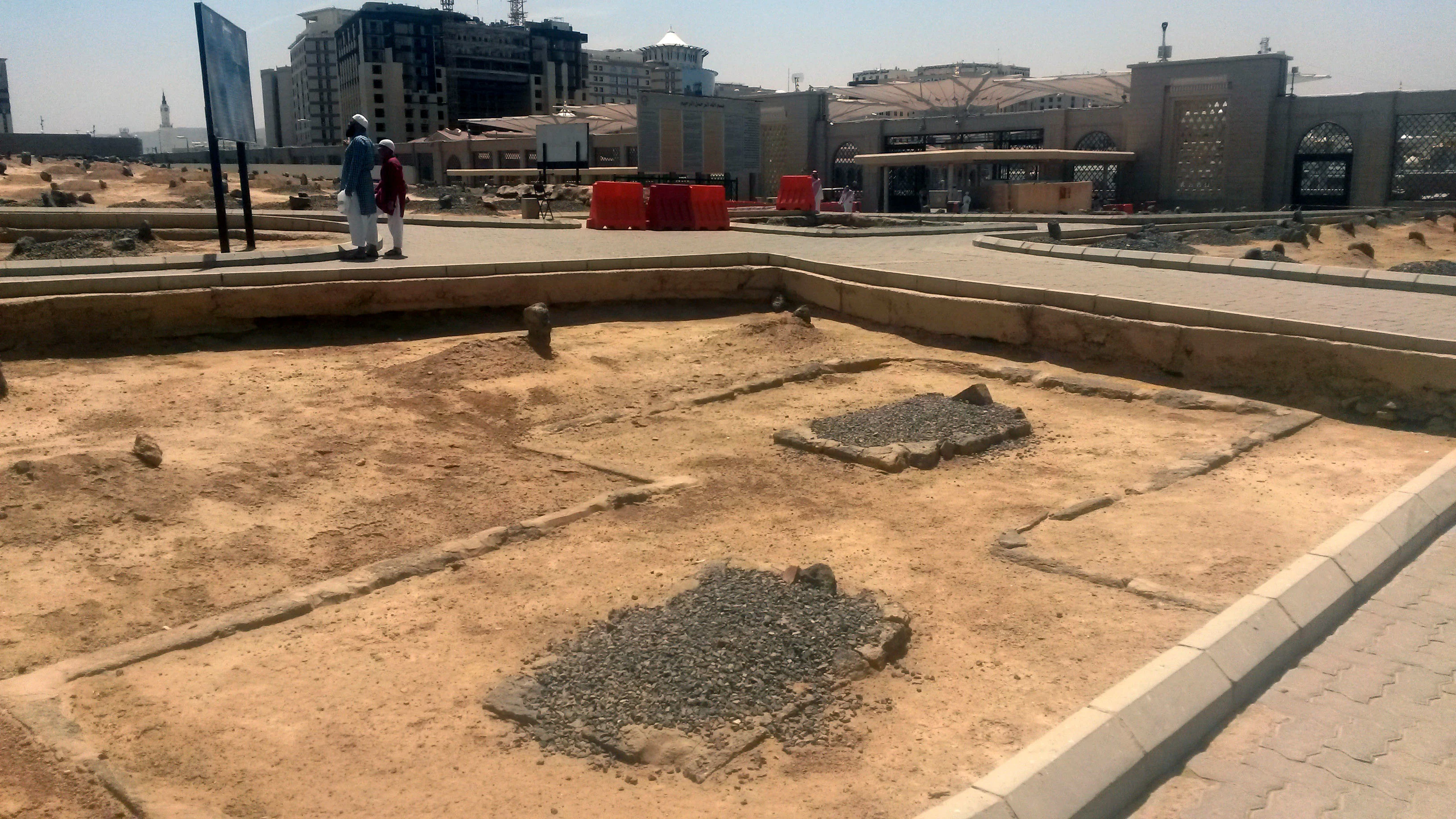
Malik ibn Anas died in Medina in 795 CE at approximately eighty-four years of age, having spent his entire life in the Prophet's city. He had never left Medina -- a choice that was both a personal commitment and a statement about the city's unique religious significance. He was buried in the Baqi' cemetery, where many of the Prophet's companions were also buried.
His legacy operates at several levels. The Muwatta remains one of the most studied texts in Islamic scholarship, valued both for its hadith content and for its methodological approach. The Maliki school he founded continues to govern the religious practice of hundreds of millions of Muslims across North and West Africa. And his concept of amal ahl al-Medina -- however debated -- raised a genuine and important question about the relationship between textual evidence and living tradition that Islamic legal scholars have never stopped discussing.
His example of scholarly independence -- the willingness to maintain a legal position under physical punishment rather than compromise the integrity of Islamic law -- became, alongside the example of Imam Ahmad ibn Hanbal during the Mihna, one of the defining models of the Islamic scholar's obligation to truth. The four major Sunni legal schools -- Hanafi, Maliki, Shafi'i, and Hanbali -- each represent a distinct approach to the sources and methods of Islamic law, and each has its own integrity and its own contribution to the tradition. Malik's contribution was to insist that the living practice of the Prophet's community was itself a form of evidence -- that Islam was not only a text but a way of life transmitted through generations of faithful practice.
The Muwatta: The First Book of Islamic Law
Composition and Character
Imam Malik's Al-Muwatta ("The Well-Trodden Path") is one of the earliest surviving books of Islamic law and hadith — a work that took approximately forty years to compose and refine (Malik reportedly worked on it from his twenties until near the end of his life). The title itself reflects its purpose: to provide a clear, well-established path through the complex terrain of Islamic legal practice.
The Muwatta is unique among the early legal works in combining hadith (prophetic traditions), athar (reports from the companions and their successors), and Malik's own legal opinions into a single integrated text. It is organized by legal topic — covering prayer, fasting, pilgrimage, commercial transactions, marriage, criminal law, and other areas — with each chapter presenting the relevant traditions followed by Malik's analysis of their implications.
The number of hadith and reports in the Muwatta varies across the approximately thirty surviving transmissions (students who heard Malik teach the work at different times received slightly different versions, as he continued to refine it). The most widely used transmission today is that of Yahya ibn Yahya al-Laythi, which contains approximately 1,720 traditions and reports. This relatively modest number (compared to the thousands in later collections) reflects Malik's selectivity — he included only those traditions that he considered genuinely authoritative and legally relevant.
The Muwatta's Influence
The Muwatta influenced virtually every hadith collection that followed it. Imam al-Shafi'i, who studied under Malik as a young man, was deeply shaped by the work. Ahmad ibn Hanbal transmitted it and valued it. Even the later canonical collections (al-Bukhari, Muslim) drew upon traditions that Malik had recorded. The Muwatta was thus not only the foundational text of the Maliki school but a source for the entire subsequent tradition of hadith scholarship.
Its influence extended geographically through Malik's students, who carried it to Al-Andalus (through Yahya ibn Yahya al-Laythi), to Egypt (through Ibn al-Qasim and Ashhab), and to North Africa (through various Tunisian and Libyan scholars). Through these channels, the Muwatta became the primary textbook of Islamic law across the western Islamic world — a position it retained for centuries.
The Concept of Amal Ahl al-Medina
The Living Practice as Evidence
Malik's most distinctive and controversial legal principle was amal ahl al-Medina — "the practice of the people of Medina" — which he treated as an independent source of law alongside the Quran and hadith. His reasoning was that Medina was the city where the Prophet had lived, taught, and established his community; the people of Medina had learned their religious practice directly from the Prophet and his companions; and this practice had been transmitted from generation to generation through continuous, collective action. Therefore, the way Medina's people actually practiced Islam — their customs in prayer, commerce, inheritance, and other matters — was itself a form of prophetic evidence, preserved through communal transmission rather than through individual narrator chains.
This principle allowed Malik to give precedence to established Medinan practice over isolated hadith that contradicted it. If a single hadith (transmitted through one or two narrators) contradicted what the entire population of Medina had always done, Malik argued that the collective practice was more reliable than the individual report — because the practice was transmitted by thousands of people simultaneously, making corruption or error effectively impossible, whereas a single-chain hadith could always contain an error at any link.
The Debate with al-Shafi'i
This principle was vigorously challenged by Imam al-Shafi'i, who argued that the practice of Medina's people, however venerable, could not override an authenticated prophetic hadith. Al-Shafi'i maintained that the text (hadith) always trumped practice — because the text could be traced to the Prophet through authenticated chains, while the "practice" was merely what people did without a specific textual warrant. The debate between Malik (practice can override isolated text) and al-Shafi'i (text always overrides practice) became one of the fundamental methodological disagreements in Islamic jurisprudence and drove much of the subsequent development of legal theory.
Malik's Personal Character and Teaching
The Scholar of Medina
Malik was known for the extraordinary dignity and solemnity with which he conducted his teaching sessions. Before delivering his lectures on hadith, he would perform ablution, put on his finest garments, apply perfume, and sit in a posture of formality. He considered the transmission of the Prophet's words to be an act of worship that demanded the highest reverence, and he expected his students to maintain silence and attention as a religious obligation.
His teaching sessions were held in his home (and later in the Prophet's Mosque), and they attracted students from across the Islamic world. His students included future founders of other legal schools (al-Shafi'i studied under him), future hadith scholars (who transmitted his traditions), and future judges and governors who would implement his rulings across the Muslim world. The pedagogical chain from Malik to his students to their students created the institutional foundation of the Maliki school.
The Flogging Incident
Like other great scholars who clashed with political authority, Malik endured physical punishment for a legal opinion. The Abbasid governor of Medina ordered him flogged (some sources say his arm was dislocated) because Malik had issued a legal opinion (fatwa) that oaths taken under coercion were not binding — a ruling that could be interpreted as legitimizing resistance to Abbasid authority, since many pledges of allegiance to the dynasty had been extracted through pressure.
Malik endured the punishment without retracting his opinion, and the incident enhanced rather than diminished his reputation. The people of Medina rallied to him, and the Abbasid caliphs themselves later sought to make amends — Harun al-Rashid reportedly visited Malik in Medina and treated him with great deference. The episode established Malik, alongside Ahmad ibn Hanbal, as a model of scholarly resistance to political interference in religious matters.
References and Further Reading
Primary Islamic Sources
- Quran, Surah al-Hashr (59:7) — "Whatever the Messenger gives you, take it; and whatever he forbids you, refrain from it" — the Quranic basis for the authority of the Sunnah in Maliki jurisprudence
- Quran, Surah al-Nisa (4:65) — on the necessity of accepting the Prophet's judgment, foundational to Malik's emphasis on transmitted practice
- Sahih al-Bukhari, Book of Virtues of Medina, Hadith 1870 — "Medina is a sanctuary from such-and-such to such-and-such" — reflects the city's special status in Maliki thought
- Sahih Muslim, Book of Hajj, Hadith 1360 — traditions on the sanctity and special character of Medina
- Malik ibn Anas. Al-Muwatta. Multiple recensions, compiled c. 750–795 CE. The foundational text of the Maliki school and first systematic combination of hadith and Islamic law.
- Sahih al-Bukhari, Book of Knowledge, Hadith 100 — on the shrinking of knowledge as scholars pass away, a theme central to Malik's urgency in compiling the Muwatta
Classical Islamic Sources
- Malik ibn Anas. Al-Muwatta (Recension of Yahya ibn Yahya al-Laythi). Edited by Muhammad Fu'ad Abd al-Baqi. Cairo: Dar Ihya' al-Turath al-Arabi, 1985. [Compiled c. 795 CE]
- Sahnun ibn Sa'id. Al-Mudawwana al-Kubra. Beirut: Dar Sadir, 1994. [Original c. 854 CE] The great systematization of Maliki law.
- Qadi Iyad. Tartib al-Madarik wa Taqrib al-Masalik. Edited by Ahmad Bakir Mahmud. Beirut: Maktabat al-Hayat, 1967. [Original c. 1149 CE] The primary classical biography of Imam Malik.
- Al-Dhahabi, Shams al-Din. Siyar A'lam al-Nubala. Edited by Shu'ayb al-Arna'ut. Mu'assasat al-Risala, 1981. [Original c. 1320 CE]
- Ibn Farhun al-Maliki. Al-Dibaj al-Mudhahhab fi Ma'rifat A'yan Ulama al-Madhhab. c. 14th century CE. Biographies of Maliki scholars.
Academic and Scholarly Sources
- Dutton, Yasin. The Origins of Islamic Law: The Quran, the Muwatta and Madinan Amal. London: Curzon Press, 1999.
- Hallaq, Wael B. The Origins and Evolution of Islamic Law. Cambridge: Cambridge University Press, 2005.
- Kamali, Mohammad Hashim. Principles of Islamic Jurisprudence. Cambridge: Islamic Texts Society, 2003.
- Melchert, Christopher. The Formation of the Sunni Schools of Law, 9th–10th Centuries CE. Leiden: Brill, 1997.
- Schacht, Joseph. An Introduction to Islamic Law. Oxford: Oxford University Press, 1964.
Further Reading
- Bewley, Aisha. Malik and the Madinah School of Fiqh. London: Ta-Ha Publishers, 2000.
- Powers, David S. Studies in Quran and Hadith: The Formation of the Islamic Law of Inheritance. Berkeley: University of California Press, 1986.
- Rippin, Andrew. Muslims: Their Religious Beliefs and Practices. London: Routledge, 2005.
Mentioned In
27 articles reference this topic
and 15 more articles
More from Umayyad Caliphate
Al-Aqsa Mosque: The Farthest Sanctuary
Al-Aqsa Mosque in Jerusalem is the third holiest site in Islam, central to the Night Journey (Isra and Miraj) of Prophet Muhammad, and a symbol of Islamic heritage and Palestinian identity for over 1,300 years.
Battle of Karbala
The Battle of Karbala (680 CE) was a confrontation in which Husayn ibn Ali, grandson of Prophet Muhammad, was killed with his companions by Umayyad forces near the Euphrates. It became one of the most consequential events in Islamic history, shaping the development of Shia Islam.
The Battle of Tours - Turning Point in European History
The Battle of Tours (732 CE) between Charles Martel's Frankish forces and the Umayyad army halted Muslim expansion into Western Europe, marking a decisive turning point that shaped the continent's political and religious landscape for centuries.
The Dome of the Rock
Comprehensive history of the Dome of the Rock, one of Islam's most iconic monuments and the oldest surviving Islamic building, built in Jerusalem in 691 CE