Islam in Europe
Islam has been part of European history since the eighth century through three main pathways: the civilization of Al-Andalus in Iberia, the Arab and Norman period in Sicily, and the Ottoman presence in the Balkans. Each left lasting marks on European culture and religious geography.
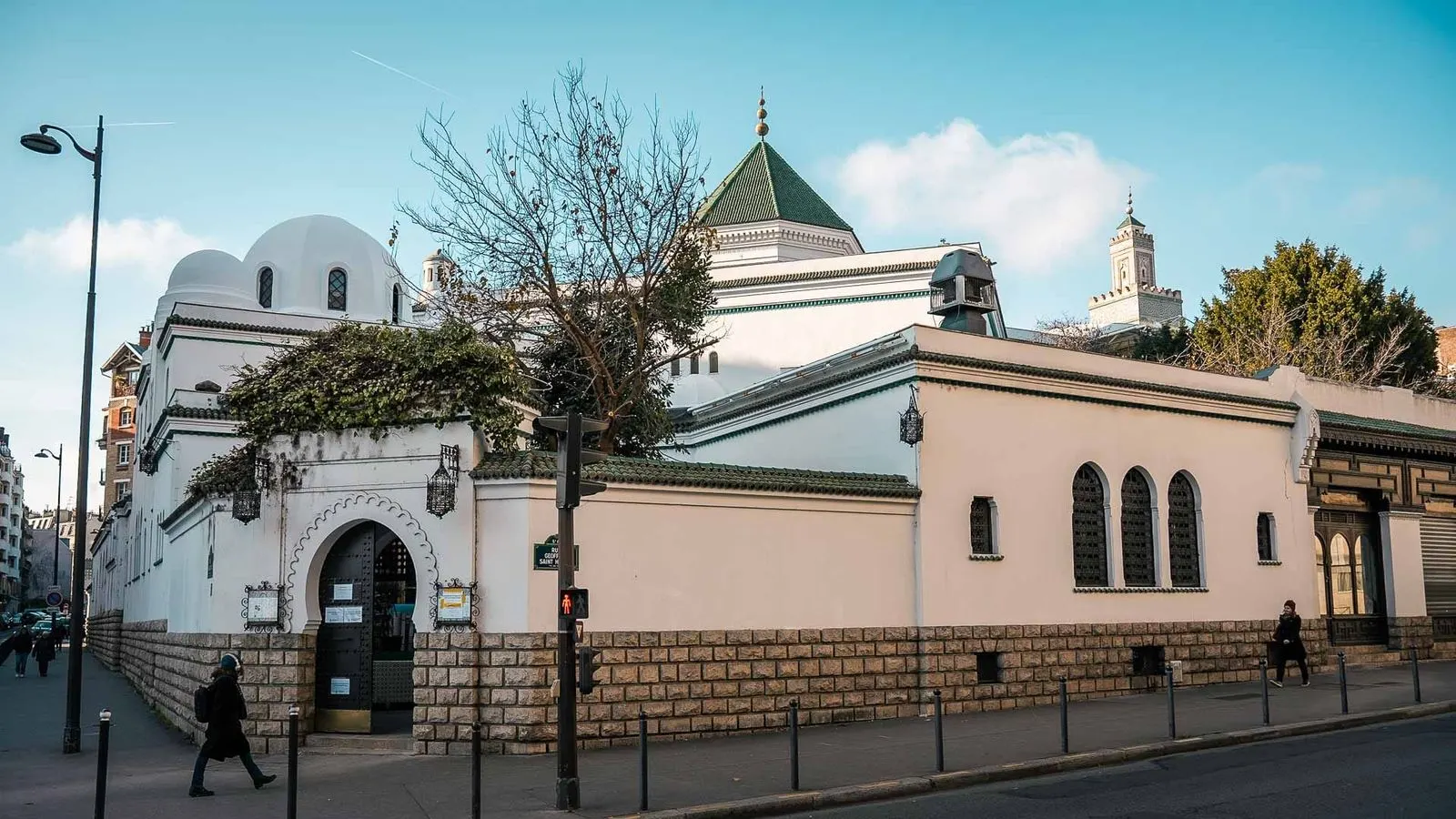
Islam has been part of European history since the eighth century CE, when Muslim forces crossed from North Africa into the Iberian Peninsula and established what would become one of the most sophisticated civilizations of the medieval world. Over the following thirteen centuries, Islam entered Europe through three distinct pathways -- the Islamic civilization of Al-Andalus in the Iberian Peninsula, the Arab and Norman period in Sicily and southern Italy, and the Ottoman expansion into the Balkans -- each leaving lasting marks on European culture, scholarship, architecture, and religious geography. Understanding Islam's place in European history requires understanding each of these pathways on its own terms, as well as the intellectual transmission through which Islamic learning shaped the development of European thought.
Al-Andalus: The Iberian Peninsula (711-1492 CE)
The most extensive and most consequential Islamic presence in medieval Europe was in the Iberian Peninsula, where Muslim rule lasted for nearly eight centuries. The conquest of 711 CE, led by Tariq ibn Ziyad across the Strait of Gibraltar, overthrew the Visigothic Kingdom and established Islamic rule over most of the peninsula within a decade. The civilization that developed there -- Al-Andalus -- became one of the most sophisticated in the medieval world, producing philosophers, physicians, poets, and scientists whose work shaped both Islamic and European intellectual history.
The full story of Al-Andalus -- its political history, its intellectual achievements, its social structure, and its fall -- is covered in the dedicated articles on Al-Andalus, Cordoba, Granada, and the Umayyads of Cordoba. What is relevant here is Al-Andalus's significance as a European phenomenon: a civilization that was simultaneously Islamic and European, that produced figures like Ibn Rushd (Averroes) and Maimonides who shaped the intellectual traditions of both Islam and Christianity, and that left architectural monuments -- the Great Mosque of Cordoba, the Alhambra -- that remain among the most celebrated buildings in Europe.
The Reconquista -- the gradual Christian reconquest of the Iberian Peninsula -- proceeded over several centuries, with Toledo falling in 1085 CE, Cordoba in 1236 CE, Seville in 1248 CE, and Granada in 1492 CE. The fall of Granada ended Islamic political rule in Iberia, but it did not end the Islamic presence: the Morisco communities -- Muslims who had converted to Christianity under pressure -- maintained elements of Islamic culture and practice for another century before their final expulsion between 1609 and 1614 CE. The expulsion of the Moriscos was one of the largest forced migrations in early modern European history, ending a continuous Muslim presence in Iberia that had lasted nearly a thousand years.
Sicily and Southern Italy (827-1091 CE)
Less well-known than Al-Andalus but equally significant for the transmission of Islamic learning to Europe was the Islamic period in Sicily and southern Italy. Muslim forces from North Africa began raiding Sicily in the early ninth century and established control over most of the island by 902 CE, with Palermo as their capital. For nearly two centuries, Sicily was an Islamic territory -- part of the broader Mediterranean Islamic world that connected it to North Africa, Egypt, and the eastern Mediterranean.
Islamic Sicily was a prosperous and sophisticated society. Palermo became one of the largest cities in Europe, with a population that may have reached 300,000 at its height. The island's agriculture was transformed by Islamic irrigation techniques and the introduction of new crops -- citrus fruits, cotton, sugar cane -- that would permanently change the agricultural landscape of the Mediterranean. Islamic scholars and craftsmen brought their knowledge of mathematics, astronomy, medicine, and architecture to the island, and the cultural synthesis that developed in Sicily -- combining Arab, Byzantine, and Norman elements -- was one of the most distinctive in the medieval world.
The Norman conquest of Sicily, completed by 1091 CE, did not end Islamic cultural influence on the island. The Norman kings of Sicily -- particularly Roger II (r. 1130-1154 CE) -- maintained a court that was explicitly multicultural, employing Arab scholars, administrators, and craftsmen alongside Norman and Byzantine ones. The Arab geographer al-Idrisi, one of the greatest cartographers of the medieval world, worked at Roger II's court and produced the most accurate map of the world that had yet been made. The Palatine Chapel in Palermo, built by Roger II, combined Norman architecture with Byzantine mosaics and Arab muqarnas ceiling decoration -- a physical embodiment of the cultural synthesis that characterized Norman Sicily.
Sicily's significance for European intellectual history lay in its role as a channel for the transmission of Islamic learning to Latin Europe. The Norman court's multilingual scholars translated Arabic scientific and philosophical texts into Latin, and Sicily -- alongside Toledo in Spain -- was one of the two primary centers through which the accumulated knowledge of the Islamic world reached medieval European universities. The works of al-Khwarizmi, al-Razi, Ibn Sina, and Ibn Rushd that transformed European scholastic philosophy and medicine reached Europe partly through the Sicilian channel.
The Intellectual Transmission: How Islamic Learning Shaped Europe
The most lasting contribution of Islam to European civilization was not political but intellectual: the transmission of Greek philosophy, Islamic science, and original Islamic scholarship to medieval Europe through the translation movement. This transmission occurred primarily through two channels -- Toledo in Spain and Sicily in Italy -- and it transformed European intellectual life in ways that are still felt today.
The translation movement centered in Toledo from the eleventh century onward was the more systematic and more extensive of the two channels. After the Christian conquest of Toledo in 1085 CE, the city became the most important center for translating Arabic works into Latin. Gerard of Cremona (c. 1114-1187 CE), the most prolific of the Toledo translators, translated more than seventy Arabic works into Latin, including Ibn Sina's Canon of Medicine, al-Zarqali's astronomical tables, and Ibn Rushd's commentaries on Aristotle. These translations provided the raw material for the intellectual transformation that historians call the twelfth-century Renaissance and, ultimately, for the Scientific Revolution of the sixteenth and seventeenth centuries.
What Europe received through Toledo and Sicily was not simply the Greek texts that had been preserved in Arabic translation -- though that was important -- but the Arabic commentaries, corrections, and original contributions that Islamic scholars had added. The algebra of al-Khwarizmi, the optics of Ibn al-Haytham, the philosophy of Ibn Rushd, the medicine of Ibn Sina -- all of these reached European universities through the translation movement, and all of them shaped the subsequent development of European thought. Thomas Aquinas, Albertus Magnus, Roger Bacon, and Dante all engaged with Islamic scholarship, and the European scholastic tradition that produced them was, in significant part, a response to and development of the Islamic philosophical tradition.
The intellectual life of Al-Andalus -- the philosophy, medicine, poetry, and legal scholarship that flourished in Cordoba, Seville, and Granada -- was the source from which much of this transmission flowed. The scholars of Al-Andalus were not merely transmitters of eastern Islamic learning but original thinkers who developed their own distinctive contributions, and it was their work that most directly shaped European intellectual development.
The Crusades and Christian-Muslim Contact
The Crusades (1095-1291 CE) represented a different kind of contact between European Christianity and Islam -- military rather than intellectual, confrontational rather than collaborative. The Crusades brought European knights and soldiers into direct contact with Islamic civilization in the Levant, and the encounter, while primarily violent, also produced cultural exchange of a kind that neither side had anticipated.
Crusaders who settled in the Levant encountered Islamic civilization at its height -- sophisticated urban culture, advanced medicine, refined cuisine, and luxury goods unknown in Europe. Some of this knowledge and these goods made their way back to Europe with returning crusaders, contributing to the gradual transformation of European material culture. The military orders that developed during the Crusades -- the Knights Templar, the Knights Hospitaller -- developed financial and administrative systems that drew on Islamic models, and the architectural innovations of crusader castles reflected the encounter with Islamic military architecture.
The Crusades also produced a body of European literature about Islam and Muslims that, while often hostile and distorted, reflected a genuine engagement with the Islamic world. European writers like William of Tyre and Joinville described Muslim rulers and soldiers with a complexity that went beyond simple demonization, and the figure of Saladin -- the Kurdish Muslim general who recaptured Jerusalem in 1187 CE -- became a model of chivalric virtue in European literature as well as in Islamic tradition.
The Ottoman Balkans (14th-20th Centuries)
The most sustained and most demographically significant Islamic presence in Europe outside the Iberian Peninsula was the Ottoman presence in the Balkans, which lasted from the fourteenth century until the early twentieth. The Ottoman Empire's expansion into southeastern Europe began with the crossing of the Dardanelles in 1354 CE and continued through the conquest of Bulgaria, Serbia, Bosnia, Albania, and Greece over the following century. By the mid-fifteenth century, the Ottomans controlled most of the Balkan Peninsula, and Constantinople -- the capital of the Byzantine Empire -- fell to Ottoman forces in 1453 CE.
The Ottoman administration of the Balkans was organized around the millet system -- a framework that allowed religious communities to govern their own internal affairs under Ottoman oversight. Christians and Jews were recognized as protected communities (dhimmis), permitted to practice their religions, maintain their churches and synagogues, and govern their personal and family affairs according to their own religious laws. This system was not equality -- Muslims occupied the dominant position in the social and legal hierarchy -- but it was a form of structured coexistence that allowed non-Muslim communities to survive and, in many cases, to flourish.
The Islamization of the Balkans was a gradual and complex process that varied significantly by region. In some areas -- particularly Bosnia and Albania -- substantial portions of the local population converted to Islam over the course of the fifteenth and sixteenth centuries. The reasons for these conversions were multiple: some converts were motivated by genuine religious conviction, others by the social and economic advantages that came with Muslim status, and others by the specific political circumstances of their regions. The Bosnian conversion, in particular, has been the subject of extensive historical debate, with scholars disagreeing about the relative importance of different factors.
The Ottoman period produced distinctive Balkan Muslim cultures that were genuinely European in character -- shaped by the specific languages, landscapes, and cultural traditions of the Balkans rather than by the Arab or Persian cultures of the Islamic heartlands. Bosnian Muslims developed their own literary and architectural traditions; Albanian Muslims maintained strong connections to pre-Islamic Albanian cultural identity; the Bektashi Sufi order, which was particularly influential in Albania and parts of the Balkans, developed a form of Islamic practice that incorporated elements of Christian and pre-Christian tradition.
The decline of Ottoman power in Europe was a long process that began with the Treaty of Karlowitz in 1699 CE and continued through the Balkan Wars of 1912-1913 CE and the First World War. As Ottoman territories were lost to newly independent Balkan states, large numbers of Muslims were displaced -- killed, expelled, or forced to migrate to remaining Ottoman territories. The population exchanges of the early twentieth century, particularly the Greek-Turkish exchange of 1923 CE, formalized this displacement, creating the demographic map of the Balkans that largely persists today.
The Modern Period: Muslim Communities in Europe
The twentieth century brought a new phase of Islamic presence in Europe, distinct from the medieval and early modern periods in its origins and character. The labor migration of the 1950s-1970s brought Muslim workers from Turkey, North Africa, and South Asia to Western European countries -- Germany, France, Britain, the Netherlands, Belgium -- that had no significant prior Muslim presence. These communities, initially conceived as temporary, became permanent, and their descendants -- European-born Muslims who are citizens of European countries -- now constitute the majority of Western Europe's Muslim population.
This modern Muslim presence in Western Europe is historically distinct from the medieval Islamic civilizations of Al-Andalus and the Ottoman Balkans. It is not the product of conquest or of centuries of gradual conversion but of economic migration and, more recently, of refugee movements from conflict zones. The communities it has produced are diverse in their origins, their religious practices, and their relationships to both European and Islamic traditions.
The historical significance of this modern presence lies in its contribution to the ongoing story of Islam as a global religion -- a religion that has been part of European history for thirteen centuries and that continues to shape European culture, scholarship, and religious life. The mosques of London, Paris, and Berlin stand in a long tradition that includes the Great Mosque of Cordoba, the Palatine Chapel of Palermo, and the mosques of Sarajevo and Tirana -- a tradition of Islamic presence in Europe that is older than many of the nations that now constitute the European continent.
Legacy
Islam's presence in European history has left marks that are visible in the landscape, the language, and the intellectual tradition of Europe. The architectural monuments of Al-Andalus -- the Great Mosque of Cordoba, the Alhambra, the Giralda of Seville -- are among the most visited sites in Europe. The star names that astronomers use -- Aldebaran, Betelgeuse, Rigel -- are Arabic names given by Islamic astronomers. The words that European languages borrowed from Arabic -- algebra, algorithm, alcohol, almanac, zenith, nadir -- testify to the depth of Islamic influence on European intellectual and material culture.
The intellectual transmission through Toledo and Sicily was perhaps the most consequential contribution: the works of Ibn Rushd, Ibn Sina, al-Khwarizmi, and al-Razi that reached European universities through the translation movement shaped the development of European philosophy, medicine, mathematics, and science in ways that are still felt today. The European Renaissance and the Scientific Revolution were built, in significant part, on foundations that Islamic scholars had laid.
The story of Islam in Europe is not a simple story of conflict or of coexistence, of conquest or of peaceful spread. It is a complex story of multiple encounters -- military, commercial, intellectual, and cultural -- that unfolded over thirteen centuries and that produced some of the most remarkable civilizations and some of the most devastating conflicts in European history. Understanding that story in its full complexity is essential for understanding both the history of Europe and the history of Islam as a world religion.
References and Further Reading
Primary Islamic Sources
- Quran, Surah Al-Hujurat (49:13) — "O mankind, indeed We have created you from male and female and made you peoples and tribes that you may know one another."
- Al-Maqqari, Ahmad ibn Muhammad. Nafh al-Tib min Ghusn al-Andalus al-Ratib, on Islamic civilization in Europe. [Original c. 1629 CE]
- Evliya Çelebi. Seyahatname, descriptions of Ottoman European territories. [Original c. 1682 CE]
- Ibn Jubayr, Muhammad. Rihlat Ibn Jubayr, observations of Muslim-Christian interactions in the Mediterranean. [Original c. 1185 CE]
Classical Islamic Sources
- Ibn Khaldun, Abd al-Rahman. Kitab al-Ibar, sections on al-Andalus and European frontiers. [Original c. 1377 CE]
- Al-Idrisi, Muhammad. Nuzhat al-Mushtaq, detailed geography of European lands. [Original c. 1154 CE]
- Ottoman administrative records on the governance of Balkan Muslim communities.
Academic and Scholarly Sources
- Catlos, Brian A. Kingdoms of Faith: A New History of Islamic Spain. New York: Basic Books, 2018.
- Malcolm, Noel. Bosnia: A Short History. London: Macmillan, 1994.
- Pinson, Mark, ed. The Muslims of Bosnia-Herzegovina. Cambridge: Harvard University Press, 1993.
- Nielsen, Jørgen S. Muslims in Western Europe. 3rd ed. Edinburgh: Edinburgh University Press, 2004.
- Allievi, Stefano, and Jørgen S. Nielsen, eds. Muslim Networks and Transnational Communities in and Across Europe. Leiden: Brill, 2003.
- Kennedy, Hugh. Muslim Spain and Portugal: A Political History of al-Andalus. London: Longman, 1996.
- Sugar, Peter F. Southeastern Europe Under Ottoman Rule, 1354–1804. Seattle: University of Washington Press, 1977.
Further Reading
- Menocal, María Rosa. The Ornament of the World. Boston: Little, Brown, 2002.
- Finkel, Caroline. Osman's Dream: The Story of the Ottoman Empire, 1300–1923. London: John Murray, 2005.
- Ramadan, Tariq. Western Muslims and the Future of Islam. Oxford: Oxford University Press, 2004.
- Cesari, Jocelyne. When Islam and Democracy Meet: Muslims in Europe and the United States. New York: Palgrave Macmillan, 2004.
Mentioned In
2 articles reference this topic
More from All Eras
Complete Timeline of Islamic History: From Prophet Muhammad to Modern Era
Fourteen centuries of Islamic history set out in sequence, from the first revelation in 610 CE to the present: the caliphates and dynasties, the conquests and the losses, the intellectual flowering, and the making of the modern Muslim world.
Islamic Architecture: A Complete Guide to Styles, Elements, and Masterpieces
The building tradition of the Muslim world, from the first mosques of Medina to the present day and from Spain to Indonesia. Its recurring elements are the dome, the arch, the minaret and the courtyard, and its ornament is geometric rather than figural.
Islamic Art: A Complete Guide to Styles, Techniques, and Masterpieces
The visual tradition of the Muslim world across fourteen centuries and from Spain to Indonesia. It is united less by a single style than by shared principles: geometric pattern, arabesque, the primacy of calligraphy, and restraint in figural representation.
Islamic Banking and Financial Systems: Evolution and Principles
Islamic banking represents a comprehensive approach to finance based on Sharia principles, emphasizing ethical finance, risk-sharing, and asset-backed transactions while prohibiting interest (riba), creating alternative mechanisms that influence global economies.