Intellectual Life in Al-Andalus
Al-Andalus produced one of the most distinctive intellectual traditions of the medieval world, combining Islamic, Jewish, and Christian scholarship in a society where Arabic was the language of learning. Its philosophers, physicians, and poets shaped both Islam and medieval Europe.
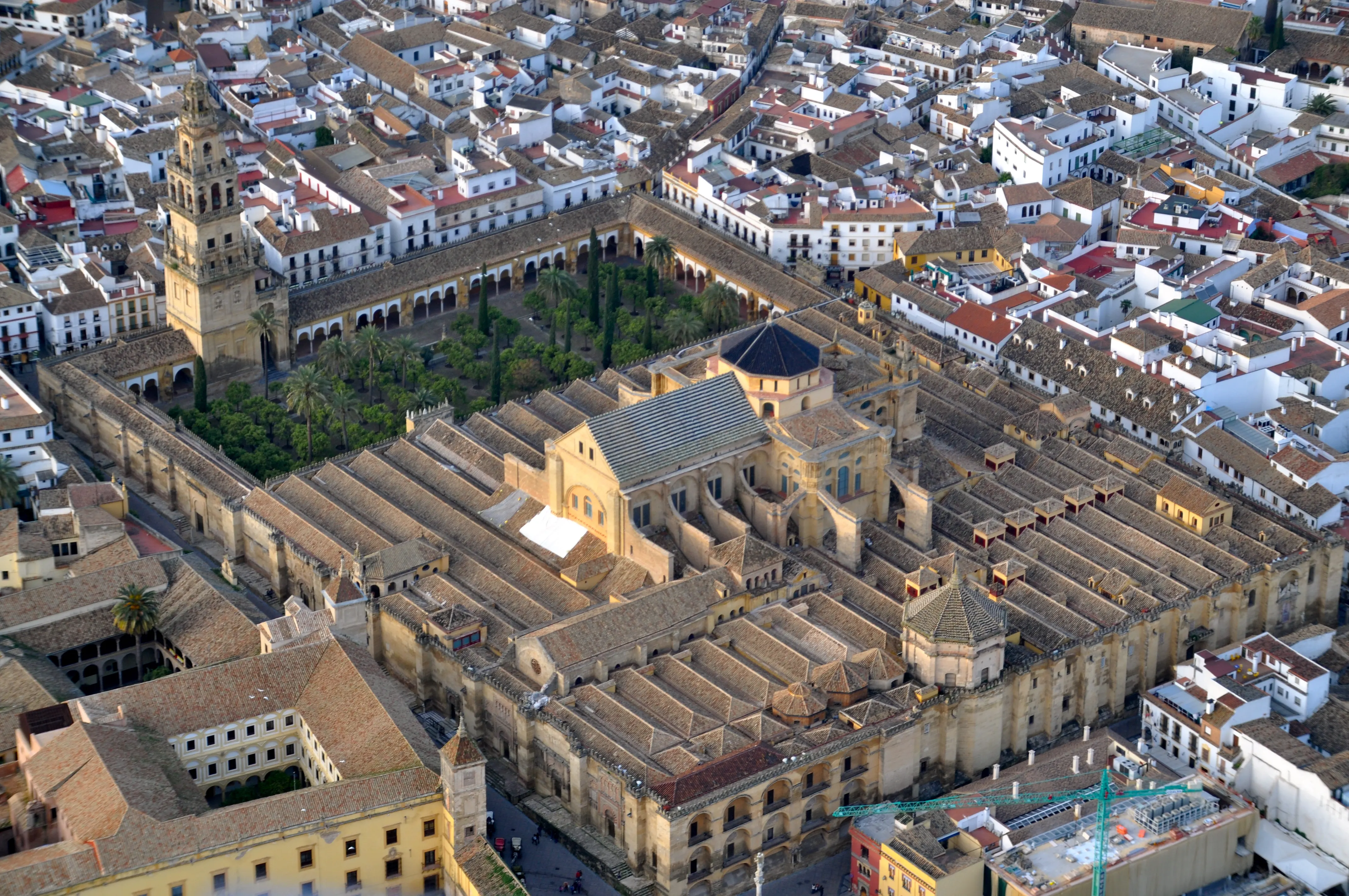
The intellectual life of Al-Andalus was one of the most distinctive and consequential in the medieval world. For nearly eight centuries, the Islamic territories of the Iberian Peninsula produced philosophers, physicians, poets, legal scholars, and scientists whose work shaped both the Islamic world and medieval Europe. What made Andalusi intellectual culture distinctive was not merely its productivity but its character: it developed in a society where Arabic was the shared language of learning across religious communities, where the Maliki legal tradition coexisted with Aristotelian philosophy, and where Jewish and Christian scholars participated in the same intellectual conversations as their Muslim contemporaries. The result was a tradition that was genuinely its own -- neither simply an extension of eastern Islamic learning nor a precursor to European Renaissance thought, but something that drew on both while remaining rooted in the specific conditions of Iberian Islamic civilization.
The Language of Learning: Arabic in a Multilingual Society
The foundation of Andalusi intellectual life was the Arabic language. From the eighth century onward, Arabic became not only the language of Islamic religious practice but the language of scholarship across religious communities. Christian scholars in Cordoba -- the Mozarabs -- adopted Arabic for intellectual work while maintaining their religious identity. Jewish scholars wrote philosophy, poetry, and biblical commentary in Arabic, sometimes using Hebrew script. The result was a shared intellectual medium that allowed scholars from different traditions to read each other's work, debate each other's arguments, and build on each other's discoveries.
This linguistic unity had practical consequences. When a Jewish physician in Cordoba wanted to engage with the latest developments in Islamic medicine, he could read the Arabic texts directly. When a Muslim philosopher wanted to understand the arguments of a Jewish theologian, the language barrier was minimal. The intellectual culture of Al-Andalus was not a culture of translation between communities but a culture of shared discourse -- and this shared discourse was what made the distinctive achievements of Andalusi scholarship possible.
The dominance of Arabic did not eliminate other languages. Hebrew remained the language of Jewish religious practice and liturgy, and the Hebrew literary renaissance of Al-Andalus -- one of the most remarkable episodes in the history of Hebrew literature -- was made possible precisely by the encounter with Arabic poetic forms and philosophical vocabulary. Latin remained the language of Christian religious practice and, eventually, of the translation movement that transmitted Andalusi learning to northern Europe. But Arabic was the medium through which these traditions encountered each other.
Philosophy: The Aristotelian Tradition and Its Tensions
The philosophical tradition of Al-Andalus was shaped by a fundamental tension: the encounter between Aristotelian rationalism and Islamic theological commitments. This tension was not unique to Al-Andalus -- it was the central problem of Islamic philosophy everywhere -- but it took a distinctive form in the west, where the philosophical tradition developed somewhat independently of the eastern schools and produced its own characteristic responses.
The Andalusi philosophical tradition began with figures like Ibn Masarra (883-931 CE), who developed a mystical philosophy combining Neoplatonism with Islamic thought, and Ibn Bajjah (Avempace, c. 1095-1138 CE), who wrote systematic commentaries on Aristotle and developed a theory of the intellect's capacity to achieve union with the Active Intellect through philosophical contemplation. Ibn Tufayl (c. 1105-1185 CE) wrote Hayy ibn Yaqzan, a philosophical novel about a child raised in isolation who discovers philosophical truth through reason alone -- one of the most original works of medieval Islamic literature and a direct influence on later European thought.
The culmination of the Andalusi philosophical tradition was Ibn Rushd (Averroes, 1126-1198 CE), born in Cordoba into a family of distinguished jurists. Ibn Rushd wrote comprehensive commentaries on virtually the entire Aristotelian corpus -- works so authoritative that he became known in medieval Europe simply as "the Commentator." His philosophical project was to demonstrate that Aristotle, properly understood, was compatible with Islamic doctrine, and that the apparent conflicts between philosophy and revelation could be resolved through careful interpretation. His Tahafut al-Tahafut (The Incoherence of the Incoherence) was a systematic response to al-Ghazali's critique of Islamic philosophy, defending the legitimacy of philosophical inquiry against theological attack.
The irony of Ibn Rushd's career is that his influence was far greater in Europe than in the Islamic world. When his works were translated into Latin in the twelfth and thirteenth centuries, they transformed European scholastic philosophy: Thomas Aquinas, Albertus Magnus, and Dante all engaged with his arguments, and the Averroist tradition he inspired shaped European intellectual life for centuries. In Al-Andalus itself, his later years were marked by persecution -- the Almohad caliph had him exiled and his philosophical works burned, a reminder that the tolerance of Andalusi intellectual life had real limits.
The Legal Tradition: Maliki Scholarship in the West
The dominant legal tradition of Al-Andalus was the Maliki school, associated with Imam Malik of Medina, and its establishment in the Iberian Peninsula was one of the most consequential intellectual decisions of the early Umayyad period. The Maliki school's emphasis on the living practice of Medina as a source of law gave it a conservative character that sometimes put it in tension with the more rationalist approaches of the Iraqi legal schools, and this tension shaped the intellectual culture of Al-Andalus in important ways.
The leading Maliki scholars of Al-Andalus were not merely transmitters of eastern doctrine but original thinkers who adapted the tradition to Andalusi conditions. Ibn Hazm (994-1064 CE), born in Cordoba during the caliphate's final years, was one of the most prolific and original writers of the medieval Islamic world. He rejected the Maliki school's reliance on analogical reasoning and developed a literalist approach to Islamic law that insisted on deriving rulings directly from the Quran and hadith without the mediation of scholarly opinion. His Tawq al-Hamama (The Ring of the Dove) is a meditation on love and human nature that combines philosophical depth with literary elegance; his polemical works on comparative religion were among the most sophisticated of the medieval period.
The relationship between legal scholarship and political authority in Al-Andalus was complex. The Maliki scholars of Cordoba were important figures in the Umayyad state, serving as judges and legal advisors, but they also maintained a tradition of scholarly independence that sometimes brought them into conflict with rulers. The Almohad period, which imposed a stricter theological orthodoxy, was particularly difficult for scholars who had developed independent positions -- Ibn Rushd's exile was only the most famous example of a broader pattern of intellectual suppression.
Medicine and Natural Science
The medical tradition of Al-Andalus was one of its most practically significant intellectual achievements. Building on the foundations of Islamic medicine as it had developed in the eastern caliphate, Andalusi physicians made original contributions that influenced both the Islamic world and medieval Europe.
Al-Zahrawi (Albucasis, c. 936-1013 CE), born near Cordoba, wrote al-Tasrif -- a thirty-volume medical encyclopedia whose surgical section was the most comprehensive treatment of surgery in the medieval world. He described more than two hundred surgical instruments, many of which he designed himself, and his work on the use of catgut for internal sutures remained standard practice until the development of synthetic sutures in the twentieth century. His al-Tasrif was translated into Latin by Gerard of Cremona and became the standard surgical reference in European medical schools for centuries.
Ibn Zuhr (Avenzoar, 1094-1162 CE) was a clinical physician of the first rank who emphasized direct observation over theoretical speculation. His Kitab al-Taysir (Book of Simplification) described diseases and their treatments with a clinical specificity that was unusual for the period, and his work on parasitology -- including the first accurate description of the itch mite -- was genuinely original. He was a close friend and collaborator of Ibn Rushd, and the two men's complementary approaches -- Ibn Zuhr the empirical clinician, Ibn Rushd the philosophical systematizer -- represent the range of Andalusi medical thought.
The mathematical and astronomical tradition of Al-Andalus was equally significant. Al-Zarqali (Arzachel, 1029-1087 CE) worked in Toledo and produced the Toledan Tables -- astronomical tables that were the most accurate of the medieval period and that influenced European astronomy for over a century. His invention of the universal astrolabe (the saphea), usable at any latitude, was a genuine technical innovation. Maslama al-Majriti (c. 950-1007 CE) adapted the astronomical tables of al-Khwarizmi for use in Al-Andalus and wrote important works on mathematics and the astrolabe.
Literature: Arabic, Hebrew, and the New Forms
The literary tradition of Al-Andalus was one of its most original contributions to world culture. While eastern Islamic poetry followed the classical Arabic forms established in the pre-Islamic period and refined in the Abbasid courts of Baghdad, Andalusi poets developed new forms that reflected the specific conditions of their society.
The most important of these innovations was the muwashshah -- a strophic poem with a complex rhyme scheme that alternated between classical Arabic and vernacular language (either colloquial Arabic or Romance). The muwashshah was a genuinely new form, without precedent in the eastern tradition, and it became one of the most popular poetic genres in Al-Andalus. Its vernacular endings (kharjas) are among the earliest examples of Romance-language poetry, and they demonstrate the linguistic hybridity that characterized Andalusi culture at its most creative.
The zajal, developed by Ibn Quzman (1078-1160 CE), went further in the vernacular direction -- it was composed entirely in colloquial Arabic and was intended for popular performance rather than court recitation. Ibn Quzman's zajals are witty, irreverent, and full of the specific details of Andalusi urban life; they represent a tradition of popular poetry that had no equivalent in the eastern Islamic world.
The Hebrew literary renaissance of Al-Andalus was one of the most remarkable episodes in the history of Hebrew literature. Inspired by the encounter with Arabic poetic forms and philosophical vocabulary, Jewish poets in Al-Andalus transformed Hebrew from a primarily liturgical language into a vehicle for secular poetry of the highest quality. Solomon ibn Gabirol (c. 1021-1058 CE) wrote both liturgical poetry of great beauty and secular verse that drew on Arabic models; his philosophical poem Keter Malkhut (Crown of Kingship) is one of the masterpieces of medieval Hebrew literature. Judah Halevi (c. 1075-1141 CE) was the greatest Hebrew poet of the medieval period, writing love poetry, wine songs, and religious verse of extraordinary power, as well as the Kuzari, a philosophical dialogue defending Jewish tradition against Aristotelian rationalism.
The Jewish Intellectual Tradition
The Jewish community of Al-Andalus produced intellectual figures of the first rank whose influence extended far beyond their own community. The conditions of Andalusi society -- the shared Arabic language, the relative tolerance of the Umayyad and early taifa periods, the access to Islamic philosophical and scientific learning -- created an environment in which Jewish scholarship could flourish in ways that were impossible in most of medieval Europe.
Moses Maimonides (1135-1204 CE), born in Cordoba, was the greatest Jewish philosopher of the medieval period. His Guide for the Perplexed (Dalalat al-Ha'irin, written in Arabic) attempted to reconcile Aristotelian philosophy with Jewish theology in a way that influenced both Jewish and Christian thought for centuries. His Mishneh Torah, a comprehensive code of Jewish law written in Hebrew, remains one of the most important works in the history of Jewish jurisprudence. Maimonides was forced to flee Cordoba under Almohad persecution and eventually settled in Cairo, where he served as court physician to Saladin -- a reminder that the intellectual achievements of Al-Andalus were often produced by scholars who had been driven from their homes.
Ibn Khaldun, though not himself Andalusi, spent time at the Nasrid court of Granada and drew on his observations of Andalusi civilization in developing the social theory of the Muqaddimah. His analysis of how civilizations rise and fall was shaped in part by his encounter with a sophisticated but declining Islamic civilization surrounded by more powerful enemies -- a description that fit Granada precisely.
The Translation Movement and Transmission to Europe
The most consequential intellectual achievement of Al-Andalus, from the perspective of world history, was the transmission of Islamic learning to medieval Europe through the translation movement centered in Toledo. After the Christian conquest of Toledo in 1085 CE, the city became the most important center for translating Arabic works into Latin, and the scholars who worked there over the following two centuries transformed European intellectual life.
The translation movement was not a simple transfer of texts from one language to another. It was a complex process of cultural mediation in which Jewish scholars often served as intermediaries -- translating from Arabic into vernacular Romance languages, which Christian scholars then rendered into Latin. Gerard of Cremona (c. 1114-1187 CE), the most prolific of the Toledo translators, translated more than seventy Arabic works into Latin, including Ibn Sina's Canon of Medicine, al-Zarqali's astronomical tables, and Ibn Rushd's commentaries on Aristotle. These translations provided the raw material for the intellectual transformation that historians call the twelfth-century Renaissance and, ultimately, for the Scientific Revolution of the sixteenth and seventeenth centuries.
What Europe received through Toledo was not simply the Greek texts that had been preserved in Arabic translation -- though that was important -- but the Arabic commentaries, corrections, and original contributions that Islamic scholars had added. The algebra of al-Khwarizmi, the optics of Ibn al-Haytham, the philosophy of Ibn Rushd, the medicine of Ibn Sina -- all of these reached European universities through the Toledo translators, and all of them shaped the subsequent development of European thought.
Achievement and Limitation
The intellectual life of Al-Andalus was genuinely remarkable, but it is important to understand it accurately rather than idealize it. The conditions that made it possible -- the relative tolerance of the Umayyad and early taifa periods, the shared Arabic language, the access to diverse intellectual traditions -- were not constant. The Almohad period (mid-twelfth to early thirteenth century) brought forced conversion and expulsion for Jews and Christians, and the intellectual culture that had flourished under more tolerant conditions was severely disrupted. Both Ibn Rushd and Maimonides were forced into exile under Almohad rule; the Jewish golden age of Al-Andalus effectively ended with the Almohad conquest.
The intellectual achievements of Al-Andalus were also unevenly distributed. They were concentrated in the cities -- particularly Cordoba, Seville, Toledo, and later Granada -- and in the courts of rulers who chose to patronize learning. The rural population, the majority of Andalusi society, participated in this intellectual culture primarily through its practical applications: the agricultural techniques, the medical knowledge, the legal rulings that filtered down from the scholarly elite.
What remains, after these qualifications, is still extraordinary: a tradition of philosophical inquiry that produced Ibn Rushd, a medical tradition that produced al-Zahrawi and Ibn Zuhr, a poetic tradition that produced the muwashshah and the Hebrew renaissance, a legal tradition that shaped Islamic jurisprudence across North and West Africa, and a translation movement that transmitted the accumulated knowledge of the Islamic world to medieval Europe. The intellectual life of Al-Andalus was not a golden age of perfect tolerance and universal achievement, but it was a genuine and consequential flowering of human learning that left marks on the history of knowledge that have not faded.
References and Further Reading
Primary Islamic Sources
- Quran, Surah Al-Alaq (96:1–5) — "Read in the name of your Lord who created... Taught man that which he knew not."
- Quran, Surah Az-Zumar (39:9) — "Are those who know equal to those who do not know?"
- Ibn Rushd (Averroes). Fasl al-Maqal (The Decisive Treatise on the Harmony of Religion and Philosophy). Cairo: Dar al-Ma'arif, 1972. [Original c. 1179 CE]
- Ibn Hazm, Ali ibn Ahmad. Al-Fisal fi al-Milal wa al-Ahwa wa al-Nihal (The Book of Religions and Sects). Cairo: Maktabat al-Khanji, 1899. [Original c. 1030 CE]
- Al-Maqqari, Ahmad ibn Muhammad. Nafh al-Tib, sections on Andalusi scholarship. Cairo: Dar al-Kutub al-Misriyyah, 1949. [Original c. 1629 CE]
- Said al-Andalusi. Tabaqat al-Umam (Categories of Nations). Beirut: Dar al-Tali'ah, 1985. [Original c. 1068 CE]
Classical Islamic Sources
- Ibn al-Khatib, Lisan al-Din. Al-Ihata fi Akhbar Gharnata. Cairo: Maktabat al-Khanji, 2003. [Original c. 1374 CE]
- Ibn Bashkuwal, Khalaf ibn Abd al-Malik. Kitab al-Silah (Continuation of the Biographical Dictionary of Andalusi Scholars). Cairo: Dar al-Misriyyah, 1955. [Original c. 1139 CE]
- Al-Dabbi, Ahmad ibn Yahya. Bughyat al-Multamis fi Tarikh Rijal al-Andalus. Madrid: Real Academia de la Historia, 1885. [Original c. 1203 CE]
Academic and Scholarly Sources
- Jayyusi, Salma Khadra, ed. The Legacy of Muslim Spain. 2 vols. Leiden: Brill, 1992.
- Menocal, María Rosa. The Ornament of the World: How Muslims, Jews, and Christians Created a Culture of Tolerance in Medieval Spain. Boston: Little, Brown, 2002.
- Leaman, Oliver. Averroes and His Philosophy. Oxford: Oxford University Press, 1988.
- Burnett, Charles. "The Coherence of the Arabic-Latin Translation Program in Toledo in the Twelfth Century." Science in Context 14 (2001): 249–288.
- Gutas, Dimitri. Greek Thought, Arabic Culture: The Graeco-Arabic Translation Movement in Baghdad and Early Abbasid Society. London: Routledge, 1998.
- Vernet, Juan. La cultura hispanoárabe en Oriente y Occidente. Barcelona: Ariel, 1978.
- Fierro, Maribel, and Julio Samsó, eds. The Formation of al-Andalus, Part 2: Language, Religion, Culture and the Sciences. Aldershot: Ashgate, 1998.
Further Reading
- Saliba, George. Islamic Science and the Making of the European Renaissance. Cambridge: MIT Press, 2007.
- Kennedy, Hugh. Muslim Spain and Portugal: A Political History of al-Andalus. London: Longman, 1996.
- Glick, Thomas F. Islamic and Christian Spain in the Early Middle Ages. Princeton: Princeton University Press, 1979.
- Catlos, Brian A. Kingdoms of Faith: A New History of Islamic Spain. New York: Basic Books, 2018.
Mentioned In
4 articles reference this topic
More from Al-Andalus
Abd al-Rahman I: The Falcon of the Quraysh
Abd al-Rahman I (731-788) was the Umayyad prince who survived the Abbasid destruction of his family, reached Iberia after five years as a fugitive, and in 756 founded the Emirate of Cordoba. Thirty years of near-continuous revolt shaped the state he built.
Abd al-Rahman III: The First Caliph of Cordoba
Abd al-Rahman III (891-961) inherited a collapsing emirate in 912, spent twenty years restoring it by force, and in 929 declared himself caliph. His fifty-year reign made Cordoba the strongest state in western Europe and built the palace-city of Madinat al-Zahra.
Al-Andalus
Al-Andalus was the Islamic territory in the Iberian Peninsula from 711 to 1492 CE. Over nearly eight centuries it produced major intellectual and architectural achievements, and its mix of Muslim, Christian, and Jewish communities left a lasting mark on European and Islamic civilization.
Al-Mansur ibn Abi Amir: The Chamberlain Who Ruled Al-Andalus
Al-Mansur ibn Abi Amir (c. 938-1002), known in Spanish tradition as Almanzor, rose from court clerk to chamberlain and ruled Al-Andalus for two decades while the caliph Hisham II remained a figurehead. He led some fifty campaigns and left the caliphate militarily dominant and politically hollow.