Islamic Influence on Europe - The Andalusian Legacy
The Islamic civilization of Al-Andalus profoundly shaped European development through the transmission of knowledge, architecture, technology, and culture. From translating classical texts to introducing new agriculture, Islamic Spain bridged the Islamic world and medieval Europe.
The Islamic influence on Europe through Al-Andalus represents one of the most significant cultural exchanges in world history. For nearly eight centuries, Islamic Spain served as a crucial bridge between the Islamic world and Christian Europe, facilitating the transmission of knowledge, technology, artistic traditions, and cultural practices that would fundamentally transform European civilization. This influence extended far beyond mere translation of texts to encompass architecture, science, philosophy, agriculture, medicine, and countless aspects of daily life that helped lay the foundations for the European Renaissance and the modern world.
The Transmission of Classical Knowledge
The Great Translation Movement
The translation of Arabic works into Latin was perhaps the most significant intellectual transfer in medieval history. It was carried out in several centres: Toledo, the premier centre for Arabic-to-Latin translation after 1085 CE; Córdoba, where early translation activities took place during the Umayyad period; Seville, where translation work continued under various rulers; and Palermo, with its connections to Norman Sicily and broader Mediterranean networks. Its key translators included Gerard of Cremona (1114–1187 CE), who translated over 80 works including Ptolemy's Almagest; Adelard of Bath (1080–1152 CE), who translated Euclid's Elements and astronomical works; Robert of Chester (1110–1160 CE), the first to translate the Quran and algebraic texts; and Michael Scot (1175–1232 CE), who translated Averroes and Aristotelian commentaries.
Philosophical Transmission
The rediscovery of Aristotle through Arabic sources revolutionised European thought. The Islamic commentaries that carried it included the comprehensive commentaries of Averroes (Ibn Rushd) on Aristotle, the synthesis of Aristotelian and Islamic philosophy by Avicenna (Ibn Sina), the political philosophy and metaphysical works of al-Farabi, and the theological and philosophical synthesis of al-Ghazali. Their European impact was profound: they laid the foundation for the scholasticism of medieval European philosophy, informed Thomas Aquinas's integration of Aristotelian philosophy with Christian theology, shaped a university curriculum based on the translated Arabic texts, and promoted rational inquiry through reason and logical argumentation.
Scientific Revolution Foundations
The mathematical and scientific texts transmitted to Europe included al-Khwarizmi's algebra, which introduced algebraic methods; astronomical works such as Ptolemy's Almagest and Islamic astronomical treatises; medical texts such as Avicenna's Canon of Medicine and surgical treatises; and optical studies, notably Ibn al-Haytham's works on optics and vision. Their methodological influence lay in the emphasis on empirical observation and experimentation, the use of mathematics for precision in scientific investigation, a systematic and organised approach to knowledge and research, and the critical analysis of scholarly methods of textual criticism and verification.
Architectural and Artistic Influence
Islamic Architectural Elements in Europe
Structural innovations attributed to Islamic influence include the pointed arch, which bore on the development of Gothic architecture; ribbed vaulting, an advanced structural technique; flying buttresses, which may have drawn on Islamic architectural solutions; and geometric patterns integrating Islamic decorative motifs. In the decorative arts, the influence appears in the complex mathematical geometric designs of European art, the pseudo-Arabic calligraphic inscriptions on European buildings, the Mudejar style as a direct continuation of Islamic architectural traditions, and the azulejo ceramic-tile traditions spreading throughout Europe.
Specific Architectural Examples
In Spain, the influence is seen in Mudejar architecture, Islamic-influenced Christian buildings; the Cathedral of Córdoba, an Islamic mosque converted and expanded; the Alcázar of Seville, a synthesis of Islamic and Christian elements; and synagogues, Jewish buildings incorporating Islamic architectural elements. Its broader European influence appears in Norman Sicily, with Islamic architectural elements in Palermo and Monreale; in Venetian architecture, shaped by Islamic influences through trade connections; in Romanesque churches, which incorporated Islamic decorative motifs; and in Gothic cathedrals, which show possible structural influences from Islamic architecture.
Scientific and Technological Transfer
Medical Knowledge
Surgical advances flowed from al-Zahrawi (Albucasis), regarded as a father of modern surgery for his instruments and techniques; from the introduction of new surgical tools to Europe; from advanced surgical procedures for various operations; and from hospital-based methods of medical education. Medical texts were equally influential: Avicenna's Canon became a standard medical textbook in European universities, the works of Rhazes offered clinical observations and case studies, pharmaceutical knowledge introduced new medicines and treatments, and anatomical studies provided a detailed understanding of human anatomy.
Mathematical and Astronomical Contributions
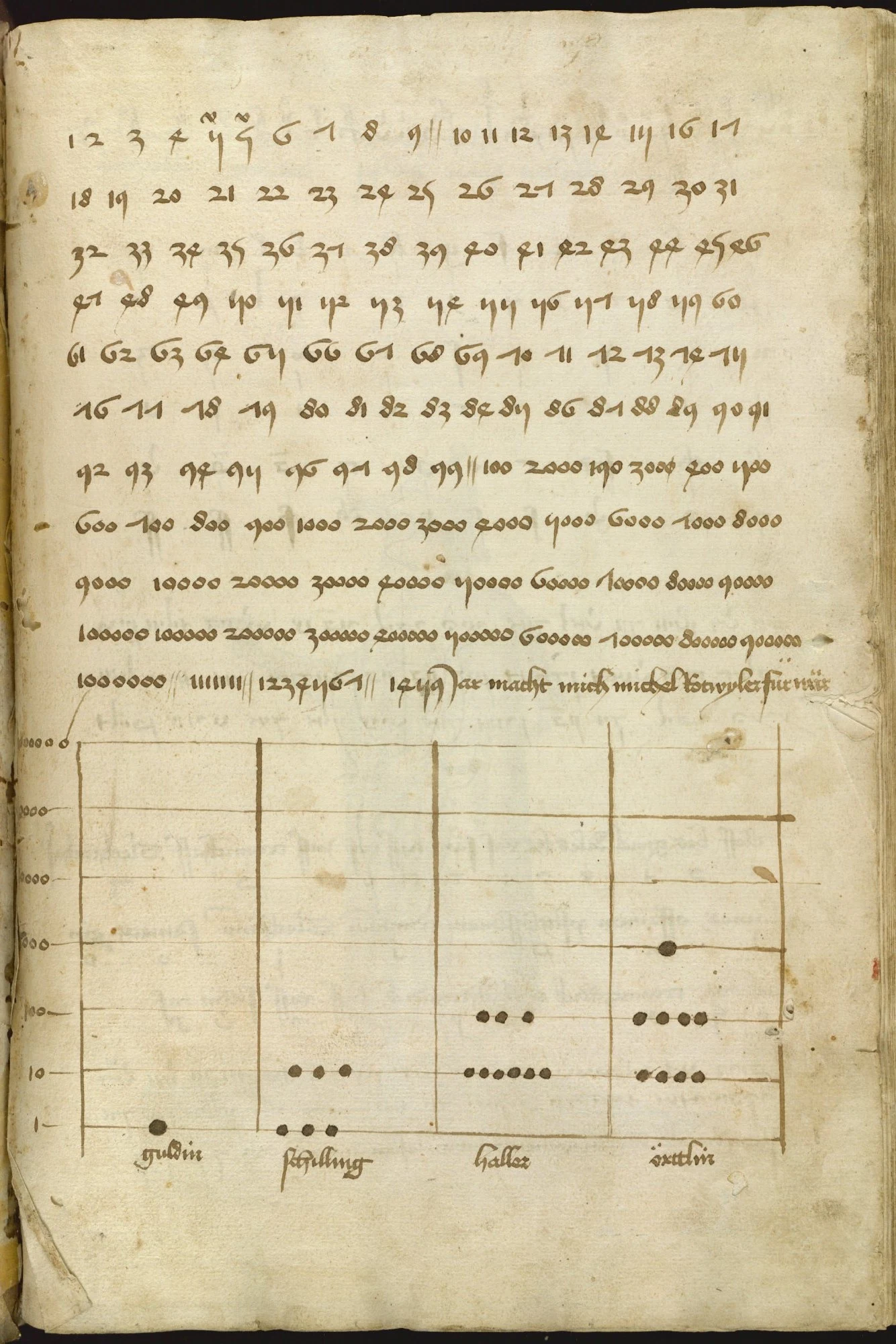
In numerical systems, the influence appears in the Arabic numerals that introduced the decimal system to Europe, the algebraic methods for solving equations, the trigonometry supporting advanced calculations for astronomy and navigation, and the geometric principles giving a sophisticated understanding of geometric relationships. In astronomical instruments, it appears in the astrolabe, a sophisticated instrument for astronomical observation; the armillary spheres, three-dimensional models of celestial mechanics; the quadrants for measuring celestial positions; and the star charts that mapped the night sky in detail.
Technological Innovations
Industrial techniques transmitted to Europe included paper-making, which introduced paper production; textile production with advanced weaving and dyeing techniques; metallurgy with improved methods for working with metals; and alchemical and chemical knowledge of chemical processes. Agricultural technology included advanced irrigation and water-management techniques, improved agricultural tools such as ploughs and farming implements, systematic approaches to crop rotation for maintaining soil fertility, and botanical knowledge of plant cultivation and breeding.
Agricultural and Economic Influence
New Crops and Farming Techniques
A range of new crops was introduced, including citrus fruits such as oranges, lemons, and limes; rice, with cultivation techniques adapted to European conditions; cotton, for fibre production and textile manufacturing; sugar cane, which enabled early European sugar production; saffron, a valuable cultivated spice; and artichokes, with their vegetable cultivation techniques. New agricultural methods accompanied these crops: sophisticated irrigation and water-management systems, terraced farming that maximised arable land on hillsides, crop rotation that maintained soil fertility through systematic planting, and selective breeding that improved crop varieties and livestock.
Commercial Practices
In banking and finance, the influence appears in advanced credit systems, international trade networks connecting Europe with the Islamic world, sophisticated monetary systems of currency exchange, and legal frameworks of commercial law for trade and commerce. In urban development, it appears in the systematic organisation of commercial districts, craft guilds as professional organisations for artisans, quality-control standards for manufactured goods, and the commercial infrastructure of warehouses, inns, and trading facilities.
Cultural and Social Influence
Educational Systems
The development of universities drew on the organisation of knowledge into disciplines, degree systems of academic qualifications and certification, the systematic collection and cataloguing of books in library organisation, and scholarly methods for research and academic writing. Pedagogical approaches included the commentary tradition of detailed explanation and interpretation of texts, structured academic disputation through debate methods, an emphasis on empirical observation through direct observation and experience, and the critical analysis of scholarly methods of textual criticism.
Literary and Linguistic Influence
Literary forms bore the influence of courtly romance on European romantic literature, new poetic metres and rhythmic patterns in European poetry, narrative techniques of storytelling methods and literary devices, and allegorical writing with its symbolic and metaphorical approaches. The linguistic impact appears in a vocabulary of thousands of Arabic loanwords in European languages, technical scientific terminology across various fields, place names reflecting Islamic heritage, and cultural concepts, ideas and practices transmitted through language.
Music and Performance
Among musical instruments, the influence appears in the lute, developed from the Arabic oud; the guitar, which evolved from Islamic stringed instruments; various percussion drums and rhythmic instruments; and wind instruments such as flutes and reed instruments. In musical theory, it appears in the mathematical approaches to harmony in harmonic systems, complex rhythmic patterns and structures, performance practices in court music and popular entertainment, and systems of musical notation for recording and transmitting music.
Philosophical and Intellectual Impact
Rational Philosophy
The influence of Averroes extended across his detailed Aristotelian commentary interpreting Aristotelian philosophy, his rational theology integrating reason and religious belief, his political philosophy of governance and social organisation, and his natural philosophy explaining the physical world. European scholasticism reflected this influence in Thomas Aquinas's synthesis of Aristotelian and Christian thought, Albertus Magnus's integration of Islamic scientific knowledge, Roger Bacon's emphasis on empirical observation and experimentation, and the philosophical developments of Duns Scotus building on Islamic foundations.
Scientific Method
The empirical approach rested on the systematic observation of natural phenomena, the controlled testing of hypotheses through experimentation, mathematical analysis in scientific investigation, and methods of verification for confirming scientific discoveries. It was supported by institutional development: universities as centres for advanced learning and research, libraries for the systematic collection and preservation of knowledge, observatories as facilities for astronomical research, and hospitals as centres for medical education and practice.
Regional Variations of Islamic Influence
Iberian Peninsula
On the Iberian Peninsula the influence was direct, seen in the Mudejar communities of Muslims living under Christian rule, the architectural continuity of ongoing Islamic architectural traditions, the cultural synthesis blending Islamic, Christian, and Jewish elements, and the linguistic heritage of Arabic influence on Spanish and Portuguese.
Southern France
In the Occitan culture of southern France, the influence appears in troubadour poetry, which may have drawn on Arabic poetic traditions; in a courtly culture of sophisticated court life and entertainment; in architectural elements showing Islamic influences in Romanesque architecture; and in the commercial networks of trade connections with Islamic Spain.
Italy
In Norman Sicily, the influence appears in the cultural synthesis integrating Islamic, Byzantine, and Norman elements, the architectural fusion of a unique blend of traditions, the scholarly translation of Arabic texts into Latin, and the Islamic influences on governmental organisation in its administrative systems. In the maritime republics, it appears in the trade networks of commercial connections with the Islamic world, the technological transfer of navigation and shipbuilding techniques, the cultural exchange of artistic and intellectual influences, and the economic practices of banking and commercial methods.
Long-term Impact on European Development
Renaissance Foundations
The intellectual preparation for the Renaissance came through the classical revival, the rediscovery of ancient texts through Arabic sources; the scientific method, with its empirical approaches to knowledge; rational inquiry, emphasising reason and logical investigation; and the cultural synthesis integrating diverse intellectual traditions. Its artistic and cultural development appeared in perspective, the mathematical approach to artistic representation; architectural innovation in new structural and decorative techniques; the development of new literary genres and styles; and the musical evolution advancing musical theory and practice.
Scientific Revolution
The methodological foundations of the Scientific Revolution lay in empirical observation, the systematic study of natural phenomena; mathematical analysis in scientific investigation; the experimental method of controlled testing of hypotheses; and critical thinking in the scholarly verification of knowledge. Its institutional development rested on universities as centres for advanced learning and research, scientific societies as organisations for scholarly collaboration, observatories as facilities for astronomical research, and libraries for the systematic collection and preservation of knowledge.
The Translation Movement and Intellectual Transfer
Toledo as a Center of Translation
The city of Toledo, after its conquest by Christian forces in 1085 CE, emerged as the most important center for the translation of Arabic works into Latin. This translation movement was not merely a mechanical transfer of texts but a profound intellectual engagement that transformed European thought and laid the groundwork for the Renaissance.
The Archbishop of Toledo, Raymond de Sauvetât, established a translation school that attracted scholars from across Europe. These translators worked in teams, often with a Jewish or Mozarabic (Christian Arab) scholar translating from Arabic to Castilian Spanish, and a Christian scholar then translating from Spanish to Latin. This collaborative process reflected the multicultural character of medieval Iberia and demonstrated how cultural diversity could facilitate intellectual advancement.
The scope of the translation movement was extraordinary. Translators rendered into Latin works on mathematics, astronomy, medicine, philosophy, alchemy, and numerous other fields. They translated not only original Arabic works but also Greek texts that had been preserved and commented upon by Islamic scholars. Through this process, Europe regained access to classical Greek knowledge that had been largely lost in the West, while also encountering the original contributions of Islamic civilization.
The impact of these translations on European intellectual life cannot be overstated. Works like Euclid's Elements, Ptolemy's Almagest, and Aristotle's philosophical treatises became foundational texts in European universities. The medical works of Avicenna and Rhazes became standard textbooks in European medical schools for centuries. The mathematical and astronomical works of Al-Khwarizmi and Al-Battani revolutionized European understanding of these fields.
The Role of Individual Translators
Individual translators played crucial roles in this intellectual transfer, often dedicating their entire lives to the painstaking work of translation and commentary. Gerard of Cremona, perhaps the most prolific translator, spent decades in Toledo translating over 80 works from Arabic to Latin. His translations included Ptolemy's Almagest, Euclid's Elements, and numerous medical and philosophical texts. His work made accessible to Latin Europe the accumulated knowledge of Greek, Persian, Indian, and Arab civilizations.
Adelard of Bath, an English scholar who traveled extensively in the Islamic world, translated Euclid's Elements and astronomical tables from Arabic. His translations were accompanied by his own observations and commentaries, demonstrating how European scholars didn't merely receive Islamic knowledge passively but engaged with it critically and creatively. Adelard's work exemplifies the active intellectual exchange that characterized this period.
Robert of Chester translated Al-Khwarizmi's work on algebra, introducing this mathematical discipline to Europe. The very word "algebra" comes from the Arabic "al-jabr," demonstrating the linguistic as well as intellectual debt Europe owes to Islamic civilization. Robert also produced the first Latin translation of the Quran, though this was motivated more by polemical than scholarly interests.
Michael Scot, working in the 13th century, translated the works of Averroes (Ibn Rushd), whose commentaries on Aristotle profoundly influenced European scholastic philosophy. Through Michael's translations, Averroes' interpretations of Aristotle became central to European philosophical discourse, sparking debates that shaped the development of medieval and early modern European thought.
The Transmission of Scientific Knowledge
The transmission of scientific knowledge from the Islamic world to Europe through Al-Andalus was particularly significant. Islamic scientists had not only preserved Greek scientific knowledge but had made substantial original contributions, developing new theories, refining existing ones, and creating new instruments and methodologies.
In astronomy, Islamic scholars had made precise observations, developed sophisticated mathematical models, and created accurate astronomical tables. These advances were transmitted to Europe through translations and through the migration of instruments like the astrolabe. European astronomers built upon this foundation, eventually leading to the Copernican revolution and the development of modern astronomy.
In mathematics, the transmission of Arabic numerals and the decimal system revolutionized European calculation and commerce. The introduction of algebra provided new tools for solving mathematical problems. The development of trigonometry, largely an Islamic achievement, became essential for navigation, astronomy, and engineering. These mathematical advances were prerequisites for the scientific revolution that would transform Europe in the 16th and 17th centuries.
In medicine, the transmission of Islamic medical knowledge transformed European medical practice and education. The comprehensive medical encyclopedias of Avicenna and Rhazes, with their systematic organization of medical knowledge, clinical observations, and therapeutic recommendations, became standard texts in European medical schools. Surgical techniques and instruments developed by Al-Zahrawi (Albucasis) advanced European surgical practice. The concept of the hospital as an institution for medical treatment and education, developed in the Islamic world, was adopted and adapted in Europe.
Architectural and Artistic Influences
The Development of Gothic Architecture
While the relationship between Islamic architecture and Gothic architecture remains debated among scholars, there are striking similarities that suggest possible influence. The pointed arch, a characteristic feature of Gothic architecture, was widely used in Islamic architecture centuries before its appearance in European Gothic buildings. While pointed arches also appeared in earlier European architecture, their systematic use in Gothic buildings may have been influenced by Islamic examples.
The ribbed vaulting that characterizes Gothic cathedrals bears similarities to Islamic architectural techniques. The use of geometric patterns and the emphasis on light in Gothic architecture also echo Islamic architectural principles. The rose windows of Gothic cathedrals, with their intricate geometric patterns, may have been influenced by the geometric designs common in Islamic architecture.
Beyond specific architectural elements, Islamic architecture may have influenced Gothic architecture at a more fundamental level—in its approach to creating sacred space through light, geometry, and vertical emphasis. The Gothic cathedral's soaring height, its use of light filtered through stained glass, and its complex geometric organization all have parallels in Islamic architectural traditions.
Mudejar Architecture
The Mudejar style, which developed in Christian Spain after the Reconquista, represents a direct continuation of Islamic architectural traditions. Mudejar buildings, constructed by Muslim craftsmen working under Christian rule, combined Islamic architectural elements with Christian building types. This unique synthesis created a distinctive architectural style that flourished in Spain and influenced architecture in Spain's American colonies.
Mudejar architecture is characterized by the use of brick and ceramic tile, horseshoe arches, geometric patterns, and elaborate stucco work—all elements derived from Islamic architectural traditions. Churches, palaces, and civic buildings in the Mudejar style demonstrate how Islamic architectural principles could be adapted to Christian purposes, creating buildings that were functionally Christian but aesthetically Islamic.
The Alcázar of Seville, built in the 14th century for the Christian king Peter of Castile, is perhaps the finest example of Mudejar architecture. Its elaborate stucco work, geometric tile patterns, and horseshoe arches create an aesthetic that is unmistakably Islamic, yet the building served as a Christian royal palace. This synthesis of Islamic form and Christian function exemplifies the complex cultural interactions of medieval Iberia.
Decorative Arts and Crafts
Islamic influence on European decorative arts extended beyond architecture to encompass ceramics, textiles, metalwork, and other crafts. The technique of lusterware, developed in the Islamic world, was transmitted to Europe through Al-Andalus and became highly prized. Spanish lusterware, produced in centers like Manises, combined Islamic techniques with European designs, creating a distinctive hybrid style.
Textile production in medieval Europe was profoundly influenced by Islamic techniques and designs. The production of silk, introduced to Europe through Islamic Spain and Sicily, became an important European industry. Textile patterns featuring geometric designs, arabesques, and stylized floral motifs—all derived from Islamic artistic traditions—became common in European textiles.
Metalwork techniques, including damascening (the inlaying of gold or silver into steel or iron) and the production of elaborate brass vessels with intricate geometric patterns, were transmitted from the Islamic world to Europe. These techniques influenced European metalworking traditions and contributed to the development of European decorative arts.
Agricultural and Economic Transformations
The Agricultural Revolution
The Islamic influence on European agriculture, particularly through Al-Andalus, constituted a genuine agricultural revolution. Islamic agronomists had developed sophisticated understanding of irrigation, crop rotation, soil management, and plant breeding. They had also introduced numerous crops from Asia and Africa to the Mediterranean region. This agricultural knowledge and these new crops were transmitted to Christian Europe, transforming European agriculture and diet.
The introduction of rice cultivation to Europe through Al-Andalus had lasting economic and culinary impacts. Rice became an important crop in Spain and Italy, and rice dishes became integral to Mediterranean cuisine. The cultivation of sugar cane, introduced by Muslims to Spain and Sicily, established the foundation for Europe's later sugar industry, though large-scale sugar production would eventually shift to the Atlantic islands and the Americas.
Citrus fruits—oranges, lemons, and limes—were introduced to Europe through Islamic Spain. These fruits not only enriched European diet but also had important medical applications, particularly in preventing scurvy. The cultivation of cotton, introduced by Muslims to Spain and Sicily, established the basis for European cotton textile production, though this industry would later expand dramatically with the exploitation of colonial resources.
Beyond specific crops, Islamic agricultural techniques transformed European farming practices. Sophisticated irrigation systems, including the noria (water wheel) and qanat (underground water channel), were adopted in Spain and other parts of Europe. Crop rotation systems that maintained soil fertility while maximizing productivity were learned from Islamic agronomists. Techniques for grafting fruit trees and breeding improved plant varieties were transmitted from the Islamic world to Europe.
Commercial Practices and Urban Development
Islamic commercial practices significantly influenced European economic development. The concept of the check (from Arabic "sakk"), which facilitated long-distance trade without the need to transport large amounts of coin, was adopted by European merchants. Letters of credit, partnership agreements, and other commercial instruments developed in the Islamic world were adapted for European use.
The organization of urban markets, with specialized districts for different crafts and trades, influenced European urban planning. The concept of the bazaar or souk, with its covered walkways and specialized shops, influenced the development of European market halls and shopping arcades. Guilds, which organized craftsmen and regulated production and trade, may have been influenced by similar organizations in the Islamic world.
Banking practices, including the acceptance of deposits, the making of loans, and the exchange of currencies, were influenced by Islamic commercial practices. While Islamic law prohibited interest (riba), Islamic merchants and bankers developed various legal devices to facilitate credit transactions. European merchants and bankers adapted some of these practices while developing their own approaches to credit and banking.
Philosophical and Intellectual Impacts
The Averroist Tradition
The influence of Averroes (Ibn Rushd) on European philosophy was profound and long-lasting. His commentaries on Aristotle, translated into Latin in the 13th century, sparked intense philosophical debates that shaped the development of European thought. Averroes' emphasis on the compatibility of reason and faith, his defense of philosophical inquiry, and his interpretations of Aristotelian philosophy influenced generations of European philosophers.
The Averroist tradition in European philosophy emphasized the autonomy of reason and the importance of philosophical inquiry independent of theological constraints. This tradition, while controversial and sometimes condemned by religious authorities, contributed to the development of a more secular approach to philosophy and natural science. The debates sparked by Averroes' ideas helped establish philosophy as a distinct discipline with its own methods and standards of inquiry.
Thomas Aquinas, perhaps the most influential medieval Christian philosopher, engaged extensively with Averroes' interpretations of Aristotle. While Aquinas ultimately rejected some of Averroes' conclusions, his own philosophical synthesis was profoundly shaped by his engagement with Averroist philosophy. Through Aquinas and other scholastic philosophers, Averroes' influence extended throughout European intellectual life.
The Development of Universities
The development of European universities in the 12th and 13th centuries was influenced by Islamic educational institutions, particularly the madrasa. While European universities developed their own distinctive characteristics, they borrowed certain organizational features and pedagogical approaches from Islamic institutions.
The madrasa system, with its emphasis on the systematic study of texts, the use of commentaries and super-commentaries, and the granting of certificates (ijaza) authorizing graduates to teach, provided a model that influenced European educational development. The organization of knowledge into distinct disciplines, the use of formal disputation as a pedagogical tool, and the emphasis on mastery of authoritative texts all had parallels in Islamic educational practice.
The curriculum of medieval European universities was heavily influenced by texts translated from Arabic. The study of Aristotelian philosophy, which became central to university education, was based largely on texts and commentaries transmitted through Arabic sources. Medical education relied on texts by Avicenna, Rhazes, and other Islamic physicians. Mathematical and astronomical education used texts translated from Arabic. Thus, the content as well as the structure of European university education bore the imprint of Islamic influence.
Scientific Methodology
The emphasis on empirical observation and experimentation in Islamic science influenced the development of European scientific methodology. Islamic scientists like Ibn al-Haytham (Alhazen) emphasized the importance of experimental verification of theories, a methodological approach that would become central to modern science.
Ibn al-Haytham's work on optics, which included careful experiments with light and vision, provided a model of how to combine mathematical analysis with experimental observation. His insistence that theories must be tested against empirical evidence influenced European scientists like Roger Bacon, who advocated for experimental methods in natural philosophy.
The Islamic tradition of careful astronomical observation, with its emphasis on precise measurement and mathematical analysis, influenced European astronomy. The astronomical tables compiled by Islamic astronomers, based on centuries of systematic observation, provided European astronomers with data of unprecedented accuracy. This emphasis on precise observation and mathematical analysis became characteristic of European astronomy and eventually of European science more broadly.
Literary and Cultural Influences
The Troubadour Tradition
The relationship between Arabic poetry and the troubadour tradition of southern France has been the subject of scholarly debate. Some scholars argue that the troubadour tradition, with its emphasis on courtly love, its sophisticated poetic forms, and its elevation of the beloved lady, was influenced by Arabic love poetry. Others emphasize the indigenous European roots of troubadour poetry.
Regardless of the extent of direct influence, there are striking parallels between Arabic love poetry and troubadour poetry. Both traditions emphasize the ennobling power of love, the suffering of the lover, and the idealization of the beloved. Both use sophisticated poetic forms with complex rhyme schemes and meters. Both developed in courtly contexts where poetry was performed for aristocratic audiences.
The cultural context of southern France, with its proximity to Al-Andalus and its extensive commercial and diplomatic contacts with the Islamic world, made cultural transmission possible. The courts of southern France, like those of Al-Andalus, valued poetry, music, and refined culture. Whether through direct influence or parallel development, the troubadour tradition and Arabic poetry share important characteristics that reflect a common Mediterranean cultural milieu.
Narrative Literature
Islamic narrative literature, particularly the collection known as The Thousand and One Nights (though this work was not from Al-Andalus), influenced European narrative traditions. The frame narrative structure, in which stories are nested within other stories, became a common device in European literature. The use of fantastic elements, magical transformations, and exotic settings influenced European romance literature.
More directly, the literary culture of Al-Andalus, with its emphasis on adab (refined culture and literature), influenced European conceptions of courtly culture. The ideal of the cultured courtier, skilled in poetry, music, and refined conversation, had parallels in both Islamic and European courtly traditions. The transmission of this cultural ideal through Al-Andalus may have influenced the development of European courtly culture.
The maqama, an Arabic literary genre featuring a clever protagonist who uses his wit and eloquence to extricate himself from difficult situations, may have influenced the development of the picaresque novel in Spain. The picaresque tradition, which features a roguish protagonist navigating a corrupt society through cleverness and deception, shares characteristics with the maqama tradition.
The Concept of Romantic Love
The concept of romantic love, which became central to European literature and culture, may have been influenced by Arabic literary traditions. Arabic love poetry, with its emphasis on the ennobling power of love, the suffering of the lover, and the idealization of the beloved, anticipated themes that would become central to European romantic literature.
The concept of 'udhri love in Arabic poetry, which emphasized pure, spiritual love that transcends physical desire, has parallels with the concept of courtly love in European literature. Both traditions idealize a love that is often unattainable, that ennobles the lover through suffering, and that is valued for its own sake rather than for any practical outcome.
Whether through direct influence or parallel development, the similarities between Arabic and European conceptions of romantic love suggest a shared Mediterranean cultural tradition. The transmission of these ideas through Al-Andalus, where Arabic, Hebrew, and Romance languages coexisted and influenced each other, created a cultural synthesis that shaped European literary traditions.
The Legacy in Modern Europe
Linguistic Heritage
The linguistic legacy of Islamic influence on Europe is substantial and enduring. Thousands of words in European languages, particularly Spanish and Portuguese, derive from Arabic. These words span numerous domains, reflecting the breadth of Islamic influence on European life.
In Spanish, words related to agriculture (acequia - irrigation channel, alcachofa - artichoke, azúcar - sugar), architecture (alcázar - palace, azulejo - tile), commerce (aduana - customs house, tarifa - tariff), and numerous other fields derive from Arabic. Many Spanish place names, particularly in southern Spain, are of Arabic origin, preserving the memory of Islamic rule.
Beyond vocabulary, Arabic influenced the structure and style of Spanish and Portuguese. The use of certain grammatical constructions and rhetorical devices in these languages may reflect Arabic influence. The development of Romance languages in Iberia occurred in a context of intense contact with Arabic, and this contact left lasting marks on these languages.
The influence extends beyond Iberian languages. English contains numerous words of Arabic origin, many of which entered English through Spanish or through scientific and commercial contacts with the Islamic world. Words like algebra, algorithm, alchemy, alcohol, and many others testify to the Islamic contribution to European intellectual and material culture.
Architectural Heritage
The architectural heritage of Islamic influence is visible throughout Europe, particularly in Spain and Portugal. The Alhambra in Granada, the Great Mosque of Córdoba (now the Cathedral of Córdoba), and numerous other buildings testify to the architectural achievements of Islamic Spain. These buildings continue to attract millions of visitors and inspire architects and artists.
Beyond these major monuments, Islamic architectural influence is visible in countless smaller buildings throughout Iberia. Churches, palaces, and civic buildings in the Mudejar style demonstrate the lasting influence of Islamic architectural traditions. The use of horseshoe arches, geometric tile patterns, and elaborate stucco work in buildings constructed centuries after the end of Islamic rule in Spain testifies to the enduring appeal of Islamic architectural aesthetics.
The influence extends beyond Iberia. The Moorish Revival style, popular in 19th-century Europe and America, drew inspiration from Islamic architecture, particularly that of Al-Andalus. Synagogues, theaters, and other buildings in this style demonstrate the continuing fascination with Islamic architectural forms and the recognition of their aesthetic power.
Scientific and Intellectual Legacy
The scientific and intellectual legacy of Islamic influence through Al-Andalus is fundamental to modern European and world civilization. The scientific method, with its emphasis on empirical observation, mathematical analysis, and experimental verification, owes much to Islamic scientific traditions. The organization of knowledge into distinct disciplines, the use of systematic classification and categorization, and the emphasis on building upon previous work all reflect practices developed in Islamic civilization and transmitted to Europe.
The university system, which became central to European intellectual life and eventually spread throughout the world, was influenced by Islamic educational institutions and relied heavily on texts translated from Arabic. The curriculum of medieval universities, with its emphasis on Aristotelian philosophy, mathematical sciences, and medicine, was shaped by the knowledge transmitted from the Islamic world.
Modern science, which emerged in Europe in the 16th and 17th centuries, built upon foundations laid by Islamic scientists. The mathematical tools, astronomical observations, medical knowledge, and philosophical frameworks developed in the Islamic world provided essential prerequisites for the scientific revolution. While European scientists made original contributions that transformed these inherited traditions, they did so by building upon the work of their Islamic predecessors.
Conclusion
The Islamic influence on Europe through Al-Andalus represents one of the most significant cultural exchanges in world history. For nearly eight centuries, Islamic Spain served as a bridge between civilizations, facilitating the transmission of knowledge, technology, and cultural practices that fundamentally transformed European development and laid the foundations for modern global civilization.
This influence extended far beyond the mere translation of texts to encompass every aspect of European life: architecture, science, philosophy, agriculture, medicine, literature, music, and countless elements of daily existence. The Islamic contributions provided crucial foundations for the European Renaissance, the Scientific Revolution, and the development of modern European civilization. From the mathematical tools that enabled scientific calculation to the philosophical frameworks that shaped European thought, from the agricultural techniques that transformed European farming to the architectural forms that inspired European builders, Islamic civilization profoundly shaped European development.
The story of Islamic influence on Europe through Al-Andalus demonstrates the power of cultural exchange and intellectual collaboration. It shows how civilizations can enrich each other through peaceful interaction and mutual learning, creating achievements that neither could have accomplished alone. The translation movement in Toledo, the cultural synthesis in Córdoba, and the intellectual ferment in other centers of learning in Al-Andalus created a unique cultural environment where knowledge flowed freely across religious and linguistic boundaries.
Perhaps most importantly, this historical example reminds us that human progress depends on openness to different ideas, willingness to learn from other cultures, and recognition that knowledge and wisdom can come from any source. The Islamic influence on Europe through Al-Andalus stands as a testament to the benefits of cultural diversity and intellectual exchange, offering valuable lessons for our contemporary globalized world.
The legacy of this influence continues to shape European and world civilization today. From the architectural monuments that grace European cities to the scientific methods that drive modern research, from the literary traditions that enrich European culture to the philosophical approaches that inform contemporary thought, the Islamic influence transmitted through Al-Andalus remains a living part of our shared human heritage. The words we speak, the buildings we inhabit, the knowledge we possess, and the ways we think all bear the imprint of this profound cultural exchange.
In our contemporary world, characterized by globalization, migration, and increasing cultural contact, the history of Islamic influence on Europe through Al-Andalus offers both inspiration and caution. It inspires us with examples of successful cultural exchange and intellectual collaboration, demonstrating what can be achieved when people of different backgrounds work together for common goals. It cautions us against intolerance and cultural chauvinism, reminding us of what was lost when the multicultural society of Al-Andalus gave way to religious uniformity and cultural homogeneity.
As we face global challenges that require international cooperation and mutual understanding, the lessons of Al-Andalus are more relevant than ever. This history teaches us that cultural diversity can be a source of strength, that different civilizations can learn from each other, and that the greatest human achievements often result from the synthesis of different cultural traditions. It reminds us that we are all heirs to a shared human heritage that transcends national, religious, and cultural boundaries.
The Islamic influence on Europe through Al-Andalus is not merely a historical curiosity but a living legacy that continues to shape our world. By studying this history, understanding its complexities, and learning its lessons, we can work toward a future characterized by mutual respect, cultural exchange, and collaborative pursuit of knowledge and human flourishing. The bridge that Al-Andalus built between civilizations can inspire us to build new bridges in our own time, connecting people across differences and working together for the common good of all humanity.
References and Further Reading
Primary Islamic Sources
- Quran, Surah Al-Alaq (96:1–5) — "Read in the name of your Lord who created... Taught man that which he knew not."
- Ibn Rushd (Averroes). Fasl al-Maqal (The Decisive Treatise on the Harmony of Religion and Philosophy). [Original c. 1179 CE]
- Ibn Rushd (Averroes). Tahafut al-Tahafut (The Incoherence of the Incoherence). [Original c. 1180 CE]
- Al-Khwarizmi. Al-Kitab al-Mukhtasar fi Hisab al-Jabr wa al-Muqabalah. [Original c. 820 CE]
- Ibn al-Haytham. Kitab al-Manazir (Book of Optics). [Original c. 1021 CE]
- Ibn Sina (Avicenna). Al-Qanun fi al-Tibb (The Canon of Medicine). [Original c. 1025 CE]
Classical Islamic Sources
- Said al-Andalusi. Tabaqat al-Umam (Categories of Nations), on the transfer of knowledge between civilizations. [Original c. 1068 CE]
- Al-Maqqari, Ahmad ibn Muhammad. Nafh al-Tib, on Andalusi scholarship and its transmission. [Original c. 1629 CE]
- Ibn Jubayr, Muhammad. Rihlat Ibn Jubayr, on cultural exchange in the Mediterranean. [Original c. 1185 CE]
Academic and Scholarly Sources
- Saliba, George. Islamic Science and the Making of the European Renaissance. Cambridge: MIT Press, 2007.
- Gutas, Dimitri. Greek Thought, Arabic Culture: The Graeco-Arabic Translation Movement in Baghdad. London: Routledge, 1998.
- Burnett, Charles. "The Coherence of the Arabic-Latin Translation Program in Toledo in the Twelfth Century." Science in Context 14 (2001): 249–288.
- Menocal, María Rosa. The Ornament of the World. Boston: Little, Brown, 2002.
- Freely, John. Aladdin's Lamp: How Greek Science Came to Europe Through the Islamic World. New York: Knopf, 2009.
- Lindberg, David C. "The Transmission of Greek and Arabic Learning to the West." In Science in the Middle Ages, edited by David C. Lindberg. Chicago: University of Chicago Press, 1978.
- Jayyusi, Salma Khadra, ed. The Legacy of Muslim Spain. 2 vols. Leiden: Brill, 1992.
Further Reading
- Al-Khalili, Jim. The House of Wisdom. New York: Penguin Press, 2011.
- Lyons, Jonathan. The House of Wisdom: How the Arabs Transformed Western Civilization. New York: Bloomsbury Press, 2009.
- Haskins, Charles Homer. The Renaissance of the Twelfth Century. Cambridge: Harvard University Press, 1927.
- Catlos, Brian A. Kingdoms of Faith: A New History of Islamic Spain. New York: Basic Books, 2018.
Mentioned In
6 articles reference this topic
More from Al-Andalus
Al-Andalus
Al-Andalus was the Islamic territory in the Iberian Peninsula from 711 to 1492 CE. Over nearly eight centuries it produced major intellectual and architectural achievements, and its mix of Muslim, Christian, and Jewish communities left a lasting mark on European and Islamic civilization.
Alhambra
A magnificent palace and fortress complex in Granada, Spain, built by the Nasrid dynasty. Considered the pinnacle of Islamic architecture in Western Europe, the Alhambra represents the final flowering of Islamic art and culture in Al-Andalus.
Abd al-Rahman I: The Falcon of the Quraysh
Abd al-Rahman I (731-788) was the Umayyad prince who survived the Abbasid destruction of his family, reached Iberia after five years as a fugitive, and in 756 founded the Emirate of Cordoba. Thirty years of near-continuous revolt shaped the state he built.
Abd al-Rahman III: The First Caliph of Cordoba
Abd al-Rahman III (891-961) inherited a collapsing emirate in 912, spent twenty years restoring it by force, and in 929 declared himself caliph. His fifty-year reign made Cordoba the strongest state in western Europe and built the palace-city of Madinat al-Zahra.