Islam in Southeast Asia
Islam reached Southeast Asia through Indian Ocean trade from the thirteenth century, spreading via Muslim merchants, Sufi teachers, and converting rulers. Today the region holds the world's largest Muslim population, with Indonesia home to more Muslims than any Arab country.
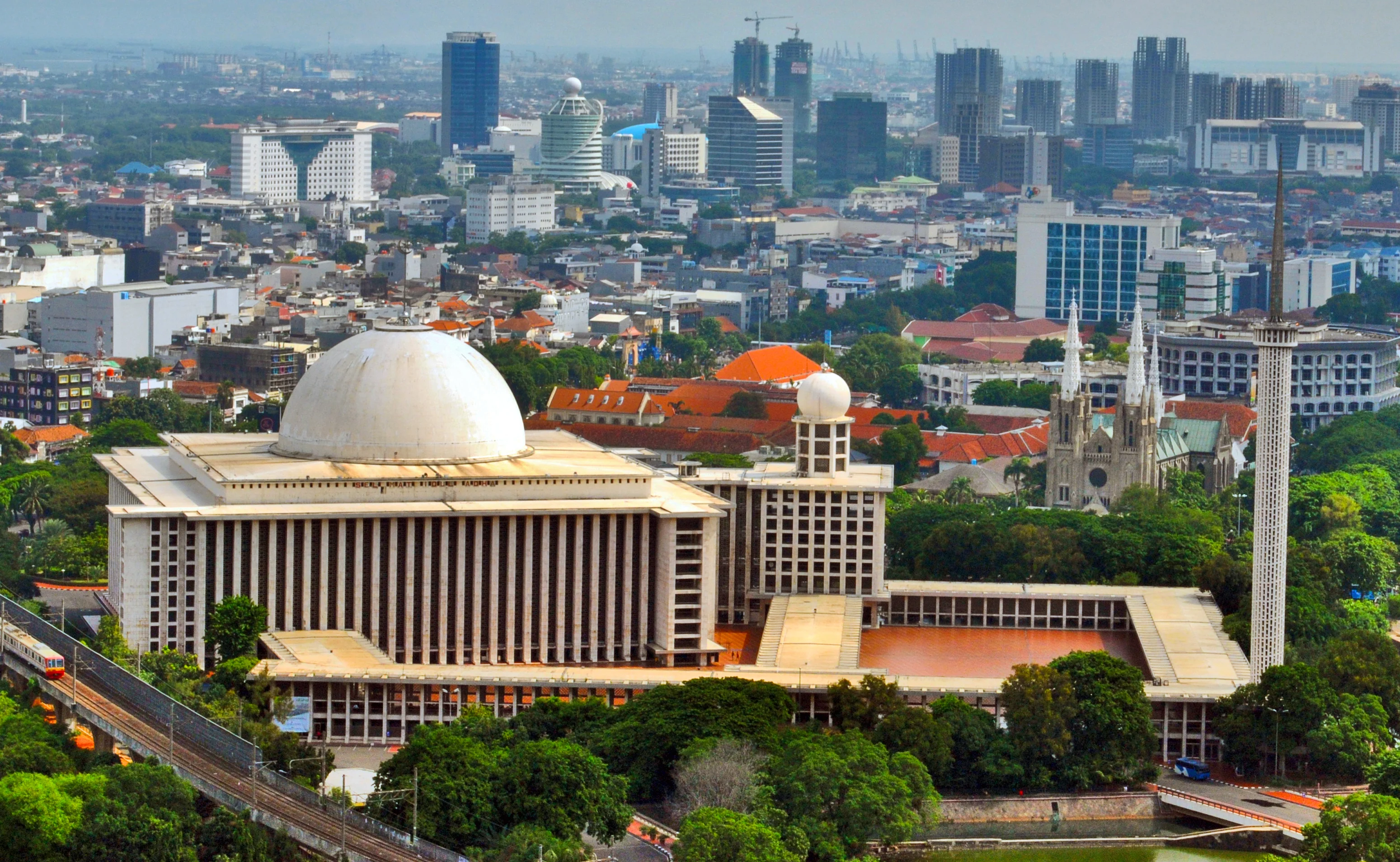
Southeast Asia is home to the world's largest Muslim population. Indonesia alone contains more Muslims than any Arab country, and the combined Muslim populations of Indonesia, Malaysia, Brunei, the southern Philippines, and Muslim minorities across the region make Southeast Asia one of the most significant parts of the global Islamic world. Yet Islam arrived in this region relatively late -- not through military conquest, as in the early Arab expansion, but through the slower and more complex processes of trade, scholarship, Sufi networks, and the conversion of local rulers. Understanding how Islam took root in the archipelagos and peninsulas of Southeast Asia requires understanding the specific mechanisms of that spread and the specific conditions that made it so successful.
The Indian Ocean World and the Arrival of Islam
The story of Islam in Southeast Asia begins with the Indian Ocean trade networks that connected the Arabian Peninsula, Persia, India, and Southeast Asia long before Islam existed. The monsoon winds that made this trade possible -- blowing northeast in winter and southwest in summer -- created a seasonal rhythm of commerce that brought merchants from across the Indian Ocean world to the ports of Southeast Asia, where they traded spices, silk, porcelain, and other luxury goods.
When Islam spread across the Arabian Peninsula and into Persia and India in the seventh and eighth centuries, it transformed these existing trade networks. Muslim merchants from the Arabian Peninsula, from Persia, and increasingly from the Muslim communities of Gujarat and the Malabar Coast of India became the dominant traders in the Indian Ocean world. They established communities in the port cities of Southeast Asia -- in Sumatra, in the Malay Peninsula, in Java, in the Philippines -- and these communities became the first nuclei of Islamic presence in the region.
The earliest evidence of Islam in Southeast Asia comes from the thirteenth century. The Venetian traveler Marco Polo, passing through northern Sumatra in 1292 CE, noted that the city of Perlak had converted to Islam. The Moroccan traveler Ibn Battuta, visiting the region in 1345-1346 CE, found the Sultanate of Samudra-Pasai in northern Sumatra to be a flourishing Islamic state with a sultan who was a devoted Muslim and a patron of Islamic scholarship. By the time Ibn Battuta visited, Islam had been established in northern Sumatra for at least a century.
The mechanisms of this early spread were primarily commercial. Muslim merchants who settled in Southeast Asian ports brought their faith with them, established mosques, and created communities that served as models of Islamic practice. Local rulers who converted to Islam gained access to the wider networks of Muslim commerce -- the credit systems, the commercial partnerships, the shared legal frameworks of Islamic commercial law that made trade across the Indian Ocean world more reliable and more profitable. Conversion was not merely a spiritual act but a commercial and political one, connecting local rulers to a vast network of Muslim merchants and scholars that stretched from Morocco to China.
The Malacca Sultanate: The Pivot of Southeast Asian Islam
The most important single event in the Islamization of Southeast Asia was the conversion of the ruler of Malacca and the subsequent rise of the Malacca Sultanate as the dominant commercial and cultural power in the region. Malacca was founded around 1400 CE by Paramesvara, a Hindu prince from Sumatra who had fled the collapse of the Majapahit Empire. The city's location at the narrowest point of the Strait of Malacca -- the passage between the Malay Peninsula and Sumatra through which virtually all trade between the Indian Ocean and the South China Sea had to pass -- gave it an extraordinary strategic advantage.
Paramesvara converted to Islam around 1414 CE, taking the name Megat Iskandar Shah, and his conversion transformed Malacca from a regional port into the center of Southeast Asian Islamic civilization. The conversion was not merely personal: it was a political and commercial decision that aligned Malacca with the Muslim merchant networks that dominated Indian Ocean trade and gave the sultanate access to the financial and commercial resources of the Islamic world. Within a generation, Malacca had become the most important port in Southeast Asia, handling trade from China, India, Arabia, and the Malay archipelago.
Malacca was also a center of Islamic learning. The Malacca Sultanate attracted scholars from across the Islamic world, and the city became a place where Islamic law, theology, and Sufi practice were taught and debated. The Malay language, which was the lingua franca of trade throughout the archipelago, became the vehicle for Islamic learning in Southeast Asia -- the language in which Islamic texts were translated, in which Islamic law was applied, and in which Islamic poetry and literature were composed. The Malacca Sultanate's cultural influence spread throughout the Malay world, from Sumatra to Borneo to the Philippines, creating a shared Islamic culture that transcended political boundaries.
The fall of Malacca to the Portuguese in 1511 CE was a catastrophic blow to the sultanate but paradoxically accelerated the spread of Islam in the region. The Muslim merchants and scholars who had made Malacca their base dispersed to other ports -- to Aceh in northern Sumatra, to Johor in the southern Malay Peninsula, to Demak in Java, to Brunei in Borneo -- carrying Islamic learning and commercial networks with them. The Portuguese conquest of Malacca did not end Islamic influence in Southeast Asia; it spread it more widely.
The Sufi Orders and the Islamization of Java
The most populous island in Southeast Asia -- Java, home to what is now the world's largest Muslim population -- was Islamized through a process that was distinctive in its methods and its results. Java had been the center of the Hindu-Buddhist Majapahit Empire, one of the most sophisticated civilizations in Southeast Asian history, and the Islamization of Java involved a complex negotiation between the new faith and the existing cultural and religious traditions.
The agents of this Islamization were primarily Sufi teachers -- members of the mystical orders of Islam who emphasized the inner, spiritual dimensions of the faith and who were skilled at presenting Islamic teachings in ways that resonated with existing religious sensibilities. The most celebrated of these teachers are the Wali Songo -- the Nine Saints -- a group of scholars and teachers who are credited in Javanese tradition with spreading Islam across the island in the fifteenth and sixteenth centuries.
The Wali Songo were not a formal organization but a retrospective category -- a way of honoring the most important figures in the Islamization of Java. They included figures like Sunan Kalijaga, who is said to have used Javanese shadow puppet theater (wayang) to teach Islamic stories and values; Sunan Bonang, who adapted Javanese gamelan music to Islamic purposes; and Sunan Giri, who established an Islamic educational center that trained teachers and sent them throughout the archipelago. Their methods were characterized by cultural adaptation -- finding ways to present Islamic teachings through existing Javanese cultural forms rather than demanding the abandonment of those forms.
This approach was not without controversy. More orthodox Islamic scholars sometimes criticized the Wali Songo's methods as compromising the purity of Islamic practice. But the results were undeniable: Java became Muslim, and the form of Islam that took root there was deeply integrated with Javanese culture in ways that made it resilient and enduring. The tension between the more syncretic, Sufi-influenced Islam of the Wali Songo tradition and the more orthodox, scripturally focused Islam of later reformers has been one of the defining dynamics of Indonesian Islamic history ever since.
The Shafi'i School and the Legal Framework of Southeast Asian Islam
One of the most significant features of Southeast Asian Islam is its almost universal adherence to the Shafi'i school of Islamic jurisprudence -- the legal tradition founded by Imam al-Shafi'i (767-820 CE) and dominant today in Egypt, East Africa, and Southeast Asia. The Shafi'i school's dominance in Southeast Asia was not accidental: it reflected the specific channels through which Islam reached the region.
The Muslim merchants who dominated Indian Ocean trade in the medieval period were predominantly from the Shafi'i-majority regions of the Islamic world -- from the Hadramawt region of Yemen, from the Malabar Coast of India, from the Swahili Coast of East Africa. When they established communities in Southeast Asian ports and when local rulers converted to Islam, they brought the Shafi'i legal tradition with them. The scholars who came to teach in the courts of the Malacca Sultanate and its successors were trained in the Shafi'i tradition. The Islamic educational institutions that developed in the region -- the pesantren of Java, the pondok of the Malay Peninsula -- taught Shafi'i jurisprudence as the standard framework of Islamic law.
The Shafi'i school's emphasis on the authority of hadith alongside the Quran, and its systematic approach to legal reasoning, made it well-suited to the task of Islamizing societies that had no prior Islamic legal tradition. It provided a comprehensive framework for organizing social life -- governing marriage, inheritance, commerce, and religious practice -- that could be applied to the specific conditions of Southeast Asian societies.
Aceh: The Veranda of Mecca
While Malacca was the pivot of early Southeast Asian Islam, the Aceh Sultanate in northern Sumatra became the most important center of Islamic scholarship in the region from the sixteenth century onward. Aceh's position at the northwestern tip of Sumatra, directly on the route between the Indian Ocean and the Strait of Malacca, made it a natural successor to Malacca's commercial and cultural role after the Portuguese conquest.
The Aceh Sultanate reached its height under Sultan Iskandar Muda (r. 1607-1636 CE), who made Aceh one of the most powerful states in Southeast Asia and a major center of Islamic learning. Aceh attracted scholars from across the Islamic world -- from Arabia, from Persia, from India -- and produced its own scholars of international reputation. The most important of these was Hamzah Fansuri (c. 1550-1600 CE), a Sufi poet and theologian whose works in Malay established the literary and theological vocabulary of Southeast Asian Islam. His student Shamsuddin al-Sumatrani continued this tradition, and the debates between Sufi and more orthodox scholars that took place in Aceh's courts shaped the intellectual development of Southeast Asian Islam for generations.
Aceh's reputation as a center of Islamic learning earned it the title Serambi Mekah -- the Veranda of Mecca -- a designation that reflected both its geographical position as the first port of call for pilgrims from the archipelago heading to the Hijaz and its role as a gateway through which Islamic learning entered Southeast Asia.
The Philippines and the Northern Frontier
Islam reached the Philippine archipelago from the south, spreading northward from Borneo and the Sulu archipelago in the fourteenth and fifteenth centuries. The Sultanate of Sulu, established in the late fourteenth century, became the most important Islamic polity in the Philippines, controlling the trade routes between Borneo and the Philippine islands and spreading Islamic influence northward toward Luzon.
The Islamization of the Philippines was interrupted by the Spanish conquest, which began in 1565 CE. The Spanish colonial project was explicitly religious as well as political: the Spanish sought to Christianize the Philippines, and they largely succeeded in the northern and central islands. But in the southern islands -- Mindanao and the Sulu archipelago -- the Muslim populations resisted Spanish colonization with a tenacity that the Spanish never fully overcame. The Muslim peoples of the southern Philippines, known collectively as the Moro, maintained their Islamic identity and their political autonomy through centuries of colonial pressure, and their descendants remain a significant Muslim community today.
The Colonial Period and Islamic Resilience
The arrival of European colonial powers in Southeast Asia -- the Portuguese in the early sixteenth century, the Dutch and English in the seventeenth -- transformed the political landscape of the region but did not end the spread of Islam. In some respects, colonial rule accelerated Islamization: the disruption of existing political structures and the imposition of Christian colonial authority made Islamic identity a more important marker of resistance and community solidarity.
The Dutch colonial administration in the Indonesian archipelago, which became the most extensive European colonial presence in Southeast Asia, had a complex relationship with Islam. The Dutch sought to limit the political influence of Islamic institutions while tolerating Islamic religious practice, and they developed a system of indirect rule that worked through local rulers who were often Muslim. The result was a colonial society in which Islamic identity was simultaneously constrained and reinforced -- constrained by colonial restrictions on Islamic political activity, reinforced by the association of Islam with indigenous identity against colonial rule.
The nineteenth and early twentieth centuries saw the development of Islamic reform movements in Southeast Asia, influenced by the reformist currents that were transforming Islamic thought across the Muslim world. Scholars who had studied in Mecca and Medina returned to Southeast Asia with new ideas about Islamic practice, challenging the syncretic traditions of the Wali Songo and the Sufi orders and calling for a more scripturally grounded Islam. These reform movements -- represented in Indonesia by organizations like Muhammadiyah (founded 1912) and in Malaysia by similar reformist currents -- created the intellectual and institutional foundations of modern Southeast Asian Islam.
Legacy and Significance
The Islamization of Southeast Asia is one of the most significant episodes in the history of the global Muslim community. It demonstrates that Islam could spread through mechanisms other than military conquest -- through trade, through Sufi networks, through the conversion of rulers, through cultural adaptation -- and that it could take root in societies with very different cultural and religious traditions from those of the Arab world.
The form of Islam that developed in Southeast Asia was genuinely distinctive. It was shaped by the Sufi tradition's emphasis on spiritual experience and cultural adaptation, by the Shafi'i legal tradition's systematic approach to Islamic law, and by the specific cultural contexts of the Malay world, Java, and the Philippine archipelago. It produced its own scholars, its own literary traditions, its own architectural styles, and its own approaches to the relationship between Islamic practice and local culture.
Today, Southeast Asia's Muslim communities -- with Indonesia alone containing more Muslims than any Arab country -- represent one of the most important and most diverse expressions of Islamic civilization in the world. The history of how Islam came to this region, and how it was adapted and transformed in the process, is an essential part of the history of Islam as a global religion.
References and Further Reading
Primary Islamic Sources
- Quran, Surah An-Nahl (16:125) — "Invite to the way of your Lord with wisdom and good instruction."
- Quran, Surah Al-Hujurat (49:13) — "O mankind, indeed We have created you from male and female and made you peoples and tribes that you may know one another."
- Sahih al-Bukhari, Book of Sales — Islamic commercial ethics that shaped trading relationships in Southeast Asia.
- Ibn Battuta. Rihlat Ibn Battuta, accounts of his visits to Sumatra, Malabar, and the Malay world. [Original c. 1355 CE]
- Ma Huan. Yingya Shenglan (Overall Survey of the Ocean's Shores), observations of Muslim communities in Southeast Asia during Zheng He's voyages. [Original c. 1433 CE]
Classical Islamic Sources
- Al-Idrisi, Muhammad. Nuzhat al-Mushtaq, early references to the Malay Archipelago. [Original c. 1154 CE]
- Sulayman al-Mahri. Maritime guides for Indian Ocean and Southeast Asian waters. [Original c. 1511 CE]
- Ahmad ibn Majid. Kitab al-Fawa'id, navigation routes to Southeast Asia. [Original c. 1490 CE]
- Local chronicles: Sejarah Melayu (Malay Annals), Hikayat Raja-Raja Pasai, and Javanese court chronicles.
Academic and Scholarly Sources
- Ricklefs, M.C. A History of Modern Indonesia Since c. 1200. 4th ed. Stanford: Stanford University Press, 2008.
- Reid, Anthony. Southeast Asia in the Age of Commerce, 1450–1680. 2 vols. New Haven: Yale University Press, 1988–1993.
- Azra, Azyumardi. The Origins of Islamic Reformism in Southeast Asia. Honolulu: University of Hawaii Press, 2004.
- Riddell, Peter G. Islam and the Malay-Indonesian World: Transmission and Responses. Honolulu: University of Hawaii Press, 2001.
- Hooker, M.B. Indonesian Islam: Social Change Through Contemporary Fatawa. Honolulu: University of Hawaii Press, 2003.
- Andaya, Leonard Y. "The Search for the 'Origins' of Melayu." Journal of Southeast Asian Studies 32, no. 3 (2001): 315–330.
Further Reading
- Hefner, Robert W. Civil Islam: Muslims and Democratization in Indonesia. Princeton: Princeton University Press, 2000.
- Federspiel, Howard M. Islam and Ideology in the Emerging Indonesian State: The Persatuan Islam (PERSIS), 1923 to 1957. Leiden: Brill, 2001.
- Hourani, George F. Arab Seafaring in the Indian Ocean. Rev. ed. Princeton: Princeton University Press, 1995.
- Lapidus, Ira M. A History of Islamic Societies. 3rd ed. Cambridge: Cambridge University Press, 2014.
- Nyai Ahmad Dahlan — founder of the Indonesian women's organisation Aisyiyah
Mentioned In
1 article references this topic
More from Medieval Islamic World
Al-Nawawi: Jurist of the Shafi'i School and Compiler of Riyad al-Salihin
Al-Nawawi (1233-1277) was a Shafi'i jurist and hadith scholar of Damascus who died at forty-four having written some of the most widely used books in Sunni Islam, including Riyad al-Salihin, the Forty Hadith, and the standard Shafi'i legal manual.
Al-Suyuti
Jalal al-Din al-Suyuti (1445-1505 CE) was an Egyptian scholar of the late Mamluk period and the most prolific author in Islamic literature. His Al-Itqan remains the standard classical survey of the Qur'anic sciences, and his Tadrib al-Rawi a principal manual of hadith method.
Baha' al-Din Naqshband: The Master of Silent Remembrance
Baha al-Din Naqshband of Bukhara (1318-1389 CE) gave his name to the Naqshbandi order, one of the most widespread in Islam. His insistence on silent remembrance and his rejection of music, retreat and distinctive dress set the order apart from every other Sufi path of his age.
Ibn Kathir: Exegete and Historian of Mamluk Damascus
Ibn Kathir (c. 1300-1373) was a Shafi'i scholar of Mamluk Damascus whose commentary on the Quran and universal history became two of the most widely read works in Sunni Islam. He studied under al-Mizzi, al-Dhahabi and Ibn Taymiyya.