Islam in Africa - Historical and Contemporary Overview
Africa holds the largest Muslim population of any continent, some 550 million people or roughly 31 per cent of Muslims worldwide. Islam reached Egypt and the Maghreb in the 640s and spread over the following centuries through trade, scholarship and teaching.
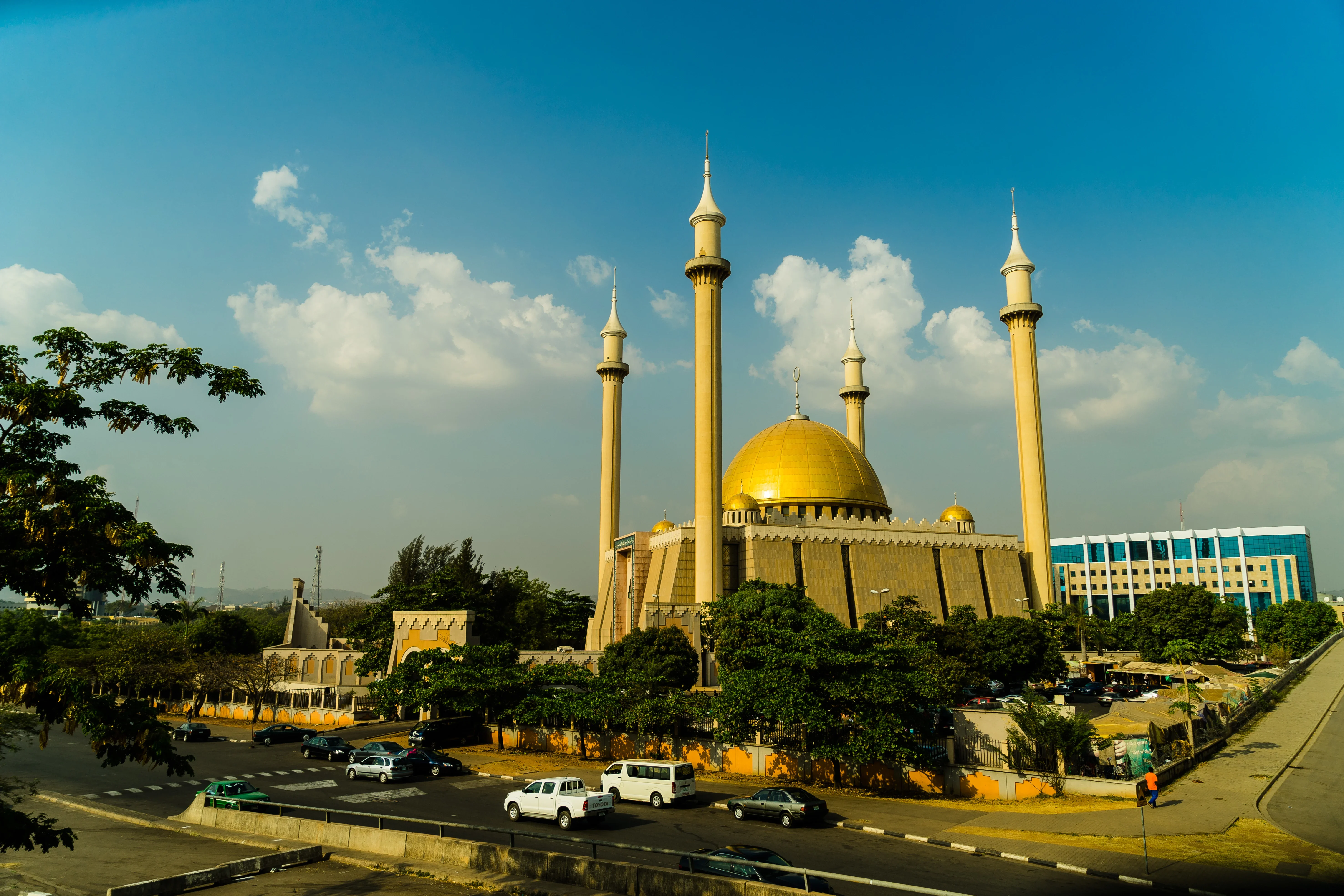
Africa is home to over 550 million Muslims, representing approximately 31% of the global Muslim population and making it the continent with the largest Muslim population in the world. Islam's presence in Africa spans nearly fourteen centuries, from its early arrival in Egypt and the Maghreb to its gradual spread across the Sahel, East Africa, and other regions through trade, scholarship, and peaceful propagation.
Early Islamic Expansion into Africa (7th-11th Centuries)
North Africa and the Maghreb
The Arab conquest of Byzantine Egypt took place between 640 and 642 CE, led by Amr ibn al-As, and included the capture of Alexandria, a major Byzantine stronghold. The Coptic Christian population generally received tolerant treatment, and Egypt was integrated into the expanding Islamic empire.
The conquest of the Maghreb followed between 647 and 709 CE. Uqba ibn Nafi led the early expeditions into North Africa, where the Muslim forces met initial resistance from Berber tribes. The Berbers gradually converted to Islam, and Kairouan was established as a major Islamic center.
Over the following centuries, a series of Berber Islamic dynasties rose to power. The Almoravids (1040-1147) controlled Morocco and Al-Andalus; the Almohads (1121-1269) formed a reformed Islamic movement spanning North Africa and Spain; and the Marinids (1244-1465) were a Moroccan dynasty that promoted Islamic scholarship. Together these dynasties fostered a distinctive Maghrebi Islamic culture.
East Africa and the Swahili Coast
Islam reached East Africa early through commerce, as Islamic merchants established trading posts along the coast. The Kilwa Sultanate emerged as a major Islamic trading city-state, while Mogadishu became an important Islamic commercial center. These coastal settlements fostered cultural exchange among Arab, Persian, and African peoples.
From this exchange grew the Swahili civilization. The Swahili language developed while incorporating Arabic vocabulary, and a distinctive Swahili Islamic architecture took shape. Extensive commercial networks reached across the Indian Ocean, producing a unique blend of African, Arab, and Islamic cultures.
Trans-Saharan Trade and Islamic Expansion (8th-16th Centuries)
Trade Routes and Commercial Networks
Trans-Saharan commerce moved along several major routes: a western route from Morocco to Ghana and Mali, a central route from Tunisia and Libya to Chad and Nigeria, and an eastern route from Egypt to Sudan and Ethiopia. The goods carried included gold, salt, ivory, slaves, and manufactured goods.
The merchants who worked these routes were also carriers of Islamic culture and values. Berber traders served as key intermediaries, Arab merchants established communities, and African converts joined the trading networks, spreading Islamic influence along with commerce.
West African Islamic Kingdoms
The Ghana Empire (300-1200 CE) saw growing Islamic influence among its ruling elite, accommodating both Islamic and traditional beliefs. Its commercial prosperity derived from the gold and salt trade, and it became a site of interaction between Islamic and African cultures.
The Mali Empire (1235-1600 CE) is famous for the pilgrimage of Mansa Musa to Mecca in 1324-1325. Under Mali, Timbuktu flourished as a center of Islamic learning, Islamic and traditional African practices were integrated, and the empire's economic power rested on its control of trans-Saharan trade routes.
The Songhai Empire (1464-1591 CE) reached new heights under Askia Muhammad, who promoted Islamic education and scholarship. Timbuktu and Gao served as major centers of Islamic learning, Islamic law was implemented alongside customary law, and Islamic arts and literature flourished.
The Kanem-Bornu Empire (700-1900 CE) was one of Africa's longest-lasting Islamic states. Its strategic location gave it control of central trans-Saharan routes, and it developed Islamic educational institutions across centuries of stable Islamic governance.
Hausaland and Northern Nigeria
The Hausa city-states formed an important network of commercial and Islamic centers. Kano was a major commercial and Islamic center, Katsina an important center of Islamic learning, and Zazzau (Zaria) a significant Islamic city-state, all linked by extensive trade networks across West Africa.
In the eighteenth and nineteenth centuries, the Fulani jihads reshaped the region. Usman dan Fodio led an Islamic reform movement in northern Nigeria that established the Sokoto Caliphate, a large Islamic state. The movement promoted Islamic education and scholarship and undertook social reform aimed at purifying Islamic practice.
East African Islamic Development
Ethiopian and Sudanese Islam
The Sultanate of Ifat (1285-1415) was an Islamic state in the Ethiopian region. It was engaged in ongoing conflicts with the Christian Ethiopian Empire, controlled trade routes to the Red Sea, and developed a distinctive Ethiopian Islamic culture.
The Funj Sultanate (1504-1821) was an Islamic state in present-day Sudan, centered on the Blue Nile region. It was marked by strong Sufi traditions and practices, developed Islamic schools and scholarship, and blended Arab, African, and Islamic cultures.
The Mahdist State (1885-1898) arose when Muhammad Ahmad, the self-proclaimed Mahdi, led an Islamic revival. The movement mounted anti-colonial resistance against Egyptian and British rule and sought to purify Islamic practice, but it was short-lived, being defeated by Anglo-Egyptian forces.
Horn of Africa
The Adal Sultanate (1415-1577) was an Islamic state in present-day Somalia and Ethiopia. Under Ahmad ibn Ibrahim it led campaigns against the Ethiopian Empire, received support from the Ottoman Empire, and exerted a significant influence on the Islamic culture of the Horn of Africa.
The Ajuran Sultanate (13th-17th Centuries) controlled much of present-day Somalia along the Somali coast. It was notable for advanced hydraulic engineering and water management systems, extensive Indian Ocean trade connections, and a distinctive Somali Islamic architecture.
Sufi Orders and Islamic Scholarship
Major Sufi Orders in Africa
The Qadiriyya order is present across North, West, and East Africa. It emphasizes Islamic scholarship and education, provides social services and community support, and has adapted to local African cultures.
The Tijaniyya order, founded by the Algerian scholar Ahmad al-Tijani, is particularly strong in West Africa. It emphasizes Islamic education and literacy and has exercised significant political influence in some regions.
The Shadhiliyya order originated in North Africa. It focuses on Islamic scholarship and mysticism, has integrated with local cultural practices, and continues to exert influence in contemporary Africa.
Centers of Islamic Learning
Timbuktu was home to Sankore University, a major center of Islamic higher education, and to a manuscript tradition that preserved thousands of Islamic manuscripts. Its scholars maintained connections with Islamic scholars worldwide, and the city is recognized as a UNESCO World Heritage site.
Al-Azhar University in Cairo attracted students from across Africa and facilitated the exchange of Islamic knowledge. It served as a source of religious guidance for African Muslims and continues to influence African Islamic thought.
Fez in Morocco was home to Al-Qarawiyyin University, one of the world's oldest universities, and served as a center of North African Islamic scholarship. It contributed to the development of the Maliki legal school and influenced Islamic culture across Africa.
Colonial Period and Islamic Response (19th-20th Centuries)
European Colonialism and Islamic Resistance
The French colonial empire controlled much of West Africa. Various Islamic leaders led resistance movements, French assimilation policies affected Islamic culture, and French educational systems were introduced.
The British colonial empire controlled Kenya, Uganda, and Tanzania in East Africa, and governed Nigeria through indirect rule that accommodated Islamic institutions. Sudan was administered as an Anglo-Egyptian condominium. British rule was generally more accommodating of Islamic institutions.
Islamic reform movements arose in response to colonial pressures. The Mahdist movement was Sudan's Islamic resistance movement; the Sanusiyya order led Libyan Islamic resistance to Italian colonialism; and various West African jihads formed Islamic reform and resistance movements. Alongside these ran efforts to preserve and promote Islamic education.
Impact of Colonialism on African Islam
Colonial rule brought significant administrative changes. European legal systems were introduced alongside Islamic law, European educational systems competed with Islamic education, traditional Islamic political structures were disrupted, and African societies were integrated into the global capitalist economy.
The cultural and religious impact was equally far-reaching. Christian missionary activities operated in Muslim areas, traditional Islamic and African cultures faced new challenges, European languages were promoted over Arabic and local languages, and Islam, Christianity, and traditional religions came into competition.
Contemporary African Islam (1960-2024)
Post-Independence Developments
After independence, Islam played an important role in shaping national identity. Debates arose over Islam's place in new constitutions, Muslims participated in post-independence politics, and there was a revival of Islamic and African cultural traditions.
Economic development followed varied paths. Some Islamic countries, such as Algeria, Libya, and Nigeria, held significant oil resources, while Islamic communities in agricultural regions pursued agricultural development. Migration from rural to urban areas accelerated, and many regions faced poverty and development challenges.
Regional Overview of Contemporary African Islam
The following figures give the Muslim population and its share of the national population by region.
In North Africa:
| Country | Muslim population | Share of population |
|---|---|---|
| Egypt | 95 million | 94.9% |
| Algeria | 42.2 million | 99.0% |
| Morocco | 36.6 million | 99.9% |
| Tunisia | 11.7 million | 99.8% |
| Libya | 6.8 million | 96.6% |
In West Africa:
| Country | Muslim population | Share of population |
|---|---|---|
| Nigeria | 103 million | 53.5% |
| Mali | 18.9 million | 94.8% |
| Burkina Faso | 12.9 million | 63.2% |
| Niger | 24.1 million | 99.3% |
| Senegal | 16.3 million | 95.9% |
In East Africa:
| Country | Muslim population | Share of population |
|---|---|---|
| Sudan | 39.6 million | 90.7% |
| Somalia | 15.6 million | 99.8% |
| Ethiopia | 28.7 million | 33.9% |
| Tanzania | 19.4 million | 35.2% |
| Kenya | 9.0 million | 18.0% |
In Central Africa:
| Country | Muslim population | Share of population |
|---|---|---|
| Chad | 7.8 million | 52.1% |
| Cameroon | 7.3 million | 27.7% |
| Central African Republic | 0.9 million | 15.0% |
Contemporary Challenges and Issues
African Muslim societies face a range of political challenges, including the difficulties of democratic governance in Muslim-majority countries, the need to address corruption and improve governance, the resolution of ethnic and religious conflicts, and the maintenance of peace and stability across regions.
Economic challenges are also substantial, spanning the reduction of widespread poverty and inequality, the promotion of sustainable economic development, the provision of employment for large youth populations, and the effective management of natural resources.
Social challenges center on improving access to quality education, addressing healthcare needs, advancing gender equality and women's rights, and managing rapid urbanization and urban growth.
Security challenges include addressing threats from extremist groups, managing and resolving regional conflicts, securing porous borders and managing migration, and contributing to regional and international peacekeeping.
Islamic Organizations and Institutions
Continental Organizations
The African Union (AU) includes a significant number of Muslim-majority member states. It works to maintain peace and security, promotes economic integration and development, and fosters African cultural cooperation and exchange.
The Organization of Islamic Cooperation (OIC) counts 27 African countries among its members. Its work in Africa includes Islamic Development Bank projects, Islamic educational and cultural programs, and diplomatic coordination on international issues.
Regional Organizations
The Arab Maghreb Union promotes integration among North African countries. It pursues economic cooperation and trade promotion, encourages Arab and Islamic cultural exchange, and coordinates on regional political issues.
The Economic Community of West African States (ECOWAS) advances economic and political integration in West Africa. It maintains mechanisms for resolving regional conflicts, promotes the free movement of people and goods, and supports cooperation in development projects.
Educational and Cultural Institutions
A number of Islamic universities serve African Muslims. Al-Azhar University maintains its influence and African student enrollment; the University of Tunis is a major center of Islamic higher education; the Islamic University of Niger promotes Islamic education in West Africa; and various national universities across Africa offer Islamic studies programs.
Cultural institutions complement this educational network. Islamic cultural centers promote Islamic culture and arts, research institutes support Islamic research and scholarship, libraries and archives preserve Islamic manuscripts and heritage, and museums display Islamic art and cultural artefacts.
Contemporary Islamic Movements and Trends
Reform and Revival Movements
A broad Islamic revival has been marked by growing religious observance and practice, the expansion of Islamic educational institutions, a renaissance of Islamic cultural traditions, and increasing engagement of youth with Islamic values.
Modernist movements have advanced progressive interpretations of Islam. They include Islamic feminist movements advocating for women's rights, efforts to promote the compatibility of Islam with democratic values, and an emphasis on Islamic principles of social justice.
Conservative movements have grown alongside them, reflected in the increasing influence of Salafi interpretations, an emphasis on traditional Islamic values and practices, efforts at religious purification, and the influence of external funding on religious movements.
Extremism and Counter-Extremism
Several extremist groups have operated across the continent. Boko Haram is a Nigerian extremist group affecting the West Africa region; Al-Shabaab is a Somali extremist group with regional influence; Al-Qaeda in the Islamic Maghreb (AQIM) operates in the Sahel region; and various ISIS-affiliated groups are active across Africa.
Counter-extremism efforts have combined several approaches, including regional and international military operations, deradicalization programs to counter extremist ideologies, community engagement in counter-extremism efforts, and educational programs promoting moderate Islam.
Economic Development and Islamic Finance
Natural Resources and Development
Oil and gas play a major economic role in Africa. Algeria, Libya, Nigeria, and other oil-producing countries are significant producers, and their resources have a substantial impact on national economies. Managing this resource wealth for broad-based development remains a challenge, and countries cooperate in energy sector development.
Mining and agriculture are likewise important. The continent holds significant mineral resources and large agricultural potential in many regions, and efforts continue to address food security challenges and to promote sustainable resource management.
Islamic Banking and Finance
Islamic finance has developed across several countries. Sudan pioneered Islamic banking in Africa, Nigeria has a growing Islamic banking sector, and Morocco has developed Islamic financial institutions, with regional cooperation supporting the wider development of Islamic finance.
Islamic microfinance has been applied to development goals as well. Sharia-compliant microfinance supports rural economic development, provides programs for women entrepreneurs, and is used as a tool for poverty alleviation.
Cultural Contributions and Heritage
Architecture and Arts
African Islamic architecture encompasses distinctive African Islamic mosque styles, Islamic palaces and royal architecture, the Islamic influence on African urban planning, and modern Islamic architecture on the continent.
The arts and crafts of African Islam include Arabic and Islamic calligraphy traditions, Islamic textile traditions and contemporary production, traditional Islamic metalwork and jewelry, and Islamic ceramic traditions in pottery.
Literature and Scholarship
In Arabic literature, African Muslims have preserved and developed the classical Arabic literary tradition, produced modern Arabic literature, translated Islamic texts into African languages, and integrated Islamic themes with African oral traditions.
Islamic scholarship in Africa has spanned contributions to Quranic studies, the development of Islamic legal scholarship, contributions to Islamic theological thought, and Islamic philosophical traditions.
Conclusion
Islam in Africa represents one of the most significant and diverse expressions of the global Islamic community, encompassing over 550 million Muslims across the continent's 54 countries. From the early Islamic expansion into North and East Africa to the gradual spread across the Sahel and sub-Saharan regions, Islam has become deeply integrated into African societies, cultures, and civilizations.
The historical contributions of African Muslims to Islamic civilization—including the great centers of learning in Timbuktu, Cairo, and Fez, the architectural achievements of various Islamic kingdoms, and the rich traditions of Islamic scholarship and Sufi mysticism—demonstrate the central role of Africa in the development of Islamic culture and thought.
Contemporary African Islam faces significant challenges, including poverty, political instability, extremism, and development needs, while its young and growing Muslim population, abundant natural resources, and rich cultural heritage provide a substantial foundation for continued development. As Africa integrates further into the global economy, its Muslim communities continue to shape both continental and global Islamic discourse, and the African experience of religious diversity, cultural synthesis, and resilience in the face of challenges contributes to a broader understanding of Islam's adaptability and vitality.
References and Further Reading
Primary Islamic Sources
- Quran, Surah Al-Hujurat (49:13) — "O mankind, indeed We have created you from male and female and made you peoples and tribes that you may know one another."
- Sahih al-Bukhari, Book of the Stories of the Prophets, Hadith 3877 — The migration to Abyssinia and the Prophet's respect for African rulers.
- Sahih Muslim, Book of Virtues, Hadith 2543 — The Prophet's instruction to treat the people of Egypt well.
- Al-Bakri, Abu Ubayd. Kitab al-Masalik wa al-Mamalik, sections on North and West Africa. [Original c. 1068 CE]
- Al-Sa'di, Abd al-Rahman. Tarikh al-Sudan. [Original c. 1655 CE]
- Ahmad Baba al-Timbukti. Nayl al-Ibtihaj. [Original c. 1596 CE]
Classical Islamic Sources
- Ibn Battuta. Rihlat Ibn Battuta, extensive accounts of his travels through East and West Africa. [Original c. 1355 CE]
- Al-Umari, Ahmad ibn Fadlallah. Masalik al-Absar, sections on African Muslim kingdoms. [Original c. 1349 CE]
- Leo Africanus (al-Hasan ibn Muhammad al-Wazzan). Description of Africa. [Original c. 1526 CE]
- Al-Idrisi, Muhammad. Nuzhat al-Mushtaq, sections on African geography. [Original c. 1154 CE]
Academic and Scholarly Sources
- Levtzion, Nehemia, and Randall L. Pouwels, eds. The History of Islam in Africa. Athens: Ohio University Press, 2000.
- Robinson, David. Muslim Societies in African History. Cambridge: Cambridge University Press, 2004.
- Trimingham, J. Spencer. A History of Islam in West Africa. London: Oxford University Press, 1962.
- Trimingham, J. Spencer. Islam in East Africa. Oxford: Clarendon Press, 1964.
- Insoll, Timothy. The Archaeology of Islam in Sub-Saharan Africa. Cambridge: Cambridge University Press, 2003.
- Gomez, Michael A. African Dominion: A New History of Empire in Early and Medieval West Africa. Princeton: Princeton University Press, 2018.
- Brenner, Louis. Controlling Knowledge: Religion, Power and Schooling in a West African Muslim Society.
- Cruise O'Brien, Donal B. and Christian Coulon. Charisma and Brotherhood in African Islam.
Further Reading
- Austen, Ralph A. Trans-Saharan Africa in World History. Oxford: Oxford University Press, 2010.
- Hunwick, John O. Timbuktu and the Songhay Empire. Leiden: Brill, 1999.
- Lapidus, Ira M. A History of Islamic Societies. 3rd ed. Cambridge: Cambridge University Press, 2014.
- Levtzion, Nehemia. Ancient Ghana and Mali. New York: Africana Publishing, 1980.
- Amina of Zazzau — the warrior queen of the Hausa states
- Islamic Ethiopia — Islam in the Horn of Africa
- Omar al-Mukhtar — the Libyan teacher who led the resistance to Italian occupation
Mentioned In
2 articles reference this topic
More from African Islamic Empires
Amina of Zazzau: The Warrior Queen of the Hausa States
Amina of Zazzau (c. 1533-1610) was a Hausa warrior queen who ruled the city-state of Zazzau (modern Zaria, Nigeria) for 34 years, expanding its territory through sustained military campaigns, establishing fortified walls, and integrating the region into trans-Saharan trade networks.
Askia Muhammad - The Great Reformer of the Songhai Empire
Askia Muhammad I (c. 1443-1538 CE) was the most important ruler of the Songhai Empire. He transformed Songhai into the largest empire in African history, implemented Islamic reforms, and promoted Islamic scholarship in Timbuktu.
Mali Empire - The Golden Age of West African Islam
The Mali Empire (1235-1600 CE) was one of West Africa's wealthiest Islamic empires, renowned for its gold resources and Timbuktu's Islamic scholarship. Under Mansa Musa, Mali spread Islam throughout West Africa and established centers of learning that attracted scholars from across the Muslim world.
Mansa Musa - The Golden King of Mali
Mansa Musa I (c. 1280-1337 CE) was the tenth mansa of Mali and one of history's wealthiest individuals. His legendary 1324-1325 pilgrimage to Mecca brought Mali to global attention, and Timbuktu became a major center of Islamic learning.