Al-'Ijliyyah: The Astrolabe Maker of Aleppo
Al-'Ijliyyah bint al-'Ijliyy (fl. 10th century CE) was an astrolabe maker active in Aleppo under the patronage of the Hamdanid emir Sayf al-Dawla, one of the few named women craftspeople of precision scientific instruments recorded in the medieval Islamic world.
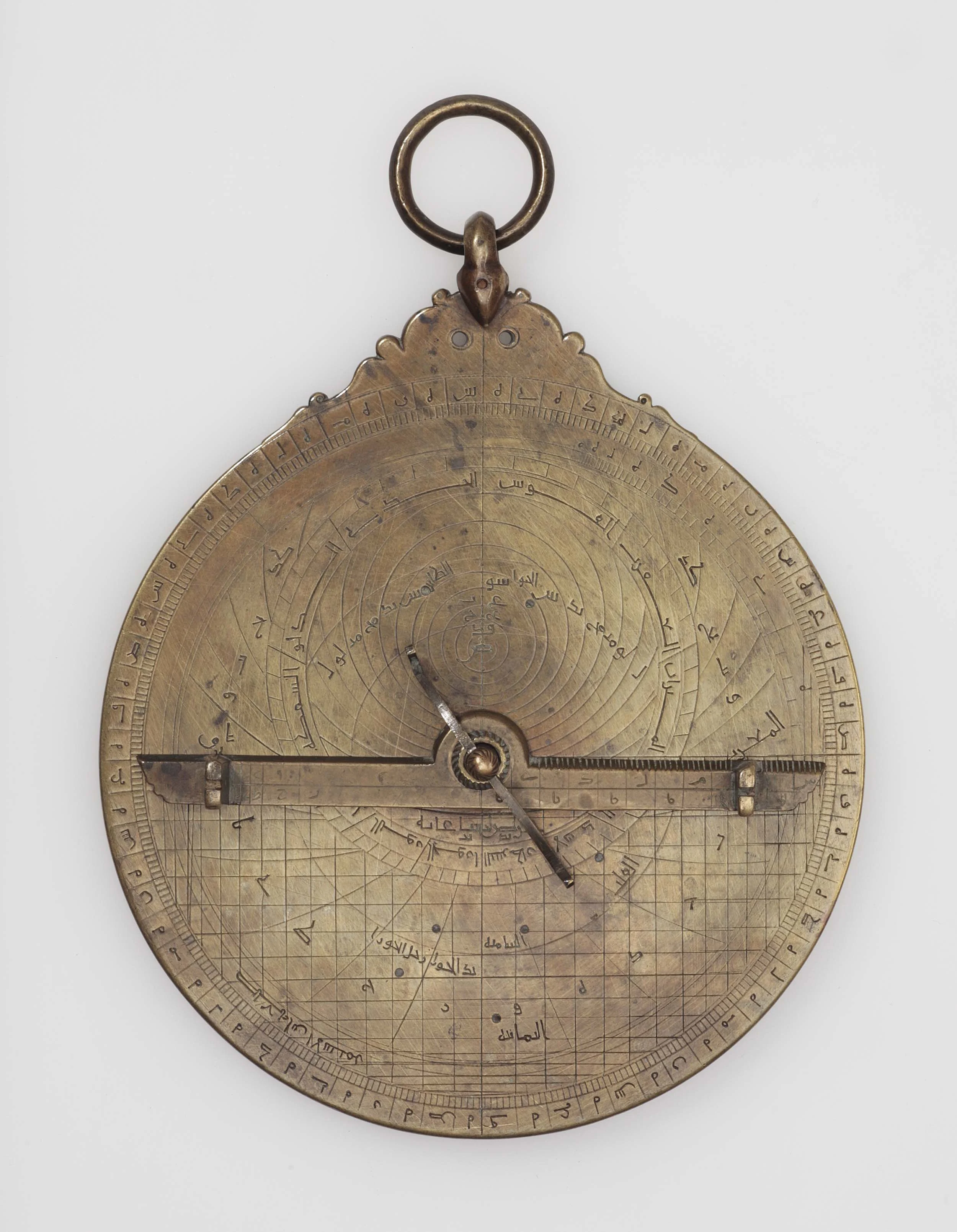
Al-'Ijliyyah bint al-'Ijliyy (العجلية بنت العجلي), active in the tenth century CE, was a maker of astrolabes — the sophisticated astronomical instruments used throughout the medieval Islamic world for timekeeping, determining the direction of prayer, calculating the positions of celestial bodies, and a wide range of related astronomical and calendrical purposes — working in the northern Syrian city of Aleppo under the patronage of the Hamdanid emir Sayf al-Dawla, who ruled Aleppo from 944 to 967 CE. She is among the very small number of named women craftspeople of precision scientific instruments documented anywhere in the medieval Islamic world, and her recorded existence provides valuable, if extremely limited, direct evidence of women's participation in the highly technical guild traditions of instrument-making that supported the broader astronomical and mathematical achievements of the Islamic Golden Age.
The historical record concerning Al-'Ijliyyah is exceptionally sparse, consisting essentially of a single substantive reference in the Kitab al-Fihrist (The Catalogue), the great tenth-century bio-bibliographical survey of Muslim intellectual and cultural life compiled by the Baghdad bookseller and bibliographer Ibn al-Nadim. This scarcity of source material means that any account of Al-'Ijliyyah's life must proceed with considerable caution regarding claims that extend beyond what the primary source directly states, a caution that this article observes throughout, while also situating her single documented biographical notice within the richer context of what is more generally known about astrolabe-making as a craft and about the intellectual culture of Hamdanid Aleppo in which she worked.
The Single Primary Source: Ibn al-Nadim's Fihrist
The entirety of the direct historical evidence for Al-'Ijliyyah's existence and activity derives from a brief passage in Ibn al-Nadim's Kitab al-Fihrist, completed in Baghdad around 987 CE as a comprehensive catalogue of the books and, in connection with them, the notable scholars, scientists, and craftspeople of the Islamic world known to the author. In the section addressing astrolabe-makers, Ibn al-Nadim records: "al-'Ijli al-Asturlabi, an apprentice of Batulus [Nastulus]; al-'Ijliyah, his daughter, a pupil of Batulus, who was with Sayf al-Dawla." This single sentence establishes the essential facts upon which all subsequent accounts of Al-'Ijliyyah's life depend: that she was the daughter of a craftsman known as al-'Ijli al-Asturlabi ("the astrolabist of the Banu 'Ijl," referring to the Arabian tribal affiliation reflected in the name), that both she and her father trained under a master astrolabe-maker named Nastulus (a Baghdad-based instrument maker of the ninth or early tenth century whose own work is separately documented), and that she was professionally active during the period of Sayf al-Dawla's rule over Aleppo, meaning her documented period of activity falls within the years 944 to 967 CE.
The name "al-'Ijliyyah" itself, like her father's name "al-'Ijli," functions primarily as an occupational and tribal descriptor rather than as a personal given name in the modern sense: the suffix al-Asturlabi or al-Asturlabiyyah (the masculine and feminine forms respectively) simply means "the astrolabe-maker" or "the astrolabist," indicating the family's professional specialization, while "al-'Ijli" and "al-'Ijliyyah" indicate descent from or association with the Banu 'Ijl, an Arabian tribal grouping. This naming convention means that Al-'Ijliyyah's actual personal given name is not preserved in the historical record at all; the name "Mariam" or "Maryam," by which she is frequently identified in modern popular literature under the fuller appellation "Mariam al-Asturlabiyya," does not appear in Ibn al-Nadim's original notice or in any other source contemporary or near-contemporary to her lifetime, and appears to be a later attribution of uncertain origin and no established documentary basis, a point that has been specifically noted and clarified by modern scholars examining the primary source material, including the article on Al-'Ijliyyah maintained in scholarly reference literature addressing women in the history of Islamic science.
Nastulus and the Baghdad Instrument-Making Tradition
The specific mention of Nastulus as the shared teacher of both Al-'Ijliyyah and her father provides one of the few additional threads of context available for situating her within the broader technical tradition of Islamic astrolabe-making. Nastulus (sometimes rendered Batulus or Bastulus in variant manuscript transmissions of Ibn al-Nadim's text, reflecting the difficulties of transmitting foreign or unusual proper names accurately through successive generations of manuscript copying) was a Baghdad-based instrument maker of the ninth or early tenth century whose own astrolabes are documented and, in at least one instance, survive: an astrolabe signed by Nastulus and dated to 927-928 CE is preserved and has been studied by historians of Islamic scientific instrumentation, providing a rare point of direct physical connection to the specific workshop tradition in which Al-'Ijliyyah trained, even though no instrument definitively attributable to her own hand has survived or been identified.
The existence of a documented teacher-student relationship spanning from Baghdad — the center of Abbasid caliphal patronage of science during the height of the translation movement and the House of Wisdom — to Aleppo, where Al-'Ijliyyah and her father practiced their craft under Hamdanid patronage, illustrates the broader geographic mobility of specialized technical knowledge within the tenth-century Islamic world, in which skilled craftspeople trained in one major center of scientific patronage might subsequently relocate, or train students who would themselves relocate, to serve the patronage needs of regional courts elsewhere in the Islamic world as centralized Abbasid authority fragmented into multiple competing regional centers of power and cultural patronage during the tenth century. Whether Al-'Ijliyyah and her father trained directly with Nastulus in Baghdad before relocating to Aleppo, or received instruction from him through some other arrangement, such as an extended visit by Nastulus to Aleppo or instruction transmitted through intermediate students, is not specified in Ibn al-Nadim's brief notice and cannot be determined with confidence from the available evidence.
Astrolabes and Their Significance in Islamic Civilization
To understand the significance of Al-'Ijliyyah's documented profession, some account of the astrolabe itself and its role within Islamic scientific and religious life is necessary. The astrolabe was a sophisticated analog computing instrument, typically constructed of brass, consisting of a series of interlocking engraved discs and a rotating sighting arm (the alidade) that together allowed its user to determine the positions of the sun and prominent stars at any given time, to calculate the time of day or night from astronomical observation, to determine the direction of the qibla (the direction of prayer toward Mecca) from a given location, to calculate the precise times of the five daily prayers, and to perform a range of other astronomical, astrological, and surveying calculations. The instrument's origins predate Islam, developing from Hellenistic Greek astronomical instrumentation, but it was substantially refined, elaborated, and disseminated throughout the medieval Islamic world, where astrolabe-making developed into a specialized and prestigious craft tradition, with named makers — almost all of them men, which makes the specific documentation of Al-'Ijliyyah's activity particularly notable — producing instruments of increasing sophistication and precision across the ninth through fifteenth centuries CE, work that would eventually be transmitted to and further developed within medieval and Renaissance Europe through the channels of Andalusian and, later, direct Latin translation of Arabic astronomical texts.
The specific religious utility of the astrolabe within Islamic society — its capacity to determine prayer times and the qibla direction with precision, functions of direct practical importance to the fulfillment of core Islamic religious obligations — meant that astrolabe-making occupied a position of genuine social and religious significance beyond its purely scientific or astronomical applications, and that skilled astrolabe-makers, particularly those working under the patronage of prominent rulers such as Sayf al-Dawla, could expect to enjoy meaningful social standing and secure patronage in recognition of the practical religious as well as scientific value of their craft. This context helps to explain why Ibn al-Nadim, in a bibliographical work primarily concerned with cataloguing scholarly and literary production, would nonetheless include a specific entry addressing astrolabe-makers as a professional category, and why the specific patronage relationship between Al-'Ijliyyah and her father, on the one hand, and the Hamdanid emir Sayf al-Dawla, on the other, would have been considered a detail worth recording.
The technical production of an astrolabe required the maker to possess a demanding combination of skills spanning several distinct crafts and bodies of knowledge. The instrument's base plate (the umm, or "mother") and the interchangeable plates fitted within it (each engraved with the coordinate projections appropriate to a specific geographic latitude) required precise mathematical calculation, drawing on stereographic projection techniques inherited and refined from Hellenistic astronomy, to correctly map the celestial sphere onto a flat engraved surface. The rotating star map (the rete), typically the most visually elaborate component of the instrument, needed to be cut and pierced with sufficient precision that the pointers indicating the positions of named bright stars would align correctly with the underlying coordinate grid when the instrument was in use. The sighting arm (alidade) and the graduated scales around the instrument's rim required careful metalworking and engraving to ensure that angular measurements taken from live astronomical observation could be read with useful precision. A skilled astrolabe-maker therefore needed to combine the mathematical and astronomical knowledge necessary to calculate the correct underlying projections with the practical metalworking, engraving, and fine mechanical skills necessary to render that calculation into a functioning, durable, and legible physical instrument — a combination of theoretical and practical craft competence that helps explain why astrolabe-making, though a craft rather than a purely scholarly discipline, nonetheless demanded a genuinely sophisticated technical education, of the kind that Al-'Ijliyyah is recorded as having received under Nastulus's instruction.
Beyond their religious and astronomical applications, astrolabes served a range of additional practical functions in medieval Islamic society, including their use in surveying and land measurement, in the calculation of astrological data for those segments of society that engaged with astrological practice (a practice regarded with varying degrees of religious acceptance across different scholars and periods of Islamic history), and in general timekeeping for administrative, commercial, and educational purposes in a world before the development of mechanical clocks. The instrument's versatility and its combination of genuine scientific sophistication with practical everyday utility contributed to its widespread production and use across the Islamic world from the ninth century onward, and to the eventual transmission of astrolabe technology, along with the broader corpus of Arabic astronomical learning of which it was a practical expression, into medieval Latin Christian Europe, primarily through the channel of Islamic Spain (al-Andalus), where Arabic astronomical texts and instruments were translated and studied by European scholars from the twelfth century onward, contributing significantly to the eventual development of European astronomical and navigational instrumentation in the later medieval and early modern periods.
Aleppo Under Sayf al-Dawla
Al-'Ijliyyah's documented period of professional activity, spanning the reign of Sayf al-Dawla over Aleppo from 944 to 967 CE, situates her within one of the most culturally and intellectually distinguished courts of the tenth-century Islamic world. Sayf al-Dawla ("Sword of the State"), born Ali ibn Abdallah ibn Hamdan, was the founder of the Aleppo branch of the Hamdanid dynasty, an Arab dynasty that had originated in the Jazira region of northern Mesopotamia before establishing separate branches ruling Mosul and Aleppo respectively as the Abbasid Caliphate's central authority progressively weakened during the tenth century. Sayf al-Dawla governed Aleppo as a effectively independent ruler, nominally acknowledging Abbasid suzerainty while exercising full practical sovereignty, and he became renowned as one of the great patrons of Arabic literary and scientific culture of his era, maintaining a court that attracted some of the most celebrated poets, scholars, and scientists of the tenth-century Islamic world.
Most famously, Sayf al-Dawla served as the principal patron of the poet Abu al-Tayyib al-Mutanabbi, widely regarded as one of the greatest poets in the entire history of Arabic literature, whose panegyric verses celebrating Sayf al-Dawla's military campaigns against the Byzantine Empire — campaigns fought along the contested frontier zone between Hamdanid Aleppo and Byzantine Anatolia that defined much of Sayf al-Dawla's reign — remain celebrated masterpieces of the classical Arabic poetic tradition studied throughout the Arabic-speaking world into the present day. Beyond al-Mutanabbi, Sayf al-Dawla's court attracted numerous other scholars and scientists, reflecting a broader pattern common to the various regional successor states that emerged from the fragmentation of centralized Abbasid authority during the tenth century, in which regional rulers — the Hamdanids in Aleppo and Mosul, the Buyids in Iraq and Persia, the Samanids in Central Asia — competed for prestige in part through the patronage of literary, scientific, and artistic talent, creating multiple, geographically dispersed centers of intellectual and cultural production across the Islamic world rather than a single dominant center as had prevailed during the height of direct Abbasid caliphal authority in Baghdad.
It was within this specific context of Hamdanid Aleppo's cultivated and cosmopolitan court culture that Al-'Ijliyyah and her father practiced their craft, presumably producing astrolabes and potentially other astronomical instruments for use by the court itself, by religious institutions requiring accurate determination of prayer times, and by other patrons able to afford the services of a skilled and evidently court-associated instrument-making family. The specific nature of the working relationship between Al-'Ijliyyah, her father, and their shared training under the Baghdad-based master Nastulus suggests a family workshop tradition of the kind commonly documented in the history of medieval craft production more broadly, in which specialized technical knowledge was transmitted within families across generations, with daughters as well as sons receiving training in cases where the family's craft tradition and immediate economic circumstances supported such an arrangement.
Sayf al-Dawla's own documented interests extended beyond literary patronage to include active engagement with scientific and astronomical matters, consistent with a broader pattern among the regional dynasts of the tenth-century Islamic world, many of whom cultivated astronomy and astrology both as intellectually prestigious pursuits in their own right and for their practical utility in political and military decision-making, including the determination of astrologically favorable timing for military campaigns and other significant undertakings — a practice that, while controversial among Islamic religious scholars who regarded predictive astrology with suspicion or outright disapproval, remained widespread among ruling elites across the medieval Islamic world. Whether Al-'Ijliyyah's instruments served such astrological applications specifically, or were directed primarily toward the more religiously uncontroversial applications of timekeeping and qibla determination, or some combination of both, cannot be determined from the surviving evidence, though the general pattern of astrolabe use in the period suggests that instruments produced for court patronage often needed to serve multiple such functions simultaneously, reflecting the genuinely multipurpose character of the instrument itself.
Named Astrolabe-Makers of the Medieval Islamic World
Al-'Ijliyyah's case can be usefully situated within the broader roster of named astrolabe-makers documented across the medieval Islamic world, a roster that, while overwhelmingly male, provides useful comparative context for assessing the significance of her own recorded activity. Beyond Nastulus himself, other documented astrolabe-makers of the ninth and tenth centuries include Ali ibn Isa al-Asturlabi, active in Baghdad and Damascus in the early ninth century and credited with several surviving or historically documented instruments and with astronomical observations conducted in connection with the Abbasid caliph al-Ma'mun's astronomical projects; and Khafif al-Asturlabi, another Baghdad-based maker of the same general period. In subsequent centuries, the craft continued to develop through the work of makers such as Ibrahim ibn Said al-Sahli, active in eleventh-century Toledo in al-Andalus, whose surviving signed instruments are counted among the most technically sophisticated astrolabes to survive from the medieval Islamic world, and various members of the extended Banu Musa family of instrument-makers and mechanical engineers associated with the House of Wisdom in ninth-century Baghdad.
Against this broader roster of named, exclusively male astrolabe-makers whose work and, in many cases, surviving signed instruments have been studied extensively by historians of Islamic scientific instrumentation, Al-'Ijliyyah's brief but explicit documentation as a professionally trained and court-patronized woman astrolabe-maker stands out as a genuine historical rarity, one of extremely few such documented cases across the full span of medieval Islamic scientific and technical history. This rarity itself carries interpretive significance: it suggests either that women's participation in this specific craft tradition was genuinely exceptional and unusual even by the standards of medieval Islamic craft production more broadly (in which women's documented participation in various textile, food production, and other craft trades was considerably more extensive, even if still generally less thoroughly documented by name than men's), or alternatively that women's participation in specialized technical crafts such as astrolabe-making may have been somewhat less exceptional in practice than the surviving documentary record — which, like most medieval biographical and bibliographical literature, was overwhelmingly authored by and primarily concerned with documenting the activities of men — would suggest, with Al-'Ijliyyah's case representing simply the rare instance in which a woman's technical craft activity happened to be recorded by a bibliographer, Ibn al-Nadim, whose systematic cataloguing interests extended to including her alongside her father in his broader survey of the astrolabe-making profession.
Women in the Craft Traditions of Islamic Science
Al-'Ijliyyah's documented case, however brief and sparsely detailed, offers a valuable point of reference for the broader historical question of women's participation in the technical and craft dimensions of Islamic scientific culture, a dimension of women's historical contribution to Islamic civilization that has received considerably less scholarly and popular attention than women's roles as patrons of scholarship, as transmitters of hadith and religious learning, or as rulers and political figures. While women's participation in the highest ranks of formal Islamic scholarly authorship — as authors of independent astronomical or mathematical treatises circulating under their own names — is very poorly documented for the medieval period (in contrast to women's substantial and well-documented participation in the transmission of hadith, addressed in the scholarship of Mohammad Akram Nadwi and others), the craft and instrument-making traditions that supported the practical application of astronomical and mathematical science appear to have offered at least occasional space for women's skilled technical participation, particularly, as in Al-'Ijliyyah's case, within family workshop contexts where existing kinship and apprenticeship relationships could extend training and professional standing to daughters as well as sons.
This pattern — women's documented participation concentrated in craft and technical production rather than in the formal authorship of scholarly treatises — parallels broader patterns observed by historians of medieval and early modern science and technology across multiple civilizational contexts, in which women's technical contributions were frequently embedded within family-based craft production (as apparently was the case with Al-'Ijliyyah) rather than within the more formally credentialed and individually authored scholarly production that has traditionally received greater attention from historians of science, a pattern of source survival and historiographical attention that has, until relatively recently, tended to obscure or underrepresent the actual historical extent of women's technical and scientific contribution across numerous historical societies, Islamic and non-Islamic alike.
The specific technical skill required for astrolabe-making — encompassing precise metalworking, mathematical and astronomical calculation to determine the correct positioning of the instrument's engraved scales and plates, and fine engraving work to render this calculation accurately and durably onto the finished brass instrument — represented a genuinely demanding and specialized technical competence, and Al-'Ijliyyah's documented training under the recognized master Nastulus, in a shared apprenticeship alongside her own father, indicates that her contemporaries regarded her as possessing this competence to a professionally recognized degree, sufficient to secure and sustain the ongoing patronage of a major regional ruler such as Sayf al-Dawla over an extended period, since Ibn al-Nadim's notice, describing her association with Sayf al-Dawla's court without specifying particular individual instruments or a narrower timeframe, suggests a sustained rather than merely momentary professional relationship.
The Banu 'Ijl and Arabian Tribal Identity in Aleppo
The tribal designation embedded in Al-'Ijliyyah's name — indicating descent from or affiliation with the Banu 'Ijl, an Arabian tribal grouping historically associated with the Bakr ibn Wa'il tribal confederation of eastern and central Arabia — provides a further, if similarly limited, thread of context regarding her family's background. The persistence of tribal nomenclature of this kind among craftspeople and scholars active in tenth-century Syria, several centuries after the initial Arab migrations that had brought various Arabian tribal groups into the settled populations of Syria and Iraq following the seventh-century conquests, reflects the continuing social significance of tribal genealogical identity within Arab Muslim society of the period, even among families, such as Al-'Ijliyyah's own, whose actual occupation and social milieu — skilled urban craft production under court patronage — had little direct connection to the pastoral and tribal military traditions originally associated with groups such as the Banu 'Ijl in the pre-Islamic and early Islamic periods. This pattern, in which genealogical tribal affiliation persisted as a marker of social identity long after a family's actual social and economic integration into urban, settled, craft-based ways of life, was a common feature of Arab Muslim society across the medieval Islamic world, and Al-'Ijliyyah's and her father's shared tribal designation likely reflects this general pattern of persistent genealogical identity rather than indicating any specific ongoing connection to pastoral Banu 'Ijl communities during their own lifetimes.
Historical Uncertainty and Modern Attribution
Beyond the essential facts preserved in Ibn al-Nadim's brief notice, nothing further is reliably known about Al-'Ijliyyah's life — not her birth or death dates beyond the general chronological window established by Sayf al-Dawla's reign, not details of her personal life, marriage, or family beyond her father's profession, and not any specific surviving astrolabe that can be reliably attributed to her workmanship, in contrast to the situation for several other named medieval Islamic astrolabe-makers whose signed instruments have survived and been studied by historians of scientific instrumentation. This absence of surviving attributed instruments means that assessment of Al-'Ijliyyah's specific technical skill and stylistic characteristics as a craftsperson must remain entirely inferential, based on the general standards of the Nastulus workshop tradition in which she trained rather than on direct examination of her own confirmed work.
The modern popularization of Al-'Ijliyyah's story, particularly the widespread modern use of the name "Mariam al-Asturlabiyya" to refer to her — a name not found in the primary medieval source and apparently a later, undocumented attribution — reflects a broader and historiographically significant phenomenon in which modern popular and educational literature addressing women's contributions to Islamic scientific history has sometimes supplied additional specific biographical detail beyond what the surviving primary sources actually support, in the service of constructing more complete and engaging popular narratives. This phenomenon, while understandable given the genuine scarcity of documented women scientific figures from the medieval Islamic world and the legitimate desire to make such figures more vivid and memorable to modern audiences, requires that any historically responsible account of Al-'Ijliyyah's life clearly distinguish between the limited but genuine documentary foundation provided by Ibn al-Nadim's Fihrist and the additional, less securely founded biographical elaboration that has accumulated around her story in more recent popular treatment, including modern media such as the character she is said to have inspired in the science-fiction novella Binti by Nnedi Okorafor and in the Netflix series Vikings: Valhalla, works of contemporary fiction that draw inspiration from her historical example without claiming to provide a documented historical account of her actual life.
Ibn al-Nadim and the Value of the Fihrist as a Historical Source
The significance of Al-'Ijliyyah's inclusion in Ibn al-Nadim's Fihrist is best appreciated in light of the broader character and purpose of that work as a historical source. Ibn al-Nadim, a Baghdad bookseller and bibliophile of the later tenth century, compiled the Fihrist as an ambitious attempt to catalogue the full range of written and, in some cases, craft-based intellectual production of the Muslim world known to him, organizing his material by subject and profession across categories including religious sciences, philosophy, medicine, mathematics and astronomy, alchemy, and various craft and technical professions connected to these fields, including instrument-making. The work is recognized by modern historians of Islamic intellectual history as an invaluable, if not always fully reliable or complete, source for reconstructing the scope and personnel of tenth-century Islamic scholarly and technical culture, precisely because Ibn al-Nadim's cataloguing interests extended to a wide range of specialized technical professions, such as astrolabe-making, that might otherwise have gone entirely undocumented in the more narrowly focused theological, legal, and literary biographical dictionaries that constitute the bulk of surviving medieval Islamic biographical literature.
It is precisely this comprehensive cataloguing impulse — Ibn al-Nadim's evident interest in documenting the full range of specialized technical professions and their leading practitioners, rather than only scholars producing formal written treatises — that accounts for Al-'Ijliyyah's survival in the historical record at all. Had Ibn al-Nadim confined his Fihrist to authors of written scholarly works, as many other medieval Islamic biographical compilations did, Al-'Ijliyyah — who, so far as the evidence indicates, produced instruments rather than texts, and whose craft output has not survived in any form identifiable to modern scholarship — would in all likelihood have vanished from the historical record entirely, leaving no trace of her documented existence for modern historians to recover. Her case therefore illustrates, in a particularly stark form, the degree to which our knowledge of women's technical and scientific contributions to medieval Islamic civilization depends on the accidents of source survival and the particular cataloguing interests of individual medieval compilers such as Ibn al-Nadim, whose comprehensive documentary impulse happened, in this instance, to extend to a technical craft profession in which at least one woman practitioner, alongside presumably many others whose names have not survived at all, is known to have achieved sufficient professional standing to merit a specific bibliographical notice.
Legacy and Modern Recognition
Notwithstanding the genuine scarcity of biographical detail concerning her life, Al-'Ijliyyah has achieved recognition in modern accounts of the history of Islamic science. In 2016, the International Astronomical Union's Minor Planet Center approved the naming of the asteroid 7060 Al-'Ijliya — discovered by the astronomer Henry E. Holt at Palomar Observatory in 1990 — in her honor, a formal scientific commemoration that situates her, symbolically at least, within the broader modern tradition of astronomical nomenclature that has increasingly sought to recognize historically underrepresented scientific contributors, including women and non-European scientific traditions, through the naming of newly discovered celestial bodies.
Al-'Ijliyyah's continued invocation in contemporary discussions of women's history in Islamic science, notwithstanding the genuine limitations of the surviving documentary record concerning her specific life and work, serves an important function in illustrating the broader, if imperfectly documented, historical reality that women did participate, in at least some documented instances, in the highly technical craft traditions that supported the astronomical and mathematical achievements for which the Islamic Golden Age is justly celebrated. Her case, precisely because of its documentary sparseness, also serves as an instructive example of the broader challenges facing historians seeking to reconstruct and honor the contributions of historically marginalized or underdocumented groups to the history of science and technology, challenges that require careful attention to the distinction between what the surviving primary sources actually establish and the additional narrative elaboration that inevitably accumulates around sparsely documented but symbolically significant historical figures.
References and Further Reading
Primary Islamic Sources
- Ibn al-Nadim, Muhammad ibn Ishaq. Kitab al-Fihrist (The Catalogue). Compiled c. 987 CE — the sole primary source establishing Al-'Ijliyyah's existence, her training under Nastulus, her father's profession, and her association with Sayf al-Dawla's court in Aleppo
- No hadith or Quranic material applies directly to this specific tenth-century craftsperson
Classical Islamic Sources
- Dodge, Bayard, trans. and ed. The Fihrist of Al-Nadim: A Tenth-Century Survey of Muslim Culture. New York: Columbia University Press, 1970. [Translation of Ibn al-Nadim's original c. 987 CE work]
- Contemporary biographical and literary accounts of Sayf al-Dawla's court in Aleppo, including references to the poet al-Mutanabbi's patronage relationship with the emir, providing indirect context for the cultural environment in which Al-'Ijliyyah worked
Academic and Scholarly Sources
- King, David A. Astronomy in the Service of Islam. Leiden: Brill, 1993.
- Kennedy, Hugh. The Prophet and the Age of the Caliphates. 2nd ed. London: Routledge, 2004. [Context on Hamdanid Aleppo]
- Nadwi, Mohammad Akram. Al-Muhaddithat: The Women Scholars in Islam. Oxford: Interface Publications, 2007. [Comparative context on women's scholarly participation in medieval Islam]
Further Reading
- Turner, Howard R. Science in Medieval Islam: An Illustrated Introduction. Austin: University of Texas Press, 1997.
- Morrison, Robert. Islam and Science: The Intellectual Career of Nizam al-Din al-Nisaburi. London: Routledge, 2007.
- 1001 Inventions. "Extraordinary Women from the Golden Age of Muslim Civilisation." Educational resource, 1001 Inventions initiative.
Mentioned In
1 article references this topic
More from Islamic Golden Age
House of Wisdom
The House of Wisdom (Bayt al-Hikma) was the premier intellectual institution of the Islamic Golden Age, established in Baghdad under the Abbasid caliphs. For over a century it was the world's leading center for translation, research, and scholarship across the sciences.
Islamic Astronomy and Navigation: Mapping the Heavens and Seas
Islamic astronomers revolutionized celestial study during the Golden Age, building observatories, creating astronomical tables, developing instruments like the astrolabe, and making discoveries that transformed navigation and cosmology.
Islamic Contributions to Science and Medicine: A Comprehensive Guide
Islamic scholars made groundbreaking contributions to science, medicine, mathematics, and astronomy during the 8th-15th centuries, preserving ancient knowledge and advancing human understanding through systematic research and institutional support.
Algebra
Algebra takes its name from the Arabic al-jabr, an operation described by al-Khwarizmi in his ninth-century treatise that established the discipline. Building on Babylonian, Greek, and Indian traditions, his framework for solving equations later shaped European science.