Imam Muslim
Muslim ibn al-Hajjaj (817–875 CE) compiled Sahih Muslim, the second most authoritative hadith collection in Sunni Islam. A student of al-Bukhari, he grouped all chains of transmission for each hadith together, making his work especially valuable for studying transmission history.
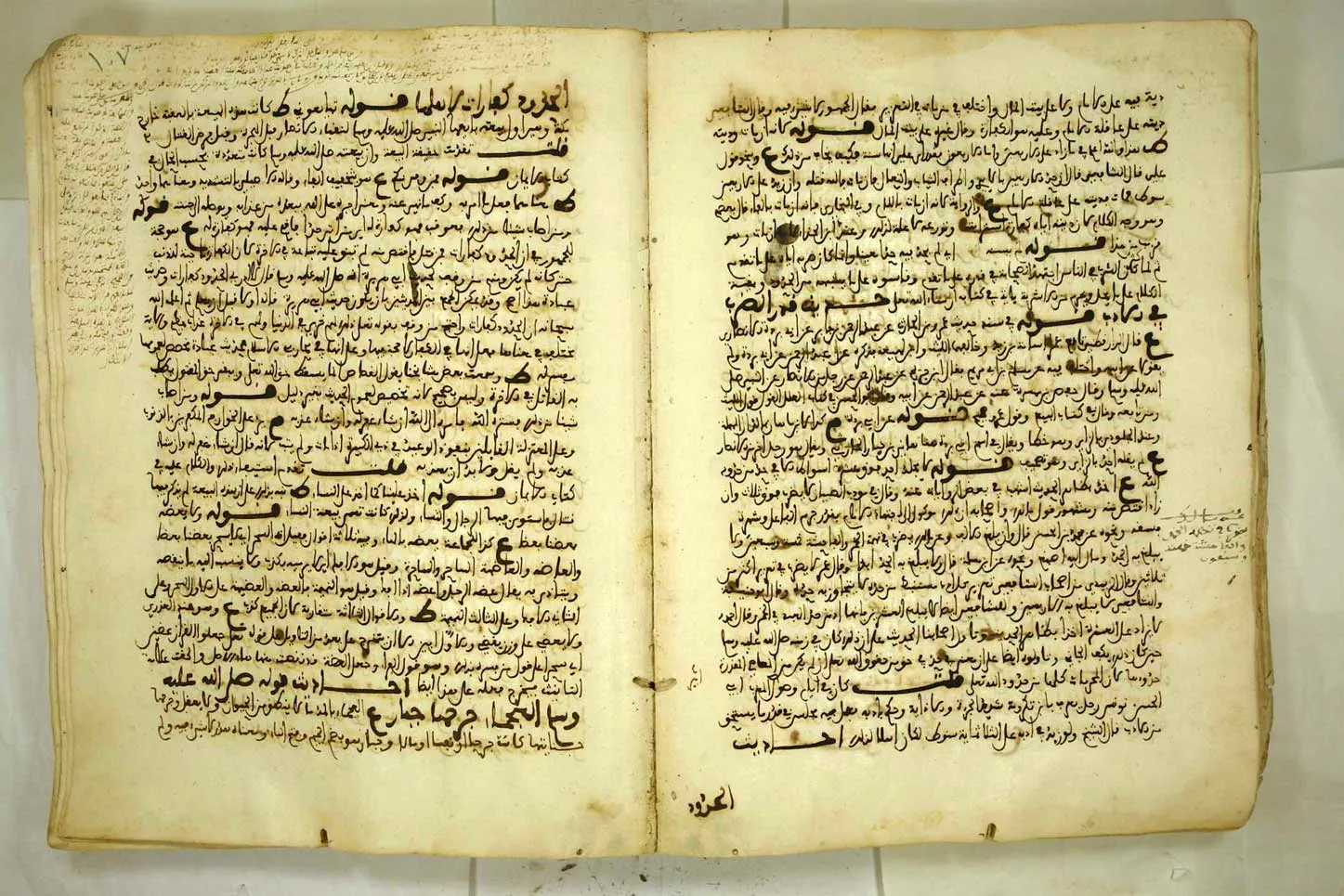
Muslim ibn al-Hajjaj ibn Muslim al-Qushayri al-Naysaburi (817-875 CE / 202-261 AH) was the compiler of Sahih Muslim, the second of the two most authoritative hadith collections in Sunni Islam. Together with Muhammad al-Bukhari's Sahih, his collection forms the Sahihayn (the Two Sahihs) -- the pair of hadith collections that stand at the apex of the Sunni hadith canon and that are cited more frequently than any other collections in Islamic legal and theological scholarship. Muslim was al-Bukhari's student, and his collection was developed in conscious dialogue with his teacher's work, sharing the same commitment to rigorous authentication while developing a distinctive organizational methodology that made it particularly valuable for scholars studying the transmission history of individual traditions.
Historical Context: Nishapur and the Hadith Tradition
Muslim was born in 817 CE in Nishapur, a major city in the Khurasan region of northeastern Persia (in present-day Iran). Nishapur was one of the most important intellectual centers of the Abbasid Caliphate -- a city of scholars, merchants, and administrators that had developed a strong tradition of hadith scholarship. The region of Khurasan had produced some of the most important hadith scholars of the third Islamic century, including Muhammad al-Bukhari himself, who was born in Bukhara nearby.
Muslim came of age during the mature phase of the hadith movement -- the period when the great collections were being compiled and the science of hadith criticism had developed into a sophisticated discipline with its own technical vocabulary and methodological standards. The generation of scholars to which he belonged was working in the shadow of the Mihna -- the inquisition imposed by Caliph al-Ma'mun to enforce the Mu'tazilite doctrine of the created Quran -- and the aftermath of that episode had strengthened the position of the hadith scholars as the guardians of authentic Islamic knowledge against caliphal interference.
The intellectual environment of Nishapur in the ninth century was shaped by the encounter between the Persian scholarly tradition and the Arabic-Islamic tradition that had arrived with the Arab conquests. Nishapur had been a center of Zoroastrian learning before Islam, and it became a center of Islamic learning with the same intensity. The city's scholars were known for their rigorous standards and their independence from political pressure -- qualities that would characterize Muslim's own scholarship., a major city in the Khurasan region of northeastern Persia (in present-day Iran). Nishapur was one of the most important intellectual centers of the Abbasid Caliphate -- a city of scholars, merchants, and administrators that had developed a strong tradition of hadith scholarship. The region of Khurasan had produced some of the most important hadith scholars of the third Islamic century, including Muhammad al-Bukhari himself, who was born in Bukhara nearby.
Muslim came of age during the mature phase of the hadith movement -- the period when the great collections were being compiled and the science of hadith criticism had developed into a sophisticated discipline. The generation of scholars to which he belonged was working in the shadow of the Mihna -- the inquisition imposed by Caliph al-Ma'mun to enforce the Mu'tazilite doctrine of the created Quran -- and the aftermath of that episode had strengthened the position of the hadith scholars as the guardians of authentic Islamic knowledge against caliphal interference.
Early Life and the Journey of Learning
Muslim began his hadith studies in Nishapur under local scholars, including Yahya ibn Yahya al-Tamimi and Ishaq ibn Rahawayh -- two of the most important hadith scholars of the region. But like all serious hadith scholars of his generation, he understood that comprehensive knowledge required travel. The authentic traditions of the Prophet had been transmitted through chains of narrators spread across the Islamic world, and to collect them comprehensively required seeking out scholars in every major center of Islamic learning.
Muslim began his journeys in pursuit of hadith at a young age, traveling to the major centers of Islamic learning across the Abbasid world -- to Baghdad, to Basra, to Kufa, to Syria, to Mecca and Medina, and to Egypt. These journeys were not comfortable: they required years away from home, living on limited resources, and moving from teacher to teacher as he exhausted what each had to offer.
The most important encounter of his scholarly career was his study under Muhammad al-Bukhari, the greatest hadith scholar of the age. Muslim studied under al-Bukhari and absorbed his methodology -- the rigorous standards for narrator evaluation, the insistence on verified contact between transmitters, the systematic approach to authentication. He later expressed his admiration for al-Bukhari in terms that leave no doubt about the depth of his respect: he reportedly said that al-Bukhari had no equal in the world of hadith scholarship, and he is said to have kissed al-Bukhari's forehead and called him the master of masters and the physician of hadith.
He also studied under other major scholars of the period, including Imam Ahmad ibn Hanbal, the founder of the Hanbali school of jurisprudence and the scholar whose resistance to the Mihna had made him the most respected religious figure in the Sunni world. Ahmad ibn Hanbal's emphasis on the primacy of transmitted sources over rational reasoning shaped the entire generation of hadith scholars to which Muslim belonged. Muslim also studied under Ali ibn al-Madini, the great hadith critic whose encyclopedic knowledge of narrator biographies was unmatched, and under Abu Zur'a al-Razi and Abu Hatim al-Razi, two of the leading hadith critics of the period.
These teachers gave Muslim access to the full range of hadith scholarship as it had developed in the third Islamic century -- the authentication standards, the biographical knowledge of narrators, the critical techniques for evaluating chains of transmission. He absorbed all of this and then applied it to the compilation of a collection that would stand alongside his teacher's as one of the two most authoritative hadith collections in Sunni Islam. under local scholars, but like all serious hadith scholars of his generation, he understood that comprehensive knowledge required travel. He began his journeys in pursuit of hadith at a young age, traveling to the major centers of Islamic learning across the Abbasid world -- to Baghdad, to Basra, to Kufa, to Syria, to Mecca and Medina, and to Egypt.
The most important encounter of his scholarly career was his study under Muhammad al-Bukhari, the greatest hadith scholar of the age. Muslim studied under al-Bukhari and absorbed his methodology -- the rigorous standards for narrator evaluation, the insistence on verified contact between transmitters, the systematic approach to authentication. He later expressed his admiration for al-Bukhari in terms that leave no doubt about the depth of his respect: he reportedly said that al-Bukhari had no equal in the world of hadith scholarship.
He also studied under other major scholars of the period, including Imam Ahmad ibn Hanbal, the founder of the Hanbali school of jurisprudence and the scholar whose resistance to the Mihna had made him the most respected religious figure in the Sunni world. Ahmad ibn Hanbal's emphasis on the primacy of transmitted sources over rational reasoning shaped the entire generation of hadith scholars to which Muslim belonged.
The Sahih: Methodology and Distinctive Character
Muslim compiled his Sahih over a period of approximately fifteen years, reportedly examining around 300,000 hadith and selecting approximately 4,000 for inclusion (with some repetitions; the number of unique hadith is closer to 3,000). The ratio -- roughly one in a hundred of the hadith he had examined -- reflects both the breadth of his collection and the rigor of his selection.
The Sahih's most distinctive methodological feature was its organizational principle. Where al-Bukhari had distributed the different chains of transmission for a single hadith across multiple chapters -- using the same hadith in different contexts to make different legal or theological points -- Muslim gathered all the chains of transmission for each hadith together in a single place. This meant that a scholar studying the Sahih could see, at a glance, all the different ways a particular tradition had been transmitted, which narrators had transmitted it, and how the different versions related to each other.
This organizational choice reflected a different scholarly priority from al-Bukhari's. Al-Bukhari's Sahih was organized to make legal and theological arguments through the arrangement of chapter headings and the selection of hadith -- it was, in part, a work of jurisprudence as well as hadith collection. Muslim's Sahih was organized to serve the needs of hadith scholars who wanted to study the transmission history of individual traditions -- it was, in a more pure sense, a work of hadith science.
Muslim also applied what scholars have described as a two-narrator requirement: he generally required that each narrator in a chain of transmission be confirmed to have transmitted from the narrator above him by at least two independent witnesses. This was a stricter standard than al-Bukhari's in some respects, though the two scholars' criteria overlapped significantly and each accepted some narrators that the other did not.
Muslim was explicit about his methodology in the introduction to the Sahih -- one of the most important methodological statements in the history of hadith scholarship. He explained his criteria for inclusion, his approach to narrator evaluation, and his organizational principles. This transparency about methodology was unusual and reflects the intellectual seriousness with which he approached his work.
The Sahih's Place Among the Six Canonical Collections
The six canonical hadith collections of Sunni Islam -- the Kutub al-Sitta -- are the Sahih of Muhammad al-Bukhari, the Sahih of Muslim, the Sunan of Imam Abu Dawood, the Jami of Imam Tirmidhi, the Sunan of Imam al-Nasa'i, and the Sunan of Ibn Majah. Among these six, al-Bukhari's and Muslim's collections are ranked highest for authenticity and are always discussed together as the Sahihayn.
Within this pairing, al-Bukhari's Sahih is generally ranked first. The traditional formulation among Sunni scholars is that Sahih al-Bukhari is the most authentic book after the Quran, with Sahih Muslim ranked second. This ranking reflects both the rigor of al-Bukhari's authentication standards and the centuries of scholarly scrutiny that have confirmed the quality of his work. Muslim himself acknowledged al-Bukhari's superiority in hadith scholarship.
The two collections are complementary rather than competing. They share a large number of hadith -- approximately 2,000 hadith appear in both collections -- but each also contains hadith not found in the other. A scholar who wants comprehensive coverage of the most authentic prophetic traditions needs both collections. The Sahihayn together are cited in Islamic legal and theological scholarship more frequently than any other hadith sources, and they form the foundation on which the broader hadith canon rests.
Al-Nawawi's Commentary and the Scholarly Tradition
The most important scholarly engagement with Sahih Muslim was the commentary written by Yahya ibn Sharaf al-Nawawi (1233-1277 CE), known simply as Sharh Sahih Muslim (The Commentary on Sahih Muslim). Al-Nawawi was one of the greatest Islamic scholars of the medieval period -- a jurist, hadith scholar, and spiritual writer whose works remain among the most widely read in the Islamic tradition. His Forty Hadith and his Riyadh al-Salihin (Gardens of the Righteous) are among the most widely distributed Islamic texts in the world, and his commentary on Muslim's Sahih became the standard reference for understanding the collection.
Al-Nawawi's commentary explained the legal implications of each hadith, addressed apparent contradictions between different traditions, evaluated the reliability of narrators, and provided the linguistic and contextual analysis needed to understand the hadith in their full meaning. It transformed Sahih Muslim from a collection of authenticated traditions into a comprehensive resource for Islamic legal and theological scholarship. The commentary is still studied in Islamic educational institutions worldwide and is the primary lens through which Muslim's Sahih has been understood by subsequent generations of scholars.
The relationship between Muslim's Sahih and al-Nawawi's commentary illustrates a broader pattern in Islamic scholarship: the great hadith collections generated their own scholarly traditions of commentary and analysis, and it is often through these commentaries that the collections have been most widely studied. Just as al-Bukhari's Sahih generated Ibn Hajar al-Asqalani's monumental Fath al-Bari (The Opening of the Creator), Muslim's Sahih generated al-Nawawi's commentary -- and both commentaries became classics of Islamic scholarship in their own right, studied alongside the collections they explained. with Sahih Muslim was the commentary written by Yahya ibn Sharaf al-Nawawi (1233-1277 CE), known simply as Sharh Sahih Muslim (The Commentary on Sahih Muslim). Al-Nawawi was one of the greatest Islamic scholars of the medieval period -- a jurist, hadith scholar, and spiritual writer whose works remain among the most widely read in the Islamic tradition -- and his commentary on Muslim's Sahih became the standard reference for understanding the collection.
Al-Nawawi's commentary explained the legal implications of each hadith, addressed apparent contradictions between different traditions, evaluated the reliability of narrators, and provided the linguistic and contextual analysis needed to understand the hadith in their full meaning. It transformed Sahih Muslim from a collection of authenticated traditions into a comprehensive resource for Islamic legal and theological scholarship. The commentary is still studied in Islamic educational institutions worldwide and is the primary lens through which Muslim's Sahih has been understood by subsequent generations of scholars.
Other Works
Muslim's scholarly output extended beyond the Sahih, though none of his other works has approached it in influence, and several survive only in part or through later citation.
Kitab al-Tabaqat, a biographical work arranging hadith transmitters by generation, and Kitab al-Kuna wa al-Asma', a reference work resolving the bynames and epithets by which many early transmitters were known — often the only names by which a source identified them — belong to the same discipline of rijal criticism that underlay the Sahih itself. A scholar checking whether two chains of transmission that named a source differently in fact referred to the same person needed exactly this kind of reference, and Muslim's compilation of it reflects the same meticulousness visible in his hadith collection.
He also wrote al-Tamyiz (Kitab al-Tamyiz al-Mumayyiz), a treatise on distinguishing sound from defective reports through close comparative analysis of their chains, and Kitab al-Muhadramin, dealing with those who lived both before and after the advent of Islam. Ibn Abi Hatim al-Razi and other hadith critics of the generation after Muslim drew on this biographical and methodological work in their own compilations, which is largely how its content is known today, since the original texts have not all survived complete.
Later Life and Legacy
Muslim spent his later years in Nishapur, teaching the Sahih to students who came from across the Islamic world. He died in Nishapur in 261 AH (875 CE); his death is treated in the section on his life below. His tomb in Nishapur became a site of scholarly pilgrimage.
His legacy in Islamic scholarship is inseparable from the Sahih. The collection he compiled -- from a reported 300,000 hadith down to approximately 4,000, organized with a distinctive methodology that made it particularly valuable for studying transmission history -- became one of the two most authoritative hadith collections in Sunni Islam. It was studied in the great madrasas of the medieval Islamic world, cited in the legal opinions of jurists from Baghdad to Cordoba, and commented upon by scholars across fourteen centuries.
His methodological contribution was as significant as the collection itself. By organizing all chains of transmission for each hadith together, and by being transparent about his criteria for inclusion in the Sahih's introduction, Muslim established a model for hadith scholarship that combined rigorous authentication with systematic organization and methodological transparency. This model influenced the subsequent development of hadith scholarship in ways that are still felt today.
The Sahihayn -- al-Bukhari's Sahih and Muslim's Sahih together -- represent the collective achievement of the two greatest hadith scholars of the third Islamic century. They worked in the same intellectual environment, shared many of the same teachers, and were engaged in the same project of preserving and authenticating the prophetic traditions that are the foundation of Islamic law and practice. Muslim's contribution to that achievement was the more systematically organized of the two collections, and it is a contribution that has shaped Islamic hadith scholarship ever since.
Muslim's Methodology: The Introduction to the Sahih
The Explicit Methodological Statement
Unlike al-Bukhari, who left his methodology to be inferred from his practice, Muslim composed an explicit methodological introduction (muqaddima) to his Sahih, and it is one of the most important texts in the history of the hadith sciences. In it he set out the criteria by which he accepted or rejected a narrator, and stated that he admitted only those traditions meeting the highest standard of authenticity. He explained why he had chosen to group the chains of a tradition together rather than distribute them by legal topic, set out how he understood the distinction between the sound (sahih), the good (hasan) and the weak (da'if), and discussed what follows from the different structures a chain may have — whether it is continuous, elevated to the Prophet, or suspended at some point short of him.
This methodological transparency was itself a contribution to the field. By making his criteria explicit, Muslim allowed subsequent scholars to evaluate his work critically — to check whether his practice matched his stated principles, and to identify any hadith that might not meet the standards he claimed to apply. This transparency also made his work more useful as a teaching tool: students could learn the principles of hadith criticism by studying how Muslim applied them.
The Criterion of Contemporaneity
Muslim's most significant methodological difference from al-Bukhari concerned the conditions for accepting a chain of transmission. While al-Bukhari required proven contact between each pair of narrators in a chain (evidence that they had actually met and that the transmission had actually occurred), Muslim required only contemporaneity — that the two narrators had lived at the same time and that it was possible for them to have met.
This difference is subtle but significant. Al-Bukhari's stricter requirement means that some hadith accepted by Muslim are not accepted by al-Bukhari — not because the narrators are unreliable but because there is insufficient evidence of actual contact between them. The scholarly consensus generally acknowledges al-Bukhari's criterion as slightly more rigorous, but Muslim's criterion is still extremely demanding by the standards of the field: mere possibility of contact is not enough — the narrators must have been contemporary, in the same region, and part of the same scholarly network.
The Organization by Chains
Muslim's distinctive organisational choice — grouping all the chains of transmission for a given hadith together — made his Sahih particularly valuable for studying the transmission history of individual traditions. With every chain for one report set out in one place, a scholar can compare the precise wording each transmitter gives and detect minor variations between them; can judge which of the chains is strongest and which weakest; can trace how the report spread geographically through different scholarly networks; and can identify the cases where several independent chains converge on the same text, which is the strongest form of evidence the discipline recognises.
This organization contrasts with al-Bukhari's approach of distributing the same hadith across multiple chapters (placing it under each legal topic to which it is relevant). Muslim's arrangement serves the hadith critic; al-Bukhari's serves the jurist. The two approaches are complementary rather than contradictory, and together they provide scholars with the tools to study prophetic traditions from both perspectives.
Muslim's Life and Character
Birth and Education
Muslim ibn al-Hajjaj ibn Muslim al-Qushayri al-Naysaburi was born in approximately 817 CE (202 AH) in Nishapur — one of the great cities of Khorasan and a major center of hadith scholarship in the third Islamic century. His family was of Arab origin (the Banu Qushayr), though they had settled in Khorasan. He began studying hadith from the age of twelve and commenced his scholarly travels at approximately fourteen — early even by the standards of an age when hadith study began in youth.
His travels took him across the Islamic world: to the Hejaz (Mecca and Medina), to Baghdad and the Iraqi cities, to Egypt, and to various centers of learning in Khorasan and Central Asia. He studied under approximately 220 teachers, including the most prominent hadith scholars of his generation. Among his most important teachers was al-Bukhari himself — the senior scholar from whom Muslim learned the highest standards of hadith criticism.
The Relationship with al-Bukhari
Muslim's relationship with al-Bukhari was that of a devoted student to an acknowledged master. He attended al-Bukhari's teaching sessions in Nishapur, studied his methods, and applied his standards (with the single modification of the contact/contemporaneity criterion noted above). When al-Bukhari was expelled from Nishapur during the theological controversy about the "creation of the Quran," Muslim was among the few who publicly stood by his teacher — refusing to participate in the boycott and continuing to attend al-Bukhari's sessions despite social pressure.
This loyalty cost Muslim socially: he lost standing with some Nishapur scholars who had sided against al-Bukhari. But it demonstrated the principle of scholarly solidarity and the recognition that academic disagreements should not be settled by social ostracism or political pressure. Muslim's loyalty to his teacher during the Nishapur controversy was later remembered as evidence of his own integrity and his recognition of al-Bukhari's superior standing.
Death and Legacy
Muslim died in Nishapur in 261 AH (875 CE). His year of birth is given as 202 AH by some of the biographers and a little later by others, so his age at death is reported variously in the high fifties; no single figure is asserted here. The cause of his death, according to a famous anecdote, was exhaustion following a marathon hadith research session: a student asked him about a hadith he could not immediately identify, and he spent the entire night searching through his materials until he found it. The exertion of this search, combined with his existing ill health, reportedly contributed to his death the following day.
Whether this anecdote is literally true or not, it captures an essential quality of Muslim's character: his dedication to precision, his refusal to rest until a question was answered, and the absolute priority he gave to the accuracy of hadith knowledge over personal comfort or health. He was buried in Nishapur, and his grave remained a site known to scholars for centuries.
References and Further Reading
Primary Islamic Sources
- Quran, Surah al-Hujurat (49:6) — "If a transgressor brings you news, verify it" — the Quranic foundation for the rigorous source criticism that defines Sahih Muslim
- Quran, Surah al-Nisa (4:59) — "Obey Allah and obey the Messenger" — underpins the legal and theological authority of the hadith collections
- Sahih Muslim, Introduction (Muqaddima), Hadith 1 — Muslim's own methodological statement explaining his criteria for inclusion and the importance of isnad verification
- Muslim ibn al-Hajjaj. Sahih Muslim. Edited by Muhammad Fu'ad Abd al-Baqi. 5 vols. Beirut: Dar Ihya' al-Turath al-Arabi, 1972. [Compiled c. 847–875 CE] The canonical collection itself.
Classical Islamic Sources
- Al-Nawawi, Yahya ibn Sharaf. Sharh Sahih Muslim (Commentary on Sahih Muslim). 18 vols. Beirut: Dar Ihya' al-Turath al-Arabi, 1972. [Original c. 1270 CE] The standard scholarly commentary, essential for understanding the collection.
- Al-Qadi Iyad ibn Musa. Ikmal al-Mu'lim bi-Fawa'id Muslim. Edited by Yahya Ismail. 9 vols. Cairo: Dar al-Wafa', 1998. [Original c. 1149 CE] Earlier major commentary on Sahih Muslim.
- Al-Dhahabi, Shams al-Din. Siyar A'lam al-Nubala. Edited by Shu'ayb al-Arna'ut. Mu'assasat al-Risala, 1981. [Original c. 1320 CE]
- Al-Mizzi, Jamal al-Din. Tahdhib al-Kamal fi Asma' al-Rijal. Edited by Bashshar Awwad Ma'ruf. Beirut: Mu'assasat al-Risala, 1980. [Original c. 1341 CE]
- Ibn Hajar al-Asqalani, Ahmad ibn Ali. Hady al-Sari: Muqaddimat Fath al-Bari. Beirut: Dar al-Ma'rifa, 1959. [Original c. 1449 CE] Includes comparative analysis of al-Bukhari and Muslim.
Academic and Scholarly Sources
- Brown, Jonathan A.C. The Canonization of al-Bukhari and Muslim: The Formation and Function of the Sunni Hadith Canon. Leiden: Brill, 2007.
- Brown, Jonathan A.C. Hadith: Muhammad's Legacy in the Medieval and Modern World. Oxford: Oneworld Publications, 2009.
- Siddiqi, Muhammad Zubayr. Hadith Literature: Its Origin, Development and Special Features. Cambridge: Islamic Texts Society, 1993.
- Al-Azami, Muhammad Mustafa. Studies in Hadith Methodology and Literature. Indianapolis: American Trust Publications, 1977.
- Melchert, Christopher. The Formation of the Sunni Schools of Law, 9th–10th Centuries CE. Leiden: Brill, 1997.
Further Reading
- Juynboll, G.H.A. Muslim Tradition: Studies in Chronology, Provenance and Authorship of Early Hadith. Cambridge: Cambridge University Press, 1983.
- Lucas, Scott C. Constructive Critics, Hadith Literature, and the Articulation of Sunni Islam. Leiden: Brill, 2004.
- Motzki, Harald, ed. Hadith: Origins and Developments. Aldershot: Ashgate, 2004.
Mentioned In
25 articles reference this topic
and 13 more articles
More from Abbasid Caliphate
Umayyad vs Abbasid Caliphate: A Comparative Analysis
The Umayyad and Abbasid Caliphates represented contrasting approaches to governance, culture, and Islamic identity. While the Umayyads built a vast Arab empire, the Abbasids created a cosmopolitan Islamic civilization.
University of al-Qarawiyyin
The University of al-Qarawiyyin in Fez, Morocco, founded as a mosque in 857-859 CE, is recognised by UNESCO as the oldest existing, continually operating institution of higher learning in the world, and a historic centre of Maliki legal scholarship in the western Islamic world.
Abbasid Caliphate
The third major Islamic caliphate (750–1258 CE), centered in Baghdad. It presided over the Islamic Golden Age, with landmark advances in science, philosophy, literature, and the arts, forging a cosmopolitan empire that blended Greek, Persian, Indian, and Arab traditions.
Baghdad
Baghdad, founded in 762 CE by Caliph al-Mansur, served as the capital of the Abbasid Caliphate and became the intellectual, cultural, and economic center of the Islamic world during the Islamic Golden Age, reaching a population of over one million before its destruction by the Mongols in 1258 CE.