Imam al-Tirmidhi
Abu Isa Muhammad ibn Isa al-Tirmidhi (824–892 CE) compiled Jami' al-Tirmidhi, the fourth of the six canonical Sunni hadith collections. He systematized the 'hasan' (good) grade of authenticity, and his legal commentary alongside each hadith made the work valuable for jurisprudence.
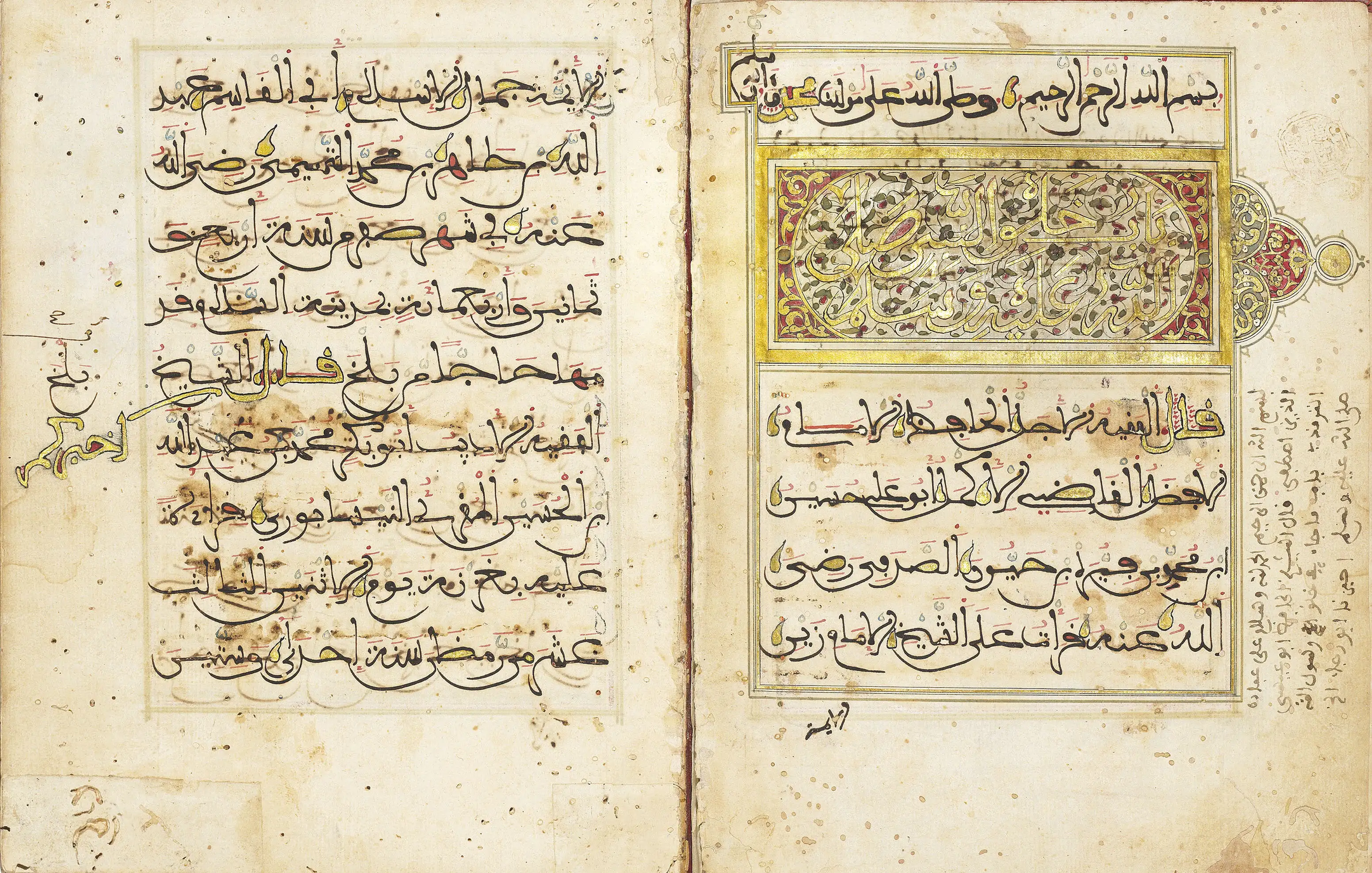
Abu Isa Muhammad ibn Isa al-Tirmidhi (824-892 CE / 209-279 AH) was the compiler of Jami' al-Tirmidhi, the fourth of the six canonical hadith collections in Sunni Islam. His collection is distinguished from the others by two innovations that made it uniquely valuable for Islamic jurisprudence: the systematic introduction of the hasan (good) category as a distinct grade of hadith authenticity, and the practice of including legal commentary and multiple scholarly opinions alongside each hadith. These features transformed the Jami' from a simple collection of authenticated traditions into a comprehensive reference work for Islamic legal scholarship.
Historical Context: Tirmidh and the Central Asian Hadith Tradition
Al-Tirmidhi was born in 824 CE in Tirmidh, a city on the Amu Darya River in the Transoxiana region of Central Asia (in present-day Uzbekistan, near the modern city of Termez). Tirmidh was part of the broader Central Asian intellectual world that had produced some of the most important hadith scholars of the third Islamic century -- Muhammad al-Bukhari was born in Bukhara nearby, and the region had developed a strong tradition of hadith scholarship that combined the rigor of the Iraqi tradition with the distinctive scholarly culture of the Persian-speaking world.
The cities of Transoxiana -- Tirmidh, Bukhara, Samarkand, and others -- had been centers of Persian-Islamic culture since the Arab conquests of the seventh century, and by the ninth century they had developed their own distinctive scholarly traditions. The region's scholars were known for their rigorous standards, their independence from political pressure, and their ability to synthesize the Arabic-Islamic scholarly tradition with the Persian intellectual heritage. This environment shaped al-Tirmidhi's approach to scholarship -- his systematic, comprehensive methodology reflects the Central Asian scholarly tradition at its best.
Al-Tirmidhi came of age during the mature phase of the Abbasid Caliphate's intellectual flowering -- the period when the great hadith collections were being compiled and the science of hadith criticism had developed into a sophisticated discipline with its own technical vocabulary and methodological standards. The generation of scholars to which he belonged was working in the aftermath of the Mihna -- the inquisition imposed by Caliph al-Ma'mun to enforce the Mu'tazilite doctrine of the created Quran -- and the failure of that episode had strengthened the position of the hadith scholars as the guardians of authentic Islamic knowledge against caliphal interference. The hadith movement that produced al-Tirmidhi and his contemporaries was, in part, a response to the Mihna's challenge: a determination to preserve and authenticate the prophetic traditions that were the foundation of Islamic law and practice, independent of political pressure.
Early Life and the Journey of Learning
Al-Tirmidhi began his hadith studies in Tirmidh under local scholars before embarking on the extensive travels that were essential for any serious hadith scholar of his generation. He traveled to the major centers of Islamic learning across the Abbasid world -- to Baghdad, to Basra, to Kufa, to Syria, to Mecca and Medina, and to Egypt -- seeking out scholars who possessed traditions he had not yet collected and verifying the reliability of the narrators in those traditions' chains.
The most important encounter of his scholarly career was his study under Muhammad al-Bukhari, the greatest hadith scholar of the age. Al-Tirmidhi studied under al-Bukhari and absorbed his methodology -- the rigorous standards for narrator evaluation, the insistence on verified contact between transmitters, the systematic approach to authentication. The influence of al-Bukhari on al-Tirmidhi's scholarship was profound and lasting, and al-Tirmidhi acknowledged it explicitly in his own work. He reportedly said that he had not seen anyone in Iraq or Khurasan who understood the hidden defects of hadith better than al-Bukhari.
He also studied under Imam Muslim, Imam Abu Dawood, and Imam Ahmad ibn Hanbal -- three of the other five canonical hadith scholars -- making him one of the most comprehensively trained hadith scholars of his generation. This breadth of training gave him access to the full range of hadith scholarship as it had developed across the Islamic world, and it shaped the distinctive character of his own collection. Where some hadith scholars specialized in a particular regional tradition or a particular methodological approach, al-Tirmidhi synthesized multiple traditions into a collection that was genuinely comprehensive in its coverage of both hadith and jurisprudence.
His travels also gave him direct personal knowledge of the scholars whose traditions he collected -- he could evaluate their reliability not just from biographical reports but from his own observations of their character, memory, and scholarly conduct. This personal knowledge was one of the most valuable assets a hadith scholar could possess, and al-Tirmidhi's extensive travels ensured that he had it in abundance.
The Jami': Methodology and Distinctive Character
Al-Tirmidhi compiled his Jami' over a period of years, reportedly examining a large number of hadith and selecting those that met his criteria for inclusion. The collection contains approximately 3,956 hadith, organized by legal topic in the manner of the other Sunan collections.
The Jami''s most important methodological innovation was the systematic introduction of the hasan (good) category as a distinct grade of hadith authenticity. Before al-Tirmidhi, hadith scholars generally classified traditions as either sahih (authentic) or da'if (weak), with various subcategories within each. Al-Tirmidhi recognized that this binary classification was too crude -- there were many traditions that were not quite strong enough to be called sahih but were significantly more reliable than the weakest da'if traditions. He developed the hasan category to describe these intermediate traditions: those with slightly lower but still acceptable authentication, where narrators might have minor weaknesses in memory but maintained overall reliability.
This grading system was revolutionary because it provided nuanced categories beyond the simple "authentic or not" approach. Al-Tirmidhi recognized that religious knowledge existed on a spectrum of reliability, and his system allowed scholars to make informed decisions about how to use different types of traditions. His approach acknowledged that even weaker traditions could have value for understanding Islamic history, ethics, and spirituality, even if they could not serve as primary legal evidence. The hasan category in particular became enormously influential -- it opened up a large body of traditions that had previously been difficult to use, and it gave Islamic jurisprudence access to a wider range of prophetic guidance.
Al-Tirmidhi was also distinctive in his practice of including legal commentary alongside each hadith. Where al-Bukhari's Sahih made legal arguments through the arrangement of chapter headings, and Imam Muslim's Sahih focused on the transmission history of individual traditions, al-Tirmidhi explicitly stated the legal implications of each hadith and presented the opinions of different legal schools on the questions it raised. For each tradition, he would typically note which of the major legal schools -- Hanafi, Maliki, Shafi'i, and Hanbali -- followed it, and where they differed, he would explain the basis for the disagreement.
This comparative legal approach made the Jami' uniquely valuable for students of Islamic jurisprudence. A scholar studying al-Tirmidhi's collection could see not only what the Prophet had said but how different schools of Islamic law had interpreted and applied his words. The Jami' was, in this sense, both a hadith collection and a comparative legal reference -- a combination that no other canonical collection achieved in quite the same way.
Al-Tirmidhi also included in his collection a section on the 'ilal (hidden defects) of hadith -- the subtle problems in chains of transmission that could undermine a tradition's reliability even when the chain appeared sound on the surface. This section, known as Kitab al-'Ilal, was a significant contribution to the science of hadith criticism and demonstrated al-Tirmidhi's mastery of the most advanced techniques of hadith analysis.
The Jami's Place Among the Six Canonical Collections
The six canonical hadith collections of Sunni Islam -- the Kutub al-Sitta -- are the Sahih of Muhammad al-Bukhari, the Sahih of Imam Muslim, the Sunan of Imam Abu Dawood, the Jami' of al-Tirmidhi, the Sunan of Imam al-Nasa'i, and the Sunan of Ibn Majah. Among these six, al-Bukhari's and Muslim's collections are ranked highest for authenticity; al-Tirmidhi's Jami' is generally ranked fourth, after Abu Dawood's Sunan.
The Jami''s distinctive contribution to the canon was its combination of hadith authentication with legal commentary and comparative jurisprudence. Where the other collections were primarily resources for hadith scholars, al-Tirmidhi's collection was also a resource for jurists -- a work that bridged the gap between hadith science and Islamic law in a way that made it indispensable for legal scholarship. This dual character explains why the Jami' has been so widely studied across all four major Sunni legal schools, despite the fact that al-Tirmidhi himself was associated with the Shafi'i tradition.
The Jami' is also known by the title al-Sunan, though scholars generally prefer al-Jami' to distinguish it from the other Sunan collections. The title Jami' (comprehensive) reflects the collection's broader scope -- it covers not only legal topics but also topics related to faith, ethics, and spirituality that the more narrowly focused Sunan collections do not address. This comprehensiveness made the Jami' a more complete guide to Islamic practice than any of the other Sunan collections, and it contributed to its wide adoption in Islamic educational curricula.
The Jami' also contains a section on the 'ilal (hidden defects) of hadith -- the subtle problems in chains of transmission that could undermine a tradition's reliability even when the chain appeared sound on the surface. This section, known as Kitab al-'Ilal, was a significant contribution to the science of hadith criticism and demonstrated al-Tirmidhi's mastery of the most advanced techniques of hadith analysis. It attracted its own scholarly commentary tradition, most notably Ibn Rajab al-Hanbali's Sharh 'Ilal al-Tirmidhi, which remains one of the most important works on the science of hidden defects in hadith.
Al-Shama'il al-Muhammadiyya
Alongside the Jami', al-Tirmidhi produced a shorter work that has had a long and distinctive life of its own: al-Shama'il al-Muhammadiyya ("The Characteristics of Muhammad"), a collection of hadith devoted specifically to the person of the Prophet rather than to legal rulings.
Its fifty-odd chapters gather traditions describing his physical appearance — the sources report, for instance, that he was neither conspicuously tall nor short, and that his hair was neither tightly curled nor entirely straight — together with his manner of dress, his habits of eating and sleeping, his conduct in worship, his humility, the names by which he was known, and the character traits his companions recorded of him: his patience, his generosity, and his bearing in company. The work is therefore biographical and devotional rather than juristic in the way the Jami' is, and it stands apart from the rest of al-Tirmidhi's output for that reason.
Its enduring popularity rests on exactly this distinctiveness. Where the canonical collections are organised around what the Prophet said and ruled, the Shama'il is organised around what he was like as a man, and it has been read for that purpose continuously since its composition — as a devotional text describing the Prophet's character in concrete and human detail, memorised in part by students of the religious sciences, and printed and translated as a discrete book far more often than isolated chapters of the Jami' have been. It generated its own commentary tradition in later centuries, separate from the commentaries on the Jami', and it remains one of the most widely circulated shorter hadith works in the Muslim world.
Later Life and Legacy
Al-Tirmidhi spent his later years in Tirmidh, teaching the Jami' to students who came from across the Islamic world. The biographical tradition records that he lost his sight in his later years -- some accounts suggest this resulted from excessive weeping out of fear of God, while others attribute it to the strain of intensive scholarly work. Whatever the cause, his blindness did not diminish his scholarly activity: he continued to teach from memory, and his students served as his scribes and readers.
He died in Tirmidh in 892 CE at approximately sixty-eight years of age. His tomb in Tirmidh became a site of scholarly pilgrimage.
His legacy in Islamic scholarship rests primarily on the Jami' and on his contributions to the science of hadith classification. The hasan category he developed became a standard part of the vocabulary of hadith criticism, used by scholars across the centuries to describe traditions that were reliable but not quite at the level of sahih. His practice of including legal commentary alongside hadith influenced the subsequent development of Islamic jurisprudence, and his comparative presentation of different legal schools' opinions made his collection a model for the kind of balanced, multi-perspective scholarship that Islamic legal education has valued ever since.
The Jami' attracted important commentaries from later scholars, most notably Ibn al-Arabi al-Maliki's Aridhat al-Ahwadhi and Ibn Rajab al-Hanbali's Sharh 'Ilal al-Tirmidhi -- the latter focusing specifically on al-Tirmidhi's contributions to the science of hidden defects in hadith. These commentaries testify to the depth and originality of al-Tirmidhi's scholarship and to the lasting influence of his methodological innovations.
The six canonical collections together -- al-Bukhari's Sahih, Muslim's Sahih, Abu Dawood's Sunan, al-Tirmidhi's Jami', al-Nasa'i's al-Mujtaba, and Ibn Majah's Sunan -- represent the collective achievement of a generation of hadith scholars who worked in the third Islamic century to preserve, authenticate, and organize the prophetic traditions that are the foundation of Islamic law and practice. Al-Tirmidhi's contribution to that achievement was the most jurisprudentially oriented of the group -- a collection that served not only as a repository of authenticated traditions but as a guide to how those traditions had been understood and applied by the great legal scholars of the Islamic tradition.
The Innovation of the Hasan Grade
A Middle Category
Al-Tirmidhi's most lasting methodological contribution to the hadith sciences was his systematic use of the hasan (good/fair) category as a middle grade between sahih (authentic) and da'if (weak). Before al-Tirmidhi, hadith scholars generally worked with a binary distinction: a tradition was either authentic (meeting the highest standards) or weak (failing to meet them). Al-Tirmidhi recognized that this binary was inadequate for the many traditions that fell in between — those whose chains were not perfect enough for the sahih category but were too well-supported to be dismissed as weak.
The hasan grade accommodated these intermediate traditions by establishing criteria for a "good" hadith: one whose chain was continuous, whose narrators were known and not accused of lying, but whose narrators did not quite reach the highest level of precision required for sahih status. This three-tier grading system (sahih, hasan, da'if) became standard in hadith scholarship after al-Tirmidhi and remains the fundamental framework for evaluating traditions to this day.
The Impact on Islamic Law
The hasan category was particularly important for Islamic jurisprudence (fiqh). Many legal rulings are based on hadith that, while not meeting al-Bukhari's stringent standards, are well-attested enough to be used as evidence. Without the hasan grade, these traditions would have been classified as either sahih (which they weren't quite) or da'if (which would have made them legally unusable). By creating the middle category and demonstrating that hasan hadith were legitimate evidence for legal rulings (though less authoritative than sahih ones), al-Tirmidhi expanded the evidential base of Islamic law while maintaining standards of scholarly rigor.
Al-Tirmidhi's Comparative Legal Method
Including Multiple Scholarly Opinions
What made the Jami' uniquely useful for Islamic jurists was al-Tirmidhi's practice of not merely reporting hadith but noting how different legal scholars had understood and applied them. After presenting a tradition, he would typically note: "In this chapter there are also traditions from so-and-so..." (listing other companions who transmitted similar reports), and then add: "This is the practice of the people of knowledge" or "The scholars have differed on this matter" — followed by a summary of different legal positions.
This comparative method meant that a jurist consulting the Jami' could find not only the relevant hadith but also a survey of how the major schools had interpreted it — making the work a kind of comparative legal reference as well as a hadith collection. No other canonical collection provides this dual function so systematically.
Al-Tirmidhi's Own Blindness and Scholarly Production
Al-Tirmidhi lost his sight in the later years of his life — a loss that, like al-Bukhari's childhood blindness, did not prevent him from continuing his scholarly work. His remarkable memory allowed him to continue teaching, evaluating, and composing even after he could no longer read manuscripts. The hadith scholars of this era cultivated memory to a degree that modern people find difficult to imagine — they could recall not only the texts of thousands of traditions but the precise chains of transmission through which they had received each one. Al-Tirmidhi's blindness, while a personal hardship, did not diminish his scholarly output because his primary tools — memory and analytical judgment — were not dependent on sight.
He died in 892 CE (279 AH) in Termez (modern Uzbekistan), the city from which his name derived, at approximately sixty-eight years of age. His grave there remained known to scholars, and his legacy was carried forward through his students and through the continued study and commentary on his Jami' across the centuries.
References and Further Reading
Primary Islamic Sources
- Quran, Surah al-Hujurat (49:6) — "If a transgressor brings you news, verify it" — the Quranic basis for the critical verification of transmitted reports that al-Tirmidhi systematized
- Quran, Surah al-Nahl (16:43) — "Ask the people of knowledge if you do not know" — cited in the context of scholarly transmission and the isnad tradition
- Sahih al-Bukhari, Book of Knowledge, Hadith 71 — "Whoever Allah wishes good for, He grants him understanding of the religion" — a recurring hadith in al-Tirmidhi's collection
- Al-Tirmidhi, Muhammad ibn Isa. Jami' al-Tirmidhi (also Sunan al-Tirmidhi). Edited by Ahmad Muhammad Shakir. 5 vols. Cairo: Maktabat Mustafa al-Babi al-Halabi, 1975. [Compiled c. 864–892 CE]
- Al-Tirmidhi, Muhammad ibn Isa. Kitab al-'Ilal al-Saghir. Included in editions of the Jami'. c. 892 CE. Al-Tirmidhi's treatise on the hidden defects of hadith.
Classical Islamic Sources
- Al-Tirmidhi, Muhammad ibn Isa. Al-Shama'il al-Muhammadiyya (Characteristics of the Prophet Muhammad). Edited by Ibrahim 'Atwa 'Iwad. Cairo: Mustafa al-Babi al-Halabi, 1975. [Original c. 870 CE]
- Ibn Rajab al-Hanbali, Abd al-Rahman. Sharh 'Ilal al-Tirmidhi. Edited by Nur al-Din 'Itr. Damascus: Dar al-Mallah, 1978. [Original c. 1391 CE] The most important commentary on al-Tirmidhi's science of hidden defects.
- Al-Dhahabi, Shams al-Din. Siyar A'lam al-Nubala. Edited by Shu'ayb al-Arna'ut. Mu'assasat al-Risala, 1981. [Original c. 1320 CE]
- Al-Mizzi, Jamal al-Din. Tahdhib al-Kamal fi Asma' al-Rijal. Edited by Bashshar Awwad Ma'ruf. Beirut: Mu'assasat al-Risala, 1980. [Original c. 1341 CE]
- Ibn al-Arabi al-Maliki, Abu Bakr. Aridhat al-Ahwadhi bi-Sharh Sahih al-Tirmidhi. Beirut: Dar al-Kutub al-Ilmiyya, 1997. [Original c. 1148 CE]
Academic and Scholarly Sources
- Brown, Jonathan A.C. Hadith: Muhammad's Legacy in the Medieval and Modern World. Oxford: Oneworld Publications, 2009.
- Siddiqi, Muhammad Zubayr. Hadith Literature: Its Origin, Development and Special Features. Cambridge: Islamic Texts Society, 1993.
- Al-Azami, Muhammad Mustafa. Studies in Hadith Methodology and Literature. Indianapolis: American Trust Publications, 1977.
- Melchert, Christopher. The Formation of the Sunni Schools of Law, 9th–10th Centuries CE. Leiden: Brill, 1997.
- Lucas, Scott C. Constructive Critics, Hadith Literature, and the Articulation of Sunni Islam. Leiden: Brill, 2004.
Further Reading
- Juynboll, G.H.A. Muslim Tradition: Studies in Chronology, Provenance and Authorship of Early Hadith. Cambridge: Cambridge University Press, 1983.
- Robson, James. "The Transmission of Abu Dawud's Sunan." Bulletin of the School of Oriental and African Studies 14, no. 3 (1952): 579–588.
- Khanam, Farida. A Simple Guide to Hadith Science. New Delhi: Goodword Books, 2003.
Mentioned In
27 articles reference this topic
and 15 more articles
More from Abbasid Caliphate
Islamic Schools of Jurisprudence: The Madhabs
The madhabs, the schools of Islamic law that developed methods for deriving rulings from the Qur'an and the Sunnah. Four Sunni schools and the Shi'a traditions have guided Muslim practice for over a millennium; they are schools of method, not sects.
University of al-Qarawiyyin
The University of al-Qarawiyyin in Fez, Morocco, founded as a mosque in 857-859 CE, is recognised by UNESCO as the oldest existing, continually operating institution of higher learning in the world, and a historic centre of Maliki legal scholarship in the western Islamic world.
Abbasid Caliphate
The third major Islamic caliphate (750–1258 CE), centered in Baghdad. It presided over the Islamic Golden Age, with landmark advances in science, philosophy, literature, and the arts, forging a cosmopolitan empire that blended Greek, Persian, Indian, and Arab traditions.
Baghdad
Baghdad, founded in 762 CE by Caliph al-Mansur, served as the capital of the Abbasid Caliphate and became the intellectual, cultural, and economic center of the Islamic world during the Islamic Golden Age, reaching a population of over one million before its destruction by the Mongols in 1258 CE.