Khawla bint al-Azwar: Warrior of the Muslim Conquest of the Levant
Khawla bint al-Azwar (d. 639 CE) was a Muslim woman warrior of the Banu Asad tribe who fought alongside her brother Dhiraar in the Rashidun conquest of the Levant, most famously at the Battle of Yarmouk in 636 CE, becoming one of the most celebrated women soldiers in Islamic history.
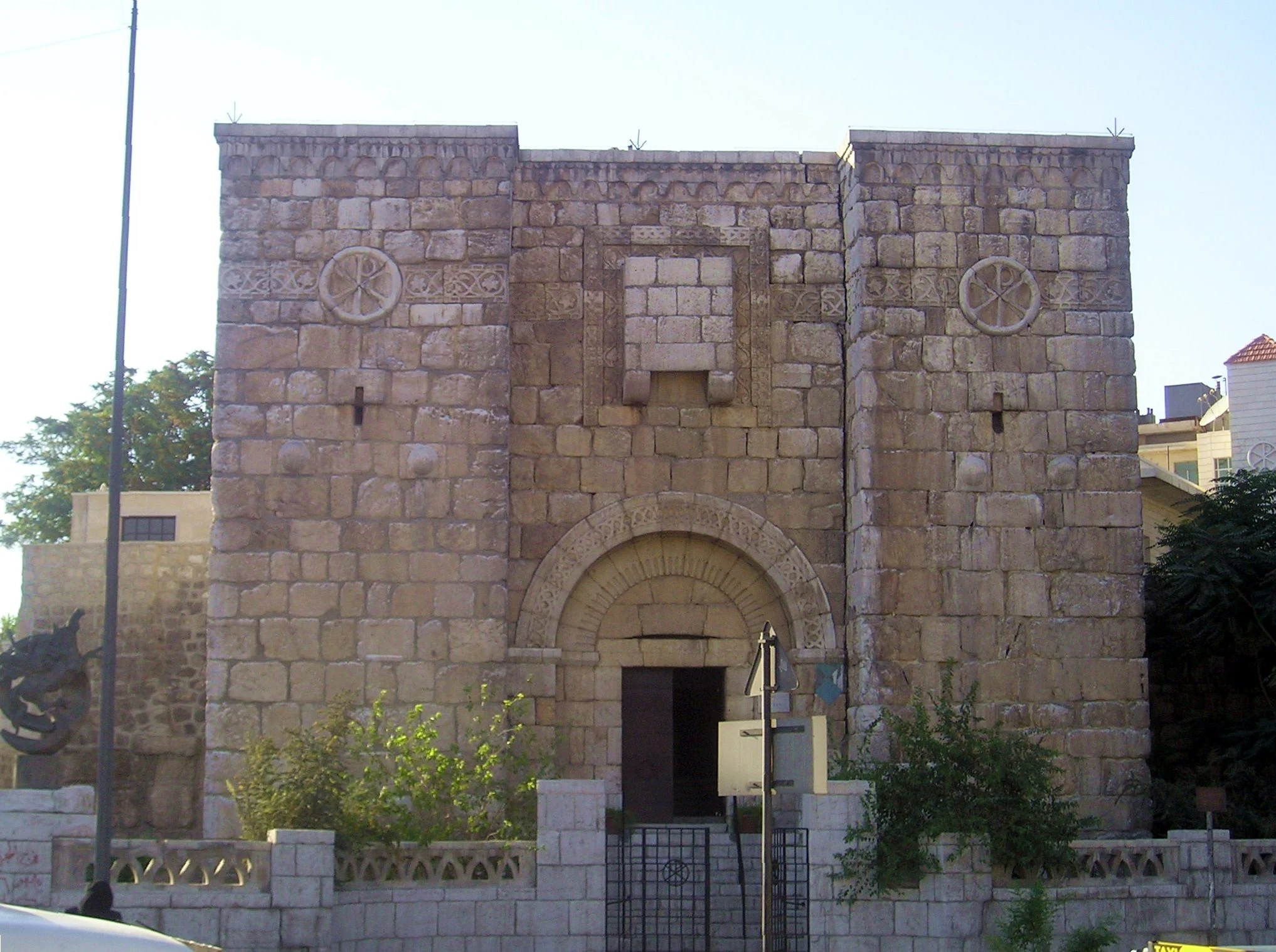
Khawla bint al-Azwar (خولة بنت الأزور; died 639 CE / 18 AH) was a Muslim warrior of the Banu Asad tribe whose battlefield exploits during the Rashidun conquest of the Levant made her one of the most celebrated women soldiers in the history of early Islam. Fighting alongside her brother Dhiraar ibn al-Azwar in the campaigns that brought Byzantine Syria under Muslim rule during the 630s CE, Khawla is remembered above all for her role at the decisive Battle of Yarmouk in 636 CE, where later Islamic historical tradition credits her with leading a company of women in direct combat against Byzantine forces and with rescuing fellow Muslims from captivity through her own martial skill.
Khawla's story occupies a distinctive place within the broader corpus of accounts describing women's participation in the earliest Islamic military campaigns. While the Quran and the most rigorously authenticated hadith collections make clear that women such as Nusaybah bint Ka'ab provided medical care, water, and, in moments of crisis, direct combat support to Muslim armies during the Prophetic period, the specific and extensive battlefield exploits attributed to Khawla bint al-Azwar during the Rashidun-era conquest of Syria derive primarily from a later narrative tradition, most closely associated with texts attributed to the early historian al-Waqidi, whose reliability as a transmitter of historical reports was questioned by many classical Muslim scholars of hadith criticism. This complex source situation — a beloved and enduring figure of popular Islamic historical memory whose specific exploits rest on historically contested textual foundations — makes Khawla's story a particularly instructive case study in the relationship between popular tradition, didactic literature, and rigorous historical verification within the broader field of early Islamic historiography.
The reverence in which Khawla bint al-Azwar is held across the modern Arab and Muslim world — reflected in the schools, streets, military units, and public monuments that bear her name — testifies to the enduring power of her legend as a symbol of women's courage and capability in the defense of the early Muslim community, regardless of the specific questions of source reliability that attend the detailed narrative of her individual exploits. Her story continues to be invoked in contemporary discussions of women's history in Islam, in debates about the legitimacy of women's military service in modern Muslim-majority states, and in the broader effort to recover and commemorate the historical contributions of women to the foundational period of Islamic civilization.
Family Background and the Banu Asad
Khawla bint al-Azwar was born in the early seventh century CE, most likely in or near Mecca, as the daughter of al-Azwar al-Asadi, a chief of the Banu Asad ibn Khuzaymah, an Arabian tribe whose territory lay to the northeast of Mecca in the Najd region and whose members had a documented history of both resistance to and eventual integration within the early Muslim community. The Banu Asad's relationship with the nascent Islamic polity was not without friction: the tribe was among those that participated in the Ridda Wars, the wars of apostasy that followed the death of Prophet Muhammad ﷺ in 632 CE, before being brought back into the fold of the Muslim community under the caliphate of Abu Bakr. Khawla's own family, however, is described in the sources as having accepted Islam earlier and more securely, with her brother Dhiraar ibn al-Azwar recorded as having converted following the Battle of the Trench (al-Khandaq) in 627 CE, one of the pivotal military engagements of the Prophetic period fought in defense of Medina.
Dhiraar ibn al-Azwar himself emerged as one of the most formidable individual warriors of the early Rashidun conquests, credited in the historical tradition with extraordinary feats of combat during the Muslim campaigns in Syria, including the killing of numerous Byzantine commanders at the Battle of Ajnadayn in 634 CE and a central role in blocking the Byzantine retreat at Yarmouk in 636 CE, as well as, according to some accounts, the killing of over a hundred enemy soldiers single-handedly during the siege of Oxyrhynchus (Bahnasa) in Egypt in the subsequent conquest of that province. According to the accounts preserved of Khawla's early life, it was Dhiraar who personally trained his sister in the arts of mounted combat, teaching her swordsmanship, spear-fighting, and other martial skills that were, in the context of seventh-century Arabian tribal society, primarily the province of men but not entirely unknown among women of certain warrior families, particularly those, like the Banu Asad, whose tribal culture placed a premium on individual martial prowess and whose women were sometimes called upon, in moments of extremity, to participate directly in tribal warfare and its defense.
The pre-Islamic Arabian tribal context from which Khawla and Dhiraar emerged is significant for understanding the plausibility, in general terms, of a woman of the Banu Asad receiving martial training and participating in combat under exceptional circumstances. Pre-Islamic Arabian poetry and tribal historical memory preserve accounts of women who, though not typically engaged in regular combat, could and occasionally did take up arms in defense of their tribe or family during raids and tribal conflicts, and the institution of the hida — the practice of women accompanying tribal warriors to battle to sing verses of encouragement, tend to the wounded, and, in some recorded instances, shame retreating warriors back into the fight — provided an established cultural framework within which women's presence on or near the battlefield, and occasional direct participation in it, was not entirely without precedent. The Banu Asad's own tribal history includes references to women noted for courage and outspokenness, a cultural memory that provides at least a plausible social backdrop against which the accounts of Khawla's own martial formation and eventual battlefield role can be situated, whatever the specific historical reliability of the detailed narrative tradition that has come down to us regarding her individual exploits.
The Muslim Conquest of Syria and Early Campaigns
The strategic and political context of the Muslim conquest of Syria in which Khawla's military career unfolded was shaped by the immense exhaustion of the Byzantine Empire following its protracted and costly war against Sasanian Persia, which had concluded only a few years before the beginning of the Muslim campaigns with the Byzantine emperor Heraclius's hard-won but financially and militarily draining victory over Persia in 628 CE. This exhaustion left Byzantine Syria — a province of great wealth, ancient urban centers, and strategic importance connecting the Mediterranean world to the trade routes of Arabia and the East — comparatively vulnerable to the sudden emergence of a unified and highly motivated Arabian military force operating under the political and religious authority of the newly established caliphate. The Muslim conquest of Syria was not, therefore, simply a matter of raw military superiority but reflected as well the particular historical conjuncture of Byzantine imperial overextension, local administrative and religious tensions between the Byzantine authorities and segments of the Syrian population (including various Christian communities who had experienced friction with Constantinople over theological disputes), and the exceptional cohesion, mobility, and morale of the Rashidun armies in the years immediately following the consolidation of Arabia under Islam.
Khawla's emergence as a battlefield figure in her own right is placed by the historical tradition within the broader context of the Rashidun conquest of Syria (Bilad al-Sham), the sustained military campaign undertaken under the caliphates of Abu Bakr and, principally, Umar ibn al-Khattab that brought the Byzantine-controlled provinces of the Levant under Muslim rule during the 630s CE. This campaign, prosecuted under the overall command of generals including Khalid ibn al-Walid, Abu Ubaydah ibn al-Jarrah, and Amr ibn al-As, involved a series of major engagements — including the Battle of Ajnadayn (634 CE), the Siege of Damascus (634 CE), the Battle of Fahl (635 CE), and culminating in the decisive Battle of Yarmouk (636 CE) — through which Byzantine military power in Syria was systematically broken and the region's principal cities, including Damascus and eventually Jerusalem, passed into Muslim control.
According to the traditional accounts of Khawla's military career, her talent as a warrior first became evident during the Battle of Sanita al-Uqab in 634 CE, fought in connection with the Siege of Damascus, when her brother Dhiraar, then commanding a detachment of Muslim forces, was wounded and taken captive by Byzantine soldiers. Khalid ibn al-Walid personally led a detachment of his mobile guard (al-tali'ah) to rescue Dhiraar, and Khawla accompanied this relief force, according to the tradition, rushing ahead alone into the Byzantine rearguard in pursuit of her captured brother. Dressed in the armor and loose battle attire typical of Arabian warriors of the period, Khawla's gender reportedly went unrecognized by her own comrades until Khalid ibn al-Walid himself inquired as to her identity, an episode the tradition presents as establishing, from the outset of her military career, both her exceptional courage and the degree to which her battlefield conduct was indistinguishable, to observers, from that of the most capable male warriors of the Muslim army.
A further episode from this period of the Syrian campaign, again centered on the capture of Dhiraar, is recorded in connection with the Battle of Ajnadayn. Khawla, who had accompanied the Muslim forces in the more conventional supporting role of providing medical attention to wounded soldiers, is said to have taken up a captured Byzantine knight's armor, weapons, and horse, wrapping herself in a distinctive green shawl, upon learning of her brother's second capture by Byzantine forces during the battle. She then engaged a Byzantine battalion that was pressing an attack against Muslim soldiers, fighting with sufficient skill and ferocity that many of the Muslim soldiers who observed her from a distance mistook her for Khalid ibn al-Walid himself, until Khalid's own appearance on the field dispelled the confusion. One of the Rashidun army's commanders, Shurahbil ibn Hassana, is reported to have remarked of the unidentified warrior, "This warrior fights like Khalid ibn al-Walid, but I am sure he is not Khalid" — a statement that, in the traditional narrative, captures both the scale of the impression Khawla's fighting made on her comrades and the initial ambiguity surrounding her identity. Khalid subsequently ordered a general charge against the Byzantine forces, who were routed, and the pursuing Muslim forces succeeded in locating and freeing the Muslim prisoners, including Dhiraar, who had been taken during the engagement.
The Battle of Yarmouk
The Battle of Yarmouk, fought over six days in August 636 CE along the Yarmouk River in what is now the border region between Syria and Jordan, represents the central and best-documented episode of Khawla bint al-Azwar's military career, and the engagement most closely associated with her name in both classical Islamic historiography and modern popular memory. The battle itself was the decisive military confrontation of the entire Syrian campaign, pitting a Muslim army under the overall command of Khalid ibn al-Walid against a substantially larger Byzantine force under the Emperor Heraclius's general Vahan, and its outcome — a comprehensive Muslim victory achieved despite significant numerical disadvantage — effectively ended organized Byzantine military resistance in Syria and opened the way for the subsequent Muslim conquest of Jerusalem and the wider Levant.
The terrain along the Yarmouk River, characterized by deep ravines and a landscape that constrained the maneuverability of large infantry and cavalry formations, played a critical role in the battle's outcome, as Khalid ibn al-Walid's forces were able to exploit the terrain to neutralize the Byzantine army's numerical advantage and to eventually trap significant portions of the Byzantine force against the ravines, cutting off their avenues of retreat. The battle unfolded over multiple days of intense and repeated engagement, with the Muslim forces, despite being significantly outnumbered by most historical estimates, employing superior cavalry tactics, unified command under Khalid (who had been given overall coordinating authority over the various regional Muslim armies converging on the battle), and the accumulated combat experience of a force that had, by 636 CE, already fought and won numerous engagements over the preceding years of the Syrian campaign. The Byzantine army, by contrast, suffered from ethnic and religious divisions among its constituent forces — which included Byzantine regulars, Armenian troops, and Arab Christian allies (the Ghassanids) whose loyalty to Byzantine rule was, in the assessment of several historians, considerably less secure than that of the various contingents making up the Muslim side — as well as from command difficulties arising from disagreements between Vahan and other Byzantine commanders regarding strategy.
It is within this broader context of a hard-fought, multi-day battle involving the entire Muslim army along with its accompanying non-combatants that the specific traditions concerning Khawla's role should be situated. According to the traditional accounts of Khawla's role in the battle, she participated actively across the engagement's several days of fighting, and on its fourth day is credited with leading a company of Muslim women in direct combat against Byzantine forces after a Byzantine detachment succeeded, at a critical juncture, in penetrating toward the Muslim camp where the women, children, and non-combatants accompanying the army were positioned. Faced with this direct threat, Khawla is said to have organized and led the women present — who, in the customary manner of the period, had accompanied the army to provide water, medical care, and logistical support — into active combat using whatever implements were available, including tent poles, in a defense that succeeded in repelling the Byzantine incursion and, according to some versions of the tradition, resulted in the defeat and death of the Byzantine detachment's commanding officer at Khawla's own hands. She was reportedly wounded during subsequent combat with a Byzantine soldier in the course of this engagement, an injury that the tradition presents as testament to the genuine physical danger she faced rather than as a merely symbolic action taken from a position of safety.
A separate strand of the traditional narrative, transmitted through accounts attributed to al-Waqidi, describes an episode in which Khawla was herself taken captive by Byzantine forces after falling from her mount during combat, and was brought to a camp holding other Muslim women prisoners, where the Byzantine commander holding them intended to assault her. According to this account, Khawla rallied her fellow captives to resistance, and the women, using tent poles as improvised weapons, succeeded in overpowering and killing several of their Byzantine guards — including, according to the tradition, the officer who had insulted her — before making their escape or being rescued by advancing Muslim forces. This episode, emphasizing both the physical danger faced by Muslim women accompanying the army and their capacity for organized collective resistance even in captivity, has become one of the most frequently retold elements of the broader Khawla narrative tradition, reproduced in modern popular and educational literature addressing women's roles in early Islamic history.
Broader Significance of the Syrian Campaign
The Muslim conquest of Syria, within which Khawla's story is situated, carried consequences that extended vastly beyond the immediate military and political outcome of Byzantine defeat. The incorporation of Syria into the emerging Islamic caliphate brought under Muslim political authority a province of immense historical and religious significance, home to ancient cities including Damascus, Aleppo, and Homs, as well as to Jerusalem, whose eventual capitulation to the Muslim army under Umar ibn al-Khattab in 637 CE — commemorated in the Conquest of Jerusalem and the caliph's own visit to the city — carried profound religious significance for the Muslim community given the city's sanctity in the Abrahamic religious tradition and its association with the Prophet's Night Journey (Isra and Mi'raj). The Syrian conquest also brought the emerging caliphate into direct and sustained contact with a sophisticated late antique Christian civilization, whose administrative practices, urban infrastructure, and religiously diverse population (encompassing Chalcedonian, Monophysite, and other Christian communities, alongside significant Jewish populations) would profoundly shape the subsequent development of Islamic governance, culminating eventually in Damascus's elevation to the status of imperial capital under the Umayyad Caliphate later in the seventh century.
Within this broader context, the individual battles and campaigns in which Khawla is said to have participated were not merely military engagements but constituent episodes in one of the most consequential transformations of the late antique Mediterranean and Near Eastern world, a transformation that would, within a single generation of the Prophet's death, see the emergence of an Islamic polity stretching from the Atlantic coast of North Africa to the frontiers of Central Asia and the Indian subcontinent. Khawla's participation in this transformation, whatever the precise historical reliability of the specific episodes attributed to her, situates her within a company of individuals — male and female, well documented and imperfectly documented alike — whose collective actions during the 630s CE reshaped the political and religious map of the ancient world in ways whose consequences remain evident up to the present day.
Historical Reliability and Source Criticism
The question of the historical reliability of the extensive narrative tradition surrounding Khawla bint al-Azwar's military exploits requires careful attention, both because it illustrates important principles of Islamic historical methodology and because it is directly relevant to any responsible presentation of her life and legacy. The primary and, in fact, essentially sole substantive textual source for the specific episodes attributed to Khawla — her rescue missions on behalf of her brother Dhiraar, her leadership of women in combat at Yarmouk, and her escape from captivity — is a work commonly known as Futuh al-Sham (The Conquests of Syria), traditionally but almost certainly falsely attributed to the eighth-century historian Muhammad ibn Umar al-Waqidi. Islamic textual scholars, including specialists working within the traditional discipline of hadith criticism, have identified this particular Futuh al-Sham text as a later composition, likely dating from several centuries after the events it describes, and stylistically and methodologically distinct from al-Waqidi's genuinely attributed historical works, which, even on their own terms, were regarded by many classical scholars of hadith transmission as less rigorous than the more tightly sourced hadith collections and were subject to significant scholarly criticism regarding al-Waqidi's reliability as a transmitter.
This source-critical situation does not necessarily mean that Khawla bint al-Azwar herself is a fictional or invented figure, nor that the core outline of her participation in the Syrian campaigns alongside her brother Dhiraar — a participation broadly consistent with the documented, if exceptional, pattern of women's involvement in early Islamic military campaigns as combatants under conditions of necessity — should be dismissed as entirely without historical basis. Women's presence with Muslim armies during the Rashidun-era conquests, providing water, medical care, and, in moments of crisis, direct combat support, is documented across multiple, more rigorously sourced historical traditions concerning other figures of the period, including Nusaybah bint Ka'ab in the Prophetic period. What the source-critical difficulty specifically concerns is the extensive, detailed, and dramatically elaborated narrative of Khawla's individual exploits — including the specific episodes of disguise, single combat, and leadership of women in battle — which rest on a textual foundation that responsible historical scholarship, including scholarship produced within traditional Islamic institutions of religious learning, regards as considerably less secure than the foundational sources for the Quran, the most rigorously authenticated hadith collections, or the more carefully sourced historical chronicles such as those of al-Tabari.
Contemporary Islamic scholarly institutions addressing questions from the general public about the authenticity of the Khawla bint al-Azwar narratives have generally counseled caution, noting that while the broader phenomenon of women's courage and participation in the early Islamic conquests is well attested and worthy of commemoration, the specific and often dramatic details of the Futuh al-Sham narrative tradition should not be treated with the same evidentiary weight as material drawn from the Quran, sahih hadith collections, or the most carefully sourced early Islamic historical chronicles. This distinction — between the general historical plausibility of women's courageous participation in early Islamic military campaigns and the specific evidentiary weakness of the elaborated narrative tradition surrounding Khawla's individual exploits — is essential to a historically responsible presentation of her legacy, and it exemplifies the broader methodological rigor that has long characterized the Islamic scholarly tradition's approach to the transmission and evaluation of historical reports, a rigor originally developed in the specific context of hadith criticism but extended by later scholars to the evaluation of historical narrative more broadly.
This methodological caution should not, however, be mistaken for a wholesale dismissal of Khawla's historical existence or of the general credibility of her participation in the Syrian campaigns. The genre distinction at issue is a familiar one within Islamic historical scholarship: the maghazi and futuh (conquest narrative) literature that developed in the eighth and ninth centuries CE, describing the military campaigns of the Prophetic and early Rashidun periods, often combined historically grounded core narratives with substantial literary embellishment, heroic topoi, and set-piece dramatic episodes that served didactic, entertainment, and community-building functions alongside their historical reporting function. Modern historians of the early Islamic conquests, including Fred Donner and Hugh Kennedy, have noted that this literature requires careful source-critical handling, distinguishing the more securely attested broad outlines of military campaigns — troop movements, the sequence of major battles, the identities of principal commanders — from the more elaborated individual episodes, including personal duels, dramatic escapes, and extended dialogue, that often carry the hallmarks of literary and homiletic development rather than straightforward historical reportage. Khawla's story, considered in this light, likely preserves a genuine historical kernel — a woman of the Banu Asad, sister to the accomplished warrior Dhiraar, who did in fact accompany the Muslim armies during the Syrian campaign and did, in some documented or at least plausible fashion, participate in combat under conditions of necessity — elaborated over subsequent generations of oral and written transmission into the more extensive and dramatically vivid narrative that has come down to us in the Futuh al-Sham tradition.
Comparative Context: Women Warriors of Early Islam
Khawla bint al-Azwar's story is best understood in relation to the broader, and in some cases more securely documented, pattern of women's participation in combat during the formative decades of Islamic history. Nusaybah bint Ka'ab, also known as Umm Amarah, provides the most rigorously attested parallel case: her defense of Prophet Muhammad ﷺ at the Battle of Uhud in 625 CE is documented in hadith collections regarded as authentic (sahih) by the mainstream tradition of Islamic scholarship, including her own first-person account of the battle and the Prophet's direct praise for her courage, preserved with a chain of transmission that Islamic scholars of hadith criticism have generally regarded as sound. Nusaybah's subsequent participation in the Battle of Yamama during the Ridda Wars, where she lost a hand in combat against the forces of the false prophet Musaylimah, further establishes a documented pattern of sustained women's combat participation extending across the Prophetic period and into the early Rashidun caliphate — precisely the same general period, and in Khawla's case even the same specific campaign context, in which her own exploits are said to have occurred.
This comparison is instructive: it demonstrates that the general phenomenon Khawla's story describes — a woman from a family with a strong martial tradition taking up arms in defense of the Muslim community under conditions of extremity — was neither unprecedented nor implausible within the historical context of the early Islamic conquests, even as the specific textual foundation for Khawla's own individual exploits remains less secure than that available for Nusaybah's documented combat record. Other figures sometimes mentioned alongside Khawla in discussions of early Islamic women warriors include Umm Umara and various unnamed women described in the sources as having provided combat support during the conquests of Syria, Iraq, and Egypt, reflecting a broader, if imperfectly documented, historical reality of women's presence on or near the front lines of the early Islamic conquests in roles that, while predominantly non-combat in nature, could and did extend to direct participation in fighting when circumstances demanded it.
The Rashidun caliphate's own policy and practice regarding women's presence with military campaigns provides further useful context. It was standard practice for Muslim armies of the period to be accompanied by a substantial retinue of women, who performed essential logistical functions including the provision of water and food, medical care for the wounded, and general camp maintenance, and who were, as a matter of established practice rather than exception, present in close proximity to active combat zones throughout the major campaigns of the Rashidun conquests. This institutional context — women's routine and sanctioned presence with the army, in a support capacity that placed them physically close to the fighting and periodically vulnerable to enemy incursion — provides the essential precondition for the kind of emergency combat participation attributed to figures such as Nusaybah and Khawla: these were not women who set out from their homes with the intention of fighting as regular combatants, but women whose sanctioned support role occasionally required them, under conditions of direct threat to themselves or to the Muslim forces they accompanied, to take up arms in immediate self-defense or defense of the wider community, a pattern of episodic rather than routine combat participation that is broadly consistent across the various documented and traditionally attributed cases of early Islamic women in combat.
Death and Final Years
The precise circumstances and date of Khawla bint al-Azwar's death are not established with certainty in the available sources, though the year 639 CE (18 AH) is commonly cited in reference works addressing her life, placing her death within the period immediately following the main phase of the Muslim conquest of Syria, during the early years of the caliphate of Umar ibn al-Khattab. No detailed account of the circumstances of her death — whether in continued military service, from illness, or in ordinary retirement from active campaigning — appears to have been preserved in the historical tradition with the same specificity as the narrative accounts of her military exploits during the Syrian campaign, a gap in the record that is unfortunately typical of the historical treatment accorded to women of the early Islamic period even when, as in Khawla's case, their wartime exploits received extensive and celebratory commemoration in later literary tradition.
The historical sources do preserve an account, transmitted through a chain reaching the second caliph Umar ibn al-Khattab, in which Umar is reported to have praised Khawla's fighting skills, a detail that, whatever its precise historical reliability, reflects the broader esteem in which her reputation as a warrior was held within the memory of the early Muslim community, extending to its highest political leadership.
The absence of a well-documented account of Khawla's later life and death stands in some contrast to the relatively detailed, if source-critically complex, narrative preserved of her wartime exploits, and this asymmetry is itself historically instructive. The conquest narrative literature from which the bulk of Khawla's story derives was primarily interested in dramatic episodes of combat, rescue, and heroism occurring within the specific temporal window of the active military campaign, and had comparatively little interest in the subsequent, less dramatic decades of an individual's life once the campaigns that had made them notable had concluded. This pattern is not unique to Khawla; many companions and near-companions of the Prophet whose wartime or early-Islamic exploits are well documented similarly disappear from the detailed historical record once the specific campaigns or events that established their reputation had passed, their subsequent lives being recorded, if at all, only in the barest outline within later biographical dictionaries such as Ibn Hajar al-Asqalani's Al-Isabah, which typically provide little more than an approximate date of death and perhaps a brief note on burial location or surviving descendants.
Legacy and Commemoration
Khawla bint al-Azwar's enduring legacy within Islamic and, more specifically, Arab cultural memory rests on her status as one of the most widely celebrated exemplars of women's courage and martial capability in the formative period of Islamic history. Streets, schools, and other public institutions across the Arab world bear her name, and the Hashemite Kingdom of Jordan issued a commemorative postage stamp honoring her as part of a series dedicated to notable Arab women in history. In Iraq, an all-women military unit was named the "Khawla bint al-Azwar Unit" in her honor, and in the United Arab Emirates, the country's first military training college for women was likewise named Khawla bint al-Azwar Training College, reflecting the continued invocation of her example in the specific context of women's military service in the contemporary Arab world.
The specific choice of Khawla, rather than Nusaybah bint Ka'ab or other more rigorously documented women warriors of early Islam, as the namesake for these various modern military and educational institutions dedicated to women's service is itself historically significant, and likely reflects the particular dramatic vividness and narrative completeness of the Khawla tradition as it has been transmitted and popularized through modern Arabic-language educational literature, television dramatizations (including adaptations of her story produced for Arabic-language television), and nationalist historical writing produced across the twentieth century in various Arab states seeking to construct usable historical narratives of women's military service and civic contribution. The image of Khawla — disguised in armor, indistinguishable from the greatest male warriors of her age, rescuing captured comrades and rallying fellow captive women to violent resistance — offered twentieth-century Arab nationalist and, later, various state-sponsored women's military initiatives a maximally dramatic and inspirational historical touchstone, whatever the underlying source-critical complexities of the tradition from which that image derives.
Beyond these institutional commemorations, Khawla's story has occupied a significant place in modern educational and popular literature addressing the roles of women in Islamic history, frequently presented alongside the more securely documented accounts of Nusaybah bint Ka'ab and other women who provided combat support during the Prophetic and Rashidun periods. This pairing situates Khawla within a broader narrative tradition emphasizing the active, and at times directly combative, participation of Muslim women in the defense and expansion of the early Islamic community — a narrative tradition that, notwithstanding the specific source-critical questions surrounding the detailed Futuh al-Sham accounts of her individual exploits, continues to serve an important didactic and inspirational function within contemporary discussions of women's history in Islam, illustrating the historical depth of women's engagement with questions of communal defense, courage, and sacrifice that extend across the full length of Islamic history from its very earliest formative decades.
The continuing popularity of Khawla's story also reflects a broader contemporary interest, both within Muslim-majority societies and among historians of women more generally, in recovering and foregrounding historical accounts of women's agency and capability that have often been marginalized or under-emphasized within more male-centered traditional historical narratives. In this respect, Khawla's story performs cultural work analogous to that performed by other historically contested but culturally significant accounts of women warriors across different civilizational traditions — figures whose precise historical documentation may be imperfect but whose symbolic and inspirational function within their respective cultural traditions is considerable and historically significant in its own right, quite apart from the specific question of the reliability of the individual episodes attributed to them. Understanding Khawla in this dual register — as both a probable historical figure whose core participation in the Syrian campaigns likely reflects genuine events, and as a figure whose fuller legend developed through centuries of literary and didactic elaboration — allows for an appreciation of her significance that neither naively accepts every detail of the traditional narrative nor dismisses the substantial cultural and historical value of the tradition as a whole.
References and Further Reading
Primary Islamic Sources
- Quran, Surah Al-Tawbah (9:20) — on the ranking of those who strive and emigrate in the cause of Allah, frequently invoked in connection with early Muslim warriors including women combatants
- Attributed to Muhammad ibn Umar al-Waqidi, Futuh al-Sham (The Conquests of Syria) — the principal narrative source for Khawla's individual military exploits, though its attribution to al-Waqidi is regarded by textual scholars as spurious and its historical reliability as significantly weaker than sahih hadith or the major historical chronicles
- Ibn Hajar al-Asqalani, Al-Isaba fi Tamyiz al-Sahabah — biographical dictionary entries addressing companions of the Prophet, providing context for the Banu Asad tribe and figures of the early conquest period
- Traditions concerning Umar ibn al-Khattab's praise of Khawla's fighting skill, transmitted in later biographical compilations
Classical Islamic Sources
- Al-Tabari, Muhammad ibn Jarir. Tarikh al-Rusul wa al-Muluk. Edited by M.J. de Goeje. Leiden: Brill, 1879-1901. [Completed c. 915 CE] — the standard early chronicle of the Muslim conquest of Syria, though it does not contain the elaborated Khawla narratives found in the later Futuh al-Sham tradition
- Ibn al-Athir, Ali ibn Muhammad. Al-Kamil fi al-Tarikh. [Compiled c. 1231 CE]
- Ibn Kathir, Ismail. Al-Bidaya wa al-Nihaya. Beirut: Dar al-Kutub al-Ilmiyyah, 1994. [Compiled c. 1373 CE]
- Ibn Hajar al-Asqalani. Al-Isabah fi Tamyiz al-Sahabah. Beirut: Dar al-Kutub al-Ilmiyyah, 1995. [Compiled c. 1449 CE]
Academic and Scholarly Sources
- Ezzati, A. The Spread of Islam: The Contributing Factors. London: ICAS Press, 2002.
- Kurzman, Charles, ed. Modernist Islam, 1840-1940: A Sourcebook. New York: Oxford University Press, 2002.
- Donner, Fred M. The Early Islamic Conquests. Princeton: Princeton University Press, 1981.
- Kennedy, Hugh. The Great Arab Conquests: How the Spread of Islam Changed the World We Live In. Philadelphia: Da Capo Press, 2007.
- Nadwi, Mohammad Akram. Al-Muhaddithat: The Women Scholars in Islam. Oxford: Interface Publications, 2007.
Further Reading
- Khan, Mariam. "Inside the Untold History of Revolutionary Muslim Women." The New Arab, 2020.
- Jones, David E. Women Warriors: A History. Washington, D.C.: Brassey's, 2000.
- Mernissi, Fatima. The Forgotten Queens of Islam. Minneapolis: University of Minnesota Press, 1993.
- Abul Husn, Ma'an. "Khawla Bint Al-Azwar: The Islamic Heroine." Al Shindagah, 2003.
Mentioned In
1 article references this topic
More from Rashidun Caliphate
Battle of Yarmouk: The Decisive Victory that Opened the Levant
The Battle of Yarmouk (636 CE) was the decisive military engagement that secured Muslim conquest of the Levant, where Khalid ibn al-Walid's tactical genius led to a crushing defeat of the Byzantine Empire and opened Syria and Palestine to Islamic rule.
Ridda Wars
The Ridda Wars (11-12 AH / 632-633 CE) were the campaigns by which the first caliph Abu Bakr suppressed the tribal revolts, zakat refusals and rival prophetic movements that broke out across Arabia after the Prophet's death, restoring Medinan authority over the peninsula in about four months.
Battle of Nahrawan: Ali's Conflict with the Kharijites
The Battle of Nahrawan (658 CE) was fought between Caliph Ali and the Kharijites who defected after the arbitration at Siffin. This battle marked the emergence of the Kharijite movement and led to Ali's assassination.
Battle of Siffin: The Defining Conflict of the First Islamic Civil War
The Battle of Siffin (657 CE) was a major confrontation between Caliph Ali and Muawiyah that ended with controversial arbitration, marking a turning point that led to the emergence of the Kharijites and deepening sectarian divisions.