Murad II: The Sultan Who Twice Left the Throne
Murad II (1404-1451) completed the recovery of the Ottoman state after its collapse at Ankara in 1402. He reigned twice, abdicating in 1444 and returning to win the Battle of Varna, and left his son Mehmed II an empire capable of taking Constantinople.
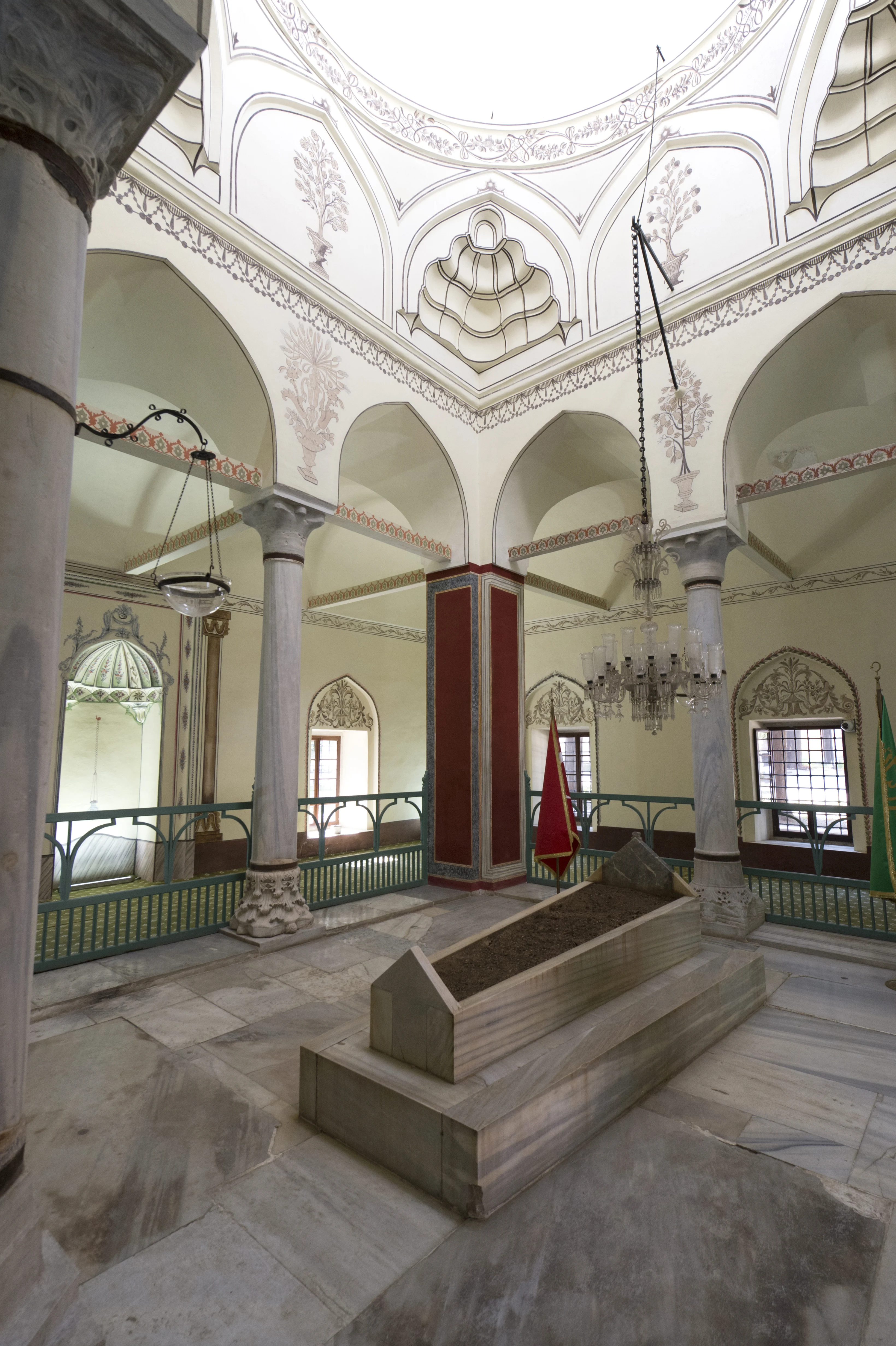
Murad II ruled the Ottoman Empire from 1421 to 1444 and again from 1446 until his death in 1451, the only Ottoman sultan to occupy the throne in two separate reigns by his own choice. He inherited a state that had been shattered nineteen years before his accession and rebuilt for less than a decade, and he left one strong enough that his son Mehmed II took Constantinople two years after succeeding him.
His reign is the least celebrated of the great period of Ottoman expansion, falling between the catastrophe of 1402 and the triumph of 1453, and it is the one that made the second possible. Murad defeated a pretender backed by Byzantium, took Thessalonica, fought the Hungarians and their allies to a standstill across two decades, won the decisive victories at Varna in 1444 and Kosovo in 1448, and subdued the rival Turkish principalities of Anatolia. He also produced the odd and much-discussed episode of a sultan who abdicated in favour of a twelve-year-old, returned to command an army, went back into retirement, and was recalled a second time.
The article on the Ottoman Empire sets out the dynasty's long arc; this one is concerned with the reign in which the Ottoman recovery was completed and the frontier with Christian Europe settled into the shape it would hold for a century.
The Inheritance: Ottoman Collapse and Recovery
To understand Murad's reign it is necessary to begin twenty years before it.
In 1402 the Ottoman sultan Bayezid I was defeated and captured at the Battle of Ankara by Timur. The consequences went far beyond a lost battle. Timur dismantled the Ottoman state in Anatolia, restoring the Turkish principalities — the Karamanids, the Germiyanids, Aydın, Menteşe and others — that Ottoman sultans had spent two generations absorbing, and reducing the dynasty's Anatolian holdings to a fraction of their former extent. Bayezid died in captivity in 1403.
There followed the period Ottoman historiography calls the Interregnum, roughly 1402 to 1413, in which Bayezid's sons fought each other for the remnants. The Ottoman polity in these years was not a state but a set of competing principalities, and its survival was genuinely in question. Dimitris Kastritsis's study of the period examines how close the dynasty came to disappearing and how the eventual victor reassembled it.
That victor was Mehmed I, Murad's father, who ruled from 1413 to 1421 and spent his reign restoring what could be restored: reuniting the European and Anatolian territories under one authority, re-establishing the army and the fiscal system, suppressing revolts including a major religious and social rising in the west of Anatolia, and re-imposing Ottoman overlordship where he could.
The work was unfinished when he died in 1421. The Anatolian principalities were only partly recovered and the Karamanids remained hostile and independent. The Byzantine Empire, reduced to Constantinople and fragments, had learned during the Interregnum that supporting Ottoman pretenders was its most effective weapon and held several members of the dynasty as potential candidates. In the Balkans, Ottoman authority over Serbia, Wallachia, Bosnia and Albania was a patchwork of vassalage and tribute rather than rule, and Hungary had emerged as a serious military power on the Danube. Venice controlled key ports and the sea.
Murad was about seventeen. He had been born at Amasya in June 1404 and had served as a provincial governor in Anatolia during his father's reign.
Securing the Throne, 1421–1423
Murad's first task was to survive the mechanism that had almost destroyed his family.
Within months of his accession, Byzantium released and supported his uncle Mustafa, a son of Bayezid I, as a rival claimant — the figure Ottoman sources call Düzme Mustafa, "the counterfeit Mustafa", a name that reflects the dynasty's later verdict rather than a judgement on his parentage. Mustafa gathered support in Europe, took Edirne, and was for a time in control of the Ottoman Balkans. Murad defeated him, and he was captured and executed in 1422.
A second challenge followed immediately from Murad's own younger brother Mustafa, supported by Anatolian interests including the Karamanids; that revolt was suppressed in 1423 and the brother killed. Two further brothers were also eliminated in this period. The pattern was not new — fratricide had become the practical instrument of Ottoman succession because the alternative had been demonstrated in 1402 — and it was codified as policy under Mehmed II.
Murad also responded to Byzantine interference in the obvious way, laying siege to Constantinople in 1422. The siege failed. Ottoman artillery was not yet capable of breaching the Theodosian walls, and the sultan had to break off to deal with his brother's revolt in Anatolia. The lesson was not lost: the conquest of Constantinople thirty-one years later depended on a scale of siege artillery that did not exist in 1422.
Having secured the throne, Murad imposed terms on Byzantium — tribute and the end of support for pretenders — and turned to his frontiers.
The Balkans and the Hungarian Wars
The central military problem of the reign was the northwestern frontier, and it occupied Murad for twenty-five years.
His early gains were solid. Thessalonica, the second city of the Byzantine world and at that point held by Venice, was taken in 1430 after a short siege, giving the Ottomans the principal port of the northern Aegean. Campaigns in the 1420s and 1430s reasserted Ottoman authority over Serbia, where the Ottomans took Smederevo and reduced the despotate; over Bosnia and parts of Albania; and over Wallachia, which was brought back to tributary status. Ottoman raiding reached into Transylvania and Hungary itself.
The opposition consolidated in response. Hungary under the regency and generalship of John Hunyadi — Hunyadi János, a soldier of Transylvanian origin who became the most effective commander the Ottomans faced in this period — mounted a series of counter-offensives from the late 1430s. The Serbian despot George Branković, the Albanian leader who became known as Skanderbeg, and Venice were variously involved, and the papacy worked to organise a crusade.
The years 1441 to 1443 went badly for Murad. Hunyadi defeated Ottoman forces in Transylvania and Serbia, and in the winter of 1443 mounted a deep raid — the campaign Hungarian tradition calls the Long Campaign — that crossed the Balkan mountains, took Niš and Sofia, and threatened Edirne before withdrawing. Ottoman field armies had been beaten repeatedly. Simultaneously, Murad faced war with the Karamanids in Anatolia, which meant fighting on two fronts several weeks' march apart.
In 1444 he negotiated. The settlement reached at Edirne and confirmed at Szeged provided for a truce of ten years, the restoration of the Serbian despotate under Branković, and the surrender of Ottoman claims in some contested areas. It was a concessionary peace made by a sultan who needed to deal with Anatolia, and it was followed at once by his abdication.
Anatolia and the Turkish Principalities
The Balkan wars are better known, but Murad's Anatolian problem was in some ways harder, and it constrained everything he did in Europe.
Timur's settlement of 1402 had restored the Turkish principalities that Ottoman sultans had spent two generations absorbing, and it had done so deliberately, to prevent any single Anatolian power from reassembling. Mehmed I had recovered some of this ground. Murad continued the work: Aydın, Menteşe, Germiyan and the Hamid lands were brought back under Ottoman control during his reign, in part by conquest and in part by inheritance arrangements in which childless rulers bequeathed their territories to the Ottoman house — a method the dynasty used repeatedly and which the Ottoman chronicles present as voluntary submission to a legitimate overlord.
The exception was Karaman. The Karamanid principality in south-central Anatolia was the Ottomans' most persistent Muslim rival, claiming the inheritance of the Seljuks of Rum and thus a better title to Anatolian leadership than the Ottomans possessed. It fought Murad repeatedly, allied with whoever was opposing him — his brother Mustafa in 1423, Hungary and Venice at various points, and the Mamluks of Egypt — and it was never subdued in his lifetime. Karaman was finally absorbed under Mehmed II.
The strategic consequence deserves emphasis. Murad's two fronts were several weeks' march apart, and a serious war on one invited attack on the other. The concessionary peace he made with Hungary in 1444 was signed while he was engaged against Karaman, and the coordination between his Christian and Muslim enemies was deliberate on both sides. This two-front constraint is the single best explanation for why the reign produced a long attritional struggle rather than rapid conquest, and why Murad was willing to accept unfavourable terms in the west when he needed his army in the east.
Relations with the Mamluk Sultanate of Egypt and Syria, the other great Muslim power of the region, remained cool but did not produce open war; the friction concerned influence over the buffer principalities of southeastern Anatolia.
The Crusade of 1443–1444 in Detail
The sequence that produced the abdication and the battle of Varna is the most closely documented episode of the reign, and it repays being set out step by step, because the outcome turned on a series of miscalculations by both sides.
The crisis began with Hungarian success. In the autumn of 1443 an army under Wladyslaw III of Poland and Hungary, with John Hunyadi in operational command, crossed the Danube and drove deep into Ottoman Rumelia, taking Niš and Sofia. The advance was halted in the mountain passes of the Balkan range by winter weather and Ottoman defence, and the army withdrew, winning a further engagement on the way back. This was the campaign Hungarian tradition calls the Long Campaign, and its effect was to persuade Europe that the Ottomans could be driven out of the Balkans.
Murad's position at that moment was genuinely difficult. He had lost a series of engagements in Serbia and Transylvania since 1441, his prestige had suffered, and he was simultaneously at war with the Karamanids in Anatolia — a front several weeks' march from Rumelia. He therefore negotiated, and the terms he accepted were concessionary: a truce of ten years agreed at Edirne in June 1444 and confirmed at Szeged in August, restoring the Serbian despotate to George Branković and abandoning Ottoman claims in contested areas.
He then abdicated in favour of his son Mehmed, then about twelve, and withdrew to Anatolia.
The reasons are not fully established, and this is one of the genuine puzzles of the reign. The explanations offered in the sources and by modern historians include exhaustion after twenty-three years of continuous warfare; grief at the recent death of his eldest son Alaeddin; a personal inclination to religious retirement, for which there is some evidence in his associations with Sufi circles; and a calculated wish to see his heir established while he was alive to support him. None is conclusive, and the sources are late enough that the motive may simply not be recoverable.
The crusading coalition read the situation as an opportunity, and two arguments made the breach of the truce possible. The first was that a boy on the Ottoman throne and a truce that had removed Ottoman forces from Serbia offered a better chance than would recur. The second was theological: the papal legate Cardinal Julian Cesarini pressed the position that an oath sworn to a Muslim ruler did not bind a Christian king, and released Wladyslaw from it. The Latin sources handle this with visible discomfort, and it became a durable Ottoman grievance about Christian faithlessness.
The campaign plan was reasonable and depended on one condition. The crusader army would march down the Danube toward the Black Sea coast, gathering support, while a Venetian and papal fleet blocked the straits to prevent Murad returning from Anatolia with the Anatolian army. If the fleet held, the crusaders would face only the Rumelian forces under a child sultan's regents.
The fleet did not hold. Murad crossed the Bosphorus, and the sources indicate that Genoese shipping assisted the passage for payment — Genoa being Venice's commercial rival and unwilling to see a Venetian-led victory. He resumed command and marched to intercept.
The armies met at Varna on the Black Sea coast on 10 November 1444. The Ottoman force was the larger. The battle was hard fought and turned on a charge by Wladyslaw against the Janissaries drawn up around the sultan's position; the king was killed, and with him the coalition's cohesion. The army was destroyed, Cesarini was killed, and Hunyadi escaped with a remnant.
The consequences were decisive in a way few medieval battles were. Varna ended the prospect of expelling the Ottomans from Europe by crusade. It confirmed that Ottoman field armies could defeat the best that Latin Christendom could assemble against them. It broke Hungarian offensive capacity for four years, until Hunyadi tried again at Kosovo in 1448 and was beaten again. And it left the Byzantine capital without any realistic prospect of outside relief, which is the essential precondition of the conquest of Constantinople nine years later.
Murad's own conduct after the victory is the puzzling part. He returned to retirement in Anatolia, leaving his son on the throne, and had to be recalled in 1446 when a Janissary rising at Edirne and the evident unworkability of a minor sultan made the arrangement collapse.
The Second Reign, 1446–1451
The five years of Murad's second reign were spent consolidating what Varna had won.
He campaigned in Greece, reducing the Byzantine despotate of the Morea to tribute and breaking the defensive wall across the Isthmus of Corinth. He fought Skanderbeg in Albania, where the mountainous terrain and an exceptionally capable opponent produced no decisive result. And in October 1448 he met Hunyadi again at the second Battle of Kosovo, on the field where Murad I had died in 1389, and defeated him. That victory ended Hungarian offensive capacity in the Balkans for a generation and settled the Danube frontier.
The State Murad Built
The domestic work of both reigns deserves as much attention as the campaigns, because it is what his successor inherited and what made 1453 possible.
The central military development was the maturing of the standing army. The Janissary corps — infantry recruited as boys from Christian subject populations through the levy known as the devşirme, converted to Islam, trained in barracks, paid in cash, and owing loyalty to the sultan alone — took on in this period the form that made it the most effective infantry in Europe. Its significance was as much political as tactical. A paid professional force under the ruler's direct control gave the sultan an instrument independent of the Turkish frontier nobility and the provincial cavalry, whose loyalty had proved unreliable during the Interregnum. The corps that Murad relied on also, by the end of his reign, had the collective power to force his return to the throne in 1446 — the first appearance of a problem that would dominate Ottoman politics in later centuries.
Alongside it the provincial cavalry system was regularised: horsemen supported by grants of the revenue of specified lands, held in return for military service and not heritable as private property. This arrangement, described in the article on the Ottoman Empire, allowed the state to field large cavalry forces without paying for them in cash, and its administration required the land surveys and revenue registers that became the basis of Ottoman provincial government.
Fiscally and administratively, Murad's reign consolidated the recovery. Customs and mining revenues in the Balkans — the Serbian silver mines in particular — were brought under Ottoman control, and the frontier arrangements with vassal Christian rulers converted raiding into regular tribute. The practice of governing through appointed officials rather than hereditary frontier lords advanced, though the great marcher families remained powerful throughout the reign.
Edirne, the European capital, was expanded and endowed, and Murad's building there and at Bursa included mosques, schools and charitable complexes. He patronised scholars and poets, drawing on the Persian and Arabic learned traditions, and Ottoman Turkish emerged in this period as a literary language of consequence. The court he maintained was the one in which Mehmed II was educated.
He died at Edirne on 3 February 1451 and was buried at Bursa. Mehmed II succeeded at nineteen and took Constantinople in May 1453.
Court, Culture, and the Ottoman State in the Making
The reign is remembered for its wars, and the cultural and institutional consolidation that accompanied them was at least as consequential for what the Ottoman Empire became.
Edirne, the European capital, was the centre of it. Murad built extensively there and at Bursa, and the Üç Şerefeli mosque at Edirne, constructed in the late 1430s and 1440s, is the major architectural monument of the reign: its large central dome over a wide prayer hall, and its four minarets of differing design, mark a decisive step away from the smaller multi-domed plans of earlier Ottoman building toward the great domed mosques of the following century. His own funerary complex at Bursa, the Muradiye, continued the dynasty's association with its first capital.
Patronage of learning and letters was deliberate and had a specific character: the promotion of Turkish as a language of serious writing. Works of history, religious instruction and literature were composed for or translated at Murad's court, and the dynastic history of the Seljuks compiled for him by Yazıcıoğlu Ali is an instructive case, since it attached the Ottoman house to the older Turkish dynastic tradition of Anatolia and thereby to a claim of legitimate succession. Scholars were recruited from the wider Islamic world, madrasas were founded, and a specialist college for the study of hadith was established at Edirne. The teachers Murad appointed included the men who educated his son, and the intellectual formation of Mehmed II — famously wide-ranging by the standards of contemporary European rulers — was a product of this court.
Institutionally the reign advanced the shift from a frontier principality to a state. The great marcher families of the Balkan frontier — the houses descended from the first generation of Ottoman conquerors, holding vast territories and their own followings — remained powerful throughout Murad's reign and were indispensable to his campaigns, but the growth of the Janissary corps and of a salaried provincial cavalry gave the sultan forces that did not depend on them. The tension between the dynasty and the frontier nobility runs through the whole period and was resolved in the sultan's favour only under his son.
Two aspects of Ottoman legitimacy took shape here as well. The ideology of holy war on the frontier — the gazi ethos, in which the dynasty's claim rested on its role in extending Muslim rule — was cultivated in the literature of the court, and Cemal Kafadar's study of the construction of the Ottoman state examines how flexible and syncretic that ideology actually was in practice on a frontier where Christian troops served Muslim lords and vice versa. At the same time the dynasty's relations with the religious establishment were regularised, with judges and professors appointed and paid by the state, producing the hierarchy of scholar-officials that became a defining institution of the empire.
Historiographical Note
The sources for Murad's reign are better than for the earlier sultans but present specific difficulties.
Ottoman narrative historiography began to be written down in the fifteenth century, and the chronicles of Aşıkpaşazade and Neşri, together with the anonymous Tevarih-i Al-i Osman traditions, are the principal Turkish accounts. They were composed later in the century, under Mehmed II and Bayezid II, and they are shaped by the dynasty's interest in presenting a continuous and providential rise; the treatment of the Interregnum and of rival claimants such as Düzme Mustafa is coloured accordingly.
Byzantine and Latin sources are substantial for this reign — the histories of Michael Dukas, Laonikos Chalkokondyles and others, together with Venetian, Hungarian and papal material — and they are indispensable for the Balkan wars, Varna and the diplomacy. They are also written from within the coalition that lost, and they have their own difficulty: the breaking of the Szeged truce required justification, and the Latin accounts handle it with visible discomfort.
Two matters remain genuinely uncertain. The first is Murad's motive for abdicating in 1444, on which the sources offer little and modern historians disagree. The second is the detailed course of the Battle of Varna, where the accounts differ on the sequence of events and on the circumstances of King Wladyslaw's death; the outcome is not in doubt but the narrative is reconstructed.
Halil İnalcık's classic account of the classical age and Colin Imber's study of Ottoman power provide the standard modern framework, and Kastritsis's work on the Interregnum is essential for understanding what Murad inherited.
Assessment
Murad II's achievement is best measured by comparing the state he received with the one he handed on.
In 1421 the Ottoman polity was eight years out of a civil war that had followed a catastrophic defeat, held a partial and contested position in Anatolia, exercised loose overlordship rather than rule in much of the Balkans, faced a Byzantine Empire actively sponsoring rival claimants, and had just begun to encounter a Hungarian military power on the Danube. In 1451 the Anatolian principalities had been largely subordinated, the Karamanids contained, Serbia and the Morea reduced to tribute, Hungarian offensive capacity broken at Varna and Kosovo, Thessalonica taken, the crusading option discredited, Byzantium isolated and paying tribute, and the Janissary and provincial military systems developed into the instruments that would carry the empire through the following century. The conquest of Constantinople in 1453 was possible because of that inheritance.
His method was patient rather than brilliant. He fought a long attritional war on the Danube frontier in which he lost engagements repeatedly and was twice forced to negotiate from weakness, and he won because the Ottoman state could absorb defeats that its opponents could not and could return the following season. He was willing to make concessionary peace when he needed to fight elsewhere, as in 1444, and willing to take the field again immediately when the peace was broken. This is the conduct of a competent strategist rather than a conqueror, and it is what the situation required.
Two things count against the conventional picture of him, and both should be stated. The elimination of his brothers and the execution of his uncle were the ordinary practice of Ottoman succession in this period, made ordinary by the near-destruction of the dynasty in 1402, and they were nonetheless the killing of family members for reasons of state. And the abdication of 1444, whatever its motive, was a serious misjudgement in its consequences: placing a twelve-year-old on the throne of a state at war invited exactly the attack that followed, and it was only Murad's willingness to return and his victory at Varna that prevented the error from being catastrophic. That he corrected it does not make it wise.
The most interesting thing about him is the least characteristic of a conquering dynasty: he twice tried to stop. The evidence does not allow a confident account of why, and the temptation to read a contemplative temperament into a ruler who spent twenty-five years at war should be resisted. What the record supports is that the man who made the conquest of Constantinople possible did not obviously want the throne he had spent his life defending, and left it to a son who did.
References and Further Reading
Primary Islamic Sources
- Quran, Surah Al-Imran (3:26) — on the granting and withdrawal of sovereignty, a text recited in Ottoman accession and enthronement contexts
- Quran, Surah al-Anfal (8:60–61) — on military preparedness and on accepting peace when the adversary inclines to it; the scriptural basis of the juristic discussion of truces such as that of 1444
- Quran, Surah al-Nahl (16:91) — on the obligation to fulfil covenants once made, the verse at issue in the Ottoman response to the breaking of the Szeged truce
- Quran, Surah al-Saff (61:4) — on the ranks of those who fight in God's cause, used in Ottoman campaign rhetoric
- Sahih al-Bukhari and Sahih Muslim, Kitab al-Jihad wa al-Siyar — the prophetic material on treaties, truces, and the conduct of warfare, the framework of Ottoman juristic opinion on the Hungarian wars
Classical Islamic Sources
- Aşıkpaşazade. Tevarih-i Al-i Osman. [15th century] — one of the earliest Ottoman narrative chronicles
- Neşri, Mehmed. Kitab-i Cihan-numa. [late 15th century]
- Anonymous Chronicles of the House of Osman (Tevarih-i Al-i Osman). [15th century]
- Şükrullah. Behcetü't-Tevarih. [15th century] — written during Murad II's own period
- Yazıcıoğlu Ali. Tevarih-i Al-i Selçuk. [15th century] — composed for Murad II, illustrating the dynasty's use of Turkish dynastic tradition
- Idris-i Bidlisi. Hasht Bihisht. [c. 1506] — a later Persian-language Ottoman history
Academic and Scholarly Sources
- İnalcık, Halil. The Ottoman Empire: The Classical Age, 1300–1600. London: Weidenfeld and Nicolson, 1973. — the standard account of Ottoman institutions in this period
- Imber, Colin. The Ottoman Empire, 1300–1650: The Structure of Power. Basingstoke: Palgrave Macmillan, 2002.
- Kastritsis, Dimitris. The Sons of Bayezid: Empire Building and Representation in the Ottoman Civil War of 1402–13. Leiden: Brill, 2007. — essential for the state Murad inherited
- Finkel, Caroline. Osman's Dream: The Story of the Ottoman Empire, 1300–1923. London: John Murray, 2005.
- Setton, Kenneth M. The Papacy and the Levant, 1204–1571, vol. II. Philadelphia: American Philosophical Society, 1978. — on the crusade of Varna and papal diplomacy
- Jefferson, John. The Holy Wars of King Wladislas and Sultan Murad: The Ottoman-Christian Conflict from 1438–1444. Leiden: Brill, 2012. — the fullest modern study of the Varna campaign
- Kafadar, Cemal. Between Two Worlds: The Construction of the Ottoman State. Berkeley: University of California Press, 1995.
- Ágoston, Gábor. The Last Muslim Conquest: The Ottoman Empire and Its Wars in Europe. Princeton: Princeton University Press, 2021.
Further Reading
- Babinger, Franz. Mehmed the Conqueror and His Time. Princeton: Princeton University Press, 1978. — on the son and the second reign
- Nicolle, David. Varna 1444: Crusade in the Balkans. Oxford: Osprey, 2008.
- Runciman, Steven. The Fall of Constantinople 1453. Cambridge: Cambridge University Press, 1965.
- Goffman, Daniel. The Ottoman Empire and Early Modern Europe. Cambridge: Cambridge University Press, 2002.
Mentioned In
3 articles reference this topic
More from Ottoman Empire
Conquest of Constantinople - The Fall of Byzantium
The historic conquest of Constantinople by Ottoman Sultan Mehmed II on May 29, 1453 CE, ending the Byzantine Empire and establishing Ottoman dominance in southeastern Europe. This pivotal victory transformed the Ottomans into a major European power.
Ottoman Empire (1299-1922 CE)
The Ottoman Empire ruled for over 600 years, spanning three continents at its height. Founded by Osman I in 1299 CE, it became one of history's most powerful empires, serving as the seat of the Islamic Caliphate from 1517 until 1922.
Topkapi Palace - Heart of the Ottoman Empire
Topkapi Palace (1459-1856 CE) served as the primary residence and administrative headquarters of Ottoman sultans for nearly four centuries. Located on Seraglio Point overlooking the Bosphorus, this vast complex represents the pinnacle of Ottoman architecture and imperial power.
Battle of Nicopolis (1396 CE)
The Battle of Nicopolis, fought on 25 September 1396, was a decisive Ottoman victory over a combined Western European crusading army under Sigismund of Hungary. The last major crusade of the medieval period, its failure cemented Ottoman dominance over the Balkans.