Mehmed II: The Conqueror and the Making of an Empire
Mehmed II (1432-1481) took Constantinople in 1453 and spent the following three decades converting the Ottoman state into a centralised empire, codifying its law, rebuilding its new capital, and extending its rule across Anatolia, the Balkans and the Black Sea.
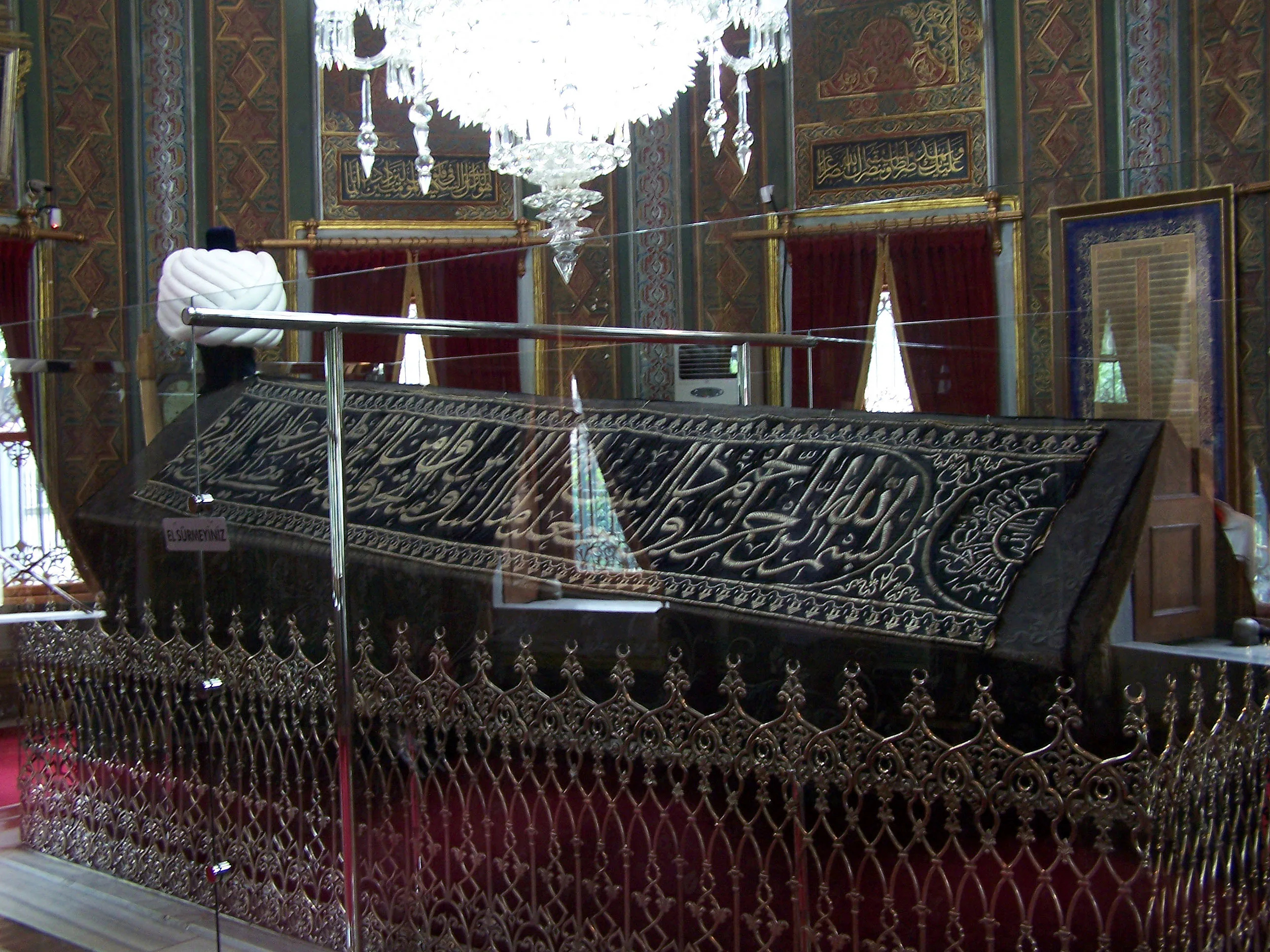
Mehmed II, known in Turkish as Fatih Sultan Mehmed — Mehmed the Conqueror — ruled the Ottoman Empire briefly as a boy from 1444 to 1446 and then in his own right from 1451 until his death in 1481. He is remembered above all for a single day: 29 May 1453, when his army entered Constantinople and the Byzantine Empire, which traced itself to Roman antiquity, ceased to exist.
That event is treated in its own article, and this one does not retell it. What follows concerns the other twenty-eight years of his reign — the state he built on the strength of that conquest, the law he codified, the capital he created, the campaigns that extended his rule from the Danube to the Euphrates and around the Black Sea, and the conception of sovereignty he constructed for himself. The conquest made his reputation; the rest of the reign made the empire.
Early Life and the First Reign
Mehmed was born at Edirne on 30 March 1432, a younger son of Murad II. He was not the expected heir, and his early years were spent in provincial governorship at Amasya and Manisa in the customary Ottoman training of princes. The deaths of his elder brothers left him heir by the early 1440s.
In August 1444 his father abdicated in his favour, and Mehmed became sultan at twelve. The experiment failed. A crusading army under the Hungarian commander John Hunyadi and the Polish-Hungarian king Władysław advanced into the Balkans in breach of a recently concluded truce, and the boy sultan's government could not meet the emergency. Murad II was recalled to command, won the battle of Varna in November 1444, and resumed the throne outright in 1446 after janissary unrest in the capital.
The episode is worth recording because of its effect on Mehmed. He had been sovereign and had been set aside, at the insistence of a military establishment and a vizierate that judged him unfit. When he returned to the throne on his father's death in February 1451, aged nineteen, he moved to ensure that no such body would constrain him again. The execution of the grand vizier Çandarlı Halil Pasha after the fall of Constantinople, and the systematic replacement of the old Turkish aristocratic families in high office by men of devşirme origin who owed everything to the sultan, both follow from it.
Consolidation After 1453
The conquest of Constantinople transformed Mehmed's position, and he used it immediately.
The city itself had to be made viable. It had been in decline for two centuries and its population had collapsed; a capital of a great empire could not be a ruin. Mehmed repopulated it by a combination of inducement and compulsion, settling Muslims, Greeks, Armenians and Jews from across his territories, restoring the water supply, and granting property to those who would rebuild. He confirmed the Greek Orthodox Church in its position under a patriarch of his appointment, and established the framework by which the empire administered its non-Muslim communities through their own religious hierarchies — the arrangement later described as the millet system. Whatever its later rigidities, the immediate effect was to give the conquered populations a recognised legal standing and a reason to remain.
He also began the building programme that defined the city: the great mosque complex bearing his name with its colleges and hospital, the covered market, and the palace on the promontory above the Bosphorus that became Topkapı. The architecture of the reign is treated further in the survey of Indo-Islamic and Islamic architecture; its political character was deliberate — a new imperial capital asserting a sovereignty that was Islamic, Roman and Ottoman at once.
The Campaigns
Mehmed campaigned almost continuously for three decades, and the extent of the acquisition is easier to grasp by region than by year.
The Balkans. Serbia was annexed by 1459, ending the vassal arrangements of the previous century. Bosnia followed in 1463 — the article on Bosnia and Herzegovina treats the consequences for that region. Albania resisted for decades under Skanderbeg and was subdued only after his death in 1468. Wallachia was brought to tributary status after campaigning against Vlad III in 1462. The Morea, the Byzantine remnant in southern Greece, was annexed by 1460. Belgrade, however, held: Mehmed's siege of 1456 failed against Hunyadi's relief, and the fortress remained Hungarian until 1521.
Anatolia. The Turkish principalities that had survived alongside the Ottomans were extinguished. Karaman, the most persistent rival, was annexed in the late 1460s and 1470s. The Greek empire of Trebizond on the Black Sea coast — the last independent Byzantine successor state — fell in 1461. In the east, Mehmed defeated Uzun Hasan of the Aqquyunlu at Otlukbeli in 1473, securing the Anatolian frontier against the strongest Turkmen confederation of the period.
The Sea and the Islands. The reign saw the Ottomans become a naval power. Lesbos, Euboea and other Aegean islands were taken from Venice and Genoa; the long Ottoman-Venetian war of 1463–1479 ended on Ottoman terms. The Genoese colonies of the Black Sea, including Caffa in the Crimea, were taken in 1475, and the Crimean Khanate became an Ottoman vassal — making the Black Sea effectively an Ottoman lake and giving the empire control of its grain, slave and fur trades. An assault on Rhodes in 1480 failed against the Knights Hospitaller. In the same year an Ottoman force took Otranto in southern Italy, holding it briefly.
The pattern across all fronts is of a ruler who accepted setbacks — Belgrade, Rhodes, the length of the Albanian and Venetian wars — without abandoning the general direction of expansion, and who consolidated administratively behind each advance.
Law and the Structure of the State
Mehmed's most durable work may have been legal and administrative rather than military.
He issued kanunname — codes of secular regulation issued on the sultan's authority, covering criminal penalties, taxation, land tenure, market regulation, and the organisation of the state itself. These operated alongside the sharia administered by the kadi courts, in the domain that Islamic legal theory left to the discretion of the ruler. The codification of this material under Mehmed established the Ottoman practice of dynastic law that later sultans, including Suleiman, extended; Suleiman's byname Kanuni, the lawgiver, refers to the same tradition.
One code addressed the structure of government and the ceremonial of the court. It fixed the hierarchy of offices, the protocol of the imperial council, and the degree of the sultan's seclusion — the ruler withdrawing from public visibility and communicating with his own council through a screen. Gülru Necipoğlu's study of the Topkapı Palace demonstrates how the building was designed to express this conception: a sovereign at the centre of concentric courtyards, progressively less accessible, embodying an authority that was absolute because it was remote.
He also systematised the empire's fiscal machinery, ordering cadastral surveys of conquered provinces, regularising the timar register, and expanding the salaried standing army — the janissaries and the household cavalry — relative to the provincial cavalry. The effect was to shift power from the landed Turkish nobility toward a professional service class recruited, trained and promoted by the sultan.
A note on the human cost belongs here. The recruitment of that service class through the devşirme levy on Christian rural populations expanded considerably under Mehmed, and the practice of fratricide on accession — the killing of a new sultan's brothers to prevent civil war — was given formal expression in this period. Ottoman apologists and critics have both said a great deal about the second practice; the plain fact is that it was regarded within the dynasty as the price of avoiding the succession wars that had nearly destroyed the state after 1402.
Learning, Patronage and Self-Presentation
Mehmed's cultural policy was unusually eclectic, and it has attracted attention because it sits awkwardly with the image of a purely martial conqueror.
He assembled a library that included Greek, Latin and Arabic works, employed Greek and Italian scholars and secretaries, and commissioned Byzantine and Italian artists. He invited the Venetian painter Gentile Bellini to his court, and the portrait attributed to Bellini is the earliest realistic likeness of an Ottoman sultan. He took a serious interest in geography and in the classical past of the territories he ruled, and he patronised debate among the Islamic scholars of his court, including a celebrated theological exchange on the relative merits of philosophy and revelation.
He also constructed a claim to universal sovereignty out of three traditions at once. He was a Muslim sultan and gazi, heir to the frontier warriors of Osman's day. He was — by his own use of the title Kayser-i Rum, Caesar of Rome — the successor of the emperors whose city he had taken. And he drew on Persianate and Turco-Mongol conceptions of world rule inherited from the eastern Islamic tradition. The combination was intended to place him above every other Muslim ruler and to justify ambitions extending to Italy.
The eclecticism should not be overstated. Mehmed's patronage of Italian artists and Greek scholars served an imperial programme rather than expressing personal cosmopolitanism for its own sake, and his Islamic foundations were far larger in scale than his Renaissance commissions. But the openness was real, and it distinguishes his court from those of most of his contemporaries in either direction.
The Navy and the Sea
The transformation of the Ottomans into a naval power belongs to this reign, and it was a deliberate programme rather than a by-product of conquest.
Before 1453 the Ottomans had ships but no fleet capable of contesting the sea with Venice or Genoa. The siege of Constantinople exposed the deficiency: an Ottoman squadron failed to prevent a small Genoese relief force from breaking into the harbour, and Mehmed's response — dragging vessels overland from the Bosphorus into the Golden Horn — was an improvisation forced on him by naval weakness.
He addressed it afterwards with characteristic method. Dockyards were built at Gallipoli and at the new capital, shipwrights were recruited, and the fleet was expanded and standardised. Within two decades the Ottomans could mount amphibious operations against fortified islands, blockade Venetian possessions, and project force into the western Mediterranean.
The results were substantial. The Genoese colonies of the Aegean and the Black Sea were reduced; Caffa in the Crimea fell in 1475, and with the submission of the Crimean Khanate the Black Sea became an Ottoman preserve, closed to foreign shipping and supplying Istanbul with grain, salt, fish, timber and slaves. Venice was forced to terms in 1479 after sixteen years of war, surrendering territory and agreeing to tribute for trading rights. The failure at Rhodes in 1480 showed the limits — the Knights Hospitaller's fortifications were beyond Ottoman siege capacity, as they remained until Suleiman took the island in 1522 — but the strategic position had changed permanently.
Control of the sea also had an economic logic. The Ottomans now sat astride the trade routes between the Black Sea, the Aegean and the Levant, and the customs revenue of that traffic became a significant part of the imperial income. The wider commercial context is treated in the article on Islamic trade routes.
Administration of a Conquered World
The practical business of absorbing so much territory so quickly deserves separate notice, because it is where Mehmed's government differed most from that of a purely military conqueror.
The instrument was the survey. After each significant conquest, officials compiled a tahrir — a register recording every village, its households, its cultivated land, its expected yield and its tax liability. These registers, many of which survive, are among the richest administrative archives of the pre-modern world and they served a specific purpose: they converted a conquered province into a fiscal object that could be assigned, taxed and audited from the centre.
On the basis of the survey, land was distributed as timar to cavalrymen who owed service in proportion to the revenue they held. Crucially, existing agrarian arrangements were largely left in place. Peasants kept their holdings and their customary rights; what changed was the identity of the person collecting the surplus and the fact that his tenure was revocable. This continuity is a large part of why Ottoman rule in the Balkans consolidated as rapidly as it did — for most cultivators the change of regime meant a change of landlord rather than a disruption of life, and Ottoman tax demands were in several documented cases lighter than those of the lords they replaced.
Non-Muslim communities were incorporated through their own religious hierarchies. Mehmed confirmed the Greek Orthodox patriarchate, established an Armenian patriarchate at Istanbul, and recognised the Jewish communities, granting each jurisdiction over the personal law of its members in return for the collection of the poll tax and responsibility for good order. The arrangement — later called the millet system — was not a modern toleration and it rested on legal inequality, since non-Muslims paid a tax Muslims did not and were subject to disabilities of dress and testimony. But it gave communities a corporate legal existence and an interest in the regime's stability, and Jewish refugees from Iberian persecution found the empire a place of refuge in this and the following reigns.
Mehmed also moved population deliberately. The sürgün — compulsory resettlement — was used to repopulate Istanbul and to break up concentrations of resistance elsewhere, transferring communities from one province to another. It was effective and it was coercive, and the sources describe both aspects.
Death and Succession
Mehmed died on 3 May 1481 near Gebze, in Anatolia, at the outset of a campaign whose objective is not certainly known — Rhodes, Egypt and Italy have all been proposed. He was forty-nine. Some contemporaries suspected poison, and the possibility has been discussed ever since without resolution; the evidence does not settle it.
His death produced exactly the crisis the fratricide policy existed to prevent. His sons Bayezid and Cem contested the throne; Bayezid prevailed as Bayezid II, and Cem fled abroad, becoming for years a instrument in the hands of European powers who hoped to use him against the empire. The disputed succession halted expansion for a generation, and it was left to Mehmed's grandson Selim I to resume it.
The Failures
A reign narrated through its conquests can obscure how much did not work, and Mehmed's failures are instructive about the limits of Ottoman power in the fifteenth century.
Belgrade, 1456. The fortress commanding the confluence of the Sava and the Danube was the gateway to Hungary, and Mehmed besieged it three years after taking Constantinople with the same artillery train. It held. A relief force under John Hunyadi broke the siege, Mehmed was wounded, and the Ottomans withdrew with heavy losses. Belgrade remained Hungarian for sixty-five years, and the Ottoman advance up the Danube stopped for a generation.
Albania. Skanderbeg's resistance in the Albanian mountains occupied Ottoman forces for a quarter of a century. Mehmed campaigned there personally more than once. The terrain defeated the methods that worked on open ground, and the country was reduced only after Skanderbeg's death, and then incompletely.
Rhodes, 1480. The Knights Hospitaller's fortifications were the most advanced in the Mediterranean, and the Ottoman siege failed. The island remained a base for attacks on Ottoman shipping until Suleiman took it in 1522.
Moldavia. Stephen the Great defeated an Ottoman army at Vaslui in 1475. Mehmed responded in person the following year and won at Valea Albă, but Moldavia was not subdued and continued as a hostile tributary at best.
The pattern is consistent and worth naming. Ottoman superiority rested on numbers, siege artillery, and a logistical system that could sustain a large army in the field for a season. It was decisive against states that met it in open country or held cities with medieval walls. It was much less effective against modern bastioned fortifications, against mountain warfare, and at the end of long supply lines late in the campaigning year. Mehmed's reign established both the reach of Ottoman power and its outer limit.
Assessment
Mehmed II is conventionally assessed by the conquest of Constantinople, and the conquest deserves its standing: it removed the last Roman polity, gave the Ottomans an imperial capital astride two continents, and altered the strategic position of both the Islamic world and Christian Europe. The article on the conquest treats it in full.
The more considered judgement is that the conquest was the beginning of his significance rather than its substance. What he did with the following twenty-eight years was to build a centralised imperial state where he had inherited a successful frontier monarchy. The instruments were the kanunname codes, the cadastral surveys, the salaried standing army, the recruitment of the governing class through the devşirme, the reduction of the old Turkish aristocracy, the incorporation of non-Muslim communities under their own hierarchies, and a court ceremonial designed to place the sovereign beyond reach. These held. The empire that Suleiman ruled at its height, and that survived into the twentieth century, was recognisably the one Mehmed designed.
The costs and the failures should be stated with the achievements. The Balkan and Anatolian campaigns were destructive and the annexations were resisted for decades in Albania and elsewhere. The devşirme and the fratricide policy were both institutionalised on his authority. Belgrade and Rhodes defeated him. And the concentration of authority in the sultan's person, which was his solution to the constraint he had suffered as a boy, left the empire dependent on the capacity of individual rulers — a vulnerability that became apparent soon enough.
The sources on the reign are unusually rich and unusually partisan in both directions. Kritovoulos, a Greek who entered Ottoman service, wrote a history presenting Mehmed as a legitimate universal sovereign; Tursun Beg, an Ottoman official, wrote from inside the administration; and the Latin and Greek accounts of the conquest were composed by men with every reason to portray the conqueror as a scourge. Franz Babinger's biography, still the standard full treatment, drew on all of them and is itself now regarded as harsher than the evidence requires. Read together they indicate a ruler of exceptional administrative seriousness whose reputation, in both admiring and hostile traditions, has been dominated by a single spring morning in 1453.
References and Further Reading
Primary Islamic Sources
- Quran, Surah al-Fath (48:1) — "Indeed, We have given you a clear conquest"; the verse invoked in the Ottoman celebration of 1453 and the source of the byname Fatih
- Quran, Surah al-Anfal (8:60–61) — on military preparedness and on inclining toward peace
- Quran, Surah al-Nisa (4:58) — on rendering trusts and judging with justice, the standard applied to rulers in the Ottoman literature of governance
- Sahih al-Bukhari and Sahih Muslim, Books of Jihad and of Leadership — the prophetic material on warfare, the treatment of the conquered, and the accountability of those in authority
- The kanunname of Mehmed II, and the tahrir cadastral registers and waqf deeds of the reign — the documentary core of Ottoman administrative history for this period
Classical Islamic Sources
- Tursun Beg. The History of Mehmed the Conqueror. Translated by Halil İnalcık and Rhoads Murphey. Minneapolis: Bibliotheca Islamica, 1978. [Compiled late 15th century] — by an official of the administration
- Aşıkpaşazade. Tevarih-i Al-i Osman. [Compiled c. 1480s]
- Neşri, Mehmed. Kitab-i Cihannüma. [Compiled c. 1490s]
- İbn Kemal (Kemalpaşazade). Tevarih-i Al-i Osman. [Compiled early 16th century]
- Kritovoulos. History of Mehmed the Conqueror. Translated by Charles T. Riggs. Princeton: Princeton University Press, 1954. — a Greek in Ottoman service, writing to present Mehmed as legitimate emperor
Academic and Scholarly Sources
- Babinger, Franz. Mehmed the Conqueror and His Time. Translated by Ralph Manheim. Princeton: Princeton University Press, 1978. — the standard biography, and now regarded as unsympathetic
- İnalcık, Halil. The Ottoman Empire: The Classical Age, 1300–1600. London: Weidenfeld and Nicolson, 1973.
- Imber, Colin. The Ottoman Empire, 1300–1650: The Structure of Power. 2nd ed. Basingstoke: Palgrave Macmillan, 2009.
- Necipoğlu, Gülru. Architecture, Ceremonial, and Power: The Topkapı Palace in the Fifteenth and Sixteenth Centuries. Cambridge, MA: MIT Press, 1991.
- Kafescioğlu, Çiğdem. Constantinopolis/Istanbul: Cultural Encounter, Imperial Vision, and the Construction of the Ottoman Capital. University Park: Pennsylvania State University Press, 2009.
- Fleet, Kate, ed. The Cambridge History of Turkey, Volume 1: Byzantium to Turkey, 1071–1453. Cambridge: Cambridge University Press, 2009.
- Faroqhi, Suraiya, and Kate Fleet, eds. The Cambridge History of Turkey, Volume 2: The Ottoman Empire as a World Power, 1453–1603. Cambridge: Cambridge University Press, 2013.
Further Reading
- Finkel, Caroline. Osman's Dream: The Story of the Ottoman Empire, 1300–1923. London: John Murray, 2005.
- Crowley, Roger. Constantinople: The Last Great Siege, 1453. London: Faber, 2005.
- Goodwin, Godfrey. A History of Ottoman Architecture. London: Thames and Hudson, 1971.
- Raby, Julian. "Mehmed the Conqueror's Greek Scriptorium." Dumbarton Oaks Papers 37 (1983): 15–34.
Mentioned In
12 articles reference this topic
More from Ottoman Empire
Blue Mosque: The Sultan Ahmed Mosque of Istanbul
The Blue Mosque (Sultan Ahmed Mosque) in Istanbul, built between 1609-1616 CE, is one of the most magnificent examples of Ottoman architecture and a masterpiece of Islamic architectural achievement.
Conquest of Constantinople - The Fall of Byzantium
The historic conquest of Constantinople by Ottoman Sultan Mehmed II on May 29, 1453 CE, ending the Byzantine Empire and establishing Ottoman dominance in southeastern Europe. This pivotal victory transformed the Ottomans into a major European power.
Ottoman Empire (1299-1922 CE)
The Ottoman Empire ruled for over 600 years, spanning three continents at its height. Founded by Osman I in 1299 CE, it became one of history's most powerful empires, serving as the seat of the Islamic Caliphate from 1517 until 1922.
Topkapi Palace - Heart of the Ottoman Empire
Topkapi Palace (1459-1856 CE) served as the primary residence and administrative headquarters of Ottoman sultans for nearly four centuries. Located on Seraglio Point overlooking the Bosphorus, this vast complex represents the pinnacle of Ottoman architecture and imperial power.