Sayf al-Din Qutuz: The Sultan Who Stopped the Mongols
Sayf al-Din Qutuz (c. 1221-1260) was the third Mamluk sultan of Egypt, reigning under a year. He executed Hulegu's envoys, marched into Syria, and defeated the Mongol army at Ain Jalut in September 1260, then was assassinated weeks later by conspirators including Baybars.
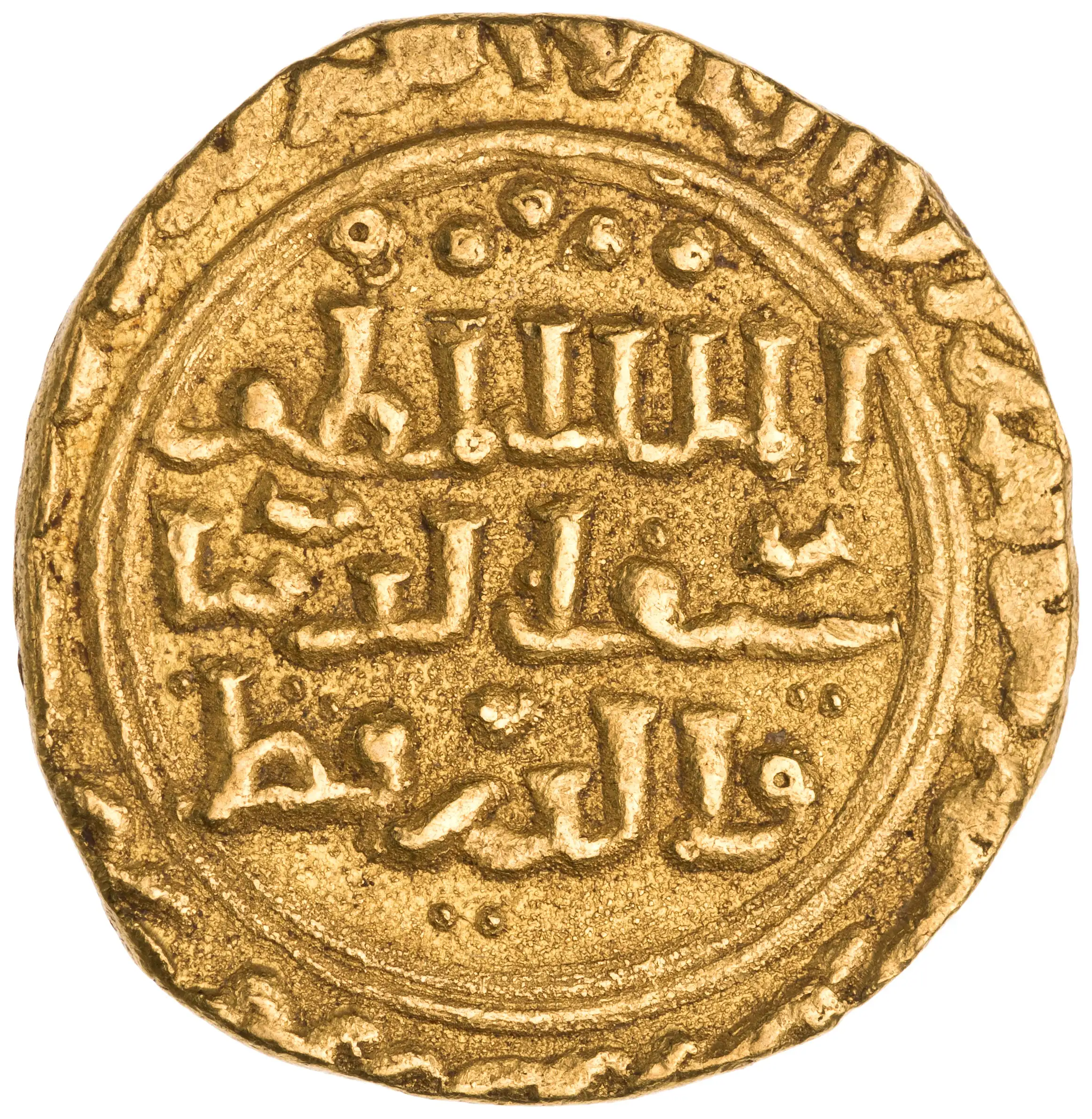
Al-Malik al-Muzaffar Sayf al-Din Qutuz was the third sultan of the Mamluk Sultanate of Egypt and held the throne for less than a year, from late 1259 to October 1260. In that time he refused the Mongol demand for submission in the most public and irreversible way available to him, took an Egyptian army into Syria against a Mongol force that had just destroyed Aleppo and occupied Damascus, and won the Battle of Ain Jalut on 3 September 1260. Seven weeks later he was murdered by his own officers on the road back to Cairo.
The reign is among the shortest of consequence in Islamic history. It falls in the two years after the Mongol sack of Baghdad, described in the article on the siege of Baghdad in 1258, when the Abbasid caliphate had been extinguished as a political institution, Syria had fallen, and there was no obvious reason to expect Egypt to survive. Qutuz's decision to fight rather than negotiate, and the victory that followed, secured Egypt and Syria for the Mamluk state and established the political order that governed the region until the Ottoman conquest of 1517.
He has nonetheless been overshadowed in the record by the man who killed him. Baybars, who commanded the vanguard at Ain Jalut and succeeded him as sultan, ruled for seventeen years, built the Mamluk state into a great power, and — importantly for what later writers said about Qutuz — controlled the writing of its history.
Origins
Qutuz was a mamluk: a military slave, purchased as a youth, converted to Islam, trained as a cavalryman, and manumitted into the service of the master who had bought him. The system that produced men like him, and the reasons a slave élite came to rule Egypt, are set out in the article on the Mamluk Sultanate.
Beyond that, his origins are reported in a form that requires caution. The tradition preserved in the Arabic sources holds that he was a prince of the ruling house of Khwarazm — that his given name was Mahmud, that he was a nephew of the Khwarazmian ruler Jalal al-Din, and that he was captured in the Mongol destruction of that state and sold into slavery, passing through Damascus before being bought in Egypt. His birth is placed around 1221, which would make him a small child at the time of the Khwarazmian collapse.
The account may be true. It is also precisely the kind of story that attaches to slave rulers, in Islamic historiography and elsewhere: a royal origin recovered after the fact supplies a legitimacy that servile status denies, and the sources reporting it were written after Qutuz had become sultan and a victorious one. Modern historians generally record the claim without relying on it. What is not in doubt is that he entered Egypt as a purchased slave soldier and rose entirely by service.
He was bought by Aybak, a Mamluk emir of the household of the Ayyubid sultan al-Salih Ayyub, and took his place in Aybak's own regiment, the Mu'izziyya — named for the title Aybak later assumed, al-Mu'izz. The regimental affiliation determined the rest of his career. Mamluk politics ran along the lines of these household regiments, whose members were bound to their patron and to each other by the shared experience of purchase, training and manumission, and the rivalry between the Mu'izziyya and the Bahriyya — the regiment of the late al-Salih Ayyub, to which Baybars belonged — is the thread running through everything that happened between 1250 and 1260.
The Mamluk System
Qutuz's career is unintelligible without the institution that produced him, and the institution was unusual enough to require explanation.
A mamluk was a military slave. The system, described more fully in the article on the Mamluk Sultanate, worked by purchase: boys and young men, predominantly Turkish and later Circassian, were bought in the slave markets of the Black Sea steppe and Central Asia, brought to Egypt or Syria, converted to Islam, and placed in a barracks establishment where they were given a religious education and an intensive military training in horsemanship, archery and the use of the lance. On completing it they were manumitted and enrolled in the household of the master who had bought them.
Three features of the arrangement matter for understanding Qutuz.
The first is that manumission was the beginning of a career rather than the end of an obligation. A freed mamluk remained bound to his purchaser by a relationship the sources treat as closer than kinship, and to his fellow trainees — the men bought, trained and freed alongside him — by a solidarity that functioned as the basic unit of Mamluk politics. These regimental cohorts, named after the patron who had formed them, were the political parties of the sultanate. Qutuz belonged to the Mu'izziyya, the regiment of Aybak; Baybars belonged to the Bahriyya, formed by the last Ayyubid sultan al-Salih Ayyub. Almost everything that happened between 1250 and 1260 follows from the rivalry between those two bodies.
The second is that the system produced soldiers of exceptional quality and no dynastic legitimacy whatever. Mamluk cavalry were the best-trained heavy horsemen of the thirteenth-century Near East, drilled in mounted archery to a standard that Mongol armies found difficult to match, and this is the technical explanation for Ain Jalut. But a mamluk had no lineage, no tribe, and no claim to rule beyond his own standing among his peers.
The third follows from the second: the sultanate had no rule of succession. Authority went to whichever emir could command the loyalty of enough regiments, and it was taken from him the same way. This is why a majority of the early Mamluk sultans were deposed or killed, why Qutuz set aside a child to take the throne himself, and why he was murdered seven weeks after the greatest victory in the state's history. The violence was not a malfunction of the system; it was the system's method of selection.
The End of Ayyubid Egypt
The circumstances in which the Mamluks came to rule Egypt were exceptional, and Qutuz's rise took place inside them.
The Ayyubid dynasty founded by Saladin governed Egypt and much of Syria as a loose family confederation, with princes holding cities and provinces and acknowledging a senior member. Its Egyptian branch was destroyed between 1249 and 1250 by the coincidence of a crusade and a succession.
The Seventh Crusade under Louis IX of France landed in the Nile Delta in 1249 and took Damietta. The sultan al-Salih Ayyub died during the campaign, and his widow Shajar al-Durr concealed the death to prevent collapse while the heir, Turanshah, was summoned from the Jazira. The Mamluk regiments — the Bahriyya above all — then fought and destroyed the crusader army at Mansura and Fariskur in 1250, capturing Louis IX himself, who was later ransomed.
The regiments had thus saved Egypt, and they drew the obvious conclusion about where power lay. Turanshah, who arrived to find the victory already won and attempted to promote his own followers over the men who had won it, was murdered within weeks. The Ayyubid line in Egypt ended with him.
What followed was improvised. Shajar al-Durr, whose remarkable position is examined in the article devoted to her, ruled briefly in her own name — an arrangement without precedent that neither the Syrian Ayyubids nor the caliph in Baghdad would accept. The solution was her marriage to Aybak, the senior Mamluk emir, who became sultan.
Qutuz rose through this as Aybak's man. He became a leading emir of the Mu'izziyya and served as his patron's deputy, effectively vice-sultan. In 1254 Aybak moved against the Bahri leader Aqtay and had him killed; the Bahriyya scattered, many of them — Baybars among them — taking service with Ayyubid princes in Syria. Qutuz was implicated in that killing, and it is the origin of the grudge that ended his life six years later.
In 1257 Aybak was murdered at Shajar al-Durr's instigation, and the regime nearly disintegrated. Qutuz acted decisively: Shajar al-Durr was killed, Aybak's young son al-Mansur Ali was installed as sultan, and Qutuz governed as his guardian. For two years he held a fractured state together in a child's name, and the Mongol advance then made that arrangement untenable.
The Seizure of the Sultanate
By 1259 the Mongol advance made the arrangement untenable, and Qutuz ended it.
The scale of the threat is important. Hulegu, a grandson of Genghis Khan, had been sent west with a large army and a mandate to subdue the Islamic lands. He had destroyed the Ismaili strongholds of northern Iran, then taken Baghdad in February 1258, killing the last Abbasid caliph of the Baghdad line and sacking the city. In 1259–60 he moved into Syria: Aleppo was stormed and its population massacred, Damascus surrendered, and the Ayyubid principalities of Syria either submitted or fled. The Mongol frontier was now on Egypt's approaches, and there was no third power left between them.
Qutuz deposed al-Mansur Ali in late 1259 and took the throne himself as al-Malik al-Muzaffar. The justification he gave — that a boy could not lead the army in the emergency that was coming — was self-serving and also true. The Mamluk regime's legitimacy rested on nothing but its capacity to defend Egypt, and a regency was not going to do it.
He then set about repairing the state's fractures with a realism that is the most impressive thing about him. He issued an amnesty to the exiled Bahri Mamluks and invited them back — including Baybars, the man with the strongest reason to hate him, who returned with his followers and was received. He composed differences with Ayyubid princes and with Syrian and Bedouin forces. He raised money and troops, drawing on the resources of Egypt in a way that suggests effective administration behind the campaign. A ruler with a fortnight's political capital assembled a coalition out of men who had recently been trying to kill each other.
Mongol Diplomacy and the Meaning of the Envoys
The killing of Hulegu's ambassadors is the act for which Qutuz is chiefly remembered, and its significance depends on facts about Mongol practice that deserve to be stated.
Mongol expansion operated through a standard sequence. Envoys were sent to a ruler with a demand for submission, framed as an offer: acknowledge Mongol overlordship, pay tribute, supply troops, and the ruler and his subjects would be spared. Refusal meant war, and war meant, at Mongol discretion, the destruction of cities and the massacre of populations. The demands were couched in the language of a universal mandate to rule, and they were not negotiable.
Within that system the persons of envoys were inviolable, and the killing of them was the one act that guaranteed a war of extermination with no possibility of later terms. The precedent was famous: the Mongol conquest of Khwarazm, in which Qutuz's own family — on the traditional account of his origins — had been destroyed, began with the killing of Mongol emissaries by the Khwarazmian governor of Utrar. Every literate person in the Islamic world knew that story.
Qutuz therefore knew exactly what he was doing when he had the envoys put to death and their heads displayed at Bab Zuwayla. The act was irrevocable by design. It removed the option of submission not only for himself but for every emir in Cairo, and it announced to the army, the religious establishment and the population that there would be no accommodation and no flight to the Maghrib.
The calculation behind it was that submission offered nothing. The evidence in front of him was recent and unambiguous. The Abbasid caliph had negotiated and Baghdad had been sacked in 1258, as the article on that siege describes. Aleppo had resisted and been stormed with a general massacre. Damascus had surrendered and been occupied under a Mongol governor. The Ayyubid princes of Syria had submitted, fled, or been destroyed. For a regime whose entire claim to rule was its capacity to defend Egypt, capitulation meant extinction by another route.
There is a further consideration that the sources do not state and that the situation implies. Qutuz's problem in 1260 was not primarily military but political: he had to hold together a coalition of Mu'izzi and Bahri Mamluks who had been killing each other for six years, along with Ayyubid remnants, Syrians and Bedouin. A public and irreversible commitment to war was the most effective way of preventing that coalition from bargaining separately with the enemy.
Ain Jalut
Circumstances then improved in a way Qutuz could not have arranged. The Great Khan Möngke died in 1259, and the succession struggle among his brothers drew Hulegu east with the greater part of his army. He left Syria under the command of Kitbuqa with a substantially smaller force — Mongol troops together with Armenian, Georgian and local contingents.
Qutuz marched from Egypt in the summer of 1260 with Baybars commanding the vanguard. Passing along the Palestinian coast, he obtained from the Frankish authorities of the rump crusader states a neutrality that allowed his army passage and supplies; the Franks did not join either side, having concluded that neither a Mongol nor a Mamluk victory served them and that provoking the nearer power was unwise.
The armies met on 3 September 1260 at Ain Jalut in the Jezreel valley of northern Palestine. The battle was decided by a feigned withdrawal: the Mamluk vanguard drew the Mongol force forward into ground where the main body waited, and the Mongols, once committed and enveloped, were broken. Kitbuqa was captured and killed. The tactical detail, the composition of the two armies, and the long debate over the battle's significance are treated in the article devoted to Ain Jalut.
Two points belong to Qutuz's biography. The first is that the victory was a Mamluk one in a precise sense: the army that won it was built on the same military slave system that had produced its commanders, and its heavy cavalry and archery were the product of the training regime that the Mamluk state existed to maintain. The second is that Qutuz's contribution was as much political as tactical. He assembled and held together an army of Mu'izzi and Bahri Mamluks, Ayyubid remnants, Syrians and Bedouin, and kept it in the field far from Egypt against an enemy with a reputation for invincibility. That the coalition did not fracture before contact was the precondition of everything that happened at Ain Jalut.
The immediate results were substantial. Damascus was recovered within days, Aleppo and the Syrian towns followed, the Mongol garrisons and their local collaborators were driven out or killed, and Syria passed under Mamluk authority. The Ayyubid principalities were absorbed rather than restored. In a single campaign the Mamluk sultanate had become the dominant power of the eastern Mediterranean, with Egypt and Syria under one government for the first time since Saladin.
The Syrian Settlement
Ain Jalut was followed within weeks by a political reordering of Syria, and it is the part of Qutuz's achievement most often overlooked because he did not live to consolidate it.
The Mongol collapse in Syria was rapid. Damascus was recovered within days of the battle; Aleppo, Hama, Homs and the Syrian towns followed; and Mongol garrisons and the local officials who had cooperated with them were driven out or killed. The pursuit was pressed as far as the Euphrates.
What Qutuz did with the recovered territory determined the shape of the Mamluk state. He did not restore the Ayyubid principalities to independence. Syria was brought under the authority of the sultan in Cairo, with governors appointed from Egypt and the surviving Ayyubid princes reduced to subordinate holdings or removed altogether — a settlement that united Egypt and Syria under a single government for the first time since Saladin, and one that gave the Mamluk sultanate the territorial depth it needed to fight the Ilkhanid state for the next forty years.
The strategic logic was sound and became Mamluk doctrine. Egypt alone could not be defended against an enemy operating from Iran; Syria was the necessary buffer, and holding it required a unified command, garrisoned fortresses, and the destruction of any independent power in between — which is why the Mamluks went on to eliminate the remaining crusader states and to keep the Syrian interior under close control.
Qutuz had perhaps six weeks of it. The consolidation — the defence against the Ilkhanid counter-offensives, the reconstruction of the caliphate as a Cairo institution, the reduction of the Frankish coastal cities, the fortification of the Euphrates frontier — was the work of Baybars and his successors. But the decision to absorb Syria rather than restore it was taken in the autumn of 1260, and it was Qutuz's.
Assassination
Qutuz did not reach Cairo. On 24 October 1260, at al-Salihiyya in the eastern Nile Delta, he was killed by a group of Mamluk emirs while the army was on its return march. Baybars was among the conspirators, and the sources treat him as the leading figure in the plot. He was proclaimed sultan immediately afterwards and reigned until 1277.
The motives reported are several and not mutually exclusive. The immediate grievance recorded is that Baybars had asked for the governorship of Aleppo, having distinguished himself in the campaign, and had been refused — a refusal that made sense from Qutuz's position, since granting a rival faction leader an independent Syrian command was an obvious danger, and made the danger certain instead. Behind that lay the Bahri–Mu'izzi rivalry and Qutuz's part in the killing of Aqtay in 1254, which gave Baybars a blood claim. And behind that lay the structural fact of Mamluk politics: a sultan was the most successful emir among peers who had been trained alongside him and who did not regard his position as sacred. Of the first eight Mamluk sultans, a majority were deposed or murdered.
The timing is what makes the episode notable — the victor of the most celebrated battle in Mamluk history killed by his own officers seven weeks after winning it. It illustrates how little a Mamluk sultan's achievements protected him, and it explains why Qutuz's reputation was shaped by others. The court historiography of the following seventeen years was produced under Baybars, whose biographers had reason to present the succession as legitimate and the victory at Ain Jalut as substantially their patron's work.
Historiographical Note
The evidence for Qutuz is thin, late, and shaped by the interests of his successor's regime.
There is no contemporary history written from his side and no body of documents. The Arabic narrative sources that describe him — Ibn Abd al-Zahir's biography of Baybars, written for Baybars; the encyclopaedic history of al-Nuwayri; the chronicles of Ibn Wasil, who was closer in time; and al-Maqrizi's great compilation of the fifteenth century — were composed either within the Baybars tradition or long afterwards. The Persian sources for the Mongol side, including Rashid al-Din, write from within the Ilkhanid state and treat Ain Jalut as a reverse suffered by a detachment.
Three consequences follow. Qutuz's Khwarazmian royal origin is a claim in the sources rather than an established fact, and it serves a legitimising purpose. The division of credit for Ain Jalut between Qutuz and Baybars is affected by the fact that the fullest accounts were written to honour Baybars, and the vanguard commander's prominence in them should be read with that in mind. And the assassination is reported by a tradition produced under the man who benefited from it, which is why the stated motive — the refusal of Aleppo — is plausible but cannot be treated as the complete account.
Reuven Amitai-Preiss's study of the Mamluk–Ilkhanid war is the standard modern examination of the military and diplomatic context, and it is careful about what the sources can bear. Peter Thorau's biography of Baybars necessarily reconstructs Qutuz's reign as its prelude and assesses the source problem directly. Robert Irwin's history of the early sultanate sets the reign within the factional politics that produced and destroyed it.
Assessment
Qutuz reigned for under a year and made three decisions, and the three together changed the political shape of the Islamic Middle East.
He took the throne from a child in the face of an invasion, which was a usurpation and was also the only way of putting a competent commander at the head of the Egyptian army. He recalled and reconciled the exiled Bahri faction, including the man who had the strongest motive to kill him, because he needed their troops more than he needed his own safety — a judgement that was correct, produced the victory, and cost him his life. And he executed Hulegu's envoys at Bab Zuwayla, closing off submission irrevocably at a moment when submission had just been shown to save no one.
The result was Ain Jalut. The battle's long-term significance has been debated by modern historians and the debate is set out in its own article: Hulegu's main force had withdrawn, the defeated army was not the full Mongol host, and the Ilkhanid state returned to attack Syria repeatedly over the following forty years. What is not disputed is that a Mongol field army was destroyed and its commander killed, that Syria was cleared and held, that Egypt was never invaded, and that the Mamluk sultanate emerged from the campaign as the dominant power in the region — a position it retained for two and a half centuries.
The limits of what can be credited to him should be stated plainly. He had two years as effective ruler and less than one as sultan, so there is no administrative record to assess, no building programme, and no policy beyond the emergency. He owed a great deal to accident: Möngke's death and Hulegu's withdrawal reduced the force he faced, and without that the outcome would probably have been different. He had risen by participating in the factional killings that characterised the regime, including the deaths of Aqtay and Shajar al-Durr, and he was destroyed by the same politics. And the consolidation of the victory — the Syrian settlement, the defence against the Ilkhanid counter-offensives, the destruction of the crusader states, the reconstruction of the caliphate as a Cairo institution — was the work of Baybars.
What remains is a narrow and genuine distinction. In the two years after Baghdad fell, when the Mongol advance appeared unstoppable and every power in its path had either submitted or been destroyed, one ruler assembled a coalition out of his own enemies, refused terms in a manner that admitted no retreat, and beat them. He did not live to see what came of it.
References and Further Reading
Primary Islamic Sources
- Quran, Surah al-Baqarah (2:249) — "How often has a small force overcome a large one by God's permission"; the verse most cited in the Arabic accounts of Ain Jalut
- Quran, Surah Al-Imran (3:26) — on the granting and withdrawal of sovereignty, invoked across the chronicles of the Mongol catastrophe
- Quran, Surah al-Anfal (8:45–46) — on steadfastness in battle and the prohibition of internal division, read in the Mamluk sources against the factional quarrels of the regime
- Quran, Surah al-Hajj (22:39–40) — on permission to fight in defence against those who have driven people from their homes
- Sahih al-Bukhari, Kitab al-Jihad, and Sahih Muslim, Kitab al-Jihad wa al-Siyar — the prophetic material on warfare, the treatment of envoys, and the conduct of armies, the framework within which the killing of Hulegu's emissaries was debated
Classical Islamic Sources
- Ibn Abd al-Zahir. Al-Rawd al-Zahir fi Sirat al-Malik al-Zahir. [13th century] — the official biography of Baybars, and the fullest near-contemporary account of Ain Jalut
- Ibn Wasil, Jamal al-Din. Mufarrij al-Kurub fi Akhbar Bani Ayyub. [13th century] — closest in time to the events, from an Ayyubid perspective
- Al-Nuwayri, Ahmad ibn Abd al-Wahhab. Nihayat al-Arab fi Funun al-Adab. [early 14th century]
- Al-Maqrizi, Ahmad ibn Ali. Kitab al-Suluk li-Marifat Duwal al-Muluk. [15th century] — the great compilation of Mamluk history
- Abu Shama. Kitab al-Rawdatayn, with the continuation covering the Mongol invasions. [13th century]
- Rashid al-Din Hamadani. Jami al-Tawarikh. [c. 1307] — the Persian Ilkhanid account, giving the Mongol perspective
- Ibn Khaldun, Abd al-Rahman. Kitab al-Ibar. [c. 1377] — including the analysis of the Mamluk military system
Academic and Scholarly Sources
- Amitai-Preiss, Reuven. Mongols and Mamluks: The Mamluk-Ilkhanid War, 1260–1281. Cambridge: Cambridge University Press, 1995. — the standard study of the conflict and its sources
- Thorau, Peter. The Lion of Egypt: Sultan Baybars I and the Near East in the Thirteenth Century. London: Longman, 1992.
- Irwin, Robert. The Middle East in the Middle Ages: The Early Mamluk Sultanate 1250–1382. London: Croom Helm, 1986.
- Humphreys, R. Stephen. From Saladin to the Mongols: The Ayyubids of Damascus, 1193–1260. Albany: State University of New York Press, 1977.
- Jackson, Peter. The Mongols and the Islamic World: From Conquest to Conversion. New Haven: Yale University Press, 2017.
- Ayalon, David. Studies on the Mamluks of Egypt. London: Variorum, 1977. — the foundational work on the military slave system and its factional politics
- Levanoni, Amalia. A Turning Point in Mamluk History. Leiden: Brill, 1995.
- Morgan, David. The Mongols. 2nd ed. Oxford: Blackwell, 2007.
Further Reading
- Waterson, James. The Knights of Islam: The Wars of the Mamluks. London: Greenhill, 2007.
- Northrup, Linda S. From Slave to Sultan: The Career of al-Mansur Qalawun. Stuttgart: Franz Steiner, 1998.
- Amitai, Reuven and Morgan, David, eds. The Mongol Empire and Its Legacy. Leiden: Brill, 1999.
- Behrens-Abouseif, Doris. Cairo of the Mamluks: A History of the Architecture and Its Culture. London: I.B. Tauris, 2007. — on Bab Zuwayla and the Mamluk capital
Mentioned In
1 article references this topic
More from Medieval Islamic World
Battle of Ain Jalut: Turning Back the Mongol Tide
The 1260 CE battle where the Mamluk Sultanate defeated the Mongol Empire in the Jezreel Valley, marking the first major Mongol defeat and halting their westward expansion into the Islamic heartlands.
Mamluk Sultanate - The Slave Soldiers Who Became Kings
The Mamluk Sultanate (1250-1517 CE) was a powerful military state that ruled Egypt and Syria for nearly three centuries. Founded by former slave soldiers, the Mamluks defeated the Mongols at Ain Jalut, expelled the Crusaders, and presided over a cultural renaissance.
Ayyubid Dynasty - Saladin's Legacy and the Unification of the Muslim East
The Ayyubid Dynasty (1171-1260 CE) was founded by Saladin and ruled Egypt, Syria, and Yemen. The Ayyubids recaptured Jerusalem from the Crusaders, promoted Sunni Islam, and created a sophisticated state combining military power with cultural patronage.
Battle of Hattin - Saladin's Decisive Victory
The decisive battle of July 4, 1187 CE, where Saladin's forces crushed the Crusader armies near Hattin in Palestine. This pivotal victory led to the recapture of Jerusalem and marked the beginning of the end of Crusader dominance in the Holy Land.