Zubaidah bint Ja'far: Queen of the Abbasid Golden Age
Zubaidah bint Ja'far (765/766-831 CE) was the wife of the Abbasid caliph Harun al-Rashid and one of the most powerful and celebrated women of the Islamic Golden Age, remembered above all for financing the wells and reservoirs of the Darb Zubaydah pilgrim route between Baghdad and Mecca.
Zubaidah bint Ja'far ibn al-Mansur (زبيدة بنت جعفر بن المنصور; born 765 or 766 CE, died 10 July 831 CE / 26 Jumada al-Awwal 216 AH) was the wife and paternal cousin of the Abbasid caliph Harun al-Rashid, and one of the most celebrated and historically consequential women of the Islamic Golden Age. The best documented of the Abbasid princesses, Zubaidah is remembered above all for a single, extraordinarily consequential act of public benefaction: the financing and construction of a series of wells, reservoirs, and artificial pools along the pilgrimage route connecting Baghdad to Mecca and Medina, and the deepening and restoration of the sacred Zamzam well itself, engineering works so significant that the entire pilgrim route from Kufa to Mecca came to be known, and remains known to this day, as the Darb Zubaydah — the Path of Zubaydah — in her honor.
Zubaidah's life intersected with the height of Abbasid imperial power and cultural florescence during the reign of her husband Harun al-Rashid (786-809 CE), a period whose combination of political grandeur, economic prosperity, and cultural sophistication has made it, in both historical scholarship and popular imagination, virtually synonymous with the Islamic Golden Age itself. Her own household and personal conduct, as documented in the historical sources, exemplified the extraordinary wealth and cultural refinement of the Abbasid court at its zenith, while her sustained charitable investment in the infrastructure of the hajj pilgrimage — a project she pursued with a determination that historical anecdote credits her with expressing in terms of an explicit indifference to its ruinous expense — established a legacy of pious public works whose physical and administrative traces endured for over a thousand years, making her contribution to the practical facilitation of the pilgrimage one of the most consequential acts of individual patronage in the entire history of the hajj.
The broader historical period into which Zubaidah was born and in which she came to occupy so prominent a position — the height of the Abbasid Caliphate under Harun al-Rashid — represented the culmination of decades of political consolidation, economic prosperity, and intellectual and cultural development that had followed the Abbasid revolution of 750 CE and the subsequent founding of Baghdad by her own grandfather, the caliph al-Mansur, in 762 CE. Baghdad under Harun al-Rashid had grown into one of the largest and wealthiest cities in the world, a cosmopolitan center of trade, scholarship, and craft production drawing merchants, scholars, and diplomats from across the known world, from Byzantine Constantinople to Tang-dynasty China, and it was within this context of imperial grandeur and cultural sophistication — a context that would later furnish the setting for the One Thousand and One Nights and that remains, in both scholarly and popular historical memory, virtually synonymous with the phrase "Islamic Golden Age" — that Zubaidah's own life and public activities unfolded.
Family Background and Royal Lineage
Zubaidah was born in Iraq around 765 or 766 CE into the innermost circle of the Abbasid ruling dynasty, as the granddaughter of the caliph al-Mansur, the effective founder of Baghdad and the second Abbasid caliph, through his son Ja'far ibn Abdallah al-Mansur, Zubaidah's father. Her mother, Salsal bint Atta, was an elder sister of al-Khayzuran, the second and most politically powerful wife of the Abbasid caliph al-Mahdi and the mother of two future caliphs, Musa al-Hadi and Harun al-Rashid, making Zubaidah not only Harun's paternal cousin through her father's descent from al-Mansur but also his maternal cousin through her mother's sisterhood with al-Khayzuran — a doubled kinship connection that reinforced the closeness of her relationship to the caliphal house even before her marriage to Harun formalized this connection through matrimonial alliance as well.
The name "Zubaidah" by which she is universally known to history was not her given name at birth but rather an affectionate nickname bestowed upon her by her grandfather, the caliph al-Mansur, reportedly meaning "little butter ball" — a term of endearment presumably reflecting either her physical appearance as an infant or simply the affectionate diminutive naming conventions common within elite Abbasid family life. Her actual birth name is recorded in the sources as Sukaynah or, alternatively, Amat al-Aziz. Following the birth of her son, she additionally received the honorific kunya Umm Ja'far ("Mother of Ja'far"), a name that elegantly reflected her dual status as granddaughter of the caliph Abu Ja'far al-Mansur and as wife of the caliph who, following his own accession, was formally addressed by the honorific title Abu Ja'far — creating a resonant genealogical symmetry between her paternal grandfather's and her husband's shared caliphal designations that Abbasid court culture, with its close attention to naming and genealogical symbolism, would certainly have appreciated.
Marriage to Harun al-Rashid
Zubaidah and Harun al-Rashid were married in 781-782 CE (165 AH), at the residence of Muhammad ibn Sulayman in Baghdad, several years before Harun's own accession to the caliphate in 786 CE following the death of his brother al-Hadi. As Harun's first wife, and one bound to him by close and doubled family kinship as well as by marriage, Zubaidah occupied from the outset of her married life a position of particular prominence and security within the complex hierarchy of wives, concubines, and children that characterized the domestic arrangements of the Abbasid caliphal household, an arrangement in which multiple women bore children to the ruling caliph and in which questions of succession, status, and influence among the various mothers of caliphal children carried substantial political significance.
Zubaidah bore Harun a single son, Muhammad, born in April 787 CE, who would later reign as the caliph al-Amin. In September 792 CE, Harun formally received the oath of allegiance (bay'ah) for Muhammad under the caliphal title al-Amin ("The Trustworthy"), effectively designating him as the primary heir to the caliphate — a decision of considerable significance given that Muhammad al-Amin possessed, through his mother Zubaidah, a double royal Abbasid lineage that his half-brother and eventual rival Abdallah (the future caliph al-Ma'mun) did not share. Abdallah, born in Baghdad on the night of 13-14 September 786 CE — a night that came to be remembered in Abbasid historical tradition as "the night of the three caliphs," since it coincided with the death of the reigning caliph al-Hadi and the accession of his brother Harun al-Rashid — was born to Harun's concubine Marajil, a woman of Persian origin from the Badghis region, who died shortly after giving birth to Abdallah. Following Marajil's death, the infant Abdallah was raised within Harun's household under the direct care of Zubaidah herself, who thus assumed a maternal role toward her husband's son by another woman even as she continued to advance the interests of her own son Muhammad as Harun's chosen heir — an arrangement that, whatever its personal complexities, meant that Zubaidah exercised a formative maternal influence over both of the sons whose eventual rivalry would erupt into the devastating civil war (the Fourth Fitna) that convulsed the Abbasid Caliphate in the years immediately following Harun's death.
Harun al-Rashid did not formally designate Abdallah as second heir, under the caliphal title al-Ma'mun ("The Trusted One"), until 799 CE, thirteen years after his own accession, by which point the succession arrangement Harun had established provided for Muhammad al-Amin to succeed as caliph with Abdallah al-Ma'mun as his own heir and, in the interim, as a powerful semi-autonomous governor of the eastern Abbasid provinces (Khurasan) — an arrangement intended to balance the claims and interests of both sons but that, in the event, proved unable to prevent the eventual descent of the succession into open civil war after Harun's death in 809 CE.
The formal arrangements Harun al-Rashid established for this dual succession were unusually elaborate by the standards of Abbasid dynastic practice, involving documents deposited within the Kaaba itself in Mecca during the pilgrimage of 802 CE, witnessed by prominent officials, judges, and religious scholars, in an apparent effort to invest the succession arrangement with the maximum possible degree of legal and religious solemnity and thereby to forestall the kind of succession disputes that had troubled previous transitions of Abbasid and, before them, Umayyad caliphal power. Under this arrangement, al-Amin was to inherit the caliphate itself along with direct authority over the western and central provinces of the empire including Iraq, Syria, and the Hejaz, while al-Ma'mun was to retain semi-autonomous governance of Khurasan and the eastern provinces, owing nominal allegiance to his half-brother as caliph but retaining substantial independent military and administrative authority over his own territorial base — an arrangement that, whatever its intended purpose of balancing and reconciling the claims of both sons, in practice created two power centers with independent military resources that would prove disastrously easy to turn against one another once relations between the half-brothers deteriorated after their father's death.
Zubaidah's own position within this unfolding drama placed her in a genuinely difficult situation once the underlying succession arrangement began to unravel. As the mother of al-Amin, her most direct dynastic and personal interest lay unambiguously with her own son's claim to unimpeded caliphal authority; yet her long-standing role in raising al-Ma'mun following his own mother's death had, according to the historical tradition, established genuine bonds of affection between herself and her stepson that appear to have persisted even as the political relationship between the two half-brothers catastrophically deteriorated. Some historical accounts suggest that Zubaidah attempted, in the years following Harun's death, to counsel her son al-Amin against provocative actions that might destabilize the succession arrangement his father had established, though the ultimate failure of such counsel — if it was indeed offered — to prevent the descent into civil war reflects the broader structural instability of an arrangement that had divided supreme military and administrative authority between two ambitious young men whose father's death removed the singular unifying authority that had, during Harun's own lifetime, kept their rivalry in check.
Household, Wealth, and Cultural Patronage
Zubaidah's household and personal style of life, as documented in the historical sources, exemplified the extraordinary material wealth and cultural sophistication that characterized the Abbasid court at the height of its power under Harun al-Rashid. According to the historian Ibn Khallikan, Zubaidah's palace was said to "sound like a beehive," a description reflecting the fact that she employed one hundred women attendants who had each memorized the entire Quran, a detail that speaks both to the scale of her personal household establishment and to the genuine religious learning cultivated within it, situating Zubaidah's court alongside the broader pattern of elite female religious patronage and personal piety documented among Abbasid royal women of the period.
The material splendor of Zubaidah's personal household became legendary even within her own lifetime and was subsequently woven into the broader literary tradition of the One Thousand and One Nights, whose narrative frame draws extensively on the historical court culture of Harun al-Rashid's Baghdad, in which Zubaidah herself appears as a character. Historical accounts describe her household as dining from gold and silver plates rather than the simpler leather trays that had been customary at court in earlier generations, and credit her with introducing the fashion of wearing sandals decorated with precious gems among elite Abbasid women. She was carried, according to these accounts, in a palanquin constructed of silver and ebony and lined with silk, and she built for herself a palace featuring a large carpeted banqueting hall supported by pillars of ivory and gold, its walls inscribed with Quranic verses rendered in gold lettering, surrounded by gardens stocked with exotic animals and birds. A particularly vivid anecdote preserved in the sources describes Zubaidah keeping a pet monkey dressed in the attire of a cavalry soldier, attended by a staff of thirty servants specifically assigned to its care, and required, according to the same account, that visitors to her court — including high-ranking generals and officials — formally kiss the monkey's hand as a mark of deference, a detail that, whatever its precise literal accuracy, conveys something of both the extravagant theatricality of Abbasid court culture at its height and the genuine personal authority and eccentric personal style that Zubaidah is remembered as having exercised within her own household.
Beyond the maintenance of her own lavish household, Zubaidah employed a dedicated staff of business agents and administrators who managed her extensive personal property holdings and conducted commercial ventures on her behalf, operating with a substantial degree of independence from her husband's own household administration — an arrangement reflecting the broader pattern, documented for several prominent Abbasid royal women including Harun's own mother al-Khayzuran, in which elite women of the caliphal family could and did exercise significant independent economic agency, controlling substantial personal wealth and directing its investment and charitable disposition according to their own judgment rather than functioning merely as passive recipients of resources allocated by male relatives.
This pattern of substantial independent economic agency exercised by elite Abbasid women points to a broader institutional feature of Abbasid court life that historians such as Nabia Abbott have examined in detail: the existence of an extensive parallel administrative apparatus, staffed by eunuchs, freed slaves, and salaried agents, through which royal women managed their own considerable landholdings, investment portfolios, and charitable disbursements largely independently of the male-dominated formal bureaucracy of the caliphal government itself. This arrangement allowed women such as Zubaidah and al-Khayzuran to accumulate and deploy financial resources on a scale sufficient to fund undertakings of genuinely imperial magnitude — in Zubaidah's case, an engineering project spanning nearly a thousand miles of desert terrain and requiring an expenditure that the sources describe in the millions of gold dinars — without requiring the formal sanction or administrative machinery of the caliphal state itself, even though such projects, once completed, redounded to the credit and prestige of the ruling dynasty as a whole and, in Zubaidah's specific case, permanently associated her own name and memory with one of the most religiously significant infrastructure projects in Islamic history.
The scale of wealth controlled by Zubaidah and comparable Abbasid royal women derived from multiple sources, including inherited family property, formal grants and allowances from the caliphal treasury befitting their rank, revenue from agricultural estates and urban properties held in their own name, and, in some documented instances, direct participation in commercial ventures including long-distance trade — an economic profile that, while exceptional in its absolute scale, reflected broader patterns of women's property ownership and commercial activity recognized and protected under Islamic legal norms governing inheritance and independent female ownership of wealth, norms that, whatever their specific application in the exceptional case of caliphal family wealth, provided the underlying legal framework within which women across Abbasid society, not only its most elite members, could and did exercise meaningful independent control over property and its disposition.
The Darb Zubaydah and the Water Works of Mecca
Zubaidah's most enduring and historically consequential legacy derives from her sustained investment in the physical infrastructure supporting the annual hajj pilgrimage to Mecca, an undertaking of such scale and significance that it permanently attached her name to the pilgrimage route itself. According to the traditional accounts, the specific catalyst for this project came during Zubaidah's fifth pilgrimage to Mecca, when she observed that a severe drought had devastated the local population and reduced the sacred Zamzam well — the well whose waters, according to Islamic tradition, had first sprung forth to save the infant Ismail and his mother Hajar from thirst in the desert, and which has remained one of the most sacred sites associated with the Kaaba and the hajj throughout Islamic history — to a mere trickle of water, threatening the water supply upon which both the resident population of Mecca and the vast annual influx of pilgrims depended.
In response, Zubaidah ordered the Zamzam well deepened and financed an extensive program of hydraulic engineering works, reportedly expending over two million gold dinars — an immense sum reflecting the seriousness of her commitment to the project — on improving the water supply of Mecca and its surrounding province. This program included the construction of an aqueduct channeling water from the spring of Hunayn, located some ninety-five kilometers to the east of Mecca, as well as the creation of the celebrated "Spring of Zubaydah" on the plain of Arafat, one of the essential ritual stations of the hajj pilgrimage where the vast body of pilgrims gather on the ninth day of the pilgrimage month. According to an account preserved by the medieval biographer Ibn Khallikan, when Zubaidah's engineers cautioned her regarding the immense expense and formidable technical difficulty of this undertaking, she is reported to have replied that she was resolved to see the work through to completion "were every stroke of a pickax to cost a dinar" — an anecdote that, whether or not it preserves her exact words, has become the most frequently cited encapsulation of the scale of her personal commitment to the project and of the broader historical memory of her generosity.
Beyond the specific water works around Mecca itself, Zubaidah financed the improvement of the pilgrimage route across the nine-hundred-mile stretch of desert connecting the city of Kufa in Iraq to Mecca, a route along which she ordered the road paved and cleared of obstructing boulders, and along which she established a network of water storage facilities positioned at regular intervals to supply pilgrims with drinking water and, during the seasonal desert storms that could produce sudden and dangerous flash flooding, to capture and safely store the surplus rainwater that had, on previous occasions, drowned travelers caught unprepared along the route. She additionally ordered the construction of a qanat — an underground channel or tunnel system for transporting water across long distances with minimal loss to evaporation, a hydraulic engineering technique with ancient roots in Persian civil engineering — specifically to supply water to Mecca itself. This comprehensive programme of hydraulic engineering, spanning wells, reservoirs, aqueducts, paved roadway, and underground water channels distributed across nearly a thousand miles of the pilgrimage route, came collectively to be known as the Darb Zubaydah, and the various individual water installations she funded came to be referred to, both by contemporaries and by subsequent generations, as the Canal of Zubaidah or, in various local usages, simply as Zubaidah's springs, wells, or pools.
The practical significance of this infrastructure investment for the hajj pilgrimage as it was actually experienced by ordinary Muslims traveling from Iraq, Persia, and the broader eastern Islamic world cannot be overstated. Prior to Zubaidah's intervention, the Kufa-to-Mecca route, traversing some of the most arid and hazardous terrain in Arabia, presented pilgrims with a genuinely dangerous journey in which the availability of water at any given point could not be reliably assured, and in which travelers unable to reach the next known water source in time faced potentially fatal consequences. By establishing a reliable, evenly spaced network of maintained water sources along the entire length of this route, Zubaidah's investment transformed the practical calculus of the pilgrimage for a substantial proportion of the Muslim world's population — those residing in Iraq, Persia, and territories further east and requiring passage through Iraq to reach Mecca — converting a journey of considerable mortal danger into one of comparatively manageable, though still arduous, difficulty. This transformation had implications extending well beyond individual pilgrim safety, since a demonstrably safer and more reliable pilgrimage route would, over time, have facilitated increased participation in the hajj from the eastern regions of the Islamic world, reinforcing the religious, commercial, and cultural integration of the diverse and geographically extensive Abbasid Caliphate around the shared ritual center of Mecca.
The specific engineering challenges Zubaidah's project addressed also deserve emphasis in any full assessment of its historical significance. The construction of a qanat system to supply water to Mecca required boring underground channels through often difficult terrain to tap groundwater sources and transport them, gravity-fed, across considerable distances while minimizing losses to evaporation in the extreme heat of the Arabian climate — a technique whose successful implementation demanded genuine hydraulic engineering expertise of a kind actively cultivated within the broader scientific and technical culture of the Abbasid Golden Age, itself intimately connected to the mathematical, astronomical, and engineering scholarship associated with institutions such as the House of Wisdom in Baghdad. That a member of the caliphal family, and specifically a woman occupying that position, took direct personal initiative in commissioning and overseeing engineering works of this technical sophistication and geographic scale illustrates the practical reach of elite patronage in translating the Abbasid period's broader scientific and technical achievements into concrete infrastructure serving the everyday needs of the wider Muslim community, extending the benefits of Abbasid-era engineering competence well beyond the palaces and observatories of Baghdad itself to the harsh desert environment of the pilgrimage route and the holy cities it served.
The North African traveler Ibn Battuta, writing of his own experience traversing this same pilgrimage route more than five centuries after Zubaidah's death, provided striking testimony to the continued functioning and continued renown of her water works, observing that "every reservoir, pool or well on this road which goes from Mecca to Baghdad is due to her munificent bounty... had it not been for her concern on behalf of this road, it would not be usable by anyone." Ibn Battuta specifically identified the water reservoirs at Birkat al-Marjum and al-Qarurah as among the surviving components of Zubaidah's original infrastructure that he personally observed and made use of during his own journey, providing valuable independent confirmation that her engineering works remained functional, maintained, and gratefully remembered by pilgrims traversing the same route well into the fourteenth century CE, nearly five hundred and fifty years after their original construction.
Religious Significance of Zubaidah's Investment in Zamzam
The specific religious weight attached to Zubaidah's intervention at the Zamzam well deserves particular emphasis, given the well's unique standing within Islamic sacred geography. According to Islamic tradition, preserved in hadith literature addressing the origins of Mecca's water supply, the well sprang forth miraculously to sustain Hajar and her infant son Ismail after Ibrahim had, in obedience to divine command, left them in the barren valley that would become Mecca — an episode commemorated in the ritual of Sa'i, in which pilgrims performing the hajj or umrah walk seven times between the hills of Safa and Marwah in remembrance of Hajar's desperate search for water on behalf of her son. The Zamzam well's waters have, since this foundational episode, been regarded by Muslims as possessing particular spiritual merit and blessing (baraka), and pilgrims performing the hajj or umrah customarily drink from the well and, in many cases, carry its water home with them as a treasured devotional item, a practice that continues among Muslims worldwide into the present day.
Given this profound religious significance, the drought-induced reduction of Zamzam's flow that Zubaidah personally observed during her fifth pilgrimage represented, in the context of seventh through ninth century Islamic religious sensibility, a crisis extending well beyond the merely practical question of water supply for Mecca's residents and visitors, touching instead upon the continued accessibility of one of the most sacred features of the entire Islamic ritual landscape. Zubaidah's decision to personally fund the well's deepening and restoration therefore carried a specifically and heightened religious significance beyond even the already substantial merit attached to her broader programme of pilgrimage route improvements, addressing a threat to the functioning of a site whose sacred status derived directly from Quranic and prophetic tradition rather than merely from its practical utility to travelers. This specifically religious dimension of her intervention at Zamzam likely accounts for the particular prominence this episode receives in the traditional accounts of her charitable activity, distinguishing it even from her otherwise comparably significant investment in the broader network of wells and reservoirs along the pilgrimage route itself.
Additional Public Works
Beyond her celebrated investment in the pilgrimage route's water infrastructure, Zubaidah is credited in the historical sources with the rebuilding of the city of Tabriz, in the region of Iranian Azerbaijan, following a devastating earthquake that struck the city in 791 CE — a further instance of her pattern of directing substantial personal resources toward major public infrastructure and disaster relief projects extending beyond the specific religious significance of the hajj route itself, though the pilgrimage infrastructure clearly remained the centerpiece and most historically celebrated component of her broader programme of public works.
The scale and diversity of Zubaidah's public benefactions — spanning religious pilgrimage infrastructure, urban reconstruction following natural disaster, and, through her extensive personal household, the support of substantial numbers of religiously trained female attendants — situate her within a broader tradition of elite female patronage documented across Islamic history, in which women of sufficient personal wealth and social standing directed significant independent resources toward religiously and civically significant public works, a tradition that would find later echoes in figures such as Fatima al-Fihri, founder of the University of al-Qarawiyyin in Fez, and in numerous subsequent examples of female royal and elite patronage of mosques, madrasas, caravanserais, and other charitable infrastructure across the later medieval and early modern Islamic world.
Comparative Context: Women of the Abbasid Caliphal Household
Zubaidah's prominence within the Abbasid court should be understood alongside that of several other women of the same dynasty whose political and economic influence has attracted comparable historical attention. Al-Khayzuran, Zubaidah's own maternal aunt and the mother of both the caliph al-Hadi and Harun al-Rashid himself, exercised what several historians have characterized as effectively decisive influence over Abbasid governance during the reigns of both of her sons, to the point of being credited by some contemporary and near-contemporary sources with involvement in the circumstances surrounding al-Hadi's sudden death, which brought Harun to the throne — allegations that, whatever their precise historical reliability, reflect the genuine scale of political influence attributed to her by contemporaries. Nabia Abbott's landmark study Two Queens of Baghdad, one of the foundational works of modern scholarship addressing women's political influence in the Abbasid court, treats al-Khayzuran and Zubaidah as a linked pair of case studies illustrating the substantial, if informally institutionalized, political and economic power available to women occupying the position of mother or wife to a reigning Abbasid caliph.
Beyond al-Khayzuran, other prominent Abbasid royal women whose historical documentation, though generally less extensive than Zubaidah's own, illustrates the broader pattern of elite female influence within the dynasty include Buran bint al-Hasan ibn Sahl, who married the caliph al-Ma'mun in a wedding celebrated for its extraordinary lavishness, and various later Abbasid queen mothers whose influence over the administration and succession arrangements of their sons' reigns is documented, with varying degrees of detail, across the subsequent history of the caliphate. Considered collectively, these cases demonstrate that Zubaidah, while perhaps the single most celebrated and certainly the most enduringly commemorated of these women owing to the specific and lasting physical legacy of the Darb Zubaydah, exemplifies rather than constitutes an exception to a broader and well-documented pattern of substantial female influence and independent economic agency within the highest circles of Abbasid dynastic power — a pattern that complicates any oversimplified characterization of women's political marginalization within medieval Islamic court society and that has increasingly attracted the attention of historians seeking a more complete and accurate picture of the actual distribution of political and economic influence within the Abbasid caliphal system.
Widowhood, the Fourth Fitna, and Later Life
Harun al-Rashid died in March 809 CE while campaigning in the eastern province of Khurasan, at the city of Tus, and was succeeded as caliph by Zubaidah's son Muhammad al-Amin, who initially continued his father's generally progressive administrative policies during the first two relatively peaceful years of his reign. This peace proved short-lived: al-Amin's attempt to remove his half-brother Abdallah al-Ma'mun from the succession arrangement his father had established precipitated the devastating civil war known as the Fourth Fitna, a conflict that pitted the forces of the two half-brothers against one another and that culminated in the siege and fall of Baghdad and the killing of al-Amin by al-Ma'mun's supporters in 813 CE.
The death of her only son in this internecine conflict represented, by any reasonable assessment, the single greatest personal tragedy of Zubaidah's long life, and the sources, while not dwelling extensively on her personal reaction to this loss, make clear that the succession passed thereafter to al-Ma'mun — the very son whom Zubaidah herself had raised within her own household following his mother Marajil's death shortly after his birth. In a development that speaks to the complexity of the relationships within the Abbasid caliphal family, and perhaps to Zubaidah's own personal character and the genuine maternal bond she had formed with Abdallah during his upbringing under her care, the sources indicate that al-Ma'mun, despite having been responsible, through his supporters, for the death of Zubaidah's own son and rival claimant to the throne, continued to accord Zubaidah the same degree of honor and respect that had been due to her as his own adoptive mother, a reconciliation — or perhaps a continuity of genuine affection that had never been fully severed even amid the political catastrophe of the civil war — that allowed Zubaidah to remain a figure of continued honor and dignity at the Abbasid court throughout the subsequent decades of al-Ma'mun's own long and consequential reign (813-833 CE), which would itself become closely associated with the height of the translation movement and the intellectual activity of the House of Wisdom in Baghdad.
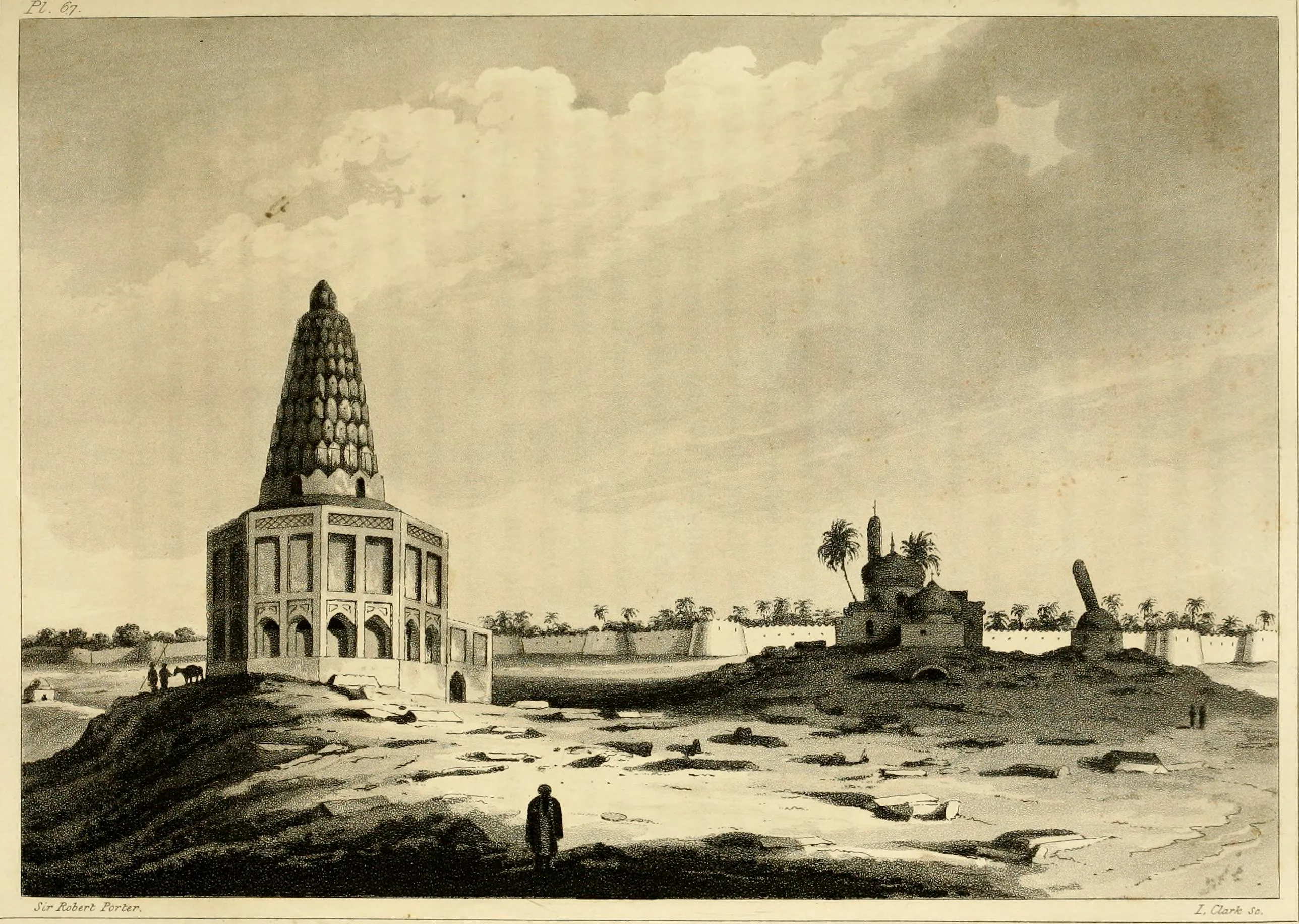
Zubaidah lived for more than two decades following the death of her son and the resolution of the civil war that had claimed his life, continuing to reside in Baghdad and, presumably, continuing to exercise the kind of independent economic and charitable activity that had characterized her earlier life, though the sources provide comparatively little detailed information regarding the specific activities of this final phase of her life. She died in Baghdad on 10 July 831 CE (26 Jumada al-Awwal 216 AH), during the reign of her former ward and adoptive son al-Ma'mun, having lived through the reigns of no fewer than four Abbasid caliphs as an adult royal woman of the innermost caliphal family circle — her father's brother al-Mahdi, her husband Harun al-Rashid, her own son al-Amin, and finally al-Ma'mun — and having witnessed both the zenith of Abbasid imperial power and cultural achievement under Harun al-Rashid and the traumatic civil war that had, for a period, threatened to tear the caliphate apart. Her tomb near Baghdad, recorded and illustrated by later travelers including the British artist and diplomat Robert Ker Porter in the early nineteenth century, remained a recognized site of historical memory associated with her name for centuries after her death.
Legacy and Historical Significance
Zubaidah bint Ja'far's historical significance rests on the distinctive combination of dynastic centrality, personal wealth and cultural sophistication, and sustained practical charitable achievement that characterized her long life at the heart of the Abbasid caliphal family during the period of its greatest power and cultural flourishing. Unlike many royal women of the medieval Islamic world whose historical presence is documented primarily through their relationships to more thoroughly recorded male relatives, Zubaidah achieved a historical prominence and a body of specifically attributed personal achievement — above all the Darb Zubaydah and the associated water infrastructure of Mecca — substantial enough to ensure that her name, quite literally, became permanently attached to a major feature of the physical landscape of the Islamic world's most sacred pilgrimage route, a form of enduring commemoration achieved by remarkably few historical figures, male or female, across the full span of Islamic history.
The specific character of Zubaidah's most celebrated achievement — the provision of water infrastructure supporting the hajj pilgrimage, one of the five pillars of Islamic religious practice and an obligation incumbent upon every capable Muslim at least once in their lifetime — situates her charitable legacy within a category of religiously significant public works of the very highest order of communal benefit, since her investment directly facilitated the safe and successful performance of religious obligation by uncounted generations of pilgrims traversing what had previously been, and to a significant degree remained even after her improvements, one of the most physically demanding and hazardous long-distance journeys undertaken by ordinary believers anywhere within the medieval Islamic world. The persistence of her name in connection with this infrastructure across more than a millennium — from Ibn Khallikan's thirteenth-century biographical notice through Ibn Battuta's fourteenth-century travel account to the continued modern use of the term Darb Zubaydah in scholarly and popular discussion of the historical hajj route — testifies to the exceptional and enduring character of the gratitude with which her contribution was remembered by the Muslim community across the many centuries during which her water works continued to serve their intended purpose.
Zubaidah's story, alongside that of Harun al-Rashid's mother al-Khayzuran, has been the subject of specific modern historical study addressing the political and economic influence exercised by prominent women within the Abbasid caliphal household, scholarship that has sought to move beyond the sometimes legendary and literary elaboration surrounding figures such as Zubaidah — elaboration exemplified above all by her appearance as a character within the One Thousand and One Nights narrative tradition — toward a more historically grounded assessment of the genuine scope of her personal wealth, independent economic agency, and practical charitable achievement, an assessment that, on the specific and well-documented evidence of the Darb Zubaydah and its associated water infrastructure, confirms that Zubaidah's historical reputation for extraordinary generosity and practical accomplishment rests on a foundation considerably more solid than legend alone, even as the more colorful anecdotal details of her household life recorded by Ibn Khallikan and other medieval biographers should, as with much biographical writing of the period, be read with appropriate awareness of the genre conventions and literary embellishment characteristic of medieval Arabic biographical and historical writing more broadly.
Zubaidah's appearance as a character within the One Thousand and One Nights, in which the historical court of Harun al-Rashid provides the setting for numerous individual tales within the larger frame narrative, reflects the broader process by which the genuinely remarkable historical culture of Abbasid Baghdad under Harun's reign became, within a few generations of its own existence, a subject of extensive literary elaboration and legendary embellishment, blending accurately remembered historical detail with imaginative literary invention in ways that can complicate the task of the modern historian seeking to distinguish reliable historical fact from later literary accretion. In Zubaidah's specific case, however, the existence of the physical infrastructure of the Darb Zubaydah itself, along with independent textual attestation across multiple historical sources spanning several centuries — from Ibn Khallikan's thirteenth-century biographical notice through Ibn Battuta's direct fourteenth-century eyewitness testimony to the continued modern use of her name in connection with the pilgrimage route — provides a form of corroborating evidence considerably more robust than exists for many other figures whose historical existence has become entangled with the literary legend of the Nights, allowing modern historians to speak with reasonable confidence regarding the genuine scale and significance of her charitable achievement even while treating certain of the more anecdotal details of her personal household life with appropriate scholarly caution.
Modern archaeological and historical geography research addressing the physical remains of the Darb Zubaydah route has, in recent decades, provided further concrete confirmation of the scale and sophistication of the infrastructure Zubaidah financed. Surveys of the route between Kufa and Mecca conducted by Saudi and international archaeologists have documented surviving remains of wells, reservoirs, and waystations along significant stretches of the historical route, some incorporated into subsequent modern water infrastructure projects and others preserved as recognized historical and archaeological sites, providing physical corroboration for the textual accounts of Zubaidah's engineering programme and allowing modern researchers to assess with increasing precision the technical sophistication and engineering methods employed in the ninth-century construction of this remarkable infrastructure. This ongoing archaeological attention to the physical remains of the Darb Zubaydah reflects the continued scholarly and popular significance attached to Zubaidah's legacy within contemporary Saudi Arabian and broader Islamic historical and heritage scholarship, more than twelve centuries after the original construction of the works that bear her name.
References and Further Reading
Primary Islamic Sources
- Al-Tabari, Muhammad ibn Jarir. The History of al-Tabari, Vol. 30: The 'Abbasid Caliphate in Equilibrium: The Caliphates of Musa al-Hadi and Harun al-Rashid, A.D. 785-809. Translated by C.E. Bosworth. Albany: State University of New York Press, 1989.
- Al-Tabari, Muhammad ibn Jarir. Continuation covering the Fourth Fitna and the reign of al-Amin, translated by Michael Fishbein as The War Between Brothers. State University of New York Press, 1992.
- Ibn Khallikan, Ahmad ibn Muhammad. Wafayat al-A'yan (Deaths of Eminent Men) — the source for the anecdote regarding Zubaidah's household and her determination to complete the Mecca water works regardless of expense
- Al-Khatib al-Baghdadi. Tarikh Baghdad — early biographical and historical notices concerning Zubaidah's life in Baghdad
Classical Islamic Sources
- Ibn Battuta. The Travels of Ibn Battutah. Translated and abridged by Tim Mackintosh-Smith. London: Picador, 2002. [Original journey 1325-1354 CE] — independent fourteenth-century eyewitness testimony to the continued functioning of Zubaidah's water infrastructure along the pilgrimage route
- Safadi, Khalil ibn Aybak al-. A'yan al-'Asr, Vol. XIV — biographical notice addressing Zubaidah's public works
- Al-Bidaya wa al-Nihaya, Vol. X — chronicle reference to Zubaidah's charitable works
Academic and Scholarly Sources
- Abbott, Nabia. Two Queens of Baghdad: Mother and Wife of Harun al-Rashid. Chicago: University of Chicago Press, 1946.
- Bobrick, Benson. The Caliph's Splendor: Islam and the West in the Golden Age of Baghdad. New York: Simon & Schuster, 2012.
- Verde, Tom. "Malika I: Khayzuran & Zubayda." Saudi Aramco World, January/February 2016.
- Al-Bassam, Abdulaziz M., and Faisal K. Zaidi. "Aqueducts in Saudi Arabia." In Underground Aqueducts Handbook, edited by Andreas N. Angelakis et al. Boca Raton: CRC Press, 2016.
- Kennedy, Hugh. When Baghdad Ruled the Muslim World: The Rise and Fall of Islam's Greatest Dynasty. Cambridge, MA: Da Capo Press, 2005.
Further Reading
- El Cheikh, Nadia Maria. "Gender and Politics in the Harem of al-Muqtadir." In Harem Histories: Envisioning Places and Living Spaces, edited by Marilyn Booth. Duke University Press, 2010.
- Mernissi, Fatima. The Forgotten Queens of Islam. Minneapolis: University of Minnesota Press, 1993.
- Ahsan, M.M. Social Life Under the Abbasids, 170-289 AH, 786-902 AD. London: Longman, 1979.
Mentioned In
1 article references this topic
More from Abbasid Caliphate
Abbasid Caliphate
The third major Islamic caliphate (750–1258 CE), centered in Baghdad. It presided over the Islamic Golden Age, with landmark advances in science, philosophy, literature, and the arts, forging a cosmopolitan empire that blended Greek, Persian, Indian, and Arab traditions.
Baghdad
Baghdad, founded in 762 CE by Caliph al-Mansur, served as the capital of the Abbasid Caliphate and became the intellectual, cultural, and economic center of the Islamic world during the Islamic Golden Age, reaching a population of over one million before its destruction by the Mongols in 1258 CE.
Islamic Urban Planning and City Development
How cities were laid out in the Islamic world from the eighth century onward, with the congregational mosque and market at the centre, streets graded from public to private, and courtyard houses built for seclusion. Baghdad, Cordoba, Cairo and Istanbul show the pattern at scale.
The Mihna
The Mihna (833–849 CE) was an inquisition begun by Caliph al-Ma'mun to enforce the Mu'tazilite doctrine that the Quran was created. Its failure, symbolized by Ahmad ibn Hanbal's resistance, established the independence of religious scholarship from political authority.