Isa ibn Musa
Isa ibn Musa (103–167 AH) was an Abbasid prince, a nephew of al-Saffah and al-Mansur, who governed Kufa and was named second heir after al-Mansur. He led the Abbasid army against Muhammad and Ibrahim in 145 AH and gave up his place in the succession in 147 and again in 160.
Isa ibn Musa ibn Muhammad ibn Ali ibn Abd Allah ibn al-Abbas (103–167 AH / c. 721–784 CE) was an Abbasid prince, a nephew of the dynasty's first two caliphs, al-Saffah and al-Mansur. He was born at al-Humayma, went to Kufa with the family during the Abbasid revolution, and governed Kufa from the first years of the new dynasty.12
Al-Saffah named him second heir, after al-Mansur, and when al-Saffah died he took the oath of allegiance for al-Mansur at al-Anbar. In 145/762 al-Mansur sent him against the Alid brothers Muhammad al-Nafs al-Zakiyya at Medina and Ibrahim ibn Abd Allah at Bakhamra, and the Encyclopaedia of Islam credits him with directing the operations against both and with winning the victory at Bakhamra.12 In 147/764 al-Mansur had his own son al-Mahdi named heir ahead of him, and in 160/776, under the caliph al-Mahdi, he gave up his place in the succession a second time, in favour of al-Mahdi's sons.12
He died at Kufa in 167/783–784; the TDV also records 168/784–785. The sources give his age at death, the way in which he came to accept the renunciation of 147, and some of the dates of his campaigns differently, and each version is told where the detail arises; the Historiographical Note sets out the differences that need explaining.123
The sources
The Encyclopaedia of Islam entries cited here are by modern scholars, among them F. Buhl, L. Veccia Vaglieri, W. Madelung, I. Goldziher and K. A. C. Creswell, and two modern reference entries are devoted to him: D. Sourdel's in the Encyclopaedia of Islam, and Abdülmün'im Mâcid's in the TDV İslâm Ansiklopedisi, which tells the life in more detail and cites the ninth- and tenth-century sources on which it rests.12 An early account appears in the history of al-Tabari, the ninth-century historian, read here in the English translation of the State University of New York series, volumes 27 to 30, with the translators' notes. Isa appears in it as a governor and army commander in the narratives of the reigns of al-Saffah, al-Mansur and al-Mahdi, and the accounts of 147 and 160 are given there in several versions.45 Ibn Kathir (701–774 AH), a later historian, records his death in the al-Bidaya wa al-nihaya, and Akbar Shah Najeebabadi's The History of Islam, which its publisher's note says was written in Urdu in 1922, tells the campaigns and the second renunciation in outline.67
Name, family and birth
The Encyclopaedia of Islam gives his lineage as Isa ibn Musa ibn Muhammad ibn Ali ibn Abd Allah ibn al-Abbas, and calls him a nephew of the first two Abbasid caliphs, al-Saffah and al-Mansur.1 Al-Tabari likewise calls him al-Saffah's nephew.8 One sentence on al-Ukhaydir in K. A. C. Creswell's entry 'Architecture' in the same encyclopaedia calls the Isa ibn Musa to whom it attributes the palace an uncle of al-Mansur.9 The TDV heading gives his kunya as Abu Musa and adds the name al-Murtada.2
The TDV states that he was born in 103 (721) at al-Humayma and brought up there, and that his father died in 108 (726), after which he grew up under the protection of Ibrahim al-Imam.2 Al-Tabari records a report from Ibrahim ibn Musa ibn Isa ibn Musa, a descendant of his, who had it from his father, that Isa was born in 103 and was forty-three years old when he fought Muhammad and Ibrahim.10 Sourdel gives the age at which he died as eighty-five, which does not agree with a birth in 103; the Historiographical Note returns to this.1
Governor of Kufa
When the Abbasid revolution reached Iraq, Isa went from al-Humayma to Kufa with his uncle al-Saffah and other members of the family, and the TDV dates the journey to 132/749.2 Al-Tabari lists him among the Abbasid family who accompanied Abu al-Abbas, al-Saffah, to Kufa, and records that al-Saffah sent his nephew to help al-Hasan ibn Qahtabah, who was besieging Ibn Hubayra, the last Umayyad governor of Iraq, at Wasit.1182 Najeebabadi names the commander as Qahtaba, where al-Tabari and the TDV name al-Hasan ibn Qahtabah.7
Al-Tabari reports, among the events of 132, that al-Saffah removed his paternal uncle Dawud ibn Ali from the governorship of Kufa and its territory, gave him Medina, Mecca, Yemen and Yamama instead, and appointed Isa in his place; in the same year Isa appointed Ibn Abi Layla judge of Kufa.4 The TDV places the appointment in the same year, 132.2 Goldziher's entry on al-Ka'ka' in the Encyclopaedia of Islam gives the span of his governorship as 132/750 to 147/764 and names his chief of police as al-Ka'ka' ibn Dirar al-Tamimi, whom al-Tabari calls al-Qa'qa' ibn Dirar, in its account of events at al-Hashimiyya near Kufa in 141.1213 Hugh Kennedy, the translator of volume 29, notes in one footnote that the governorship lasted fifteen years, and in another that al-Tabari, iii, 71, gives the appointment as 131/750, which would also make fifteen years, while the text of the same volume itself says that the governorship "lasted thirteen years" until al-Mansur removed him.1415 The sources also differ on whether Isa kept the post throughout al-Mansur's reign, a point told below under 147.
The TDV records that he led the pilgrimage in 134 (752).2
Heir after al-Mansur, 136/754
In the account al-Tabari gives under 136, al-Saffah had the oath taken to his brother Abu Ja'far, al-Mansur, as heir, with Isa ibn Musa as al-Mansur's successor; he recorded the appointments in a document, sealed it with his own seal and those of his family, and entrusted it to Isa.16 The Encyclopaedia of Islam and the TDV likewise record that al-Saffah made him second heir, after al-Mansur.12 Al-Saffah died at al-Anbar, and al-Mansur, who had led the pilgrimage that year, was in Mecca.1617 Sourdel writes that it was Isa who, at al-Anbar, administered the oath of allegiance on al-Mansur's behalf, and the TDV says the same.12
Al-Tabari's account, which stands among the events of 137, adds the particulars. Isa had placed a guard on the treasuries, storehouses and government offices by the time al-Mansur reached him at al-Anbar; the people swore allegiance to al-Mansur as caliph and then to Isa as his successor, and Isa handed authority over to al-Mansur. Isa had also sent al-Saffah's chamberlain, Abu Ghassan Yazid ibn Ziyad, to Abd Allah ibn Ali to receive his oath to al-Mansur, as al-Saffah had ordered.18 When al-Mansur and Abu Muslim came to al-Anbar, Abu Muslim invited Isa to swear allegiance to him, and Isa refused; the Encyclopaedia of Islam describes Abu Muslim as the leader of the Abbasid movement in Khurasan.1920 Later, when Abu Muslim was on the road to Khurasan, al-Mansur told Isa ibn Ali (an uncle of the first two Abbasid caliphs, according to the translator's note), Isa ibn Musa and the Banu Hashim with them to write to Abu Muslim, thanking him for what he had done, enjoining obedience and asking him to return to the caliph.21 In 143 (761) Isa led the pilgrimage again: the TDV records it, and al-Tabari names him, as governor of Kufa and its Sawad, as its leader.222
The campaign against Muhammad at Medina, 145/762
In 145/762 the Alid Muhammad al-Nafs al-Zakiyya rose against al-Mansur at Medina, and his brother Ibrahim began a rising at Basra on 1 Ramadan 145 (23 November 762), according to Veccia Vaglieri.23 Buhl writes in the Encyclopaedia of Islam that al-Mansur turned first to Medina, offered Muhammad a complete amnesty, and when that produced only an exchange of letters sent his relative Isa against him with 4,000 men, with instructions to settle the matter peacefully if he could.24 Al-Tabari gives the same figure: al-Mansur gave Isa 4,000 soldiers detached from the army and sent with him Muhammad, the son of Abu al-Abbas, that is, of al-Saffah.25 Najeebabadi names the prince Muhammad ibn al-Saffah.7 In the order of battle that al-Tabari records from a descendant of Isa, Humayd ibn Qahtabah commanded the vanguard and Muhammad, the son of Abu al-Abbas, the right flank.10
Al-Tabari reports that Isa moved his troops up to the watering place of Sulayman ibn Abd al-Malik at al-Jurf, about four miles from Medina, and that he camped at Qasr Sulayman in al-Jurf early on Saturday 12 Ramadan 145 (4 December 762, in the translator's reckoning) and stayed through Sunday; early on Monday he went out to Sal', a pass near Medina from which he could survey the city, and covered the approaches with cavalry and troops, leaving open only the way past the mosque of Abu al-Jarrah as an exit for anyone who wished to leave.2627 In the same account Isa summoned Muhammad three times, on Friday, Saturday and Sunday, to accept a guarantee of safety, and rode forward with about five hundred foot soldiers to proclaim that whoever stood under his banner, stayed in his house, entered the mosque, threw down his weapons or left Medina was safe.27 The TDV adds that Isa wrote to Muhammad and to the people of Medina promising that their lives and property would be safe if they submitted, that Muhammad replied that he was the lawful caliph and demanded Isa's obedience, and that Isa, who then besieged the city, offered safety again and received no favourable answer.2 Buhl, in the Encyclopaedia of Islam, writes that Isa offered a free pardon for a few days in vain, laid doors over the ditch Muhammad had restored, entered the town and began a battle in which Muhammad's supporters became fewer until their leader fell on Monday 14 Ramadan 145 (6 December 762).24 The TDV gives the same day and adds that part of the people of Medina were killed by the Abbasid forces and part withdrew from the fighting.2
Najeebabadi dates Medina's fall to Monday 15 Ramadan, between the afternoon and sunset prayers.7 Al-Tabari, in a report from his earlier authority Muhammad ibn Umar, says that Muhammad was killed "in the middle of the month of Ramadan in 145", and that his head was brought to Isa, who had Ibn Abi al-Karram look at it; when he recognised it Isa made a prostration, entered Medina and gave all its people an amnesty.28 Najeebabadi writes that Isa sent the head and the letter of victory to al-Mansur by the hands of Muhammad ibn Abi al-Karram and al-Qasim ibn al-Hasan ibn Zayd.7 Isa appointed Kathir ibn Husayn his deputy at Medina, and Kathir governed for one month until Abd Allah ibn al-Rabi' al-Harithi arrived for al-Mansur.28
The campaign against Ibrahim at Bakhamra, 145/762–763
Veccia Vaglieri writes in the Encyclopaedia of Islam that al-Mansur instructed Isa to break off his activity in the Hijaz after his victory over Muhammad and to march at once against Ibrahim.23 Al-Tabari gives another sequence, in a report from Muhammad ibn Umar: the letter ordering Isa to report to al-Mansur reached him after he had entered the state of consecration for the lesser pilgrimage; he abandoned that state and presented himself to the caliph, who then dispatched him with commanders, troops and weapons.29 The TDV says that Isa marched on al-Mansur's order after bringing Medina under Abbasid rule, and Najeebabadi that al-Mansur summoned Isa to Kufa, where he arrived with his own army and was then sent against Ibrahim.27 On the size of his force, al-Tabari has a report from Ibrahim ibn Musa, Isa's descendant, that al-Mansur dispatched Isa with 15,000 men and put Humayd ibn Qahtabah over a vanguard of 3,000; Najeebabadi writes that an army of 100,000 gathered at Kufa, from which Isa was sent out with Humayd in the van.307
The two armies met at Bakhamra, which al-Tabari places about sixteen farsakhs from Kufa and the TDV 95 kilometres, and which the Encyclopaedia of Islam places sixteen parasangs from it.29231 Al-Tabari reports that Humayd's vanguard was routed and the troops ran, leaving Isa with about a hundred men of his guard and retinue; when he was urged to leave the position until the troops came back, he answered, "Never shall I leave this position of mine until I am killed or God is victorious by my hand. It will not be said, 'He was routed.'"29 Veccia Vaglieri writes that Isa's vanguard was at first routed but that this first failure soon turned to victory for the government troops; the TDV says that Isa was wounded in the battle, that his army had to withdraw, and that the Abbasid forces attacked again when Ibrahim's army turned back; and Najeebabadi adds that Isa rallied his men when fresh Abbasid troops arrived behind Ibrahim.2327 Ibrahim was mortally wounded by an arrow.317
Al-Tabari gives Ibrahim's death as Monday 25 Dhu al-Qa'da 145, and reports that his head was brought to Isa, who had it identified, set it on the ground, made a prostration giving thanks and sent it to al-Mansur.32 The TDV and Najeebabadi also give 25 Dhu al-Qa'da, and Veccia Vaglieri gives the same day (14 February 763) for Ibrahim's death and 1 Dhu al-Qa'da (21 January 763) for the battle, noting that one source puts the death in Dhu al-Hijja.2723 Sourdel gives only Dhu al-Qa'da 145 (February 763) for the victory.1
The succession of 147/764
In al-Tabari's report for 147, on the authority of Ali ibn Muhammad al-Nawfali, al-Mansur handed his paternal uncle Abd Allah ibn Ali over to Isa secretly at night with orders to behead him, and Isa hid him instead of carrying out the order.142 In another report in the same entry, Abd Allah died in prison in 147 at the age of fifty-two.14
Al-Nawfali's account has al-Mansur, some months after he had given al-Mahdi precedence over Isa, removing Isa from the governorship of Kufa and appointing Muhammad ibn Sulayman ibn Ali in his place.14 The TDV agrees that Isa was removed from Kufa after he said he would not withdraw from the succession, and Najeebabadi that he was replaced by Muhammad ibn Sulayman.27 The Encyclopaedia of Islam writes instead that Isa kept his post of governor during the whole reign of al-Mansur, while Goldziher's article on al-Ka'ka' in the same work gives his governorship as running from 132/750 to 147/764.112
The sources give several accounts of how Isa came to yield precedence to al-Mahdi. The TDV and the Encyclopaedia of Islam both date the request to 147 and describe pressure. The TDV says that al-Mansur asked Isa to give up the succession in 147/764, that Isa refused and was removed from Kufa, and that under al-Mansur's pressure he had to accept al-Mahdi's succession, receiving a large sum of money for himself and his family.2 Madelung, in the Encyclopaedia of Islam, writes that al-Mahdi was made Isa's heir in 141/758–759 and that in 147/764 pressure from the caliph and from the Khurasani soldiers stationed in Iraq forced Isa to resign and accept al-Mahdi as heir apparent; Sourdel writes that he was obliged to renounce his rights in 147/764–765.331
Al-Tabari records the accounts in more detail. In one, when Isa would not give the oath to al-Mahdi, al-Mansur ordered his freedman al-Rabi' to strangle Isa's son Musa with his sword belt, and Isa, seeing al-Rabi' begin to tighten it, gave his hand for the oath; al-Mansur then asked that the succession pass to Isa after al-Mahdi, and after the caliph and the family members present pressed him Isa said, "O Commander of the Faithful, you know best."5 In another, al-Mansur spoke to the army about al-Mahdi's succession, the soldiers made Isa hear things he disliked when they saw him riding, and al-Mansur told them not to annoy his brother's son, who was "the skin that lies between my eyes", before writing to Isa.5 In a third, which al-Tabari gives from al-Aswari on the authority of al-Hasan ibn Isa the secretary, Isa refused to depose himself; Khalid ibn Barmak, taking thirty senior men of the Abbasid party with him, urged him in vain, and then told al-Mansur that Isa had agreed. When Isa denied it, the men testified that he had agreed, and al-Mansur issued the document for al-Mahdi.34 The Encyclopaedia of Islam names Khalid ibn Barmak among those who took part in the manoeuvres that led Isa to agree.35 A fourth account, from al-Walid ibn Muhammad al-Anbari, says that Salm ibn Qutayba told Isa that if he gave al-Mahdi precedence al-Mahdi would assign the succession to him afterwards; Isa agreed, the people took the oath to al-Mahdi and to Isa after him, and, in that account, al-Mansur fulfilled what he had promised.36
In a fifth account a commander recalled the day on which Isa publicly handed the position to al-Mahdi. In it Isa stated, when prompted by al-Mahdi's secretary Abu Ubayd Allah, that he had given up his precedence for ten million dirhams, three hundred thousand to be divided among his children and seven hundred thousand to one of his wives; he put his handwriting and seal to the document before the witnesses, and al-Mansur gave Isa, his son Musa and his other children robes worth more than 1,200,000 dirhams.15 Al-Tabari also gives the text of a letter from Isa in reply to one from al-Mansur, in which Isa speaks of what al-Mansur had "begun in cutting me out".37
Madelung writes in the Encyclopaedia of Islam that in the schism of the Abbasid Shi'a in 147/764 one party held al-Mansur's displacement of Isa unlawful and recognised Isa and later some of his descendants as imams, while the other held it lawful because Isa had agreed to sell his rights.20
Sourdel and the TDV agree that Isa remained second heir after al-Mahdi, and the TDV adds that in 151 (768) al-Mansur had the oath taken again for himself, for al-Mahdi and for Isa, and that at the ceremony the hands of the caliph and of al-Mahdi were kissed while Isa's was only held.12
At al-Mansur's death, 158/775
Najeebabadi writes that al-Mansur died on 6 Dhu al-Hijja 158 at Batan, three miles from Mecca, and that on the next day Isa ibn Musa, with other members of the family, was called to the court, where al-Rabi' announced the death.7 He adds that Isa at first refused to swear allegiance to al-Mahdi through the deputy named for the oath, that Ali ibn Isa ibn Mahan told him that he would cut off his head if he refused, and that Isa then took the oath.7 He also writes that Isa led the funeral prayer, and al-Tabari records that al-Waqidi said that Isa prayed over al-Mansur at Shi'b al-Khuz; it also gives a report from Ali ibn Muhammad al-Nawfali that Ibrahim ibn Yahya prayed over him in the tents, because al-Rabi' said that no one who was aspiring to the caliphate should do so.738
The renunciation of 160/776
Najeebabadi and al-Tabari both describe Isa as living quietly in the years of al-Mahdi's reign. In one report in al-Tabari, Isa had an estate at al-Rahba and entered Kufa for the Friday prayer only at certain times of the year; later he bought the house of the heirs of al-Mukhtar ibn Abi Ubayd beside the mosque of Kufa, refurbished it, and made Kufa his home.397
The Encyclopaedia of Islam writes that in Muharram 160 (October–November 776) al-Mahdi pressed Isa to renounce his rights in favour of al-Mahdi's own son Musa, the future al-Hadi, and the TDV that Isa, forced by al-Mahdi, gave up the succession for money in favour of al-Mahdi's sons Musa al-Hadi and Harun al-Rashid.12 Al-Tabari gives two accounts of the pressure. In the first, which it ascribes to Umar, Isa refused to resign when asked; al-Mahdi appointed Rawh ibn Hatim governor of Kufa and Khalid ibn Yazid over its police, and told Isa that he would be treated as a rebel unless he renounced his rights so that the oath could be taken to Musa and Harun, promising him compensation instead; Isa agreed, swore allegiance to the two, and al-Mahdi ordered ten million dirhams for him and numerous estates.39 In the other account, from someone other than Umar, Isa suspected al-Mahdi's intentions and would not come to Baghdad when ordered; al-Mahdi sent his uncle al-Abbas ibn Muhammad, and then the commander Muhammad ibn Farrukh Abu Hurayra with a thousand men who beat drums on entering Kufa, and Isa, who said he was ill, was taken to the City of Peace.39 He arrived with Abu Hurayra on Thursday 6 Muharram, and stayed in a house of Muhammad ibn Sulayman on the Tigris.40 Najeebabadi says that al-Mahdi sent first for Isa by letters and by his uncle Abbas, then by two commanders, and that Isa was lodged with Muhammad ibn Sulayman and that Muhammad ibn Sulayman wanted to compel him to abdicate; Isa made excuses on account of the oath he had sworn at the succession, and al-Mahdi called the legal scholars, who ruled that he might retire after paying compensation for breaking his oath.7
According to al-Tabari, Isa remained confined with al-Mahdi in the House of the Diwan at al-Rusafa until he accepted the deposition on Wednesday 26 Muharram, and swore allegiance to al-Mahdi and then to Musa on the morning of Thursday 27 Muharram.40 Najeebabadi gives 26 Muharram 160 as the day he retired, with an oath to al-Hadi, and says al-Mahdi announced it publicly the next day.7 Al-Tabari gives the compensation as ten million dirhams and the estates of the Upper Zab and Kaskar; Najeebabadi gives 10,000 dirhams and the estates at Zab and Kaskar, and the TDV a large sum.4072
Al-Mahdi then had a letter of resignation written for Isa and witnessed by the people of his household, his courtiers and party, his secretaries and the soldiers on the registers. The letter, which al-Tabari gives in full, records that Isa renounced the covenant and oath that had been his, swore allegiance to al-Mahdi and to Musa, and bound himself, if he broke it, to the divorce of his wives, the freeing of his slaves, the giving of his wealth as alms and a walk barefoot from the City of Peace to the Ka'ba for thirty years. It states that four hundred and thirty members of the Banu Hashim, freedmen, Quraysh courtiers, ministers, secretaries and judges witnessed it, and that it was written in Safar 160 and sealed by Isa.41
Last years and death, 167/783–784
The sources give his death at Kufa in 167: Sourdel writes 167/783–784, Ibn Kathir, who records him under the year 167 as the man who had been heir after al-Mahdi and had been removed, gives the same year, and al-Tabari places it among the events of 167, in the year that began on 5 August 783 according to its translator.163 The TDV gives 167 (783) and adds that 168 (784–785) is also recorded.2
Al-Tabari and Ibn Kathir agree on what followed. Rawh ibn Hatim, who was governor of Kufa, called on the judge and a body of the principal people to witness Isa's death, and Isa was then buried; al-Tabari adds that the witnesses were to attest that he had died of natural causes.36 Ibn Kathir records that Rawh had refused to pray over him, that al-Mahdi heard of it and wrote to Rawh in the sharpest terms, and that he ordered him called to account for his work.6
Baghdad, al-Ukhaydir and his poetry
The TDV records that a palace of his stood in Baghdad and that the canal known as Nahr Isa is attributed to him; Sourdel likewise mentions the chroniclers' report of a palace that had been his and passed to the descendants of the caliph al-Mamun, and says that certain sources connect the name Nahr Isa with him.21 The translator of al-Tabari's volume 28, Jane Dammen McAuliffe, instead identifies the canal Nahr Isa as named for Isa ibn Ali, an uncle of the first two Abbasid caliphs, and says that it marked the southern limit of Baghdad.21
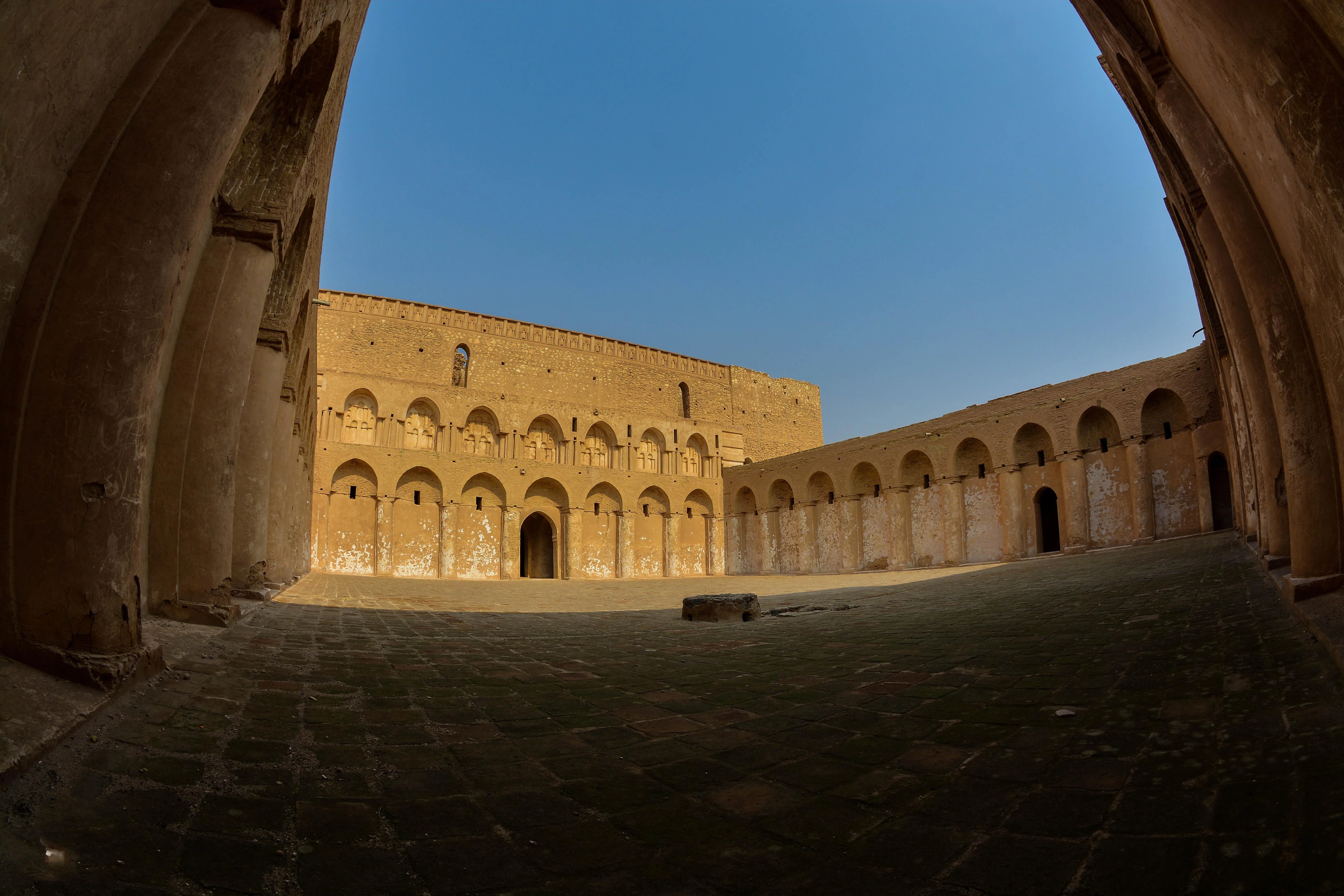
The foundation of the castle of al-Ukhaydir, in the steppe not far from Kufa, is generally attributed to Isa, in Sourdel's words, and the TDV likewise records that the castle was built by him.12 Sourdel adds that the castle has a strategic importance, and the TDV that it was built at a strategic point near Kufa.12
The TDV states that he also composed poetry and that some of his poems have survived, and cites Abu Bakr al-Suli's anthology of the poetry of the sons of caliphs for them.2
Family
A translator's note in al-Tabari's volume 30 identifies Ali ibn Isa ibn Musa as a son who had been governor of Medina and who died on a raid into Byzantine territory in the events of 187, accompanying al-Qasim.42
Historiographical Note
Each difference of detail between the sources is given in the text where the detail is told, attributed to its source. This note explains the ones that need it.
His birth and age. The TDV and al-Tabari (from Isa's descendant Ibrahim ibn Musa) give his birth as 103, and al-Tabari gives his age as forty-three in 145. Sourdel gives his age at death as eighty-five; with a death in 167, that age would place his birth about 82 AH. The two statements do not agree. The article gives 103 as the year two sources state, gives Sourdel's age as his, and takes the dates in the frontmatter from the first.2101
His relationship to al-Mansur. Sourdel's lineage, the TDV and al-Tabari make him a nephew of al-Saffah and al-Mansur; Creswell's sentence on al-Ukhaydir calls him an uncle of al-Mansur. The article follows the first group, which agrees with the lineage the Encyclopaedia of Islam gives for him elsewhere.1289
The governorship of Kufa. Its start is 132 in the TDV and Goldziher and 131 in Kennedy's note, citing al-Tabari; its length is fifteen years in Kennedy's notes and thirteen in al-Tabari's text; and it ends in 147 in Goldziher, the TDV and al-Tabari's account of 147, whereas Sourdel has Isa keep the post throughout al-Mansur's reign. The article gives each as its source states it.21215141
The day Muhammad was killed. Buhl and the TDV give Monday 14 Ramadan 145, which agrees with al-Tabari's account of Isa's camp on Saturday 12 Ramadan and his advance on the Monday; Najeebabadi gives Monday 15, and one report in al-Tabari says only the middle of the month.24227728
Bakhamra. Veccia Vaglieri gives 1 Dhu al-Qa'da 145 (21 January 763) for the battle and 25 Dhu al-Qa'da (14 February 763) for Ibrahim's death, and Sourdel gives only Dhu al-Qa'da 145 (February 763) for the victory. The TDV says Isa was wounded; al-Tabari's account has him staying in position with about a hundred men and records no wound.231229
The succession of 147. Al-Tabari, the Encyclopaedia of Islam and the TDV describe the pressure on Isa in different terms, and al-Tabari itself gives five accounts that differ on what was said, who was present and what was paid. Madelung dates al-Mahdi's designation as heir to 141, and the other sources date the pressure on Isa to 147. For Abd Allah ibn Ali, al-Tabari gives the account in which al-Mansur ordered Isa to kill him beside the report that he died in prison, and does not decide between them.233534361514
The renunciation of 160. The beneficiaries are Musa in Sourdel and in the oath and letter reported by al-Tabari (which also name al-Mahdi), and Musa and Harun in the TDV and in the account ascribed to Umar in al-Tabari. The compensation is ten million dirhams in al-Tabari, 10,000 in Najeebabadi and a large sum in the TDV. Kennedy's Gregorian equivalents for Thursday 6 and Wednesday 26 Muharram are thirty days apart, not twenty, so the article gives the days of the Hijri month only.3940721
The canal Nahr Isa. The TDV and Sourdel connect it with Isa ibn Musa, and McAuliffe names it for Isa ibn Ali.2121
See also
- Abu Ja'far al-Mansur — the caliph who named him second heir and later displaced him
- Muhammad al-Nafs al-Zakiyya — the Alid claimant against whom he led the army at Medina in 145/762
- The Abbasid Caliphate — the dynasty of al-Saffah, al-Mansur and al-Mahdi
- Kufa — the city he governed and where he died
- Baghdad — the city al-Mansur founded, where Isa had a palace according to the TDV
- Harun al-Rashid — one of the two sons of al-Mahdi named in the renunciation of 160
References
Citations
Footnotes
-
D. Sourdel, ''Isa b. Musa b. Muhammad b. Ali b. Abd Allah b. al-Abbas', The Encyclopaedia of Islam, new edition, vol. 4 — the dedicated entry: his lineage and place as nephew of the first two Abbasid caliphs, the governorship of Kufa, his place as second heir, the oath at al-Anbar, the operations against Muhammad and Ibrahim, the renunciations of 147 and 160, his death and his age, his palace, Nahr Isa and the attribution of al-Ukhaydir. ↩ ↩2 ↩3 ↩4 ↩5 ↩6 ↩7 ↩8 ↩9 ↩10 ↩11 ↩12 ↩13 ↩14 ↩15 ↩16 ↩17 ↩18 ↩19 ↩20 ↩21 ↩22 ↩23 ↩24
-
Abdülmün'im Mâcid, 'Îsâ b. Mûsâ', TDV İslâm Ansiklopedisi, vol. 22 (Istanbul, 2000), p. 482 — the dedicated entry: his birth and upbringing, the journey to Kufa, the governorship, the pilgrimages, the campaigns against Muhammad and Ibrahim, the succession of 147, the oath of 151, the renunciation of 160, his death, his palace, Nahr Isa, al-Ukhaydir and his poetry; https://islamansiklopedisi.org.tr/isa-b-musa, register entry 2, islamansiklopedisi.org.tr. ↩ ↩2 ↩3 ↩4 ↩5 ↩6 ↩7 ↩8 ↩9 ↩10 ↩11 ↩12 ↩13 ↩14 ↩15 ↩16 ↩17 ↩18 ↩19 ↩20 ↩21 ↩22 ↩23 ↩24 ↩25 ↩26 ↩27 ↩28 ↩29 ↩30 ↩31 ↩32 ↩33 ↩34 ↩35 ↩36 ↩37 ↩38 ↩39
-
Al-Tabari, The History of al-Tabari, vol. 29, Al-Mansur and al-Mahdi, translated by Hugh Kennedy, pp. 236–237 (Leiden iii 519–520) — the events of 167: Isa's death at Kufa, the witnesses Rawh ibn Hatim called, and the burial — https://archive.org/details/tabarivolume29, register entry 12, archive.org. ↩ ↩2 ↩3
-
Al-Tabari, The History of al-Tabari, vol. 27, The 'Abbasid Revolution, translated by John Alden Williams, p. 195 (Leiden iii 71) — Isa appointed governor of Kufa in place of Dawud ibn Ali, and Ibn Abi Layla as judge of Kufa — https://archive.org/details/tabarivolume27, register entry 12, archive.org. ↩ ↩2
-
Al-Tabari, The History of al-Tabari, vol. 29, Al-Mansur and al-Mahdi, translated by Hugh Kennedy, pp. 23–24 (Leiden iii 338) — the accounts in which al-Mansur obtained Isa's oath to al-Mahdi and the army's treatment of Isa — https://archive.org/details/tabarivolume29, register entry 12, archive.org. ↩ ↩2 ↩3 ↩4
-
Ibn Kathir, al-Bidaya wa al-nihaya, edited by Abd Allah ibn Abd al-Muhsin al-Turki (Dar Hajr), xiii, 532 — the events of 167: Isa's death at Kufa, the witnesses Rawh ibn Hatim called, the burial, and al-Mahdi's letter to Rawh; https://shamela.ws/book/4445/8200, register entry 4, shamela.ws. ↩ ↩2 ↩3 ↩4
-
Akbar Shah Najeebabadi, The History of Islam, vol. 2 (Riyadh: Darussalam) — the campaigns of 145; the succession of 147 and Isa's removal from Kufa; the oath after al-Mansur's death on 6 Dhu al-Hijja 158; the funeral prayer; and the renunciation of 160; library copy, cited by title and author. ↩ ↩2 ↩3 ↩4 ↩5 ↩6 ↩7 ↩8 ↩9 ↩10 ↩11 ↩12 ↩13 ↩14 ↩15 ↩16 ↩17 ↩18 ↩19 ↩20
-
Al-Tabari, The History of al-Tabari, vol. 27, The 'Abbasid Revolution, translated by John Alden Williams, p. 161 — al-Saffah's nephew Isa sent to al-Hasan ibn Qahtabah, who was besieging Ibn Hubayra at Wasit — https://archive.org/details/tabarivolume27, register entry 12, archive.org. ↩ ↩2 ↩3
-
K. A. C. Creswell, 'Architecture', The Encyclopaedia of Islam, new edition, vol. 1 — the sentence on al-Ukhaydir that calls Isa ibn Musa an uncle of al-Mansur. ↩ ↩2
-
Al-Tabari, The History of al-Tabari, vol. 28, 'Abbasid Authority Affirmed, translated by Jane Dammen McAuliffe, p. 201 (Leiden iii 238) — the report from Isa's descendant Ibrahim ibn Musa on his birth in 103, and the order of battle — https://archive.org/details/tabarivolume28, register entry 12, archive.org. ↩ ↩2 ↩3
-
Al-Tabari, The History of al-Tabari, vol. 27, The 'Abbasid Revolution, translated by John Alden Williams, p. 157 (Leiden iii 33) — Isa named among the Abbasid family travelling to Kufa with Abu al-Abbas — https://archive.org/details/tabarivolume27, register entry 12, archive.org. ↩
-
I. Goldziher, 'al-Ka'ka'', The Encyclopaedia of Islam, new edition, vol. 4 — al-Ka'ka' ibn Dirar al-Tamimi, chief of Isa's police, and the span 132/750 to 147/764 given for the governorship of Kufa. ↩ ↩2 ↩3
-
Al-Tabari, The History of al-Tabari, vol. 28, 'Abbasid Authority Affirmed, translated by Jane Dammen McAuliffe, p. 65 (Leiden iii 130–131) — al-Qa'qa' ibn Dirar, chief of Isa's police, in the events at al-Hashimiyya in 141 — https://archive.org/details/tabarivolume28, register entry 12, archive.org. ↩
-
Al-Tabari, The History of al-Tabari, vol. 29, Al-Mansur and al-Mahdi, translated by Hugh Kennedy, pp. 15–17 (Leiden iii 329–331) — the death of Abd Allah ibn Ali, the accounts of how he was handed to Isa and of his death in prison, Isa's removal from Kufa, and the translator's note on his fifteen years — https://archive.org/details/tabarivolume29, register entry 12, archive.org. ↩ ↩2 ↩3 ↩4 ↩5 ↩6
-
Al-Tabari, The History of al-Tabari, vol. 29, Al-Mansur and al-Mahdi, translated by Hugh Kennedy, p. 38 (Leiden iii 351–352) — the commander's account of the document and the sums paid, the robes given to Isa and his children, and the length of the governorship of Kufa — https://archive.org/details/tabarivolume29, register entry 12, archive.org. ↩ ↩2 ↩3 ↩4
-
Al-Tabari, The History of al-Tabari, vol. 27, The 'Abbasid Revolution, translated by John Alden Williams, p. 212 — the oath to al-Mansur with Isa as his successor, the sealed document entrusted to Isa, and al-Saffah's death at al-Anbar — https://archive.org/details/tabarivolume27, register entry 12, archive.org. ↩ ↩2
-
Al-Tabari, The History of al-Tabari, vol. 28, 'Abbasid Authority Affirmed, translated by Jane Dammen McAuliffe, p. 6 — al-Mansur leading the pilgrimage in this year, and Isa as governor of Kufa — https://archive.org/details/tabarivolume28, register entry 12, archive.org. ↩
-
Al-Tabari, The History of al-Tabari, vol. 28, 'Abbasid Authority Affirmed, translated by Jane Dammen McAuliffe, p. 8 — Isa's guard on the treasuries, the oath to al-Mansur and then to Isa at al-Anbar, and Abu Ghassan sent to Abd Allah ibn Ali — https://archive.org/details/tabarivolume28, register entry 12, archive.org. ↩
-
Al-Tabari, The History of al-Tabari, vol. 28, 'Abbasid Authority Affirmed, translated by Jane Dammen McAuliffe, pp. 20–21 (Leiden iii 100) — Abu Muslim at al-Anbar inviting Isa to swear allegiance to him — https://archive.org/details/tabarivolume28, register entry 12, archive.org. ↩
-
W. Madelung, 'Kaysaniyya', The Encyclopaedia of Islam, new edition, vol. 4 — Abu Muslim as the leader of the Abbasid movement in Khurasan, and the two Abbasid Shi'i parties of 147/764. ↩ ↩2
-
Al-Tabari, The History of al-Tabari, vol. 28, 'Abbasid Authority Affirmed, translated by Jane Dammen McAuliffe, p. 27 (Leiden iii 104–105) — al-Mansur's instruction to Isa ibn Ali, Isa ibn Musa and the Banu Hashim to write to Abu Muslim, and the translator's note on Nahr Isa — https://archive.org/details/tabarivolume28, register entry 12, archive.org. ↩ ↩2 ↩3
-
Al-Tabari, The History of al-Tabari, vol. 28, 'Abbasid Authority Affirmed, translated by Jane Dammen McAuliffe, p. 83 (Leiden iii 142) — Isa as governor of Kufa and its Sawad leading the pilgrimage in 143 — https://archive.org/details/tabarivolume28, register entry 12, archive.org. ↩
-
L. Veccia Vaglieri, 'Ibrahim b. Abd Allah', The Encyclopaedia of Islam, new edition, vol. 3 — the rising at Basra, al-Mansur's order to Isa to march against Ibrahim, the rout of the vanguard at Bakhamra and the dates of the battle and of Ibrahim's death. ↩ ↩2 ↩3 ↩4 ↩5
-
F. Buhl, 'Muhammad b. Abd Allah b. al-Hasan', The Encyclopaedia of Islam, new edition, vol. 7 — the 4,000 men sent against Muhammad, the instruction to settle the matter peacefully, the offer of pardon, the crossing of the ditch and the day of Muhammad's death. ↩ ↩2 ↩3
-
Al-Tabari, The History of al-Tabari, vol. 28, 'Abbasid Authority Affirmed, translated by Jane Dammen McAuliffe, p. 185 (Leiden iii 223) — the 4,000 soldiers given to Isa and Muhammad, the son of Abu al-Abbas, sent with him — https://archive.org/details/tabarivolume28, register entry 12, archive.org. ↩
-
Al-Tabari, The History of al-Tabari, vol. 28, 'Abbasid Authority Affirmed, translated by Jane Dammen McAuliffe, p. 194 (Leiden iii 231–232) — Isa's move to the watering place of Sulayman ibn Abd al-Malik at al-Jurf — https://archive.org/details/tabarivolume28, register entry 12, archive.org. ↩
-
Al-Tabari, The History of al-Tabari, vol. 28, 'Abbasid Authority Affirmed, translated by Jane Dammen McAuliffe, p. 197 (Leiden iii 233–234) — the camp at Qasr Sulayman, the survey from Sal', the three summonses and the guarantee of safety — https://archive.org/details/tabarivolume28, register entry 12, archive.org. ↩ ↩2 ↩3
-
Al-Tabari, The History of al-Tabari, vol. 28, 'Abbasid Authority Affirmed, translated by Jane Dammen McAuliffe, pp. 231–232 (Leiden iii 265–266) — Muhammad killed in the middle of Ramadan, his head brought to Isa, and Kathir ibn Husayn as deputy at Medina — https://archive.org/details/tabarivolume28, register entry 12, archive.org. ↩ ↩2 ↩3
-
Al-Tabari, The History of al-Tabari, vol. 28, 'Abbasid Authority Affirmed, translated by Jane Dammen McAuliffe, pp. 286–287 (Leiden iii 312–313) — the summons while Isa was in the state of consecration, the distance to Bakhamra, the rout of the vanguard and Isa's answer — https://archive.org/details/tabarivolume28, register entry 12, archive.org. ↩ ↩2 ↩3 ↩4
-
Al-Tabari, The History of al-Tabari, vol. 28, 'Abbasid Authority Affirmed, translated by Jane Dammen McAuliffe, p. 283 (Leiden iii 308–309) — Isa dispatched against Ibrahim with 15,000 men and a vanguard of 3,000 under Humayd ibn Qahtabah — https://archive.org/details/tabarivolume28, register entry 12, archive.org. ↩
-
M. Streck and S. H. Longrigg, 'Bakhamra', The Encyclopaedia of Islam, new edition, vol. 1 — the place and its distance from Kufa, and the battle fought there under Isa in which Ibrahim was fatally wounded by an arrow. ↩ ↩2
-
Al-Tabari, The History of al-Tabari, vol. 28, 'Abbasid Authority Affirmed, translated by Jane Dammen McAuliffe, p. 289 (Leiden iii 316) — Ibrahim's head brought to Isa, and the day of Ibrahim's death — https://archive.org/details/tabarivolume28, register entry 12, archive.org. ↩
-
W. Madelung, 'al-Mahdi', The Encyclopaedia of Islam, new edition, vol. 5 — al-Mahdi's designation as Isa's heir in 141/758–759 and the pressure that forced Isa to resign in 147/764. ↩ ↩2
-
Al-Tabari, The History of al-Tabari, vol. 29, Al-Mansur and al-Mahdi, translated by Hugh Kennedy, pp. 32–33 (Leiden iii 346) — the account of Khalid ibn Barmak and the thirty men of the Abbasid party — https://archive.org/details/tabarivolume29, register entry 12, archive.org. ↩ ↩2
-
W. Barthold and D. Sourdel, 'al-Baramika', The Encyclopaedia of Islam, new edition, vol. 1 — Khalid ibn Barmak's part in the manoeuvres that led Isa to renounce his rights in 147/764–765. ↩
-
Al-Tabari, The History of al-Tabari, vol. 29, Al-Mansur and al-Mahdi, translated by Hugh Kennedy, p. 37 (Leiden iii 350–351) — the account of Salm ibn Qutayba's promise to Isa — https://archive.org/details/tabarivolume29, register entry 12, archive.org. ↩ ↩2
-
Al-Tabari, The History of al-Tabari, vol. 29, Al-Mansur and al-Mahdi, translated by Hugh Kennedy, p. 29 — Isa's letter in reply to al-Mansur — https://archive.org/details/tabarivolume29, register entry 12, archive.org. ↩
-
Al-Tabari, The History of al-Tabari, vol. 29, Al-Mansur and al-Mahdi, translated by Hugh Kennedy, pp. 91–92 (Leiden iii 389–391) — the funeral prayer for al-Mansur according to al-Waqidi and according to Ali ibn Muhammad al-Nawfali — https://archive.org/details/tabarivolume29, register entry 12, archive.org. ↩
-
Al-Tabari, The History of al-Tabari, vol. 29, Al-Mansur and al-Mahdi, translated by Hugh Kennedy, pp. 177–179 (Leiden iii 467–469) — the agitation against Isa in 159, his estate at al-Rahba, the two accounts of the pressure from al-Mahdi, and the sum offered — https://archive.org/details/tabarivolume29, register entry 12, archive.org. ↩ ↩2 ↩3 ↩4
-
Al-Tabari, The History of al-Tabari, vol. 29, Al-Mansur and al-Mahdi, translated by Hugh Kennedy, pp. 182–183 (Leiden iii 471–473) — Isa's arrival with Abu Hurayra, his confinement at al-Rusafa, the compensation, and the oaths of 26 and 27 Muharram — https://archive.org/details/tabarivolume29, register entry 12, archive.org. ↩ ↩2 ↩3 ↩4
-
Al-Tabari, The History of al-Tabari, vol. 29, Al-Mansur and al-Mahdi, translated by Hugh Kennedy, pp. 184–186 — the letter of resignation and its penalty clauses, and the witnesses — https://archive.org/details/tabarivolume29, register entry 12, archive.org. ↩
-
Al-Tabari, The History of al-Tabari, vol. 30, The 'Abbasid Caliphate in Equilibrium, translated by C. E. Bosworth, p. 239 (Leiden iii 695) — the translator's note on Ali ibn Isa ibn Musa, and the report of his death in 187 — https://archive.org/details/tabarivolume30, register entry 12, archive.org. ↩
Sources
Works in the approved library. Cited by title and author, and by the entry used.
- Bearman, P. J., et al., eds. The Encyclopaedia of Islam, new (second) edition — D. Sourdel, ''Isa b. Musa b. Muhammad b. Ali b. Abd Allah b. al-Abbas' (vol. 4); I. Goldziher, 'al-Ka'ka'' (vol. 4); W. Madelung, 'Kaysaniyya' (vol. 4); L. Veccia Vaglieri, 'Ibrahim b. Abd Allah' (vol. 3); M. Streck and S. H. Longrigg, 'Bakhamra' (vol. 1); W. Barthold and D. Sourdel, 'al-Baramika' (vol. 1); K. A. C. Creswell, 'Architecture' (vol. 1); W. Madelung, 'al-Mahdi' (vol. 5); F. Buhl, 'Muhammad b. Abd Allah b. al-Hasan' (vol. 7).
- Najeebabadi, Akbar Shah. The History of Islam, vol. 2. Riyadh: Darussalam.
Classical work read at Shamela (register entry 4, shamela.ws).
- Ibn Kathir. Al-Bidaya wa al-nihaya, edited by Abd Allah ibn Abd al-Muhsin al-Turki, vol. 13. Dar Hajr, 1417–1420 AH.
Read at archive.org (register entry 12, archive.org).
- Al-Tabari. The History of al-Tabari, vol. 27: The 'Abbasid Revolution, translated by John Alden Williams. Albany: State University of New York Press, 1985.
- Al-Tabari. The History of al-Tabari, vol. 28: 'Abbasid Authority Affirmed: The Early Years of al-Mansur, translated by Jane Dammen McAuliffe. Albany: State University of New York Press, 1995.
- Al-Tabari. The History of al-Tabari, vol. 29: Al-Mansur and al-Mahdi, translated by Hugh Kennedy. Albany: State University of New York Press, 1990.
- Al-Tabari. The History of al-Tabari, vol. 30: The 'Abbasid Caliphate in Equilibrium, translated by C. E. Bosworth. Albany: State University of New York Press, 1989.
Encyclopaedia entry read at the TDV (register entry 2, islamansiklopedisi.org.tr).
- Mâcid, Abdülmün'im. 'Îsâ b. Mûsâ'. TDV İslâm Ansiklopedisi, vol. 22. Istanbul, 2000.
Further reading
Offered to the reader for further study. Nothing in this article rests on the works below beyond what the sources above record of them.
- Al-Baladhuri. Ansab al-ashraf — cited in the TDV's bibliography for Isa ibn Musa.
- Al-Ya'qubi. Tarikh — cited in the TDV's bibliography and by Sourdel.
- Ibn al-Athir. Al-Kamil fi al-tarikh — cited in the TDV's bibliography and by Sourdel.
- Abu al-Faraj al-Isfahani. Maqatil al-Talibiyyin — cited in the TDV's bibliography.
- Al-Suli. Ash'ar awlad al-khulafa' — the anthology of the poetry of the sons of caliphs that the TDV cites for Isa's verse.
- Ibn Asakir. Tarikh madinat Dimashq — cited in the TDV's bibliography for his birth and upbringing.
- Caskel, W. Study in Islam, vol. 39 (1964), cited by Sourdel and the TDV in connection with al-Ukhaydir.
External links
Approved sources only, each with its number on the Register of Approved External Web Sources.
- Îsâ b. Mûsâ — the TDV İslâm Ansiklopedisi, register entry 2, islamansiklopedisi.org.tr: the dedicated entry, in Turkish
- Ibn Kathir, al-Bidaya wa al-nihaya, the events of 167 — register entry 4, shamela.ws: in Arabic
- Al-Tabari, The History of al-Tabari, vol. 29 — register entry 12, archive.org: the translation by Hugh Kennedy, with the accounts of 147, 158, 160 and 167
- Al-Tabari, The History of al-Tabari, vol. 28 — register entry 12, archive.org: the translation by Jane Dammen McAuliffe, with the campaigns of 145
Mentioned In
3 articles reference this topic
More from Abbasid Caliphate
Abbasid Caliphate
The third major Islamic caliphate (750–1258 CE), centered in Baghdad. It presided over the Islamic Golden Age, with landmark advances in science, philosophy, literature, and the arts, forging a cosmopolitan empire that blended Greek, Persian, Indian, and Arab traditions.
Baghdad
Baghdad, founded in 762 CE by Caliph al-Mansur, served as the capital of the Abbasid Caliphate and became the intellectual, cultural, and economic center of the Islamic world during the Islamic Golden Age, reaching a population of over one million before its destruction by the Mongols in 1258 CE.
Islamic Urban Planning and City Development
How cities were laid out in the Islamic world from the eighth century onward, with the congregational mosque and market at the centre, streets graded from public to private, and courtyard houses built for seclusion. Baghdad, Cordoba, Cairo and Istanbul show the pattern at scale.
The Mihna
The Mihna (833–849 CE) was an inquisition begun by Caliph al-Ma'mun to enforce the Mu'tazilite doctrine that the Quran was created. Its failure, symbolized by Ahmad ibn Hanbal's resistance, established the independence of religious scholarship from political authority.