Jabir ibn Hayyan
Jabir ibn Hayyan, known in the Latin West as Geber, is the name attached to the founding corpus of Arabic chemical writing, which shaped Islamic science and medieval alchemy. Tradition places him at the early Abbasid court; modern scholarship dates the corpus later and doubts a single author.
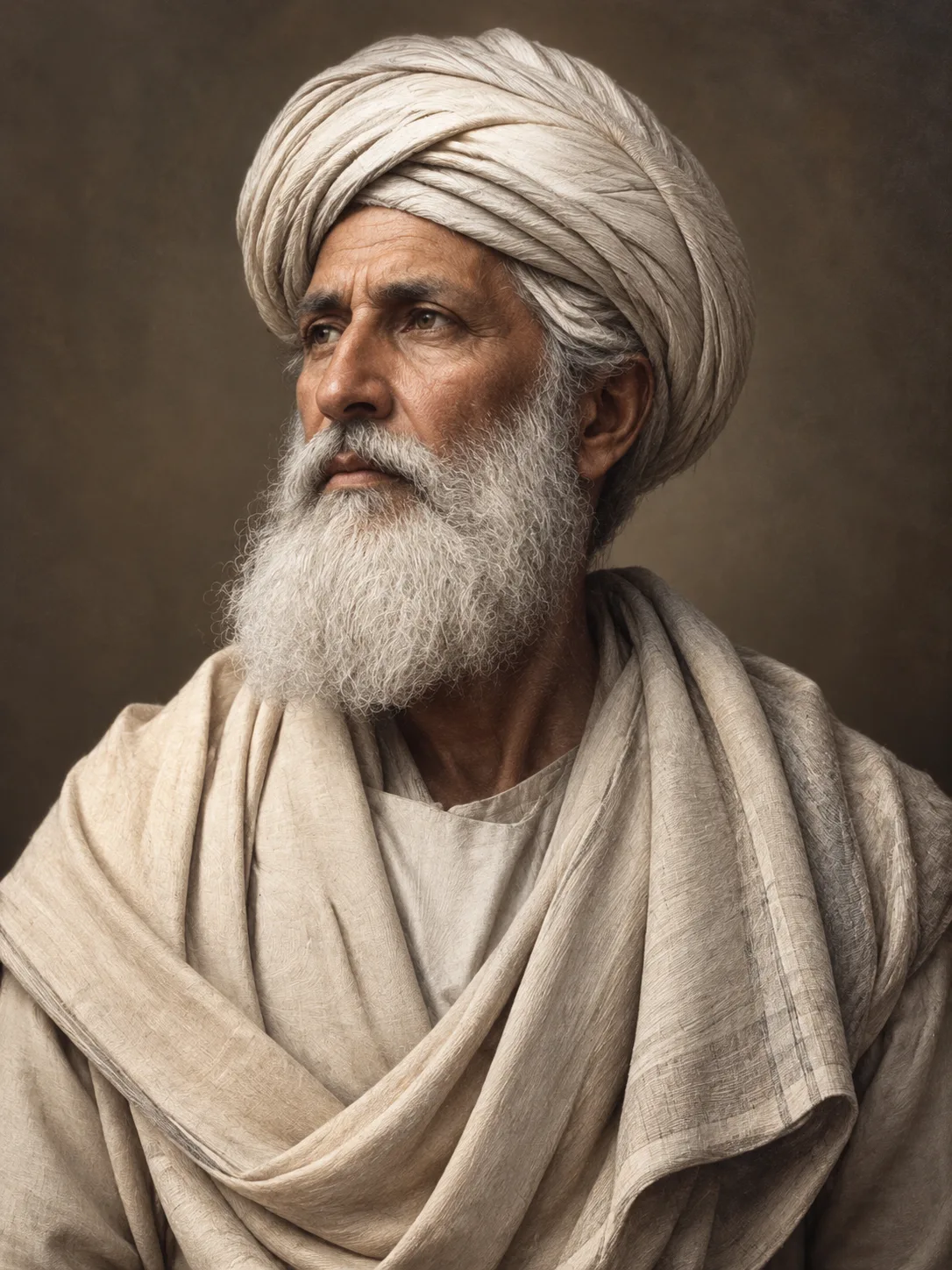
Abu Musa Jabir ibn Hayyan (traditionally c. 721–815 CE / 103–200 AH), known in the Latin West as Geber, is the name attached to one of the most consequential bodies of writing in the history of chemistry. The corpus that bears it transformed the ancient practice of alchemy from a tradition of mystical speculation and craft knowledge into something approaching a systematic experimental science: it describes laboratory apparatus, sets out chemical processes with unprecedented precision, classifies substances by their observable properties, and organises the whole into a body of work that would be studied and built upon for centuries.
Who wrote it is a genuinely open question, and this article treats it as one. The traditional account, set out below, places Jabir at the court of the early Abbasid Caliphate in a period of extraordinary intellectual vitality. Modern scholarship, beginning with Paul Kraus in the 1940s, dates the writings to the ninth and tenth centuries — too late for the man the tradition describes — and holds that they are the work of a group rather than an individual, with the existence of a historical Jabir itself in doubt. Doubts of this kind are not a modern invention: they were already being recorded in the tenth century. The article accordingly distinguishes throughout between the traditional biography, the contents of the corpus, and the claims that later authors in Europe made under Jabir's name.
His influence extended far beyond the Islamic world. When his treatises were translated into Latin in the twelfth and thirteenth centuries, they became foundational texts for European alchemy and early chemistry. The name "Geber" became synonymous with chemical authority in medieval Europe, and the word "gibberish" — a term for obscure or unintelligible language — may derive from the deliberately cryptic style of some texts attributed to him. More concretely, the Arabic words he and his contemporaries used for chemical substances entered European languages: al-kohl became alcohol, al-qali became alkali, al-iksir became elixir. The vocabulary of chemistry still carries the traces of his world.
Historical Context: Alchemy Before Jabir
To appreciate what Jabir achieved, it helps to understand what alchemy was before him. The alchemical tradition that Jabir inherited was ancient and multicultural, drawing on Egyptian craft knowledge, Greek philosophical speculation, Persian and Indian practical chemistry, and Hellenistic mystical traditions. It was a tradition that sought to understand the nature of matter — particularly the possibility of transforming base metals into gold — and to discover substances of extraordinary power, including the legendary elixir of life.
This tradition was not simply superstition. It contained genuine chemical knowledge accumulated over centuries of practical work with metals, dyes, medicines, and materials. But it was also deeply embedded in symbolic and mystical frameworks that made it difficult to separate reliable observation from speculation, and practical knowledge from philosophical allegory. Alchemical texts were often deliberately obscure, written in coded language that only initiates could understand, and the line between describing a real chemical process and describing a spiritual transformation was frequently blurred.
The early Abbasid Caliphate provided the conditions in which this tradition could be transformed. The translation movement, which brought Greek scientific and philosophical texts into Arabic, gave Islamic scholars access to the full range of ancient knowledge. The patronage of the Abbasid caliphs, particularly Harun al-Rashid, supported scholars and scientists at the court in Baghdad. And the intellectual culture of the period — which valued systematic inquiry, precise observation, and the integration of knowledge across disciplines — created an environment in which a rigorous thinker like Jabir could push alchemy in new directions.
The Traditional Biography
An account of Jabir's life has to begin with a warning about its own evidentiary basis, because every element of the biography that follows derives either from the corpus of writings that bears his name or from later biographical compilations that drew on that corpus. There is no independent documentary record of him: no contemporary chronicle notice, no administrative record, no reference by a datable contemporary. What exists is a tradition about a life, and the section that follows sets out that tradition as a tradition. The section after it explains why the tradition cannot be taken at face value.
As the sources have it, Jabir ibn Hayyan was born around 721 CE in Tus, in the Khorasan region of northeastern Persia (present-day Iran). His father, Hayyan al-Azdi, is described as a pharmacist and a supporter of the Abbasid cause who was executed by the Umayyad authorities — a family history that placed Jabir within the political upheavals of the Abbasid revolution. After his father's death he was, on this account, raised in Arabia, where he received his early education.
He is said to have studied under the Imam Jafar al-Sadiq (d. 765 CE), the sixth Imam of the Shia tradition and one of the most learned scholars of his generation. Jafar al-Sadiq was known not only as a religious authority but as a teacher of natural philosophy and the sciences, and his circle attracted students interested in the full range of Islamic and Greek learning. This association is the most prominent feature of the traditional account and the most heavily emphasised in the corpus itself: many of the texts attributed to Jabir present themselves as transmitting the teachings of the Imam, and the claim to that lineage is central to the authority they assert.
The tradition then places Jabir at the court of Caliph Harun al-Rashid (r. 786–809 CE) as court alchemist and physician, under the patronage of the Barmakid family, the viziers who were among the most powerful supporters of learning in the early Abbasid period. When the Barmakids fell in the sudden purge of 803 CE, Jabir's position is described as becoming precarious, and he is said to have withdrawn to Kufa, where he continued his work until his death around 815 CE.
The shape of this biography deserves attention in its own right. It supplies its subject with a martyred Abbasid father, an initiation from the most authoritative teacher available in the Shia tradition, and a place at the most celebrated court in Islamic history — which is to say that it supplies, at each point, precisely the credential that would make the writings carrying his name authoritative.
The Jabir Corpus and the Question of Authorship
The body of texts attributed to Jabir is enormous — some three thousand titles by the largest counts — and it is not the work of one person. This much has been recognised for a very long time, and the recognition is not a modern imposition on the tradition: the dispute is already visible in the tenth century, when Ibn al-Nadim's Fihrist records that there were people who denied that Jabir had ever existed at all, a charge the bibliographer took seriously enough to argue against. Doubts about the authenticity of the corpus were, in other words, contemporary with its circulation.
Modern scholarship has gone considerably further, and it is important to state its conclusions accurately rather than in the softened form in which they are often reported. The foundational study is Paul Kraus's, published in 1942–43 and still the point of departure for all work on the subject. Kraus argued, on internal evidence, that the corpus could not have been written in the eighth century: it depends on Greek philosophical and scientific material that was not translated into Arabic until the ninth, and it uses technical and doctrinal vocabulary that did not exist in Jabir's supposed lifetime. He dated the writings to the period between the late ninth and the tenth century, associated them with a milieu of Isma'ili-linked scholars, and concluded that Jabir himself was a legendary figure. Later work has largely operated within this framework. Pierre Lory's study of the corpus's religious and doctrinal content argues that the "Jabireans" constituted a genuine sectarian current within the Shia heterodox milieu of the third/ninth and fourth/tenth centuries — a real group of writers, in other words, but not the individual the tradition names.
The standard scholarly position today is accordingly that the corpus is very largely apocryphal and that the existence of a historical Jabir ibn Hayyan is doubtful. This encyclopaedia does not assert either that he existed or that he did not; the honest statement is that the evidence does not settle it, and that the biography summarised above cannot be treated as history.
What does not depend on the answer is the significance of the writings. Whoever composed them, the Jabirian corpus is a substantial and internally coherent body of chemical and philosophical work produced within the Islamic world between roughly the ninth and tenth centuries, and its influence on the subsequent history of chemistry is a matter of record rather than of attribution. The remainder of this article therefore describes what the corpus contains and what it achieved, referring to "Jabir" and "the Jabirian corpus" as a convenient designation for that body of work rather than as a claim about a single author.
The Experimental Method: Jabir's Core Contribution
The most important thing Jabir did for chemistry was insist on experiment. This sounds simple, but it represented a fundamental shift in how chemical knowledge was produced and validated. Earlier alchemical traditions had relied on received authority, symbolic interpretation, and craft knowledge passed down through practice. Jabir argued that chemical claims had to be tested through direct observation and reproducible experiment.
His approach had several distinctive features. He emphasized precise measurement — the careful weighing of substances before and after reactions, the accurate recording of temperatures and times, the systematic variation of conditions to understand their effects. He insisted on reproducibility — a procedure that could not be reliably repeated was not reliable knowledge. And he insisted on clarity of description — his accounts of chemical processes were written to be followed by others, not to mystify or impress.
This methodological commitment is visible throughout the Jabir corpus. His descriptions of chemical processes are specific and practical: he gives quantities, temperatures, times, and the observable signs by which a process can be judged to have succeeded or failed. He distinguishes between what he has observed himself and what he has received from others. He acknowledges when experiments have failed and tries to understand why.
The philosopher of science who reads Jabir will find much that is not modern — the theoretical framework is still alchemical, the goals still include the transmutation of metals, and the language is often symbolic. But the methodological commitment to experiment, observation, and reproducibility is genuine and significant. It represents a real step toward the scientific method, even if the full development of that method lay centuries in the future.
Chemical Discoveries and Innovations
Mineral Acids: A Contested Attribution
The claim most frequently made on Jabir's behalf is that he discovered the mineral acids — nitric acid (aqua fortis), hydrochloric acid, and the mixture of the two known as aqua regia, which dissolves gold. The claim is repeated in a great deal of popular and educational writing, and it requires qualification rather than repetition, because the specialist history of chemistry does not support it in that form.
The difficulty is that the earliest unambiguous descriptions of the preparation of the mineral acids do not appear in the Arabic Jabirian corpus. They appear in Latin, in the pseudo-Geber writings of the late thirteenth and early fourteenth centuries — De inventione veritatis and the Summa Perfectionis — which were composed in Europe under Jabir's Latinised name and are not translations of Arabic originals. Historians of chemistry accordingly date the discovery of the mineral acids to thirteenth-century European alchemy rather than to eighth- or ninth-century Iraq. Some reference and outreach literature continues to give the older attribution, and the disagreement is real; but the weight of the specialist scholarship lies with the later dating, and the encyclopaedia reports it as the better-supported position.
What can be said with confidence is narrower and still substantial. The Arabic tradition, in the Jabirian corpus and in the closely related work of al-Razi, developed the distillation of mineral substances — including the treatment of vitriol, alum, saltpetre, and sal ammoniac — to a level of technical sophistication that made the isolation of strong acids possible, and the Latin authors who achieved it were working with Arabic materials, apparatus, and procedures. The corrective is not that the Arabic chemists contributed nothing to the mineral acids, but that the specific step is not securely theirs, and that attributing it to a named individual whose historical existence is itself uncertain compounds one unsupported claim with another.
Distillation and Laboratory Apparatus
Jabir made significant improvements to distillation apparatus and technique. The alembic — the distillation vessel that became standard in both Islamic and European laboratories — was refined and described in detail in the Jabir corpus. He also developed the retort, a vessel designed for distillation of substances that required heating from below. His descriptions of these instruments were precise enough that later craftsmen could build them from his specifications.
Beyond distillation, Jabir described and improved techniques for crystallization, filtration, sublimation, and calcination. He designed furnaces capable of maintaining controlled temperatures for extended periods — essential for many chemical processes. The laboratory as a physical space, equipped with specific instruments for specific purposes, owes much to the tradition Jabir established.
Classification of Substances
Jabir developed one of the first systematic classifications of chemical substances. He divided substances into three main categories: spirits (volatile substances that vaporize when heated, including mercury, sulfur, arsenic, and ammonium chloride), metals (gold, silver, copper, iron, tin, lead, and their alloys), and non-malleable substances (minerals that could be powdered but not worked like metals). This classification was not identical to modern chemistry's periodic table, but it represented a genuine attempt to organize chemical knowledge according to observable properties rather than symbolic associations.
His theory of the composition of metals — that all metals were composed of sulfur and mercury in different proportions and degrees of purity — was the dominant theory of metallic composition in both Islamic and European chemistry for centuries. While incorrect by modern standards, it was a coherent theoretical framework that made sense of observable facts about metals and provided a basis for thinking about how metals might be transformed.
Practical Chemistry
Jabir's chemical knowledge extended to numerous practical applications. He described methods for preparing steel, for dyeing cloth, for tanning leather, for making glass and glazes, and for preparing medicines and poisons. His work on the preparation of compounds used in dyeing — including various metallic salts and mordants — was particularly detailed and practically useful. This practical dimension of his work reflects the integration of theoretical and applied knowledge that characterized the best Islamic science of his period.
Major Works
The Jabir corpus is vast, but several works stand out as particularly important. Kitab al-Kimya (The Book of Chemistry) is one of the earliest and most fundamental texts, laying out the basic principles of Jabir's approach to chemical investigation. Kitab al-Sab'in (The Book of Seventy) is a comprehensive collection of chemical knowledge organized into seventy treatises, covering everything from the preparation of specific substances to theoretical questions about the nature of matter. Kitab al-Mizan (The Book of the Balance) develops Jabir's theory of quantitative relationships in chemistry — his attempt to understand chemical composition in numerical terms. Kitab al-Ahjar (The Book of Stones) covers minerals and their properties, drawing on both practical knowledge and theoretical speculation.
These works were not merely technical manuals. They engaged with philosophical questions about the nature of matter, the relationship between theory and experiment, and the proper methods of scientific inquiry. Jabir was a thinker as well as a practitioner, and his theoretical reflections on what chemistry was and how it should be done were as important as his specific discoveries.
Jabir and the Broader Islamic Scientific Tradition
Jabir's work did not exist in isolation. He was part of the broader intellectual culture of the early Abbasid period, which was characterized by the systematic translation and assimilation of Greek, Persian, and Indian knowledge. The House of Wisdom in Baghdad, established under al-Ma'mun, became the institutional center of this translation movement, and the scholars who worked there — including al-Kindi, who wrote on chemistry and metallurgy — were engaged with many of the same questions that Jabir had addressed.
Later Islamic scientists built directly on Jabir's foundations. Al-Razi (d. 925 CE), the great physician and polymath, was deeply influenced by Jabir's chemical work and extended it in important ways. Al-Razi's Kitab al-Asrar (Book of Secrets) is one of the most practically detailed chemical texts of the medieval period, and it draws extensively on the Jabir corpus. Ibn Sina also engaged with chemical questions, though he was more skeptical than Jabir about the possibility of metallic transmutation.
The relationship between chemistry and medicine was particularly important in the Islamic tradition. Jabir's work on the preparation of chemical substances had direct applications in pharmacy and medicine, and the integration of chemical and medical knowledge was a distinctive feature of Islamic science that distinguished it from the more compartmentalized approach of later European science.
Transmission to Europe and the "Geber" Problem
When Jabir's works were translated into Latin in the twelfth and thirteenth centuries, they entered European intellectual life under the name "Geber" and became foundational texts for European alchemy and early chemistry. The Latin Geber corpus includes texts that are clearly translations or adaptations of Arabic originals, but it also includes works — particularly the Summa Perfectionis — that appear to have been composed in Latin by a European author writing under the Geber name, probably in the thirteenth or fourteenth century.
This "Geber problem" — the question of which Latin texts represent genuine translations of Jabir's Arabic works and which are later European compositions — has been extensively studied by historians of science. The consensus is that the Summa Perfectionis, long considered the most important Latin Geber text, was probably composed by a European author, possibly the Italian friar Paul of Taranto. This does not diminish Jabir's historical importance, but it does complicate the picture of his direct influence on European chemistry.
What is clear is that the name "Geber" carried enormous authority in medieval European chemistry, and that this authority derived from the genuine achievements of the Arabic Jabirian tradition. European chemists who read and cited Geber were drawing on a real body of chemical knowledge, whatever the precise textual history of the writings that transmitted it. The irony is worth noting: a corpus whose Arabic form was already pseudepigraphic acquired, in Latin, a second layer of pseudepigrapha on top of the first.
Legacy
The legacy of the Jabirian corpus operates on several levels. At the most concrete level, it contributed specific chemical knowledge — the refinement of distillation apparatus, the systematic classification of substances, the sulfur-mercury theory of metallic composition, and a large repertoire of practical preparations — that became part of the permanent stock of the discipline. At a methodological level, its insistence on experiment, precise measurement, and reproducibility helped establish standards for chemical investigation that pointed toward the scientific method. At a cultural level, the work demonstrated that systematic empirical inquiry into the natural world was compatible with Islamic intellectual and religious commitments — that natural science could be pursued rigorously as part of a broader engagement with God's creation.
Its influence on the vocabulary of chemistry is still visible today. The words alcohol, alkali, elixir, and alembic all derive from Arabic terms used in this tradition. Every time a chemist uses them, a debt to it is being acknowledged in a small way.
More broadly, the Jabirian writings represent a kind of intellectual work that the Islamic Golden Age produced in remarkable abundance: theoretical ambition combined with practical skill, a willingness to work with the materials directly while also engaging the deepest philosophical questions about the nature of matter and of knowledge. The work was imperfect by modern standards — the alchemical framework within which it operated contained assumptions that later chemistry had to discard, and the goal of transmuting metals was unattainable — but the commitment to understanding the natural world through careful observation and repeatable procedure was sound, and it bore fruit that enriched both Islamic civilisation and, through the transmission of these texts to Europe, the broader history of science.
There is a final point worth making about the attribution problem, because it is easily mistaken for a diminishment. That the corpus is the work of several hands over several generations, and that its named author may never have lived, does not reduce what was achieved; it changes who achieved it. A tradition of chemical investigation sustained across a century or more by a community of writers is, if anything, a more substantial historical phenomenon than a single gifted individual would be. What the evidence will not support is the biography. What it plainly supports is the work.
References and Further Reading
Primary Islamic Sources
- Jabir ibn Hayyan. Kitab al-Kimya (Book of Chemistry). [Original c. 8th–9th century CE]
- Jabir ibn Hayyan. Kitab al-Sab'in (The Seventy Books). [Original c. 8th–9th century CE]
- Jabir ibn Hayyan. Kitab al-Rahmah (Book of Mercy — on transmutation). [Original c. 8th–9th century CE]
- Jabir ibn Hayyan. Kitab al-Tajmi' (Book of Concentration). [Original c. 8th–9th century CE]
- The Jabirian Corpus — Large body of alchemical and scientific texts attributed to Jabir. Various manuscripts, 8th–10th century CE.
Classical Islamic Sources
- Ibn al-Nadim. Kitab al-Fihrist, extensive catalogue of Jabir's works. [Original c. 987 CE]. The earliest substantial listing of the corpus, and also the earliest record that Jabir's very existence was disputed in his own tradition: Ibn al-Nadim reports the denial and argues against it.
- Al-Qifti, Ali ibn Yusuf. Tarikh al-Hukama, biography of Jabir. [Original c. 1248 CE]
- Ibn Khallikan, Ahmad. Wafayat al-A'yan, entry on Jabir. [Original c. 1274 CE]
- Said al-Andalusi. Tabaqat al-Umam, on Jabir's contributions. [Original c. 1068 CE]
Academic and Scholarly Sources
- Kraus, Paul. Jabir ibn Hayyan: Contribution à l'histoire des idées scientifiques dans l'Islam. 2 vols. Cairo: Institut français d'archéologie orientale, 1942–1943. The foundational study, which dated the corpus to the late ninth and tenth centuries on internal evidence, associated it with an Isma'ili-linked milieu, and concluded that Jabir was a legendary figure. Still the point of departure for all work on the subject.
- Lory, Pierre. "The Solitude of the Orphan: Ǧābir b. Ḥayyān and the Shiite Heterodox Milieu of the Third/Ninth–Fourth/Tenth Centuries." Bulletin of the School of Oriental and African Studies. Argues from the corpus's doctrinal content that the Jabireans were a real sectarian current unrecorded by the heresiographers.
- Newman, William R. "New Light on the Identity of Geber." Sudhoffs Archiv 69, no. 1 (1985): 76–90. On the Latin pseudo-Geber and the authorship of the Summa Perfectionis.
- Holmyard, E.J. Alchemy. Harmondsworth: Penguin, 1957.
- Rashed, Roshdi, ed. Encyclopedia of the History of Arabic Science. 3 vols. London: Routledge, 1996.
- Saliba, George. Islamic Science and the Making of the European Renaissance. Cambridge: MIT Press, 2007.
- Al-Hassan, Ahmad Y. "The Arabic Original of Liber de Compositione Alchimiae." Arabic Sciences and Philosophy 14 (2004): 213–231.
Further Reading
- Al-Khalili, Jim. The House of Wisdom. New York: Penguin Press, 2011.
- Turner, Howard R. Science in Medieval Islam. Austin: University of Texas Press, 1997.
- Hill, Donald R. Islamic Science and Engineering. Edinburgh: Edinburgh University Press, 1993.
- Freely, John. Aladdin's Lamp. New York: Knopf, 2009.
Mentioned In
9 articles reference this topic
More from Islamic Golden Age
House of Wisdom
The House of Wisdom (Bayt al-Hikma) was the premier intellectual institution of the Islamic Golden Age, established in Baghdad under the Abbasid caliphs. For over a century it was the world's leading center for translation, research, and scholarship across the sciences.
Islamic Contributions to Science and Medicine: A Comprehensive Guide
Islamic scholars made groundbreaking contributions to science, medicine, mathematics, and astronomy during the 8th-15th centuries, preserving ancient knowledge and advancing human understanding through systematic research and institutional support.
Islamic Golden Age
The Islamic Golden Age (8th-13th centuries CE) represents the pinnacle of Islamic civilization, characterized by unprecedented achievements in science, mathematics, medicine, philosophy, literature, and the arts, centered in Baghdad, Córdoba, Cairo, and other major Islamic cities.
Algebra
Algebra takes its name from the Arabic al-jabr, an operation described by al-Khwarizmi in his ninth-century treatise that established the discipline. Building on Babylonian, Greek, and Indian traditions, his framework for solving equations later shaped European science.