Muhammad al-Baqir: Muhammad ibn Ali ibn al-Husayn
Muhammad ibn Ali (56 or 57–114 AH), called al-Baqir, was a son of Zayn al-Abidin and a grandson of both al-Hasan and al-Husayn. He taught hadith and law in Medina and is the fifth Imam of the Twelver Shi'a.
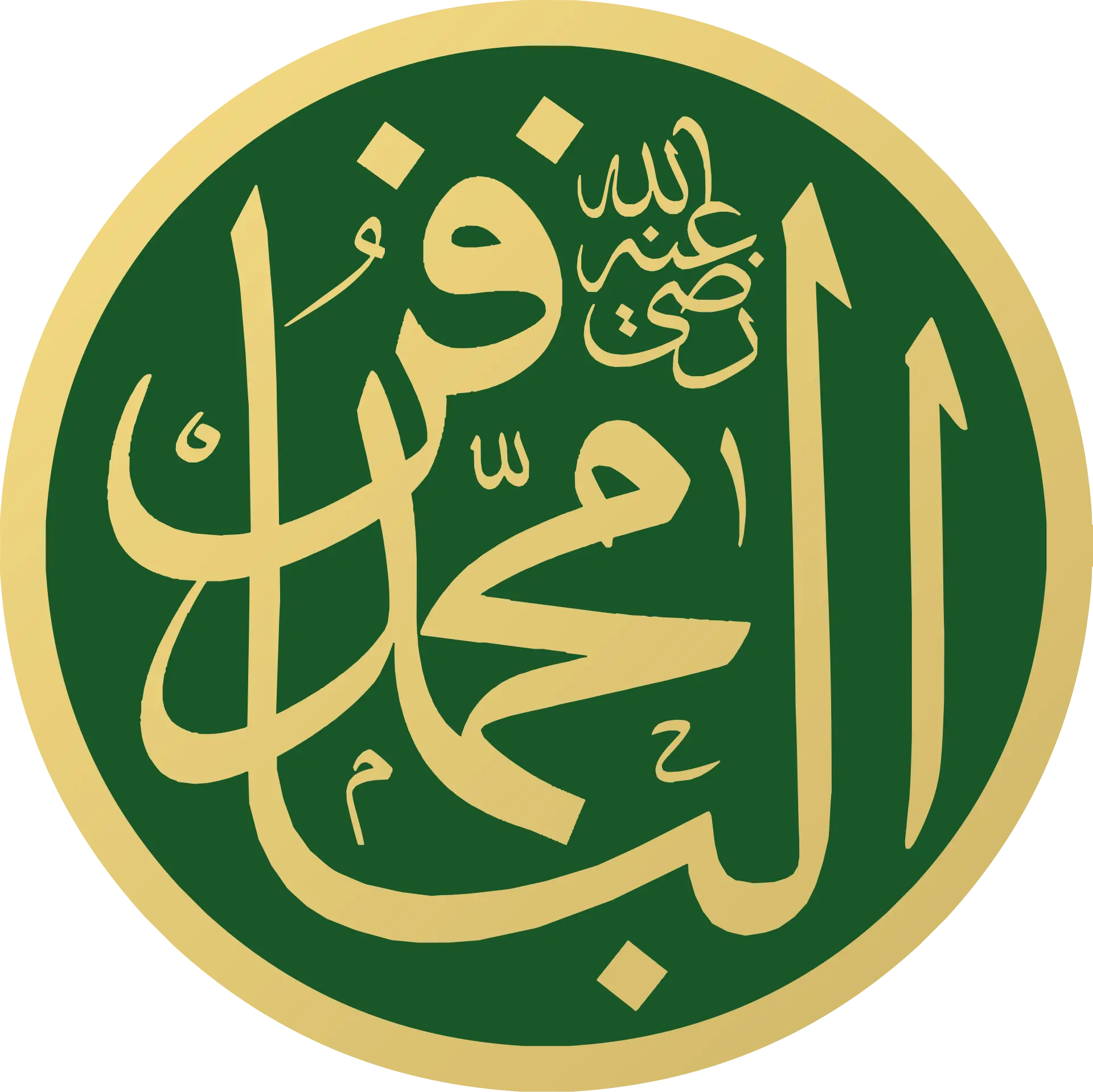
Muhammad ibn Ali ibn al-Husayn ibn Ali ibn Abi Talib (56 or 57–114 AH / 675–733 CE), known by the kunya Abu Ja'far and the epithet al-Baqir, was a son of Ali ibn al-Husayn Zayn al-Abidin and, through both his parents, a descendant of the Prophet Muhammad (Peace Be Upon Him) and his daughter Fatimah: his father was a son of al-Husayn ibn Ali, and his mother a daughter of al-Hasan ibn Ali.123[a] The epithet is short for baqir al-ilm, which the sources explain as "the one who splits knowledge open".24
He was a small child when al-Husayn was killed at Karbala in 61/680, and he grew up in Medina in the years when the last of the Prophet's Companions were still living there. One of them, Jabir ibn Abd Allah, received him as a boy, and the long report in which Jabir describes the Prophet's pilgrimage of 10 AH reached the hadith collections through al-Baqir and his son Ja'far al-Sadiq (Sahih Muslim 1218). On his father's death in 94/712–13 he became the head of the descendants of al-Husayn, and he taught in Medina for the twenty years that followed.56 The Sunni biographers count him among the jurists of the Successors (tabi'un) of the city, and al-Mizzi records that all six of the canonical Sunni collections carry reports from him.78
For the Twelver Shi'a he is the fifth Imam. Kohlberg and Madelung, in the Encyclopaedia of Islam, write that the systematic teaching of Imami law began with him, and Öz, in the TDV İslâm Ansiklopedisi, that Shi'i tradition presents him, with his son Ja'far, as the founder of Imami Shi'ism.296 Like his father he took no part in risings against the Umayyads, and he warned his brother Zayd against one.26 He died in Medina in 114/732–3 and was buried at al-Baqi'.106
The sources
The earliest account of him consulted here is the entry in Ibn Sa'd's al-Tabaqat al-kubra, which places him in the third generation of the people of Medina and is built from reports by his son Ja'far and by men who had seen him.111 Abu Nu'aym's Hilyat al-awliya' collects his sayings, and the biographical dictionaries of Ibn Khallikan, al-Mizzi, al-Dhahabi and Ibn Hajar record whom he heard, who heard him, and what the hadith critics said of him; the modern editors of al-Dhahabi trace most of the reports in his entry to the history of Damascus by Ibn Asakir.12133 Al-Tabari's history includes an account of Karbala transmitted from him.14 The Imami works that preserve much of his teaching, among them al-Kulayni's al-Kafi, are known here only through the two modern reference entries consulted, by Etan Kohlberg in the Encyclopaedia of Islam and by Mustafa Öz in the TDV İslâm Ansiklopedisi.26
The sources differ over the year of his birth, the year and place of his death and the number of his children, and they read his reported statements about Abu Bakr and Umar in different ways. Those differences are set out in the Historiographical Note at the end of the article.
Name, family and birth
Name and epithet
His name was Muhammad and his kunya Abu Ja'far.3 The genealogist al-Zubayr ibn Bakkar records that he was called baqir al-ilm, and al-Dhahabi derives the epithet from baqara, to split open: he split knowledge open, al-Dhahabi writes, and knew its root and what was hidden in it.74 Kohlberg gives the two explanations current in the sources, "the one who splits knowledge open" (that is, brings it to light) and "the one who possesses great knowledge".2 Ibn Khallikan derives it instead from tabaqqur, broadening, because he broadened himself in knowledge, and he quotes a line of verse, which al-Dhahabi attributes to al-Qurazi, addressing him by it: "O splitter of knowledge for the people of piety".1516 Öz records that he was also called al-Shakir, al-Amin, al-Hadi and al-Shabih, the last on account of a resemblance to the Prophet.6
Parents and descent
His father was Ali ibn al-Husayn, known as Zayn al-Abidin. His mother was Umm Abd Allah, a daughter of al-Hasan ibn Ali, whom Kohlberg and Öz name Fatima.1726 He was therefore a grandson of both al-Hasan and al-Husayn, and al-Dhahabi gives him the nisbas al-Alawi and al-Fatimi, marking his descent from Ali and from Fatimah; in listing those from whom he transmitted without having met them, al-Dhahabi names among his forebears the Prophet and Ali, and al-Hasan and al-Husayn.23
Ibn Sa'd records that his mother was also the mother of his brother Abd Allah, and among his father's other sons he names Umar and Zayd, each the son of an umm walad.17 Zayd was born in 75/694–5, by his son al-Husayn's account, and Madelung reckons him at least eighteen years younger than al-Baqir.5 Ibn Sa'd preserves a report, through Sufyan al-Thawri from Ja'far, that al-Baqir used to tend his mother's hair.18
Birth
He was born in Medina in 56 or 57 AH (675–677 CE).26 The authorities for each year, and the days and months they give, are set out in the Historiographical Note.
Childhood
Karbala
He was three years old, by Ibn Khallikan's reckoning, when his grandfather al-Husayn was killed at Karbala on 10 Muharram 61 (10 October 680).156 Öz writes that he witnessed the battle as a small child, and Kohlberg cites an account in which he could still recall the day and "the travails which had beset his family at the time".62
His own account of the events reached al-Tabari through Ammar ibn Mu'awiya al-Duhni, a traditionist who died in 133/750–1. Ammar asked him to tell him about the killing of al-Husayn "so that he might think that he was present at it", and al-Tabari gives what he related in instalments alongside the fuller narrative of Abu Mikhnaf, beginning with al-Husayn's departure from Medina when he was asked for the oath of allegiance, and continuing to his meeting with al-Hurr ibn Yazid near al-Qadisiyya.14 Its translator, I. K. A. Howard, describes the account as brief and as agreeing in outline, with slight variations, with the version of Ibn al-Kalbi.19
Medina and the day of al-Harra
In 63/683 Medina rose against the caliph Yazid, and the army he sent against it fought the Medinese at al-Harra, on the north-eastern side of the town.20 Asked whether anyone of his household had gone out on that day, al-Baqir answered: "None of the family of Abu Talib went out in it, nor anyone of the Banu Abd al-Muttalib; they kept to their houses."21 Ibn Sa'd gives with it his account of how the commander of that army received his father after the battle, which the article on Zayn al-Abidin relates.
Jabir ibn Abd Allah
Jabir ibn Abd Allah al-Ansari was one of the Companions he knew. Sahih Muslim preserves al-Baqir's own account of their meeting, as his son Ja'far transmitted it. A group came to Jabir, who asked each of them who he was; when he came to al-Baqir, the boy answered, "I am Muhammad ibn Ali ibn Husain." Jabir, who was by then blind, put his hand on his head, undid his upper and lower buttons and placed his hand on his chest — "at that time," al-Baqir said, "I was a young boy" — and told him, "Welcome to you, O son of my brother. Ask whatever you want." When the time for prayer came, Jabir led them in prayer wrapped in a small blanket, his cloak hanging on a peg beside him, and al-Baqir then asked him to describe the pilgrimage of the Prophet (Sahih Muslim 1218).
Jabir counted nine on his hand: the Prophet had stayed nine years in Medina without making the pilgrimage, and in the tenth announced that he would go. The report that follows takes the Farewell Pilgrimage stage by stage, from the setting out from Dhu al-Hulayfa to the rites at Arafat, Muzdalifa and Mina, and the hadith collections preserve it through al-Baqir and his son: Muslim and Ibn Majah give it whole, and al-Nasa'i distributes parts of it among his chapters on the rites of pilgrimage, among them the passage on proclaiming God's unity on al-Safa and the one on leaving Muzdalifa before sunrise (Sahih Muslim 1218; Sunan Ibn Majah 3074; Sunan an-Nasa'i 2976, 3056).
Other reports show him with Jabir on other occasions. Al-Bukhari records that he and his father were with Jabir when men asked about the ritual bath, and that Jabir told them a sa' of water was enough; when a man said it was not enough for him, Jabir answered that it had been enough for one who had more hair than he did and who was better than he, meaning the Prophet (Sahih al-Bukhari 252). Jabir also told him how he had answered his cousin al-Hasan ibn Muhammad ibn al-Hanafiyya on the same question (Sahih al-Bukhari 256). Abd Allah ibn Muhammad ibn Aqil recalled that he and Abu Ja'far used to go to Jabir together and write down what he said on tablets.7 Al-Tirmidhi gives through him Jabir's report of the Prophet's words "My intercession is for the people who committed major sins in my Ummah", and with it al-Baqir's statement that Jabir said to him, "O Muhammad! Whoever is not among the people of major sins, then there is no need in the intercession for him"; al-Tirmidhi calls it hasan gharib by this route (Jami' at-Tirmidhi 2436). Abu Hamza al-Thumali asked al-Baqir whether it had been reported to him from Jabir that the Prophet washed each part once in ablution, and twice, and three times, and he answered yes to each (Sunan Ibn Majah 410, graded sahih in the edition).
A different report concerns a greeting. Imami works record that the Prophet charged Jabir with conveying his greetings to this descendant and that Jabir passed them on to him as a boy, which Kohlberg and Öz note the Imamiyya took as a sign of his imamate; Kister adds that in Shi'i tradition the two met often and that some of al-Baqir's reports were related on Jabir's authority.2622 Al-Dhahabi gives the report in a version in which Jabir found him at his lessons and told him that the Prophet had ordered him to convey his greetings, with Ibn Adi's remark that no one but al-Mufaddal ibn Salih transmitted it from Aban ibn Taghlib, and in another version in which it is al-Husayn who conveys the greeting.16
Learning in Medina
His teachers, as al-Dhahabi, al-Mizzi and Ibn Hajar list them, were his father; his father's uncle Muhammad ibn al-Hanafiyya; the Companions Jabir ibn Abd Allah, Abd Allah ibn Umar, Abu Sa'id al-Khudri, Anas ibn Malik and Abd Allah ibn Ja'far; and among the Successors Sa'id ibn al-Musayyab, Ubayd Allah ibn Abi Rafi' and Ata' ibn Yasar.31323 One of his recollections of Ibn Umar is in Sunan Ibn Majah: "Whenever Ibn Umar heard a hadith from the Messenger of Allah, he would not do more than it said, and he would not do less" (Sunan Ibn Majah 4, graded sahih in the edition).
He also related reports from men and women he had not met: from the Prophet and from Ali, from al-Hasan and al-Husayn, and, in al-Dhahabi's list, from Ibn Abbas, Umm Salama, Aisha, Abu Hurayra and Samura ibn Jundab. Such a report, in which a link in the chain is missing, is called mursal, and the critics marked these reports as such.324 Abu Zur'a and al-Tirmidhi state that he did not meet Ali, and Ahmad ibn Hanbal that his hearing from Umm Salama is not established; Ibn Hajar records the view that of all the Companions named among his authorities, only Ibn Abbas, Jabir and Abd Allah ibn Ja'far were heard by him directly.2425 Al-Tirmidhi gives an example. He records from al-Baqir, directly from the Prophet, that "the Prophet passed judgement based on an oath along with one witness", with the words "And Ali judged between you based on it"; he judges this form, which Sufyan al-Thawri also transmitted, the more correct, and notes that others transmitted the same report through Ali (Jami' at-Tirmidhi 1345, graded sahih in the edition). Al-Dhahabi gives another: his report that Umar did not know what to do about the Magians until Abd al-Rahman ibn Awf related that the Prophet had said, "Treat them as the People of the Book," which al-Dhahabi marks as mursal; Ibn Asakir, as al-Dhahabi's editors quote him, notes that Muhammad did not meet Umar.7
Head of the family, 94–114/712–732
Succession and policy
His father died in 94/712–13, or a year later, and Madelung writes that al-Baqir then became the head of the Husaynids and was widely recognised as the imam by the Shi'a.526 He continued his father's policy. Kohlberg writes that he "pursued his father's quietist policy, and refused to support revolts against the Umayyads", and Öz that he gave no support to armed opposition to the government, even indirectly.26 Madelung records that his quietist conduct "aroused little suspicion among the authorities", while his prestige among the Shi'a of Kufa was widely recognised.9 Kohlberg adds that his relations with the Umayyads were nevertheless uneasy.2
Umar ibn Abd al-Aziz
Kohlberg and Öz both record that Umar ibn Abd al-Aziz treated him well, and that after meeting him in Medina the caliph had the oasis of Fadak returned to the descendants of Ali.26
Hisham ibn Abd al-Malik
His dealings with Hisham ibn Abd al-Malik, caliph from 105/724 to 125/743, are known from several reports.2 The genealogist al-Zubayr ibn Bakkar preserves one, set in the Haram at Mecca. Hisham, on pilgrimage, entered the sanctuary leaning on the arm of his freedman Salim, while Muhammad ibn Ali sat there. Told who he was, Hisham asked, "The one by whom the people of Iraq are captivated?" and sent Salim to ask him what people would eat and drink until judgement was passed between them on the Day of Resurrection. Al-Baqir answered that people would be gathered on land like a loaf of fine white bread, through which rivers ran. Hisham, thinking he had the better of him, sent back to ask how they could have time for eating and drinking on such a day. Al-Baqir replied that the people of the Fire would be more occupied still, and yet would not be too occupied to call out, "Pour upon us some water or from whatever Allah has provided you" (Quran 7:50).26 Kohlberg and Öz both record that Hisham summoned him to Damascus: in Kohlberg's account Hisham did so on several occasions and at least once had him imprisoned before sending him back to Medina, while Öz writes that he took part in debates there and was imprisoned, or sent back to Medina under hard conditions.26
Life in Medina
Öz records two further occasions from these years: in 105/723 he attended the funeral of the poet Kuthayyir Azza at Medina, and he rewarded the poet al-Kumayt, who had praised him in his presence, and gave him leave to praise the Umayyads.6 Ibn Sa'd preserves descriptions of him by those who saw him in the city. He rode a mule, with a servant walking beside him; he wore a gown and a wrap of khazz, and on another occasion a red wrap; he let the end of his turban hang down behind him; and he said, "We, the family of Muhammad, wear khazz, dyed cloths and Yemeni cloth."1827 Asked about a garment with a silk border, he answered that a border two fingers wide was no harm.27 Hakim ibn Hakim saw him in the mosque leaning on a folded taylasan, and al-Waqidi notes that this had always been the custom among the notables of Medina who kept to the mosque.27 Muhammad ibn Ishaq recalled seeing him at prayer in a garment knotted behind him.27
His brother Zayd
In Imami accounts, Kohlberg writes, his relations with his brother Zayd were cordial, but he warned Zayd of the consequences of a premature rising against the Umayyads; Öz writes that he did not approve of Zayd's views and warned him that an ill-prepared revolt would achieve nothing.26 Zayd's rising came after al-Baqir's death, and its consequences for his followers are described below.
Teaching and transmission
Those who learned from him
The list of those who transmitted from him is long. Al-Dhahabi names his son Ja'far; Ata' ibn Abi Rabah and al-A'raj, who were older than he was; Amr ibn Dinar, Abu Ishaq al-Sabi'i, al-Zuhri, Yahya ibn Abi Kathir, Rabi'at al-Ra'y, Layth ibn Abi Sulaym, Ibn Jurayj, al-A'mash and al-Awza'i, among others, and al-Mizzi adds Aban ibn Taghlib, Abu Hamza al-Thumali, Jabir al-Ju'fi and al-Hakam ibn Utayba.3411 Kohlberg observes that his reputation as a scholar soon spread beyond the circle of his Shi'i supporters, and names Amr ibn Dinar, Ibn Jurayj and al-Awza'i among his disciples.2
A report in Abu Nu'aym describes one gathering. Abd Allah ibn Muhammad ibn Umar ibn Ali, who calls him his maternal uncle, was sitting with him, together with Yahya ibn Sa'id and Rabi'at al-Ra'y, when the doorkeeper announced visitors from Iraq: Abu Ishaq al-Sabi'i, Jabir al-Ju'fi, Abd Allah ibn Ata' and al-Hakam.28 Abd Allah ibn Ata' later said, "I never saw scholars smaller in knowledge in anyone's presence than they were in Abu Ja'far's; I saw al-Hakam with him as though he were a pupil."29 Muhammad ibn al-Munkadir said that he had never seen anyone whom he would place above Ali ibn al-Husayn until he saw his son Muhammad: "I wanted one day to admonish him, and he admonished me."30
Whether Abu Hanifa was among his pupils is disputed: Kohlberg and Öz record that Hanafi sources describe him as al-Baqir's pupil, whom al-Baqir praised, while Imami sources describe a debate between them in which al-Baqir prevailed, and a fatwa of islamweb notes that later Sunni scholars differed over whether Abu Hanifa narrated from him at all, quoting Ibn Taymiyya's statement that Abu Hanifa did not narrate a single legal case from Ja'far or his father.2631
The hadith critics
The Sunni critics judged him reliable. Ibn Sa'd calls him thiqa, trustworthy, "of much knowledge and hadith"; al-Ijli, a Medinan Successor and trustworthy; and Ibn al-Barqi "a jurist, virtuous".171132 Al-Nasa'i counted him among the jurists of the Successors at Medina, and al-Dhahabi records that the hadith masters agreed on relying on him as proof.732 Kohlberg sums up the Sunni position as regarding him as a reliable traditionist, occasionally faulted for the reports he transmitted from Companions he had not met.2
He was not a prolific narrator. Al-Dhahabi puts him in this with his father and his son Ja'far: the hadith of none of the three would fill a large volume, "but they have questions and legal opinions".3 Öz notes that the Sunni collections carry few of his reports, and that what came from him was more favoured in Sufi circles.6 He was among the authorities of Ibn Ishaq for the life of the Prophet, and al-Tabari cites him for a version of the story of Karbala.26
Reports and opinions
Besides Jabir's account of the pilgrimage, the collections carry through him and his son a description of the Prophet's burial: "The one who made the lahd in the grave of the Messenger of Allah was Abu Talhah. And the one who placed the velvet cloth under him was Shuqran, a freed slave of the Messenger of Allah" (Jami' at-Tirmidhi 1047, graded hasan in the edition). Some of what is preserved is his own opinion rather than a report. Al-Tirmidhi records that he held it recommended to recite the chapters "Say: O you disbelievers" and "Say: He is Allah, the One" in the two units of prayer that follow the circumambulation of the Ka'ba (Jami' at-Tirmidhi 870, graded sahih in the edition). Abu Hamza al-Thumali reported his reading of the verse in which the righteous are rewarded "for what they patiently endured [with] a garden [in Paradise] and silk [garments]" (Quran 76:12): "for their patience in poverty and in the afflictions of this world".33
The reports on Abu Bakr and Umar
The Sunni biographers preserve a number of statements, made in answer to questions put to him, in which he speaks well of Abu Bakr and Umar. Ibn Sa'd records that a man named Jabir asked him three questions: whether anyone of his house had held that a sin could amount to associating partners with God, whether anyone of them had affirmed the return (raj'a), and whether anyone of them had reviled Abu Bakr and Umar. To each he answered no, and Jabir adds that he loved the two, held to them as friends and asked forgiveness for them.18 Bassam al-Sayrafi, in a report given by al-Dhahabi and al-Mizzi, asked him about the two and was told: "By God, I take them as my friends and I ask forgiveness for them, and I have not known anyone of my household who did not take them as friends."732 Salim ibn Abi Hafsa asked him and his son Ja'far together and was told, "Take them as your friends and dissociate yourself from their enemy, for they were two imams of guidance"; al-Dhahabi notes that Salim had evident Shi'i sympathies, and that the man who transmitted the report from him, Ibn Fudayl, was a trustworthy Shi'i.4
Other reports in the same vein are in Abu Nu'aym. Urwa ibn Abd Allah asked him whether it was permitted to ornament a sword; he answered that it was, for Abu Bakr al-Siddiq had ornamented his, and when Urwa repeated the title in surprise, he sprang up, faced the qibla and repeated it: "Yes, al-Siddiq; yes, al-Siddiq."34 Ibn Ishaq reported him as saying, "Whoever does not know the merit of Abu Bakr and Umar is ignorant of the Sunna."35 Abd al-Malik ibn Abi Sulayman asked him about the verse "Your ally is none but Allah and [therefore] His Messenger and those who have believed" (Quran 5:55); he answered that it meant the Companions of the Prophet, and when Abd al-Malik said that some held it to mean Ali, he answered, "Ali is among them."3635
These reports are read differently in Imami tradition and in modern scholarship, and the Historiographical Note records how.
In Imami teaching
Ibn Khallikan describes him as "one of the twelve Imams in the belief of the Imamiyya", and in Twelver Shi'ism he is the fifth, between his father and his son Ja'far.152 Kohlberg writes that the systematic, public teaching of Imami law "appears to have been initiated" by him, and Madelung calls him the founder of systematic Shi'i religious law; Öz records al-Kulayni's statement that it was from him that the Shi'a learned what was lawful and unlawful and the rites of the pilgrimage.296 Madelung lists among the features of his legal and ritual teaching that later came to distinguish Shi'i law the additional phrase in the call to prayer known as the hay'ala, the prohibition of wiping over leather socks (khuffs) in place of washing the feet in ablution, and the permission of temporary marriage (mut'a), the second and third of which Kohlberg also traces to him.92
Kohlberg considers him "probably the first to formulate" what became the basic doctrines of Twelver Shi'ism: that the imamate passes from each Imam to the next by an explicit designation (nass), made first by the Prophet and then by each Imam of his successor; that all the Imams are of the line of Fatimah; that they possess a knowledge denied to others; and that they hold absolute authority.2 In that teaching an Imam's pronouncement is taken as coming from the Prophet through the Imam's forebears, which is why, Kohlberg notes, a Shi'i hadith will often end with an Imam rather than with the Prophet. He also held, in Kohlberg's account, that under certain circumstances self-protection through concealment of belief (taqiyya) is permissible, and that it is obligatory where life or limb is in danger.2
The Imami position as it developed under him was opposed to independent reasoning (ijtihad): Kohlberg writes that he described the ideal disciple as one who receives the Imam's rulings, transmits them and abides by them without question. Not all his disciples kept to this. Zurara ibn A'yan held independent views on several theological questions, and Muhammad ibn al-Tayyar, who argued with opponents from his own reasoning rather than from the Imam's words, was rebuked by him for it. Many of his disciples wrote down his sayings in collections called usul, which Kohlberg describes as the basis of the later comprehensive works of Imami law.2 His commentary on the Qur'an, dictated to Abu al-Jarud Ziyad ibn al-Mundhir, survives in part in the Tafsir of Ali ibn Ibrahim al-Qummi.26
Kohlberg and Öz record reports of debates he held with scholars of his time, among them the Basran jurist Qatada ibn Di'ama, the Mu'tazili Amr ibn Ubayd, the Khariji Abd Allah ibn Nafi' ibn al-Azraq and, in Damascus, a Christian scholar.26 Several Kufan extremists claimed to draw their teaching and authority from him, among them, in Kohlberg's account, Abu Mansur al-Ijli and al-Mughira ibn Sa'id; Ibn Sa'd records his words, "O God, I declare myself free before You of al-Mughira ibn Sa'id and Bayan."218 Imami tradition also attributes miracles to him, as both encyclopaedias record.26
Worship, conduct and sayings
Abu Ya'qub Abd Allah ibn Yahya, who saw him in a yellow wrap, recorded that he prayed fifty units of prayer each day and night, the obligatory prayers among them.3326 A man who saw him noticed a slight mark of prostration on his forehead and nose.37 Layth ibn Abi Sulaym once found him recalling his sins and what people said of him, and weeping.26 In the depth of the night, by his son Ja'far's report, he would say: "You commanded me and I did not obey; You forbade me and I did not refrain. Here is Your servant before You, and I make no excuse."29 When he laughed, he would say, "O God, do not detest me."35 Al-Hujwiri, in the Kashf al-mahjub, records his definition of Sufism as "goodness of disposition: he that has the better disposition is the better Sufi", which Kohlberg cites among his sayings on asceticism.2
Many of his sayings are preserved, and Abu Nu'aym collects the largest number of those consulted here. On disputation he said, "Beware of disputation, for it corrupts the heart and breeds hypocrisy", and he identified those who "plunge into the verses of God" with the people of disputes.34 Of laughter he said, "Beware of laughter, or of much laughter, for it casts knowledge out."37 Of learning: "Everything has a bane, and the bane of knowledge is forgetting."38 To his son he said, "My son, beware of laziness and irritability, for they are the key to every evil: if you are lazy you will not fulfil a right, and if you are irritable you will not bear patiently with a right."38 And he named the hardest deeds as three: "remembering God in every state, giving others their due from yourself, and sharing your wealth with your brother."38
On brotherhood he asked his companions whether any of them would put his hand into his friend's sleeve and take what he needed; when they said no, he answered, "Then you are not brothers, as you claim."39 He told them, "Know the affection for you in your brother's heart by what there is for him in yours."39 To Jabir al-Ju'fi he described this world as nothing but "a mount you ride, a garment you wear, or a wife you take", and told him to treat it "as a halt at which you stopped and from which you moved on, or as wealth you came by in a dream and woke to find nothing of it with you".3326 When one of his children fell ill he was distressed, and when told of the child's death he was calm; asked about it, he said, "We call upon God in what we love, and when what we dislike comes to pass, we do not oppose God in what He loves."4039 He also said, "Nothing is dearer to God than to be asked, and nothing turns back what is decreed except supplication."41
Death and burial
He died in Medina in 114/732–3. Abu Nu'aym al-Fadl ibn Dukayn gave that year, and al-Dhahabi adds Sa'id ibn Ufayr and Mus'ab al-Zubayri; Ibn Hajar calls it the soundest date, citing al-Bukhari's report from Sufyan ibn Uyayna that Ja'far said, "My father died in 114"; and Öz places the death in Dhu al-Hijja of that year, January or February 733.1710256 The other years in the sources, and the ages they give him, are set out in the Historiographical Note.
He left instructions for his shroud. Asked what he had shrouded his father in, Ja'far said that his father had told him to use his shirt, with its buttons cut off, and the cloak he used to wear, and to buy a Yemeni mantle (burd), "for the Prophet was shrouded in three garments, one of them a Yemeni burd".37 Sa'id ibn Muslim saw a mantle of the kind called hibara on his bier.37 He was buried in the cemetery of al-Baqi' al-Gharqad in Medina; Ibn Khallikan places his grave in the one that held his father and his father's uncle al-Hasan ibn Ali, under the dome over the grave of al-Abbas.215 His son Ja'far succeeded him.2
Wives and children
Ibn Sa'd lists six children and their mothers. Ja'far and Abd Allah were the sons of Umm Farwa, daughter of al-Qasim ibn Muhammad ibn Abi Bakr al-Siddiq; Ibrahim was the son of Umm Hakim, daughter of Usayd ibn al-Mughira ibn al-Akhnas ibn Shariq of Thaqif; Ali and a daughter, Zaynab, were the children of an umm walad; and a second daughter, Umm Salama, was the child of another.1 Al-Dhahabi notes that Umm Farwa was al-Baqir's wife and the mother of Ja'far al-Sadiq, who by Ibn Sa'd's genealogy descended through her from Abu Bakr.361
After his death
According to the Sunni heresiographers whom Kohlberg cites, a group called the Baqiriyya refused to accept his death and waited for his return as the Mahdi; Öz describes it as one of the groups that held an Imam had not died, relying on the report of Jabir's greeting, and writes that the view did not last long.26 In his lifetime, by al-A'mash's report in al-Dhahabi, he had said: "They claim that I am the Mahdi, and I am nearer to my appointed time than to what they claim."40
A few years after his death, in 122/740, his brother Zayd led a rising at Kufa against the Umayyads. Al-Tabari records that a group of Zayd's supporters, after questioning him about Abu Bakr and Umar and hearing him speak well of them, broke their allegiance, saying that the true imam had precedence: it had been Abu Ja'far Muhammad ibn Ali, who had died, and "today Ja'far is our imam in succession to his father".42 Madelung writes that many of al-Baqir's former supporters withdrew from Zayd and recognised Ja'far as the legitimate Imam, and that the schism gave rise to the Imami and Zaydi branches of the Shi'a.9 In Zaydi doctrine, as Madelung summarises it, neither al-Baqir nor his father was an Imam, the first Imam after al-Husayn being Zayd; Kohlberg adds that later Zaydi writers cite al-Baqir as an authority without, as a rule, counting him an Imam.92
Historiographical Note
The sources disagree on several points, and the article follows the decisions recorded below.
Date of birth. Ibn al-Barqi gave 56, as al-Dhahabi, al-Mizzi and Ibn Hajar report, and al-Dhahabi gives that year. Ibn Khallikan gives Tuesday 3 Safar 57. Kohlberg and Öz give 3 Safar or 1 Rajab 57 (16 December 676 or 10 May 677), with the same days of 56 as the alternative.381526 Ibn Hajar, reasoning from a death in 114 at the age of fifty-eight, arrives at 56.25 The article gives 56 or 57.
Date of death, and his age. The article gives 114/732–3, for the reasons stated under Death and burial. Ibn Khallikan gives Rabi' II 113, with 23 Safar 114, 117 and 118 as other reports. Kohlberg gives 117 and the months of Rabi' I, Rabi' II and Dhu al-Hijja 114 as the dates most commonly given, with 115, 7 Dhu al-Hijja 116 and 118 besides; al-Mizzi lists 114 to 117, and 118 from Ibn Sa'd and Khalifa ibn Khayyat. In Ibn Sa'd's own text it is al-Waqidi who gives 117, at the age of seventy-three, and "others" 118.152817 The ages differ as well. Ja'far heard his father say to Fatima bint al-Husayn, al-Baqir's aunt, in the year he died, "This year completes fifty-eight years for me", a report whose chain Ibn Hajar calls of the utmost soundness; Ibn Hibban, quoted by al-Mizzi's editor, gives sixty-three; and al-Waqidi gives seventy-three, which Ibn Hajar rejects because it would place the birth about 45, when his father was still a small child.1740258 Kohlberg records three reports that place the death later still, under the caliph al-Walid ibn Yazid or by the order of Ibrahim ibn al-Walid, and suggests that they belonged originally to al-Baqir's namesake Muhammad ibn Ali ibn Abd Allah ibn al-Abbas and were then applied to him in error.2[b]
Place of death. The article follows the sources that place his death in Medina. Ibn Khallikan records a report that he died at al-Humayma and was carried to Medina for burial; Kohlberg, citing the same report from al-Safadi, explains it by the same confusion, al-Humayma being closely associated with the Abbasid revolution.152
Cause of death. Kohlberg records accounts that he died of poison; the early biographical sources consulted give no cause of death.2
The reports on Abu Bakr and Umar. The statements given above are those the Sunni biographers record. Al-Dhahabi writes that the Shi'a read such statements of al-Baqir and his son Ja'far as taqiyya, precautionary concealment of belief.7 Kohlberg writes that al-Baqir upheld the doctrine of dissociation (bara'a) from those whom Imami doctrine counts as the enemies of the Imams, among them the first three caliphs, and that Sunni authorities put the reports of his loyalty to Abu Bakr and Umar about in order to counter belief in that doctrine.2 Öz gives both: he lists dissociation from the enemies of the Imams among the doctrines Imami tradition traces to al-Baqir, and he reports from Ibn Sa'd and al-Dhahabi the Sunni accounts of his love for the two.6 The article reports each reading and does not judge between them.
His children. The article follows Ibn Sa'd's list of six. Öz counts seven, born to Umm Farwa, Umm Hakim and two umm walads.16
See also
- Zayn al-Abidin — his father, the son of al-Husayn who survived Karbala
- Ja'far al-Sadiq — his son and successor, the sixth Imam of the Twelver Shi'a
- Husayn ibn Ali and Hasan ibn Ali — his grandfathers on his father's side and his mother's
- Battle of Karbala — the battle of his childhood, of which he left an account
- Hisham ibn Abd al-Malik — the caliph of his last years, under whom his brother Zayd rose in revolt
- Umar ibn Abd al-Aziz — the caliph who returned Fadak to the descendants of Ali
- Sunni and Shia: Historical Origins — the early divisions of the community
Notes
Explanatory notes
- a. In the hadith literature he appears as Abu Ja'far, as Muhammad ibn Ali or Muhammad ibn Ali ibn al-Husayn, or, in the reports his son transmits, simply as "his father"; the Darussalam edition of al-Tirmidhi identifies the narrator as "Abu Ja'far Muhammad bin 'Ali bin Husain bin 'Ali bin Abi Talib" (Jami' at-Tirmidhi 832). Other transmitters shared the kunya, among them Abu Ja'far al-Mu'adh-dhin and Abu Ja'far al-Khatmi (Jami' at-Tirmidhi 1905, 3490), and al-Dhahabi's entry on al-Baqir itself cites a report through Abu Ja'far al-Razi, so a report given under the kunya alone is identified from its chain. ↩
- b. His contemporary and namesake Muhammad ibn Ali ibn Abd Allah ibn al-Abbas was the head of the Abbasid family; Kohlberg records that he died between 124/741–2 and 126/743–4, probably at al-Humayma, where the dying Abu Hashim had transferred to him his rights to the imamate. He is a different man from al-Baqir. ↩
References
Citations
Footnotes
-
Ibn Sa'd, al-Tabaqat al-kubra, v, 320 — his lineage, his mother, and his children and their mothers; https://shamela.ws/book/9351/2206, register entry 4, shamela.ws. ↩ ↩2 ↩3 ↩4 ↩5 ↩6
-
E. Kohlberg, 'Muhammad b. Ali Zayn al-Abidin, al-Bakir', The Encyclopaedia of Islam, new edition, vol. 7 — the dedicated entry. ↩ ↩2 ↩3 ↩4 ↩5 ↩6 ↩7 ↩8 ↩9 ↩10 ↩11 ↩12 ↩13 ↩14 ↩15 ↩16 ↩17 ↩18 ↩19 ↩20 ↩21 ↩22 ↩23 ↩24 ↩25 ↩26 ↩27 ↩28 ↩29 ↩30 ↩31 ↩32 ↩33 ↩34 ↩35 ↩36 ↩37 ↩38 ↩39 ↩40 ↩41 ↩42 ↩43
-
Al-Dhahabi, Siyar a'lam al-nubala' (Beirut: Mu'assasat al-Risala), iv, 401 — his name and nisbas, his birth, his teachers and mursal reports, the measure of his hadith, and his transmitters; https://shamela.ws/book/10906/3554, register entry 4, shamela.ws. ↩ ↩2 ↩3 ↩4 ↩5 ↩6 ↩7 ↩8 ↩9
-
Al-Dhahabi, Siyar a'lam al-nubala', iv, 402–403 — the remaining transmitters, the meaning of al-Baqir, and Salim ibn Abi Hafsa's report with al-Dhahabi's remarks on its transmitters; https://shamela.ws/book/10906/3555, register entry 4, shamela.ws. ↩ ↩2 ↩3 ↩4
-
W. Madelung, 'Zayd b. Ali b. al-Husayn', The Encyclopaedia of Islam, new edition, vol. 11 — Zayd's birth, and al-Baqir as head of the Husaynids from 94/712–13. ↩ ↩2 ↩3
-
Mustafa Öz, 'Muhammed el-Bâkır', TDV İslâm Ansiklopedisi, vol. 30 (Ankara, 2020), pp. 504–505 — https://islamansiklopedisi.org.tr/muhammed-el-bakir, register entry 2, islamansiklopedisi.org.tr. ↩ ↩2 ↩3 ↩4 ↩5 ↩6 ↩7 ↩8 ↩9 ↩10 ↩11 ↩12 ↩13 ↩14 ↩15 ↩16 ↩17 ↩18 ↩19 ↩20 ↩21 ↩22 ↩23 ↩24 ↩25 ↩26 ↩27 ↩28 ↩29
-
Al-Dhahabi, Siyar a'lam al-nubala', iv, 403 — the Shi'i reading of the reports as taqiyya, Bassam al-Sayrafi, Ibn Aqil and the tablets, al-Nasa'i and the hadith masters, the report on the Magians, and al-Zubayr ibn Bakkar on the epithet and his mother; https://shamela.ws/book/10906/3556, register entry 4, shamela.ws. ↩ ↩2 ↩3 ↩4 ↩5 ↩6 ↩7 ↩8
-
Al-Mizzi, Tahdhib al-kamal, xxvi, 141–142 — the dates of birth and death and the ages given, Ibn Hibban, and the six collections; https://shamela.ws/book/3722/13890, register entry 4, shamela.ws. ↩ ↩2 ↩3 ↩4
-
W. Madelung, 'Shi'a', The Encyclopaedia of Islam, new edition, vol. 9 — al-Baqir's teaching and its place in Shi'i law, and the schism at Zayd's revolt. ↩ ↩2 ↩3 ↩4 ↩5 ↩6
-
Al-Dhahabi, Siyar a'lam al-nubala', iv, 409 — the date of death; https://shamela.ws/book/10906/3562, register entry 4, shamela.ws. ↩ ↩2
-
Al-Mizzi, Tahdhib al-kamal, xxvi, 138–139 — those who transmitted from him, Ibn Sa'd's placing of him and his verdict, and al-Ijli; https://shamela.ws/book/3722/13888, register entry 4, shamela.ws. ↩ ↩2 ↩3
-
Abu Nu'aym al-Isfahani, Hilyat al-awliya' (Cairo: al-Sa'ada), iii, 180 — the opening of the entry; https://shamela.ws/book/10495/948, register entry 4, shamela.ws. ↩
-
Al-Mizzi, Tahdhib al-kamal, ed. Bashshar Awwad Ma'ruf (Beirut: Mu'assasat al-Risala), xxvi, 136–137 — his teachers, with the collections in which each line appears; https://shamela.ws/book/3722/13886, register entry 4, shamela.ws. ↩ ↩2
-
Al-Tabari, The History of al-Tabari, vol. 19, translated by I. K. A. Howard — Ammar al-Duhni's account from Abu Ja'far, given in instalments, with the translator's notes on both men; register entry 12, archive.org. ↩ ↩2
-
Ibn Khallikan, Wafayat al-a'yan, ed. Ihsan Abbas, iv, 174, no. 560 — the epithet, the verse, his birth, his age at Karbala, the dates and place of death, and the grave; https://shamela.ws/book/1000/1703, register entry 4, shamela.ws. ↩ ↩2 ↩3 ↩4 ↩5 ↩6 ↩7
-
Al-Dhahabi, Siyar a'lam al-nubala', iv, 404 — the verse addressing him and the reports of the greeting, with Ibn Adi's remark; https://shamela.ws/book/10906/3557, register entry 4, shamela.ws. ↩ ↩2
-
Ibn Sa'd, al-Tabaqat al-kubra, v, 324 — the report of his age, the dates of death, Ibn Sa'd's verdict, and his brothers Abd Allah and Umar; https://shamela.ws/book/9351/2210, register entry 4, shamela.ws; and v, 325, on Zayd's mother, https://shamela.ws/book/9351/2211. ↩ ↩2 ↩3 ↩4 ↩5
-
Ibn Sa'd, al-Tabaqat al-kubra, v, 321 — disputation, the three questions on sin, the return and Abu Bakr and Umar, al-Mughira ibn Sa'id and Bayan, his mother, his mule and his dress; https://shamela.ws/book/9351/2207, register entry 4, shamela.ws. ↩ ↩2 ↩3 ↩4
-
Al-Tabari, The History of al-Tabari, vol. 19, translated by I. K. A. Howard (Albany, 1990), the translator's foreword — the account from Abu Ja'far and its relation to Ibn al-Kalbi's; https://archive.org/details/the-history-of-al-tabari-vol.-19-the-caliphate-of-yazid-b.-muawiyah-a.-d.-680-683-a.-h.-60-64, register entry 12, archive.org. ↩
-
'Al-Harra', The Encyclopaedia of Islam, new edition, vol. 3 — the revolt of Medina and the battle of 63/683. ↩
-
Ibn Sa'd, al-Tabaqat al-kubra (Beirut: Dar Sadir), v, 215, in the entry on his father — his answer on the day of al-Harra; https://shamela.ws/book/9351/2101, register entry 4, shamela.ws. ↩
-
M. J. Kister, 'Djabir b. Abd Allah', The Encyclopaedia of Islam, new edition, vol. 12, Supplement — Jabir in Shi'i tradition, and his meetings with al-Baqir. ↩
-
Ibn Hajar al-Asqalani, Tahdhib al-tahdhib (Hyderabad), ix, 350, no. 580 — his teachers and transmitters; https://shamela.ws/book/3310/4095, register entry 4, shamela.ws. ↩
-
Al-Mizzi, Tahdhib al-kamal, xxvi, 138 — the critics on his reports from Ali, Umm Salama and Aisha; https://shamela.ws/book/3722/13887, register entry 4, shamela.ws. ↩ ↩2
-
Ibn Hajar, Tahdhib al-tahdhib, ix, 351–352 — his analysis of the dates, al-Bukhari's report from Ja'far, the authorities for 114, and the reports that are mursal; https://shamela.ws/book/3310/4096, register entry 4, shamela.ws. ↩ ↩2 ↩3 ↩4
-
Al-Dhahabi, Siyar a'lam al-nubala', iv, 405 — his prayer, Hisham at Mecca from al-Zubayr ibn Bakkar, his weeping, and his saying on this world; https://shamela.ws/book/10906/3558, register entry 4, shamela.ws. ↩ ↩2 ↩3 ↩4
-
Ibn Sa'd, al-Tabaqat al-kubra, v, 322 — the silk border, the red wrap and the turban, Ibn Ishaq's sight of him at prayer, the folded taylasan and al-Waqidi's remark; https://shamela.ws/book/9351/2208, register entry 4, shamela.ws. ↩ ↩2 ↩3 ↩4
-
Abu Nu'aym, Hilyat al-awliya', iii, 181 — the visitors from Iraq; https://shamela.ws/book/10495/949, register entry 4, shamela.ws. ↩
-
Abu Nu'aym, Hilyat al-awliya', iii, 186 — Abd Allah ibn Ata''s remark, and his words at night; https://shamela.ws/book/10495/954, register entry 4, shamela.ws. ↩ ↩2
-
Ibn Hajar, Tahdhib al-tahdhib, ix, 352 — Muhammad ibn al-Munkadir's remark; https://shamela.ws/book/3310/4097, register entry 4, shamela.ws. ↩
-
The Fatwa Center of islamweb.net, fatwa 314983, 22 February 2016 — the disagreement over Abu Hanifa, and Ibn Taymiyya's denial as it quotes him from Minhaj al-Sunna; https://www.islamweb.net/en/fatwa/314983/abu-haneefah-narrated-knowledge-on-the-authority-of-jafar-as-saadiq-and-muhammad-al-baaqir, register entry 15, islamweb.net. ↩
-
Al-Mizzi, Tahdhib al-kamal, xxvi, 140 — Ibn al-Barqi, al-Nasa'i, and the reports of Salim ibn Abi Hafsa and Bassam al-Sayrafi; https://shamela.ws/book/3722/13889, register entry 4, shamela.ws. ↩ ↩2 ↩3
-
Abu Nu'aym, Hilyat al-awliya', iii, 182 — Quran 76:12, his words to Jabir al-Ju'fi on this world, and his prayer; https://shamela.ws/book/10495/950, register entry 4, shamela.ws. ↩ ↩2 ↩3
-
Abu Nu'aym, Hilyat al-awliya', iii, 184–185 — disputation, and the report of Urwa ibn Abd Allah on the sword; https://shamela.ws/book/10495/952, register entry 4, shamela.ws. ↩ ↩2
-
Abu Nu'aym, Hilyat al-awliya', iii, 185 — Ibn Ishaq's report on Abu Bakr and Umar, the report on Quran 5:55, and his words when he laughed; https://shamela.ws/book/10495/953, register entry 4, shamela.ws. ↩ ↩2 ↩3
-
Al-Dhahabi, Siyar a'lam al-nubala', iv, 406 — Umm Farwa, and the report on Quran 5:55; https://shamela.ws/book/10906/3559, register entry 4, shamela.ws. ↩ ↩2
-
Ibn Sa'd, al-Tabaqat al-kubra, v, 323 — the mark of prostration, the saying on laughter, the shroud and the bier; https://shamela.ws/book/9351/2209, register entry 4, shamela.ws. ↩ ↩2 ↩3 ↩4
-
Abu Nu'aym, Hilyat al-awliya', iii, 183 — the bane of knowledge, his counsel to his son, and the hardest deeds; https://shamela.ws/book/10495/951, register entry 4, shamela.ws. ↩ ↩2 ↩3
-
Abu Nu'aym, Hilyat al-awliya', iii, 187 — brotherhood, this world, and his words at the death of a child; https://shamela.ws/book/10495/955, register entry 4, shamela.ws. ↩ ↩2 ↩3
-
Al-Dhahabi, Siyar a'lam al-nubala', iv, 407 — his saying on the Mahdi, the death of his child, and the report of his age; https://shamela.ws/book/10906/3560, register entry 4, shamela.ws. ↩ ↩2 ↩3
-
Abu Nu'aym, Hilyat al-awliya', iii, 188 — supplication; https://shamela.ws/book/10495/956, register entry 4, shamela.ws. ↩
-
Al-Tabari, The History of al-Tabari, vol. 26, The Waning of the Umayyad Caliphate, translated by Carole Hillenbrand (Albany, 1989) — the events of 122, Zayd's supporters and their break with him; https://archive.org/details/tabari-volume-26, register entry 12, archive.org. ↩
Sources
Works in the approved library. Cited by title and author, and by the entry used.
- Bearman, P. J., et al., eds. The Encyclopaedia of Islam, new (second) edition — E. Kohlberg, 'Muhammad b. Ali Zayn al-Abidin, al-Bakir' (vol. 7); M. J. Kister, 'Djabir b. Abd Allah' (vol. 12, Supplement); W. Madelung, 'Shi'a' (vol. 9); W. Madelung, 'Zayd b. Ali b. al-Husayn' (vol. 11); 'al-Harra' (vol. 3).
- Muslim ibn al-Hajjaj. Sahih Muslim, Darussalam English edition.
- Al-Bukhari. Sahih al-Bukhari, translated by Muhammad Muhsin Khan. Riyadh: Darussalam.
- Al-Tirmidhi. Jami' al-Tirmidhi. Riyadh: Darussalam.
- Ibn Majah. Sunan Ibn Majah. Riyadh: Darussalam.
- Al-Nasa'i. Sunan al-Nasa'i. Riyadh: Darussalam.
Classical works read at Shamela (register entry 4, shamela.ws).
- Ibn Sa'd. Al-Tabaqat al-kubra, vol. 5. Beirut: Dar Sadir.
- Abu Nu'aym al-Isfahani. Hilyat al-awliya' wa-tabaqat al-asfiya', vol. 3. Cairo: al-Sa'ada.
- Ibn Khallikan. Wafayat al-a'yan, edited by Ihsan Abbas, vol. 4.
- Al-Mizzi. Tahdhib al-kamal fi asma' al-rijal, edited by Bashshar Awwad Ma'ruf, vol. 26. Beirut: Mu'assasat al-Risala.
- Al-Dhahabi. Siyar a'lam al-nubala', edited by Shu'ayb al-Arna'ut et al., vol. 4. Beirut: Mu'assasat al-Risala.
- Ibn Hajar al-Asqalani. Tahdhib al-tahdhib, vol. 9. Hyderabad.
Read at archive.org (register entry 12, archive.org).
- Al-Tabari. The History of al-Tabari, vol. 19: The Caliphate of Yazid b. Mu'awiyah, translated by I. K. A. Howard. Albany: State University of New York Press, 1990.
- Al-Tabari. The History of al-Tabari, vol. 26: The Waning of the Umayyad Caliphate, translated by Carole Hillenbrand. Albany: State University of New York Press, 1989.
Encyclopaedia entry read at the TDV (register entry 2, islamansiklopedisi.org.tr).
- Öz, Mustafa. 'Muhammed el-Bâkır'. TDV İslâm Ansiklopedisi, vol. 30. Ankara, 2020.
Fatwa read at islamweb (register entry 15, islamweb.net).
- The Fatwa Center of islamweb.net. Fatwa 314983, 'Abu Haneefah narrated knowledge on the authority of Ja'far As-Saadiq and Muhammad Al-Baaqir', 22 February 2016.
The Qur'an (register entry 8, quran.com) — the English renderings of the verses quoted are those of Sahih International as given at quran.com.
Further reading
Offered to the reader for further study. Nothing in this article rests on the works below beyond what the sources above record of them.
- Al-Mufid. Kitab al-Irshad, translated by I. K. A. Howard. London, 1981 — the Twelver Shi'i account of the Imams, whose chapter on al-Baqir is cited by Kohlberg and by the translator of al-Tabari.
- Ibn Asakir. Tarikh madinat Dimashq — the entry on Muhammad ibn Ali, which the editors of al-Dhahabi's Siyar cite as the source of most of the reports collected there.
- Al-Bukhari. Al-Tarikh al-kabir — the entry on him, cited by Kohlberg, and the source from which Ibn Hajar quotes Ja'far's statement of the year of his father's death.
- Jafri, S. H. M. The Origins and Early Development of Shi'a Islam. London and New York, 1979.
External links
Approved sources only, each with its number on the Register of Approved External Web Sources.
- Muhammed el-Bâkır — the TDV İslâm Ansiklopedisi, register entry 2, islamansiklopedisi.org.tr: the dedicated entry, in Turkish
- Ibn Sa'd, al-Tabaqat al-kubra, the entry on Abu Ja'far Muhammad ibn Ali — register entry 4, shamela.ws: in Arabic
- Al-Dhahabi, Siyar a'lam al-nubala', the entry on Abu Ja'far al-Baqir — register entry 4, shamela.ws: in Arabic
More from Umayyad Caliphate
Battle of Karbala
The Battle of Karbala (680 CE) was a confrontation in which Husayn ibn Ali, grandson of Prophet Muhammad, was killed with his companions by Umayyad forces near the Euphrates. It became one of the most consequential events in Islamic history, shaping the development of Shia Islam.
Al-Aqsa Mosque: The Farthest Sanctuary
Al-Aqsa Mosque in Jerusalem is the third holiest site in Islam, central to the Night Journey (Isra and Miraj) of Prophet Muhammad, and a symbol of Islamic heritage and Palestinian identity for over 1,300 years.
The Battle of Tours - Turning Point in European History
The Battle of Tours (732 CE) between Charles Martel's Frankish forces and the Umayyad army halted Muslim expansion into Western Europe, marking a decisive turning point that shaped the continent's political and religious landscape for centuries.
The Dome of the Rock
Comprehensive history of the Dome of the Rock, one of Islam's most iconic monuments and the oldest surviving Islamic building, built in Jerusalem in 691 CE