Nusaybah bint Ka'ab: The Warrior Woman Who Defended the Prophet
Nusaybah bint Ka'ab, known as Umm Ammara, was an Ansari woman of Medina who took the Second Pledge of Aqaba, fought in defence of the Prophet at Uhud, and lost a hand at Yamama. Three hadith are transmitted from her.
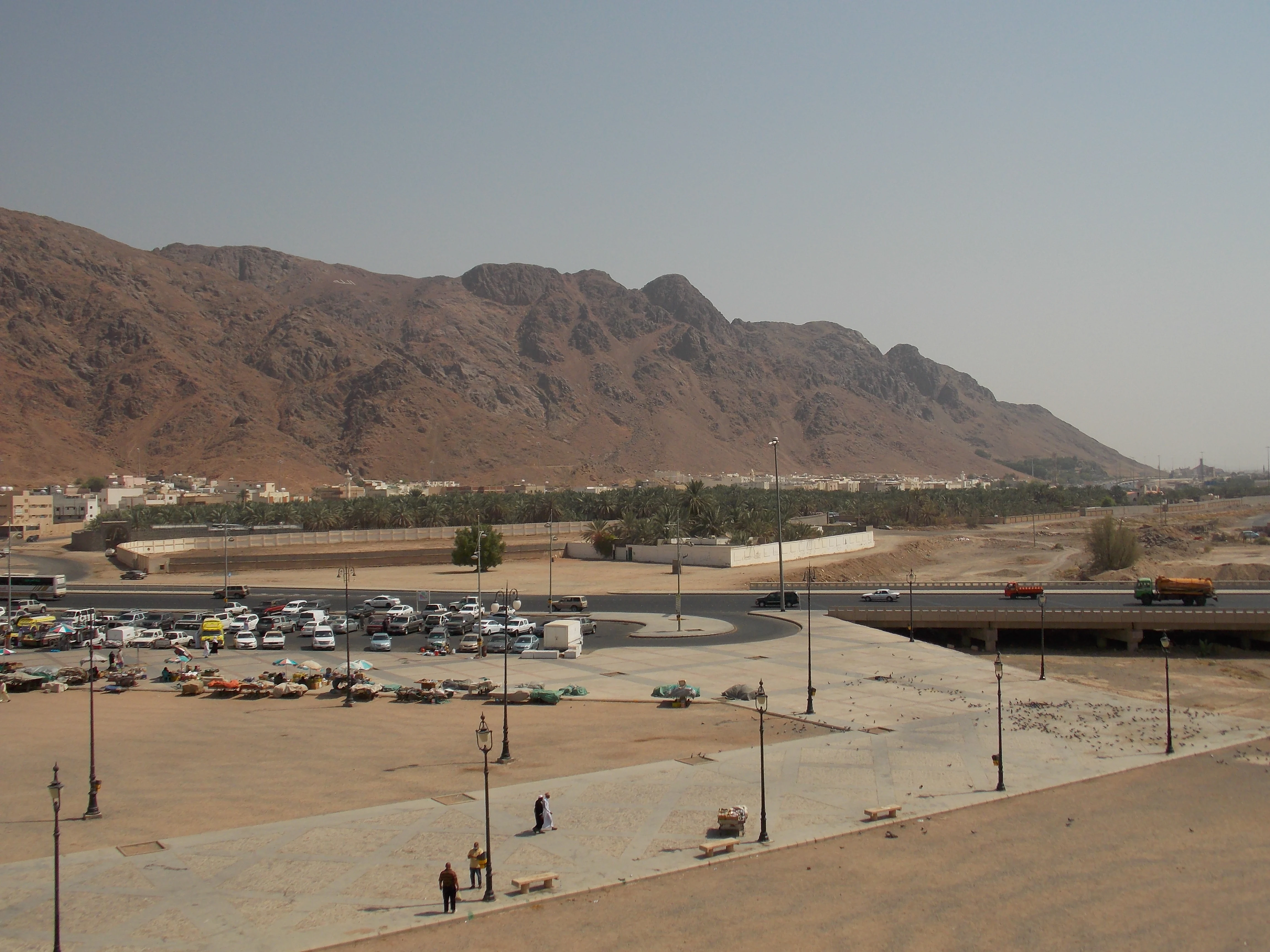
Nusaybah bint Ka'ab, known by her kunya as Umm Ammara, was a woman of the Ansar of Medina who took the Second Pledge of Aqaba, fought in defence of Prophet Muhammad ﷺ at the Battle of Uhud, and was severely wounded at the Battle of Yamama during the Ridda Wars. She is among the small number of women companions from whom hadith are transmitted in the canonical collections, and her household became a channel through which reports of the Prophet's practice entered Sahih al-Bukhari.
Her full name is given in the biographical dictionaries as Nusaybah bint Ka'ab ibn Amr ibn Awf ibn Mabdhul ibn Amr ibn Ghanm ibn Mazin ibn al-Najjar — placing her in Banu Mazin, a branch of the Banu al-Najjar clan of the Khazraj, hence the nisba al-Maziniyya by which the hadith scholars often identify her. She is known equally by her name and her kunya, and in the isnads of the hadith collections she usually appears as Umm Ammara (or Umm Umara) bint Ka'ab al-Ansariyya.
What the Sources Establish, and How
The evidence for her life divides sharply into two bodies of material, and this article keeps them distinct throughout.
Her participation in the pledge at Aqaba, her fighting at Uhud, and her wounds at Yamama come from the sira and maghazi literature and the biographical dictionaries of the Companions — principally Ibn Hisham, al-Waqidi, Ibn Sa'd, and Ibn Hajar al-Asqalani. These are the recognised classical authorities for the campaigns of the Prophetic period, and they are cited here as such. They are not hadith collections, and their reports are not graded by the standards applied to hadith.
Three traditions from her, by contrast, are in the canonical collections with grades attached, and these are the only statements in this article attributed to the Prophet on her authority. A fourth strand, indirect but well documented, runs through her descendants: her son Abdullah ibn Zayd ibn Asim al-Mazini and her grandson Abbad ibn Tamim are both hadith authorities whose reports appear repeatedly in Sahih al-Bukhari.
Family
Nusaybah married Zayd ibn Asim, of her own tribe, and bore him two sons, Abdullah and Habib. She married afterwards Ghaziyya ibn Amr, and bore him Tamim and Khawla. This second marriage matters for the transmission of hadith: her grandson Abbad ibn Tamim, who narrates directly from her, was the son of Tamim, and the "paternal uncle" from whom Abbad narrates so frequently in Sahih al-Bukhari is identified in the rijal literature as her son by her first marriage, Abdullah ibn Zayd ibn Asim al-Mazini.
Her husband and both her elder sons were, according to the biographers, present with her at the Second Pledge of Aqaba.
The Second Pledge of Aqaba
In 622 CE a delegation from Medina met the Prophet at Aqaba, outside Mecca, and pledged to receive him in their city and to defend him. Ibn Hisham's recension of Ibn Ishaq gives the delegation as seventy-three men and two women, and names the two women as Nusaybah bint Ka'ab, Umm Ammara, and Umm Mani Asma bint Amr. This pledge was the political undertaking that made the Hijra possible, and the sources record that the two women gave it as the men did.
The pledge committed those who gave it to protect the Prophet at cost to themselves. What Nusaybah did at Uhud three years later is presented in the classical accounts as the discharge of that undertaking rather than as an improvisation.
The Battle of Uhud
At Uhud in 625 CE, a Quraysh army of some three thousand met a Muslim force of about seven hundred outside Medina. The Muslims held the advantage until a body of archers left their assigned position, allowing the Meccan cavalry to strike the Muslim rear. The formation broke, the Prophet was wounded, and a rumour spread that he had been killed.
Nusaybah had come out with a water skin, to give water to the fighters and tend the wounded — the role women ordinarily filled on these expeditions. Ibn Sa'd preserves her own account of what happened next, given to Umm Sa'd bint Sa'd ibn al-Rabi, who visited her afterwards and asked her to describe the day. Nusaybah said that she had gone out at the start of the day to see what the people were doing, carrying a water skin; that she reached the Messenger of God while the Muslims were winning; and that when the Muslims were routed she went to him and set about defending him, fighting with the sword and shooting arrows, until she was wounded.
Al-Waqidi and Ibn Sa'd record that she received a number of wounds, the most serious a deep cut to the shoulder dealt by Ibn Qami'a, one of the Quraysh who was pressing toward the Prophet, and that this wound took about a year to heal. The same sources report the Prophet's words about her — that wherever he turned, right or left, on the day of Uhud, he saw her fighting in his defence.
These reports come from the maghazi and tabaqat literature, not from Bukhari or Muslim, and this article does not present the statement attributed to the Prophet here as a graded hadith. It is the testimony of the recognised early historians of the campaigns, which is a strong basis for a historical claim and a different thing from a sahih attribution.
Her son Abdullah was wounded in the arm in the same fighting. Ibn Sa'd reports that she bound the wound and told him to go back, and that the Prophet, seeing this, invoked blessing on her household.
The Battle of Yamama
After the Prophet's death in 632 CE, a number of Arabian tribes renounced their obligations to the Muslim state, and Abu Bakr resolved to compel their return. The heaviest fighting of these campaigns took place at Yamama in 633 CE against the followers of Musaylima, who had claimed prophethood among the Banu Hanifa. The Muslim army was commanded by Khalid ibn al-Walid, and the casualties on the Muslim side were severe, including many who had memorised the Quran.
Nusaybah's son Habib ibn Zayd had been sent earlier as an envoy and was seized by Musaylima, who demanded that he acknowledge Musaylima's claim to prophethood. Habib refused, and was killed by dismemberment. The sources are consistent that he died without recanting.
Nusaybah went out with the army to Yamama. Ibn Sa'd records that she was wounded twelve times and that her hand was severed in the fighting. She survived, and returned to Medina.
The narrative sometimes attached to these facts — that she killed a specified number of the enemy, or fought her way personally to Musaylima to avenge her son — is not established in the early sources and is not carried here.
Hadith Transmitted from Her
Three traditions are recorded from Umm Ammara bint Ka'ab in the canonical collections.
The best known concerns the revelation of a Quranic verse. She came to the Prophet and said that she saw everything being for the men, and saw nothing mentioned for the women. The tradition states that the verse was then revealed: "Indeed, the Muslim men and Muslim women, the believing men and believing women, the obedient men and obedient women..." (Quran 33:35), which enumerates ten qualities and names men and women equally in each (Jami' at-Tirmidhi 3211, graded hasan). Tirmidhi places it in his chapters on Quranic commentary, under Surah al-Ahzab. The report is a statement of the occasion of revelation (sabab al-nuzul) as Tirmidhi received it; other reports of the occasion of this verse also exist, and the commentators discuss them.
A second tradition concerns the Prophet's ablution. Her grandson Abbad ibn Tamim narrated from her that the Prophet performed wudu with water brought to him in a vessel holding about two-thirds of a mudd. Shu'ba, transmitting it, said he remembered that the Prophet washed his forearms, rubbing them, and wiped the inside of his ears, but could not recall whether he wiped the outside (Sunan an-Nasa'i 74, graded sahih; Sunan Abu Dawud 94, graded sahih by al-Albani). The report is cited in the law of ablution for the small quantity of water the Prophet used.
A third concerns fasting. The Prophet came in to her and food was brought to him, and he told her to eat. She said she was fasting. He then said that the angels invoke blessings upon a fasting person when others eat in his presence, until they finish — or, in another wording, until they have eaten their fill (Jami' at-Tirmidhi 785, graded hasan; a second chain at Jami' at-Tirmidhi 786 lacks the closing clause). Tirmidhi judged the first chain the sounder of the two.
Her Household in the Chains of Transmission
The more substantial part of Nusaybah's contribution to the preservation of the Sunna was made through her family rather than by her own narration.
Her son Abdullah ibn Zayd ibn Asim al-Mazini became a recognised authority on the Prophet's practice. Malik records in the Muwatta that when he was asked to demonstrate how the Prophet performed ablution, he called for water and showed the method — washing each hand, then rinsing the mouth and nose three times — and this demonstration is among the principal bases in Islamic law for performing the rinsing of mouth and nose together from the same handful (Muwatta Malik, Book 2). Musnad Ahmad devotes a section of its arrangement to his traditions.
Her grandson Abbad ibn Tamim transmitted from him extensively, and the resulting chain — Abbad ibn Tamim from his paternal uncle — appears repeatedly in Sahih al-Bukhari. Through it comes the ruling that a worshipper troubled by doubt during prayer should not break it unless he hears a sound or detects a smell (Sahih al-Bukhari 137; Sahih al-Bukhari 2056), and the group of reports describing how the Prophet prayed for rain: that he faced the qibla, supplicated, turned his cloak inside out, and prayed two cycles aloud (Sahih al-Bukhari 1005; Sahih al-Bukhari 1023; Sahih al-Bukhari 1024; Sahih al-Bukhari 1027). The same chain preserves the observation that the Prophet lay on his back in the mosque with one leg over the other (Sahih al-Bukhari 6287).
That a woman of the Ansar who fought at Uhud should also stand at the head of a family of transmitters is the least remarked feature of her biography and arguably the most consequential. The identification of Abbad's uncle as Abdullah ibn Zayd ibn Asim is made in the rijal literature — Ibn Hajar states it in Tahdhib al-Tahdhib and in Fath al-Bari — rather than in the text of the hadith themselves, and it is on that authority that the connection is drawn here.
Later Life and Death
Nusaybah returned to Medina after Yamama and lived on there. The date of her death is not recorded. The biographical dictionaries place it after the accession of Umar ibn al-Khattab in 634 CE, and since her grandson Abbad ibn Tamim narrates from her directly, she lived long enough for a grandchild to reach an age at which he could receive and retain her reports. Beyond this the sources do not go, and specific dates given for her death in later literature are not traceable to an early authority.
Reports that Abu Bakr visited her after Yamama, that Umar called on her regularly, or that a stipend was settled on her from the treasury, appear in later compilations without support in the early sources, and are not carried here.
Historiographical Note
Three points about the source position are worth stating plainly.
First, on the two women at Aqaba: the number of participants in the Second Pledge and the naming of the two women come from Ibn Ishaq through Ibn Hisham. This is the standard account and no early source contradicts it, but it rests on a single line of transmission.
Second, on her later campaigns: it is often stated that she was present at the Treaty of Hudaybiyyah, at Khaybar, at the conquest of Mecca, at Hunayn, and at the Farewell Pilgrimage. These claims circulate widely but are not established in the early maghazi material in the way that Uhud and Yamama are, and they have been left out of this article rather than reported with hedging language. What the early sources support is her presence at Aqaba, at Uhud, and at Yamama.
Third, on the distinction between her two bodies of testimony: the woman who appears in the isnads as Umm Ammara bint Ka'ab al-Ansariyya, grandmother of Abbad ibn Tamim, is identified by the hadith scholars with the Nusaybah bint Ka'ab of the Uhud accounts, and the family relationships align — Abbad is the son of her son Tamim, and the uncle he narrates from is her son Abdullah. Several women named Nusaybah appear among the Companions, and Ibn Hajar distinguishes them in al-Isabah; the identification adopted here is the one the biographical literature makes.
Legacy
Nusaybah bint Ka'ab is remembered principally for Uhud, and the classical sources treat her conduct there as an act of the first rank. Her example was cited by later jurists in discussions of whether and when women might take part in fighting, generally as evidence that participation is permissible when the community is under direct threat rather than as a general rule. The classical biographers recorded her life in detail, including her own words about the day, which is itself an indication of the value they attached to her testimony.
Two features of her biography are worth holding together. She took a political undertaking at Aqaba and discharged it on a battlefield at the cost of a shoulder wound that took a year to heal and, later, of a hand and a son. And she transmitted the Prophet's practice — how he washed for prayer, what he said about the fasting person, what was revealed when she asked why the men seemed to be spoken of and the women not — to a grandson who carried it into the most rigorously sifted collection in Islam. The record of her life is short by the standards of the major Companions, but every part of it that survives is load-bearing.
References and Further Reading
Primary Islamic Sources
- Quran 33:35 — the verse enumerating ten qualities and naming believing men and believing women equally in each, which Jami' at-Tirmidhi 3211 reports was revealed after Umm Ammara asked the Prophet why she saw everything mentioned for the men and nothing for the women
- Jami' at-Tirmidhi 3211 — Umm Ammara al-Ansariyya on the occasion of the revelation of Quran 33:35. Graded hasan (Darussalam)
- Jami' at-Tirmidhi 785, 786 — the angels invoking blessings on a fasting person when others eat in his presence, narrated from Umm Ammara bint Ka'ab al-Ansariyya. Graded hasan (Darussalam)
- Sunan an-Nasa'i 74 — Abbad ibn Tamim from his grandmother Umm Ammara bint Ka'ab: the Prophet's ablution with about two-thirds of a mudd of water. Graded sahih (Darussalam)
- Sunan Abu Dawud 94 — the same report. Graded sahih (al-Albani)
- Muwatta Malik, Book 2 — her son Abdullah ibn Zayd ibn Asim al-Mazini demonstrating the Prophet's ablution
- Sahih al-Bukhari 137, 2056 — Abbad ibn Tamim from his uncle: not breaking prayer on doubt unless a sound is heard or a smell detected
- Sahih al-Bukhari 1005, 1023, 1024, 1027 — Abbad ibn Tamim from his uncle: the Prophet's prayer for rain, facing the qibla and turning his cloak inside out
- Sahih al-Bukhari 6287 — Abbad ibn Tamim from his uncle, on the Prophet reclining in the mosque
Classical Islamic Sources
- Ibn Hisham. Al-Sirah al-Nabawiyyah. Edited by Mustafa al-Saqqa. Cairo: Mustafa al-Babi al-Halabi, 1955. [Original c. 833 CE, recension of Ibn Ishaq] — the Second Pledge of Aqaba and the naming of the two women present
- Al-Waqidi, Muhammad ibn Umar. Kitab al-Maghazi. Edited by Marsden Jones. London: Oxford University Press, 1966. [Original c. 823 CE] — the Battle of Uhud and her fighting in the Prophet's defence
- Ibn Sa'd, Muhammad. Al-Tabaqat al-Kubra. Edited by Eduard Sachau. Leiden: Brill, 1904–1940. [Compiled c. 845 CE] — the fullest biography, including her own account of Uhud given to Umm Sa'd bint Sa'd ibn al-Rabi, and her wounds at Yamama
- Ibn Hajar al-Asqalani. Al-Isabah fi Tamyiz al-Sahabah. Beirut: Dar al-Kutub al-Ilmiyyah, 1995. [Compiled c. 1449 CE] — the biographical entry, and the distinction between the several Companions named Nusaybah
- Ibn Hajar al-Asqalani. Tahdhib al-Tahdhib. [Compiled c. 1440s CE] — the identification of Abbad ibn Tamim's uncle as Abdullah ibn Zayd ibn Asim al-Mazini
- Al-Tabari, Muhammad ibn Jarir. Tarikh al-Rusul wa al-Muluk. Edited by M.J. de Goeje. Leiden: Brill, 1879–1901. [Completed c. 915 CE] — the Ridda campaigns and Yamama
- Ibn Kathir, Ismail. Al-Bidaya wa al-Nihaya. Beirut: Dar al-Kutub al-Ilmiyyah, 1994. [Compiled c. 1373 CE]
Academic and Scholarly Sources
- Sayeed, Asma. Women and the Transmission of Religious Knowledge in Islam. Cambridge: Cambridge University Press, 2013. — the standard study of women in the isnads, including the first-generation transmitters
- Nadwi, Mohammad Akram. Al-Muhaddithat: The Women Scholars in Islam. Oxford: Interface Publications, 2007.
- Roded, Ruth. Women in Islamic Biographical Collections: From Ibn Sa'd to Who's Who. Boulder: Lynne Rienner Publishers, 1994. — on how the tabaqat compilers recorded women Companions
- Shoufani, Elias. Al-Riddah and the Muslim Conquest of Arabia. Toronto: University of Toronto Press, 1973. — the Yamama campaign
- Watt, W. Montgomery. Muhammad at Medina. Oxford: Clarendon Press, 1956. — Uhud and the Medinan campaigns
Further Reading
- Bewley, Aisha. Muslim Women: A Biographical Dictionary. London: Ta-Ha Publishers, 2004.
- Stowasser, Barbara Freyer. Women in the Qur'an, Traditions, and Interpretation. New York: Oxford University Press, 1994.
- Lings, Martin. Muhammad: His Life Based on the Earliest Sources. Cambridge: Islamic Texts Society, 1983.
More from Prophetic Era
Battle of Hunayn
The Battle of Hunayn (630 CE) was fought a month after the conquest of Mecca between the Muslims and a coalition of the Hawazin and Thaqif tribes. A near-disastrous ambush was reversed into a decisive Muslim victory, followed by the siege of Ta'if and a generous distribution of captives and spoils.
Battle of Uhud
The Battle of Uhud (March 625 CE) was the second major engagement between Medina's Muslims and the Meccan Quraysh. After an early Muslim advantage, archers left their posts, enabling a Qurayshi cavalry attack that wounded the Prophet, killed Hamza, and ended in a strategic draw.
Constitution of Medina
The Constitution of Medina (622 CE) was a written agreement between Prophet Muhammad and the communities of Medina — Muslim emigrants, Muslim Medinan tribes, and several Jewish tribes — establishing mutual obligations, collective defense, and a framework for resolving disputes.
Hijra - The Migration to Medina
The Hijra (622 CE) was Prophet Muhammad's migration from Mecca to Medina, marking the Islamic calendar's beginning and establishing the first Islamic state. This pivotal event transformed Islam from a persecuted movement into a thriving autonomous community.