Osman I: Founder of the Ottoman Dynasty
Osman I (c. 1258-c. 1324) was the Turkoman frontier leader from whom the Ottoman dynasty takes its name. No written source survives from his lifetime, and almost everything recorded about him was set down more than a century later, which makes his reign the least documented of the dynasty.
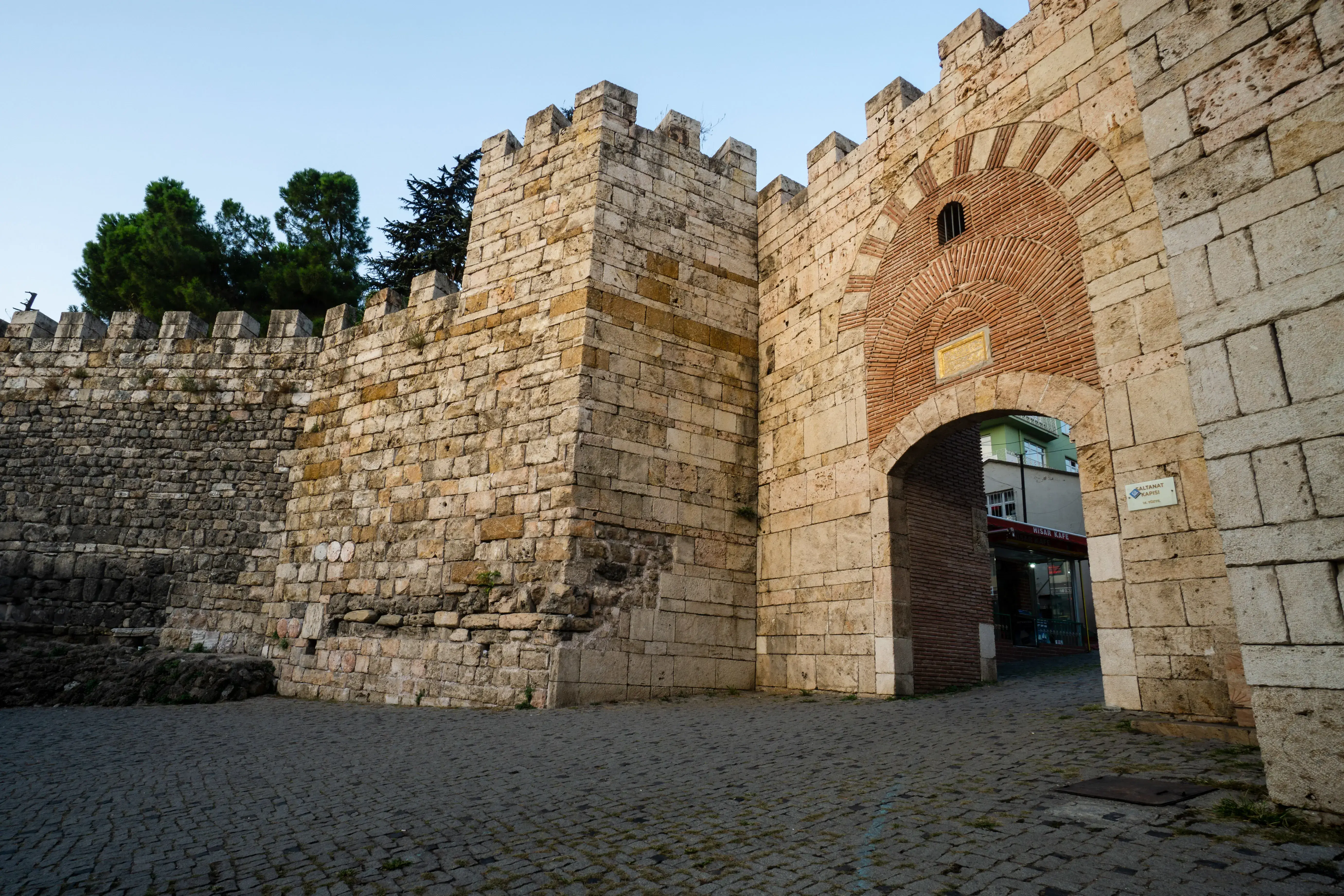
Osman I — Osman Ghazi in later Ottoman usage — was the Turkoman frontier chief in north-western Anatolia from whom the Ottoman Empire took its name, its ruling family, and the foundation legend by which it explained itself for six centuries. The dynasty he founded ruled until 1922, making it among the longest-lived in world history.
He is also the most poorly documented ruler in that dynasty, and any honest account of him has to begin with that difficulty. Not a single written document survives from his reign. The Ottomans themselves did not compose a history of his life until the fifteenth century, more than a hundred years after his death, by which time the family had become an imperial power with a strong interest in how its origins were understood. The near-contemporary evidence is Byzantine and external, brief, and concerned with Osman only as a local threat. What follows separates what can be established from what belongs to the later tradition.
The Problem of the Sources
The scale of the source problem deserves stating plainly, because a great deal of confident narrative about Osman circulates without it.
The earliest Ottoman narrative accounts date from the 1400s — the chronicles associated with Ahmedi, Aşıkpaşazade, Neşri and the anonymous Tevarih-i Al-i Osman tradition. They were written after the Ottomans had absorbed the other Anatolian principalities, after the conquest of the Balkans, and in some cases after the conquest of Constantinople. They drew on oral tradition, on frontier epic, and on the requirements of dynastic legitimation.
The one genuinely contemporary witness is Byzantine. George Pachymeres, writing in Constantinople during Osman's lifetime, records a Turkish leader in Bithynia whose name he renders as Atman or Atouman, and reports his victory over a Byzantine force. Later Byzantine writers add fragments. Coins bearing Osman's name are contested, and the earliest securely attributed Ottoman coinage belongs to his son.
The consequence is that Osman's dates, his lineage, the extent of his authority, and even the sequence of his campaigns rest on reconstruction. Modern scholarship — Cemal Kafadar's and Heath Lowry's studies in particular — has been concerned less with recovering the facts of his life, which may not be recoverable, than with understanding how and why the later tradition constructed the account it did.
Origins and Lineage
Ottoman tradition holds that Osman was the son of Ertuğrul, a Turkoman chief who had been granted lands around Söğüt in north-western Anatolia by the Seljuk sultans of Rum, and that the family belonged to the Kayı branch of the Oghuz Turks. Osman's birth is placed around 1258.
The Ertuğrul connection is early and consistent in the tradition, and it appears in the genealogies the dynasty used from the fourteenth century; that Osman's father was named Ertuğrul is generally accepted. The Kayı descent is more doubtful. It does not appear in the earliest genealogies and is attached to the family in the fifteenth century, at a point when a distinguished Oghuz pedigree had become politically useful in competition with rival Turkish dynasties — particularly after the humiliation of the house by Timur. Most modern historians regard it as a later construction rather than a preserved memory.
The setting is better understood than the family. Osman operated on the frontier between the receding Byzantine Empire and the Turkish principalities of Anatolia, in the aftermath of the collapse of Seljuk authority under Mongol pressure. This was a zone of small mobile polities led by beys whose followings were held together by success in raiding, by the distribution of plunder and land, and by a frontier culture in which religious warfare, pragmatic alliance, and the absorption of local Christian populations all coexisted. A dozen such principalities existed; nothing in the early fourteenth century marked Osman's out as the one that would become an empire.
The Reign
What can be said about Osman's actual career amounts to a handful of developments.
He established himself in the region around Söğüt and Bilecik and expanded at Byzantine expense into Bithynia, the fertile and heavily urbanised province south of the Sea of Marmara. His method was the characteristic frontier one: control of the countryside first, isolation of the fortified towns, and their eventual reduction by blockade rather than assault, since he possessed no siege capability worth the name.
The one datable event of the reign is a battle against a Byzantine force sent to relieve the pressure on Nicaea, fought at Bapheus near Nicomedia. Pachymeres records it, and it is the earliest firmly attested Ottoman victory. Its date is disputed: 1301 or 1302 are the figures usually given, and some accounts place it in 1299. The engagement was small by later standards, but its consequences were substantial — Byzantine field forces did not return to Bithynia in strength, and Osman's standing among the frontier warriors rose accordingly, drawing further followers to him.
Over the following two decades he took the fortified points of the region: Yenişehir, which became his seat, Bilecik, and others. He besieged Bursa without taking it. The city fell in 1326, either in his final months or shortly after his death, and the credit in the sources is divided between him and his son Orhan.
His date of death is uncertain, given variously between about 1323 and 1326. He was buried at Bursa, where his tomb became a dynastic shrine and where the sultans who followed him were interred until the capital moved to Edirne.
What the sources say of his household is correspondingly thin. Two consorts are named in the later tradition — Malhun Hatun, generally given as Orhan's mother, and a daughter of the sheikh Edebalı — and neither identification is secure, the names and their attribution varying between the fifteenth-century chronicles. Two sons are recorded: Orhan, who succeeded him, and Alaeddin, who did not contest the succession and is associated in the tradition with civil rather than military office. That the transition passed to one son without the other fighting for it is the single most consequential fact about Osman's family, and it is also among the least explained: the sources assert the harmony rather than accounting for it, and whether it reflects an arrangement Osman made, Orhan's strength, or a later smoothing of an untidy episode cannot be determined.
The Dream and the Foundation Legend
The best-known story about Osman is almost certainly not history, and it is important for a different reason.
The fifteenth-century chronicles relate that Osman, staying in the house of a holy man named Edebalı, dreamed that a moon rose from the sheikh's breast and entered his own, whereupon a great tree grew from his body whose shade covered the world, with mountains, rivers and cities beneath it. Edebalı interpreted the dream as a prophecy of sovereignty and gave Osman his daughter in marriage.
The story appears roughly a century and a half after the events it describes, and it performs an obvious function: it grants the dynasty a divine warrant for universal rule, ties it to religious authority through the sheikh, and does both at a moment when the Ottomans needed to assert primacy over Muslim rivals with better genealogies. Historians treat it as legend.
Its significance is nonetheless real. The dream became a foundational text of Ottoman self-understanding, recited in dynastic histories, invoked in ceremonial, and referenced in the imagery of sovereignty for centuries. It belongs to the history of Ottoman legitimacy rather than to the biography of Osman, and the distinction is the point.
The Nature of Osman's Following
One of the more productive debates in Ottoman studies concerns what actually held Osman's followers together, since the answer bears on the character of the state that grew from them.
The older view, associated with the nationalist historiography of the early twentieth century, treated the early Ottomans as a tribal Turkish migration carrying Islam westward — gazis fighting a religious frontier war. A revision associated with Paul Wittek emphasised gaza, holy war, as the organising ideology. More recent work has complicated both.
Kafadar's study argues that the frontier was a zone of mixed and fluid identity in which religious enthusiasm was genuine but coexisted with pragmatic accommodation, and in which the categories of Muslim and Christian, Turk and Greek, were less rigid than later narratives suggest. Lowry's work goes further, emphasising the evidence that Osman's following included Christian Byzantine frontier warriors who joined him for plunder and position, some of whom converted and some of whom apparently did not, and arguing that the early Ottoman enterprise is better described as a predatory confederacy than a religious movement.
The evidence does not settle the question, and the honest position is that it supports elements of more than one account. What it does establish is that the early Ottoman state absorbed rather than expelled the populations it conquered, that it recruited from them, and that this capacity for absorption is among the better explanations for why Osman's principality outgrew its neighbours.
The Name and the Question of Status
Two technical problems in the evidence are worth setting out, because both bear on how Islamised and how independent the early Ottoman enterprise actually was.
The first concerns his name. The contemporary Byzantine writer Pachymeres renders it as Atman or Atouman, and later Greek sources vary between forms closer to Osman and forms closer to Uthman. Some scholars have argued from this that the original name was a Turkish one — Atman — and that it was assimilated to the Arabic Uthman, the name of the third caliph, as the dynasty's Islamic identity became more central to its self-presentation. Others hold that the Byzantine renderings simply reflect Greek phonology. The question cannot be settled, and it is a small matter in itself; its interest is that it touches the larger issue of how thoroughly Islamised a frontier chief of this period was, and how much of the later Islamic framing was applied retrospectively.
The second concerns his political status. Anatolia in Osman's lifetime was nominally under the suzerainty of the Ilkhanid Mongols of Iran, exercised through the remnants of the Seljuk Sultanate of Rum, and the Turkish beys of the region were in principle subordinate to that authority. Whether Osman acknowledged it, paid tribute, or received any formal recognition is unknown. The later Ottoman tradition supplies an account in which the Seljuk sultan granted his father lands and conferred insignia of authority on Osman himself, but this belongs to the same fifteenth-century material as the rest of the foundation narrative and serves the same legitimising purpose.
What can be said is that the earliest surviving Ottoman document — an endowment deed of Orhan's, from 1324, immediately after Osman's death — shows a ruler making a permanent charitable foundation in his own right. That is the act of a sovereign, or of someone behaving as one, and it stands within a year or two of Osman's death. Whatever Osman's formal status, his son's position was already effectively independent.
Bithynia: Why This Frontier
The geography of Osman's expansion was not incidental, and it goes some way toward explaining why his principality succeeded where others did not.
Bithynia — the region south and east of the Sea of Marmara — was among the wealthiest and most heavily urbanised provinces the Byzantine Empire still held in Asia. It contained Nicaea, which had been the imperial capital during the Latin occupation of Constantinople and remained a major city; Nicomedia, on the gulf that bears its name; Prusa, later Bursa; and a densely settled agricultural hinterland. It was also immediately adjacent to Constantinople, separated only by water.
Most of the other Anatolian principalities faced either the Aegean coast, where they contested a maritime frontier with Latin and Byzantine sea power, or the interior plateau, where expansion meant fighting other Turks. Osman's neighbours to the west were Byzantine, wealthy, and — after the Byzantine state committed its resources to European wars and to the defence of Constantinople — inadequately garrisoned.
Two consequences followed. Territorial gains in Bithynia yielded far more revenue per unit of effort than gains elsewhere in Anatolia, which made Osman's following attractive to join. And because the opponent was Christian, expansion could be presented as gaza and drew warriors from across Anatolia who wanted the prestige as well as the plunder. Principalities fighting fellow Muslims had no such recruiting advantage.
This is a structural explanation rather than a claim about Osman's foresight. He operated where his father had settled, and the value of the position was a matter of accident. But it is a better answer to the question of why the Ottomans rather than the Karamanids or the Aydinids became an empire than any appeal to the personal qualities of a man about whom almost nothing is known.
Osman in the Later Tradition
Because the documentary Osman is so thin, the Osman of Ottoman memory did most of the work, and it is worth setting out what that figure was made to carry.
The dynasty's histories, written from the fifteenth century, present him as the ideal founder: pious, just, generous, personally brave, deferential toward religious authority, and divinely designated. The dream at Edebalı's house supplies the designation; his marriage to the sheikh's daughter supplies the link to sanctity; and a body of anecdote supplies the virtues. A set of maxims and a testament to his son were attributed to him, urging justice, the protection of the religious classes, and the continuation of gaza.
These materials served identifiable purposes. They asserted Ottoman primacy over Muslim rivals with older pedigrees. They bound the dynasty to the religious establishment whose cooperation it needed. And after the catastrophe of 1402, when Timur destroyed the Ottoman army and dismembered the state, they helped explain why the house deserved to be restored.
The tradition also shaped Ottoman practice in concrete ways. New sultans were girded with a sword said to be Osman's at their accession. The dynasty called itself Al-i Osman, the house of Osman, and its subjects were Osmanlı — the word from which "Ottoman" derives. His tomb at Bursa was maintained as a dynastic shrine, and the sultans visited it.
In the twentieth and twenty-first centuries the figure has been reworked again, in Turkish nationalist historiography and more recently in popular television drama, and the versions in wide circulation today owe more to those treatments than to any source. Readers encountering confident narratives of Osman's life, with dialogue, dated campaigns and family detail, should understand that the evidence does not support them.
Assessment
Osman's historical significance is disproportionate to anything that can be documented about him, and the disproportion is itself the interesting fact.
By any measure of his own lifetime he was a minor figure: the leader of one of a dozen Anatolian frontier principalities, master of a few towns in Bithynia, whose single recorded victory was a small engagement against a second-rate Byzantine detachment. He founded no institutions that can be traced to him, left no documents, issued no securely attributed coinage, and did not take the region's principal city.
What he did establish was a following that cohered after his death and a family that retained its leadership. The transition from Osman to Orhan was accomplished without the fragmentation that destroyed most comparable polities, and the momentum of expansion continued through three further reigns without a succession crisis serious enough to halt it. Whether this reflects Osman's own arrangements or his son's capability cannot be determined from the sources.
For the historian, the more useful way to state his importance is that the Ottoman dynasty needed a founder and constructed one. The Osman of the chronicles — pious, just, divinely favoured, prophesied — is a fifteenth-century composition serving fifteenth-century purposes, and it tells us a great deal about the empire that made it. The Osman of the evidence is a successful frontier commander of whom very little is known. Both are worth understanding, and confusing them has been the standing error of writing about early Ottoman history.
References and Further Reading
Primary Islamic Sources
- Quran, Surah al-Hajj (22:39–40) — on permission granted to those wronged, among the verses invoked in the frontier ideology of gaza
- Quran, Surah al-Anfal (8:60–61) — on military preparedness and on inclining toward peace, texts relevant to the mixed practice of the Anatolian frontier
- Sahih al-Bukhari and Sahih Muslim, Books of Jihad — the prophetic material on the conduct of warfare and the treatment of non-combatants, against which later Ottoman jurists assessed the frontier campaigns
- The Tevarih-i Al-i Osman tradition — the fifteenth-century Ottoman dynastic chronicles that constitute the earliest Muslim narrative source, and whose distance from the events is the central problem of the subject
Classical Islamic Sources
- Aşıkpaşazade. Tevarih-i Al-i Osman. [Compiled c. 1480s] — among the fullest of the early Ottoman chronicles
- Neşri, Mehmed. Kitab-i Cihannüma. [Compiled c. 1490s]
- Ahmedi. İskendername. [Early 15th century] — the earliest surviving Ottoman literary treatment of the dynasty's origins
- Ibn Battuta. The Travels. Translated by H.A.R. Gibb. Cambridge: Hakluyt Society, 1958–2000. — a description of the Anatolian principalities a generation after Osman, valuable for the setting
- Pachymeres, George. Historical Relations. [Contemporary Byzantine account] — the one witness writing during Osman's lifetime
Academic and Scholarly Sources
- Kafadar, Cemal. Between Two Worlds: The Construction of the Ottoman State. Berkeley: University of California Press, 1995. — the standard treatment of the source problem and of frontier identity
- Lowry, Heath W. The Nature of the Early Ottoman State. Albany: SUNY Press, 2003.
- Imber, Colin. The Ottoman Empire, 1300–1650: The Structure of Power. 2nd ed. Basingstoke: Palgrave Macmillan, 2009.
- İnalcık, Halil. The Ottoman Empire: The Classical Age, 1300–1600. London: Weidenfeld and Nicolson, 1973.
- Zachariadou, Elizabeth, ed. The Ottoman Emirate, 1300–1389. Rethymnon: Crete University Press, 1993.
- Wittek, Paul. The Rise of the Ottoman Empire. London: Royal Asiatic Society, 1938. — the classic statement of the gazi thesis, now substantially revised
- Vryonis, Speros. The Decline of Medieval Hellenism in Asia Minor and the Process of Islamization. Berkeley: University of California Press, 1971.
Further Reading
- Finkel, Caroline. Osman's Dream: The Story of the Ottoman Empire, 1300–1923. London: John Murray, 2005.
- Fleet, Kate, ed. The Cambridge History of Turkey, Volume 1: Byzantium to Turkey, 1071–1453. Cambridge: Cambridge University Press, 2009.
- Peacock, A.C.S. The Great Seljuk Empire. Edinburgh: Edinburgh University Press, 2015. — on the Anatolian context Osman inherited
- Cahen, Claude. Pre-Ottoman Turkey. London: Sidgwick and Jackson, 1968.
Mentioned In
6 articles reference this topic
More from Ottoman Empire
Conquest of Constantinople - The Fall of Byzantium
The historic conquest of Constantinople by Ottoman Sultan Mehmed II on May 29, 1453 CE, ending the Byzantine Empire and establishing Ottoman dominance in southeastern Europe. This pivotal victory transformed the Ottomans into a major European power.
Battle of Nicopolis (1396 CE)
The Battle of Nicopolis, fought on 25 September 1396, was a decisive Ottoman victory over a combined Western European crusading army under Sigismund of Hungary. The last major crusade of the medieval period, its failure cemented Ottoman dominance over the Balkans.
Blue Mosque: The Sultan Ahmed Mosque of Istanbul
The Blue Mosque (Sultan Ahmed Mosque) in Istanbul, built between 1609-1616 CE, is one of the most magnificent examples of Ottoman architecture and a masterpiece of Islamic architectural achievement.
Bosnia and Herzegovina: Islamic Heritage in the Balkans
The westernmost region of sustained Muslim presence in Europe. Ottoman rule from 1463 until the Austro-Hungarian occupation of 1878 produced a distinctive Bosniak Muslim culture that joined Ottoman traditions to indigenous Balkan ones.