Alp Arslan: Manzikert and the Opening of Anatolia
Alp Arslan (c. 1029-1072) was the second Seljuk sultan, whose victory over the Byzantine emperor Romanos IV at Manzikert in 1071 broke Byzantine defences in Asia Minor and opened Anatolia to Turkish settlement. He was killed the following year on campaign in Transoxiana.
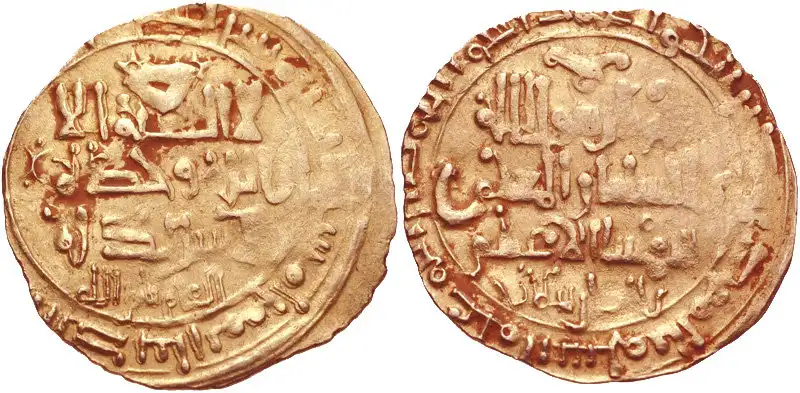
Muhammad ibn Dawud Chaghri, known by the Turkish title Alp Arslan — "heroic lion" — ruled the Seljuk Empire from 1063 to 1072. His reign is remembered for a single afternoon in August 1071, when he destroyed a Byzantine army at Manzikert and captured its emperor. The battle is conventionally identified as the moment Anatolia began to become Turkish, and its consequences reached from the settlement of Asia Minor to the calling of the First Crusade a generation later.
The reign was more than that battle, and Manzikert itself was less deliberate than its reputation implies. Alp Arslan's strategic priorities lay in Syria and Egypt rather than in Anatolia, and the campaign that produced his most famous victory was an unwanted interruption. Understanding this is essential to understanding what happened afterwards.
The Seljuk Inheritance
The Seljuks were a Turkoman family from the Oghuz confederations of the Central Asian steppe who had entered the Islamic world as mercenaries and converts, and who by the mid-eleventh century had made themselves masters of Iran. Alp Arslan's uncle Tughril Beg had entered Baghdad in 1055, received the title of sultan from the Abbasid caliph, and established the arrangement that defined the period: the caliph retained religious authority and legitimacy, while effective military and political power lay with a Turkish sultan who ruled in his name.
This was a settlement of considerable significance for Islamic political history. It formalised the separation of caliphal legitimacy from actual government, and it placed a Sunni Turkish military power at the head of the eastern Islamic world at a moment when the Shi'i Fatimid caliphate in Egypt and the Buyid dynasty in Iraq had between them dominated the previous century.
Alp Arslan was the son of Chaghri Beg, Tughril's brother, and had governed Khurasan. On Tughril's death in 1063 he secured the succession against rival claimants within the family, and by 1064 was in undisputed control. Among his first acts was the appointment of the administrator who would define his government and his son's: Nizam al-Mulk, the Persian vizier whose thirty years in office gave the Seljuk state its bureaucratic form.
Strategy and the Fatimid Objective
Alp Arslan's declared strategic aim was not Anatolia but Egypt. The Fatimid caliphate was in the crisis that would eventually deliver it to Nur al-Din Zengi's successors a century later, and the Seljuks — as champions of Sunni orthodoxy and of the Abbasid caliph — had both an ideological and a practical interest in ending it. Syria was the road to Egypt, and Alp Arslan campaigned there.
The complication came from his own followers. Turkoman tribal groups, mobile and only loosely under Seljuk control, were raiding westward into Byzantine Armenia and Asia Minor on their own account. Their activity generated Byzantine reprisals and drew the empire into a confrontation the sultan did not want. Alp Arslan's own campaigns in the region — the capture of Ani in Armenia in 1064, operations around Lake Van — were intended in part to establish control over these frontier bands and in part to secure his flank while he dealt with Syria.
The pattern is worth noting because it recurs throughout Seljuk history: a Persianate bureaucratic empire attempting to govern while the tribal forces that had created it pursued their own objectives. Nizam al-Mulk's Siyasatnama, written for Alp Arslan's son, is in part a manual for managing exactly this problem.
The Battle of Manzikert
The Byzantine emperor Romanos IV Diogenes had come to the throne in 1068 determined to restore the eastern frontier, and in 1071 he assembled a large army — the sources give figures that are certainly inflated, but it was the most substantial Byzantine field force in decades — and advanced into Armenia.
Alp Arslan was in Syria, near Aleppo, when he learned of the advance. He abandoned the Syrian campaign, marched north and east at speed, and met the Byzantine army near Manzikert, north of Lake Van, on 26 August 1071.
The battle was decided by Byzantine failures as much as by Seljuk skill. Romanos had divided his forces, sending a substantial detachment away before the engagement. His army was heterogeneous, containing mercenary contingents of uncertain loyalty, and it was tactically unsuited to fighting Turkish horse-archers who withdrew before contact and shot from the flanks. In the course of a long day the Byzantine centre advanced, found nothing to engage, and became strung out; when it turned back, part of the army believed the day lost and left the field. The Armenian and Turkish auxiliaries deserted, and a senior commander, Andronikos Doukas, withdrew his division. The remaining force was surrounded and destroyed.
Romanos IV was captured — an almost unprecedented humiliation for a Byzantine emperor. Alp Arslan's treatment of him has been remarked upon since: the emperor was received with courtesy, terms were negotiated involving ransom, territorial concessions and an alliance, and he was released. The sultan's evident preference was for a stable, tributary Byzantium on his western flank rather than the conquest of Asia Minor.
The Consequences
The terms Alp Arslan negotiated were never implemented, and the reason is instructive. Romanos returned to a civil war, was deposed, blinded and killed, and the government that replaced him repudiated the agreement. The Byzantine state then spent the following decade tearing itself apart in dynastic conflict.
The result was that the eastern frontier was left without defence at precisely the moment when the Turkoman groups whom Alp Arslan had been trying to control found it open. They moved into Anatolia not as an organised conquest directed from Baghdad or Isfahan but as a migration, occupying the interior plateau, and within twenty years Turkish principalities existed across Asia Minor. The Seljuk Sultanate of Rum, founded by a collateral branch of the family, emerged from this process.
Two long consequences followed. The first is demographic and cultural: the Turkification and Islamisation of Anatolia, studied in detail by Speros Vryonis, which over four centuries converted the Greek and Armenian heartland of the Byzantine Empire into the territory that would become Turkey — and from which the Ottoman enterprise later grew. The second is that Byzantine appeals to the West for military assistance, prompted by the loss of Asia Minor, contributed directly to the calling of the First Crusade in 1095 and thus to the events treated in the article on the Crusades.
Neither outcome was Alp Arslan's intention. He fought at Manzikert because a Byzantine army was advancing on him, he sought a negotiated settlement afterwards, and he returned east immediately. Carole Hillenbrand's study of the battle traces how a limited engagement, treated with relative brevity in the near-contemporary Muslim sources, was progressively magnified in later Turkish and modern nationalist historiography into a founding moment. The magnification is itself part of the battle's history, and it should be distinguished from what happened in 1071.
Government and Religious Policy
Alp Arslan's internal government was conducted largely through Nizam al-Mulk, and its character was Persian and bureaucratic rather than tribal. Revenue administration, the chancery, and the apparatus of provincial government were staffed by Persian secretaries working in established traditions, while military power rested with Turkish commanders and with iqta assignments of revenue in return for service.
In religious policy the reign was firmly Sunni and closely aligned with the Abbasid caliphate. The Seljuks presented themselves as restorers of orthodoxy against Shi'i power, and the madrasa network that Nizam al-Mulk founded — the Nizamiyya colleges — was established to train jurists and administrators in the Sunni legal schools. The most celebrated scholar of the following generation, al-Ghazali, taught in the Nizamiyya at Baghdad. The wider institutional development is treated in the article on Islamic education systems.
The sources also credit Alp Arslan with personal qualities that the Siyasatnama holds up as exemplary: accessibility to petitioners, generosity, and a piety that the chroniclers describe without the scepticism they apply to some of his relatives. As with all such material in the mirrors-for-princes tradition, it is written to instruct rather than merely to record, and should be read accordingly.
The Armenian and Georgian Campaigns
The operations that preceded Manzikert are worth setting out, because they show what Alp Arslan was actually trying to achieve on his northern frontier.
Armenia in the mid-eleventh century had recently been annexed by Byzantium, which had dismantled the local Armenian kingdoms and replaced their formidable frontier forces with Byzantine administration and mercenary garrisons — a decision that weakened the region's defences considerably. Alp Arslan campaigned there from 1064, taking Ani, the Armenian capital, in that year, and Kars subsequently. Georgia was raided and brought to terms.
Two purposes were being served. The first was strategic: securing the northern approaches to his Iranian territories and denying Byzantium a base from which to threaten them. The second was internal: the Turkoman tribal groups whose raiding was drawing Byzantine retaliation needed either to be controlled or to be directed at targets of the sultan's choosing, and leading them personally against Armenian and Byzantine fortresses accomplished both.
The Armenian sources — Aristakes of Lastivert and Matthew of Edessa — describe these campaigns from the receiving end and are essential to any account of them. They record considerable destruction, and they also record Armenian resentment of Byzantine rule, which helps explain the readiness of Armenian contingents to desert at Manzikert seven years later.
The Aftermath of Manzikert: What Alp Arslan Wanted
The terms Alp Arslan imposed on Romanos IV are the clearest evidence of his intentions, and they are inconsistent with any plan to conquer Asia Minor.
The reported settlement involved a ransom, an annual tribute, the release of Muslim prisoners, the cession of certain frontier territories, and a marriage alliance between the two houses. Romanos was released with an escort. In other words, Alp Arslan sought a client Byzantium that would pay him, leave his frontier quiet, and free him to resume the campaign against the Fatimids that the emperor's advance had interrupted.
This was a rational objective and it failed for reasons entirely outside his control. Romanos returned to find himself deposed; the Doukas family, whose kinsman had abandoned the battlefield, took power; the ex-emperor was blinded and died of his injuries; and the new government repudiated the agreement. The Byzantine civil wars of the 1070s then removed any coherent authority in Asia Minor.
The Turkoman migration into Anatolia that followed was not an army under orders. It was the movement of mobile pastoral groups into a vacated space, and the Seljuk sultanate's relationship to it was ambivalent throughout: these were the same tribal elements whose independence had caused Alp Arslan difficulty before Manzikert, and their establishment of principalities in Anatolia created rivals to the Great Seljuk house rather than provinces of it. The Sultanate of Rum was founded by a branch of the family that the central government regarded with suspicion.
The distinction between what Alp Arslan did and what followed from it is therefore not a technicality. Manzikert opened Anatolia; the Seljuk state did not take it, and did not entirely want the people who did.
Death
Alp Arslan died in November 1072, little more than a year after Manzikert, on campaign in Transoxiana against the Karakhanids. The circumstances as the sources describe them are that a captured commander of a fortress, brought before him, attacked him with a concealed blade; the sultan, who had refused his guards' assistance in the belief that he could deal with the man himself, was mortally wounded and died some days later. He was in his early forties.
He was succeeded by his son Malik-Shah, under whom the empire reached its greatest extent, with Nizam al-Mulk continuing as vizier.
The Structure of the Seljuk State
Understanding Alp Arslan's difficulties requires some account of what kind of polity he governed, because it was an unusual hybrid and its tensions defined his reign.
Three elements were combined. The first was a Turkoman tribal military force — mobile, pastoral, organised by kinship, motivated by pasture and plunder, and only conditionally obedient. These were the people who had brought the Seljuks to power and who continued to arrive from the steppe. The second was a Persian bureaucratic administration, inherited from the Ghaznavids and ultimately from Sasanian and Abbasid practice, staffed by secretaries who kept registers, assessed taxes and drafted correspondence in Persian and Arabic. The third was the Sunni religious establishment, whose jurists supplied legitimacy and whose institutions the state endowed.
These elements had incompatible interests. The bureaucracy wanted settled agriculture producing assessable revenue; the Turkoman bands wanted grazing and campaigns. The religious classes wanted order, endowments and orthodoxy; the tribal forces were nominally Muslim and practically indifferent to juristic norms. The sultan sat between them, and his authority depended on satisfying all three.
Alp Arslan's solution — and it was the standard Seljuk solution — was to direct the tribal element outward, at frontiers where its habits were useful and its absence was welcome. Armenia and Anatolia served this purpose. The iqta system served the other side of the problem: assigning the revenue of a district to a commander converted a plunderer into a stakeholder with an interest in the district's productivity, at least in principle.
The system worked while campaigns continued and while a sultan commanded personal respect. It did not produce an institution that could survive without those conditions, as the collapse after his son's death demonstrated.
Reputation and the Persian Mirror Tradition
Alp Arslan's standing in Islamic literature owes a good deal to a genre rather than to a chronicle.
Nizam al-Mulk's Siyasatnama, written for Malik-Shah about twenty years after Alp Arslan's death, belongs to the Persian tradition of "mirrors for princes" — works of counsel that instruct a ruler by example. In it Alp Arslan appears repeatedly as the model of the good sultan: accessible to petitioners, severe against corrupt officials, generous, personally observant, and attentive to the complaints of the weak. Because the Siyasatnama became one of the most widely read works of Islamic political thought, this portrait travelled far.
It should be read for what it is. The vizier was writing to instruct a son by praising a father, in a genre whose conventions require exemplary anecdotes, and he had his own record to defend. The specific stories cannot be verified. What can be said is that the portrait was constructed by a man who had worked beside Alp Arslan for nine years and who was writing for an audience that included people who remembered him — which sets some limit on how far it could depart from the man.
The chronicle tradition is more restrained and broadly consistent with it: Ibn al-Athir and the Seljuk histories present a competent and personally courageous ruler, and the manner of his death — refusing his guards' help against a bound prisoner, out of confidence in his own ability — is reported as characteristic rather than as an aberration.
Assessment
Alp Arslan's place in history rests on a battle he did not seek, and the assessment has to hold that oddity at its centre.
Taken on his own terms he was a capable ruler of a large and difficult empire: he secured a contested succession, appointed one of the outstanding administrators of the Islamic middle ages and supported him, held together a state that combined Persian bureaucracy with Turkoman tribal military power, and pursued a coherent strategy directed at the Fatimid caliphate. Manzikert was an interruption to that strategy, brilliantly handled but incidental to it.
Taken by consequences he is among the more consequential figures of the eleventh century. The destruction of the Byzantine field army, followed by Byzantine civil war, opened Anatolia to Turkish settlement — and the sequence that runs from there to the Sultanate of Rum, to the Anatolian principalities, to Osman I and the Ottoman Empire, begins in 1071. The same events set in motion the Byzantine appeals to the West that produced the Crusades. Few rulers have achieved so much by accident.
The honest qualification is that the causal chain was long and none of its links were his design. He did not conquer Anatolia; he defeated an army that had come to him, released its emperor on terms, and left. What made the difference was Byzantium's failure to survive its own politics, and the independent momentum of the Turkoman migration that the Seljuk state was never able to control. Alp Arslan opened a door; others walked through it, and the empire that eventually emerged on the far side of it was not his.
References and Further Reading
Primary Islamic Sources
- Quran, Surah al-Anfal (8:60–61) — on military preparedness and on inclining toward peace, texts relevant to Alp Arslan's negotiated settlement with a defeated enemy
- Quran, Surah al-Nisa (4:58) — on rendering trusts and judging with justice, the standard invoked in the Persian mirrors-for-princes literature of the Seljuk court
- Quran, Surah al-Nahl (16:90) — on justice and good conduct as a divine command
- Sahih al-Bukhari and Sahih Muslim, Books of Jihad and of Leadership — the prophetic material on the treatment of prisoners and on the accountability of rulers, both directly relevant to the aftermath of Manzikert
- The khutba formulae, coinage and diplomas of investiture recording the relationship between the Seljuk sultanate and the Abbasid caliphate
Classical Islamic Sources
- Nizam al-Mulk. Siyasatnama (The Book of Government, or Rules for Kings). Translated by Hubert Darke. London: Routledge, 2002. [Compiled c. 1091 CE] — by Alp Arslan's own vizier, the essential source on Seljuk governing assumptions
- Ibn al-Athir, Ali ibn Muhammad. Al-Kamil fi al-Tarikh. Beirut: Dar Sadir, 1979. [Compiled c. 1231 CE]
- Ibn al-Jawzi. Al-Muntazam fi Tarikh al-Umam wa'l-Muluk. Beirut: Dar al-Kutub al-Ilmiyyah, 1992. [Compiled 12th century]
- Al-Husayni, Sadr al-Din. Akhbar al-Dawla al-Saljuqiyya. [Compiled 12th–13th century] — a dedicated history of the Seljuk dynasty
- Bar Hebraeus and the Syriac chronicle tradition, together with the Armenian historians Aristakes of Lastivert and Matthew of Edessa — non-Muslim near-contemporary accounts of the Armenian and Anatolian campaigns
Academic and Scholarly Sources
- Peacock, A.C.S. The Great Seljuk Empire. Edinburgh: Edinburgh University Press, 2015.
- Hillenbrand, Carole. Turkish Myth and Muslim Symbol: The Battle of Manzikert. Edinburgh: Edinburgh University Press, 2007. — on the battle and on the construction of its later significance
- Bosworth, C.E. "The Political and Dynastic History of the Iranian World." In The Cambridge History of Iran, vol. 5. Cambridge: Cambridge University Press, 1968.
- Vryonis, Speros. The Decline of Medieval Hellenism in Asia Minor and the Process of Islamization. Berkeley: University of California Press, 1971.
- Cahen, Claude. Pre-Ottoman Turkey. London: Sidgwick and Jackson, 1968.
- Lambton, A.K.S. "The Internal Structure of the Saljuq Empire." In The Cambridge History of Iran, vol. 5. Cambridge: Cambridge University Press, 1968.
- Angold, Michael. The Byzantine Empire, 1025–1204. 2nd ed. London: Longman, 1997. — the Byzantine side
Further Reading
- Peacock, A.C.S., and Sara Nur Yıldız, eds. The Seljuks of Anatolia. London: I.B. Tauris, 2013.
- Bosworth, C.E. The New Islamic Dynasties. Edinburgh: Edinburgh University Press, 1996.
- Frankopan, Peter. The First Crusade: The Call from the East. London: Bodley Head, 2012. — on the connection between Anatolian collapse and the Crusade
- Makdisi, George. The Rise of Colleges: Institutions of Learning in Islam and the West. Edinburgh: Edinburgh University Press, 1981.
More from Medieval Islamic World
Seljuk Empire - The Turkish Transformation of the Islamic World
The Seljuk Empire (1037-1194 CE) was a powerful Turkish-Sunni dynasty that dominated the Middle East and Anatolia, defeated the Byzantine Empire at Manzikert, established Turkish power in Anatolia, and patronized the famous Nizamiyya schools.
Siege of Baghdad (1258)
Comprehensive history of the Mongol siege and conquest of Baghdad in 1258, marking the end of the Abbasid Caliphate and one of the most devastating events in Islamic history
Ayyubid Dynasty - Saladin's Legacy and the Unification of the Muslim East
The Ayyubid Dynasty (1171-1260 CE) was founded by Saladin and ruled Egypt, Syria, and Yemen. The Ayyubids recaptured Jerusalem from the Crusaders, promoted Sunni Islam, and created a sophisticated state combining military power with cultural patronage.
Battle of Ain Jalut: Turning Back the Mongol Tide
The 1260 CE battle where the Mamluk Sultanate defeated the Mongol Empire in the Jezreel Valley, marking the first major Mongol defeat and halting their westward expansion into the Islamic heartlands.