Orhan Ghazi: The Second Ottoman Ruler
Orhan Ghazi (c. 1281-1362) took Bursa, Nicaea and Nicomedia from the Byzantines, made Bursa his capital, and carried the Ottomans across the Dardanelles into Europe. Under him the frontier principality acquired the coinage, institutions and territory of a state.
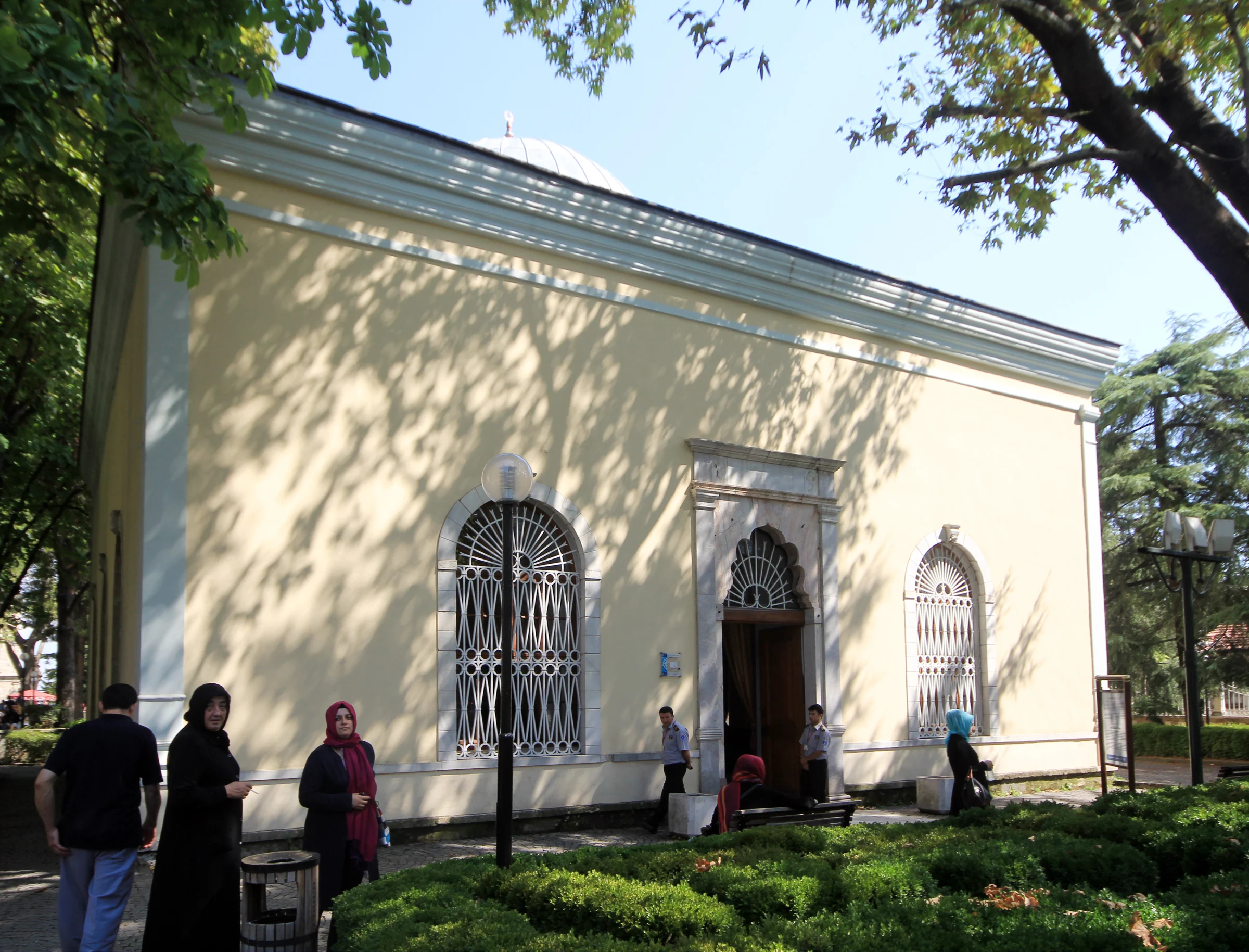
Orhan, son of Osman I, ruled the Ottoman principality from about 1324 until his death in 1362, and it was during his reign that it ceased to be one Anatolian frontier lordship among many and became a state with a capital, a coinage, an administration, and a foothold in Europe. If Osman gave the dynasty its name, Orhan gave it the apparatus of government.
The four decades of his rule accomplished three things of lasting consequence. He captured the principal cities of Bithynia, which the Byzantines had held throughout his father's lifetime. He established a working relationship with the Byzantine Empire that alternated between conquest and alliance, and used the latter as effectively as the former. And he crossed the Dardanelles into Thrace, beginning the Ottoman presence in Europe that would last into the twentieth century.
Accession and the Capture of Bursa
Orhan was born around 1281 at Söğüt, the son of Osman and a consort recorded in the later sources as Malhun Hatun. He was already an experienced commander at his father's death, having led operations in Bithynia during Osman's final years.
His accession, dated to 1323 or 1324, is notable for what did not happen. He had a brother, Alaeddin, and the later tradition records a peaceful division of responsibilities between them rather than the fratricidal contest that destroyed comparable principalities and that would characterise Ottoman successions in later centuries. Whether the account is accurate or a retrospective smoothing cannot be determined, but the principality demonstrably did not fragment.
Bursa fell in 1326, after a blockade of many years. The city's surrender rather than storm was characteristic of early Ottoman method: lacking siege equipment, they took the surrounding countryside, cut the city off, and waited. Bursa became Orhan's capital and remained the Ottoman seat until the 1360s, and it is where he and his father were buried. Its acquisition transformed the principality's resources, giving it a substantial urban population, a commercial economy tied to the silk trade, and the administrative apparatus of a Byzantine provincial city.
Nicaea — Iznik — followed in 1331, after a siege begun in 1328 and an intermittent blockade going back three decades. Nicomedia — Izmit — fell in 1337. With these the Ottomans held the whole of Bithynia, and the Byzantine Empire had lost its Asian heartland.
The Byzantine Relationship
Orhan's dealings with Byzantium are among the more instructive parts of his reign, because they show a ruler using diplomacy and dynastic marriage as readily as war.
The Byzantine Empire in these decades was consumed by civil war between the regency of the child emperor John V and the claimant John VI Kantakouzenos. Both sides sought Turkish auxiliaries, and Orhan was the most useful ally available. In 1346 Kantakouzenos gave him his daughter Theodora in marriage — she was in her mid-teens, Orhan around sixty-five — to secure Ottoman support and to prevent him from siding with his rivals.
The consequences were considerable and one-sided. Ottoman contingents fought in Byzantine internal wars, gaining detailed knowledge of Thrace and of Byzantine military weakness, and being paid for the service. The alliance gave Orhan legitimacy in Byzantine eyes and access to European soil without having to fight for the crossing. The Byzantines gained temporary military advantage at the cost of introducing a permanent power into their remaining territory.
The marriage also illustrates the character of the early Ottoman court. Theodora was not required to convert, and the sources indicate she maintained her Christian practice; the household was mixed in religion as the frontier itself was. This accommodating quality — noted in the article on Osman I — persisted into Orhan's reign and helps explain the readiness of Byzantine subjects and soldiers to enter Ottoman service.
The Crossing into Europe
The move into Europe was gradual and began as service to an ally rather than as conquest.
Ottoman forces under Orhan's son Süleyman Pasha operated in Thrace from the late 1340s in support of Kantakouzenos. Between about 1352 and 1354 they secured a permanent presence: Tzympe was occupied, and then Gallipoli — the fortress commanding the European side of the Dardanelles — came into Ottoman hands, according to the sources after an earthquake damaged its walls in 1354. Whatever the precise circumstances, the Ottomans did not leave.
The strategic significance is difficult to overstate. Gallipoli gave the Ottomans control of the crossing between Asia and Europe, which meant they could reinforce Thrace at will and that no European power could easily expel them. From this bridgehead the conquest of the Balkans proceeded under Orhan's successors, and the region — Rumelia — became the demographic and fiscal core of the empire for centuries. The relevant background on the wider Muslim presence in the region is set out in the article on Islam in Europe.
Süleyman Pasha, who had commanded these operations and was the presumed heir, died in a riding accident around 1357, and the succession passed to his brother Murad.
Institutions and the Making of a State
Orhan's reign is where Ottoman government begins to be visible, and several developments are securely attributed to it.
The first Ottoman silver coinage — the akçe — was struck in his name, and it is the earliest securely dated Ottoman coin. Coinage mattered beyond economics: minting in one's own name was an assertion of sovereignty, and it placed Orhan on a different footing from a frontier chief distributing plunder.
He founded mosques, madrasas and hospices at Bursa, Nicaea and elsewhere, endowing them with waqf property. The pattern of institutional patronage that later Ottoman sultans followed on a vast scale begins here, and it served the same purposes it served for Nur al-Din Zengi two centuries earlier: it converted conquest into governance and provided the trained personnel a state requires.
Administratively, he began the practice of appointing his own officials to conquered territories rather than leaving them to allied beys, and of assigning revenue rights in return for military service — the arrangement that developed into the timar system. The organisation of a standing infantry force is also associated with his reign, and the later Ottoman tradition credits him with the origins of the janissary corps. The specific claim is doubtful: the corps as later understood, recruited through the levy of Christian youths, is more plausibly dated to his successors, and the attribution to Orhan appears in sources written long afterwards. That some form of salaried infantry existed under him is generally accepted; that it was the janissary institution is not.
He was also the first of the dynasty to take a formal title of rulership on his coinage and inscriptions, and the Ottoman practice of styling the ruler sultan develops from this period.
Absorbing Karesi and the Aegean Coast
One acquisition of Orhan's reign is frequently passed over and had large consequences: the absorption of the neighbouring principality of Karesi, on the Aegean coast opposite Gallipoli, in the mid-1330s.
Karesi was in the middle of a disputed succession, and Orhan intervened, taking its territory and — more importantly — its personnel. Karesi's commanders and its seafaring population entered Ottoman service, and with them came experience of the sea that the landlocked Ottoman principality had lacked. Several of the commanders who led the first Ottoman operations in Thrace had been Karesi men.
The pattern is characteristic of early Ottoman expansion and worth naming: rivals were absorbed rather than destroyed, and their military classes were incorporated. The same approach was applied to Byzantine frontier warriors, to Karesi Turks, and later to Balkan nobles. It gave the Ottomans a capacity to grow by accretion that their competitors lacked, and it is among the better explanations for why this particular principality outlasted the others.
The Christian Population and the Nature of Ottoman Rule
The character of Orhan's rule over the populations he conquered has attracted considerable scholarly attention, and the evidence is more interesting than either a narrative of forced conversion or one of enlightened toleration would suggest.
The conquests of Bithynia brought a large Greek Christian population under Ottoman authority. The pattern documented in the sources is one of substantial continuity in rural life: cultivators kept their land, monasteries in several cases retained their property under Ottoman confirmation, and the tax burden was in some documented instances lighter than under Byzantine administration, which had been extracting heavily to pay for its wars.
Conversion did occur, extensively over the following centuries, and Speros Vryonis's study traces the process — driven by the disappearance of Byzantine ecclesiastical structures in the countryside, by the practical advantages of Muslim status, by intermarriage, and by the prestige of the ruling order rather than principally by coercion. Heath Lowry's work emphasises the evidence of Christians serving in Ottoman forces and holding revenue assignments in this early period.
Ibn Battuta, who passed through Orhan's territories in the 1330s, describes him as the wealthiest of the Turkish rulers of Anatolia in troops and lands, and records a ruler continually on the move between his fortresses — a detail that fits the picture of a frontier state governing by presence rather than by settled administration.
The honest summary is that Orhan's rule was neither a religious persecution nor a pluralist ideal. It was a conquest regime that found it more profitable to tax and recruit its new subjects than to displace them, and which offered advancement to those who joined it. That calculation, sustained over generations, produced both the empire's remarkable capacity to absorb difference and the steady erosion of the Christian populations of Anatolia.
Death and Succession
Orhan died in March 1362, aged about eighty, having ruled for nearly four decades. He was buried at Bursa beside his father. His son Murad succeeded without serious challenge — the third consecutive Ottoman succession to pass intact, which by the standards of the fourteenth-century Anatolian principalities was itself an achievement.
At his death the Ottomans held Bithynia, had absorbed the neighbouring principality of Karesi, and controlled a substantial part of Thrace with the crossing at Gallipoli. The polity was still small compared with what it would become, but it was no longer a frontier lordship.
The Earliest Ottoman Document
One item from Orhan's reign deserves individual notice because it is the earliest surviving Ottoman document of any kind: an endowment deed dated 1324, made in his name, establishing a waqf for a charitable foundation.
Its significance is out of proportion to its content. Everything narrated about Osman comes from sources written more than a century later; with this deed the Ottoman record becomes documentary. It shows, within a year or two of Orhan's accession, a ruler with a chancery capable of drafting a legal instrument, property he could alienate in perpetuity, religious personnel to administer the endowment, and the confidence to act as a sovereign making a permanent disposition. The transition from oral frontier tradition to written government is visible in a single sheet.
Documents of this kind accumulate from Orhan's reign onward — endowment deeds, inscriptions on buildings, and coins — and they give the historian something the previous reign lacks entirely: evidence generated at the time, by the state itself, for its own purposes rather than for posterity.
Bursa: The Making of a Capital
The choice of Bursa as the seat of government, and the investment made in it, deserve separate notice because they mark the point at which the Ottomans began to behave like a state rather than a war band.
Bursa sat at the foot of Mount Uludağ on the fertile plain south of the Sea of Marmara, on the routes connecting Anatolia to the Marmara ports. It had a Byzantine urban fabric, walls, water, and an established commercial life. What the Ottomans added over the following century made it one of the major cities of the eastern Mediterranean: it became the western terminus of the silk route from Iran, and the raw silk trade — with Genoese, Venetian and Florentine merchants buying in its markets — was the foundation of its wealth.
Orhan's own building there set the pattern. He founded a mosque, a madrasa, a bath and a kitchen for the poor, endowed with revenues assigned in perpetuity, and organised as a single complex. This grouping of religious, educational and charitable functions around a mosque, funded by waqf and built by a ruler, became the standard form of Ottoman urban patronage, reproduced in every city the dynasty held and culminating in the great imperial complexes of Istanbul. The commercial and civic logic is treated more broadly in the article on Islamic urban planning.
Bursa also became the dynastic necropolis. Orhan and Osman were buried there, and so were the sultans who followed until the capital moved; the tombs became objects of ceremonial visitation. A frontier family acquires a dynasty when it acquires ancestors in a fixed place, and Bursa supplied the place.
Coinage, Titles and the Claim to Sovereignty
The evidence of Orhan's coins and inscriptions is worth examining directly, because it is contemporary — unlike almost everything else about the reign — and because it shows a ruler feeling his way toward a claim.
The silver akçe struck in his name is the earliest securely dated Ottoman coin. Minting was not a trivial act: in Islamic practice the right to strike coin and to have one's name pronounced in the Friday sermon were the two recognised marks of sovereignty, and a subordinate bey did neither in his own name. By minting, Orhan asserted that he was not a subordinate — of the Ilkhanid Mongols who claimed suzerainty over Anatolia, of the Seljuk successor authorities, or of anyone else.
The titulature on his coins and surviving inscriptions is modest by later standards. He appears as bey and as sultan in different documents, and the grander formulations of Ottoman sovereignty — the elaborate chains of titles that later sultans used — are absent. The honorific ghazi, warrior for the faith, is attached to his name and to his father's, and it is the one element of the later ideology clearly present at the time.
This gradualism is historically informative. It indicates a polity constructing legitimacy incrementally as its power grew, rather than one claiming universal sovereignty from the outset. The claim to be heirs of Rome and leaders of the Muslim world came later, with Mehmed II and Selim I; Orhan was establishing something more basic, which is that he answered to nobody.
Assessment
Orhan is the least celebrated of the early Ottoman rulers and arguably the most consequential of the first three.
Osman is remembered as the founder and Murad and Bayezid as the conquerors of the Balkans, while Orhan occupies the transitional space between them. Yet the transition is precisely what mattered. He took the three cities that gave the principality an economic and administrative base; he acquired the European bridgehead on which the empire's subsequent expansion depended; and he introduced the coinage, the endowments, and the beginnings of the revenue-assignment system that turned a war band into a government.
Two qualities stand out in the record. The first is patience: Bursa, Nicaea and Nicomedia were all taken by blockade over years, not by assault, and the willingness to wait rather than to risk a costly failure is consistent across the reign. The second is a readiness to gain by negotiation what could not be gained by force — the Byzantine alliance and the marriage to Theodora produced the crossing into Europe at no military cost, which is a better return than any of his battles.
The limitations of the evidence should be restated. The narrative sources for Orhan's reign are, like those for his father's, largely fifteenth-century, and the institutional developments attributed to him are sometimes better documented as later practice projected backwards. The contemporary Byzantine material — Kantakouzenos wrote his own account of these years, and had every reason to explain his Turkish alliance in the best light — is valuable but partisan. What is not in doubt is the territorial and institutional position the Ottomans held in 1362 compared with 1324, and that difference is Orhan's reign.
References and Further Reading
Primary Islamic Sources
- Quran, Surah al-Hajj (22:39–40) — on permission to those wronged, among the verses invoked in the frontier ideology of the Anatolian principalities
- Quran, Surah al-Anfal (8:60–61) — on military preparedness and on inclining toward peace, both relevant to Orhan's alternation of war and alliance
- Quran, Surah al-Nisa (4:58) — on rendering trusts and judging with justice, the standard applied to rulers in the Ottoman literature of governance
- Sahih al-Bukhari and Sahih Muslim, Books of Jihad and of Leadership — the prophetic material on warfare and on the responsibilities of rulers
- The surviving waqf deeds and inscriptions of Orhan's foundations at Bursa and Iznik, and the earliest Ottoman coinage struck in his name — documentary evidence independent of the later chronicles
Classical Islamic Sources
- Aşıkpaşazade. Tevarih-i Al-i Osman. [Compiled c. 1480s]
- Neşri, Mehmed. Kitab-i Cihannüma. [Compiled c. 1490s]
- The anonymous Tevarih-i Al-i Osman chronicles — the fifteenth-century dynastic tradition, the principal Muslim narrative source and considerably later than the events
- Ibn Battuta. The Travels. Translated by H.A.R. Gibb. Cambridge: Hakluyt Society, 1958–2000. — describes the Anatolian principalities during Orhan's reign, and is among the few near-contemporary Muslim witnesses
- Kantakouzenos, John VI. Histories. [Contemporary Byzantine account] — written by Orhan's father-in-law and ally, indispensable and partisan
Academic and Scholarly Sources
- İnalcık, Halil. The Ottoman Empire: The Classical Age, 1300–1600. London: Weidenfeld and Nicolson, 1973.
- Imber, Colin. The Ottoman Empire, 1300–1650: The Structure of Power. 2nd ed. Basingstoke: Palgrave Macmillan, 2009.
- Kafadar, Cemal. Between Two Worlds: The Construction of the Ottoman State. Berkeley: University of California Press, 1995.
- Zachariadou, Elizabeth, ed. The Ottoman Emirate, 1300–1389. Rethymnon: Crete University Press, 1993.
- Nicol, Donald M. The Last Centuries of Byzantium, 1261–1453. 2nd ed. Cambridge: Cambridge University Press, 1993. — the Byzantine side of the relationship
- Lowry, Heath W. The Nature of the Early Ottoman State. Albany: SUNY Press, 2003.
- Fleet, Kate, ed. The Cambridge History of Turkey, Volume 1: Byzantium to Turkey, 1071–1453. Cambridge: Cambridge University Press, 2009.
Further Reading
- Finkel, Caroline. Osman's Dream: The Story of the Ottoman Empire, 1300–1923. London: John Murray, 2005.
- Vryonis, Speros. The Decline of Medieval Hellenism in Asia Minor and the Process of Islamization. Berkeley: University of California Press, 1971.
- Necipoğlu, Nevra. Byzantium between the Ottomans and the Latins. Cambridge: Cambridge University Press, 2009.
- Goodwin, Godfrey. A History of Ottoman Architecture. London: Thames and Hudson, 1971. — on the Bursa and Iznik foundations
Mentioned In
2 articles reference this topic
More from Ottoman Empire
Conquest of Constantinople - The Fall of Byzantium
The historic conquest of Constantinople by Ottoman Sultan Mehmed II on May 29, 1453 CE, ending the Byzantine Empire and establishing Ottoman dominance in southeastern Europe. This pivotal victory transformed the Ottomans into a major European power.
Battle of Nicopolis (1396 CE)
The Battle of Nicopolis, fought on 25 September 1396, was a decisive Ottoman victory over a combined Western European crusading army under Sigismund of Hungary. The last major crusade of the medieval period, its failure cemented Ottoman dominance over the Balkans.
Blue Mosque: The Sultan Ahmed Mosque of Istanbul
The Blue Mosque (Sultan Ahmed Mosque) in Istanbul, built between 1609-1616 CE, is one of the most magnificent examples of Ottoman architecture and a masterpiece of Islamic architectural achievement.
Bosnia and Herzegovina: Islamic Heritage in the Balkans
The westernmost region of sustained Muslim presence in Europe. Ottoman rule from 1463 until the Austro-Hungarian occupation of 1878 produced a distinctive Bosniak Muslim culture that joined Ottoman traditions to indigenous Balkan ones.