Prophet Salih عَلَيْهِ ٱلسَّلَامُ (Shelah)
Known as Salih in Arabic, he was a prophet sent to the people of Thamud in northern Arabia, famous for the miracle of the she-camel that emerged from a rock, ultimately witnessing their destruction for killing the sacred animal.
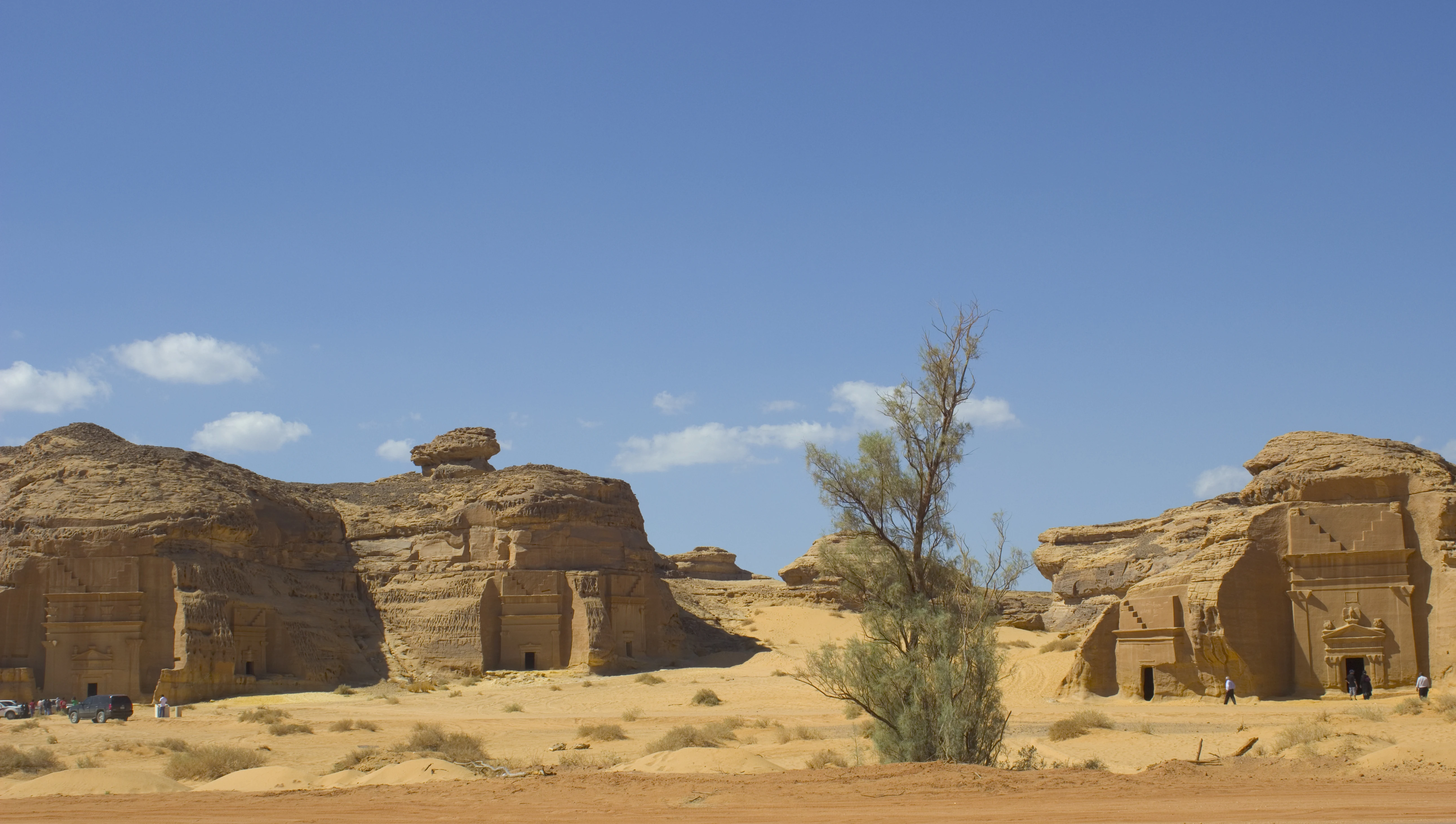
Prophet Salih (Arabic: صالح, Salih) stands as one of the most remarkable prophets in Islamic tradition, sent by Allah to the people of Thamud in northern Arabia. His story is distinguished by one of the most extraordinary miracles in prophetic history - the she-camel that emerged from solid rock - and demonstrates how divine signs, when rejected, lead to inevitable divine justice.
The People of Thamud
Geographic and Cultural Background
The Thamudites were descendants of the people of Ad who settled in northern Arabia, in the region between the Hijaz and Syria. Their main city was Al-Hijr (Mada'in Salih), known for its rock-carved architecture, and their strategic position allowed them to control important trade routes between Arabia and the Levant while they lived among rocky hills and valleys.
Their architectural achievements are noted in the Quran: "And remember when He made you successors after 'Aad and settled you in the land, [and] you take for yourselves palaces from its plains and carve from the mountains, homes." (Quran 7:74). They created elaborate dwellings carved directly into mountain faces, demonstrating advanced techniques in stone carving and construction, decorating their homes with beautiful designs and patterns, and developing sophisticated water management and storage systems.
Material Prosperity and Blessings
The Thamudites were blessed with numerous natural resources: fertile valleys that provided abundant agricultural land for crops and grazing, springs and wells that supplied adequate water, access to valuable stones and metals, and a strategic location that let them benefit from trade route commerce. Their society was also technologically advanced, combining construction expertise, sophisticated farming and irrigation methods, extensive commercial relationships with neighboring peoples, and excellence in various arts and crafts.
The Seeds of Corruption
Like their predecessors, the people of Ad, the Thamudites allowed their blessings to corrupt them. They took excessive pride in their building accomplishments and came to believe their skills made them self-sufficient, prioritizing worldly success over spiritual development and losing sight of Allah as the source of their abilities. This spiritual decline was matched by social corruption: they created unfair social hierarchies based on wealth and status, used their power to exploit those less fortunate, abandoned ethical principles in the pursuit of pleasure and profit, and turned away from the worship of Allah to idolatry.
Salih's Prophetic Mission
Divine Selection
Allah chose Salih from among the Thamudites to guide them back to righteousness: "And to Thamud [We sent] their brother Salih. He said, 'O my people, worship Allah; you have no deity other than Him.'" (Quran 7:73). As a cultural insider, Salih understood their language and customs; he possessed the moral integrity needed to challenge their corruption, received guidance and authority directly from Allah through revelation, and had the courageous spirit required to confront their established practices.
The Core Message
Salih's primary message was the worship of Allah alone. His call to tawhid emphasized that Allah is one and has no partners, acknowledged Allah as the source of all their blessings, accepted Allah's right to command and forbid, and taught that all actions are judged by Allah. Rejecting idolatry, he told them: "He has produced you from the earth and settled you in it, so ask forgiveness of Him and then repent to Him. Indeed, my Lord is near and responsive." (Quran 11:61). In this teaching he reminded them that Allah created them from the earth, acknowledged Allah's favor in giving them their land, urged them to seek forgiveness for their sins, and assured them of Allah's readiness to forgive.
Addressing Specific Corruptions
Salih specifically addressed their arrogance and materialism, teaching humility: "Do you think you will be left secure in what is here - In gardens and springs And fields of crops and palm trees with softened fruit - And you carve out of the mountains, homes, with skill?" (Quran 26:146-149). He reminded them that their prosperity was not permanent, that all their abilities came from Allah, that they would be judged for how they used their blessings, and that death comes to all regardless of achievements. He also called them to social justice: "So fear Allah and obey me. And do not obey the order of the transgressors, Who cause corruption in the land and do not reform." (Quran 26:150-152), encouraging fear of Allah in all their actions, obedience to the guidance brought by Allah's messenger, rejection of the influence of corrupt leaders, and work to improve rather than corrupt their society.
The People's Response and Demand for a Miracle
Initial Rejection
The Thamudites responded to Salih's message with skepticism and hostility: "They said, 'O Salih, you were among us a man of promise before this. Do you forbid us to worship what our fathers worshipped? And indeed we are, about that to which you invite us, in disquieting doubt.'" (Quran 11:62). They used his previous standing to question his new message, claimed loyalty to the religion of their forefathers, expressed intellectual skepticism about his teachings, and relied on community consensus to oppose him.
The Demand for Proof
The people demanded a specific miraculous sign to validate Salih's prophethood. According to Islamic tradition, they pointed to a particular rock and demanded that Salih cause a she-camel to emerge from it, with specific characteristics: it should be a pregnant she-camel carrying offspring, of a particular coloring and markings, that would give birth shortly after emerging, and whose origin would be clearly beyond natural explanation. They insisted the miracle be performed publicly in front of witnesses, under detailed conditions that seemed impossible to fulfill, claiming they would believe if it occurred — a test of whether Salih truly spoke for Allah.
The Miracle of the She-Camel
The Divine Response
Allah granted their request and performed the miraculous sign: "So he said, 'This is a she-camel. For her is a [time of] drink, and for you is a [time of] drink, [each] on a known day.'" (Quran 26:155). The solid rock split open before their eyes, a magnificent she-camel emerged from the stone, and the camel gave birth to a calf as predicted — a clear demonstration of Allah's power and Salih's truthfulness.
The Conditions and Test
The miracle came with specific conditions that would test the people's faith, centered on sharing water rights: "And do not touch her with harm, lest you be seized by the punishment of a great day." (Quran 26:156). The she-camel would drink on certain days and the people on others, the camel would provide enough milk for the entire community, they were strictly forbidden from harming the animal, and it was placed under Allah's special protection. Honoring this agreement required patience in respecting the water-sharing arrangement, trust that Allah would provide for their needs, obedience to the conditions despite any inconvenience, and community cooperation.
The People's Response to the Miracle
Initial Compliance
At first, some of the people were impressed by the miracle. Many were amazed by the supernatural event and some initially followed the conditions, though the people split between believers and skeptics, and even the skeptics had to acknowledge the miracle's reality.
Growing Resentment
Over time, however, resentment began to build. Some found the alternating water schedule burdensome, worried about the impact on their livestock and agriculture, while influential leaders opposed the new arrangement and many maintained their attachment to their traditional practices. This resentment hardened into a conspiracy: "They said, 'Take a mutual oath by Allah that we will kill him by night, he and his family. Then we will say to his heir, "We did not witness the destruction of his family, and indeed, we are truthful."'" (Quran 27:49). Conspirators gathered in secret meetings to plan the murder of both Salih and his family, prepared lies to hide their crime, and were led in this rebellion by influential members of the community.
The Killing of the She-Camel
The Fatal Decision
Despite the clear miracle and divine warning, the people chose to kill the she-camel: "But they hamstrung her, so he said, 'Enjoy yourselves in your homes for three days. That is a promise not to be denied.'" (Quran 11:65). The community as a whole supported or allowed the act, openly defying Allah's authority and protection, and Salih warned of impending punishment while granting three days for potential repentance.
Salih's Final Warning
Salih announced the divine judgment that would follow, giving exactly three days before punishment would come as a final chance to seek Allah's forgiveness. His statement made clear that punishment was now certain, yet even in judgment Allah provided time for reflection. The people responded with continued defiance, refusing to take the warning seriously, becoming more aggressive toward Salih and his followers, unable to recognize the gravity of their situation, and failing to use the three days for repentance.
The Divine Punishment
The Earthquake
On the appointed day, divine punishment struck the Thamudites: "So the earthquake seized them, and they became within their home [corpses] fallen prone." (Quran 7:78). The Quran also describes it as a blast: "So the shriek seized them at sunrise. And We made the highest part [of the city] its lowest and rained upon them stones of hard clay." (Quran 15:73-74). A violent earthquake destroyed their rock dwellings and a sound so powerful it killed instantly brought about the total annihilation of the people and their civilization, while Salih and his followers were saved from the disaster.
The Aftermath
The destruction left complete desolation: "And Salih turned away from them and said, 'O my people, I had certainly conveyed to you the message of my Lord and advised you, but you do not like advisors.'" (Quran 7:79). In his farewell he confirmed that he had delivered Allah's message completely, emphasized that his guidance had been for their benefit, acknowledged their consistent refusal to accept guidance, and saw his message proven true through the punishment. Their elaborate rock carvings remained as silent witnesses, and the ruins of Al-Hijr (Mada'in Salih) are still visible today, serving as a warning for future generations and a demonstration of Allah's power and the consequences of rebellion.
Salih in Islamic Tradition
Quranic Emphasis
The Quran mentions Salih's story in multiple chapters, emphasizing key themes. On divine miracles, it stresses the importance of recognizing and responding to divine evidence, the way miracles serve to test rather than compel faith, the accountability of entire societies for their response to signs, and Allah's special care for His signs and messengers. As a historical warning, the story presents the ruins of Thamud as visible reminders, offers guidance for all future peoples, illustrates consistent patterns of divine response to human behavior, and shows Allah's support for His messengers proven through history.
Prophetic Traditions
The hadith literature contains references to Salih, honoring him as the worker of the extraordinary sign of the she-camel, praising him as a patient prophet who persisted despite opposition, recognizing him as a community reformer who worked to improve society, and respecting him as one of Allah's chosen messengers.
Popular Understanding
Muslims worldwide draw lessons from Salih's story, understanding the importance of recognizing divine signs, the reality of collective accountability for social choices, the danger of pride in human achievements and abilities, and the belief that Allah will ultimately vindicate truth and punish evil.
Archaeological Significance
Mada'in Salih (Al-Hijr)
The ruins of the Thamudite civilization remain visible today. The physical evidence includes elaborate homes carved directly into cliff faces, advanced techniques of stone carving and construction, beautiful decorative designs and patterns adorning the structures, and sophisticated water management and storage facilities. As historical testimony, the ruins are understood in Islamic tradition as evidence of Allah's power and justice and a physical confirmation of the Quranic narrative; the site is today a destination for visitors who can see the remains of this ancient civilization and reflect on the lessons of divine justice and human responsibility.
Conclusion
Prophet Salih stands as one of the most remarkable examples of divine miracle and human response in religious history. His mission to the Thamudites demonstrates how even the most extraordinary signs can be rejected when people are determined to follow their own desires rather than divine guidance.
The miracle of the she-camel emerging from solid rock represents one of the clearest divine signs given to any people, yet their ultimate rejection and killing of the sacred animal shows how human pride and materialism can blind people to obvious truth. Their advanced architectural skills and technological achievements, rather than leading them to gratitude and humility, became sources of arrogance and self-sufficiency.
Salih's patient persistence in delivering Allah's message, despite consistent opposition and ultimate rejection, provides a notable example within prophetic history. His clear warnings about the consequences of harming the she-camel, and the precise fulfillment of those warnings, illustrate both divine mercy in providing guidance and divine justice in executing judgment.
The complete destruction of the Thamudite civilization, leaving only their empty rock dwellings as silent witnesses, is presented in the Quran as a lasting reminder that material achievement did not protect them from divine judgment when accompanied by spiritual rebellion and moral corruption. His story remains one of the principal Quranic narratives of a people who received a decisive sign and rejected it.
References and Further Reading
Primary Islamic Sources
- Quran, Surah Hud (11:61–68) — Salih's call to Thamud, the she-camel as a sign, and their destruction.
- Quran, Surah Al-A'raf (7:73–79) — Salih's mission, the she-camel miracle, and the earthquake.
- Quran, Surah Ash-Shu'ara (26:141–159) — Extended dialogue between Salih and Thamud.
- Quran, Surah An-Naml (27:45–53) — The nine conspirators who plotted against Salih.
- Quran, Surah Al-Hijr (15:80–84) — The people of al-Hijr (Thamud) and their rock-hewn dwellings.
- Quran, Surah Ash-Shams (91:11–15) — "Thamud denied [their prophet] by reason of their transgression, when the most wretched of them was sent forth."
- Quran, Surah Al-Qamar (54:23–32) — The swift destruction of Thamud.
- Sahih al-Bukhari, Book of the Stories of the Prophets, Hadith 3378 — The Prophet passing by the dwellings of Thamud during the expedition to Tabuk.
- Sahih Muslim, Book of Zuhd (Kitab al-Zuhd), Hadith 2980 — Warning against entering the dwellings of those who were punished.
- Musnad Ahmad, Hadith 4847 — The Prophet's instructions regarding the wells of Thamud.
Classical Islamic Sources
- Ibn Kathir, Ismail ibn Umar. Qisas al-Anbiya (Stories of the Prophets), Chapter on Salih. Beirut: Dar al-Kutub al-Ilmiyyah, 2003. [Original c. 1370 CE]
- Ibn Kathir, Ismail ibn Umar. Al-Bidaya wa al-Nihaya (The Beginning and the End), Vol. 1. Beirut: Dar al-Fikr, 1986. [Original c. 1370 CE]
- Al-Tabari, Muhammad ibn Jarir. Tarikh al-Rusul wa al-Muluk (History of the Prophets and Kings), Vol. 1. Cairo: Dar al-Ma'arif, 1960. [Original c. 915 CE]
- Al-Tha'labi, Ahmad ibn Muhammad. Qisas al-Anbiya (Tales of the Prophets), section on Salih. Beirut: Dar al-Kutub al-Ilmiyyah, 2004. [Original c. 1035 CE]
- Al-Qurtubi, Muhammad ibn Ahmad. Al-Jami' li Ahkam al-Quran, commentary on Surah Al-A'raf 7:73–79. Cairo: Dar al-Kutub al-Misriyyah, 1964. [Original c. 1273 CE]
Academic and Scholarly Sources
- Wheeler, Brannon M. Prophets in the Quran: An Introduction to the Quran and Muslim Exegesis. London: Continuum, 2002.
- Tottoli, Roberto. Biblical Prophets in the Quran and Muslim Literature. London: Routledge, 2002.
- Thackston, Wheeler M., trans. The Tales of the Prophets of al-Kisa'i. Boston: Twayne Publishers, 1978.
- Brinner, William M., trans. The History of al-Tabari, Vol. II: Prophets and Patriarchs. Albany: SUNY Press, 1987.
- Healey, John F. The Religion of the Nabataeans: A Conspectus. Leiden: Brill, 2001.
- Berkey, Jonathan P. The Formation of Islam: Religion and Society in the Near East, 600–1800. Cambridge: Cambridge University Press, 2003.
Further Reading
- Renard, John. Friends of God: Islamic Images of Piety, Commitment, and Servanthood. Berkeley: University of California Press, 2008.
- Newby, Gordon Darnell. The Making of the Last Prophet: A Reconstruction of the Earliest Biography of Muhammad. Columbia: University of South Carolina Press, 1989.
- Farrin, Raymond. Structure and Quranic Interpretation: A Study of Symmetry and Coherence in Islam's Holy Text. Ashland: White Cloud Press, 2014.
- Neuwirth, Angelika. The Quran and Late Antiquity: A Shared Heritage. Oxford: Oxford University Press, 2019.
More from Age of the Prophets
Maryam bint Imran (Mary, Mother of Jesus)
Maryam bint Imran (Mary), mother of Prophet Isa (Jesus), holds a uniquely exalted place in Islam as the only woman named in the Quran. Revered for her purity, devotion, and the miraculous virgin birth of Jesus, she is regarded as one of the greatest women and a model of faith.
Prophet Adam عَلَيْهِ ٱلسَّلَامُ
The first human being and the first Prophet in Islam, created by Allah as His khalifah (vicegerent) on Earth. Father of humanity, Adam's story encompasses creation, paradise, the fall, repentance, and the beginning of human civilization.
Prophet al-Yasa عَلَيْهِ ٱلسَّلَامُ (Elisha)
Known as Al-Yasa in Arabic, Elisha was the successor of Prophet Elijah, blessed with a double portion of his spirit and known for numerous miracles of healing, provision, and resurrection during his ministry to Israel.
Prophet Ayyub عَلَيْهِ ٱلسَّلَامُ (Job)
Ayyub, the Job of the Bible, is named in four passages of the Qur'an and is the Islamic tradition's standing example of patience under trial. The Qur'an records his loss of wealth, family and health, his supplication, and his restoration, while naming no specific illness.