Allah
Allah is the Arabic name for the One God in Islam: the eternal, unique Creator and Sustainer of all that exists. Belief in Him is the foundation of Islamic faith, expressed in Tawhid, the testimony of faith, and the divine names and attributes.
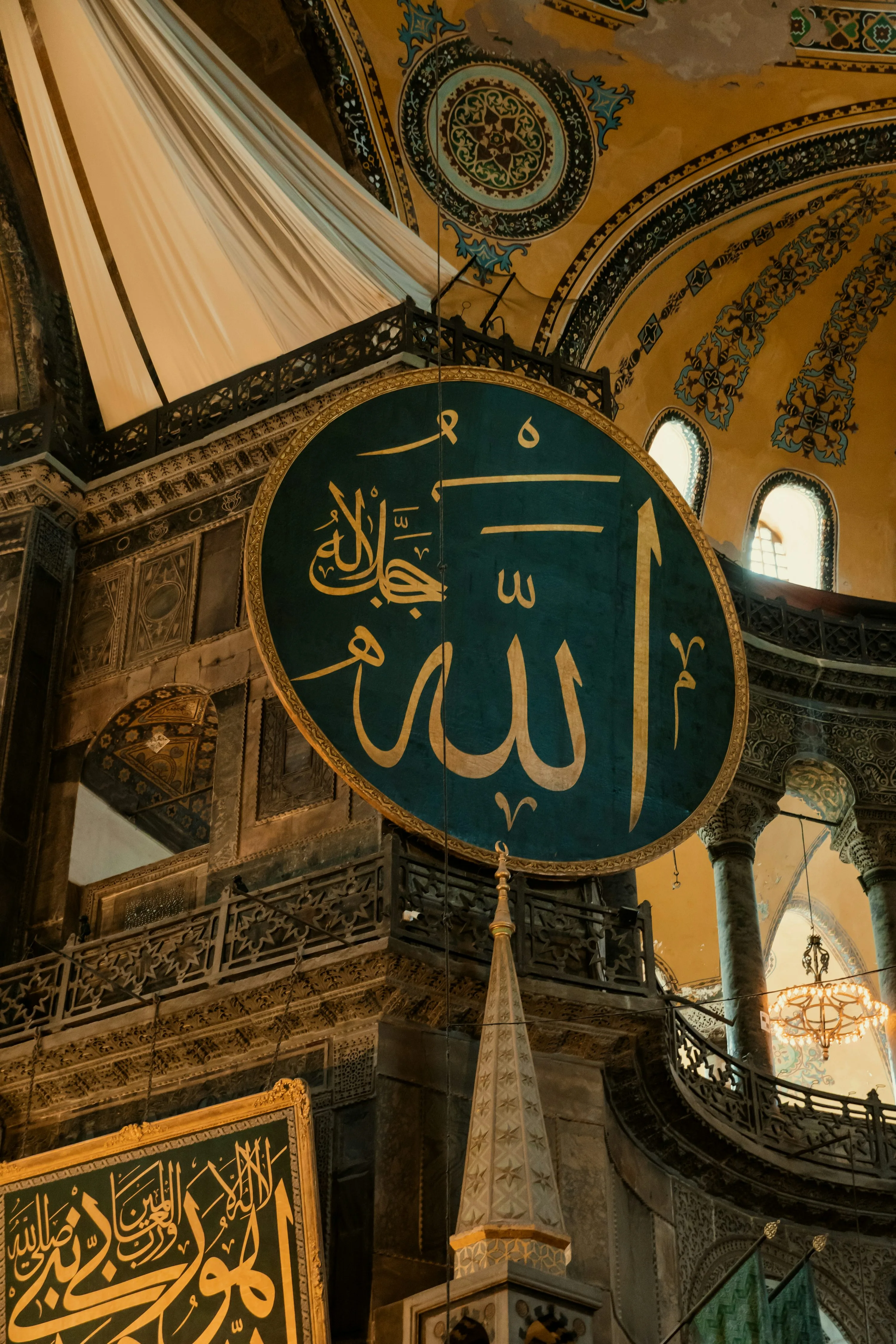
Allah (Arabic: الله) is the name of the One God in Islam — the eternal Creator and Sustainer of all that exists, the sole object of worship, and the first of the articles of Islamic faith. The word is formed in Arabic from al-ilah, "the God," and it carries in its very structure the central claim of Islamic belief: that there is one God alone, without partner, likeness, or equal. It is the same word used for God by Arabic-speaking Jews and Christians, and in Islamic understanding it names the God worshipped by the prophets from Adam onward, whose final message was conveyed through Prophet Muhammad (peace be upon him).
Belief in Allah is the ground on which the whole of Islam rests. When the Prophet was asked by the angel Jibril (Gabriel) what faith (iman) is, he answered that it is "to believe in Allah, His Angels, His Books, His Messengers, the Last Day, and to believe in al-Qadar — both the good and bad of it," placing belief in Allah first among the articles of faith (Sahih Muslim 8, Book of Faith, narrated from Umar ibn al-Khattab through his son Abdullah). Everything else in Islamic practice and thought — worship, law, ethics, the understanding of creation and the hereafter — follows from what a Muslim holds to be true about Allah.
The Name "Allah"
The word Allah is, in Arabic, the proper name of the one God. Grammatically it is understood to derive from al-ilah — the definite article al- joined to ilah, "a god" or "an object of worship" — so that the name itself carries the meaning "the God," the one true object of worship beside whom there is no other. Unlike the common noun ilah, which can be pluralised and applied to the false objects of worship the Qur'an repeatedly rejects, the name Allah has no plural and no feminine form; in Islamic understanding it belongs to Him alone and is applied to no other. The Qur'an makes the point directly when it asks whether any namesake can be found for Him — "Do you know of any similarity to Him?" (Qur'an 19:65) — and answers, throughout, that there is none.
The name was known to the Arabs before Islam, who acknowledged Allah as the supreme creator even while associating other deities with Him in worship; the Qur'an records that when they were asked who created the heavens and the earth, they answered, "Allah" (Qur'an 31:25). Islam did not introduce a new name for God so much as restore the worship of the one so named to its rightful singularity, stripping away the partners that had been attached to Him. The Qur'an joins the name to the assertion of oneness and to the two names of mercy in a single sentence: "And your god is one God. There is no deity [worthy of worship] except Him, the Entirely Merciful, the Especially Merciful" (Qur'an 2:163). Because Allah is simply the Arabic word for the one God, it is the word used for God by Arabic-speaking Jews and Christians as well, and Muslims understand it to name the same God worshipped by the prophets before Muhammad, from Adam onward.
Tawhid: The Oneness of Allah
The central doctrine of Islam is Tawhid (التوحيد), the affirmation of the absolute oneness and uniqueness of Allah. It is the first principle a Muslim learns and the truth that, in Islamic belief, every prophet was sent to proclaim. Tawhid is not only the statement that God is numerically one; it is the affirmation that He is unique in His being, that creation and sustenance belong to Him alone, that worship is due to Him alone, and that His names and attributes belong to Him in a manner unlike anything in creation.
This affirmation is embodied in the Shahada, the testimony of faith: La ilaha illa Allah — "There is no deity [worthy of worship] except Allah." The declaration has two movements: a negation of every false object of worship, and an affirmation of the sole reality of the One God. To enter Islam is to bear this witness, and the acts of worship that follow — the daily prayers, the fast, the pilgrimage — are, in Islamic understanding, expressions and renewals of it. The phrase runs throughout the Qur'an and the Prophetic tradition.
Muslim scholars have found it useful to speak of Tawhid under distinct aspects, so that each dimension of God's oneness can be considered clearly. The oneness of Lordship (rububiyya) affirms that Allah alone creates, sustains, and governs; the oneness of worship (uluhiyya) affirms that worship in all its forms is due to Him alone; and the oneness of the names and attributes (al-asma wa-l-sifat) affirms that His names and qualities are His alone and are not to be likened to those of creatures. This threefold way of setting out the subject is a framework of scholarly exposition rather than a wording of scripture, but each of its elements rests directly on the Qur'an and the Sunnah, as the sections below show.
The oneness of lordship is a point the Qur'an presents as something even those who associated partners with Allah could be brought to acknowledge: asked who created the heavens and the earth, or who sends down rain and revives the dead earth, they would answer, "Allah" (Qur'an 31:25; 29:63). The Qur'an takes this admission and presses it to its conclusion — that the One who alone creates and sustains is the only one deserving of worship. Recognition of Allah as Lord is therefore not, by itself, the whole of faith; it becomes faith when it issues in the worship of Him alone, which is the oneness of worship.
The gravest matter in Islamic belief is the opposite of Tawhid: shirk, the association of any partner with Allah in His lordship, His worship, or His attributes. The Qur'an weighs it in the words of a father to his son, where Luqman counsels: "O my son! Join not in worship others with Allah. Verily, joining others in worship with Allah is a great wrong indeed" (Qur'an 31:13). Ibn Kathir, commenting on the verse, treats the description as exact rather than rhetorical: to direct to something created the worship that belongs to the Creator is the greatest of wrongs because it misplaces the highest thing a person has to give. The Qur'an presents the summons away from every false object of devotion and toward the worship of God alone as the shared message of the prophets, each of whom, in the Qur'anic account, called his people with the same words: "O my people, worship Allah; you have no deity other than Him" — the formula given to Noah, to Hud, and to Salih in successive passages of a single surah (Qur'an 7:59, 7:65, 7:73). Worship, supplication, reliance, and ultimate devotion are directed to Allah without intermediary — the Qur'an states that He responds to the one who calls upon Him directly: "And when My servants ask you concerning Me — indeed I am near. I respond to the invocation of the supplicant when he calls upon Me" (Qur'an 2:186). The removal of intermediaries between the worshipper and God is a defining feature of Islamic devotion: there is no priesthood standing between the believer and Allah, and the believer addresses Him directly.
The testimony La ilaha illa Allah stands first among the pillars of Islam as well as among the articles of faith. In the same hadith of Jibril, asked what Islam is, the Prophet begins with it — to testify that none has the right to be worshipped but Allah and that Muhammad is the Messenger of Allah — and only then names the prayer, the zakat, the fast of Ramadan and the pilgrimage (Sahih Muslim 8). Its two clauses map the whole of Tawhid: the negation "there is no deity" clears away every rival claim on the human heart — wealth, power, desire, and every false object of devotion — and the affirmation "except Allah" fixes that devotion on its rightful and single object.
The Qur'anic Portrait of Allah
The Qur'an is the primary source for what Muslims believe about Allah, and it describes Him in His own words. Several of its passages concentrate that description with particular force, and two of them — Surah al-Ikhlas and Ayat al-Kursi — are singled out in the Prophetic tradition itself. The account may begin where the Qur'an begins.
The Opening of the Qur'an
The Qur'an opens, after the invocation of the divine name, with a short passage of praise that is itself a description of Allah — Surah al-Fatiha, "the Opening," recited in every unit of every prayer. Its first verses name Him as Rabb al-Alamin, "the Lord of all that exists," then as al-Rahman al-Rahim, "the Entirely Merciful, the Especially Merciful," and as Maliki Yawm al-Din, "the Sovereign of the Day of Recompense" (Qur'an 1:2-4). In his commentary on the surah, Ibn Kathir explains al-Rabb as the owner who has full authority over what He owns, the Master who alone directs and sustains — a title that, used absolutely, belongs to Allah alone, while of anything else one may only say "the lord of such-and-such a thing." He notes the report that al-Rabb is among the greatest of the divine names. Al-Alamin, he explains, is the plural embracing everything in existence apart from Allah — every order of creation in the heavens and the earth, on land and sea, each generation of created things being an alam (a "world") in itself.
The opening words of the Qur'an thus gather three things together: God's lordship over all that exists, His enveloping mercy, and His sovereignty over the final reckoning. The believer affirms all three each time the surah is recited in prayer, which is to say many times a day.
Surah al-Ikhlas
The short chapter Surah al-Ikhlas ("Sincerity," chapter 112) states the doctrine of divine oneness in four verses:
"Say, He is Allah, [who is] One, Allah, the Eternal Refuge. He neither begets nor is born, nor is there to Him any equivalent." (Qur'an 112:1-4)
Each phrase carries a distinct point of belief. The opening command, "Say," addresses the Prophet and, through him, every believer, so that the declaration that follows is one the Muslim takes upon their own tongue. "He is Allah, [who is] One" affirms the singularity of God. That He is al-Samad — rendered "the Eternal Refuge" — names Him as the one who is sought in every need and depends on nothing, the self-sufficient upon whom all creation leans while He leans on none. "He neither begets nor is born" denies Him offspring, parentage, and origin, setting the Islamic conception of God apart from any notion of divine generation. And "nor is there to Him any equivalent" closes the chapter on His incomparability, the same truth stated positively in "there is nothing like unto Him" (Qur'an 42:11).
The Prophet taught that this brief chapter is weighty beyond its length. Abu Sa'id al-Khudri reports that the Prophet asked his Companions, "Is it difficult for any of you to recite one-third of the Qur'an in one night?" — and when they found the suggestion hard, he told them that Surah al-Ikhlas "is equal to one-third of the Qur'an" (Sahih al-Bukhari 5015). The same teaching is recorded in Sahih Muslim on the authority of Abu al-Darda' (Sahih Muslim 811), and Muslim places beside it a narration in which the measure is stated as a division: that Allah divided the Qur'an into three parts, of which Surah al-Ikhlas is one. The surah's very name, al-Ikhlas, means "sincerity" or "purity," and it is so called because it purifies the believer's conception of God of every partner and likeness.
Ayat al-Kursi
Within Surah al-Baqara stands Ayat al-Kursi, "the Verse of the Throne," which the Prophetic tradition identifies as the greatest verse in the Qur'an. Ubayy ibn Ka'b related that the Prophet asked him, "O Abu al-Mundhir, do you know which verse from the Book of Allah that you have learned is greatest?" Ubayy answered with this verse, and the Prophet struck him on the chest and said, "I congratulate you on your knowledge, O Abu al-Mundhir" (Sahih Muslim 810, in the chapter on the virtue of Surat al-Kahf and Ayat al-Kursi):
"Allah — there is no deity except Him, the Ever-Living, the Sustainer of [all] existence. Neither drowsiness overtakes Him nor sleep. To Him belongs whatever is in the heavens and whatever is on the earth. Who is it that can intercede with Him except by His permission? He knows what is [presently] before them and what will be after them, and they encompass not a thing of His knowledge except for what He wills. His Kursi extends over the heavens and the earth, and their preservation tires Him not. And He is the Most High, the Most Great." (Qur'an 2:255)
Read clause by clause, the verse gathers a remarkable range of Islamic teaching about God into a single sentence. It opens with the declaration of oneness — "there is no deity except Him" — and then names two attributes together: al-Hayy, the Ever-Living, whose life is perfect and without beginning or end, and al-Qayyum, the Self-Subsisting Sustainer who is established in Himself and by whom all else is maintained. These two names are understood as a foundation from which the others follow, for perfect life and self-subsistence underlie every act of knowing, willing, and sustaining that the verse goes on to describe.
That He is overtaken by "neither drowsiness nor sleep" sets Him apart from every living creature, all of which tire and rest. Abu Musa related that the Prophet, standing to address them, said: "Allah, the Mighty and Sublime, does not sleep, and it is not befitting that He should sleep" (Sahih Muslim 179, Book of Faith). "To Him belongs whatever is in the heavens and whatever is on the earth" affirms His absolute ownership of all that exists. The question "Who is it that can intercede with Him except by His permission?" establishes that no intercession — no plea on another's behalf, whether by prophet or angel — takes place except by His leave, so that even the highest of creatures act only within the bounds He sets. "He knows what is before them and what will be after them, and they encompass not a thing of His knowledge except for what He wills" contrasts His unbounded knowledge with the fragment of it that creatures receive only as He grants it. The "Kursi" — rendered as His footstool or the seat of His authority, and understood in the tradition as vast beyond the heavens and the earth — extends over all creation, and its "preservation tires Him not," so that governing the whole cosmos costs Him no effort. The verse closes by naming Him "the Most High, the Most Great," sealing the description with His exaltation above all. It is this concentration of divine oneness, life, knowledge, sovereignty, and majesty in a single verse that underlies the Prophet's identifying it as the greatest in the Qur'an.
Ayat al-Nur: the Verse of Light
A third passage describes Allah by way of an extended image rather than a series of statements. Ayat al-Nur, "the Verse of Light," stands in the surah that takes its name from it:
"Allah is the Light of the heavens and the earth. The example of His light is like a niche within which is a lamp; the lamp is within glass, the glass as if it were a pearly [white] star lit from [the oil of] a blessed olive tree, neither of the east nor of the west, whose oil would almost glow even if untouched by fire. Light upon light. Allah guides to His light whom He wills. And Allah presents examples for the people, and Allah is Knowing of all things." (Qur'an 24:35)
Mufti Muhammad Shafi Usmani records in Maarif-ul-Quran that the scholars call this the "Verse of Radiance," because it sets out at length the radiance of faith against the darkness of disbelief. He gives al-Ghazali's definition of light (nur) as that which is "bright and manifest on its own, and makes other things bright and evident," and adds from Tafsir Mazhari that light is properly the condition first registered by the sense of sight, through which everything else visible then becomes perceptible — as the rays of the sun and moon fall on a solid mass, brighten it, and by reflection brighten other things in turn.
The verse therefore raises with unusual sharpness the question that governs the whole of this subject: how a word drawn from the created world can be applied to God at all. Maarif-ul-Quran answers it directly, and the answer is a strict one. The word nur cannot be used of Allah in its literal or ordinary sense, because He is free of body and materiality; there is accordingly agreement among the scholars that its use here carries the meaning of Munawwir, "the one who brightens" — so that the verse states that Allah bestows light upon the heavens and the earth and upon everything in them, the light intended being the light of guidance and righteousness. Ibn Kathir preserves the explanation of Ibn Abbas to the same effect: that Allah is the Guide of all who dwell in the heavens and the earth.
On the parable itself the commentators record two readings, and Ibn Kathir sets both down rather than choosing between them. On the first, reported from Ibn Abbas, the pronoun in "His light" refers to Allah, and the niche with its lamp is an image of the light Allah places in the hearts of believers. On the second, the pronoun refers to the believer, and the parable describes the one in whose heart Allah has laid the light of faith and of the Qur'an — a reading Ibn Jarir reports from Ubayy ibn Ka'b. Read either way, the verse joins the two themes the Qur'an keeps together: that light belongs to Allah as its source, and that guidance is His to give, since "Allah guides to His light whom He wills."
Further passages on the divine nature
Beyond these, several shorter passages carry particular weight in how the Qur'an presents Allah, and they bear directly on themes taken up later in this article.
Two verses state that everything perishes but He. "Everyone upon it [i.e., the earth] will perish, and there will remain the Face of your Lord, Owner of Majesty and Honor" (Qur'an 55:26-27), and "There is no deity except Him. Everything will be destroyed except His Face. His is the judgement, and to Him you will be returned" (Qur'an 28:88). These place the whole created order on one side and Allah alone on the other, and they supply the ground for the names al-Awwal and al-Akhir, the First and the Last, discussed below.
Another opens the surah of dominion by joining sovereignty to purpose: "Blessed is He in whose hand is dominion, and He is over all things competent — [He] who created death and life to test you [as to] which of you is best in deed" (Qur'an 67:1-2). The verse is characteristic of the Qur'an's manner: an affirmation about God is followed at once by what it means for the person who hears it, so that His power over all things is stated together with the accountability it places on those He has made.
The Names and Attributes of Allah
Allah is known in Islam through His beautiful names (al-asma al-husna) and His attributes, by which the Qur'an and the Sunnah describe Him. The Qur'an states that "to Him belong the best names" (Qur'an 59:24), and directs the believer to use them: "And to Allah belong the best names, so invoke Him by them. And leave [the company of] those who practice deviation concerning His names" (Qur'an 7:180) — the verse enjoining both the invocation and a care not to distort what has been revealed.
The Prophet spoke of their number. Abu Hurayra reported: "Allah has ninety-nine names, one hundred less one. Whoever enumerates them will enter Paradise" (Sahih al-Bukhari 7392, in the Book of Tawhid; Sahih Muslim 2677). The reports do not all render the final clause the same way, and the variation is instructive rather than troubling: where one has "whoever enumerates them," another has "he who memorized them all by heart," and a third "whoever complies with their meanings and acts accordingly" (Sahih al-Bukhari 6410). Taken together the wordings point to something fuller than counting — a learning of the names that issues in understanding and conduct. Nor does the number limit what may be said of Allah, since the Qur'an and the Sunnah name Him in terms beyond any fixed ninety-nine.
The classical scholars devoted whole works to expounding these names, the most celebrated being al-Ghazali's al-Maqsad al-Asna fi Sharh Asma Allah al-Husna ("The Highest Aim in the Explanation of the Beautiful Names of God"). Al-Ghazali treats the name Allah itself as the greatest of the ninety-nine, and explains why: whereas each of the other names refers to a single attribute — knowledge, power, mercy, and so on — the name Allah "refers to the essence which unites all the attributes of divinity, so that none of them is left out." It is also, he notes, the most specific of the names, for "no one uses it for anyone other than Him, neither literally nor metaphorically," while the other names may be applied, in a lesser and created sense, to human beings as well. This double distinction — that the name gathers all the attributes, and that it belongs to God alone — is why the tradition regards Allah as the supreme name (al-ism al-a'zam).
One principle governs the reading of all of them: the names are true of Allah in a manner befitting Him, and unlike anything in creation. A single passage near the close of Surah al-Hashr gathers many of them together:
"He is Allah, other than whom there is no deity, Knower of the unseen and the witnessed. He is the Entirely Merciful, the Especially Merciful. He is Allah, other than whom there is no deity, the Sovereign, the Pure, the Perfection, the Bestower of Faith, the Overseer, the Exalted in Might, the Compeller, the Superior... He is Allah, the Creator, the Inventor, the Fashioner; to Him belong the best names." (Qur'an 59:22-24)
The two names of mercy in this passage — al-Rahman, the Entirely Merciful, and al-Rahim, the Especially Merciful — are the most prominent of all the divine names in the Qur'an. Formed from the same Arabic root for mercy (rahma), they open all but one of the chapters of the Qur'an in the formula Bismillah al-Rahman al-Rahim, "In the name of Allah, the Entirely Merciful, the Especially Merciful." Their prominence reflects a theme the Prophet stated directly: that Allah wrote "concerning Himself" that "My mercy prevails over My wrath" (Sunan al-Tirmidhi 3543, graded sahih, al-Tirmidhi himself adding that it is hasan sahih; the same saying is in Sahih al-Bukhari and Sahih Muslim). The fullest form of the report gives the saying a striking setting. Abu Hurayra related that the Prophet said that when Allah created the creation, He wrote with Him on His Throne: "My mercy has preceded My anger" (Sahih al-Bukhari 7453, in the Book of Tawhid). The wording matters: mercy is not described as outweighing wrath in the settling of a final account, but as preceding it — written before the creation it would govern, so that in Islamic understanding mercy is the prior and encompassing disposition of God toward what He has made, and wrath the response to what runs against it. Muslim records the same saying from Abu Hurayra in his Book of Repentance (Sahih Muslim 2751), placing it where the tradition thought it belonged: at the door a person turns back through. In a related report, also from Abu Hurayra and placed in the same chapter, the Prophet described mercy as apportioned into a hundred parts, of which Allah sent one down to the earth — the share from which every creature shows compassion — and retained ninety-nine with Himself (Sahih Muslim 2752; also Sahih al-Bukhari 6000).
The names are understood not as detached labels but as the terms by which believers come to know their Lord, call upon Him, and orient their worship. Writing on the life and character of Ali ibn Abi Talib, Ali Muhammad as-Sallabi puts the matter as a practical remedy for heedlessness: that a person should learn about Allah, make a just estimate of Him, "base servitude to Him on knowledge of His beautiful names and sublime attributes, and worship Him on that basis, for all goodness is in His hands, and His mercy encompasses all things" — citing in support the verse "And whatever you have of favor — it is from Allah" (Qur'an 16:53). He adds that knowledge of the names and attributes is among the greatest means of strengthening faith and making it steadfast, pointing to the verse "It is only those who have knowledge among His slaves that fear Allah" (Qur'an 35:28).
The familiar list of ninety-nine names
A widely circulated list of ninety-nine names comes from a narration of Abu Hurayra recorded in Sunan al-Tirmidhi (no. 3507), which follows the report that Allah has ninety-nine names with an enumeration of them — al-Rahman, al-Rahim, al-Malik, and so on through to al-Sabur, the Patient. That enumeration is the source of the sets of names commonly printed, recited and displayed.
It needs the same care the tradition itself applies to it, and the distinction is worth stating precisely because the two halves of the report do not carry equal weight. That Allah has ninety-nine names is of the highest authenticity, recorded in both Sahih al-Bukhari and Sahih Muslim. The list of which names they are is a further element, and in the published edition of Tirmidhi it carries the grading da'if, weak; al-Tirmidhi appends that the report is gharib, that it reaches him only through Safwan ibn Salih, and that another chain which also names the names lacks a sound line of transmission.
The clearest evidence for the distinction is Tirmidhi's own arrangement, which brackets the enumerated report on both sides with versions that omit the list. The hadith immediately before it gives the report without the names and is graded hasan (Sunan al-Tirmidhi 3506); the hadith immediately after it does the same — "Indeed, Allah has ninety-nine Names, whoever counts them shall enter Paradise" — is graded sahih, and carries the explicit remark that there is no mention of the Names in it (Sunan al-Tirmidhi 3508). The sound tradition, in other words, gives the number and stops; the enumeration is the element that does not travel with it.
Al-Bukhari's practice points the same way. His Book of Tawhid carries the report of the ninety-nine names without any list, and the Darussalam edition notes at that chapter that he knew of the narrations enumerating the names — the ones transmitted by al-Tirmidhi — but that such a hadith "did not come up to the standard of his selection" for the Sahih. Two of the most careful compilers in the tradition thus preserved the number while declining to preserve the list.
The position that follows is threefold: the number is established, the great majority of the individual names are independently attested in the Qur'an and the authentic Sunnah, and it is only the fixed enumeration as a closed list that rests on the weaker narration. The list is reproduced below because it is what readers will encounter printed, recited and displayed, and because knowing its standing is part of using it well.
The table below gives the list in the order and wording of that narration as published, with the English meanings drawing also on al-Ghazali's explanations in al-Maqsad al-Asna.
| # | Name (Arabic) | Transliteration | Meaning |
|---|---|---|---|
| 1 | الله | Allah | The One God, the essence uniting all the attributes of divinity |
| 2 | الرحمن | Ar-Rahman | The Most Merciful (to all creation) |
| 3 | الرحيم | Ar-Rahim | The Bestower of Mercy (especially to the believers) |
| 4 | الملك | Al-Malik | The Sovereign King |
| 5 | القدوس | Al-Quddus | The Most Holy, Free of all imperfection |
| 6 | السلام | As-Salam | The Source of Peace and Security |
| 7 | المؤمن | Al-Mu'min | The Granter of Security, the Faithful |
| 8 | المهيمن | Al-Muhaymin | The Guardian, the Overseer |
| 9 | العزيز | Al-Aziz | The Almighty, the Eminent |
| 10 | الجبار | Al-Jabbar | The Compeller |
| 11 | المتكبر | Al-Mutakabbir | The Supreme in Greatness |
| 12 | الخالق | Al-Khaliq | The Creator |
| 13 | البارئ | Al-Bari' | The Originator |
| 14 | المصور | Al-Musawwir | The Fashioner of forms |
| 15 | الغفار | Al-Ghaffar | The Ever-Forgiving |
| 16 | القهار | Al-Qahhar | The Subduer, the Dominant |
| 17 | الوهاب | Al-Wahhab | The Bestower |
| 18 | الرزاق | Ar-Razzaq | The Provider |
| 19 | الفتاح | Al-Fattah | The Opener, the Judge |
| 20 | العليم | Al-Alim | The All-Knowing |
| 21 | القابض | Al-Qabid | The Withholder |
| 22 | الباسط | Al-Basit | The Expander |
| 23 | الخافض | Al-Khafid | The Abaser |
| 24 | الرافع | Ar-Rafi' | The Exalter |
| 25 | المعز | Al-Mu'izz | The Giver of Honour |
| 26 | المذل | Al-Mudhill | The Giver of Dishonour |
| 27 | السميع | As-Sami' | The All-Hearing |
| 28 | البصير | Al-Basir | The All-Seeing |
| 29 | الحكم | Al-Hakam | The Judge, the Arbitrator |
| 30 | العدل | Al-Adl | The Utterly Just |
| 31 | اللطيف | Al-Latif | The Subtle, the Benevolent |
| 32 | الخبير | Al-Khabir | The All-Aware |
| 33 | الحليم | Al-Halim | The Forbearing |
| 34 | العظيم | Al-Azim | The Magnificent |
| 35 | الغفور | Al-Ghafur | The Oft-Forgiving |
| 36 | الشكور | Ash-Shakur | The Appreciative |
| 37 | العلي | Al-Ali | The Most High |
| 38 | الكبير | Al-Kabir | The Most Great |
| 39 | الحفيظ | Al-Hafiz | The Preserver |
| 40 | المقيت | Al-Muqit | The Nourisher, the Maintainer |
| 41 | الحسيب | Al-Hasib | The Reckoner |
| 42 | الجليل | Al-Jalil | The Majestic |
| 43 | الكريم | Al-Karim | The Most Generous |
| 44 | الرقيب | Ar-Raqib | The Watchful |
| 45 | المجيب | Al-Mujib | The Responsive to prayer |
| 46 | الواسع | Al-Wasi' | The Vast, the All-Encompassing |
| 47 | الحكيم | Al-Hakim | The All-Wise |
| 48 | الودود | Al-Wadud | The Loving |
| 49 | المجيد | Al-Majid | The All-Glorious |
| 50 | الباعث | Al-Ba'ith | The Raiser of the dead |
| 51 | الشهيد | Ash-Shahid | The Witness over all |
| 52 | الحق | Al-Haqq | The Truth |
| 53 | الوكيل | Al-Wakil | The Trustee, the Disposer of affairs |
| 54 | القوي | Al-Qawi | The Strong |
| 55 | المتين | Al-Matin | The Firm |
| 56 | الولي | Al-Wali | The Protecting Friend, the Patron |
| 57 | الحميد | Al-Hamid | The Praiseworthy |
| 58 | المحصي | Al-Muhsi | The Reckoner of all things |
| 59 | المبدئ | Al-Mubdi' | The Originator of creation |
| 60 | المعيد | Al-Mu'id | The Restorer |
| 61 | المحيي | Al-Muhyi | The Giver of Life |
| 62 | المميت | Al-Mumit | The Bringer of Death |
| 63 | الحي | Al-Hayy | The Ever-Living |
| 64 | القيوم | Al-Qayyum | The Self-Subsisting Sustainer |
| 65 | الواجد | Al-Wajid | The Finder, the Resourceful |
| 66 | الماجد | Al-Majid | The Noble, the Magnificent |
| 67 | الواحد | Al-Wahid | The One |
| 68 | الصمد | As-Samad | The Eternal, Self-Sufficient upon whom all depend |
| 69 | القادر | Al-Qadir | The All-Powerful |
| 70 | المقتدر | Al-Muqtadir | The All-Determining |
| 71 | المقدم | Al-Muqaddim | The Expediter |
| 72 | المؤخر | Al-Mu'akhkhir | The Delayer |
| 73 | الأول | Al-Awwal | The First |
| 74 | الآخر | Al-Akhir | The Last |
| 75 | الظاهر | Az-Zahir | The Manifest |
| 76 | الباطن | Al-Batin | The Hidden |
| 77 | الوالي | Al-Wali | The Governor |
| 78 | المتعالي | Al-Muta'ali | The Most Exalted |
| 79 | البر | Al-Barr | The Doer of Good |
| 80 | التواب | At-Tawwab | The Ever-Accepting of repentance |
| 81 | المنتقم | Al-Muntaqim | The Avenger |
| 82 | العفو | Al-Afuww | The Pardoner |
| 83 | الرؤوف | Ar-Ra'uf | The Most Kind |
| 84 | مالك الملك | Malik al-Mulk | The Owner of all Dominion |
| 85 | ذو الجلال والإكرام | Dhu al-Jalal wa al-Ikram | The Lord of Majesty and Generosity |
| 86 | المقسط | Al-Muqsit | The Equitable |
| 87 | الجامع | Al-Jami' | The Gatherer |
| 88 | الغني | Al-Ghani | The Self-Sufficient, the Rich |
| 89 | المغني | Al-Mughni | The Enricher |
| 90 | المانع | Al-Mani' | The Preventer, the Protector |
| 91 | الضار | Ad-Darr | The one by whose decree harm may come |
| 92 | النافع | An-Nafi' | The one by whose decree benefit comes |
| 93 | النور | An-Nur | The Light |
| 94 | الهادي | Al-Hadi | The Guide |
| 95 | البديع | Al-Badi' | The Originator without precedent |
| 96 | الباقي | Al-Baqi | The Everlasting |
| 97 | الوارث | Al-Warith | The Inheritor of all |
| 98 | الرشيد | Ar-Rashid | The Guide to what is right |
| 99 | الصبور | As-Sabur | The Patient |
Several of the names in this list are paired opposites — the Giver of Honour and the Giver of Dishonour, the Expander and the Withholder, the one through whom benefit comes and the one through whom harm comes by His decree. In Islamic understanding these pairings do not divide God against Himself; they express that all that reaches creation, whether ease or trial, does so under a single wise and sovereign will, so that the believer's response to both is trust in Him.
The sections that follow set out the better-known names by theme, drawing on al-Ghazali's explanations to show what each affirms of God. Every name discussed in them is one the Qur'an or the authentic Sunnah applies to Allah, independently of the enumerated narration above.
Names of mercy and grace
Foremost among the names are those of mercy. Beyond al-Rahman and al-Rahim, the Qur'an names Allah al-Ghaffar and al-Ghafur, the Oft-Forgiving, who forgives sins for those who turn to Him; al-Tawwab, the Ever-Accepting of repentance, who turns toward the servant who turns to Him; al-Wadud, the Loving; al-Halim, the Forbearing, who is not swift to punish; and al-Barr, the Doer of Good. These names underlie the Qur'an's repeated invitation to return to God after wrongdoing, and its assurance that His forgiveness is available to the one who seeks it sincerely. They are matched in worship by the believer's turning to Him in repentance and hope.
Al-Ghazali distinguishes the two: al-Rahman is the more specific, in that — like the name Allah itself — it is used of God alone and of no created being, though it is derived from mercy (rahma); he takes it to denote a mercy beyond the powers of any creature, bound up with the ultimate happiness of the life to come, while al-Rahim names a mercy that has application to the affairs of this world as well. Expounding the two names together, he observes that mercy in its full sense involves both a wanting of good for the one shown mercy and an acting to relieve their need — and that Allah's mercy is complete in both. He raises, and answers, a question that the presence of suffering in the world naturally prompts: how can the world be full of affliction if its Lord is the Most Merciful and has the power to remove every distress? His answer is that no evil exists in the world without some good bound up within it, such that to remove the evil would nullify the greater good — as with the pain of a healing remedy or a necessary cure, where the apparent harm serves a larger benefit that only the All-Knowing fully sees. Mercy, on this reading, is not the mere absence of hardship but the wise ordering of all things, including hardship, toward the good; and the trials God permits are themselves encompassed by a mercy wider than the immediate relief a creature would choose. Al-Ghazali adds that the servant's share in this name is that he should not pass by anyone in need without helping them so far as he is able — and, where he cannot, at least by praying for them and grieving with them in sympathy.
Names of lordship and majesty
A second group names Allah's sovereignty and might. He is al-Malik, the Sovereign, and Malik al-Mulk, the Owner of all dominion; al-Quddus, the Pure, free of every imperfection; al-Salam, the flawless source of peace and security; al-Aziz, the Exalted in Might who is never overcome; al-Jabbar, the Compeller whose will prevails; al-Mutakabbir, the Supreme in greatness; al-Qahhar, the Subduer over all things; and al-Ali and al-Kabir, the Most High and the Great. Several of these stand together in the closing verses of Surah al-Hashr quoted above.
Al-Ghazali defines al-Malik, the King, as "the one who in His essence and attributes has no need of any existing thing, while every existing thing needs Him" — for nothing can dispense with Him in its essence, its attributes, its existence, or its survival, while He is independent of all. This, he says, is what it means to be king absolutely; and he adds the counsel that no creature can be king in this sense, for none can dispense with everything. His explanation of al-Quddus, the Holy, is subtle: it means the one who is free from every quality "which a sense might perceive, or imagination may conceive, or to which imagination may instinctively turn." He deliberately declines to define it merely as freedom from defects and imperfections, remarking that even to mention such things "borders on insult," since the majesty of God is far above the level at which the denial of a fault would be a fitting description. In Islamic understanding these names of majesty are the ground of the awe and humility proper to worship, and qualities such as supreme greatness, praiseworthy in Allah, are not to be claimed by any creature.
Names of creation and provision
A third group names Allah as the source of existence and sustenance. He is al-Khaliq, the Creator; al-Bari, the Originator who brings into being; and al-Musawwir, the Fashioner who gives each created thing its form — three names the Qur'an sets side by side (Qur'an 59:24). He is al-Razzaq, the Provider of all sustenance; al-Wahhab, the Bestower who gives without measure; al-Muhyi and al-Mumit, the Giver of life and the Bringer of death; and al-Muqit, the Nourisher and Maintainer. These names express the relationship of Creator to created described more fully below: that everything that exists and everything that sustains it comes from Him.
Al-Ghazali draws out the distinction among the three creative names by an analogy with human building, only to overturn it. A building, he observes, passes through separate hands — the appraiser who estimates what is needed, the architect who plans and designs, the builder who raises it from the foundations, and the decorator who finishes and adorns it. In human affairs these are different people; but "it is not like that in the actions of God," for "He Himself is planner and originator and decorator" — the one who determines, the one who brings into being, and the one who gives the finished form, all without division. So al-Khaliq, al-Bari, and al-Musawwir name not three makers but one, in the successive aspects of a single creative act, from the measuring out of a thing to the shaping of its final form.
Names of knowledge and wisdom
A fourth group names the perfection of His knowledge and judgement. He is al-Alim, the All-Knowing, whose knowledge reaches all things: "And with Him are the keys of the unseen; none knows them except Him... Not a leaf falls but that He knows it" (Qur'an 6:59). He is al-Khabir, the All-Aware of the innermost matters; al-Hakim, the All-Wise, whose every decree is placed with perfect wisdom; al-Sami and al-Basir, the All-Hearing and the All-Seeing, the two named together at the close of the verse of incomparability (Qur'an 42:11); al-Shahid, the Witness over all; and al-Latif, the Subtle, whose awareness reaches the finest and most hidden things.
Al-Ghazali brings out how these names surpass their human counterparts. Of al-Alim, the Omniscient, he writes that its perfection lies in comprehending everything — "manifest and hidden, small and large, first and last" — in a knowledge so clear that no more perfect disclosure can be conceived, and, most strikingly, in a knowledge that "is not derived from things known; rather things known are derived from it." Divine knowledge, that is, does not follow reality as human knowledge does; reality follows it. He notes that a human being does share, in a small way, in being a "knower," but that human knowledge differs from God's in at least three respects — in its extent, always finite against the infinite; in its clarity, which never reaches the utmost limit, so that even our clearest seeing is "like seeing things behind a thin veil"; and in its origin, since we receive our knowledge from things while God's knowledge is their source. Of al-Hakim, the Wise, he says that wisdom is "knowledge of the most superior things through the highest modes of knowing," and that the most sublime object of all knowledge is God Himself; so that He is the truly Wise, knowing the most sublime things by the most sublime means.
Names of eternity and self-sufficiency
The Qur'an also names Allah's relation to time and being. He is al-Awwal and al-Akhir, the First and the Last, and al-Zahir and al-Batin, the Manifest and the Hidden: "He is the First and the Last, the Ascendant and the Intimate, and He is, of all things, Knowing" (Qur'an 57:3). He is al-Samad, the Eternal and Self-Sufficient of Surah al-Ikhlas; al-Hayy and al-Qayyum, the Ever-Living and the Self-Subsisting of Ayat al-Kursi; al-Baqi, the Everlasting who remains when all else passes; and al-Ghani, the Rich and Independent who needs nothing from His creation.
Al-Ghazali gives al-Qayyum, the Self-Existing, a precise sense that captures the whole relationship of Creator to creation. Created things, he explains, fall into two kinds: those that cannot exist except in something else — qualities and accidents, which need a subject to inhere in — and those, like substances, that seem to stand on their own. Yet even the second kind, though they need no substratum, still depend on other things as conditions of their existing, and so are "not really subsistent in themselves, since they require the existence of another to subsist." Allah alone is al-Qayyum in the full sense: the one who subsists entirely of Himself, needing nothing whatever, while everything else is upheld by Him. These names together anchor the Islamic teaching that Allah has neither beginning nor end and depends on nothing, while all things depend on Him at every moment.
Affirming the attributes without likeness
Islamic theology affirms the names and attributes that Allah has given Himself while holding that they belong to Him in a way unlike anything among created things. The governing principle is stated in the Qur'an: "There is nothing like unto Him, and He is the Hearing, the Seeing" (Qur'an 42:11), read together with the closing verse of Surah al-Ikhlas, "nor is there to Him any equivalent" (Qur'an 112:4). The Book of Tawhid in Sahih al-Bukhari brings these verses together to establish that the qualities the revelation ascribes to Allah are true of Him and yet bear no resemblance to the corresponding qualities of creatures: His hearing and seeing are real, but they are not the limited hearing and seeing of created beings.
This principle guards two boundaries at once. On one side, it preserves the reality of what Allah has revealed about Himself, so that His attributes are not emptied of meaning. On the other, it preserves His incomparability, so that He is not imagined in the likeness of creation. Where the Qur'an uses expressions such as the "hand" or the "face" of Allah, the mainstream of Sunni theology has affirmed them as befitting His majesty while declining to liken them to anything created, since "there is nothing like unto Him."
The treatment of Ayat al-Nur described above shows the principle at work on a particular word. Nur, "light," is drawn from the created order, where it means something visible and material; and precisely because Allah is free of body and materiality, the commentators do not carry that sense across to Him. Maarif-ul-Quran records the scholars' agreement that the word is used of Allah in the sense of Munawwir, the one who brightens, so that the verse is read as affirming that light and guidance come from Him rather than that He is light in any created sense. The same discipline is applied to every attribute: the term revealed is retained, its reality affirmed, and the manner of it left to God. Al-Ghazali's al-Maqsad al-Asna proceeds throughout on this basis, expounding each name while marking at every turn how the divine quality differs from its created namesake.
Knowing the names, and living by them
In al-Ghazali's treatment, knowledge of the divine names is not an end in itself but the beginning of a path. He distinguishes what a servant may take from a name in three degrees: first, understanding its meaning; second, holding it in reverent awe and belief; and third — the highest — striving to acquire, so far as a creature can, whatever share of the quality is open to a human being, and to be "adorned with their good qualities." Where the name is al-Rahim, the servant's share is to show mercy to the needy; where it is al-Alim, to seek knowledge; where it is al-Halim, to be forbearing; and so through the names that describe qualities a human being can, in a limited and created way, reflect. This "taking on the character" of the divine qualities (what the later tradition called takhalluq) is, for al-Ghazali, the means by which a person draws near to God: by acquiring a share of these qualities the servant becomes, in his phrase, "lordly" — close to the Lord — and a companion of the highest angelic host.
He is careful, however, to mark the limits of this. The likeness is always one of a faint and created reflection, never of equality: the servant's mercy, knowledge, or patience is nothing beside God's, and differs from it — as al-Ghazali says of knowledge — in its extent, its clarity, and its very origin. And some names admit of no share at all: no creature can be al-Malik in the absolute sense, dependent on nothing while all depend on him; and the name Allah itself, which gathers all the attributes of divinity, can never be appropriated by any created being in any sense whatever. The path of the names, then, is one of drawing near through resemblance in the qualities a creature may reflect, while the gulf between Creator and creation remains absolute. Al-Ghazali also holds that this contemplation bears fruit only in a heart "emptied of desiring anything except God," for, as he puts it, knowledge is the seed of longing, but the seed bears fruit only in a heart freed of the thorns of the passions.
Allah and Creation
Creator and Sustainer
The relationship between Allah and everything else is, in Islamic belief, that of Creator to created and Sustainer to sustained. All that exists owes its being to Him and continues in being through Him. The Qur'an describes creation as brought about by command rather than by effort or process: "Originator of the heavens and the earth. When He decrees a matter, He only says to it, 'Be,' and it is" (Qur'an 2:117), a formula repeated elsewhere in the same terms (Qur'an 16:40; 36:82). His creative act is not confined to a first moment but is continuous, for He is al-Qayyum, the Sustainer of existence named in Ayat al-Kursi, upon whom all things depend at every instant.
This sustaining care extends to every creature without exception. The Qur'an states: "And there is no creature on earth but that upon Allah is its provision, and He knows its place of dwelling and place of storage. All is in a clear register" (Qur'an 11:6). Provision, life, and the ordering of the world are referred to Allah, and the Qur'an directs people to read the order and abundance of creation as signs pointing to their Maker. What a person possesses of good is, in the Qur'anic account, from Allah: "And whatever you have of favor — it is from Allah" (Qur'an 16:53).
The Qur'an gives human beings a particular place in this order. It records the divine announcement to the angels, "Indeed, I will make upon the earth a successive authority" (Qur'an 2:30), and presents the human being as entrusted with responsibility there and accountable for how it is discharged. This trust is the basis of the moral seriousness that runs through Islamic teaching: the world is a place of responsibility before the One who created it and to whom all return.
Justice belongs to this account as firmly as mercy does. The Qur'an states that "Allah does not do injustice, [even] as much as an atom's weight; while if there is a good deed, He multiplies it and gives from Himself a great reward" (Qur'an 4:40) — the two halves of the verse setting exactness against generosity. It states as well that "Allah does not charge a soul except [with that within] its capacity" (Qur'an 2:286), so that accountability is measured against what a person was actually able to do, and that the reckoning of the Day of Judgment will be exact. Mercy and justice are presented not as competing forces but as attributes of a single perfect God: mercy inviting return, and justice giving human choice its weight.
The signs of Allah in creation
The Qur'an does not present the existence and character of Allah primarily as a matter for abstract proof; it repeatedly directs attention to the created world as a field of ayat — "signs" — that point beyond themselves to their Maker. The heavens and the earth, the succession of night and day, the sending of rain and the reviving of the dead land, the diversity of living things: these are set before the reader as evidence to be reflected upon. "Indeed, in the creation of the heavens and the earth and the alternation of the night and the day are signs for those of understanding — who remember Allah while standing or sitting or [lying] on their sides and give thought to the creation of the heavens and the earth" (Qur'an 3:190-191). The response the Qur'an looks for is not only recognition but remembrance and reflection.
Many of these signs are drawn from the ordinary texture of human life. The Qur'an points to the creation of the human being and to the bond between spouses: "And of His signs is that He created for you from yourselves mates that you may find tranquility in them; and He placed between you affection and mercy. Indeed in that are signs for a people who give thought" (Qur'an 30:21). It points to the variety of peoples and tongues: "And of His signs is the creation of the heavens and the earth and the diversity of your languages and your colors. Indeed in that are signs for those of knowledge" (Qur'an 30:22). And it points to something as near and constant as the rhythm of rest and labour: "And of His signs is your sleep by night and day and your seeking of His bounty" (Qur'an 30:23). In each case a familiar fact of the world is read as a trace of the wisdom, power, and mercy of the One who made it.
This reading of creation as sign is one reason the Qur'an so often calls on people to reason, reflect, and use their intellect, closing its descriptions of the natural order with phrases such as "signs for a people who give thought." The demand for reflection is elsewhere made directly, in a verse whose immediate subject is the Prophet's message rather than the created order: "Say, 'I only advise you of one [thing] — that you stand for Allah, [seeking truth] in pairs and individually, and then give thought'" (Qur'an 34:46), which Ibn Kathir explains as an instruction to reflect, singly and in company, on the man who brought the message. The two summonses run together in the Qur'an's manner of argument: the world is offered as evidence, and the hearer is asked to think. The signs do not, in the Qur'anic account, compel belief on their own; they address the person willing to look, for whom the order and gift of the world become a summons to know and worship its Author.
The divine decree
Belief in the divine decree (al-qadar) is, in Islamic teaching, the sixth of the articles of faith named in the hadith of Jibril, alongside belief in Allah, His angels, His books, His messengers, and the Last Day. It affirms that nothing in existence lies outside the knowledge and will of Allah: what reaches a person could not have missed them, and what misses them could not have reached them. The Qur'an states the principle plainly: "Indeed, all things We created with predestination" (Qur'an 54:49), and describes Allah as the one who "created each thing and determined it with [precise] determination" (Qur'an 25:2). Order and measure in creation are thus referred back to the decree of God.
Alongside this, Islamic teaching affirms that human beings make real choices for which they are answerable — the whole framework of command, prohibition, reward, and accountability presumes it, and the Qur'an ties accountability to capacity in stating that no soul is charged beyond what it can bear (Qur'an 2:286). The two affirmations, of comprehensive divine decree and of genuine human responsibility, are held together in the sources rather than played against each other. In practice the doctrine of qadar is understood to sit close to trust in God: the believer takes the means available and acts, while referring the outcome to the wisdom and will of the One who governs all things.
Transcendence and Nearness
Islamic belief about Allah maintains together two truths that might seem to pull apart: that He is utterly beyond creation, and that He is intimately near to it.
His transcendence (tanzih) follows from the principle of incomparability set out above. Allah is not a body, is not contained by place, and is not subject to the conditions of created things — He does not tire, sleep, or diminish, as Ayat al-Kursi affirms. The Qur'an states that human vision does not encompass Him in this world: "Vision perceives Him not, but He perceives [all] vision; and He is the Subtle, the Acquainted" (Qur'an 6:103). His essence lies beyond the reach of created understanding, and the believer knows Him through His names, attributes, and acts rather than by comprehending His reality.
At the same time the Qur'an affirms His nearness. It describes Him as closer to the human being than the great vessel of the neck: "And We have already created man and know what his soul whispers to him, and We are closer to him than [his] jugular vein" (Qur'an 50:16). This nearness is one of knowledge, awareness, and response rather than of place — He knows what the soul whispers, and He answers the one who calls (Qur'an 2:186). The two truths are joined in the wording of a single verse, which states that nothing is like Him and in the same breath names Him the Hearing and the Seeing (Qur'an 42:11): incomparability and attentive nearness are asserted together, not balanced against one another. In Islamic spirituality this shapes the believer's posture: reverence before His majesty, and trust in His closeness.
The Prophetic tradition gives this nearness a vivid expression in the reports of the last third of the night, narrated from Abu Hurayra and preserved in all three of the principal collections consulted here. In Sahih Muslim the wording is that "our Lord comes down to the lowest heaven every night when the last third of the night is left, and says: 'Who will call upon Me, that I may answer him? Who will ask of Me, that I may give him? Who will ask Me for forgiveness, that I may forgive him?'" (Sahih Muslim 758). Al-Bukhari and al-Tirmidhi render the same report with "the nearest heaven to us" (Sahih al-Bukhari 1145, in the chapter on the night prayer; Sunan al-Tirmidhi 3498, graded sahih). The descent is affirmed as the revelation gives it, in a manner befitting His majesty and not as of a created, bodily kind. It is much loved in Islamic devotional life, for it presents the hours before dawn as a time when the servant who rises to pray and to ask is met, in the language of the hadith, by a Lord who invites the asking; and it is a principal reason for the emphasis placed on the pre-dawn night prayer (tahajjud) and on seeking forgiveness at that hour. Here again the tradition holds the two truths together: the attribute is affirmed as the revelation gives it, while its manner is left to God, since "there is nothing like unto Him."
The Speech of Allah and the Qur'an
Among the ways Allah is known in Islam is through His speech (kalam). Islamic belief holds that Allah speaks, and that the Qur'an is His speech conveyed to humanity through Prophet Muhammad by the angel Jibril. This is not treated as one claim among many but as central to the standing of the Qur'an itself: its authority as guidance rests on its being the word of Allah rather than the composition of a human author. The scholarly definition of the Qur'an turns on precisely this point — it is defined as the words of Allah, revealed in Arabic, and the introduction to the Sahih International translation notes that the Arabic Qur'an, being the words of Allah, surpasses any human composition, which is why the merits attached in the hadiths to its recitation attach to the Arabic wording itself rather than to a rendering of it.
Because it is understood as divine speech, the Qur'an holds a place in Islamic devotion beyond that of a book to be read: it is recited in every prayer, memorised in whole or in part by great numbers of believers, and approached as the means by which Allah addresses those who turn to it. The names and attributes discussed above are, for the most part, known precisely because Allah has disclosed them in this speech; the Qur'an is thus both the primary source of what Muslims believe about Allah and, in itself, an instance of His attribute of speech. Reflection on its meanings and the care taken over its recitation are, in Islamic practice, forms of drawing near to the One whose word it is held to be.
Seeing Allah in the Hereafter
While the Qur'an teaches that vision does not encompass Allah in this world (Qur'an 6:103), Islamic belief holds that the believers will be granted the vision of their Lord in the Hereafter — a blessing the tradition counts as the greatest of all the rewards of Paradise. The Qur'an points to it in describing the faces of the blessed on the Day of Resurrection: "[Some] faces, that Day, will be radiant, looking at their Lord" (Qur'an 75:22–23).
The Prophetic tradition states it directly, and al-Bukhari gathers the reports in the Book of Tawhid under the very verse quoted above. Jarir ibn Abdullah related that they were sitting with the Prophet on the night of a full moon when he looked at the moon and said, "You people shall see your Lord as you see this full moon, and you will have no difficulty or trouble in seeing Him" (Sahih al-Bukhari 7434). The same collection preserves the plain statement, again from Jarir, "You will definitely see your Lord with your own eyes" (Sahih al-Bukhari 7435). Muslim devotes a chapter of the Book of Faith to affirming that the believers will see their Lord in the Hereafter, and records the report from Jarir there in a slightly different wording, that they will see Him without crowding one another (Sahih Muslim 633).
The comparison in the full-moon report is between the two acts of seeing — its clarity and ease — and not between the moon and God, who resembles nothing in His creation. That reading is required by the principle already established: the vision is affirmed as the revelation states it, while its manner is left to God, in keeping with "there is nothing like unto Him" (Qur'an 42:11). The subject therefore turns on the same discipline that governs the divine attributes throughout — the revealed term is retained, its truth affirmed, and no created likeness supplied.
Worship and the Purpose of Creation
The Qur'an gives a direct answer to why Allah created: "And I did not create the jinn and mankind except to worship Me" (Qur'an 51:56). Worship (ibada) is thus presented not as one activity among others but as the purpose of human existence. In Islamic understanding worship is not confined to ritual; it extends to any action done in obedience to Allah and out of the desire for His pleasure, so that lawful work, the care of a family, the seeking of beneficial knowledge, and honest dealing all become worship when done for His sake. The purpose of worship, in the Qur'anic account, is not to benefit Allah, who is al-Samad, in need of nothing, but to fulfil the created being's own nature and draw it near to its Lord.
The formal acts of worship give this devotion its shape. The testimony of faith declares the oneness of Allah; the five daily prayers return the believer to the remembrance of Him through the day; the fast of Ramadan, the paying of zakat, and the pilgrimage to Mecca — where the pilgrims gather at the Kaaba, recalling the devotion of Prophet Abraham — each express submission to Him.
Remembrance and supplication
Beyond the appointed rites, Islamic devotion is marked by two practices that keep the believer turned toward Allah at all times: remembrance (dhikr) and supplication (dua). Remembrance is the mention and recollection of Allah — through set phrases of praise, glorification, and affirmation of His oneness, and through a general consciousness of Him carried into every activity. The Prophetic tradition gives remembrance a high place among the acts that draw a person near to God, and the Explanation of Riyadus Saliheen devotes successive chapters to its forms and its merit. Its object is that the heart not be heedless of its Lord, so that the whole of life is lived in awareness of Him.
Supplication is the believer's direct address to Allah — the calling upon Him for need, forgiveness, guidance, and help. Its ground is the promise of nearness and response quoted earlier, that Allah is near and answers the one who calls upon Him (Qur'an 2:186). Because He is addressed without intermediary, supplication may be made by anyone, in any language, at any time and place. The Qur'an places it at the very heart of devotion, and does so by naming it worship: "And your Lord says, 'Call upon Me; I will respond to you.' Indeed, those who disdain My worship will enter Hell" (Qur'an 40:60). As the Explanation of Riyadus Saliheen observes on this verse, God does not say "those who scorn supplicating to Me" but "My worship" — which shows that supplication is itself worship. To ask of Allah is thus not merely a request for a benefit but an act that expresses the whole relationship of servant to Lord: acknowledgement of need, trust in His power, and hope in His mercy. In this way remembrance and supplication extend the worship of the formal rites across the whole of ordinary life, and give practical form to the nearness the Qur'an ascribes to Allah.
Love, fear, and hope
Alongside the acts of worship, the Qur'an and the Prophetic tradition describe the believer's relation to Allah as a matter of the heart's disposition, and three dispositions are given particular prominence: love, fear, and hope. They are not treated as moods that come and go but as attitudes to be cultivated, each correcting what the others might distort if held alone.
Love of Allah (mahabbah) is presented in the Qur'an as something that must show itself in conduct rather than in profession. The verse usually cited on the point makes obedience the proof of the claim: "Say, [O Muhammad], 'If you should love Allah, then follow me, [so] Allah will love you and forgive you your sins. And Allah is Forgiving and Merciful'" (Qur'an 3:31). Ibn Kathir, commenting on the verse in his Tafsir, reads it as a judgement passed on anyone who asserts love of God while departing from the way of His Messenger: such a claim is not true, he holds, until it issues in following the Prophet's law in his statements, his actions, and his states. He notes what the verse promises in return, and observes that it exceeds what was asked — the one who sets out to love God is told that God will love him. Ibn Kathir also preserves a remark from al-Hasan al-Basri and others among the early Muslims which reads the verse as a test deliberately set: some people claimed that they loved Allah, and Allah tried them with this verse, so that the claim could be measured against a standard rather than accepted on its own word.
The tradition also describes what follows when that love is returned. Abu Hurayra related that the Prophet said that when Allah loves a servant He calls Jibril and tells him, "I love so-and-so, so love him"; Jibril loves him and calls out to the people of heaven, "Allah loves so-and-so, so love him"; they love him in turn, and acceptance for him is then placed on the earth (Sahih Muslim 2637, in the Book of Righteousness). The report is significant for what it says about the reach of divine love in Islamic understanding: it does not remain a private transaction between God and one person but descends through the orders of creation and takes visible effect in how that person is received by others.
Fear and hope are set together, and the Qur'an pairs them in a single instruction about how to call upon God: after commanding that He be supplicated humbly and without transgression, the passage directs, "and invoke Him in fear and hope" (Qur'an 7:55-56). Mufti Muhammad Shafi Usmani, in Maarif-ul-Quran, draws out the balance the wording requires: the worshipper prays with the fear that the supplication may go unanswered and at the same time with full hope fixed on God's mercy, and these two attitudes are, in his image, the two wings by which the human soul makes its journey and rises. He notes that the two are meant to be held in equal measure, and that becoming careless about one's own faults is contrary to the fear the verse enjoins. He records too a refinement from the commentators, citing al-Bahr al-Muhit: that it is fitting for fear to predominate while a person is in health and strength, so that obedience does not slacken, and for hope to predominate as death approaches, when the capacity to act is gone and nothing remains to be done but to hope in the mercy of God. Fear without hope would collapse into despair, and hope without fear into complacency; held together, they keep the believer in motion.
What grounds the hope, in the Prophetic tradition, is a statement about God's own disposition toward the one who turns to Him. Abu Hurayra related that the Prophet reported Allah as saying: "I am just as My servant thinks I am, and I am with him if he remembers Me. If he remembers Me within himself, I remember him within Myself; and if he remembers Me in a gathering, I remember him in a gathering better than it; and if he draws a hand span nearer to Me, I draw a cubit nearer to him; and if he draws a cubit nearer to Me, I draw nearer to him by two outstretched arms" (Sahih al-Bukhari 7405). Two ideas in it bear on the whole of this article. The first is that a person's expectation of God is not incidental to what they receive, so that thinking well of Him is itself part of faith rather than a mood accompanying it. The second is the asymmetry of the approach: every movement the servant makes toward God is answered by a longer movement from God's side. The report thus draws together the nearness the Qur'an ascribes to Allah, the remembrance discussed above, and the hope the commentators insisted must never be abandoned.
Reliance and gratitude
Two further dispositions follow from what the Qur'an says of Allah's power and generosity. The first is reliance (tawakkul): because provision, outcome, and sufficiency rest with Allah, the believer is directed to commit affairs to Him after doing what is required. "And whoever relies upon Allah — then He is sufficient for him" (Qur'an 65:3). The reliance the Qur'an describes is not a substitute for effort but the disposition within which effort is made, resting on the conviction that the One relied upon has both the knowledge to judge what is good and the power to bring it about.
The second is gratitude (shukr), which the Qur'an ties to increase in a promise God makes on His own behalf: "If you are grateful, I will surely increase you [in favour]" (Qur'an 14:7). In Islamic understanding gratitude is not confined to speech; it is the recognition that every good received is a gift rather than an entitlement, and it is expressed by using what has been given in the way its Giver intended. Set beside the fear and hope described above, reliance and gratitude complete a picture of the believer's inner life as the Qur'an frames it: a creature wholly dependent on its Lord, addressing Him in need, receiving from Him in abundance, and answerable for what it does with what it receives.
Repentance and the refusal of despair
Because mercy precedes wrath, the tradition treats the door of return as standing open, and treats despair of God's forgiveness as itself a fault rather than a form of humility. The Qur'an states the matter in an address of unusual tenderness, in which God speaks of those who have wronged themselves as still belonging to Him: "Say, 'O My servants who have transgressed against themselves, do not despair of the mercy of Allah. Indeed, Allah forgives all sins. Indeed, it is He who is the Forgiving, the Merciful'" (Qur'an 39:53). The form of the verse carries much of its force. Those addressed are not told that their wrongdoing was slight; they are told not to conclude from it that they are beyond reach, and they are still called My servants in the act of being warned.
That the compilers of hadith understood mercy and repentance as one subject can be seen in how they arranged their material: Muslim places the report that God's mercy precedes His wrath in his Book of Repentance rather than among the reports on the divine names, setting the statement about God's nature exactly where a person would need it. Repentance in Islamic understanding is accordingly not a ritual of self-abasement but a turning — an acknowledgement of what was done, a leaving of it, and a return to the One who was disobeyed. The attributes traced through the whole of this article converge at that point: knowledge, so that nothing needing forgiveness is hidden or misremembered; justice, so that the wrong is named as wrong; and mercy, which the Prophet said was written before creation and which the Qur'an declines to place any sin beyond.
Belief in Allah among the Articles of Faith
Belief in Allah stands first among the six articles of faith with which this article began, and the order is not incidental. The other five are, in Islamic understanding, extensions of the first: the angels are His creation and His messengers among the unseen; the books are His speech sent down; the messengers are those He chose to convey it; the Last Day is the accounting He will hold; and the decree is the working of His knowledge and will through all that happens. Belief in Allah is thus not one item on a list so much as the root from which the rest grow.
It is the point from which the Sunnah, the law, and the moral life of Islam all proceed. The recognition expressed in the testimony of faith — that there is no deity but Allah, the One, the Eternal, the Merciful, the Creator and Sustainer of all — is, in Islamic belief, both the beginning of a person's faith and the truth toward which the whole of their life is turned: known through His names and attributes, encountered in His speech, traced in the signs of His creation, and answered in worship, remembrance, and the direct calling upon Him.
References and Further Reading
Primary Islamic Sources
- The Qur'an, Surah al-Ikhlas (112:1-4) — the concise statement of divine oneness; Sahih International and The Meanings of the Noble Qur'an translations consulted from the approved library
- The Qur'an, Surah al-Baqara (2:255) — Ayat al-Kursi, on Allah's life, sustenance, knowledge, and sovereignty
- The Qur'an, Surah al-Hashr (59:22-24) — the cluster of divine names, closing with "to Him belong the best names"
- The Qur'an, Surah al-A'raf (7:180) — "to Allah belong the best names, so invoke Him by them"
- The Qur'an, Surah al-Shura (42:11) — "There is nothing like unto Him," the foundational verse on divine incomparability
- The Qur'an, Surah al-Hadid (57:3) — "He is the First and the Last, the Ascendant and the Intimate"
- The Qur'an, Surah Qaf (50:16) — Allah's nearness, "closer to him than [his] jugular vein"
- The Qur'an, Surah al-Dhariyat (51:56) — worship as the purpose of the creation of jinn and mankind
- The Qur'an, Surah Al Imran (3:190-191) and Surah al-Rum (30:20-23) — the signs of Allah in the created order
- The Qur'an, Surah al-Qamar (54:49) and Surah al-Furqan (25:2) — creation according to divine measure and determination (qadar)
- The Qur'an, Surah al-An'am (6:59) and Surah Hud (11:6) — the keys of the unseen and the provision of every creature
- The Qur'an, Surah Luqman (31:25) and Surah al-Ankabut (29:63) — the acknowledgement of Allah as Creator
- The Qur'an, Surah Maryam (19:65) — "Do you know of any similarity to Him?"
- The Qur'an, Surah al-Qiyama (75:22-23) — the radiant faces "looking at their Lord," on the vision of Allah in the Hereafter
- The Qur'an, Surah al-An'am (6:103) — "Vision perceives Him not," on His transcendence of worldly sight
- The Qur'an, Surah al-Fatiha (1:2-4) — "Lord of all that exists, the Entirely Merciful... Sovereign of the Day of Recompense"
- The Qur'an, Surah Al Imran (3:31) — "If you should love Allah, then follow me," making obedience the measure of the claim to love God
- The Qur'an, Surah al-A'raf (7:55-56) — the command to invoke Allah "in fear and hope"
- The Qur'an, Surah al-Zumar (39:53) — "O My servants... do not despair of the mercy of Allah. Indeed, Allah forgives all sins"
- The Qur'an, Surah Luqman (31:13) — Luqman's counsel to his son, naming the association of partners with Allah a great wrong
- Sahih al-Bukhari 7453 (Abu Hurayra), Book of Tawhid — at the creation, Allah wrote with Him on His Throne, "My mercy has preceded My anger"
- Sahih Muslim 2751 (Abu Hurayra), Book of Repentance — the same saying, placed among the reports on turning back to God
- Sahih Muslim 2637 (Abu Hurayra), Book of Righteousness — when Allah loves a servant He calls Jibril to love him, and acceptance is placed for him on the earth
- Sahih al-Bukhari 7405 (Abu Hurayra) — "I am just as My servant thinks I am"; the answering of remembrance, and the asymmetry by which a hand span toward God is met by a cubit from Him
- The Qur'an, Surah al-Talaq (65:3) — "whoever relies upon Allah, then He is sufficient for him"
- The Qur'an, Surah Ibrahim (14:7) — "If you are grateful, I will surely increase you"
- Sahih al-Bukhari, the Book of Tawhid — the affirmation of the divine attributes together with "there is nothing like unto Him"
- Sahih al-Bukhari 7434 and 7435 (Jarir ibn Abdullah), Book of Tawhid — "You people shall see your Lord as you see this full moon," and "You will definitely see your Lord with your own eyes"; Sahih Muslim 633 gives the report in the wording that they will see Him without crowding one another
- Sahih al-Bukhari 7392 and 6410, and Sahih Muslim 2677 (Abu Hurayra) — Allah has ninety-nine names, one hundred less one; the variant closing clauses on enumerating, memorising, and acting by their meanings
- Sahih Muslim 2752 and Sahih al-Bukhari 6000 (Abu Hurayra) — the mercy of Allah apportioned into a hundred parts, one sent down to the earth
- Sahih Muslim 758 (Abu Hurayra) — the Lord's descent to the lowest heaven in the last third of the night, "Who will call upon Me, that I may answer him?"; Sahih al-Bukhari 1145 and Sunan al-Tirmidhi 3498 give the same report with "the nearest heaven to us"
- Sahih Muslim 810 (Ubayy ibn Ka'b) — the Prophet's question to Abu al-Mundhir on the greatest verse in the Book of Allah, answered with Ayat al-Kursi
- Sahih Muslim 179 (Abu Musa), Book of Faith — "Allah, the Mighty and Sublime, does not sleep, and it is not befitting that He should sleep"
- Sahih al-Bukhari 5015 (Abu Sa'id al-Khudri) and Sahih Muslim 811 (Abu al-Darda') — Surah al-Ikhlas as equal to one-third of the Qur'an, with the adjacent narration in Muslim that the Qur'an was divided into three parts
- Sahih Muslim 8, Book of Faith — the hadith of Jibril, narrated from Umar ibn al-Khattab through his son Abdullah, on the articles of faith: belief in Allah, His Angels, His Books, His Messengers, the Last Day, and al-Qadar, both the good and bad of it; and on the pillars of Islam beginning with the testimony of faith
- The Qur'an, Surah Ghafir (40:60) — "Call upon Me; I will respond to you," naming supplication as worship
- The Qur'an, Surah al-Nur (24:35) — Ayat al-Nur, "Allah is the Light of the heavens and the earth"
- The Qur'an, Surah al-Baqara (2:163) — "And your god is one God. There is no deity except Him, the Entirely Merciful, the Especially Merciful"
- The Qur'an, Surah al-Rahman (55:26-27) and Surah al-Qasas (28:88) — everything perishes and there remains the Face of the Lord, Owner of Majesty and Honour
- The Qur'an, Surah al-Mulk (67:1-2) — "Blessed is He in whose hand is dominion... who created death and life to test you"
- The Qur'an, Surah al-Baqara (2:117), Surah al-Nahl (16:40) and Surah Ya Sin (36:82) — creation by command, "Be," and it is
- The Qur'an, Surah al-Baqara (2:30) — "Indeed, I will make upon the earth a successive authority"
- The Qur'an, Surah al-Nisa (4:40) — "Allah does not do injustice, [even] as much as an atom's weight"
- The Qur'an, Surah al-Baqara (2:286) — "Allah does not charge a soul except [with that within] its capacity"
- The Qur'an, Surah al-A'raf (7:59, 7:65, 7:73) — the shared call of the prophets, "O my people, worship Allah; you have no deity other than Him"
- The Qur'an, Surah Fatir (35:28) — "It is only those who have knowledge among His slaves that fear Allah"
- The Qur'an, Surah al-Nahl (16:53) — "And whatever you have of favor — it is from Allah"
Classical Islamic Sources
- Ibn Kathir, Ismail. Tafsir al-Qur'an al-Azim — the commentary on Surah al-Fatiha (the meaning of al-Rabb and al-Alamin); on Ayat al-Nur, where he records the two readings of the pronoun in "His light" and Ibn Abbas's explanation that Allah is the Guide of all in the heavens and the earth; on Qur'an 3:31, where he reads the verse as a test of the claim to love God and preserves the remark of al-Hasan al-Basri to that effect; on Qur'an 31:13 on the gravity of associating partners with Allah; and on Qur'an 34:46 on reflection, singly and in company, upon the Prophet's message
- Al-Ghazali, Abu Hamid. Al-Maqsad al-Asna fi Sharh Asma Allah al-Husna (The Highest Aim in the Explanation of the Beautiful Names of God), trans. David B. Burrell and Nazih Daher (Islamic Texts Society) — the explanation of the name Allah as the greatest name, gathering all the attributes of divinity and applied to no other; the expositions of al-Malik, al-Quddus, al-Alim, al-Hakim, al-Qayyum, the three creative names, and the two names of mercy, including the answer to the presence of affliction in a world whose Lord is Most Merciful; and the three degrees of the servant's share in the meanings of the names
- Sunan al-Tirmidhi — the Book of Supplications: no. 3543 on Allah's mercy prevailing over His wrath (graded sahih, al-Tirmidhi adding hasan sahih); no. 3498 on the descent in the last third of the night (graded sahih); and the three consecutive reports on the ninety-nine names — no. 3506 without the enumeration (hasan), no. 3507 with the full enumeration (da'if, which al-Tirmidhi calls gharib, reaching him only through Safwan ibn Salih), and no. 3508 without the enumeration (sahih), the arrangement on which the discussion of the list above rests; the enumerated report is also at sunnah.com/tirmidhi:3507
- Al-Bukhari, Muhammad ibn Ismail. Sahih al-Bukhari — used here not only for individual reports but for the compiler's arrangement: the Book of Tawhid, which gathers the verses and reports on the divine attributes and on the vision of Allah under the Qur'anic verses they expound, and which preserves the report of the ninety-nine names while declining to include any enumeration of them
- Muslim ibn al-Hajjaj. Sahih Muslim — likewise for its arrangement: the Book of Faith on the articles of faith and on Allah's not sleeping, the chapter affirming the vision of the Lord in the Hereafter, and the placing of the report that mercy precedes wrath in the Book of Repentance rather than among the reports on the divine names
Academic and Scholarly Sources
- Usmani, Mufti Muhammad Shafi. Maarif-ul-Quran — on Qur'an 24:35, for the naming of the passage as the Verse of Radiance, al-Ghazali's definition of light, the explanation from Tafsir Mazhari, and the scholars' agreement that nur is used of Allah in the sense of Munawwir, the one who brightens, since He is free of body and materiality; and on Qur'an 7:55-56 for the balance of fear and hope in supplication, with the view (citing al-Bahr al-Muhit) that fear should predominate in health and hope at the approach of death
- As-Sallabi, Ali Muhammad. Ali ibn Abi Talib — on basing servitude to Allah upon knowledge of His beautiful names and sublime attributes, and on knowledge of the names as a means of strengthening faith
- Explanation of Riyadus Saliheen (Vols 1–6) — the chapters on the remembrance of Allah, and the commentary on Qur'an 40:60 showing that supplication is itself worship
- The Qur'an: English Meanings (Sahih International) — the translation used for the quotations above, and its introductory discussion defining the Qur'an as the words of Allah, whose merits in recitation attach to the Arabic wording
- The Meanings of the Noble Qur'an — the second translation consulted, compared against the first for the passages quoted
- Islam: A Brief Guide — on the six articles of faith, including belief in the divine decree (al-qadar)
- Islamic Studies (Grades 4, 8, 11, 12) — on the elementary presentation of Tawhid, the divine names, and the articles of faith
Further Reading
- Al-Nawawi, Yahya. Riyad as-Salihin — the classic thematic collection on the testimony of faith, remembrance, and supplication; consulted here through the Explanation of Riyadus Saliheen.
- Ibn al-Qayyim al-Jawziyya. Madarij al-Salikin — on the divine names and attributes in relation to the spiritual life.
- Al-Tahawi, Abu Ja'far. Al-Aqidah al-Tahawiyyah — the widely taught early Sunni creedal statement on Allah's oneness and attributes.
- Gimaret, Daniel. Les noms divins en Islam: Exégèse lexicographique et théologique. Paris: Cerf, 1988.
- Wolfson, Harry A. The Philosophy of the Kalam. Cambridge, MA: Harvard University Press, 1976.
- Watt, W. Montgomery. Islamic Philosophy and Theology. Edinburgh: Edinburgh University Press, 1985.
- Winter, Tim, ed. The Cambridge Companion to Classical Islamic Theology. Cambridge: Cambridge University Press, 2008.
- Netton, Ian Richard. Allah Transcendent: Studies in the Structure and Semiotics of Islamic Philosophy, Theology and Cosmology. London: Routledge, 1989.
- Murata, Sachiko, and William C. Chittick. The Vision of Islam. New York: Paragon House, 1994.
Mentioned In
83 articles reference this topic
and 71 more articles