Fatima al-Bata'ihiyya
Fatima al-Bata'ihiyya, born in Rajab 625 AH and dead in Safar 711 AH, was a hadith transmitter of Damascus. She heard Sahih al-Bukhari from Ibn al-Zabidi and Sahih Muslim from al-Husayri, taught the Sahih in Damascus, and gave Ibn Rushayd an ijaza in the Prophet's Mosque at Medina.
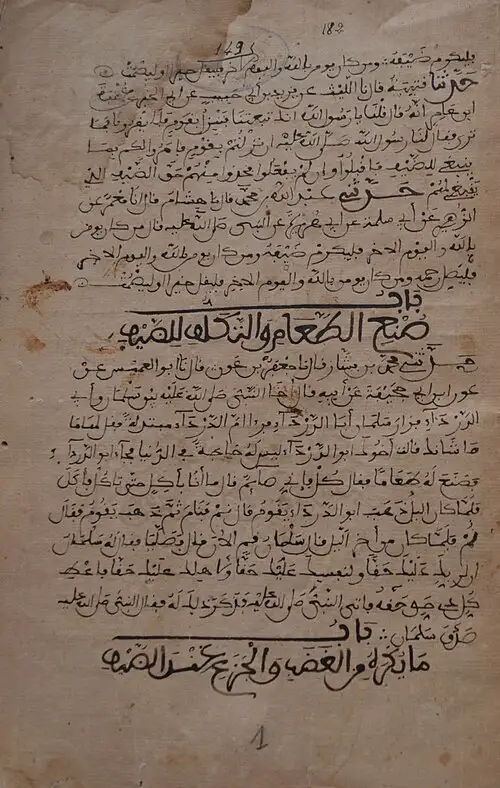
Fatima al-Bata'ihiyya was a woman of Damascus who transmitted the hadith of the Prophet Muhammad (Peace Be Upon Him). The biographical notices call her Fatima bint Ibrahim al-Bata'ihi and give her kunya as Umm Muhammad; other sources add Umm al-Khayr.1234 According to the Damascus notices her father was Ibrahim ibn Mahmud ibn Jawhar al-Bata'ihi al-Ba'labakki; the modern scholar Mohammad Akram Nadwi, in his Al-Muhaddithat, gives it once as Ibrahim ibn Muhammad ibn Jawhar.14 She was born in Rajab 625 AH (1228 CE) and died in Safar 711 AH (1311 CE).1
She heard the Sahih of al-Bukhari from Ibn al-Zabidi and Sahih Muslim from the Hanafi scholar Mahmud al-Husayri, and the notices say that she narrated the Sahih several times; the Meccan scholar Taqi al-Din al-Fasi (d. 832/1428–9) gives the number as five.56 Those named as hearing from her include the chief judge Taqi al-Din al-Subki and Siraj al-Din ibn al-Kuwayk, and the TDV İslâm Ansiklopedisi lists her among the scholars whose lessons Ibn Qayyim al-Jawziyya attended.57 Ibn Rushayd al-Fihri al-Sabti (d. 721/1321–2) met her in the Prophet's Mosque at Medina, where hadith was read to her and she wrote him an ijaza.2
The sources
No source in the approved base tells her life as a continuous account. What is known of her comes from short biographical notices, some by men who knew her and others by later historians, and from three passing mentions in a modern work. The TDV İslâm Ansiklopedisi names her once, in its entry on Ibn Qayyim al-Jawziyya.7
The historian and biographer al-Dhahabi (d. 748/1347–8) gives her a notice in his Mu'jam al-shuyukh, a dictionary of shaykhs, and says there that he read to her.1 In his Tarikh al-Islam he calls her shaykhatuna al-mu'ammara, literally 'our long-lived shaykha', in the notice on her father, and the Takmila that supplements his Siyar a'lam al-nubala' calls her shaykhatuna, 'our shaykha', in the notice on her son.89 The chronicler al-Barzali (d. 739/1338–9) records her death, her funeral and her burial, and gives the night of her birth.10 Al-Safadi (d. 764/1362–3) gives her a notice in A'yan al-'asr, his work on the notables of his age, and Ibn Hajar al-Asqalani (d. 852/1448–9) gives her one in al-Durar al-kamina, his work on the notables of the eighth century AH.511 Al-Fasi lists in his Dhayl al-taqyid the works that she heard.6 Ibn al-Imad (d. 1089/1678–9), in Shadharat al-dhahab, and the twentieth-century biographer Khayr al-Din al-Zirikli (d. 1396/1976), in al-A'lam, give her shorter entries.1213
The one account by a man who met her away from Damascus is that of Ibn Rushayd, in the section of his Mil' al-'ayba on the scholars and transmitters he met in Medina. Ibn al-Qadi (d. 1025/1616–17) has a notice on her in Durrat al-hijal that mentions Ibn Rushayd's meeting with her.23 Nadwi's Al-Muhaddithat: The Women Scholars in Islam (2007) names her in three places.14415 Other women of her time were also called Fatima bint Ibrahim, among them Fatima bint al-Izz Ibrahim al-Maqdisiyya, whose notice stands on the same page of al-Durar al-kamina.11 No report about any of them is used here. The subject of this article is identified by her father, Ibrahim ibn Mahmud ibn Jawhar.
Name and family
Her names
The notice in the Mu'jam is headed Fatima bint Ibrahim al-Bata'ihi, and al-Dhahabi writes the full name as Fatima bint Ibrahim ibn Mahmud ibn Jawhar al-Bata'ihi al-Ba'labakki, and gives the kunya Umm Muhammad. In the notice he also writes of 'Fatima bint Jawhar', and al-Zirikli's footnote records that the work al-Daris names her Fatima bint Jawhar after her grandfather.113 Ibn Rushayd gives the kunyas Umm al-Khayr and Umm Muhammad and the name Fatima bint Ibrahim ibn Mahmud ibn Jawhar al-Ba'labakki, known as al-Bata'ihi, and Ibn al-Qadi gives both kunyas as well.23 Nadwi writes her name as Umm al-Khayr Fatimah bint Ibrahim ibn Muhammad ibn Jawhar al-Balabakki al-Bata'ihi where he discusses teaching in mosques, and as Fatimah bint Ibrahim ibn Mahmud al-Bata'ihiyyah where he discusses the readings of the Sahih at Damascus.414 The article takes Umm Muhammad and Umm al-Khayr for two kunyas of one woman, since every notice that gives either of them names her father as Ibrahim ibn Mahmud ibn Jawhar, apart from Nadwi's one form.
Her nisba appears in several forms. Al-Dhahabi in the Mu'jam, al-Barzali, al-Zirikli and Ibn Rushayd give al-Ba'labakki together with al-Bata'ihi; al-Fasi and Ibn al-Imad give al-Bata'ihi al-Ba'li; al-Safadi gives al-Bata'ihiyya al-Ba'liyya; Ibn Hajar gives al-Bata'ihi; and the Mu'in of al-Dhahabi gives al-Ba'liyya.11013261251116 Al-Zirikli's footnote adds that al-Durar al-kamina has the form al-Bata'ihi and that the correction of it is from her own handwriting; the page does not say what was corrected.13 The article uses al-Bata'ihiyya, the feminine form that al-Safadi gives.
Her father
Al-Dhahabi's notice on her father in Tarikh al-Islam gives his name as Ibrahim ibn Mahmud ibn Jawhar and calls him Abu Ishaq al-Ba'labakki, an ascetic shaykh of the Hanbali school and a teacher of Quranic recitation from the Biqa'.8 It records that he narrated from Abu al-Yumn al-Kindi, kept company with Shaykh al-Imad for a time and read the Quran with him, studied law with al-Muwaffaq, and lived for a time at al-'Uqayba; that at the end of his life he went back to Ba'labakk and transmitted there; and that he had also kept company with Shaykh Abd Allah al-Bata'ihi for a time and was close to him.8 The notice calls her his daughter, the long-lived shaykha Fatima.8
Her sons
Ibn Hajar names her as the mother of Ibrahim ibn Barakat ibn al-Qurashiyya. His editor's footnote says that the copies read so, and that Ibn Hajar calls the man Ibrahim ibn Abi al-Barakat in his notice on him in the first volume of the work.11 Al-Fasi and Ibn al-Imad give him as Ibrahim ibn al-Quraysha, and Ibn al-Imad adds that his brothers were also her sons.612 The Takmila names two of his brothers, Shaykh al-Taqi and Shaykh Abd al-Qadir, and says that their mother was Fatima bint Jawhar.9 The article gives both forms of the son's name as the sources give them and does not decide that they name the same man. Ibn Rushayd records that a son of hers was with her at Medina.2
Birth and early learning
Her birth
Al-Dhahabi gives her birth in Rajab 625 AH (1228 CE), and Ibn Hajar, al-Safadi and al-Zirikli give the year 625.111513 Al-Barzali gives the night of the middle of Rajab 625, outside Bab al-Faradis, outside Damascus.10
Her teachers
Al-Dhahabi, Ibn Hajar, al-Safadi, al-Fasi and al-Zirikli all give her teacher for Sahih al-Bukhari as Ibn al-Zabidi; al-Fasi names him al-Husayn ibn al-Zabidi and adds that she heard from him the Musnad of al-Shafi'i, the Juz' of Abu al-Jahm and al-Arba'in al-Ta'iyya.1115613 Ibn al-Qadi gives his name as al-Husayn ibn al-Mubarak ibn Muhammad al-Zabidi.3 Nadwi describes a reading of the whole Sahih to al-Zabidi in the Jami' al-Muzaffari at Damascus, in 22 sessions between the end of Shawwal and 10 Dhu al-Qa'da 630, and names her among the women who attended, together with Sitt al-Wuzara' al-Tanukhiyya and others; he gives al-Dhahabi's statement that she heard the Sahih from al-Zabidi.14
For Sahih Muslim her teacher was the Hanafi scholar Mahmud al-Husayri. Al-Dhahabi in the Mu'jam calls him Abu al-Thana' Mahmud and the shaykh of the Hanafis; al-Safadi gives the form al-Husri; Ibn al-Imad gives Ibn al-Husayri; and al-Dhahabi's notice on him in Tarikh al-Islam gives his full name as Mahmud ibn Ahmad ibn Abd al-Sayyid ibn Uthman, born in 546 AH (1151–2 CE).151217 Al-Dhahabi adds that she heard from Abu al-Qasim ibn Rawaha, and Ibn al-Imad gives the same teacher.112
Teaching in Damascus
Ibn Hajar and al-Safadi say that she transmitted the Sahih from the time of Ibn Abd al-Da'im, a name that the notices give without further description.185 Al-Safadi says that she lived long and narrated the Sahih several times, and al-Fasi says that she narrated it five times.56 Ibn al-Imad says that she narrated it from Ibn al-Zabidi several times.12
Al-Safadi names those who heard from her: the chief judge Taqi al-Din al-Subki, whom he calls his own shaykh, Siraj al-Din ibn al-Kuwayk, Taqi al-Din ibn Abi al-Hasan, a son of al-Dhahabi, and a large number of others.5 Ibn Hajar and al-Zirikli give al-Subki as one who took from her.1813 The TDV İslâm Ansiklopedisi says that Ibn Qayyim al-Jawziyya attended the lessons of a number of scholars, among them Umm Muhammad Fatima bint Ibrahim al-Betaihi, and Nadwi, citing al-Dawudi's Tabaqat al-mufassirin, says that Ibn Qayyim studied hadith with her.74 Al-Dhahabi gives in the Mu'jam the chain of transmission of a report that he read to her. The chain begins with Mahmud ibn Ahmad al-Faqih, with the year 632 AH (1235 CE) after his name, and runs through Mansur ibn Abd al-Mun'im, Muhammad ibn al-Fadl al-Farawi, Abd al-Ghafir al-Farisi, Ibn Amrawayh and Ibrahim ibn Sufyan to Muslim ibn al-Hajjaj, and from Muslim through Shayban, al-Qasim al-Huddani and Abu Nadra to Abu Sa'id, who gives the report from the Prophet.1 The notice does not name the book from which the report comes, and the year of al-Dhahabi's reading is discussed in the Historiographical Note.
Teaching in Medina
Ibn Rushayd gives the fullest account of her. He lists her among those he met in the City of the Prophet, as Umm al-Khayr Fatima al-Bata'ihi, and calls her a katiba, a woman who writes.2 She came in the Syrian caravan as a visitor and a pilgrim, and he met her in the Prophet's Mosque. Hadith was read to her there while she leaned against the side of the portico of the Rawda, facing the head of the Prophet, and she wrote him an ijaza in her own hand, for all that she transmitted, for himself and for others whom the ijaza names, among them his sisters. A son of hers was present.2 He then records that he read to her on 24 Dhu al-Qa'da, between the Prophet's grave and the pulpit; the page read ends at the first name of the chain he read, al-Husayn ibn, and gives no year.2
Ibn al-Qadi's notice says that Ibn Rushayd met her in the Prophet's Mosque, that she gave him an ijaza, and that she wrote it in her own hand in 684 AH (1285–6 CE).3 Nadwi says that she taught hadith in the Prophet's Mosque and quotes Ibn Rushayd's account of meeting her there, and in his overview of the Hijaz he names her as the most important muhaddithah among the visitors from outside Medina, a woman who came from Syria, taught in the Prophet's Mosque and was studied with by great scholars.415 The judgement of her standing is Nadwi's own.
Her place in the chains of transmission
Several notices say where she stood among the transmitters of her teachers' works. Al-Dhahabi says in the Mu'jam that she was the last of those who narrated from al-Husayri by date of death, and in Tarikh al-Islam that she was the last of those who related from him and that she heard Sahih Muslim from him.117 The Takmila says that she was among the transmitters of the two Sahihs.9 Al-Dhahabi's Mu'in lists her, as al-Ba'liyya at the foot of Qasiyun, among the musnids, the transmitters who hold hadith with their chains, in its section on the tier of transmitters that runs to the 720s AH, and al-Zirikli calls her a hadith scholar of Damascus.1613
Death and burial
The notices agree on the year and differ on the day. Al-Dhahabi gives the latter part of Safar 711 AH (1311 CE); Ibn Hajar gives the night of 25 Safar 711; and al-Barzali gives Tuesday, 25 Safar.11810 Al-Iraqi and Ibn al-Imad give Safar 711, al-Safadi, the Takmila and al-Zirikli give the year 711, and Ibn al-Imad and the Takmila add that she was eighty-six.19125913
Ibn Hajar and al-Barzali place her death at Qasiyun, Ibn Hajar saying that she died and was buried there and al-Barzali that she died at the foot of Qasiyun; al-Zirikli says that she died and was buried at Qasiyun.181013 Al-Barzali records that the funeral prayer was held at noon on Tuesday in the Jami' al-Muzaffari, that she was buried beside her mother in a burial ground near the Sahibiyya school on the mountain, and that a large crowd attended.10
How the sources describe her
The descriptions below are the sources' own and are given as theirs. Al-Dhahabi in the Mu'jam calls her a righteous woman, a worshipper and a musnida, and says that she lived long and narrated much; al-Barzali, Ibn al-Imad and al-Zirikli call her righteous, and al-Safadi calls her aged (mu'ammara), a musnida and a worshipper.11012135 Ibn Rushayd and Ibn al-Qadi call her al-katiba, the one who writes, and Ibn Rushayd adds that she drew her cloak over her face out of modesty and as protection.23
Historiographical Note
The sources agree on her father's line as far as Ibn Jawhar, on her teachers for the two Sahihs, on her teaching of Sahih al-Bukhari and on the year of her birth and of her death. They differ on the points below, and the article has given each version with its source where the detail is told.
Her father's name. The Damascus notices (al-Dhahabi, Ibn Hajar, al-Fasi, Ibn al-Imad, al-Barzali and al-Zirikli), Ibn Rushayd and al-Iraqi give Ibrahim ibn Mahmud ibn Jawhar. Nadwi gives Ibrahim ibn Muhammad ibn Jawhar at p. 179 and Ibrahim ibn Mahmud at p. 105 of the same book, so that his own two forms differ. The evidence read does not show whether the form with Muhammad is an error, a second name or a different line, and the article gives it as Nadwi's.1116121013219414
Her kunyas and her son's name. Umm Muhammad is the kunya in al-Dhahabi, al-Fasi, al-Barzali, Ibn Rushayd, Ibn al-Qadi, Ibn al-Imad and al-Safadi; Umm al-Khayr appears in Ibn Rushayd, Ibn al-Qadi and Nadwi.1610231254 The son is Ibrahim ibn Barakat ibn al-Qurashiyya in Ibn Hajar, with his editor's footnote that the work calls the man Ibrahim ibn Abi al-Barakat elsewhere, and Ibrahim ibn al-Quraysha in al-Fasi, Ibn al-Imad and the Takmila. The article does not decide whether the forms of the son's name refer to one man.116129
The day of her birth and of her death. Al-Dhahabi gives her birth in Rajab 625, Ibn Hajar, al-Safadi and al-Zirikli give the year 625, and al-Barzali gives the night of mid-Rajab outside Bab al-Faradis. For her death the sources give the latter part of Safar (al-Dhahabi), the night of 25 Safar (Ibn Hajar) and Tuesday 25 Safar (al-Barzali). The article gives the three wordings as they stand, and gives separately Ibn Hajar's and al-Zirikli's burial at Qasiyun and al-Barzali's burial beside her mother near the Sahibiyya school.1181013
The year of al-Dhahabi's reading. The notice in the Mu'jam says that al-Dhahabi read to her in Muharram of the year that it writes as sanat ihda 'ashrata, literally 'the year eleven', and does not give the hundreds, although it gives the hundreds of the year 632 AH in the chain that follows. The article does not supply them and does not date the reading.1
What she was the last of. Al-Dhahabi's two wordings differ: in the Mu'jam she is the last to narrate from al-Husayri by date of death, and in Tarikh al-Islam the last of those who related from him. The article gives each with its source.117
How many times she narrated the Sahih. Al-Safadi and Ibn al-Imad say several times; al-Fasi says five times. The article does not reconcile them.5126
See also
- Muhammad al-Bukhari — the compiler of the Sahih that she taught
- Imam Muslim — the compiler of the Sahih that she heard from al-Husayri
- Hadith — the literature in which her transmission stands
- Al-Masjid al-Nabawi — the mosque at Medina where Ibn Rushayd met her
- Ibn Qayyim al-Jawziyya — a scholar who, the TDV İslâm Ansiklopedisi records, attended her lessons
- Sitt al-Wuzara' al-Tanukhiyya — another woman of Damascus who attended the reading of the Sahih to al-Zabidi in 630 AH
References
Citations
Footnotes
-
Al-Dhahabi, Mu'jam al-shuyukh al-kabir, ed. Muhammad al-Habib al-Hayla (Taif: Maktabat al-Siddiq, 1988), vol. 2, p. 103, no. 619 — her name, father and kunya, her birth, her teachers, the statement on al-Husayri, her death, his description of her, and the chain he read to her; https://shamela.ws/book/12531/521, register entry 4, shamela.ws. ↩ ↩2 ↩3 ↩4 ↩5 ↩6 ↩7 ↩8 ↩9 ↩10 ↩11 ↩12 ↩13 ↩14 ↩15 ↩16 ↩17 ↩18 ↩19
-
Ibn Rushayd al-Fihri al-Sabti, Mil' al-'ayba bi-ma jumi'a bi-tul al-ghayba, vol. 5, ed. Muhammad al-Habib Ibn al-Khuja (Beirut: Dar al-Gharb al-Islami, 1988), p. 21 — her name, kunyas and nisba, her arrival with the Syrian caravan, the reading to her, her ijaza, the son who was present, and the day of his own reading; https://shamela.ws/book/12532/17, register entry 4, shamela.ws. ↩ ↩2 ↩3 ↩4 ↩5 ↩6 ↩7 ↩8 ↩9 ↩10 ↩11 ↩12
-
Ibn al-Qadi, Durrat al-hijal fi asma' al-rijal, ed. Muhammad al-Ahmadi Abu al-Nur (Cairo: Dar al-Turath; Tunis: al-Maktaba al-Atiqa, 1971), vol. 3, p. 264, no. 1315 — her name and kunyas, her teacher, Ibn Rushayd's meeting with her, and the year 684 for her handwriting; https://shamela.ws/book/132965/905, register entry 4, shamela.ws. ↩ ↩2 ↩3 ↩4 ↩5 ↩6 ↩7
-
Nadwi, Al-Muhaddithat, p. 179 — her name in his discussion of mosques, his account of her teaching, Ibn Qayyim's study with her, and Ibn Rushayd's account of meeting her; https://archive.org/details/AlMuhaddithat, register entry 12, archive.org. ↩ ↩2 ↩3 ↩4 ↩5 ↩6 ↩7 ↩8
-
Al-Safadi, A'yan al-'asr wa a'wan al-nasr, ed. Ali Abu Zayd et al. (Beirut: Dar al-Fikr al-Mu'asir; Damascus: Dar al-Fikr, 1998), vol. 4, p. 26, no. 1334 — her name and kunya, her teachers, her teaching and its time, her pupils, and her birth and death years; https://shamela.ws/book/131/2174, register entry 4, shamela.ws. ↩ ↩2 ↩3 ↩4 ↩5 ↩6 ↩7 ↩8 ↩9 ↩10 ↩11 ↩12 ↩13 ↩14
-
Taqi al-Din al-Fasi, Dhayl al-taqyid fi ruwat al-sunan wa-l-asanid, ed. Kamal Yusuf al-Hut (Beirut: Dar al-Kutub al-Ilmiyya, 1990), vol. 2, p. 384, no. 1862 — her name and son, the works she heard from al-Husayn ibn al-Zabidi, and her five transmissions of the Sahih; https://shamela.ws/book/8884/944, register entry 4, shamela.ws. ↩ ↩2 ↩3 ↩4 ↩5 ↩6 ↩7 ↩8 ↩9 ↩10
-
H. Yunus Apaydın, 'İBN KAYYİM el-CEVZİYYE', TDV İslâm Ansiklopedisi, vol. 20 (Istanbul, 1999), pp. 109–123 — the sentence that lists Umm Muhammad Fatima bint Ibrahim al-Betaihi among the scholars whose lessons Ibn Qayyim attended; https://islamansiklopedisi.org.tr/ibn-kayyim-el-cevziyye, register entry 2, islamansiklopedisi.org.tr. ↩ ↩2 ↩3
-
Al-Dhahabi, Tarikh al-Islam, ed. Umar Abd al-Salam Tadmuri (Beirut: Dar al-Kitab al-Arabi, 1993), vol. 47, p. 381, no. 498 — the notice on her father and the description of her as his long-lived shaykha; https://shamela.ws/book/12397/22079, register entry 4, shamela.ws. ↩ ↩2 ↩3 ↩4
-
Al-Dhahabi, Takmila Siyar a'lam al-nubala', prepared by Adil Murshid, Ahmad Barhum and Salim Amir (Beirut: Dar al-Risala al-Alamiyya, 2019), vol. 30, p. 439 — the notice on her son, his brothers, and the statement on their mother; https://shamela.ws/book/10907/907, register entry 4, shamela.ws. ↩ ↩2 ↩3 ↩4 ↩5
-
Al-Barzali, Tarikh al-Barzali al-Muqtafi li-Tarikh Abi Shama, ed. Umar Abd al-Salam Tadmuri (Beirut: al-Maktaba al-Asriyya, 2006), vol. 4, p. 12, no. 12 — her death on Tuesday 25 Safar, the funeral prayer, her burial, and her birth on the night of mid-Rajab 625; https://shamela.ws/book/28/1643, register entry 4, shamela.ws. ↩ ↩2 ↩3 ↩4 ↩5 ↩6 ↩7 ↩8 ↩9 ↩10
-
Ibn Hajar al-Asqalani, al-Durar al-kamina fi a'yan al-mi'a al-thamina (Hyderabad: Da'irat al-Ma'arif al-Uthmaniyya, 1930–31), vol. 3, p. 220, no. 538 — her name and father, her son and the editor's footnote on his name, her birth, her hearing of the Sahih, and the neighbouring notices on other women called Fatima; https://shamela.ws/book/30171/1223, register entry 4, shamela.ws. ↩ ↩2 ↩3 ↩4 ↩5 ↩6 ↩7 ↩8
-
Ibn al-Imad, Shadharat al-dhahab fi akhbar man dhahab, ed. Mahmud al-Arna'ut (Damascus and Beirut: Dar Ibn Kathir, 1986), vol. 8, p. 52 — her name, her son and his brothers, her teachers, her death in Safar 711 at the age of eighty-six, and his descriptions; https://shamela.ws/book/12398/3650, register entry 4, shamela.ws. ↩ ↩2 ↩3 ↩4 ↩5 ↩6 ↩7 ↩8 ↩9 ↩10 ↩11 ↩12
-
Khayr al-Din al-Zirikli, al-A'lam, 15th printing (Dar al-'Ilm lil-Malayin, 2002), vol. 5, p. 129 — the heading 'Bint al-Bata'ihi' and the dates 625–711 AH (1228–1311 CE), his description of her, her teachers, al-Subki's study with her, her burial, and the footnote on the spelling of her name and on al-Daris; https://shamela.ws/book/12286/4346, register entry 4, shamela.ws. ↩ ↩2 ↩3 ↩4 ↩5 ↩6 ↩7 ↩8 ↩9 ↩10 ↩11 ↩12 ↩13
-
Mohammad Akram Nadwi, Al-Muhaddithat: The Women Scholars in Islam (Oxford and London: Interface Publications, 2007), p. 105 — the reading of the Sahih to al-Zabidi at the Jami' al-Muzaffari, the women who attended, and al-Dhahabi's statement that she heard the Sahih from al-Zabidi; https://archive.org/details/AlMuhaddithat, register entry 12, archive.org. ↩ ↩2 ↩3 ↩4
-
Nadwi, Al-Muhaddithat, p. 264 — the overview of the Hijaz that names her; https://archive.org/details/AlMuhaddithat, register entry 12, archive.org. ↩ ↩2
-
Al-Dhahabi, al-Mu'in fi tabaqat al-muhaddithin, ed. Humam Abd al-Rahim Sa'id (Amman: Dar al-Furqan, 1404 AH), p. 228, no. 2349 — her listing as a musnida, al-Ba'liyya at the foot of Qasiyun; https://shamela.ws/book/5889/212, register entry 4, shamela.ws. ↩ ↩2
-
Al-Dhahabi, Tarikh al-Islam, vol. 46, pp. 308–309 — the notice on al-Husayri, which begins with his full name on p. 308, and the statement that she was the last to relate from him and heard Sahih Muslim from him; https://shamela.ws/book/12397/21542 and https://shamela.ws/book/12397/21543, register entry 4, shamela.ws. ↩ ↩2 ↩3
-
Ibn Hajar, al-Durar al-kamina, vol. 3, p. 221 — her transmission from the time of Ibn Abd al-Da'im, her death on the night of 25 Safar 711 at Qasiyun, her burial there, and al-Subki's study with her; https://shamela.ws/book/30171/1224, register entry 4, shamela.ws. ↩ ↩2 ↩3 ↩4 ↩5
-
Al-Iraqi, al-Wafayat (Egypt: Dar al-Dhakha'ir, 2018), p. 315, no. 804 — her name and her death in Safar 711; https://shamela.ws/book/1078/306, register entry 4, shamela.ws. ↩ ↩2
Sources
Classical works read at Shamela (register entry 4, shamela.ws).
- Al-Dhahabi. Mu'jam al-shuyukh al-kabir, edited by Muhammad al-Habib al-Hayla, vol. 2. Taif: Maktabat al-Siddiq, 1988.
- Al-Dhahabi. Tarikh al-Islam, edited by Umar Abd al-Salam Tadmuri, vols. 46 and 47. Beirut: Dar al-Kitab al-Arabi, 2nd ed., 1993.
- Al-Dhahabi. Takmila Siyar a'lam al-nubala', prepared by Adil Murshid, Ahmad Barhum and Salim Amir, vol. 30. Beirut: Dar al-Risala al-Alamiyya, 2nd ed., 2019.
- Al-Dhahabi. Al-Mu'in fi tabaqat al-muhaddithin, edited by Humam Abd al-Rahim Sa'id. Amman: Dar al-Furqan, 1404 AH.
- Ibn Hajar al-Asqalani. Al-Durar al-kamina fi a'yan al-mi'a al-thamina, vol. 3. Hyderabad: Da'irat al-Ma'arif al-Uthmaniyya, first printing, 1930–31.
- Al-Safadi. A'yan al-'asr wa a'wan al-nasr, edited by Ali Abu Zayd et al., vol. 4. Beirut: Dar al-Fikr al-Mu'asir, and Damascus: Dar al-Fikr, 1998.
- Al-Safadi. Al-Wafi bi-l-wafayat, edited by Ahmad al-Arna'ut and Turki Mustafa, vol. 19. Beirut: Dar Ihya' al-Turath — consulted; nothing is taken from it.
- Al-Barzali. Tarikh al-Barzali al-Muqtafi li-Tarikh Abi Shama, edited by Umar Abd al-Salam Tadmuri, vol. 4. Beirut: al-Maktaba al-Asriyya, 2006.
- Taqi al-Din al-Fasi. Dhayl al-taqyid fi ruwat al-sunan wa-l-asanid, edited by Kamal Yusuf al-Hut, vol. 2. Beirut: Dar al-Kutub al-Ilmiyya, 1990.
- Ibn Rushayd al-Fihri al-Sabti. Mil' al-'ayba bi-ma jumi'a bi-tul al-ghayba, vol. 5, edited by Muhammad al-Habib Ibn al-Khuja. Beirut: Dar al-Gharb al-Islami, 1988.
- Ibn al-Qadi. Durrat al-hijal fi asma' al-rijal, edited by Muhammad al-Ahmadi Abu al-Nur, vol. 3. Cairo: Dar al-Turath, and Tunis: al-Maktaba al-Atiqa, 1971.
- Ibn al-Imad. Shadharat al-dhahab fi akhbar man dhahab, edited by Mahmud al-Arna'ut, vol. 8. Damascus and Beirut: Dar Ibn Kathir, 1986.
- Al-Iraqi. Al-Wafayat. Egypt: Dar al-Dhakha'ir, 2018.
A modern work read at Shamela (register entry 4, shamela.ws).
- Al-Zirikli, Khayr al-Din. Al-A'lam, vol. 5. 15th printing. Dar al-'Ilm lil-Malayin, 2002.
Read at archive.org (register entry 12, archive.org).
- Nadwi, Mohammad Akram. Al-Muhaddithat: The Women Scholars in Islam. Oxford and London: Interface Publications, 2007.
Encyclopaedia entry read at the TDV (register entry 2, islamansiklopedisi.org.tr).
- Apaydın, H. Yunus. 'İbn Kayyim el-Cevziyye'. TDV İslâm Ansiklopedisi, vol. 20. 1999.
Further reading
Offered to the reader for further study. Nothing in this article rests on the works below beyond what the sources above record of them.
- Al-Dhahabi. Dhayl al-'ibar — the work, at p. 60, that the editors of al-Barzali, of Ibn al-Imad and of al-Iraqi name among the earlier notices of her.
- Al-Safadi. Al-Wafi bi-l-wafayat, vol. 23, p. 700 — named in the editor's list of earlier notices of her in al-Iraqi's al-Wafayat.
- Al-Dawudi. Tabaqat al-mufassirin, vol. 2, p. 91 — the work Nadwi cites for Ibn Qayyim's study of hadith with her.
- Al-Daris — the work that al-Zirikli's footnote names as calling her Fatima bint Jawhar.
External links
Approved sources only, each with its number on the Register of Approved External Web Sources.
- Al-Dhahabi, Mu'jam al-shuyukh al-kabir, the notice on Fatima bint Ibrahim al-Bata'ihi — register entry 4, shamela.ws: in Arabic
- Ibn Hajar, al-Durar al-kamina, the notice on her — register entry 4, shamela.ws: in Arabic
- Al-Barzali, al-Muqtafi, the entry on her death — register entry 4, shamela.ws: in Arabic
- Ibn Rushayd, Mil' al-'ayba, vol. 5, on those he met in Medina — register entry 4, shamela.ws: in Arabic
- Nadwi, Al-Muhaddithat: The Women Scholars in Islam — register entry 12, archive.org
- İbn Kayyim el-Cevziyye — the TDV İslâm Ansiklopedisi, register entry 2, islamansiklopedisi.org.tr: the entry that names her, in Turkish
More from Medieval Islamic World
Mamluk Sultanate - The Slave Soldiers Who Became Kings
The Mamluk Sultanate (1250-1517 CE) was a powerful military state that ruled Egypt and Syria for nearly three centuries. Founded by former slave soldiers, the Mamluks defeated the Mongols at Ain Jalut, expelled the Crusaders, and presided over a cultural renaissance.
Ayyubid Dynasty - Saladin's Legacy and the Unification of the Muslim East
The Ayyubid Dynasty (1171-1260 CE) was founded by Saladin and ruled Egypt, Syria, and Yemen. The Ayyubids recaptured Jerusalem from the Crusaders, promoted Sunni Islam, and created a sophisticated state combining military power with cultural patronage.
Battle of Ain Jalut: Turning Back the Mongol Tide
The 1260 CE battle where the Mamluk Sultanate defeated the Mongol Empire in the Jezreel Valley, marking the first major Mongol defeat and halting their westward expansion into the Islamic heartlands.
Battle of Hattin - Saladin's Decisive Victory
The decisive battle of July 4, 1187 CE, where Saladin's forces crushed the Crusader armies near Hattin in Palestine. This pivotal victory led to the recapture of Jerusalem and marked the beginning of the end of Crusader dominance in the Holy Land.