Muhammad al-Bukhari
Muhammad al-Bukhari (810-870 CE) was the most influential hadith scholar in Islamic history. His Sahih al-Bukhari, compiled through decades of rigorous authentication work, became the most authoritative collection of the Prophet's traditions and a cornerstone of Islamic law and scholarship.
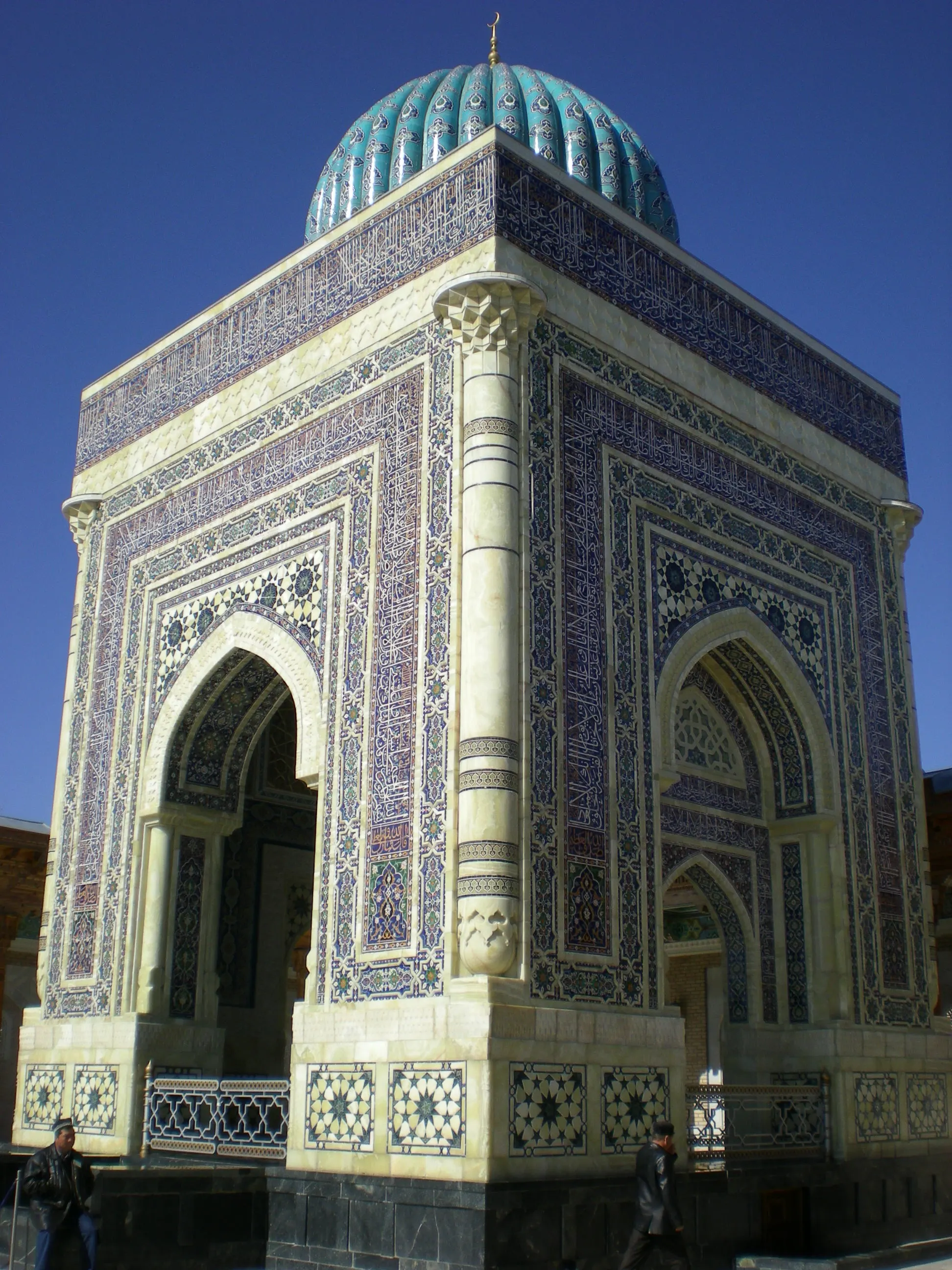
Abu Abdullah Muhammad ibn Ismail al-Bukhari (810–870 CE / 194–256 AH) was the most influential hadith scholar in Islamic history. His life's work — the compilation of Sahih al-Bukhari, a collection of the sayings and actions of Prophet Muhammad authenticated through decades of rigorous scholarly labor — became the most authoritative hadith collection in Sunni Islam and one of the most studied texts in the Islamic tradition after the Quran itself. Al-Bukhari did not merely collect traditions; he developed and demonstrated a methodology for evaluating their reliability that transformed hadith scholarship into a systematic discipline and established standards that Islamic scholars have applied ever since.
He worked in a specific historical moment — the ninth century CE, during the height of the Abbasid Caliphate — when the question of which traditions about the Prophet were authentic had become one of the most pressing intellectual and legal problems in the Islamic world. His answer to that problem, embodied in the Sahih, shaped Islamic law, theology, and education for more than a thousand years.
Historical Context: The Hadith Crisis of the Early Islamic Period
To understand what al-Bukhari achieved, it is necessary to understand the problem he was solving. In the decades and centuries after the death of Prophet Muhammad in 632 CE, the Muslim community relied on transmitted reports — hadith — to understand how the Prophet had prayed, judged disputes, treated his companions, and interpreted the Quran. These reports were the living memory of the prophetic community, and they were essential for Islamic law, theology, and practice.
But as the Islamic world expanded and the original companions of the Prophet died, the transmission of hadith became increasingly problematic. Reports circulated that were attributed to the Prophet but had been fabricated — sometimes by pious individuals who wanted to encourage good behavior, sometimes by political factions seeking religious legitimacy for their positions, sometimes by outright fraudsters. By the second and third Islamic centuries, scholars estimated that tens of thousands of hadith were in circulation, and a significant proportion of them were of doubtful or fabricated origin.
This was not merely an academic problem. Islamic law — the rules governing prayer, fasting, marriage, commerce, criminal justice, and virtually every other aspect of Muslim life — was derived in large part from hadith. If the hadith were unreliable, the law built on them was unreliable. The stakes of hadith authentication were therefore enormous: they touched on the foundations of Islamic practice and the legitimacy of the legal and theological structures that governed Muslim societies.
The Abbasid Caliphate period, during which al-Bukhari lived, was also marked by intense theological controversy. The Mihna — the inquisition imposed by Caliph al-Ma'mun requiring scholars to affirm that the Quran was created rather than eternal — had divided the scholarly community and raised fundamental questions about the relationship between political authority and religious knowledge. The resistance of scholars like Ahmad ibn Hanbal to the Mihna had strengthened the position of hadith-based scholarship as a bulwark against theological innovation. In this environment, the rigorous authentication of hadith was not just a scholarly exercise but a form of religious and intellectual integrity.
Early Life and Prodigious Gifts
Birth and Family Background
Abu Abdullah Muhammad ibn Ismail ibn Ibrahim ibn al-Mughira ibn Bardizbah al-Bukhari was born on Friday, 13 Shawwal 194 AH (21 July 810 CE) in Bukhara, one of the great cities of Transoxiana (modern Uzbekistan). His family was of Persian origin — his great-grandfather Bardizbah was a Zoroastrian who appears not to have converted to Islam, while his grandfather al-Mughira converted at the hands of the governor of Bukhara, Yaman al-Ju'fi. The family thus represented the second or third generation of Muslim Persians in Central Asia — a community that would produce a disproportionate number of the greatest hadith scholars.
His father, Ismail ibn Ibrahim, was himself a scholar and merchant of some note — reported to have studied under the famous transmitter Malik ibn Anas (through an intermediary) and under Hammad ibn Zayd. He died when Muhammad was young, leaving his son a modest inheritance that would later fund his scholarly travels. The sources emphasize that al-Bukhari's father was known for his scrupulousness in financial matters — reportedly saying on his deathbed that he knew of no single dirham in his possession that had come from a doubtful source. This combination of scholarly orientation and financial integrity shaped al-Bukhari's own character.
Childhood Genius and the Restoration of Sight
The biographical tradition records that al-Bukhari lost his sight in early childhood and that his mother prayed constantly for his recovery. According to the account preserved by later biographers, she saw the Prophet Ibrahim (Abraham) in a dream, who told her that God had restored her son's sight in response to her prayers. When al-Bukhari woke the following morning, his vision had returned. This account, preserved in the classical biographical literature, reflects the reverence in which later generations held him; whether taken literally or as a narrative expression of his exceptional gifts, it signals that his contemporaries understood him as someone marked for extraordinary achievement from the beginning.
What is historically certain is that al-Bukhari displayed a phenomenal memory from early childhood. He memorized the Quran at a young age and began memorizing hadith before he was ten. His biographers record that by the age of sixteen he had already memorized the hadith collections of two major scholars — Abdullah ibn al-Mubarak and Waki ibn al-Jarrah — and had begun to identify errors in the chains of transmission that other scholars had overlooked.
A famous anecdote illustrates his mnemonic capacity: when studying under the scholar al-Dakhili in Balkh, al-Bukhari did not write down the hadith he heard (unlike his fellow students). When challenged about this by his classmates, he asked them to read their notes back to him, then recited from memory all the hadith they had recorded — plus additional reports they had missed — correcting their versions from his memory of the original lecture. His contemporaries were astonished: this was not merely good memory but a capacity that seemed to transcend normal human limits.
Early Studies and First Compositions
Al-Bukhari completed his early education in Bukhara under local scholars before embarking on his travels. By the age of eighteen, he had already composed his first works — Qadaya al-Sahaba wa al-Tabi'in (Issues Concerning the Companions and Successors) and the beginnings of al-Tarikh al-Kabir (The Great History), his monumental biographical dictionary of hadith transmitters. These early compositions demonstrated that his ambition went far beyond memorization to critical analysis, biographical assessment, and the systematic organization of the hadith sciences. He was not merely collecting traditions but evaluating them — developing at eighteen the critical methodology that would define his career.
The Journey of Learning: Teachers and Travels
At sixteen, al-Bukhari traveled with his mother and brother to Mecca to perform the Hajj pilgrimage. He never returned to Bukhara to live permanently. Instead, he spent the next several decades traveling across the Islamic world in pursuit of hadith — a journey that took him to Medina, Baghdad, Basra, Kufa, Egypt, Syria, and the cities of Khorasan and Central Asia. He studied with more than a thousand scholars, collecting hadith and — crucially — evaluating the reliability of the transmitters through whom those hadith had been passed down.
His most important teachers were the leading hadith scholars of the generation before him. He studied with Ahmad ibn Hanbal in Baghdad — the great jurist and hadith scholar whose resistance to the Mihna had made him the most respected religious figure of his age. He studied with Yahya ibn Ma'in, whose encyclopedic knowledge of hadith transmitters and their reliability was unmatched. He studied with Ali ibn al-Madini, who was considered by many contemporaries to be the most learned hadith critic of his generation. Al-Bukhari later said of Ali ibn al-Madini that he had never felt small in the presence of any scholar except him.
These teachers represented the tradition of rijal criticism — the systematic evaluation of the men and women who had transmitted hadith across the generations. Rijal criticism required knowing not just the names of transmitters but their biographies: when they lived, whom they had met, whether they were known for honesty and accurate memory, whether they had ever been caught fabricating or distorting reports. Al-Bukhari absorbed this tradition from its greatest practitioners and then pushed it further than any of them had.
The Compilation of the Sahih
The idea for what would become Sahih al-Bukhari came to al-Bukhari, according to his own account, from a remark by his teacher Ishaq ibn Rahawayh, who said he wished someone would compile a concise collection of the authentic (sahih) traditions of the Prophet. Al-Bukhari took this as a personal challenge. He later described seeing the Prophet in a dream, standing before him with a fan, driving away flies — an image he interpreted as a sign that he was to purify the prophetic traditions of fabrications and weaknesses.
The compilation took approximately sixteen years. Al-Bukhari's method was extraordinarily demanding. He began with a pool of approximately 600,000 hadith that he had collected in his travels — reports that were in circulation in the Islamic world and attributed to the Prophet. From this vast pool, he selected only those that met his criteria for the highest level of authenticity. The final collection contains approximately 7,275 hadith (with some repetitions across chapters; the number of unique hadith is closer to 2,600). The ratio — roughly one in eighty of the hadith he had examined — reflects the severity of his standards.
His criteria for inclusion were more stringent than those of any previous collector. He required that every transmitter in a hadith's chain of transmission (isnad) be known for personal integrity and accurate memory. He required that each transmitter have been alive at the same time as the person from whom they claimed to have received the hadith, and — going further than most of his contemporaries — that there be evidence of actual contact between them, not merely the possibility of contact. He examined the text of each hadith (matn) for consistency with the Quran and with other well-established traditions. And he required that the chain of transmission be unbroken from the Prophet to the collector, with no gaps or uncertainties.
Al-Bukhari is reported to have performed a ritual bath and prayed two units of prayer before recording each hadith in the Sahih — a practice that reflects both his personal piety and his understanding of the gravity of what he was doing. He reportedly said that he did not include a single hadith in the Sahih without first making ablution and praying.
The Architecture of the Sahih: The Chapter Headings
One of the most distinctive and intellectually significant features of Sahih al-Bukhari is its organization. Al-Bukhari arranged the hadith into 97 books (kutub) covering the full range of Islamic practice and belief — from the beginning of revelation and the articles of faith, through the rituals of prayer, fasting, pilgrimage, and almsgiving, to commercial transactions, criminal law, military campaigns, and the interpretation of the Quran.
But what makes the organization particularly remarkable is the chapter headings (tarajim al-abwab). Al-Bukhari used these headings not merely as labels but as vehicles for legal reasoning. A chapter heading might pose a question, assert a legal position, or draw a subtle distinction — and the hadith placed under it were chosen to support or illustrate that position. Scholars of Islamic law have spent centuries analyzing the relationship between al-Bukhari's chapter headings and the hadith he placed beneath them, recognizing that the headings often contain implicit legal opinions that are as significant as the hadith themselves.
This practice — embedding legal reasoning in the architecture of a hadith collection — was al-Bukhari's way of demonstrating that rigorous hadith scholarship and sophisticated legal thinking were not separate activities but aspects of a single intellectual enterprise. The Sahih is not merely a reference work; it is an argument about how Islamic law should be derived from prophetic tradition.
Other Major Works
Al-Bukhari's scholarly output extended well beyond the Sahih. His al-Tarikh al-Kabir (The Great History) is a biographical dictionary of hadith transmitters — a massive work listing thousands of individuals who had transmitted hadith, with notes on their reliability, their teachers and students, and the dates of their births and deaths. This work was an essential tool for hadith criticism: to evaluate a chain of transmission, a scholar needed to know whether the people in it had actually met, and al-Bukhari's biographical dictionary provided the chronological and biographical information needed to make that determination.
His al-Adab al-Mufrad (The Book of Manners) is a collection of hadith specifically related to Islamic ethics and conduct — how to treat parents, neighbors, orphans, and animals; how to speak and behave in social situations; how to cultivate the virtues of patience, gratitude, and humility. This collection, less famous than the Sahih but widely studied, reflects al-Bukhari's understanding that hadith scholarship was not merely a legal and theological enterprise but a guide to the formation of character.
He also produced al-Tarikh al-Saghir (The Small History), a shorter biographical work, and al-Du'afa al-Saghir (The Small Book of Weak Transmitters), a critical assessment of hadith transmitters whose reliability he considered insufficient. These works together constitute a comprehensive scholarly project: not just collecting authentic hadith but mapping the entire landscape of hadith transmission, identifying who was reliable and who was not, and providing the tools that future scholars would need to continue the work of authentication.
Final Years
Al-Bukhari's last years were marked by a theological controversy that drove him first from Nishapur and then from Bukhara itself. The dispute concerned the created or uncreated status of the utterance of the Qur'an (lafz al-Qur'an), and it is set out in full in the section on the Nishapur controversy below.
He died at Khartank, a village near Samarkand, on the night of Eid al-Fitr in 256 AH (870 CE). He was in his early sixties by the lunar reckoning, having been born in Shawwal 194 AH.
The Six Canonical Collections and al-Bukhari's Place Among Them
Al-Bukhari's Sahih is the first and most authoritative of what Sunni Islamic scholarship came to call the Kutub al-Sitta — the Six Books, the canonical collections of hadith that together form the primary reference for prophetic tradition in Sunni Islam. The other five are the Sahih of Imam Muslim, the Sunan of Imam Abu Dawood, the Jami of Imam Tirmidhi, the Sunan of Imam al-Nasa'i, and the Sunan of Ibn Majah.
Among these six, al-Bukhari's Sahih and the Sahih of Imam Muslim are considered the most authoritative — together they are often referred to as al-Sahihayn (the Two Sahihs). But within this pairing, al-Bukhari's collection is generally ranked first. The traditional formulation among Sunni scholars is that Sahih al-Bukhari is the most authentic book after the Quran — a judgment that reflects both the rigor of al-Bukhari's methodology and the centuries of scholarly scrutiny that have confirmed the quality of his work.
The four major schools of Sunni Islamic law — the Hanafi school associated with Imam Abu Hanifa, the Maliki school associated with Imam Malik, the Shafi'i school associated with Imam al-Shafi'i, and the Hanbali school associated with Imam Ahmad ibn Hanbal — all draw on Sahih al-Bukhari as a primary source, though they sometimes interpret the same hadith differently in reaching their legal conclusions.
Influence on Islamic Scholarship
Al-Bukhari's influence on Islamic scholarship extends far beyond the Sahih itself. His methodology — the insistence on verified chains of transmission, the biographical evaluation of transmitters, the requirement of demonstrated contact between transmitters — became the standard framework for hadith criticism and shaped the entire subsequent tradition of Islamic hadith scholarship.
Later scholars built on his biographical dictionaries to create an extensive literature of rijal criticism — the systematic evaluation of hadith transmitters — that remains one of the most distinctive and sophisticated achievements of Islamic scholarship. The tools al-Bukhari developed and demonstrated were refined and extended by generations of scholars who came after him, creating a tradition of source criticism that has no real parallel in the medieval world.
His influence also extended to Islamic theology and spirituality. Al-Ghazali, writing two centuries after al-Bukhari, drew extensively on Sahih al-Bukhari in his Ihya Ulum al-Din (The Revival of the Religious Sciences), using hadith from the collection to ground his account of Islamic ethics and spiritual practice. The hadith al-Bukhari had authenticated became, through works like the Ihya, the living substance of Islamic moral and spiritual teaching for generations of Muslims.
Legacy
Al-Bukhari's legacy is inseparable from the text he produced. Sahih al-Bukhari has been copied, commented upon, memorized, and taught continuously since the ninth century. The tradition of writing commentaries on the Sahih — explaining difficult hadith, resolving apparent contradictions, drawing out legal implications — produced a vast literature of its own, of which the most celebrated is Ibn Hajar al-Asqalani's Fath al-Bari (The Opening of the Creator), a fourteen-volume commentary written in the fifteenth century that remains the standard reference for understanding the Sahih.
What al-Bukhari achieved was not merely the compilation of a reliable reference work, though it was that. He demonstrated that the prophetic tradition could be subjected to rigorous critical scrutiny and that such scrutiny, far from undermining the tradition, could establish it on firmer ground. His willingness to reject hadith that other scholars accepted — to say, in effect, that a tradition widely believed to be authentic did not meet his standards — required both intellectual courage and methodological confidence. The fact that his judgments have been largely sustained by subsequent scholarship is a measure of how well-founded that confidence was.
In the Islamic Golden Age that flourished in Baghdad and across the Abbasid world, al-Bukhari represents a different kind of achievement from the philosophers and scientists who are often most celebrated. He was not developing new theories about the natural world or synthesizing Greek and Islamic thought. He was doing something in some ways more difficult: establishing, through painstaking biographical and textual research, which reports about the Prophet Muhammad could be trusted. That work — unglamorous, demanding, and essential — is the foundation on which much of Islamic law and practice has rested for more than a thousand years.
Al-Bukhari's Methodology in Detail
The Science of Isnad Criticism
Al-Bukhari's methodology rested on two pillars: isnad criticism (evaluation of the chain of transmission) and matn criticism (evaluation of the text itself). Of these, isnad criticism was the more systematic and the one for which he established the most rigorous standards.
For a hadith to be accepted into the Sahih, its isnad had to satisfy several conditions simultaneously:
-
Continuity (ittisal): The chain must be unbroken — each transmitter must have actually received the hadith from the person they claimed to have heard it from, with no gaps or missing links
-
Integrity ('adala): Every transmitter in the chain must be a person of known moral integrity — free from major sins, known for truthfulness, and not accused of fabrication or serious error
-
Precision (dabt): Every transmitter must possess accurate memory and the ability to transmit what they heard without distortion — either through memorization or through well-maintained written records
-
Freedom from hidden defects ('illa): The hadith must not contain subtle defects that only an expert can detect — such as a narrator inserting his own words into a prophetic tradition, or confusing two similar but different reports
-
Freedom from irregularity (shudhudh): The hadith must not contradict more reliable reports — if a single narrator reports something that contradicts what multiple more reliable narrators report, the isolated report is considered irregular (shadh) and rejected
What made al-Bukhari's application of these criteria distinctive was his insistence on proven contact between transmitters. Earlier scholars like Imam Muslim accepted the contemporaneity of transmitters (if they lived at the same time, the transmission was accepted as possible). Al-Bukhari went further: he required evidence that the two people had actually met and that the transmission had actually occurred. This single additional requirement — contact rather than mere contemporaneity — made his standard significantly more stringent than that of his student Muslim and accounts for many of the differences between their two collections.
The Tarikh al-Kabir: The Biographical Foundation
Al-Bukhari's ability to evaluate thousands of transmitters rested on his monumental biographical dictionary, al-Tarikh al-Kabir (The Great History), which contains entries on approximately 12,315 narrators. A typical entry gives the narrator's full name and lineage, the teachers from whom he received hadith and the students to whom he transmitted them, his dates of birth and death where these were known, his standing among the hadith critics, and any specific criticism or commendation that had been directed at him. The first two of these are what make the dictionary an instrument rather than a catalogue: recording teachers and students on both sides of every name is what allows a chain to be tested for whether its links could actually have met.
This massive reference work — compiled over decades and based on al-Bukhari's personal knowledge of the hadith science and on information gathered during his travels — was the biographical infrastructure that made the Sahih possible. Without knowing who transmitted to whom, when they lived, and whether they were reliable, no critical evaluation of hadith chains could be undertaken. The Tarikh al-Kabir provided exactly this knowledge, and its existence is one of the reasons al-Bukhari could evaluate hadith at a level that his predecessors could not.
The Relationship Between Sahih al-Bukhari and Sahih Muslim
The relationship between al-Bukhari's collection and that of his student Muslim ibn al-Hajjaj (d. 875 CE) has been the subject of extensive scholarly discussion. Both are regarded as the most authentic hadith collections in Sunni Islam and they share a large body of material, but they differ on four points of method that between them account for most of the divergence in their contents and in how each is used.
| Sahih al-Bukhari | Sahih Muslim | |
|---|---|---|
| Condition for a chain | Proven contact between each pair of narrators | Contemporaneity, with the possibility of contact |
| Arrangement | By legal topic, with chapter headings that carry legal reasoning | All chains for a given hadith grouped together |
| Repetition | A hadith repeated under each topic it bears on, raising the total count | Each hadith generally placed once |
| Stated method | None; the criteria must be inferred from the practice | A detailed methodological introduction (muqaddima) |
The first difference is the one with substantive consequences: because al-Bukhari requires evidence that two narrators actually met and Muslim requires only that they could have, some traditions Muslim admits are absent from al-Bukhari — not because their narrators are held unreliable, but because the contact between them is undocumented. The second and third differences are organisational and follow from what each compiler wanted his book to be used for: al-Bukhari's arrangement serves the jurist looking for the authority on a question, Muslim's serves the critic examining how a single report was transmitted.
The scholarly consensus, though not universal, is that al-Bukhari's collection is marginally the more rigorous and that Muslim's is the better organised and the easier to consult. Together the two are known as al-Sahihayn, the Two Sahihs.
The Nishapur Controversy and Exile
The Theological Dispute
The final years of al-Bukhari's life were marked by a painful controversy that drove him from Nishapur and eventually from Bukhara itself. The dispute centered on the theological question of the creation of the Quran (khalq al-Quran) — specifically, whether the human utterance of the Quran constituted a "created" act (since human speech is produced in time) even though the Quran itself, as God's eternal word, is uncreated.
Al-Bukhari's position — that "my utterance of the Quran is created" (meaning the physical act of pronunciation, not the Quran's eternal content) — was theologically nuanced but was perceived by some conservative scholars as dangerously close to the Mu'tazilite position that the Quran itself was created. Muhammad ibn Yahya al-Dhuhli, the leading hadith scholar of Nishapur, accused al-Bukhari of holding heterodox views and urged his students to boycott him.
The controversy was partly theological and partly personal — al-Dhuhli may have felt threatened by al-Bukhari's popularity among his own students. Whatever the motivation, the result was al-Bukhari's exclusion from Nishapur's scholarly circles and his departure from the city.
Return to Bukhara and Final Exile
Al-Bukhari returned to his native Bukhara, where he was initially received with honor. But the governor, Khalid ibn Ahmad al-Dhuhli (possibly related to Muhammad ibn Yahya al-Dhuhli of Nishapur), demanded that al-Bukhari come to his palace to teach privately — effectively making the scholar a court servant. Al-Bukhari refused, declaring: "Knowledge is sought in its own places" — meaning that students should come to the scholar, not that the scholar should make himself available as entertainment for rulers.
This refusal offended the governor, who banned al-Bukhari from Bukhara. The greatest hadith scholar of his age was exiled from his own city. He traveled to Khartank, a village near Samarkand, where he stayed with relatives. There, in isolation and apparent sadness at the community's treatment of him, he died on the night of Eid al-Fitr, 1 Shawwal 256 AH (31 August 870 CE), at the age of sixty-two.
According to his biographers, his final words included a prayer: "O Allah, the earth has become constricted for me despite its vastness. Take me to You." He was buried in Khartank, where his grave remains a site of visitation to this day. The man who had produced the most authoritative collection of prophetic traditions in Islamic history died in exile — rejected by the very scholarly establishment that would later unanimously acknowledge his superiority.
Al-Bukhari's Personal Character
Piety and Asceticism
The sources consistently portray al-Bukhari as a man of profound personal piety and asceticism. He was known for extensive night prayer (tahajjud), for maintaining voluntary fasts, and for the devotional practice of praying before recording each hadith. His biographers describe him as one who lived simply despite the inheritance he had received, spending his wealth on scholarly travel and charity rather than on personal comfort.
He was also known for his generosity. Despite living as a scholar without regular income (he did not accept gifts from rulers), he would distribute money to the poor and to students. A story is told that he would distribute 500 dirhams per month to students while he himself lived on modest means.
Integrity and Independence
Al-Bukhari's refusal to become a court scholar — the decision that led to his exile from Bukhara — exemplified the principle of scholarly independence from political authority that was central to the hadith scholars' self-understanding. The hadith scholars of the third Islamic century saw themselves as custodians of prophetic authority that was independent of and superior to the authority of caliphs and governors. Their willingness to suffer for this independence — as Ahmad ibn Hanbal had during the Mihna and as al-Bukhari did in his exile — was seen as proof of their sincerity and as a guarantee that their scholarship was not corrupted by worldly motives.
The Reception and Influence of the Sahih
Immediate Reception
The Sahih was received with recognition during al-Bukhari's own lifetime, though its elevation to the supreme position it later occupied was a gradual process. Scholars who heard al-Bukhari teach from it — including Muslim ibn al-Hajjaj, al-Tirmidhi, and al-Nasa'i — acknowledged its quality and adopted its standards (while sometimes applying them differently in their own works). The public sessions where al-Bukhari read his collection drew large audiences, and copies circulated among scholars through the established system of authorized transmission (ijaza).
However, it was not until the generation after al-Bukhari's death that the Sahih achieved its unchallenged position as the most authoritative hadith collection. Scholars like Abu Bakr al-Isma'ili, Abu Nu'aym al-Isfahani, and al-Daraqutni examined the Sahih critically — identifying a small number of hadith whose chains they considered less than perfect — but their criticisms were confined to details and did not challenge the collection's overall standing. By the early fifth Islamic century (11th century CE), the scholarly consensus was fully established: Sahih al-Bukhari was the most authentic book after the Quran.
The Commentary Tradition
The importance of Sahih al-Bukhari in Islamic scholarship is reflected in the vast commentary tradition it generated. More commentaries have been written on the Sahih than on virtually any other Islamic text besides the Quran itself. The major commentaries include:
The greatest of them is Fath al-Bari by Ibn Hajar al-Asqalani (d. 1449 CE), which runs to more than thirteen volumes and which Ibn Hajar spent twenty-five years composing. It remains the standard reference for understanding any hadith in the Sahih, and its standing is caught in a saying that circulated among later scholars: that there is no commentary after Fath al-Bari. Earlier than Ibn Hajar was al-Kawakib al-Darari of al-Kirmani (d. 1384 CE), one of the first comprehensive commentaries on the work. Badr al-Din al-Ayni (d. 1451 CE) produced Umdat al-Qari almost contemporaneously with Ibn Hajar, and it is valuable precisely because it is Hanafi where Ibn Hajar leans Shafi'i, so that the two together show how the same hadith was read from within different legal schools. Irshad al-Sari of al-Qastallani (d. 1517 CE) drew on Ibn Hajar and the earlier commentators and became the version most widely studied in the Ottoman period and after.
The existence of these commentaries — and the centuries of scholarly effort they represent — testifies to the Sahih's central place in Islamic intellectual life. It is not merely a reference work to be consulted but a text to be studied, analyzed, and interpreted — a work whose depths have not been exhausted after more than a millennium of scholarly engagement.
Influence on Islamic Law
The Sahih's influence on Islamic jurisprudence (fiqh) is pervasive and fundamental. All four Sunni legal schools draw on the hadith it contains for their legal rulings, and a hadith's presence in Sahih al-Bukhari gives it a presumption of authenticity that significantly influences legal arguments. When jurists disagree about a point of law, the ability to cite a hadith from the Sahih (as opposed to from a less rigorously authenticated collection) carries substantial weight in the argument.
Al-Bukhari's chapter headings (tarajim) themselves represent legal opinions — implicit positions on debated questions of law that scholars have analyzed for centuries. The statement "fiqh al-Bukhari fi tarajimihi" ("al-Bukhari's jurisprudence is in his chapter headings") became a scholarly axiom, recognizing that the Sahih was not merely a hadith collection but a work of legal reasoning disguised as one.
The Sahih in Daily Muslim Life
Beyond its scholarly importance, Sahih al-Bukhari pervades daily Muslim religious life. The traditions it contains are cited in sermons, taught in Islamic education, referenced in personal religious practice, and invoked in ethical discussions. When a Muslim is told "there is a hadith in Bukhari that says..." the effect is immediate: the hadith is presumed authentic, and its guidance is taken seriously. This level of trust — built over twelve centuries of scholarly validation — makes the Sahih the practical foundation of Sunni Muslim practice alongside the Quran.
The collection is also read devotionally: in many Muslim societies, complete readings of the Sahih are organized during Ramadan or on other occasions, with scholars reading the entire text aloud to assembled audiences over the course of days or weeks. These readings serve both educational and spiritual purposes — they transmit the hadith to new generations while maintaining the oral transmission chains that connect modern scholars to al-Bukhari himself.
Al-Bukhari in Islamic Memory
The Title "Amir al-Mu'minin fi al-Hadith"
Al-Bukhari has been given the title Amir al-Mu'minin fi al-Hadith — "Commander of the Faithful in Hadith" — a designation that places him at the pinnacle of the hadith sciences and that no other scholar has been given with the same universal acceptance. The title signifies not merely that he was the best among hadith scholars but that his authority in this domain is commanding and definitive — that his judgments on hadith authenticity set the standard against which all others are measured.
The Scholarly Consensus
The scholarly consensus (ijma') on Sahih al-Bukhari's position is one of the most emphatic in Islamic intellectual history. Virtually every major scholar across all Sunni schools of law and theology has affirmed that the Sahih is the most authentic book after the Quran. Al-Nawawi (Shafi'i), Ibn Taymiyyah (Hanbali), al-Ayni (Hanafi), and countless others have attested to this ranking. The consensus has been maintained continuously for over a thousand years and shows no signs of weakening.
This consensus is particularly remarkable given the intellectual diversity of the scholars who hold it: they disagree on innumerable points of law, theology, and methodology, yet on the question of al-Bukhari's preeminence in hadith they are virtually unanimous. This unanimity testifies to the quality of al-Bukhari's work and to the enduring power of his methodology.
References and Further Reading
Primary Islamic Sources
- Quran, Surah al-Hujurat (49:6) — "If a transgressor brings you news, verify it" — the Quranic basis for the critical verification of hadith reports that al-Bukhari made the cornerstone of his methodology
- Quran, Surah al-Nisa (4:59) — "Obey Allah and obey the Messenger" — the foundational command establishing the legal and religious authority of the Prophet's transmitted practice
- Sahih al-Bukhari, Book of Revelation, Hadith 1 — "Actions are by intentions, and every man shall have only that which he intended" — the opening hadith of the Sahih, chosen deliberately by al-Bukhari to establish the primacy of intention in all religious acts
- Sahih al-Bukhari, Book of Knowledge, Hadith 71 — "Whoever Allah wishes good for, He grants him understanding of the religion" — one of the most cited traditions in the entire collection
- Al-Bukhari, Muhammad ibn Ismail. Sahih al-Bukhari. Edited by Muhammad Muhsin Khan (translation with Arabic text). 9 vols. Riyadh: Dar al-Salam, 1997. [Compiled c. 832–870 CE]
Classical Islamic Sources
- Al-Bukhari, Muhammad ibn Ismail. Al-Tarikh al-Kabir (The Great History). 9 vols. Hyderabad: Da'irat al-Ma'arif al-Uthmaniyya, 1941–1963. [Original c. 840 CE] The comprehensive biographical dictionary of hadith transmitters.
- Al-Bukhari, Muhammad ibn Ismail. Al-Adab al-Mufrad (The Book of Manners). Edited by Muhammad Fu'ad Abd al-Baqi. Cairo: Dar al-Basha'ir al-Islamiyya, 1989. [Original c. 9th century CE]
- Ibn Hajar al-Asqalani, Ahmad ibn Ali. Fath al-Bari Sharh Sahih al-Bukhari (Opening of the Creator: Commentary on Sahih al-Bukhari). 13 vols. Beirut: Dar al-Ma'rifa, 1959. [Original c. 1449 CE] The definitive scholarly commentary on the Sahih.
- Al-Dhahabi, Shams al-Din. Siyar A'lam al-Nubala. Edited by Shu'ayb al-Arna'ut. Mu'assasat al-Risala, 1981. [Original c. 1320 CE]
- Ibn Hajar al-Asqalani. Hady al-Sari: Muqaddimat Fath al-Bari. Beirut: Dar al-Ma'rifa, 1959. [Original c. 1449 CE] The introduction to Fath al-Bari, covering al-Bukhari's biography and methodology.
Academic and Scholarly Sources
- Brown, Jonathan A.C. The Canonization of al-Bukhari and Muslim: The Formation and Function of the Sunni Hadith Canon. Leiden: Brill, 2007.
- Brown, Jonathan A.C. Hadith: Muhammad's Legacy in the Medieval and Modern World. Oxford: Oneworld Publications, 2009.
- Al-Azami, Muhammad Mustafa. Studies in Hadith Methodology and Literature. Indianapolis: American Trust Publications, 1977.
- Juynboll, G.H.A. Muslim Tradition: Studies in Chronology, Provenance and Authorship of Early Hadith. Cambridge: Cambridge University Press, 1983.
- Siddiqi, Muhammad Zubayr. Hadith Literature: Its Origin, Development and Special Features. Cambridge: Islamic Texts Society, 1993.
Further Reading
- Lucas, Scott C. Constructive Critics, Hadith Literature, and the Articulation of Sunni Islam. Leiden: Brill, 2004.
- Motzki, Harald, ed. Hadith: Origins and Developments. Aldershot: Ashgate, 2004.
- Robson, James. An Introduction to the Science of Tradition. London: Royal Asiatic Society, 1953.
Mentioned In
45 articles reference this topic
and 33 more articles
More from Abbasid Caliphate
Islamic Schools of Jurisprudence: The Madhabs
The madhabs, the schools of Islamic law that developed methods for deriving rulings from the Qur'an and the Sunnah. Four Sunni schools and the Shi'a traditions have guided Muslim practice for over a millennium; they are schools of method, not sects.
Abbasid Caliphate
The third major Islamic caliphate (750–1258 CE), centered in Baghdad. It presided over the Islamic Golden Age, with landmark advances in science, philosophy, literature, and the arts, forging a cosmopolitan empire that blended Greek, Persian, Indian, and Arab traditions.
Baghdad
Baghdad, founded in 762 CE by Caliph al-Mansur, served as the capital of the Abbasid Caliphate and became the intellectual, cultural, and economic center of the Islamic world during the Islamic Golden Age, reaching a population of over one million before its destruction by the Mongols in 1258 CE.
Islamic Urban Planning and City Development
How cities were laid out in the Islamic world from the eighth century onward, with the congregational mosque and market at the centre, streets graded from public to private, and courtyard houses built for seclusion. Baghdad, Cordoba, Cairo and Istanbul show the pattern at scale.