Kösem Sultan
Kösem Sultan (c. 1589-1651), also known by her harem name Mahpeyker, was the wife of Sultan Ahmed I and mother of Sultans Murad IV and Ibrahim I. As valide sultan and regent she dominated Ottoman politics for four decades before being killed in a palace power struggle with her rival, Turhan Sultan.
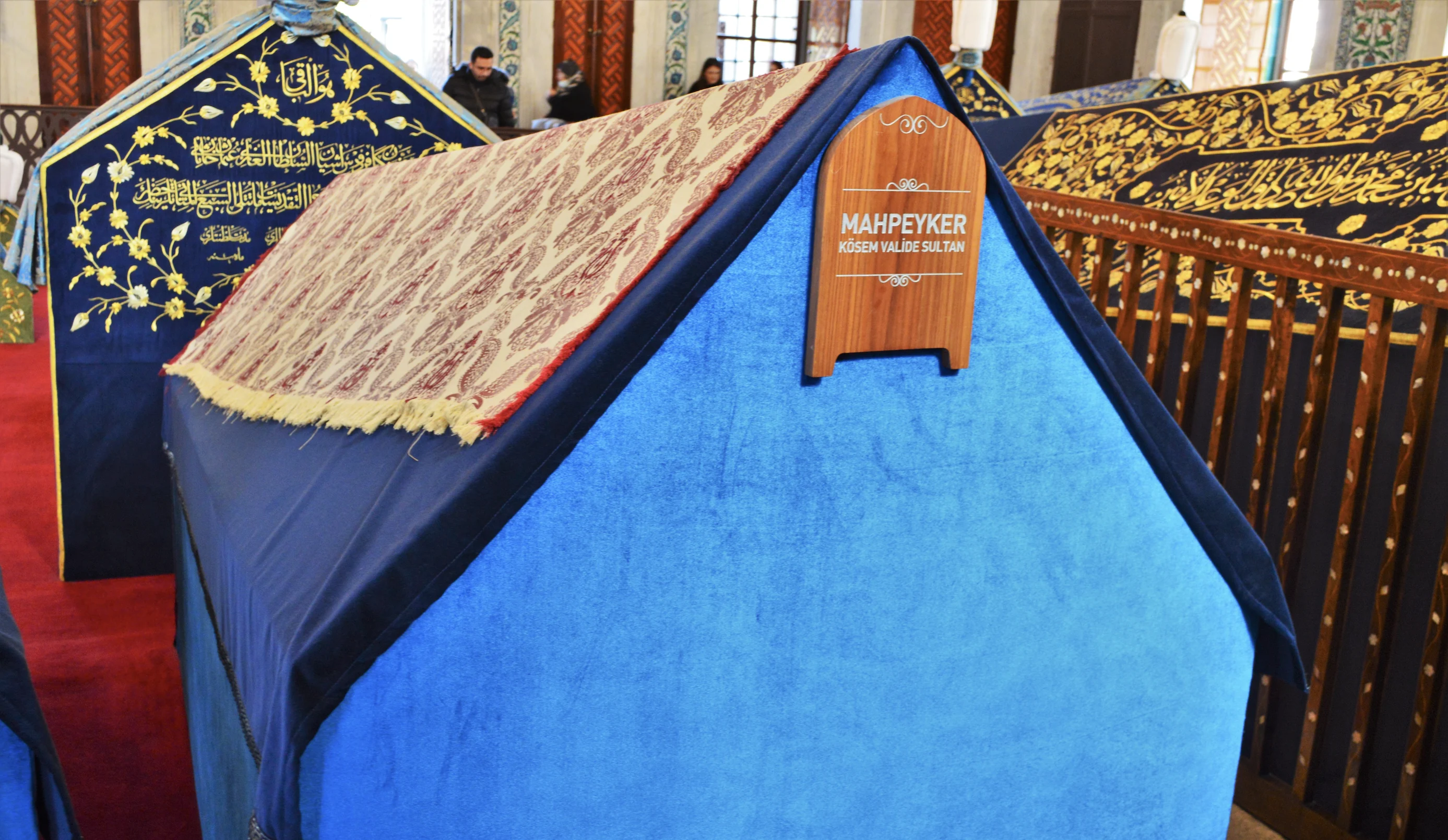
Kösem Sultan (c. 1589 – 2/3 September 1651) was the senior consort of Sultan Ahmed I, mother of Sultans Murad IV and Ibrahim I, and grandmother of Sultan Mehmed IV. As valide sultan — queen mother — and regent, she was the dominant figure in Ottoman court politics for four decades, spanning the reigns of four sultans, before being killed in September 1651 in a struggle for power with her daughter-in-law, Turhan Sultan. Her career is the central case in Ottoman history of the political authority exercised by women of the imperial household during the period historians call the Sultanate of Women.
Origins and Entry into the Imperial Harem
The sources give no reliable information about Kösem Sultan's early life. Her family's identity is not established with certainty, though it is suggested that she was the daughter of an Orthodox Christian priest, possibly brought to the Ottoman court from the Bosnian lands. Two names appear for her in the historical record: Mahpeyker and Kösem. It is understood that Mahpeyker was her actual name within the harem, while Kösem — the name by which she became better known — was a title given to her later. One explanation offered for the name Kösem connects it to Mahpeyker's meaning, on the grounds that she had smooth, beautiful skin; another holds that Kösem means "the ram that leads the flock," pointing to her quality of leadership.
According to a tradition recording her age as sixty-two at the time of her death, she can be said to have been born around 1589. She attracted the attention of Sultan Ahmed I through her beauty after arriving at the palace, and became his leading haseki, or favourite consort. Since she bore him his son Murad (the future Murad IV) in 1612, her arrival at the palace must have taken place by 1609–1610 at the latest. Following the births of Ibrahim in 1615 and of a further son, Kasim, she increasingly came to the fore at court.
The Succession of 1617 and the Years in the Old Palace
When Ahmed I fell fatally ill, Kösem is said to have undertaken various efforts to prepare the throne for her sons. It has been suggested that, to this end, after Ahmed I's death she arranged for Mustafa — son of Mehmed III and brother of Ahmed I — to be placed on the throne rather than Osman, Ahmed's son by another consort, Mahfiruz Hatice Sultan, thereby bringing about a significant change in the Ottoman system of succession. There is no certain information about Kösem's precise role in these events, but it is clear that she had some part, even if only to protect her sons, in the ending of the practice of fratricide upon a new sultan's accession, a practice that had provoked strong reaction both at court and among the public.
Kösem Sultan spent roughly six years residing in the Old Palace during the two reigns of Mustafa I and the reign of Osman II, a period in which she held no formal position at court. Her son Murad's accession to the throne on 10 September 1623 secured her the power she had long sought: she came from the Old Palace to Topkapi Palace in a special ceremony and became valide sultan. Murad's youth — he was twelve — gave her a determining voice in the administration of the state.
Regent for Murad IV
During these years Kösem worked together with the state's leading officials on matters including the payment of accession bonuses to the Janissaries, the loss of Baghdad, disobedience in the provinces, the revolt of Abaza Mehmed Pasha, Cossack raiders penetrating as far as the Bosphorus, and unrest in the Crimea. As Murad learned the business of government at his mother's side, he began to plan taking direct control of the administration himself. Kösem, for her part, had no intention of relinquishing her authority to her son. Following the dismissal of the grand vizier Husrev Pasha, however, a train of events in the provinces and in the capital, together with various manoeuvres by which Topal Recep Pasha secured the grand vizierate, broke her hold on power, and Murad IV himself took over the administration in 1631–32.
Even so, Murad continued to listen to his mother and could not entirely separate himself from her. During a journey to Bursa, when Murad had the qadi of Iznik executed following complaints against him, the reaction this provoked among the religious scholars led the Shaykh al-Islam, Ahizade Huseyin Efendi, to send Kösem a memorandum asking her to warn her son, and also informing her of rumours that the sultan might be deposed. Kösem immediately passed all of this on to Murad. On receiving the warning, the sultan returned to Istanbul and had the Shaykh al-Islam executed without any investigation of the matter. Having evidently won her son's trust through this episode, Kösem was nonetheless unable to prevent Murad from having his half-brothers Bayezid and Suleyman put to death in August 1635, on his return from the Erivan campaign, nor his full brother Kasim in February 1638, shortly before he set out on the Baghdad campaign. She did, however, save her remaining son Ibrahim, by presenting him as feeble and pitiable, and in doing so secured his position as sole heir to the throne.
Regent for Ibrahim I
Sultan Ibrahim's accession in 1640 restored Kösem to her former power. Ibrahim's mental afflictions increased her responsibilities. Kösem's first concern was to prevent the Ottoman line from ending altogether, and she took measures aimed at securing a male heir for Ibrahim. The number of concubines and favourites presented to the sultan grew considerably, leading to substantial expenditure, and these women, along with the sultan's companions and courtiers, began interfering in affairs of state. As his mental difficulties worsened, Ibrahim in time ceased to heed his mother, and — reportedly under the influence of his favourites — had her removed from the palace and confined to residence in the İskender Çelebi Gardens; according to one account, Ibrahim had even wished to exile her to Rhodes.
During this period, Kösem's wish to marry Murad IV's daughter, Kaya Sultan, to Silahdar Mustafa Pasha brought her into conflict with the grand vizier, Kemankeş Kara Mustafa Pasha, who regarded Silahdar Mustafa Pasha as a rival. The grand vizier's attempted reforms to the treasury had already provoked complaints and earned him new enemies, and his weakening position suited Kösem's purposes. Following the events that led to Kemankeş's downfall, Sultan Ibrahim developed an obsessive interest in sable fur and ambergris, and Kösem made great efforts to have his favourite, Sekerpare Hatun, removed from the palace.
The sultan's increasingly extravagant demands continued to grow, and Kösem, despite her long experience, grew fearful for her own life. The leading officials of the state and the commanders of the Janissary corps came to agree that deposing the sultan had become a necessity. Statesmen such as the grand vizier Sofu Mehmed Pasha and the Shaykh al-Islam Abdurrahim Efendi understood that the valide sultan's consent would be needed for this. When Kösem, then residing outside the palace, returned to it, a delegation — led by the Shaykh al-Islam and including Karaçelebizade Abdulaziz Efendi, Hanefi Mehmed Efendi, Muslihuddin Agha, and other officials — was sent to inform her of the decision to depose Ibrahim. Kösem initially resisted, but then, appearing to give way as though she had no other choice, began preparing her grandson Mehmed to take the throne. Shortly afterward she returned with her grandson, and the accession took place on 8 August 1648. The sources of the period agree that Kösem played a decisive part in this deposition and accession, and it is even reported that she had a hand in the subsequent strangling of Ibrahim in the chamber where he had been confined.
Regent for Mehmed IV and the Contest with Turhan Sultan
Ibrahim's reign had not, in the end, satisfied Kösem, since she had been unable to exercise the powers of the valide sultanate as freely as she wished, and the unrest at court that followed the execution of Kemankeş Kara Mustafa Pasha in 1644 had brought her anxious periods. With her grandson now seven years old, and his mother, Turhan Sultan, young and inexperienced, Kösem naturally expected that power would remain in her own hands. Ottoman custom held that the senior valide sultan should withdraw to the Old Palace once a new mother's son had acceded, leaving the reigning sultan's own mother to exercise the office's powers. Kösem outwardly appeared to accept this custom after Mehmed's accession, but it soon became clear that she had no genuine intention of doing so.
In the early years of Mehmed IV's reign, Kösem continued to intervene in affairs of state, relying on the support of the Janissary corps. These interventions led to the dismissal of the grand vizier Sofu Mehmed Pasha, who was replaced by the Janissary commander Kara Murad Pasha. Disputes between Murad Pasha and other Janissary commanders, together with Kösem's practice of discussing every matter with the chief eunuch, Bektas Agha, created further difficulties. Turhan Sultan, meanwhile, had also begun to intervene in state affairs as the reigning sultan's mother, and had likewise built a base of support among the palace officials, establishing a balance of power against Kösem. Amid this contested situation Kara Murad Pasha resigned as grand vizier. The measures taken by his successor, Melek Ahmed Pasha, to close the budget deficit provoked a rising among the tradesmen and populace of Istanbul, who marched on the palace demanding the execution of the court officials responsible. Kösem, against the wishes of the crowd, protected the officials, believing that the existing order depended on them — a stance that increased her standing with them and correspondingly strengthened her position against Turhan Sultan. Köprülü Mehmed Pasha, then rising in prominence, joined the faction supporting Kösem, while Turhan Sultan worked secretly with the palace officials against the senior valide sultan.
At this juncture, the rebel commander Ipsir Mustafa Pasha, advancing on Istanbul with his forces, posed a danger both to Kösem and to the Janissary commanders allied with her. In response, Kösem and her supporters resolved to act quickly: to depose the reigning sultan and remove Turhan Sultan, and to place on the throne Suleyman, a younger brother of Mehmed IV born to a different mother, the simple-minded Dilasub Sultan — an arrangement that would have allowed the senior valide sultan to continue exercising power without hindrance. Kösem sent secret letters to the Janissary commanders asking for their help in killing four of the harem officials loyal to Turhan Sultan. The plan called for the officials and their men to enter the palace by night, dispose of Turhan Sultan and her attendants, and then have poisoned sherbet given to Mehmed IV. However, a woman named Meleki Kadin, who had contact with both valide sultans, warned Turhan Sultan, and the plot turned against Kösem. Turhan Sultan moved to have Kösem killed, assigning the chief lala, Uzun Suleyman Agha, to the task. Suleyman Agha and his men found Kösem Sultan hiding on top of a cupboard in one of the harem chambers and killed her there, on the night of 2–3 September 1651 (16–17 Ramadan 1061). The grand vizier Siyavus Pasha, a supporter of Kösem who came to the palace on learning of the disturbance, understood what had happened and withdrew. Kösem's body was taken to the Old Palace, prepared according to the necessary rites, and buried beside her husband, Ahmed I, in the precinct of the Sultan Ahmed Mosque.
Kösem's violent end also brought about the downfall of the Janissary commanders who had continually interfered in affairs of state alongside her. The grand vizier Siyavus Pasha accelerated this process through the measures he took, and, when Uzun Suleyman Agha gained influence after Kösem's death, moved to curb his power as well. The women who had served Kösem were transferred to the Old Palace; each was given 10,000 akçe from the deceased valide sultan's estate along with two chests of belongings, and they were married to suitable men.
Wealth and Charitable Patronage
In the sources, Kösem Sultan is also referred to by titles such as valide-i muazzama (the exalted valide), koca valide (the great valide), ummu'l-mu'minin (mother of the believers), and mehd-i ulya (the exalted cradle). She came to the fore in court life during the reigns of Murad IV and Ibrahim I and at the beginning of the reign of Mehmed IV, and the sources hold her responsible for a great many events of the period; at the same time, she left her mark on an era through her part, for good or ill, in the resolution of the various crises the sultanate faced.
The contemporary historian Sarihulmenarzade, as transmitted by the Ottoman chronicler Naima, records that Kösem's income was considerable, drawing on assigned revenues from Menemen, Zile, Gaza, Kilis, and Izdin, from which some 250,000 riyals were collected annually; Karaçelebizade gives the figure as 300,000 kurus. She also drew revenue from Livadeia and its villages, and from taxes collected from residents of Istanbul, Galata, and Uskudar. Her estate at death included 2,700 valuable shawls, and twenty chests of gold coin and jewellery that she had kept at the Buyuk Valide Han, the caravanserai she had endowed, were transferred to the state treasury on her death. It is recorded that Kösem distributed her considerable income generously: she is said to have gone in person to the prisons to pay the debts of imprisoned debtors and secure their release, and a charitable foundation she established under the name "sadat ulufesi" supported two hundred poor persons. She would see to it that the girls in her service, after a period in her household, were provided with a trousseau and married to suitable men.
Among the charitable works she commissioned, the foremost is the Cinili Mosque at Uskudar, completed in 1640, together with an attached school, fountain, house of hadith studies, and double bathhouse. Other works attributed to her include the Anadolukavagi mosque, completed in 1623; a fountain near the Cinili Mosque; fountains at Sehremini, Yenikapi, and Besiktas, the last completed in 1645; and the mausoleum of the Sufi Abdulmecid Seyhi Efendi at Eyup. Kösem also established a charitable endowment to help provide water for pilgrims on the route to Mecca and Medina, to assist the poor of the two holy cities, and to fund the recitation of the Quran there, an endowment reaching 6,000 gold coins and overseen by the chief eunuch of the imperial harem. She built the Buyuk Valide Han, a caravanserai in Istanbul at Cakmakcilar Yokusu, notable for its high tower, and she held further charitable endowments in places including Euboea, Lesbos, and Cyprus.
Historical Assessment
Kösem Sultan's life has been the subject of numerous historical novels by both Turkish and foreign writers, most containing a considerable amount of invented material, a reflection of the degree to which she has captured popular imagination in the centuries since her death. The modern academic study of her career and of the wider phenomenon of female political authority in the Ottoman imperial household is chiefly associated with the historian Leslie Peirce, whose analysis of the office of valide sultan established it as a recognised position carrying defined resources and legitimate access to the sultan, rather than a matter of informal or illegitimate influence. On this understanding, Kösem's decades of authority were not an aberration in Ottoman governance but the clearest instance of an institution that shaped the empire's politics throughout the seventeenth century, a period historians have called the Sultanate of Women.
References and Further Reading
Classical Islamic Sources
- Katip Çelebi (Kâtib Çelebi). Fezleke. [17th century] — contemporary Ottoman chronicle covering the events of Kösem Sultan's later career
- Naima, Mustafa (Naîmâ). Tarih-i Naima. [early 18th century] — the standard Ottoman history of the period, citing the earlier chronicler Sarihulmenarzade on Kösem's income
- Karaçelebizade Abdulaziz Efendi. Zeyl-i Ravzatü'l-Ebrar. [17th century] — contemporary account of the deposition of Ibrahim I and of Kösem's death
- Solakzade Mehmed Hemdemi. Tarih-i Solakzade. [17th century]
Academic and Scholarly Sources
- "Kösem Sultan." TDV İslâm Ansiklopedisi, vol. 26 (2002), pp. 273-275.
- Peirce, Leslie P. The Imperial Harem: Women and Sovereignty in the Ottoman Empire. New York: Oxford University Press, 1993.
- Baysun, M. Cavid. "Kösem Sultan." İslâm Ansiklopedisi, vol. 6, pp. 915-923.
- Baysun, M. Cavid. "Kösem Wālide." Encyclopaedia of Islam, 2nd ed., vol. 5, pp. 272-273.
- Ilgurel, Mucteba. "Kösem Sultan'ın Bir Vakfiyesi." Tarih Dergisi, no. 21 (1966), pp. 83-94.
- Finkel, Caroline. Osman's Dream: The Story of the Ottoman Empire, 1300-1923. London: John Murray, 2005.
Further Reading
- Murad IV, for the reign of Kösem's elder son
- Mehmed IV, for the reign of her grandson and the conflict with Turhan Sultan that ended her life
- Roxelana, for the earlier Ottoman consort whose career established the precedent for the political influence of the imperial harem
- Topkapi Palace, for the setting and structure of the Ottoman imperial household
Mentioned In
6 articles reference this topic