Murad IV: Discipline, Prohibition, and the Recovery of Baghdad
Murad IV (1612-1640) became Ottoman sultan at eleven, took personal control at twenty in 1632, and imposed order by force. He banned tobacco, alcohol and coffeehouses, recaptured Baghdad from the Safavids in 1638, and fixed the eastern frontier by the Treaty of Zuhab.
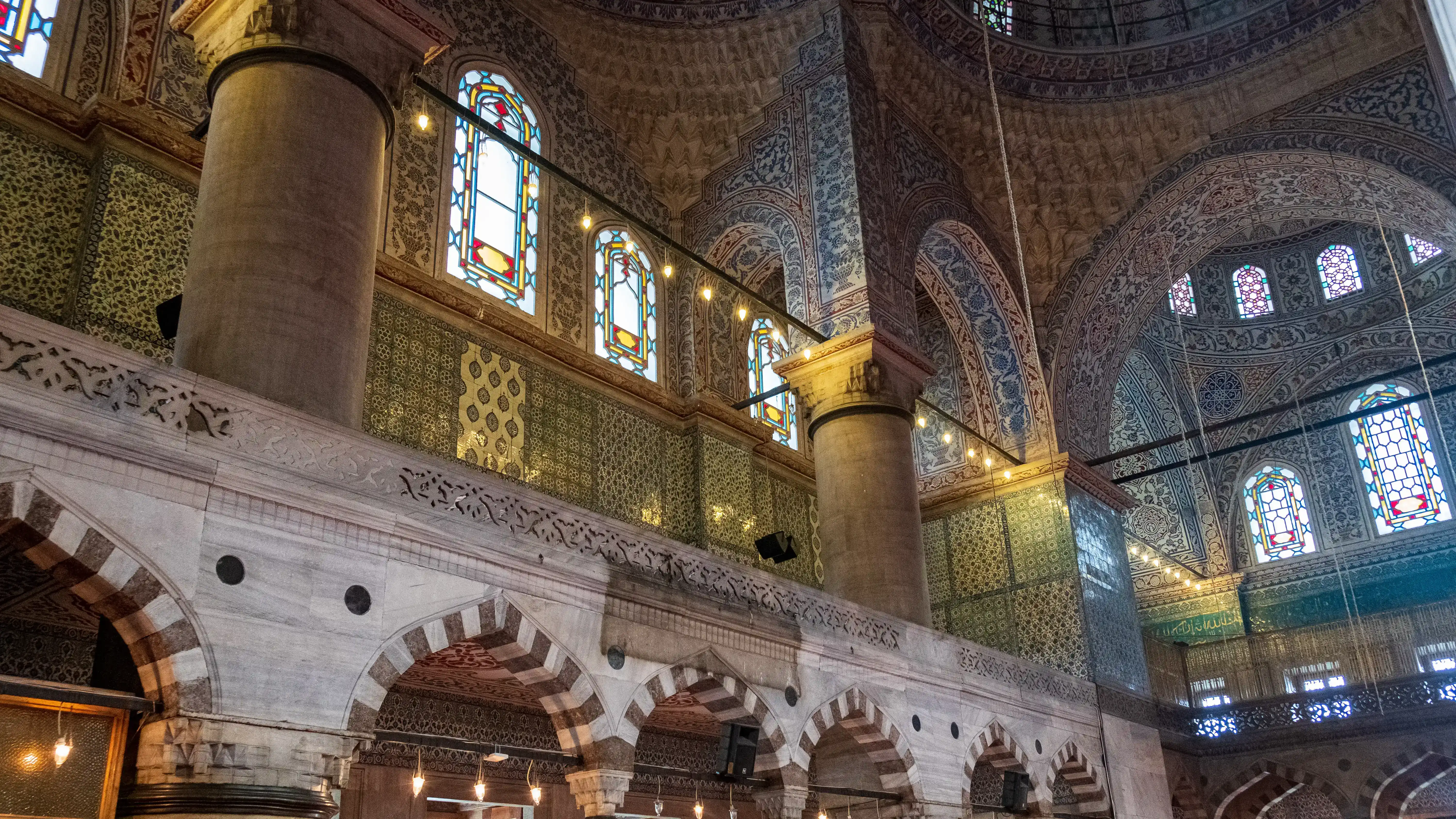
Murad IV was the seventeenth ruler of the Ottoman Empire, reigning from 1623 to 1640. He came to the throne at eleven in the middle of the worst political crisis the dynasty had experienced since the Interregnum of 1402, spent nine years as a nominal sovereign under his mother's regency, and from 1632 governed personally with a severity that made him one of the most feared rulers in Ottoman history.
He is remembered for two things that sit oddly together. The first is a programme of prohibition — tobacco, alcohol and the coffeehouses — enforced by execution, and a general policy of restoring the sultan's authority over the army and the capital by terror. The second is the recovery of Baghdad from the Safavids in 1638, followed by the Treaty of Zuhab in 1639, which ended more than a century of Ottoman–Safavid warfare and settled a frontier that still substantially corresponds to the boundary between Iraq and Iran.
He died in 1640 aged twenty-seven. His reign is the point at which the seventeenth-century Ottoman state, having demonstrated in 1622 that a sultan could be murdered by his own troops, demonstrated in turn that a sultan could still break them.
The Crisis of 1622–1623
Murad's reign has to be introduced through the emergency that produced it, because the whole of his later conduct was a response to it.
He was born in Istanbul on 27 July 1612, a son of Sultan Ahmed I and of the woman known as Kösem Sultan, who became one of the most powerful figures in Ottoman politics for the next four decades.
In May 1622 his elder half-brother Osman II — a young sultan who had attempted to curb the Janissaries and was rumoured to be planning to replace them with a new army raised in Anatolia and Syria — was deposed by those troops, imprisoned, and killed. This was the first killing of a reigning Ottoman sultan by his own soldiers, and its effect on the political order was profound: it established that the military establishment of the capital could dispose of a sovereign who threatened its interests, and it destroyed the presumption of the sultan's inviolability. Baki Tezcan's study of the period treats the episode as a constitutional turning point rather than a mere mutiny.
Osman was replaced by his uncle Mustafa I, who was mentally incapable of governing and had already been deposed once. Under him the state came close to breaking down. A major revolt broke out in Anatolia under Abaza Mehmed Pasha, ostensibly to avenge Osman II and directed against the Janissaries. Provincial administration failed in places. The coinage was debased and the treasury empty. And in 1623 the Safavids took Baghdad, the greatest city of Ottoman Iraq, in a campaign the Ottoman state was in no condition to answer.
Mustafa I was deposed in September 1623 and the eleven-year-old Murad enthroned.
The Regency, 1623–1632
For nine years Murad reigned without ruling. Authority was exercised by his mother Kösem Sultan as regent, in combination with a rapid succession of grand viziers, in the pattern of factional court government that had characterised the Ottoman state since the late sixteenth century.
The record of those years was mixed and mostly poor. Abaza Mehmed Pasha's revolt was eventually suppressed, but attempts to retake Baghdad failed, notably a long and costly siege in 1625–26 and a further failure in 1630 under the grand vizier Hüsrev Pasha. Military insubordination in the capital continued, with the troops repeatedly extorting money and the dismissal or execution of officials. Fiscal disorder persisted.
The decisive episode came in 1632. A rising of cavalry and Janissaries demanded the surrender of senior officials, and the grand vizier Hafız Ahmed Pasha was killed — according to the accounts, in the palace and in the young sultan's presence. Murad was nineteen or twenty. Shortly afterwards he took personal control of the government, and the manner in which he did so defined the rest of the reign: he identified the leaders of the military factions and had them killed, executed or exiled officials associated with them, purged the corps, and re-established the principle that the sultan's orders were not negotiable.
Personal Rule and the Prohibitions
From 1632 Murad governed as an autocrat, and the instrument was fear.
The scale of the executions is attested across the sources and was extraordinary even by the standards of a state that used capital punishment routinely. Military officers, provincial governors, officials, religious figures and private individuals were put to death, in many cases on the sultan's personal order and sometimes in his presence. Contemporary and near-contemporary Ottoman historians record it with a mixture of approval for the restoration of order and unease at the means.
The prohibitions belong to this programme rather than to personal eccentricity, and each had a rationale.
Tobacco was banned, the prohibition dating from 1633 and following a great fire in Istanbul that was attributed to careless smoking. Alcohol was prohibited. And the coffeehouses were closed — the most politically revealing of the three, because the coffeehouse had become the principal venue in Istanbul for public discussion, rumour, satire and the circulation of news, and closing them was a measure against political talk as much as against a beverage. The bans were enforced with executions, including of persons caught smoking.
The context is important on two points. Debate over the permissibility of tobacco and coffee was live among Ottoman jurists at the time, and the puritan reforming movement associated with the Kadızadeli preachers pressed for prohibition on religious grounds; Murad's measures had support in that quarter. At the same time the enforcement was a security policy directed at the sociability of a capital whose soldiers had murdered one sultan and terrorised the government for a decade.
A body of tradition surrounds this, and it should be identified as such. Murad is said to have patrolled Istanbul at night in disguise to catch offenders and to have executed them on the spot; he is described in the sources as a man of exceptional physical strength; and various anecdotes of summary justice are attached to his name. This material comes from the chronicle and traveller literature — Evliya Çelebi is a notable transmitter — and it belongs to the reputation rather than to the documented record. The prohibitions and the executions are well attested; the night patrols are reported and cannot be verified.
He also had brothers put to death: Bayezid and Süleyman early in the personal reign, and Kasım in 1638. This was the established Ottoman practice for securing a throne, and it left only Ibrahim alive.
Court, Culture, and the Ottoman Seventeenth Century
The reign is remembered for executions and prohibitions, and it belongs to one of the more productive periods of Ottoman intellectual life, which is a juxtaposition worth examining rather than passing over.
Katip Çelebi, who lived through the reign and served on the eastern campaigns as a military scribe, was among the most wide-ranging scholars the empire produced: a bibliographer whose great catalogue of Arabic, Persian and Turkish works remains a reference tool, a historian of Ottoman naval warfare, a geographer who drew on European sources, and the author of a treatise on the religious controversies of his own day. That treatise is directly relevant here, because it addresses precisely the disputes — over tobacco, coffee, music, and the permissibility of practices the puritan preachers condemned — that Murad's prohibitions turned into policy, and it argues for moderation against the zealots on both sides.
Evliya Çelebi, whose enormous travel narrative is the richest single source for the social and physical world of the seventeenth-century Ottoman lands, began his career in this period and was attached to the court. The reign also saw significant work in history, biography and the religious sciences, and the continuation of a court poetic tradition in Ottoman Turkish.
The religious politics of the period supply the context for the prohibitions. The Kadızadeli movement, named for the preacher Kadızade Mehmed, pressed a programme of moral reform: the suppression of practices it regarded as unlawful innovations, including elements of Sufi devotional practice such as musical assemblies and the veneration of saints, together with tobacco, coffee, wine and the sociability that surrounded them. Its preachers had followings in the mosques of Istanbul and access to the court, and they were opposed by the Sufi orders and by scholars of Katip Çelebi's temper. Madeline Zilfi's study of the Ottoman religious establishment traces how this contest ran through the century, flaring under several reigns.
Murad's prohibitions therefore sat at the intersection of three things: a genuine religious argument with support among the ulama; a security policy directed at the political sociability of the coffeehouse in a capital whose soldiers had murdered one sultan; and the personal authority of a ruler who enforced his orders with death. Presenting them as a private eccentricity misses all three, and presenting them as simple piety misses the second.
The coffeehouses, it should be added, reopened. The prohibition on tobacco was not sustained after his death, and coffee became and remained central to Ottoman urban life. Of the three bans, none outlasted the man who imposed them — which is the clearest illustration of the point the assessment makes about the transience of his whole method.
The State Murad Governed
The disorder Murad confronted was not only a matter of insubordinate troops, and the fiscal and institutional background explains why the crisis kept recurring.
The Ottoman military system built in the fifteenth and sixteenth centuries rested on two pillars: the provincial cavalry, supported by assignments of land revenue in return for service, and the paid standing troops of the capital, principally the Janissaries. By the early seventeenth century both had changed in ways that undermined the state.
The provincial cavalry had declined in military value as warfare shifted toward firearms and siege operations, and the revenue assignments that supported it were increasingly diverted — converted into tax farms, absorbed by officeholders, or held by men who did not serve. Central government responded by expanding the paid infantry, whose numbers grew far beyond what the treasury could reliably fund. The Janissaries meanwhile had become hereditary in practice, engaged in trade, resident in the capital, and organised enough to act as a political interest. A large payroll, an inadequate revenue base, and an armed corps in the capital with a direct financial stake in government made the periodic crises of the century close to structural.
The immediate mechanism of breakdown was usually the coinage. When the treasury could not meet the payroll it debased the silver akçe, which raised prices, reduced the real value of the troops' pay, and produced the mutinies that then extorted further payments — the sequence behind both the 1622 regicide and the 1632 revolt.
Murad's response after 1632 was to attack the payroll and the revenue side together. The registers of the paid corps were purged of men who did not serve, which reduced expenditure and was resented; revenue assignments were reviewed and reassigned; tax collection was tightened, with officials held personally accountable; and the coinage was stabilised. These measures were enforced by the same means as everything else in the reign, and they worked while he lived. Because they depended on the sultan's willingness to execute officials rather than on any change in the underlying institutions, they did not survive him — the fiscal crisis that produced the disorders of the 1650s under Mehmed IV was recognisably the same problem.
The Eastern War and the Caucasus Campaigns
Murad's military purpose was the recovery of what had been lost in the east, and unlike his predecessors he pursued it in person.
The Ottoman–Safavid conflict had run intermittently since the early sixteenth century, when Selim I confronted Shah Ismail at Chaldiran, and it was unlike the Ottomans' European wars in two respects. It was a contest between two Muslim empires, which meant that each had to justify fighting the other in religious terms — the Ottomans as Sunni sovereigns against a Shia state they characterised as heretical, the Safavids in mirror image — and the resulting polemic ran through the diplomatic correspondence and the juristic opinions of both sides. And the terrain was punishing: the contested zone ran from the Caucasus through the Kurdish highlands to the Mesopotamian plain, across mountains that made supply the decisive constraint on any campaign. Ottoman armies operating there had to be provisioned across hundreds of kilometres of country that could not feed them, which is why so many earlier expeditions had failed without being defeated in battle.
Iraq was the prize for reasons that were more than symbolic. Baghdad commanded the route to the Gulf and the trade that came with it; the province contained the Shia shrine cities of Najaf and Karbala, whose control carried obvious religious weight in a confessional war; and the Ottoman claim to leadership of the Sunni world, inherited with the conquest of the Mamluk lands in 1517, was damaged by the loss of a city that had been the seat of the Abbasid caliphate.
In 1635 Murad led a campaign that took Erivan, the fortress commanding Armenia, and also took Tabriz. The gain was not held: the Safavids recovered Erivan in 1636, and the episode illustrated the standing difficulty — Ottoman armies could take fortresses in the Caucasus and could not garrison and supply them through a winter at that distance.
The decisive campaign, the siege of Baghdad in 1638 and the peace that followed it, is treated in the next section.
The Siege of Baghdad
The recovery of Baghdad in 1638 was the largest Ottoman military operation of the reign and the fourth attempt in fifteen years. Its conduct illustrates both what the Ottoman state could still achieve and what it cost.
The three earlier attempts had all failed. Hafız Ahmed Pasha besieged the city in 1625–26 and withdrew; Hüsrev Pasha failed in 1630; and a further effort under Murad's grand vizier in 1635 came to nothing. The pattern of failure was consistent and instructive: Ottoman armies could reach Baghdad and could not stay there long enough to reduce it, because supplying a large force at that distance across the Zagros approaches was beyond the logistical capacity available, and because Safavid forces avoided battle while harassing communications.
Murad's solution was scale, preparation and personal command. He advanced in stages, wintering in Anatolia and then in the Diyarbakir region, accumulating supplies and artillery along the route and repairing the roads and bridges by which they moved. Rhoads Murphey's study of Ottoman warfare treats this kind of logistical staging as the real Ottoman military skill of the period, more decisive than tactics: an army that arrived before a fortress with its siege train intact and its provisions secured had already solved the hard problem.
The siege proper began in November 1638. The city was invested, mines were driven, and the walls were bombarded; the sources describe repeated assaults over roughly forty days at heavy cost. Baghdad fell in December. The taking of the city was accompanied by severe violence — the accounts on both sides describe a large-scale killing of the garrison and of inhabitants, and the numbers given are unreliable but the character of the event is not in doubt.
The Ottoman position in Iraq was then consolidated: garrisons installed, the province reorganised, and the Shia shrine cities brought back under Sunni Ottoman administration. Murad returned to Istanbul in triumph, and it was the last campaign of his life.
The peace that followed was the more important achievement. The Treaty of Zuhab, concluded in May 1639 and also known by the name Kasr-ı Şirin, confirmed Ottoman possession of Iraq and Safavid possession of Azerbaijan and the Caucasus territories, and delimited a frontier through the Zagros. Its terms were realistic in a way earlier settlements had not been: each side kept what it could actually hold and supply, which is why the treaty lasted. The frontier it drew was substantially maintained until the eighteenth century, was reaffirmed in later Ottoman–Persian agreements, and is the recognisable ancestor of the modern boundary between Iraq and Iran. Rudi Matthee's study of the later Safavid state examines the settlement from the Persian side and treats it as a mutual recognition of limits by two empires that had exhausted each other.
Death
Murad died at Istanbul on 8 February 1640, aged twenty-seven, having reigned sixteen years.
The cause reported in the sources and repeated in the modern literature is illness attributed to heavy drinking — an irony that contemporaries noted, since he had prohibited alcohol on pain of death and is described as having consumed it freely himself. The medical detail cannot be established at this distance, and the charge of hypocrisy, while it appears in the sources, is also the kind of story that attaches to a feared ruler after his death. What is documented is that he died young, after a short illness, without a surviving son.
He was succeeded by his brother Ibrahim, the only male of the dynasty left alive — a fact that the fratricides of the reign had produced and that placed the survival of the house on a single life. Ibrahim's reign was disastrous and ended in his deposition and execution in 1648, bringing to the throne the six-year-old Mehmed IV.
Historiographical Note
The seventeenth century is the first Ottoman period with an abundant and self-conscious historiography, and the abundance brings its own problems.
The principal Ottoman narratives are Katip Çelebi's Fezleke, written by a scholar who lived through the reign, and the early eighteenth-century history of Naima, which incorporates earlier accounts and became the standard version. Evliya Çelebi's travel narrative supplies vivid material of uneven reliability. European diplomatic reporting from Istanbul is substantial.
Two interpretative issues affect everything written about Murad IV. The first is that Ottoman historians of the later seventeenth century, writing amid renewed disorder, had reason to present his reign as a model of restored authority; the severity is recorded approvingly by writers who wanted a firm hand. The second is that the "decline" framework which dominated Ottoman historiography for much of the twentieth century treated the whole century as decay, and cast Murad as a violent aberration within it. Recent scholarship, including Baki Tezcan's work and Gabriel Piterberg's study of how Ottoman historians constructed the narrative of Osman II's murder, has argued that the period is better understood as a transformation of Ottoman political structures — a shift of power among the palace, the military and the officeholding élite — than as simple deterioration. On that reading Murad's personal rule was a reassertion within a changed system rather than a restoration of the old one, and it did not outlast him.
Specific cautions: the numbers of executions given in the sources are not verifiable; the night patrols in disguise are tradition; the attribution of his death to drinking is reported rather than established; and his precise age at taking personal control varies slightly between accounts.
Assessment
Murad IV was effective in the narrow terms he set himself, and the effectiveness did not survive him.
He inherited a state in which the army of the capital had murdered a sultan with impunity, a province containing Baghdad had been lost, Anatolia was in revolt, and the treasury was empty. Within eight years of taking personal control he had broken the military factions, suppressed the revolts, restored fiscal discipline, recovered Baghdad in a campaign he commanded himself, and concluded a peace with the Safavids that lasted the better part of a century. Judged against that inheritance, the record is a real achievement, and the Treaty of Zuhab is a first-rank diplomatic result by any standard.
The method was terror, and the objections to it are not merely moral. Government by execution destroys the information a ruler needs: officials who expect to be killed for failure conceal it, and a state run on those terms cannot correct itself. It also cannot be transmitted, because it depends entirely on the person of the ruler. Murad's authority rested on his own capacity to frighten the Janissaries, and when he died at twenty-seven it evaporated. Within eight years his brother had been deposed and killed, the soldiers were again dictating to the palace, and the crisis of 1656 in the capital was as bad as anything in 1623. The order he imposed was real and it was not institutional.
The prohibitions deserve a more careful verdict than they usually get. Closing the coffeehouses was a coherent security measure against a genuinely destabilising political sociability, and it had juristic support in the reforming religious opinion of the day; it was also unenforceable in the long run, and the coffeehouses reopened. Banning tobacco after a catastrophic fire was not absurd. Executing men for smoking was disproportionate by the standards of Ottoman law itself.
The two halves of his reputation are ultimately the same policy. The recovery of Baghdad required an army that obeyed orders, and the army had been beyond control for a decade; the discipline that made the 1638 campaign possible was manufactured by the executions of 1632 onwards. Whether the frontier settlement of 1639 was worth what it cost is a question the sources do not help with, and it is fair to record both that Murad achieved what his predecessors had failed at four times, and that he left the dynasty resting on one surviving life and the sultanate's authority no more securely founded than he had found it.
References and Further Reading
Primary Islamic Sources
- Quran, Surah al-Maidah (5:90–91) — the prohibition of intoxicants, the scriptural basis of the ban on alcohol and of the juristic debate extended to tobacco and coffee
- Quran, Surah al-Nisa (4:58–59) — on rendering trusts, judging justly, and obedience to those in authority; the framework of the Ottoman juristic response to the murder of Osman II
- Quran, Surah al-Baqarah (2:195) — on not destroying oneself, cited in the seventeenth-century Ottoman arguments against tobacco
- Quran, Surah al-Hujurat (49:9–10) — on reconciliation between contending parties of believers, invoked in the literature on the Ottoman–Safavid wars
- Sahih al-Bukhari, Kitab al-Ashriba (Book of Drinks), and Sahih Muslim, Kitab al-Imarah — the prophetic material on intoxicants and on the obligations and limits of obedience to rulers
- The fetva literature of the Ottoman chief jurists on tobacco, coffee and the coffeehouse, the primary evidence for the religious argument behind the prohibitions
Classical Islamic Sources
- Katip Çelebi. Fezleke. [17th century] — the principal contemporary Ottoman narrative
- Katip Çelebi. Mizan al-Haqq. [17th century] — his treatise addressing the controversies over tobacco, coffee and innovation
- Naima, Mustafa. Tarih-i Naima. [early 18th century] — the standard Ottoman history of the period, incorporating earlier accounts
- Evliya Çelebi. Seyahatname. [17th century] — travel narrative with extensive material on the reign and the capital
- Peçevi Ibrahim Efendi. Tarih-i Peçevi. [17th century]
- Solakzade Mehmed Hemdemi. Tarih-i Solakzade. [17th century]
Academic and Scholarly Sources
- Tezcan, Baki. The Second Ottoman Empire: Political and Social Transformation in the Early Modern World. Cambridge: Cambridge University Press, 2010. — the leading reassessment of seventeenth-century Ottoman politics
- Piterberg, Gabriel. An Ottoman Tragedy: History and Historiography at Play. Berkeley: University of California Press, 2003. — on the murder of Osman II and its historiography
- Finkel, Caroline. Osman's Dream: The Story of the Ottoman Empire, 1300–1923. London: John Murray, 2005.
- İnalcık, Halil. The Ottoman Empire: The Classical Age, 1300–1600. London: Weidenfeld and Nicolson, 1973.
- Peirce, Leslie P. The Imperial Harem: Women and Sovereignty in the Ottoman Empire. New York: Oxford University Press, 1993. — on Kösem Sultan and the politics of the regency
- Matthee, Rudi. Persia in Crisis: Safavid Decline and the Fall of Isfahan. London: I.B. Tauris, 2012. — for the Safavid side of the wars and the Zuhab settlement
- Zilfi, Madeline C. The Politics of Piety: The Ottoman Ulema in the Postclassical Age. Minneapolis: Bibliotheca Islamica, 1988. — on the Kadızadeli movement and the prohibitions
- Murphey, Rhoads. Ottoman Warfare, 1500–1700. London: UCL Press, 1999. — on the logistics of the Baghdad campaign
Further Reading
- Hathaway, Jane. The Arab Lands under Ottoman Rule, 1516–1800. Harlow: Pearson Longman, 2008.
- Shaw, Stanford J. History of the Ottoman Empire and Modern Turkey, vol. I. Cambridge: Cambridge University Press, 1976.
- Hattox, Ralph S. Coffee and Coffeehouses: The Origins of a Social Beverage in the Medieval Near East. Seattle: University of Washington Press, 1985.
- Grehan, James. "Smoking and 'Early Modern' Sociability: The Great Tobacco Debate in the Ottoman Middle East." American Historical Review 111 (2006).
- Faroqhi, Suraiya. Subjects of the Sultan: Culture and Daily Life in the Ottoman Empire. London: I.B. Tauris, 2000.
Mentioned In
6 articles reference this topic
More from Ottoman Empire
Conquest of Constantinople - The Fall of Byzantium
The historic conquest of Constantinople by Ottoman Sultan Mehmed II on May 29, 1453 CE, ending the Byzantine Empire and establishing Ottoman dominance in southeastern Europe. This pivotal victory transformed the Ottomans into a major European power.
Ottoman Empire (1299-1922 CE)
The Ottoman Empire ruled for over 600 years, spanning three continents at its height. Founded by Osman I in 1299 CE, it became one of history's most powerful empires, serving as the seat of the Islamic Caliphate from 1517 until 1922.
Battle of Nicopolis (1396 CE)
The Battle of Nicopolis, fought on 25 September 1396, was a decisive Ottoman victory over a combined Western European crusading army under Sigismund of Hungary. The last major crusade of the medieval period, its failure cemented Ottoman dominance over the Balkans.
Blue Mosque: The Sultan Ahmed Mosque of Istanbul
The Blue Mosque (Sultan Ahmed Mosque) in Istanbul, built between 1609-1616 CE, is one of the most magnificent examples of Ottoman architecture and a masterpiece of Islamic architectural achievement.