Malik-Shah I: The Seljuk Empire at Its Height
Malik-Shah I (1055-1092) was the third Seljuk sultan, under whom the empire reached its greatest extent and its administrative and cultural height. His reign produced the Jalali solar calendar, and it ended with the deaths of both his vizier Nizam al-Mulk and himself within weeks.
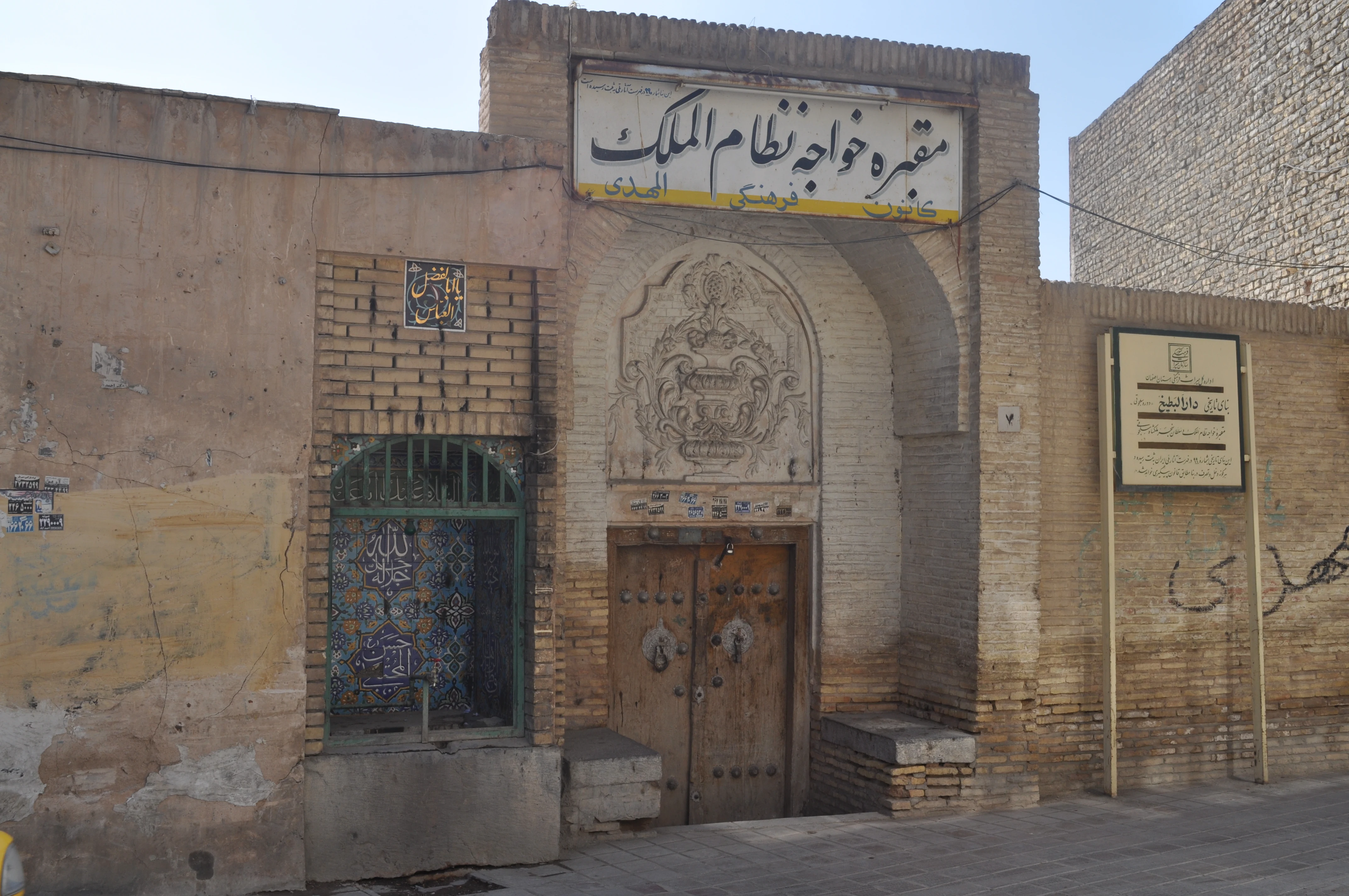
Jalal al-Din Malik-Shah, son of Alp Arslan, ruled the Seljuk Empire from 1072 to 1092. Under him the sultanate reached its greatest territorial extent, running from Syria and Anatolia to the frontiers of Central Asia and the Indian borderlands, and its highest point of administrative order, scientific patronage and architectural achievement.
His reign also demonstrated the fragility of that achievement. Within weeks in the autumn of 1092 both the sultan and his long-serving vizier Nizam al-Mulk were dead, and the empire they had governed for twenty years dissolved almost immediately into a succession war among Malik-Shah's sons from which it never fully recovered. The Crusaders who arrived in Syria six years later found a Muslim east that had lost its central authority, and the connection between the two facts is direct.
Accession
Malik-Shah was born at Isfahan in August 1055. He was designated heir by his father and succeeded in November 1072 when Alp Arslan was killed on campaign in Transoxiana. He was seventeen.
The succession was contested. His uncle Qavurt, who held Kirman, advanced a claim based on the Turkic principle of seniority within the ruling family — the same principle that had made succession in steppe polities a recurring source of civil war. Malik-Shah defeated him near Hamadan in 1073, and Qavurt was killed. Other relatives were reconciled or subdued over the following years.
The decisive factor in securing the throne was Nizam al-Mulk, who had served Alp Arslan for nine years and who managed the transition, the army and the treasury on the young sultan's behalf. The vizier's own account of statecraft, the Siyasatnama, was written for Malik-Shah near the end of the reign, and it is the fullest surviving statement of how the Seljuk state understood its own business.
The Extent of the Empire
The territorial reach of the sultanate under Malik-Shah was the greatest of any Muslim polity since the early Abbasid caliphate.
In the east, Seljuk authority was asserted over Transoxiana against the Karakhanids, and campaigns reached toward Kashgar. In the north-west, the Caucasus and Georgia were brought under tribute. In Syria, Seljuk princes and commanders took Damascus, Aleppo and Antioch — the last from Byzantium in 1084 — and the frontier was pushed toward Fatimid Egypt and to the Mediterranean coast. In Anatolia, the process that Manzikert had begun continued, though largely outside Malik-Shah's direct control: the Sultanate of Rum under a collateral branch of the family established itself in the interior, and Nicaea was taken, bringing Turkish power within sight of Constantinople.
The Abbasid caliph al-Muqtadi conferred titles on Malik-Shah and a marriage alliance linked the two houses. The arrangement inherited from Tughril Beg held: the caliph legitimised, the sultan governed. Relations were not without friction — the sources record tension in the reign's final months over the caliph's position — but the framework was not challenged.
The empire's structure was, however, less unified than a map suggests. It was held together by a family confederacy in which princes and commanders governed provinces with substantial autonomy, supported by iqta — assignments of the revenue of a district in return for military service. This was efficient in that it cost the central treasury little and put cavalry in the field; it was dangerous in that it created regional power centres whose loyalty was personal rather than institutional. A.K.S. Lambton's analysis of the empire's internal structure identifies this as the central weakness, and the events of 1092 bore it out.
Administration, Science and Building
The cultural achievement of the reign is substantial and is generally credited jointly to the sultan and his vizier.
The calendar. The best-documented scientific undertaking of the period is the reform of the solar calendar. On Nizam al-Mulk's instruction, a group of astronomers — among them Omar Khayyam, better known in the West for the quatrains attributed to him but in his own time a mathematician and astronomer of the first rank — made observations at Isfahan, Rayy and Nishapur and produced a new solar calendar, known as the Jalali or Maliki calendar after the sultan's regnal name. Its accuracy was remarkable: the length of the year it established diverges from the astronomical value by a margin measured in days per several thousand years, better than the Gregorian reform achieved five centuries later. Versions of it remain the basis of the Iranian and Afghan calendars.
The madrasas. Nizam al-Mulk's network of colleges, the Nizamiyya, was extended across the empire during this reign, with foundations at Baghdad, Nishapur, Isfahan and elsewhere. Their purpose was partly religious and partly administrative: they trained jurists in the Sunni schools and produced the literate personnel that a bureaucratic empire required. Al-Ghazali, the most influential Muslim thinker of the period, was appointed to the Nizamiyya of Baghdad under Malik-Shah's patronage. The institutional development is treated in the article on Islamic education systems.
Isfahan. The capital was rebuilt and adorned. The congregational mosque of Isfahan received the additions that make it one of the most important buildings in Iranian architecture — including the domed chambers and the four-iwan courtyard plan that became the standard form for Iranian mosques thereafter. Britannica's assessment notes the mosques of Isfahan, the poetry of Omar Khayyam and the calendar reform as the reign's memorable achievements, alongside a period of internal peace.
Roads and public works. The sources credit the reign with the repair of roads, the construction of caravanserais and bridges, the digging of wells on the pilgrimage routes, and the security of travel across a very large territory — the practical basis of the commercial prosperity that the period enjoyed.
The Isma'ili Challenge
The reign saw the emergence of an opponent that conventional armies could not reach.
Hasan-i Sabbah, an Isma'ili missionary, established himself in the fortress of Alamut in the Elburz mountains in 1090 and founded the Nizari Isma'ili state — a network of mountain strongholds and urban cells opposed to Seljuk rule and to the Sunni order it upheld. The movement's most notorious instrument was the targeted killing of political and religious figures, from which the European term "assassin" derives, by way of a disputed etymology.
Seljuk expeditions against Alamut failed. The fortress was effectively impregnable to the siege methods available, and the movement's strength lay in dispersal and secrecy rather than in territory that could be taken. Farhad Daftary's history of the Isma'ilis treats the Nizari state as a genuinely novel political form, and much of the sensational literature about it — the tales of drugged initiates and gardens of paradise, transmitted westward through Marco Polo and elaborated for centuries — as later invention with no basis in the Isma'ili sources.
The Sultanate and the Caliphate
Malik-Shah's relations with the Abbasid caliphs illustrate the constitutional arrangement of the period and its unresolved tension.
The formal position was settled: the caliph was the source of legitimate authority in Sunni theory, and he invested the sultan with titles, robes and diplomas that authorised his rule. In practice the sultan commanded the armies, controlled the revenue, appointed the officials and decided policy, while the caliph held a court in Baghdad with religious prestige, considerable wealth, and no independent military power.
Both parties had reasons to maintain the arrangement and reasons to resent it. For the Seljuks, caliphal investiture converted conquest into legitimate sovereignty and distinguished them from mere warlords; for the caliphs, Seljuk protection had ended a century of domination by the Shi'i Buyids and secured Sunni primacy in Iraq. The friction arose over the caliph's practical autonomy — his appointments, his revenues, his ability to act politically in Baghdad.
The sources record that this friction sharpened in the final year of Malik-Shah's reign, with the sultan pressing the caliph al-Muqtadi over the position at Baghdad and reportedly requiring him to leave the city. Malik-Shah died before the matter was resolved. The episode is a reminder that the sultan-caliph settlement was a working accommodation rather than a stable constitution, and that its terms depended on the relative strength of the parties at any moment.
The Seljuks' self-presentation should also be noted. Their coinage, inscriptions and correspondence styled them as protectors of the caliphate and of Sunni Islam against heresy — a claim directed simultaneously at the Fatimids in Egypt, at the Nizari Isma'ilis within their own territory, and at any Muslim rival. The madrasa programme was part of the same project, and so was the patronage of jurists and theologians who could articulate it.
1092: The Collapse
The events of the reign's final year are among the more consequential and least resolved in the period.
Relations between Malik-Shah and Nizam al-Mulk had deteriorated. The vizier had governed for thirty years across two reigns; his family held offices throughout the empire; and the sultan, now in his thirties, had his own household and his own wife — Terken Khatun, who was promoting her young son's claim to the succession against the vizier's preference. The sources describe increasing friction, and some report that Malik-Shah had determined to dismiss him.
Nizam al-Mulk was killed in October 1092 near Nihavand, stabbed by a man who approached him in the guise of a petitioner. The killing was attributed at the time and afterwards to the Nizari Isma'ilis, and it is conventionally counted the first of their political assassinations. Some of the sources, however, record the suspicion that the sultan or the court faction around Terken Khatun was complicit. The question cannot be settled from the available evidence, and the honest position is that the attribution to the Isma'ilis is the majority report while the alternative suspicion is early enough to be worth recording.
Malik-Shah himself died about five weeks later, on 19 November 1092, at Baghdad, of an illness that the sources describe variously; poison was suspected here too, without proof. He was thirty-seven.
The consequence was immediate disintegration. Malik-Shah's sons — Barkiyaruq, Muhammad Tapar, Mahmud and later Sanjar — and the provincial commanders fought over the inheritance for more than a decade. The unified sultanate of 1092 was never reconstituted. By the time the First Crusade reached Syria in 1097–98, the region was divided among competing Seljuk princes and atabegs who were as concerned with one another as with the invaders — a condition that goes a considerable way toward explaining the Crusade's success, and that Nur al-Din Zengi spent his career reversing.
The Succession Crisis and Its Consequences
The disintegration that followed Malik-Shah's death deserves more than a sentence, because it is the mechanism by which the strongest Muslim state of its century became the divided Syria that the First Crusade encountered.
The immediate dispute was between Barkiyaruq, a son by one wife, and Mahmud, the young son of Terken Khatun, whose faction had been manoeuvring for the succession before Malik-Shah died. Terken Khatun concealed the sultan's death long enough to secure recognition for her child in Baghdad; Barkiyaruq's supporters proclaimed him elsewhere. Mahmud died within a few years, but by then a further brother, Muhammad Tapar, had entered the contest, and the youngest, Sanjar, held Khurasan.
The fighting continued in various combinations until 1105. Its effect was not merely dynastic. Every claimant needed troops, and troops were paid in iqta assignments, so the contest was financed by parcelling out the empire's revenue base to commanders whose loyalty lasted as long as the assignment. Provincial atabegs — originally guardians appointed to instruct young princes — became independent rulers in Mosul, Damascus, Aleppo and elsewhere, holding cities in the name of Seljuk princes whose authority was nominal. Nur al-Din Zengi's father Imad al-Din Zengi was one such atabeg, and the Zengid state grew out of exactly this fragmentation.
Two consequences followed for the wider region. In Syria, the arrival of the First Crusade in 1097 met a set of competing Muslim rulers with no common command and, in several documented cases, a greater interest in one another's territory than in the newcomers. The Frankish states were established in that gap. In Anatolia, the Sultanate of Rum consolidated its independence from the Great Seljuk house permanently.
The judgement that follows is uncomfortable but well supported: the success of the First Crusade owed less to Frankish strength than to the timing of its arrival, five years after the simultaneous deaths of Malik-Shah and Nizam al-Mulk had removed the central authority of the Muslim east.
Culture and Court Life
The reign's cultural character deserves fuller treatment, since it is the aspect on which the Seljuk period's reputation principally rests.
The court was Persian in language and idiom. Administration, correspondence and literature were conducted in Persian, and the Turkish ruling family adopted the ceremonial and the political vocabulary of Iranian kingship, complete with the honorifics, the throne-names and the historiographical conventions that went with it. The result was the Persianate imperial culture that later spread eastward to India with the Ghaznavids and their successors and shaped courts from Anatolia to Bengal for centuries.
Patronage was extensive and organised. Poets, astronomers, mathematicians, physicians and jurists were maintained at Isfahan and at the provincial courts. The observatory built for the calendar project was a state institution with a staff and instruments, not an individual's private undertaking. The Nizamiyya colleges were a system rather than a set of separate foundations, with salaried teaching posts, stipends for students, and endowments to sustain them — an institutional form whose influence on the later history of higher education has been extensively argued.
Architecture under Malik-Shah established forms that defined Iranian building thereafter. The additions to the Isfahan congregational mosque introduced the four-iwan courtyard and the great brick domes over the maqsura, and the geometric brickwork of the period is among the most accomplished in Islamic architecture. Caravanserais, bridges and cisterns along the trunk roads are attributed to the reign, and the tomb tower — a distinctively Iranian form — flourished in this period.
The relationship between this cultural flowering and the political structure is worth stating plainly. Both depended on a large, secure, well-taxed territory under a single authority, and both contracted when that authority failed. The Seljuk cultural achievement was not independent of the Seljuk state; it was funded by it.
Assessment
Malik-Shah's reign is conventionally described as the Seljuk zenith, and by the measures of extent, order and cultural production the description is accurate.
The empire he ruled was the largest in the Islamic world since the ninth century and was, for two decades, genuinely governed rather than merely claimed: taxes were assessed and collected, roads were policed, a professional bureaucracy staffed the provinces, and the courts functioned. The scientific and architectural patronage of the period — the Jalali calendar, the Isfahan mosque, the Nizamiyya colleges, the employment of men of the calibre of Omar Khayyam and al-Ghazali — represents one of the high points of medieval Islamic civilisation, and it was sustained rather than sporadic.
The credit is properly shared. Malik-Shah came to the throne at seventeen and governed for two decades in partnership with a vizier of exceptional ability whom he inherited from his father. How the achievement divides between them cannot be determined, and the sources — several written by men in the vizier's tradition — tend to favour Nizam al-Mulk. What can be said is that the sultan supported the programme for twenty years and that the partnership's dissolution destroyed it.
The structural verdict is harsher. The empire was a family confederacy resting on iqta assignments and personal loyalty, with no institutional mechanism for transferring authority. It had no law of succession, its provinces were governed by princes with their own armies, and its cohesion depended on the presence of a sultan whom the others acknowledged. Remove him — as death did, without warning, in 1092 — and there was nothing to hold it. That the strongest Muslim state of its century fragmented within months of its ruler's death, and that the fragmentation opened the way for the Crusader states, is the most important thing about Malik-Shah's reign, and it was a consequence of how the state was built rather than of any failure in how it was run.
References and Further Reading
Primary Islamic Sources
- Quran, Surah al-Nisa (4:58) — on rendering trusts and judging with justice, the governing text of the Persian mirrors-for-princes tradition that the Seljuk court produced
- Quran, Surah al-Nahl (16:90) — on justice and good conduct as a divine command
- Quran, Surah al-Anfal (8:60) — on military preparedness, cited in the Seljuk literature on the obligations of the sultanate
- Sahih al-Bukhari and Sahih Muslim, Books of Leadership (Kitab al-Imarah) — the prophetic material on the accountability of rulers, the framework of contemporary juristic assessment of the sultanate
- The diplomas of investiture, coinage and khutba formulae recording the relationship between Malik-Shah and the Abbasid caliphs al-Muqtadi and his predecessor
Classical Islamic Sources
- Nizam al-Mulk. Siyasatnama (The Book of Government, or Rules for Kings). Translated by Hubert Darke. London: Routledge, 2002. [Compiled c. 1091 CE] — written for Malik-Shah by his own vizier in the reign's final year; the essential source
- Ibn al-Athir, Ali ibn Muhammad. Al-Kamil fi al-Tarikh. Beirut: Dar Sadir, 1979. [Compiled c. 1231 CE]
- Al-Husayni, Sadr al-Din. Akhbar al-Dawla al-Saljuqiyya. [Compiled 12th–13th century]
- Ibn al-Jawzi. Al-Muntazam fi Tarikh al-Umam wa'l-Muluk. Beirut: Dar al-Kutub al-Ilmiyyah, 1992. [Compiled 12th century]
- Rashid al-Din. Jami' al-Tawarikh, the Seljuk section. [Compiled early 14th century]
- Al-Ghazali. Nasihat al-Muluk (Counsel for Kings). — reflecting the political thought of the circles Malik-Shah patronised
Academic and Scholarly Sources
- Peacock, A.C.S. The Great Seljuk Empire. Edinburgh: Edinburgh University Press, 2015.
- Lambton, A.K.S. "The Internal Structure of the Saljuq Empire." In The Cambridge History of Iran, vol. 5. Cambridge: Cambridge University Press, 1968. — the standard analysis of the iqta system and its consequences
- Bosworth, C.E. "The Political and Dynastic History of the Iranian World." In The Cambridge History of Iran, vol. 5. Cambridge: Cambridge University Press, 1968.
- Daftary, Farhad. The Ismailis: Their History and Doctrines. 2nd ed. Cambridge: Cambridge University Press, 2007.
- Klausner, Carla L. The Seljuk Vezirate: A Study of Civil Administration, 1055–1194. Cambridge, MA: Harvard University Press, 1973.
- Sayılı, Aydın. The Observatory in Islam. Ankara: Turkish Historical Society, 1960. — on the Isfahan observatory and the calendar reform
- Hillenbrand, Robert. Islamic Architecture: Form, Function, and Meaning. Edinburgh: Edinburgh University Press, 1994. — on the Isfahan congregational mosque
Further Reading
- Peacock, A.C.S., and Sara Nur Yıldız, eds. The Seljuks of Anatolia. London: I.B. Tauris, 2013.
- Bosworth, C.E. The New Islamic Dynasties. Edinburgh: Edinburgh University Press, 1996.
- Frankopan, Peter. The First Crusade: The Call from the East. London: Bodley Head, 2012.
- Nasr, Seyyed Hossein. Science and Civilization in Islam. Cambridge, MA: Harvard University Press, 1968. — for the scientific milieu of the reign
- Makdisi, George. The Rise of Colleges: Institutions of Learning in Islam and the West. Edinburgh: Edinburgh University Press, 1981.
More from Medieval Islamic World
Seljuk Empire - The Turkish Transformation of the Islamic World
The Seljuk Empire (1037-1194 CE) was a powerful Turkish-Sunni dynasty that dominated the Middle East and Anatolia, defeated the Byzantine Empire at Manzikert, established Turkish power in Anatolia, and patronized the famous Nizamiyya schools.
Siege of Baghdad (1258)
Comprehensive history of the Mongol siege and conquest of Baghdad in 1258, marking the end of the Abbasid Caliphate and one of the most devastating events in Islamic history
Ayyubid Dynasty - Saladin's Legacy and the Unification of the Muslim East
The Ayyubid Dynasty (1171-1260 CE) was founded by Saladin and ruled Egypt, Syria, and Yemen. The Ayyubids recaptured Jerusalem from the Crusaders, promoted Sunni Islam, and created a sophisticated state combining military power with cultural patronage.
Battle of Ain Jalut: Turning Back the Mongol Tide
The 1260 CE battle where the Mamluk Sultanate defeated the Mongol Empire in the Jezreel Valley, marking the first major Mongol defeat and halting their westward expansion into the Islamic heartlands.