Nur al-Din Zengi: The Unifier of Muslim Syria
Nur al-Din Zengi (1118-1174) united Muslim Syria under a single authority, made the recovery of Jerusalem a stated public purpose, and built the network of madrasas and institutions that carried the Sunni revival. His intervention in Egypt brought Saladin to power there.
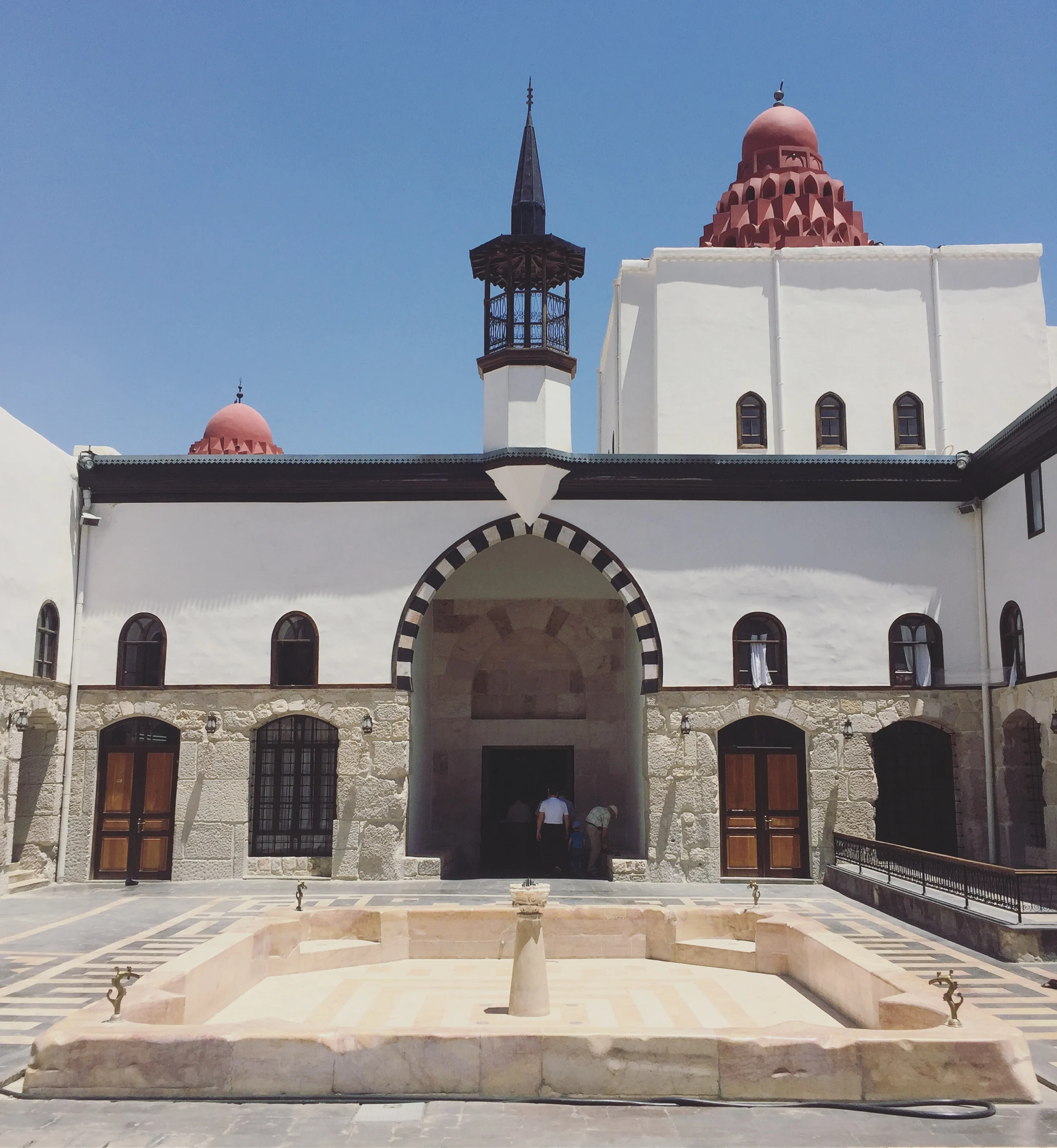
Nur al-Din Mahmud ibn Zengi ruled Muslim Syria from 1146 until his death in 1174, and his reign is the hinge on which the Muslim response to the Crusades turned. When he inherited Aleppo, Syria was a patchwork of competing Muslim principalities that had proved unable to combine against the Frankish states established on the Levantine coast a generation earlier. By his death he had joined Aleppo and Damascus under one authority, established a client regime in Egypt, and made the recovery of Jerusalem an announced object of policy rather than an aspiration.
He did not achieve that recovery. It fell to Saladin, his own subordinate, thirteen years after his death, and the fame of the achievement has largely attached to the successor rather than to the man who assembled the means. This article treats Nur al-Din's own reign — the unification of Syria, the institutional and religious programme that accompanied it, and the Egyptian intervention whose consequences he did not live to see. Saladin's career and the Ayyubid state that followed are covered in their own articles.
The Zengid Inheritance
Nur al-Din was born in February 1118, the second son of Imad al-Din Zengi, a Turkish commander who had risen in the service of the Seljuk sultans to become atabeg — governor and guardian — of Mosul, and who then extended his authority over Aleppo in 1128. The family was of Turkoman origin and its power rested on military service to a Seljuk sultanate that was itself fragmenting into autonomous provincial commands.
Zengi's most celebrated act was the capture of Edessa in 1144, the first of the Crusader states to be extinguished. It made him the outstanding Muslim commander of his generation and provoked the Second Crusade in response. He was assassinated in 1146, and his domains were divided: Mosul went to the elder son, Sayf al-Din Ghazi, and Aleppo with the Syrian territories to Nur al-Din.
The inheritance was a frontier command rather than a state. Aleppo faced the Frankish Principality of Antioch to the north and the County of Edessa to the east; Damascus to the south was ruled by an independent Burid dynasty that had repeatedly preferred accommodation with the Franks to submission to the Zengids; and the Fatimid caliphate in Egypt, Shi'i and by now internally exhausted, held the southern flank. Nur al-Din was twenty-eight.
The Consolidation of Syria
His first decade was spent securing the north. He moved immediately against Antioch, taking castles in northern Syria, and defeated an attempt by Joscelin II to recover Edessa; the city's Christian population suffered severely in the aftermath, and Edessa ceased to exist as a Frankish possession.
The Second Crusade, which had been called in response to Edessa's fall, arrived in 1148 and chose to attack Damascus — a Muslim city then on cordial terms with the Kingdom of Jerusalem and hostile to the Zengids. The siege failed within days. Its political consequence was decisive and unintended: it destroyed Damascene confidence in the Frankish alliance and made the case for Zengid protection, which Nur al-Din pressed patiently over the following years.
In 1149 he defeated and killed Raymond of Antioch at Inab, effectively ending Antioch's capacity for offensive war. In 1154 he took Damascus, entering the city with little fighting after years of pressure, negotiation, and the cultivation of opinion within it. With that he became the first ruler since the collapse of Seljuk authority in the 1090s to hold both northern and southern Syria, and the strategic position of the Crusader states was permanently altered: they now faced a single opponent on their entire land frontier rather than a set of rivals they could play against one another.
The Programme of Sunni Revival
Nur al-Din's importance is not only military. He is a central figure in what modern scholarship calls the Sunni revival — a coordinated effort, running through the twelfth century, to strengthen Sunni institutions, doctrine, and public piety in the face of both Frankish occupation and Shi'i rivals.
The instruments were institutional. He founded madrasas in large numbers across his territories, endowing them and staffing them with jurists of the Hanafi and Shafi'i schools; the wider development of these institutions is treated in the article on Islamic education systems. He built dar al-hadith — colleges dedicated specifically to the study of prophetic tradition — and the first such institution is generally attributed to his patronage. He endowed hospitals, most notably the great bimaristan at Damascus, along with Sufi hospices, caravanserais, and public works.
He also attended to the presentation of his rule. He removed practices that jurists objected to, cultivated a reputation for accessibility to petitioners, established a court of grievances that he attended personally, and lived with a personal austerity that the chroniclers — including those with no reason to flatter him — describe consistently. Coinage, inscriptions, and the Friday sermon were used to project an image of a ruler governing under the law rather than above it.
The visual and architectural expression of this programme has been studied in detail: the ornament, epigraphy, and building types of Zengid Syria were deliberately deployed to assert Sunni legitimacy, and they set the pattern that Ayyubid and later Mamluk patronage continued.
Jerusalem and the Language of Jihad
The most consequential thing Nur al-Din did may have been rhetorical. Before his reign, Muslim responses to the Frankish presence had been local and pragmatic: individual rulers fought or allied as their interests dictated, and the loss of Jerusalem in 1099 had not generated a sustained recovery campaign. Nur al-Din made the recovery of the city a declared purpose of his state and organised the vocabulary of jihad around it.
The evidence is concrete rather than merely literary. Poets and preachers at his court developed the theme; his chancery correspondence deployed it; and — the most-cited instance — he commissioned a magnificent carved wooden pulpit, a minbar, intended for installation in the Al-Aqsa Mosque once Jerusalem was recovered. It was made at Aleppo and stood there for two decades. Saladin installed it in Jerusalem after 1187. It remained in place until it was destroyed by fire in 1969.
That pulpit is the clearest single expression of the shift Nur al-Din brought about: a ruler commissioning furniture for a building he did not control, in the confident expectation that his state would take it. Carole Hillenbrand's study of the Muslim experience of the Crusades treats this reorientation of purpose as his principal legacy, and treats Saladin's achievement as the execution of a programme Nur al-Din had defined.
Egypt and the Rise of Saladin
The Fatimid caliphate in Egypt was, by the 1160s, a shell governed by contending viziers, and both Nur al-Din and the Kingdom of Jerusalem understood that whoever controlled it would hold the balance in the Levant. A series of campaigns followed between 1163 and 1169, with Frankish and Zengid forces intervening alternately in Egyptian factional politics.
Nur al-Din's instrument was Asad al-Din Shirkuh, a Kurdish commander in his service, who led three expeditions to Egypt and took his nephew Yusuf ibn Ayyub — later known as Saladin — with him. Shirkuh secured the vizierate in 1169 and died within weeks. His nephew succeeded to the position.
What followed is among the better-documented instances of a lieutenant outgrowing his master. Saladin consolidated his own authority in Egypt, abolished the Fatimid caliphate in 1171 and restored Abbasid allegiance there, and became progressively less responsive to instructions from Damascus. Nur al-Din summoned him to joint operations that Saladin found reasons to avoid; the sources record mounting friction and Nur al-Din's preparations to march on Egypt and impose obedience. He died before doing so, in May 1174, of an illness, at Damascus.
The relationship should not be reduced to a simple betrayal. Saladin's position in Egypt was genuinely precarious in the early years, and his reluctance to campaign alongside his overlord had defensible military grounds as well as political ones. What is clear is that Nur al-Din created the opportunity that made Saladin's career possible, and that he came to regard its outcome as insubordination.
Government and the Army
Nur al-Din's administration is better documented than those of most twelfth-century Syrian rulers, and its features explain how a frontier command became a state.
The army rested on iqta — assignments of the revenue of a district to a commander in return for maintaining a specified number of cavalry. The arrangement was inherited from Seljuk practice and it had the usual advantages and dangers: it cost the treasury little and produced troops quickly, but it created regional interests whose loyalty was personal. Nur al-Din managed this by rotating assignments, by keeping a substantial force of household troops directly under his own pay, and by the constant campaigning that gave his commanders a reason to remain useful to him.
Alongside the Turkish cavalry he employed Kurdish contingents in growing numbers — the family of Shirkuh and Saladin among them — and the rise of Kurdish military families in Syrian service dates substantially from his reign. The mixture had a consequence he did not intend: it created a body of commanders whose ties were to one another rather than to the Zengid house, and which transferred its allegiance intact after his death.
In civil administration he relied on Persian and Arab secretaries in an established chancery tradition, and the surviving documents of his reign — appointment diplomas, waqf deeds, letters — show a working bureaucracy. He also gave attention to the fortification of his territory, rebuilding the citadels of Aleppo, Damascus, Homs and Hama, and the military architecture of Zengid Syria is a substantial part of what survives from the period.
The most-remarked feature of his government, noted across the sources, is the court of grievances he held in person. Petitioners could bring complaints against officials and commanders directly to the ruler, and the chroniclers record instances of Nur al-Din deciding against his own officers and his own family. The institution was not unique to him, but his use of it was systematic and it is central to the reputation for justice that the epithet al-Malik al-Adil — the Just King — records.
The Damascus Question
The acquisition of Damascus in 1154 was the pivot of Nur al-Din's career and it repays closer examination, because it shows his method more clearly than any battle.
Damascus under the Burid dynasty had pursued a consistent policy for decades: independence from the Zengids of the north, purchased where necessary by accommodation with the Kingdom of Jerusalem, including tribute and joint action. From the Burid standpoint this was rational — the Zengids were the nearer and more dangerous threat to their independence, and the Franks were a manageable neighbour.
Nur al-Din's response was to make that position untenable rather than to storm the city. He cultivated opinion inside Damascus, presenting himself as the defender of Muslims against the Franks and the Burids as collaborators. He used the failure of the Second Crusade's assault on the city in 1148 — an attack on a city allied to the Franks — as evidence that the alliance was worthless. He pressured the city militarily without devastating its hinterland, offered terms that protected Burid interests, and cut its access to the grain of the Hawran. When he entered in 1154 the population had substantially decided the question for him.
The episode illustrates several things. It shows a ruler using religious argument as an instrument of statecraft with considerable sophistication, and it shows him doing so successfully against fellow Muslims — the language of jihad served, in this instance, to delegitimise a Muslim rival. It also shows the patience that characterises his whole career: eight years elapsed between the failed Frankish siege and his entry into the city.
Death and the Zengid Collapse
Nur al-Din died on 15 May 1174, aged fifty-six, leaving an eleven-year-old son, al-Salih Isma'il. The state he had assembled did not survive the succession. Aleppo, Damascus and Mosul fell to competing regents and relatives; Saladin moved from Egypt into Syria in the same year, taking Damascus in 1174 and reducing the Zengid remnants over the following decade until Aleppo fell to him in 1183.
The empire Nur al-Din built therefore passed intact, in substance, to the man he had been preparing to attack — and it was with those Syrian and Egyptian resources combined that Saladin destroyed the Frankish field army at Hattin in 1187 and recovered Jerusalem. The Ayyubid dynasty that resulted was, institutionally, a continuation of the Zengid state under a different family.
The Sources and Their Bias
The evidence for Nur al-Din's reign is comparatively good for a twelfth-century Muslim ruler, and understanding its shape explains why his reputation has moved as it has.
Two near-contemporary Syrian chroniclers matter most. Ibn al-Qalanisi wrote in Damascus and died in 1160, so his account covers most of the reign from inside the city Nur al-Din took; he is a civic rather than a court historian, and his interest is in what the city experienced. Ibn al-Athir, writing in Mosul in the following century, came from a family in Zengid service and had access to Zengid material; his history is fuller and is markedly warmer toward Nur al-Din than toward Saladin, whose family had displaced his patrons.
Against these stand the Ayyubid court historians. Abu Shama's history of the two reigns and the biographies of Saladin produced under Ayyubid patronage had an obvious problem: they had to celebrate a ruler whose rise involved insubordination toward, and whose state was taken from, a sovereign whom the religious classes had regarded as exemplary. Their solution was largely to present Nur al-Din respectfully and to pass over the friction quickly.
The consequence for later historiography was that Nur al-Din survived as a virtuous predecessor rather than as an actor in his own right, and the counter-Crusade came to be narrated as Saladin's achievement. The correction has come from documentary rather than narrative evidence. The inscriptions on his buildings, the waqf deeds of his endowments, his coinage, and the surviving chancery material record a coordinated programme of institutional and ideological construction that the chronicles describe only in passing. Nikita Elisseeff's three-volume study assembled this material, and it is the basis of the modern assessment.
A caution applies in the other direction as well. Because his reputation for piety and justice was established in his own lifetime and served the purposes of every subsequent Sunni dynasty in Syria, the anecdotal material about his personal conduct grew in the retelling. The administrative record is solid; the stories of individual acts of justice are exemplary literature and should be read as such.
Nur al-Din in Later Memory
The afterlife of Nur al-Din's reputation is itself instructive about how Muslim political traditions have used their own history.
Within Syria he became the model of the just Sunni ruler, and the institutions he founded carried his name for centuries. The Ayyubids and then the Mamluks presented themselves as continuing his work, and the Mamluk sultans in particular — Baybars above all — adopted the combination he had pioneered: military campaigning against the Franks, lavish patronage of Sunni institutions, and a public presentation of the ruler as the servant of the law. The pattern outlasted the Crusades entirely.
His name also attached to objects and buildings. The pulpit he commissioned for Jerusalem became a relic of the reconquest and stood in the Aqsa Mosque for nearly eight centuries. A tomb complex in Damascus bearing his name became a place of visitation. The hospital he founded there operated as a teaching institution into the modern period.
In the modern era his reputation has been drawn on in more contested ways. Twentieth-century Arab and Islamic writing has invoked the Zengid and Ayyubid counter-Crusade as a precedent in discussions of contemporary politics, and the analogy has been deployed by parties with very different objectives. That reception history is substantial and belongs to the modern period rather than to the twelfth century; the article on the Crusades notes the broader pattern. This encyclopaedia records that such invocations exist without adopting or assessing them, and the historical Nur al-Din should not be read backwards through them.
Assessment
The historical judgement on Nur al-Din has shifted, and the direction of the shift is worth stating. In the popular memory of the Crusades he is a preliminary figure, the overlord whom Saladin superseded. In the scholarly literature he has come to be treated as the more structurally important of the two.
The case for that view rests on three things. He solved the political problem that had made the Frankish states secure — the division of Muslim Syria — and he solved it by patient accumulation rather than by a single victory, which is why it held. He built the institutional apparatus of the Sunni revival, and the madrasas, hospitals and colleges of hadith he endowed outlasted every political arrangement of the period. And he redefined the purpose of Muslim policy toward the Crusader states, converting a set of frontier accommodations into a stated project for the recovery of Jerusalem, with the propaganda, patronage and personal example to make it credible.
Against this stands the failure of dynastic succession, which is the recurring weakness of the military states of the period. He built an apparatus and did not secure it for his family, and within a decade of his death both his state and his programme were in other hands.
The chroniclers of the following generation, writing under Ayyubid patronage, were in the awkward position of praising a ruler whose inheritance their patrons had taken. Ibn al-Athir, who came from Mosul and had Zengid sympathies, is notably more generous to Nur al-Din than to Saladin, and modern historians treat his account as a useful corrective to the Saladin-centred narrative that dominates both Arabic and European sources. Read together, they indicate a ruler of unusual administrative seriousness whose reputation was overtaken by the success of the enterprise he began.
References and Further Reading
Primary Islamic Sources
- Quran, Surah al-Baqarah (2:190–193) — the verses on fighting those who fight you and on the limits of warfare, central to the twelfth-century Syrian discourse on jihad
- Quran, Surah al-Hajj (22:39–40) — on permission to defend against wrongful expulsion, cited in the counter-Crusade literature
- Quran, Surah al-Isra (17:1) — on the Night Journey to the furthest mosque, the scriptural basis of Jerusalem's standing and thus of the campaign to recover it
- Sahih al-Bukhari and Sahih Muslim, Books of Jihad — the prophetic material on the conduct of war and the treatment of non-combatants, the framework within which contemporary jurists assessed his campaigns
- The inscriptions, coinage, and waqf deeds of Nur al-Din's foundations, which survive in substantial number and constitute documentary evidence independent of the chronicles
Classical Islamic Sources
- Ibn al-Athir, Ali ibn Muhammad. Al-Kamil fi al-Tarikh. Beirut: Dar Sadir, 1979. [Compiled c. 1231 CE] — the fullest narrative, written from a Mosul and Zengid standpoint
- Ibn al-Qalanisi. The Damascus Chronicle of the Crusades. Translated by H.A.R. Gibb. London: Luzac, 1932. [Original 12th century] — a contemporary Damascene account, ending in 1160
- Abu Shama. Kitab al-Rawdatayn fi Akhbar al-Dawlatayn (The Book of the Two Gardens). [Compiled 13th century] — a history of the reigns of Nur al-Din and Saladin together
- Ibn Jubayr. The Travels of Ibn Jubayr. Translated by R.J.C. Broadhurst. London: Jonathan Cape, 1952. — observations of Syria shortly after Nur al-Din's death
- Usama ibn Munqidh. Kitab al-I'tibar (The Book of Contemplation). — a Syrian nobleman's memoir of the period, valuable on Muslim-Frankish relations
Academic and Scholarly Sources
- Elisseeff, Nikita. Nur ad-Din: un grand prince musulman de Syrie au temps des Croisades. 3 vols. Damascus: Institut Français de Damas, 1967. — the standard monograph
- Hillenbrand, Carole. The Crusades: Islamic Perspectives. Edinburgh: Edinburgh University Press, 1999.
- Tabbaa, Yasser. The Transformation of Islamic Art during the Sunni Revival. Seattle: University of Washington Press, 2001. — on the architectural and epigraphic programme
- Köhler, Michael A. Alliances and Treaties between Frankish and Muslim Rulers in the Middle East. Leiden: Brill, 2013.
- Humphreys, R. Stephen. From Saladin to the Mongols: The Ayyubids of Damascus, 1193–1260. Albany: SUNY Press, 1977.
- Sivan, Emmanuel. L'Islam et la Croisade: idéologie et propagande dans les réactions musulmanes aux Croisades. Paris: Adrien Maisonneuve, 1968. — on the development of counter-Crusade ideology
- Lyons, M.C., and D.E.P. Jackson. Saladin: The Politics of the Holy War. Cambridge: Cambridge University Press, 1982. — indispensable on the Nur al-Din–Saladin relationship
Further Reading
- Cobb, Paul M. The Race for Paradise: An Islamic History of the Crusades. Oxford: Oxford University Press, 2014.
- Asbridge, Thomas. The Crusades: The War for the Holy Land. London: Simon and Schuster, 2010.
- Ephrat, Daphna. A Learned Society in a Period of Transition: The Sunni Ulama of Eleventh-Century Baghdad. Albany: SUNY Press, 2000.
- Hillenbrand, Robert. Islamic Architecture: Form, Function, and Meaning. Edinburgh: Edinburgh University Press, 1994.
Mentioned In
4 articles reference this topic
More from Medieval Islamic World
Ayyubid Dynasty - Saladin's Legacy and the Unification of the Muslim East
The Ayyubid Dynasty (1171-1260 CE) was founded by Saladin and ruled Egypt, Syria, and Yemen. The Ayyubids recaptured Jerusalem from the Crusaders, promoted Sunni Islam, and created a sophisticated state combining military power with cultural patronage.
Battle of Ain Jalut: Turning Back the Mongol Tide
The 1260 CE battle where the Mamluk Sultanate defeated the Mongol Empire in the Jezreel Valley, marking the first major Mongol defeat and halting their westward expansion into the Islamic heartlands.
Battle of Hattin - Saladin's Decisive Victory
The decisive battle of July 4, 1187 CE, where Saladin's forces crushed the Crusader armies near Hattin in Palestine. This pivotal victory led to the recapture of Jerusalem and marked the beginning of the end of Crusader dominance in the Holy Land.
Fatimid Caliphate (909-1171 CE)
A major Shia Islamic caliphate (909-1171 CE) that ruled North Africa, Egypt, and parts of the Middle East. Founded by the Ismaili Shia dynasty claiming descent from Fatimah, the Fatimids established a powerful empire centered in Cairo rivaling the Abbasid and Umayyad caliphates.