Oruc Reis: The Elder Barbarossa
Oruc Reis (c. 1474-1518), known as Baba Aruj and the first of the brothers called Barbarossa, was a corsair captain who seized Algiers in 1516 and ruled it until Spanish forces killed him near Tlemcen in 1518. His younger brother Hayreddin succeeded him and inherited the name.
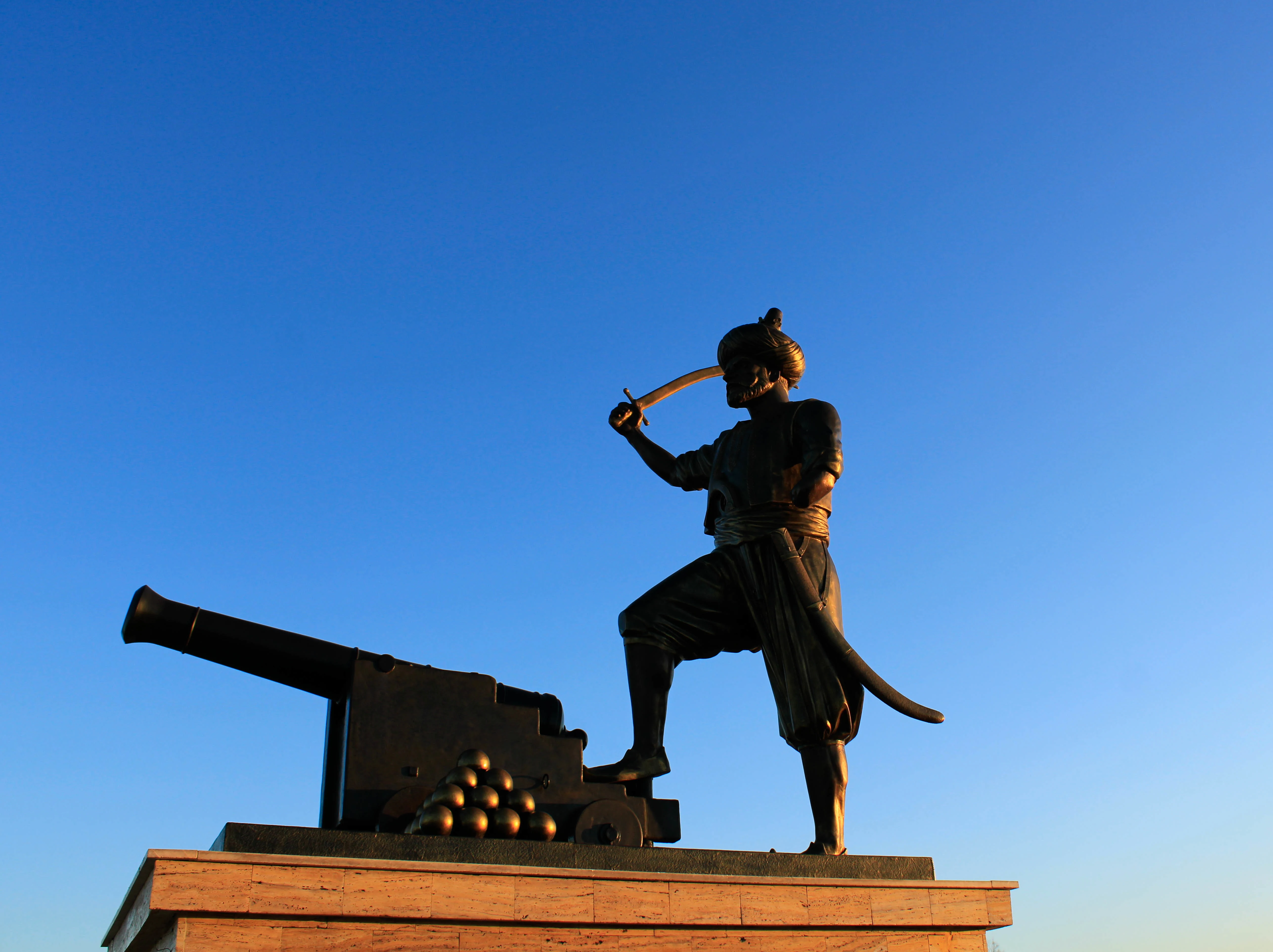
Oruç Reis, called Baba Aruj in Ottoman usage and known to European contemporaries by the name that became Barbarossa, was a corsair captain of the eastern and then the western Mediterranean who made himself ruler of Algiers in 1516 and was killed by Spanish forces two years later. He was the elder brother of Hayreddin Barbarossa, who succeeded him at Algiers, brought the city under Ottoman sovereignty, rose to command the entire Ottoman navy, and inherited the nickname.
A point of identification is worth settling at the outset, because the two brothers and their names are frequently confused. Oruç Reis, Aruj, Aruj Barbarossa and Oruç Barbaros are all names for the same man — this one — and not for two different people. The name Barbarossa, apparently a European rendering of the honorific Baba Aruj reinforced by the redness of his beard, belonged to him first. It passed to Hayreddin only after Oruç's death in 1518, and it is Hayreddin, the younger brother and by far the more famous of the two, whom the name usually denotes in European writing about the sixteenth-century Mediterranean.
The distinction matters for more than bookkeeping. Oruç's four years at Algiers established the political entity that his brother then attached to the Ottoman Empire, and the Ottoman presence in the central and western Maghrib — which lasted, in the case of Algiers, until the French conquest of 1830 — began with his seizure of the city.
Family and Origins
Oruç was born on the island of Midilli — Lesbos — around 1474. The island had been taken by the Ottomans in 1462, so he was born into a recently incorporated Aegean territory with a mixed Greek and Turkish population.
He was one of four brothers who all went to sea: Ishak, the eldest; Oruç; Hızır, later known as Hayreddin; and İlyas, the youngest. Their father is named in the sources as Yakup, and the accounts of his background differ — he is variously described as a Turkish soldier who settled on the island after its conquest and as a convert of local origin. Their mother is described as a local Christian woman. The family's trade is given as potting and maritime commerce.
These details come principally from a sixteenth-century Ottoman narrative of Hayreddin's career, compiled by Seyyid Murad and known as the Gazavat-ı Hayreddin Paşa, which is a work of celebration written for the surviving brother, and from Spanish accounts written by enemies. The parentage and the family's ethnic origin cannot be settled from this material, and modern historians report the variants rather than choosing among them. What is not in question is that all four brothers went into Mediterranean seafaring and that three of them died violently in it.
Corsair, Captive, and Captain
Oruç began as a sailor and trader in the Aegean and Levant, in a maritime world where the distinction between commerce, privateering and piracy was a matter of circumstance and licence rather than of profession.
Early in his career he was captured by the Knights of St John, the military order based at Rhodes and the most formidable Christian naval power in the eastern Mediterranean. The youngest brother, İlyas, was killed in the engagement. Oruç was held for a period the sources give as around three years, and the accounts of his release differ, some describing an escape and others a ransom. Captivity of this kind was routine on both sides of the Mediterranean; the corsair war ran on captives, ransom and galley slavery, and men who had been prisoners frequently returned to the trade.
He then established himself as a corsair captain, operating first out of Antalya on the southern Anatolian coast, where he obtained the patronage of Korkut, a son of Sultan Bayezid II serving as a provincial governor. The arrangement was the standard one: a captain received a base, supplies and legitimacy, and the patron received a share of the prizes.
Around 1505–10 he moved his operations west, to the central Mediterranean and the coast of Ifriqiya, and obtained from the Hafsid ruler of Tunis the use of the island of Djerba and other harbours in exchange for a share of what he took — commonly given as a fifth. The relocation was a commercial and strategic judgement. The western Mediterranean now carried the traffic of the Spanish empire, including bullion and troops moving between Spain and Italy, and it offered richer targets than the Aegean.
The Spanish Frontier
The political situation Oruç moved into is essential to understanding what he became, and it is more than a background to piracy.
The conquest of Granada in 1492 had ended the last Muslim state in Iberia, and the Spanish crown followed it with a policy of expansion onto the North African coast. Between 1497 and 1511 Spanish forces took or fortified Melilla, Oran, Béjaïa, Tripoli and a series of other coastal positions, and imposed tributary or garrison arrangements on Algiers and other towns. In several cases they built fortified islets commanding a harbour — at Algiers this was the Peñón, a fortress on a rock in the bay from which Spanish guns could dominate the port.
At the same time the Muslim population of Iberia was under increasing pressure: forced conversion in Granada from 1500, and successive measures against the communities that remained. Refugees crossed to North Africa in large numbers, and they arrived with a specific grievance and, in many cases, with knowledge of Spanish shipping and coasts.
The local Muslim polities of the Maghrib — the Hafsids at Tunis, the Zayyanids at Tlemcen, the Wattasids in Morocco — were unable to resist Spanish encroachment. What filled the gap was the corsair captains: men with ships, artillery, and crews drawn from Turks, Maghribis, Andalusi refugees and European renegades, whose interests aligned with those of the coastal towns and who were prepared to fight the Spanish because Spanish shipping was their livelihood.
Oruç fought the Spanish repeatedly in this period. In 1512 he took part in an attack on Spanish-held Béjaïa in which he was wounded and lost his left arm; the tradition that he wore a silver prosthetic, and the resulting Turkish epithet meaning "silver arm", belongs to the legend that grew around him and is reported rather than documented. A further attempt on Béjaïa followed in 1514, and he raided the Spanish and Italian coasts. By the mid-1510s he commanded a substantial squadron and had become the most effective Muslim naval commander in the western Mediterranean.
The Spanish Presidios
The specific Spanish policy that Oruç overturned deserves to be described, because it explains both why Algiers invited him and why his seizure of the city changed the outcome of a war.
After the fall of Granada in 1492, the Castilian crown extended its offensive across the strait. The campaign was driven substantially by Cardinal Francisco Jiménez de Cisneros, who argued for pursuing the defeated enemy into North Africa, and it proceeded rapidly: Melilla was occupied in 1497, Mers el-Kébir in 1505, Oran in 1509, and Béjaïa and Tripoli in 1510. In the same period a fortified islet was built in the harbour of Algiers — the Peñón — from which Spanish guns commanded the port, and Algiers together with several neighbouring towns was forced into tributary treaties.
The strategy behind this was the presidio: hold fortified coastal positions, control the harbours and the shipping, extract tribute from the towns, and decline to conquer the interior. Its logic was economical. Occupying the Maghrib would have required armies Spain could not spare, at a moment when its resources were being drawn into Italy and, after 1492, across the Atlantic. Holding the ports appeared to deliver the strategic object — security against raiding and control of the sea lanes — at a fraction of the cost.
The weaknesses of the arrangement became apparent within a decade. Presidio garrisons were isolated, dependent on resupply by sea, expensive to maintain, and unable to influence events more than a few kilometres inland. They antagonised the coastal populations without protecting them from anything, since the tributary treaties left the towns subject to Spanish demands while offering nothing in return. And they created exactly the market that the corsair captains filled: coastal communities under pressure from a Christian power, with no effective protection from their own dynasties, willing to accept whoever would fight the Spanish.
The Maghribi states could not respond. The Hafsids at Tunis, the Zayyanids at Tlemcen and the Wattasids in Morocco were internally divided and militarily incapable of contesting the coast, and their principal response to the corsairs was to license them in exchange for a share of the prizes.
Oruç's seizure of Algiers in 1516 broke the presidio system's assumptions. It placed a hostile naval power in the best harbour on the central Maghribi coast, with ships, artillery and a fighting population, and it demonstrated that Spanish tribute arrangements could be overturned. The Peñón itself held out until Hayreddin took it in 1529, but the strategic initiative on that coast passed in 1516 and never returned. Spain retained Oran and Melilla into the modern period and lost everything else: Tripoli fell in 1551, Béjaïa in 1555, and Tunis was contested for decades before passing to the Ottomans. Andrew Hess's study of the Ibero-African frontier treats the presidio strategy as a coherent policy defeated by the emergence of an organised opponent it had not anticipated.
The Andalusi Refugees
The other element that made the corsair states possible was a displaced population with a specific grievance, and its story belongs with Oruç's.
The terms on which Granada surrendered in 1492 guaranteed the Muslim population its religion, property and law. Those guarantees were abandoned within a decade: pressure for conversion intensified from the late 1490s, a rising in the Alpujarras was suppressed, and from about 1500 in Castile — and a quarter-century later in the eastern kingdoms — Islam was prohibited outright and the remaining Muslims required to accept baptism. The converted population, the people Spanish sources call Moriscos, retained Arabic, Islamic practice and communal identity in varying degrees, and lived under increasing suspicion and legal disability for a further century until the expulsions of 1609–14.
Throughout that period Muslims left Iberia for North Africa, in a movement that ran from the 1490s to the seventeenth century. They settled in Algiers, Tunis, Tetouan, Salé and elsewhere, and they arrived with resources the corsair enterprises needed: Spanish language, detailed knowledge of Spanish ports, coasts, shipping schedules and defences, urban and craft skills, and a personal reason to fight. Some of the North African ports became substantially Andalusi in population, and the corsair activity of Salé and Tetouan in later generations was largely an Andalusi enterprise.
The relationship between the refugees and the corsairs was therefore reciprocal, and it explains something about how the corsair war was understood by those conducting it. To Spanish observers these were pirates. To the men on the galiots, a substantial proportion of whom were exiles from Iberia or the sons of exiles, the war against Spanish shipping was continuous with the loss of al-Andalus — and the Quranic text on those wrongfully driven from their homes was directly applicable. That framing does not make the raiding of Italian villages or the enslavement of Christian crews defensible, and it is necessary for understanding why the enterprise attracted the men it did. The end of al-Andalus and the rise of the Barbary corsair states are two halves of one process.
How a Corsair Enterprise Worked
Because the word "pirate" carries associations that obscure more than they explain, it is worth setting out what Oruç's operation actually consisted of.
The vessels were oared. The standard corsair craft of the period were the galiot and the brigantine — light, shallow-draught, fast under oars, carrying a modest number of guns and a large fighting complement relative to their size. They could work close inshore, hide in shallow bays, and run from heavier warships in calm weather. They could not fight a line of battle and were not intended to. The tactical purpose was interception: to take merchant shipping and raid coastal settlements, and to avoid engagements with the galley squadrons of Spain and the Knights.
The crews were mixed to a degree that surprises readers who expect a religious war to produce homogeneous forces. Turkish and Levantine seamen formed the core; Maghribi recruits and Andalusi refugees supplied numbers and local knowledge; and a substantial element consisted of European converts to Islam — the men the Christian sources call renegades — many of them former captives who had changed religion and taken service, and some of them experienced navigators and gunners. Oarsmen were often Christian captives.
The economics were regulated rather than anarchic. Prizes were divided by established shares: a portion to the captain and the owners of the vessel, a portion distributed among the crew, and a portion — commonly a fifth — to the ruler who provided the base and the legitimacy. This is why Oruç's arrangements with Prince Korkut at Antalya and with the Hafsid ruler of Tunis mattered: they were licensing agreements, and they made his activity lawful within the framework the Ottoman and Maghribi states recognised. The Christian powers operated the same system, with the Knights of St John, the Tuscan order of Santo Stefano and Spanish licensees raiding Muslim shipping under equivalent authority and dividing the proceeds by equivalent rules.
The most valuable cargo was people. Captives were held for ransom where they were worth it and sold or set to the oar where they were not, and an established machinery of intermediaries, religious orders and merchants moved ransom money across the Mediterranean in both directions. This was the economic engine of the whole frontier, and it ran on both shores.
Understanding this explains the political trajectory. A captain who accumulated ships, crews, guns and prize revenue was accumulating the components of a state, and the coastal towns of the Maghrib — under Spanish pressure and unprotected by their own dynasties — had reason to prefer a corsair protector to a Spanish garrison. Oruç's move from licensed raider to ruler of Algiers was not a change of trade but the natural extension of it.
The Seizure of Algiers
In 1516 the townspeople of Algiers, whose ruler Salim al-Tumi had been forced into a tributary arrangement with Spain and who lived under the guns of the Peñón, invited Oruç to help them expel the Spanish.
He came, and he stayed. The Spanish fortress in the bay was not taken — it held out until Hayreddin captured it in 1529 — but Oruç entered the city, and Salim al-Tumi was killed. The sources attribute the killing to Oruç or his men, and although the details differ the substance is generally accepted. Oruç then assumed the government of Algiers himself.
This was the decisive transition of his career: from corsair captain operating out of harbours granted by others to ruler of a city in his own right. In 1517 a Spanish expedition under Diego de Vera attempted to retake Algiers and was defeated. He extended his authority along the coast and inland, and in 1517 took Tlemcen, the seat of the Zayyanid dynasty, deposing its ruler.
The character of the state he was building deserves a plain description. It rested on naval force, on the revenues of raiding and ransom, on troops who were largely Turkish and Levantine incomers together with Andalusi refugees, and on the consent of coastal populations who preferred it to Spanish domination. It was not a Maghribi dynasty and it was not yet Ottoman. It was a corsair principality, and its legitimacy was the protection it offered against Spain.
Death at the Río Salado
The taking of Tlemcen provoked the counter-attack that killed him. In 1518 a Spanish force, acting with the deposed Zayyanid ruler and local allies, moved against the city.
Oruç was besieged in Tlemcen. The accounts describe a defence of some months, followed by an attempt to break out and withdraw toward Algiers. He was pursued and brought to battle at the Río Salado, and killed there in 1518, at about forty-four. His elder brother Ishak was also killed in the campaign.
Hayreddin, who had been holding Algiers, succeeded him.
What followed is the reason Oruç matters beyond his own career. Hayreddin recognised that a corsair principality could not survive alone against the Spanish empire, and in 1519 he offered the submission of Algiers to Sultan Selim I. The offer was accepted: Selim granted him the title of beylerbey, sent Janissaries and artillery, and Algiers became an Ottoman province. From that arrangement grew the Ottoman regency of Algiers, the Ottoman position in the western Mediterranean, and Hayreddin's own rise to the command of the imperial fleet under Suleiman.
Historiographical Note
Oruç is a difficult subject because almost everything about him was written either to celebrate his brother or to condemn them both.
The principal Ottoman source is the Gazavat-ı Hayreddin Paşa, compiled by Seyyid Murad in the mid-sixteenth century from material associated with Hayreddin himself. It is a work of heroic narrative produced for and about the younger brother, in which Oruç appears chiefly as a precursor; its chronology is loose and its incidents are shaped for effect. The Spanish and Italian sources — of which the most influential is the early seventeenth-century description of Algiers published under the name Diego de Haedo — were written by men who regarded the brothers as pirates and the Ottoman presence in the Maghrib as a scourge, and their accounts of the seizure of Algiers and the killing of Salim al-Tumi are correspondingly hostile.
The consequences for the record are specific. His birth year is approximate. The details of his captivity with the Knights and the manner of his release differ between accounts. The loss of his arm is attested but the silver prosthetic is legend. The precise sequence and dating of his campaigns between 1512 and 1516 vary. And the circumstances of Salim al-Tumi's death are reported by hostile witnesses, though the fact that Oruç took power by force is not in doubt.
Modern scholarship on the sixteenth-century Mediterranean has largely moved away from the "pirate versus crusader" framing that both traditions supplied. Andrew Hess's study of the Ibero-African frontier treats the corsair states as political formations arising from a genuine frontier conflict, and Ottoman maritime historians have examined the corsairs as an arm of imperial policy rather than as freelance brigandage. On that reading Oruç was a frontier warlord who converted naval skill into a state, in a contest between two expanding empires.
Assessment
Oruç Reis's historical importance rests on four years and one city.
As a naval commander he was evidently very capable: he built a squadron from nothing, operated successfully against the shipping of the strongest power in Europe for a decade, survived captivity and serious wounds, and defeated a Spanish expedition sent to remove him. As a ruler he had barely two years, and the record shows conquest rather than administration — Algiers held, Tlemcen taken, the coast extended, and no time for anything else.
The decisive act was the seizure of Algiers in 1516. Before it, the Spanish advance along the North African coast had met no organised resistance: town after town had been garrisoned, fortified or reduced to tribute, and the local dynasties had proved incapable of stopping it. Oruç's seizure of Algiers, and his defeat of the expedition sent to recover it, established a hostile naval power at the strategic centre of the western Mediterranean and halted the Spanish advance. Whatever his motives — and they were those of a corsair building a base, not of a defender of Islam in any pure sense — the effect was to change the outcome of the Ibero-African frontier war.
He also failed at the thing that killed him. Taking Tlemcen overextended a position he did not yet have the strength to hold, and it invited precisely the Spanish and Zayyanid counter-attack that destroyed him and his eldest brother. He died leaving a city he had held for two years, no dynasty, no institutional settlement, and no security against the power that had killed him.
The settlement came from Hayreddin, and the contrast between the brothers is instructive. Oruç built a corsair principality on his own authority; Hayreddin, having watched him die, gave it away to the Ottoman sultan in exchange for Janissaries, cannon and the protection of an empire — and thereby made it last three centuries. Judged as a state-builder, Oruç was the less far-sighted of the two. Judged as the man who created the thing Hayreddin then secured, he is where the Ottoman Maghrib begins.
His name, finally, went to his brother, which is why he is the more obscure figure. The Barbarossa of European memory — the admiral of Preveza, the ally of France, the grand admiral of Suleiman — is Hayreddin. The Barbarossa who first bore the name was the elder brother killed in a river bed near Tlemcen in 1518.
References and Further Reading
Primary Islamic Sources
- Quran, Surah al-Baqarah (2:190–193) — on fighting those who fight you and the limits of warfare, the framework within which Ottoman jurists assessed the corsair war against Spain
- Quran, Surah al-Hajj (22:39–40) — on permission to fight for those wrongfully driven from their homes, a text of direct relevance to the Andalusi refugees who manned the corsair fleets
- Quran, Surah al-Anfal (8:41) — on the division of spoils, the scriptural basis of the shares by which corsair prizes were distributed and remitted to patrons
- Quran, Surah al-Rahman (55:24) and Surah Ibrahim (14:32) — on ships that sail by God's command, verses conventionally invoked in Ottoman maritime writing
- Sahih al-Bukhari, Kitab al-Jihad wa al-Siyar — the prophetic material on naval expeditions, captives and ransom, the legal framework of the Mediterranean captive trade
Classical Islamic Sources
- Gazavat-ı Hayreddin Paşa, compiled by Seyyid Murad. [16th century] — the principal Ottoman narrative of the brothers' careers, written for Hayreddin
- Piri Reis. Kitab-ı Bahriye. [1521, revised 1526] — the contemporary Ottoman sailing directions for the Mediterranean, by a captain of the same generation
- Katip Çelebi. Tuhfat al-Kibar fi Asfar al-Bihar. [17th century] — the standard Ottoman history of naval warfare
- Al-Maqqari, Ahmad ibn Muhammad. Nafh al-Tib. [c. 1629] — on the expulsion of the Muslims of Iberia and their reception in the Maghrib
- Ibn Abi Dinar. Al-Muanis fi Akhbar Ifriqiya wa Tunis. [17th century] — for the Hafsid context
- Ottoman chancery registers recording the incorporation of Algiers under Selim I
Academic and Scholarly Sources
- Hess, Andrew C. The Forgotten Frontier: A History of the Sixteenth-Century Ibero-African Frontier. Chicago: University of Chicago Press, 1978. — the standard reframing of the conflict
- Wolf, John B. The Barbary Coast: Algiers under the Turks, 1500 to 1830. New York: Norton, 1979.
- Bono, Salvatore. I corsari barbareschi. Turin: ERI, 1964.
- Bostan, İdris. Ottoman Maritime Arsenals and Shipbuilding, and related studies on Ottoman naval organisation.
- Braudel, Fernand. The Mediterranean and the Mediterranean World in the Age of Philip II. 2 vols. London: Collins, 1972–73. — the foundational study of the sixteenth-century Mediterranean system
- Guilmartin, John F. Gunpowder and Galleys: Changing Technology and Mediterranean Warfare at Sea in the Sixteenth Century. Cambridge: Cambridge University Press, 1974.
- Fisher, Godfrey. Barbary Legend: War, Trade and Piracy in North Africa, 1415–1830. Oxford: Clarendon Press, 1957. — a corrective to the European "pirate" tradition
- Abun-Nasr, Jamil M. A History of the Maghrib in the Islamic Period. Cambridge: Cambridge University Press, 1987.
Further Reading
- Crowley, Roger. Empires of the Sea: The Final Battle for the Mediterranean, 1521–1580. London: Faber, 2008.
- Davis, Robert C. Christian Slaves, Muslim Masters: White Slavery in the Mediterranean. Basingstoke: Palgrave Macmillan, 2003.
- Harvey, L. P. Muslims in Spain, 1500 to 1614. Chicago: University of Chicago Press, 2005.
- Imber, Colin. The Ottoman Empire, 1300–1650: The Structure of Power. Basingstoke: Palgrave Macmillan, 2002.
Mentioned In
2 articles reference this topic
More from Ottoman Empire
Battle of Nicopolis (1396 CE)
The Battle of Nicopolis, fought on 25 September 1396, was a decisive Ottoman victory over a combined Western European crusading army under Sigismund of Hungary. The last major crusade of the medieval period, its failure cemented Ottoman dominance over the Balkans.
Blue Mosque: The Sultan Ahmed Mosque of Istanbul
The Blue Mosque (Sultan Ahmed Mosque) in Istanbul, built between 1609-1616 CE, is one of the most magnificent examples of Ottoman architecture and a masterpiece of Islamic architectural achievement.
Bosnia and Herzegovina: Islamic Heritage in the Balkans
The westernmost region of sustained Muslim presence in Europe. Ottoman rule from 1463 until the Austro-Hungarian occupation of 1878 produced a distinctive Bosniak Muslim culture that joined Ottoman traditions to indigenous Balkan ones.
Conquest of Constantinople - The Fall of Byzantium
The historic conquest of Constantinople by Ottoman Sultan Mehmed II on May 29, 1453 CE, ending the Byzantine Empire and establishing Ottoman dominance in southeastern Europe. This pivotal victory transformed the Ottomans into a major European power.