Hayreddin Barbarossa: Grand Admiral of the Ottoman Fleet
Hayreddin Barbarossa (c. 1478-1546) succeeded his brother Oruc at Algiers in 1518, placed it under Ottoman sovereignty, and rose to command the Ottoman navy as Kapudan Pasha. His victory at Preveza in 1538 gave the Ottomans naval dominance in the eastern Mediterranean.
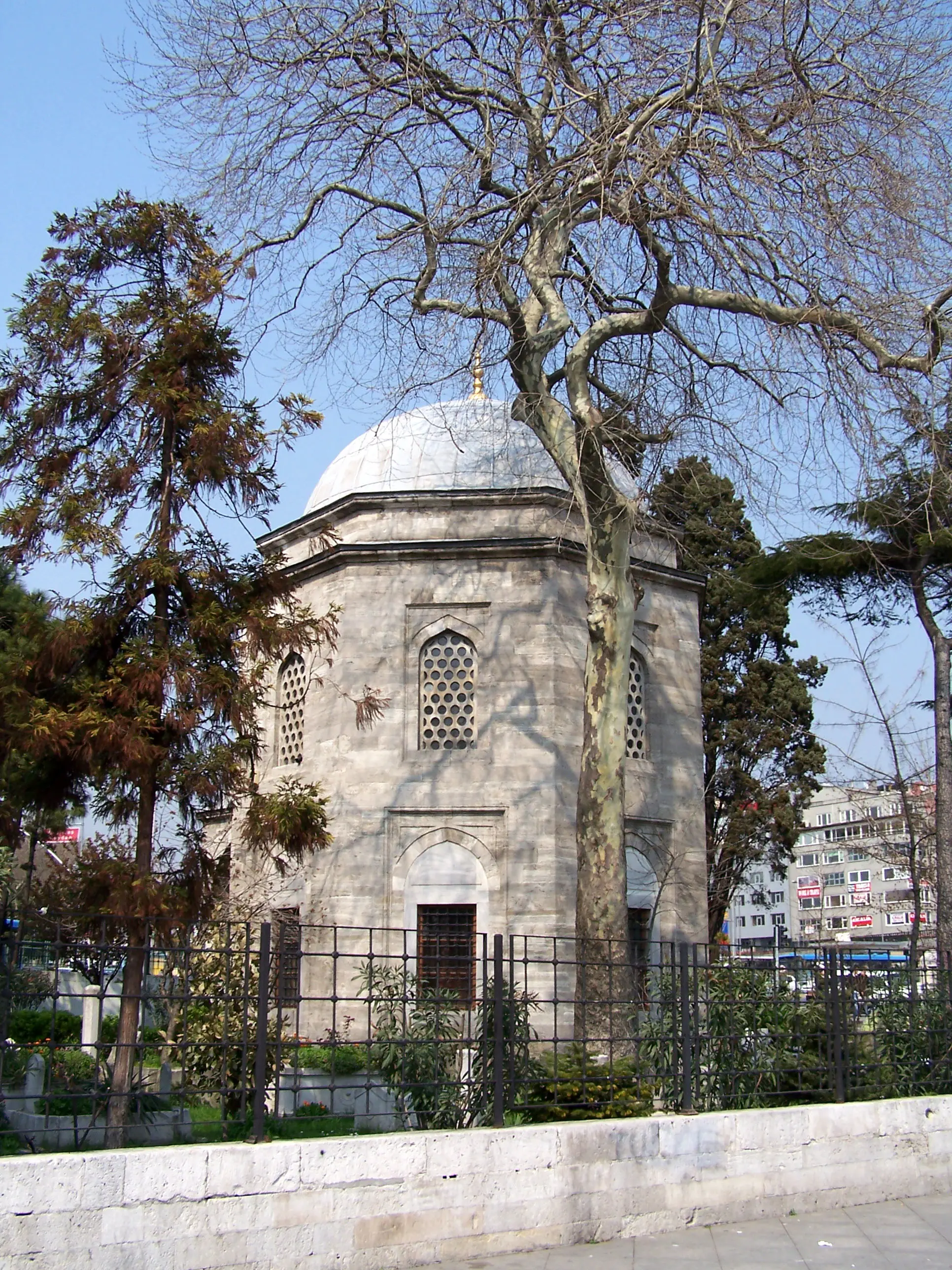
Hayreddin Barbarossa, born Hızır on the island of Lesbos, was the most successful naval commander in Ottoman history. He inherited the corsair principality of Algiers from his elder brother Oruç Reis in 1518, attached it to the Ottoman Empire the following year, and over the next quarter-century rose to become Kapudan Pasha — grand admiral of the imperial fleet — and the architect of Ottoman seapower in the age of Suleiman the Magnificent.
His defining achievement was the Battle of Preveza in September 1538, where he defeated a combined Christian fleet assembled by the papacy, Venice, Spain and Genoa under the command of Andrea Doria. The victory established Ottoman naval dominance in the eastern Mediterranean for a generation and forced Venice to make peace on Ottoman terms. He also took Tunis in 1534, organised the evacuation of Muslim refugees from Spain, commanded joint operations with the fleet of France against the Habsburgs, and reorganised the Ottoman navy and its arsenal into a permanent institution.
The name by which he is known was not originally his. Barbarossa belonged first to his elder brother Oruç — Baba Aruj to the Ottomans — and passed to Hayreddin after Oruç's death in 1518. Almost every European reference to "Barbarossa" in the context of the sixteenth-century Mediterranean means Hayreddin, and the two brothers are frequently and wrongly treated as one man or as interchangeable. They were distinct people with distinct careers, and the difference between them is instructive: Oruç built a corsair state and lost his life defending it alone, while Hayreddin gave it to an empire and thereby made it permanent.
Origins and Early Career
Hayreddin was born on Midilli — Lesbos — which the Ottomans had taken in 1462. His birth year is genuinely uncertain, and the sources support dates ranging across 1466, 1478 and 1483; none can be established.
He was one of four brothers, the others being Ishak, Oruç, and İlyas, and the family background is described in the article on Oruç. The accounts of their parentage differ between sources and cannot be resolved.
His early career was spent as a corsair captain in his brother's company, first in the Aegean and Levant and then, from about 1505, in the western Mediterranean, where the brothers operated against Spanish shipping from bases in Ifriqiya granted by the Hafsid ruler of Tunis. He was present in the campaigns against Spanish-held Béjaïa and in the raiding of the Spanish and Italian coasts, and by the mid-1510s he was a squadron commander in his own right.
The context of that warfare — the Spanish advance along the North African coast after 1492, the fortified enclaves, the expulsion and forced conversion of the Muslims of Iberia, and the incapacity of the local Maghribi dynasties to resist — is set out in the article on Oruç Reis and is the necessary background to everything Hayreddin did.
When Oruç seized Algiers in 1516, Hayreddin held the city while his brother campaigned inland. When Oruç and Ishak were killed by Spanish forces near Tlemcen in 1518, Hayreddin succeeded to the government of Algiers at a moment when the Spanish had just destroyed its ruler and his army.
The Ottoman Bargain of 1519
Hayreddin's response to that position is the most consequential decision of his life, and it was a political rather than a military one.
He judged that Algiers could not survive as an independent corsair principality against the resources of the Spanish empire. In 1519 he offered the city and his own allegiance to Sultan Selim I, the ruler who had just conquered Egypt and Syria and assumed the leadership of the Sunni Muslim world. The offer was accepted. Selim granted him the title of beylerbey, recognised him as governor, and sent Janissaries, artillery and money.
The exchange was advantageous to both parties, which is why it lasted. Hayreddin obtained regular troops, siege guns, a supply of recruits, and the protection and legitimacy of the strongest Muslim power in the world; Algiers ceased to be a warlord's city and became an Ottoman province. The Ottomans obtained a naval base at the strategic centre of the western Mediterranean, a fleet of experienced captains, and a permanent instrument for harassing the Habsburgs — at almost no cost, since the corsair economy paid for itself.
The Ottoman regency of Algiers created by this arrangement lasted until the French conquest in 1830. The Ottoman position in the western Mediterranean, which shaped the whole sixteenth-century contest with Spain that Fernand Braudel's great study anatomises, dates from it.
Consolidation followed. Hayreddin's authority in Algiers was not immediately secure and he was driven out for a period in the 1520s before recovering it. In 1529 he took the Peñón, the Spanish fortress on the rock commanding the harbour that had dominated the port for two decades, and used its stone to build the mole that made Algiers a proper naval base. The city became the principal corsair port of the Mediterranean and the capital of an Ottoman province.
Algiers under Hayreddin
The city Hayreddin governed for most of the 1520s and returned to periodically thereafter was substantially his creation, and it is worth describing because it became the model for Ottoman rule across the Maghrib.
Physically, the taking of the Peñón in 1529 transformed it. With the Spanish guns removed and the fortress dismantled, its stone was used to build a mole joining the offshore islets to the shore, creating a protected harbour capable of holding a large fleet. Fortifications, an arsenal, shipyards and storehouses followed. Algiers became the best-defended port on the North African coast and the principal base for operations against Spanish shipping.
Politically, the arrangement Hayreddin devised was a hybrid that proved remarkably durable. Formal sovereignty lay with the Ottoman sultan; the governor held the imperial title of beylerbey and later pasha; a garrison of Janissaries sent from Istanbul provided the professional infantry and became a self-conscious corporation with its own privileges; and the corsair captains were organised as a recognised body with a share in the city's government and revenues. Local Maghribi populations, the tribes of the interior, and the Andalusi refugees each had a distinct place in this order. The state's income came from raiding, ransom, customs and tribute rather than from land taxation, which made it unlike most Ottoman provinces.
Demographically the city changed beyond recognition within a generation. Its population grew rapidly, drawing in Andalusi refugees in large numbers, Turkish and Levantine soldiers and seamen, Maghribi migrants from the interior, European converts, Jewish merchant families, and a very large captive population. Sixteenth- and seventeenth-century observers describe a polyglot city of perhaps tens of thousands, with a lingua franca of mixed Romance, Arabic and Turkish elements in use around the harbour.
The regency of Algiers created on these foundations outlasted Hayreddin by three centuries, surviving as an Ottoman province with increasing autonomy until the French invasion of 1830. Its longevity is the strongest evidence that the settlement of 1519 was well judged.
The Refugees from Spain
In the same period Hayreddin's fleet was used for an operation of a different character. Following the forced conversions and the progressive suppression of Muslim practice in Spain, large numbers of Muslims and converted Muslims — the people Spanish sources call Moriscos — sought to leave.
In 1529 Hayreddin organised a series of voyages that carried refugees from the Spanish coast to North Africa. The sources describe repeated crossings over a period of weeks and give figures in the thousands; the totals are not reliably established, but the scale was substantial and the operation was deliberate rather than incidental.
The refugees mattered to the corsair states as well as being helped by them. Andalusi exiles had detailed knowledge of Spanish ports, shipping and coasts, a personal grievance, and in many cases maritime and craft skills; they became a significant element in the population of Algiers and in the crews of its fleets. The relationship between the corsair war and the fate of the Muslims of Iberia was direct, and it is part of the aftermath of the end of al-Andalus.
Grand Admiral
In 1533 Suleiman summoned Hayreddin to Istanbul and appointed him Kapudan-ı Derya, commander of the imperial fleet, with the governorship of the Aegean archipelago attached.
The appointment reflected a strategic problem. The Ottoman navy had been built up under Bayezid II and had performed well against Venice, but by the 1530s the empire faced the combined naval resources of Spain, Genoa and the Italian states, directed by Andrea Doria, the most accomplished Christian admiral of the age, who had inflicted a series of reverses on Ottoman forces in the Aegean and Ionian. Suleiman needed a commander of comparable ability, and the man who had beaten the Spanish repeatedly in the west was the obvious candidate.
Hayreddin's work at Istanbul was institutional as well as operational. He reorganised the fleet and the imperial arsenal, standardised the construction of galleys, brought in captains from the Maghrib corsair world, and integrated the western squadrons into the imperial system. What had been a navy assembled for campaigns became a permanent service with its own command structure and recruiting base. This is the least visible and possibly the most important part of his career.
His first major operation was the seizure of Tunis in 1534, expelling the Hafsid ruler and bringing the central Maghrib under Ottoman control. It provoked a direct response from the Emperor Charles V, who mounted a large amphibious expedition in 1535, retook Tunis with Doria's fleet, and restored the Hafsid as a Spanish client. Hayreddin escaped with part of his fleet to Algiers and immediately raided Minorca. The episode set the pattern of the following decade: neither side could hold the other's territory, and the contest turned on fleets, bases and the initiative.
The Ottoman Naval Establishment
Hayreddin's appointment as Kapudan Pasha in 1533 gave him charge of an institution he then substantially rebuilt, and the reorganisation is his least visible and most durable achievement.
The Ottoman fleet he inherited had been created under Bayezid II and had performed well against Venice at the turn of the century, but by the 1530s it faced a different problem: the combined naval resources of Spain, Genoa and the Italian states, directed by Andrea Doria, whose galleys had inflicted a series of reverses in the Aegean and Ionian. What was needed was not more ships but a service capable of matching a professional opponent year after year.
Four changes produced it.
The imperial arsenal on the Golden Horn was expanded and its output standardised. Ottoman galley construction was organised on something close to a series principle, with standardised dimensions and fittings allowing rapid building and straightforward repair — an advantage over the more variable practice of the Italian yards, and the reason the empire was repeatedly able to replace fleet losses within a season or two. Timber came from the Black Sea forests, hemp and pitch from Anatolia, iron from the Balkans, and the whole supply system was administered by the arsenal's own officials. İdris Bostan's work on the Ottoman arsenals sets out how this operated.
Command was professionalised. The office of Kapudan Pasha was made the head of a service, with the governorship of the Aegean archipelago attached to it as a revenue and recruiting base, and a hierarchy of squadron commanders beneath. Naval command ceased to be an ad hoc appointment given to a soldier or a courtier.
Recruitment was directed at the men who could actually sail. Hayreddin brought the corsair captains of the Maghrib into the imperial service with rank, pay and standing — Turgut Reis is the outstanding example — and the regencies of Algiers, and later Tunis and Tripoli, became a permanent nursery of Ottoman naval talent. This is the structural point that distinguishes the Ottoman navy from its Spanish opponent: where Spain relied heavily on aristocratic command and contracted Genoese squadrons, the Ottomans absorbed and promoted working seamen regardless of origin.
Manning was organised through the same fiscal machinery as the rest of the empire, with oarsmen drawn from levies on coastal populations, from paid volunteers, and from captives, and fighting men supplied by the standing corps and by the corsair crews.
The result was that by the 1540s the Ottoman Empire could put a fleet of well over a hundred galleys to sea in a season, replace losses, and sustain operations from the Aegean to the western Mediterranean. That capacity, rather than any single battle, is the foundation of Ottoman naval dominance for the next three decades.
Preveza
The campaign of 1537–38 was Hayreddin's masterpiece.
Ottoman operations in 1537 took Venetian islands in the Aegean and Ionian and raided the Adriatic coasts, and the pressure brought Venice into a Holy League organised by the papacy with Spain and Genoa. The allied fleet assembled in 1538 under Andrea Doria was larger than the Ottoman force and included heavy sailing vessels alongside galleys.
The two fleets met off Preveza, on the western coast of Greece near the entrance to the Gulf of Arta, on 28 September 1538. Hayreddin held a position with shore support and forced the engagement on terms that suited galleys; Doria manoeuvred, declined to commit fully, and withdrew. The allied fleet dispersed without being destroyed, but it had been comprehensively out-generalled, and the strategic result was decisive.
The consequences followed quickly. The Holy League collapsed. Venice made a separate peace in 1540, ceding islands and paying an indemnity, and effectively conceded Ottoman naval primacy in the eastern Mediterranean. For roughly the next three decades the Ottomans held the initiative at sea, and no Christian coalition seriously challenged them in eastern waters until Lepanto in 1571, a quarter-century after Hayreddin's death.
Preveza is often compared unfavourably with Lepanto on the ground that no great slaughter took place, and the comparison misses what galley warfare was for. Sixteenth-century fleets were instruments for controlling bases and coasts, expensive to build and difficult to replace; an admiral who broke up an enemy coalition, secured a peace on his own terms, and kept his own fleet intact had achieved the object. John Guilmartin's study of Mediterranean naval warfare makes the point that the logistics of galley fleets, not battle casualties, determined strategic outcomes in this period.
The French Alliance and the Last Campaigns
The final phase of Hayreddin's career was conducted in formal cooperation with a Christian monarchy, and the episode is worth examining because it says a great deal about how sixteenth-century Mediterranean politics actually worked.
The alignment had a straightforward basis. Francis I of France faced the Habsburg encirclement of his kingdom — Charles V ruling Spain, the Netherlands, much of Italy and the Empire — and the Ottomans were the only power capable of pressing Charles from the other side. Franco-Ottoman contacts developed from the 1520s into a working relationship involving diplomatic representation, commercial privileges for French merchants in Ottoman ports, and coordinated military pressure. It was denounced across Catholic Europe as an unnatural alliance, and both parties found it useful for most of the century.
The naval cooperation came in 1543 and 1544. Hayreddin's fleet sailed west, joined French forces, and the combined force besieged Nice, then held by the Duke of Savoy as a Habsburg ally; the town was taken though the citadel held. The Ottoman fleet then wintered at Toulon, which the French crown placed at its disposal — a Muslim battle fleet quartered in a French port, provisioned by the French, for several months. The scandal in Catholic Europe was considerable and the arrangement held.
Two other events of these years belong here. In 1541 Charles V mounted a large amphibious expedition against Algiers in person, intending to remove the corsair capital permanently; it was wrecked by storms with heavy losses before it could accomplish anything. Hayreddin was not present — he was at Istanbul, and the defence was conducted by the governor he had installed — but the failure secured Algiers for good and confirmed the judgement behind the Ottoman bargain of 1519.
Hayreddin retired to Istanbul in 1545 and died there on 4 July 1546. He was buried at Beşiktaş on the Bosphorus in a tomb attributed to the architect Sinan, and Ottoman fleets leaving for campaign saluted it for centuries. His son Hasan Pasha governed Algiers after him, and the captains he had trained carried Ottoman seapower through the generation that fought at Djerba and Malta.
Historiographical Note
The sources present a familiar difficulty in an acute form: the principal Ottoman account is a work of celebration and the principal European accounts are works of denunciation.
The Gazavat-ı Hayreddin Paşa, compiled by Seyyid Murad in the mid-sixteenth century from material connected with Hayreddin himself and sometimes described as his memoirs, is the fullest Ottoman narrative. Its value is that it comes from within his circle; its weakness is that it is heroic narrative with loose chronology, and its testimony about motive and about the brothers' origins cannot be checked. Katip Çelebi's seventeenth-century naval history is a more sober Ottoman source. European material is abundant — Venetian, Spanish, Genoese and papal — and indispensable for the fleet actions, but the tradition descending from the seventeenth-century Spanish description of Algiers published under Diego de Haedo's name is committed to presenting the corsairs as pirates and Algiers as a den of slavery.
The captive question requires a direct statement, because both traditions distort it. Corsair warfare on both sides of the Mediterranean was substantially an economy of raiding, ransom and slavery: Hayreddin's fleets took Christian captives in large numbers, and Christian fleets, including the galleys of the Knights of St John and of Spain, took Muslim captives and worked them at the oar. Robert Davis's work on Mediterranean slavery examines the scale on both sides. Ottoman sources pass over this lightly and European sources treat it as uniquely Muslim barbarity; neither is accurate.
Specific uncertainties: his birth year is unresolved across a range of nearly twenty years; the number of refugees carried from Spain in 1529 is not established; the tactical detail of Preveza differs between Ottoman and Venetian accounts; and the extent to which the Gazavat represents his own words is disputed.
Assessment
Hayreddin Barbarossa was the ablest naval commander of the sixteenth-century Mediterranean, and his importance is institutional as much as tactical.
The tactical record speaks for itself: three decades of successful operations against the strongest naval powers in Europe, the capture of Algiers's Spanish fortress and of Tunis, the defeat of a combined Christian fleet under the best Christian admiral of the age at Preveza, and no significant defeat at sea. He was, on the evidence, a better commander than Doria, who avoided battle with him whenever the terms were not favourable.
The institutional achievement is greater and less noticed. Hayreddin converted a personal corsair enterprise into a branch of imperial government. The 1519 submission of Algiers turned a warlord's city into an Ottoman province that lasted three centuries; the reorganisation of the fleet and arsenal after 1533 turned a navy raised for campaigns into a permanent service; and the recruitment of Maghribi captains into the imperial system gave the Ottomans a corps of professional seamen they had previously lacked. Ottoman seapower as a durable institution is substantially his creation, and the empire's ability to dominate the eastern Mediterranean until 1571 rested on it.
His strategic judgement was consistently better than his brother's, and the comparison is the fairest way to measure him. Oruç built the same kind of power and kept it for himself, and it died with him in a Maghribi river bed within two years. Hayreddin, having watched that happen, subordinated himself to an empire and gained troops, artillery, legitimacy and permanence. Ambitious men who understand the limits of their own resources are rarer than able commanders.
Two qualifications belong in any honest account. The corsair war he conducted was a slaving and ransoming economy, and his fleets carried off Christian populations from coastal towns and islands as a matter of routine; the practice was mirrored on the Christian side and it was brutal on both. And his gains were not all durable: Tunis was lost within a year of its capture and remained contested for decades, and the Ottoman position in the far western Mediterranean was never as secure as at Algiers.
What is not in doubt is the scale of what he built from an unpromising start. A captain from a small Aegean island, whose brother had just been killed by the Spanish and whose inheritance was a single besieged city, ended as grand admiral of the Ottoman Empire, the ally of the king of France, and the reason a Habsburg emperor could not command his own sea. His tomb on the Bosphorus was saluted by Ottoman fleets for three hundred years, and the judgement it expressed was sound.
References and Further Reading
Primary Islamic Sources
- Quran, Surah al-Baqarah (2:190–193) — on fighting those who fight you and the limits of warfare, the framework of Ottoman juristic assessment of the naval war against Spain
- Quran, Surah al-Hajj (22:39–40) — on permission to fight for those wrongfully driven from their homes, a text of direct application to the Andalusi refugees carried to North Africa
- Quran, Surah al-Anfal (8:41) — on the division of spoils, the basis of the distribution of corsair prizes
- Quran, Surah al-Isra (17:66) and Surah al-Rahman (55:24) — on ships that run upon the sea by God's command, verses conventionally invoked in Ottoman maritime writing and on naval standards
- Sahih al-Bukhari, Kitab al-Jihad wa al-Siyar, and Sahih Muslim, Kitab al-Jihad — the prophetic material on naval expeditions, captives, ransom and the treatment of prisoners
Classical Islamic Sources
- Gazavat-ı Hayreddin Paşa, compiled by Seyyid Murad. [16th century] — the fullest Ottoman account, drawn from material associated with Hayreddin himself
- Katip Çelebi. Tuhfat al-Kibar fi Asfar al-Bihar. [17th century] — the standard Ottoman history of naval warfare
- Piri Reis. Kitab-ı Bahriye. [1521, revised 1526] — contemporary Ottoman sailing directions for the waters in which he operated
- Al-Maqqari, Ahmad ibn Muhammad. Nafh al-Tib. [c. 1629] — on the expulsion of the Muslims of Iberia
- Ottoman chancery and arsenal registers recording fleet construction and the administration of Algiers
- Mustafa Ali. Kunh al-Akhbar. [late 16th century] — Ottoman historical writing on the reign of Suleiman
Academic and Scholarly Sources
- Braudel, Fernand. The Mediterranean and the Mediterranean World in the Age of Philip II. 2 vols. London: Collins, 1972–73. — the foundational study of the system in which he operated
- Hess, Andrew C. The Forgotten Frontier: A History of the Sixteenth-Century Ibero-African Frontier. Chicago: University of Chicago Press, 1978.
- Guilmartin, John F. Gunpowder and Galleys: Changing Technology and Mediterranean Warfare at Sea in the Sixteenth Century. Cambridge: Cambridge University Press, 1974. — essential on why Preveza mattered
- Bostan, İdris. Ottoman Maritime Arsenals and Shipbuilding, and related studies on Ottoman naval organisation.
- Wolf, John B. The Barbary Coast: Algiers under the Turks, 1500 to 1830. New York: Norton, 1979.
- Davis, Robert C. Christian Slaves, Muslim Masters: White Slavery in the Mediterranean. Basingstoke: Palgrave Macmillan, 2003.
- İnalcık, Halil. The Ottoman Empire: The Classical Age, 1300–1600. London: Weidenfeld and Nicolson, 1973.
- Abun-Nasr, Jamil M. A History of the Maghrib in the Islamic Period. Cambridge: Cambridge University Press, 1987.
Further Reading
- Crowley, Roger. Empires of the Sea: The Final Battle for the Mediterranean, 1521–1580. London: Faber, 2008.
- Harvey, L. P. Muslims in Spain, 1500 to 1614. Chicago: University of Chicago Press, 2005.
- Imber, Colin. The Ottoman Empire, 1300–1650: The Structure of Power. Basingstoke: Palgrave Macmillan, 2002.
- Necipoğlu, Gülru. The Age of Sinan: Architectural Culture in the Ottoman Empire. London: Reaktion, 2005. — on the tomb at Beşiktaş
- Setton, Kenneth M. The Papacy and the Levant, vol. III. Philadelphia: American Philosophical Society, 1984.
Mentioned In
6 articles reference this topic
More from Ottoman Empire
Ottoman Empire (1299-1922 CE)
The Ottoman Empire ruled for over 600 years, spanning three continents at its height. Founded by Osman I in 1299 CE, it became one of history's most powerful empires, serving as the seat of the Islamic Caliphate from 1517 until 1922.
Topkapi Palace - Heart of the Ottoman Empire
Topkapi Palace (1459-1856 CE) served as the primary residence and administrative headquarters of Ottoman sultans for nearly four centuries. Located on Seraglio Point overlooking the Bosphorus, this vast complex represents the pinnacle of Ottoman architecture and imperial power.
Battle of Nicopolis (1396 CE)
The Battle of Nicopolis, fought on 25 September 1396, was a decisive Ottoman victory over a combined Western European crusading army under Sigismund of Hungary. The last major crusade of the medieval period, its failure cemented Ottoman dominance over the Balkans.
Blue Mosque: The Sultan Ahmed Mosque of Istanbul
The Blue Mosque (Sultan Ahmed Mosque) in Istanbul, built between 1609-1616 CE, is one of the most magnificent examples of Ottoman architecture and a masterpiece of Islamic architectural achievement.