Sayyida al-Hurra: Governor of Tétouan
Sayyida al-Hurra (probably born c. 1485-1495, died c. 1552-1561) governed the Moroccan port city of Tétouan from 1519 until 1542, ran a privateering campaign against Spanish and Portuguese shipping in alliance with Oruç Reis, and married Ahmed al-Wattasi, Sultan of Fez, in 1541.
Sayyida al-Hurra — a title or name meaning "the noble lady" or "the free lady" — governed the Moroccan port city of Tétouan from 1519 until 1542. She built the city into a base for privateering operations against Spanish and Portuguese shipping in alliance with the corsair captain Oruç Reis, and in 1541 married Ahmed al-Wattasi, Sultan of Fez, in a wedding held on her own insistence at Tétouan rather than at the Wattasid capital. She was removed from power in 1542 and spent her later years at Chefchaouen, the town her father had founded, where she is remembered as a Sufi saint. She is generally described as the last woman in Moroccan history to have held the title al-hurra.
This article draws on two sources: Tom Verde's "Malika VI: Sayyida Al-Hurra," a popular account published by Muslim Heritage and originally by AramcoWorld, itself drawing on the historians Leo Africanus and al-Maqqari and the modern scholars Hasna Lebbady and Germán Vázquez Chamorro; and Jason Idriss Sparkes's academic article "Sayyida al-Hurra: An Early Modern Decolonial Muslim Exemplar," published in the peer-reviewed journal Religions (2025), which draws principally on Lebbady's critical survey of the scholarship and on the author's own fieldwork in Chefchaouen. Sparkes's article is written to advance a particular decolonial theoretical argument about her significance; that argument, and its interpretive framing, are not reproduced here. Only its historical and biographical content is used, consistent with how this encyclopaedia handles sources written in an argumentative voice. Where the two sources disagree on a point of fact, the disagreement is reported rather than resolved by choosing one account.
Family Background and the Expulsion from Al-Andalus
Sayyida al-Hurra's life was shaped from its beginning by the final collapse of Muslim rule in the Iberian Peninsula. In 1492 the forces of Ferdinand and Isabella completed the conquest of Granada, ending nearly eight centuries of Islamic presence in al-Andalus. Among the many thousands of Muslims and Jews expelled or driven to flee in the aftermath — described by the historian al-Maqqari a century later as having "peopled the desert towns and districts" of North Africa, including Tétouan, Salé, and the plains near Algiers — was the family of Ali ibn Rashid.
Ali ibn Rashid was a qaid, or tribal chief, of noble descent, tracing his lineage to Prophet Muhammad ﷺ. His family lineage also included the Sufi Shaykh Abd al-Salam ibn Mashish (d. c. 1227) and Idris I, the founder of Morocco's first independent Muslim dynasty in the eighth century. Ali ibn Rashid had taken part in the resistance to the Catholic conquest of Granada before withdrawing to Northern Morocco. His wife, Zohra Fernandez, was a convert to Islam from the Spanish town of Vejer de la Frontera, near Cadiz, who lived the rest of her life apart from her Christian relatives as a result of her conversion.
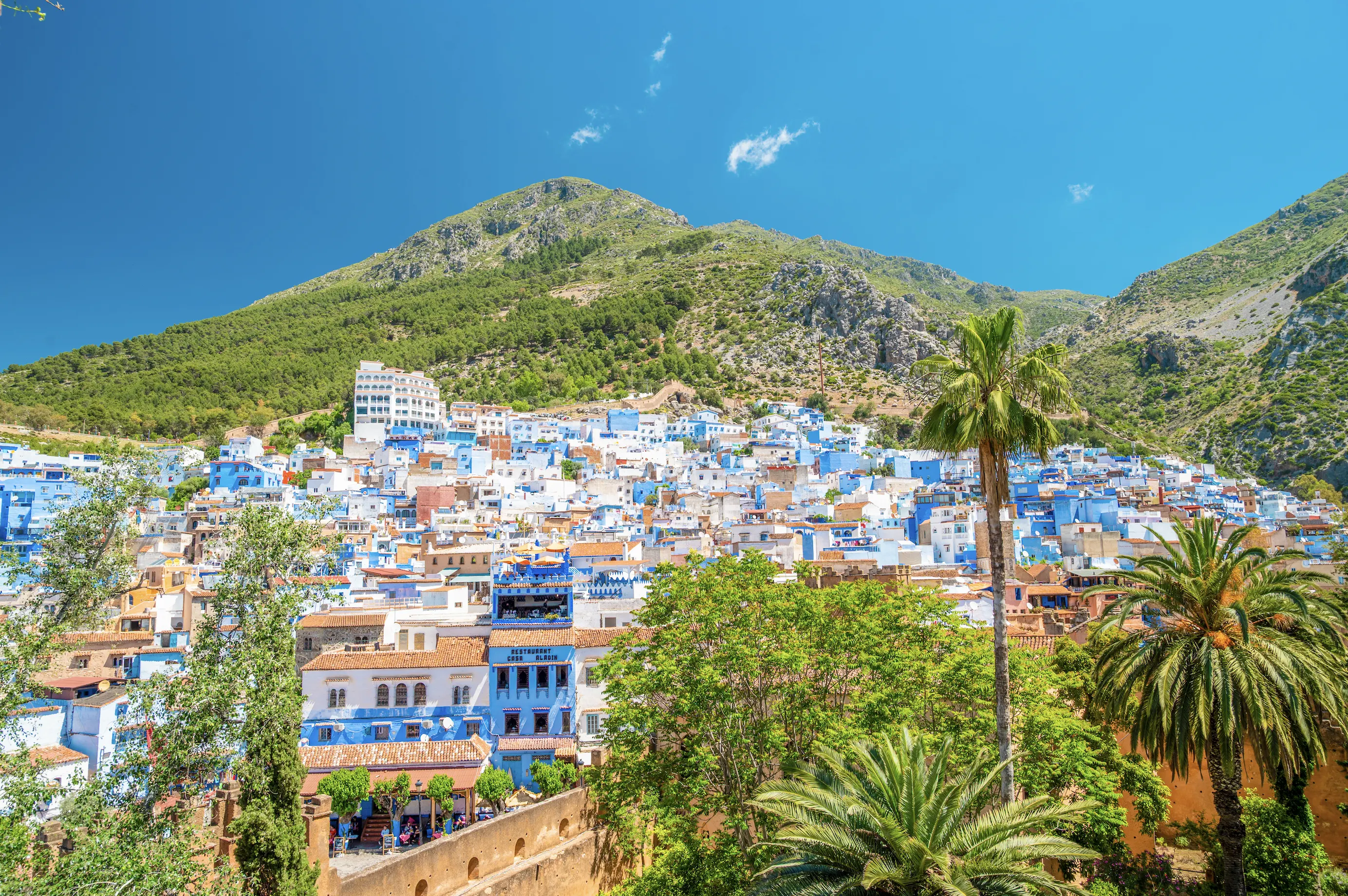
In 1471, Ali ibn Rashid founded the city-state of Chefchaouen in the Rif Mountains, 66 kilometres inland from the Mediterranean, as a fortified refuge for Muslim and Jewish exiles from al-Andalus. He settled the town's Jewish community directly beside his own household, a protective arrangement of a kind not found in the Jewish quarters of contemporary Christian Europe.
The future Sayyida al-Hurra was Ali ibn Rashid's daughter, born to him and Zohra Fernandez sometime between about 1485 and 1495; one modern study places her birth closer to 1491. Her given name is not established with certainty. Some sources suggest she was born Aisha, others Fatima, and at least one scholarly assessment holds that "Sayyida al-Hurra" was itself her birth name rather than an honorific title acquired later — the sources disagree, and this article does not choose between them. She had a brother, Ibrahim (1490–1539), who would later serve as vizier to Ahmed al-Wattasi, Sultan of Fez.
Sayyida al-Hurra received an education befitting the Northern Moroccan nobility of her time, becoming fluent in Castilian Spanish, Portuguese, and Arabic, and receiving instruction in diplomacy, literature, and the Islamic sciences. Among her teachers was the Sufi shaykh Abdallah al-Ghazwani (d. 1528/9), through whom she was connected to the Jazuli branch of the Shadhili Sufi order — a branch in which women played an active teaching role, and which traced its own spiritual lineage back to her ancestor Ibn Mashish.
Marriage to the Governor of Tétouan
In 1510, Sayyida al-Hurra married the governor of Tétouan. The sources give his identity somewhat differently. One account names him as Abu Hassan al-Mandari, governor of the city since 1505, and notes that historians dispute whether this was the same Abu Hassan al-Mandari remembered as having restored Tétouan a generation earlier, or a younger relative of the same name who had succeeded him. Another account names her husband as Muhammad al-Mandari, and identifies him as the nephew of an earlier Abu al-Hasan al-Mandari, who had rebuilt Tétouan between 1483 and 1485 together with a group of fellow Andalusi exiles. Both accounts agree that the city had been destroyed once already — one source dates this to a Portuguese attack around 1400, the other to a Castilian raid in 1437 — and that it was restored by a leader of the al-Mandari family, into which Sayyida al-Hurra married.
Tétouan, at the mouth of the Martil River, was Morocco's major port, with trade connections reaching as far as Denmark, and a strategic naval base for operations against the nearby Portuguese-held port of Ceuta, some 40 kilometres away. The Spanish, meanwhile, had held the northeastern Moroccan city of Melilla since 1494. Marrying into the al-Mandari family placed Sayyida al-Hurra at the centre of Tétouan's government, and her brother's position as vizier at Fes gave her family influence with the Wattasid dynasty as well.
Sayyida al-Hurra became her husband's principal confidant, advisor, and eventually his informal co-governor, a position that drew on her education and independence of judgement. According to Hasna Lebbady, a scholar of Andalusi-Moroccan oral narratives, this kind of independent standing was characteristic of Andalusi-Moroccan women of the period more broadly, who were trusted by their male relatives to know what needed to be done under different circumstances.
Sole Ruler of Tétouan
Her husband died in 1519 (one account gives the range 1515–1519), and Sayyida al-Hurra became Tétouan's governor in her own right. She took the formal title sayyida al-hurra, hakimat titwan — "Sovereign Lady, Governor of Tétouan." Contemporary Spanish records rendered the title as "Sida el-Horra."
As governor, Sayyida al-Hurra held Tétouan's affairs independently for roughly the next two decades, in a difficult political position between several larger powers: Portuguese Ceuta to the north, the Wattasid monarchy at Fes to which she was linked through her brother, the rising Saadi dynasty of southern Morocco, and the Ottoman Empire to the east, which had absorbed Algiers in 1516 and was regarded warily by the Moroccan dynasties. One modern source records that under her governance Tétouan "reached an unheard of level of prosperity," a prosperity substantially derived from raids on Spanish and Portuguese shipping.
Alliance with Oruç Reis and Privateering Operations
Sayyida al-Hurra's naval operations were conducted in alliance with the corsair captain Oruç Reis (c. 1474–1518) and his younger brother Hayreddin (c. 1480–1546), known together in the West as Barbarossa. Between 1504 and 1510, Oruç had transported Muslim and Jewish refugees from Spain to North Africa, work for which the refugees are said to have called him Baba Oruç — "Father Oruç" — a name Europeans rendered as "Barbarossa."
Sayyida al-Hurra's forces, together with those of Oruç, raided Spanish and Portuguese shipping and coastal settlements, taking captives who were ransomed or, in some cases, enslaved — a lucrative trade for Tétouan's Muslim and Jewish population alike, and one conducted, according to one source, largely through mercenary forces acting on her authority rather than through her own direct action. Spanish sources from 1540 record an attack on Gibraltar resulting in substantial captured goods and prisoners, for whom Sayyida al-Hurra herself negotiated ransom. A Portuguese royal envoy to the court of Fez, Sébastien de Vargas, described her as "a very aggressive and bad-tempered woman about everything," and Portuguese observers are recorded as having wished to see her hanged.
Because of this reputation, she is commonly described in Western sources as a "pirate queen." Both sources used for this article note that this characterisation is not applied evenly: contemporaries such as the English captain Francis Drake, who conducted comparable operations under royal licence, are remembered as privateers rather than pirates, and Elizabeth I of England, who knighted Drake, is not remembered as a pirate queen. Whatever term is used, outsourcing naval operations to independent captains operating under a ruler's authority — the practice both Sayyida al-Hurra and contemporary European states relied upon — was standard early modern military practice on both shores of the Mediterranean.
Second Marriage and Removal from Power
In 1541, Ahmed al-Wattasi, Sultan of Fez — for whom Sayyida al-Hurra's brother Ibrahim had served as vizier until his death in 1539 — married her. She accepted on the condition that the wedding take place in Tétouan rather than at the Wattasid capital, said to be the only occasion in Moroccan history on which a sultan married outside his own capital city. The marriage strengthened the alliance between Tétouan, Chefchaouen, and Fes, without ending Tétouan's autonomy: after the wedding Sayyida al-Hurra remained in Tétouan rather than moving to the Wattasid court.
The same year, the rival Saadi dynasty, based in the south and already in control of Marrakesh since 1525, expelled Portuguese garrisons from Agadir, Safi, and Azemmour, continuing its rise at Wattasid expense. In 1542, members of the al-Mandari family — the family of her first husband — deposed Sayyida al-Hurra and reasserted Tétouan's autonomy, aligning the city with the ascendant Saadis rather than with the Wattasids. Ahmed al-Wattasi himself sought protection from several powers, including the Ottomans, the Portuguese, and the French, but the Saadis eventually overran Fes itself in 1549.
Sayyida al-Hurra did not attempt to regain power. She returned to Chefchaouen, the town of her birth, and withdrew from public life. There she is remembered as having devoted her remaining years to worship, attached to the same Sufi lineage in which she had been raised, and she is buried in a small chamber within the zawiya, or Sufi lodge, associated with her family's descendants in Chefchaouen, close to the mausoleum of her father. The date of her death is not settled with precision: one source gives 14 July 1561, while another gives a range of estimates between 1552 and 1561. To this day she is remembered in Chefchaouen as a saint of the Shadhili order, alongside her teacher al-Ghazwani, who is also venerated there despite the two having taken opposing sides when the Saadis rose against the Wattasids.
Historical Significance
Sayyida al-Hurra's career sits at the intersection of several major developments of the early sixteenth-century western Mediterranean: the aftermath of the expulsion from al-Andalus, the Portuguese and Spanish expansion along the North African coast, the rivalry between the Wattasid and Saadi dynasties for control of Morocco, and the rise of corsair captains such as Oruç Reis and Hayreddin who contested Iberian naval power under the nominal authority of the Ottoman sultan. Her governorship of Tétouan for over two decades, and her direct command of privateering operations, made her one of relatively few women in Islamic history known to have exercised independent political and military authority over a city in her own right, rather than as a regent for a male relative.
References and Further Reading
Academic and Scholarly Sources
- Verde, Tom. "Malika VI: Sayyida Al-Hurra." Muslim Heritage (muslimheritage.com), republished from AramcoWorld.
- Sparkes, Jason Idriss. "Sayyida al-Hurra: An Early Modern Decolonial Muslim Exemplar." Religions 16 (2025), no. 1362.
- Lebbady, Hasna. Feminist Traditions in Andalusi-Moroccan Oral Narratives. Palgrave Macmillan, 2009. [Cited within the sources above.]
- Lebbady, Hasna. "Women in Northern Morocco: Between the Documentary and the Imaginary." Alif: Journal of Comparative Poetics 32 (2012): 127-150. [Cited within Sparkes, above.]
- Vázquez Chamorro, Germán. Mujeres Piratas (Women Pirates). Edaf Antillas, 2004. [Cited within Verde, above.]
Further Reading
- Mernissi, Fatima. The Forgotten Queens of Islam. Translated by Mary Jo Lakeland. University of Minnesota Press, 2006 (first published 1988).
- Al-Wazzan, al-Hasan ibn Muhammad (Leo Africanus). Sixteenth-century account of the restoration of Tétouan, as cited within Verde, above.
- Al-Maqqari, Ahmad ibn Muhammad. Historical account of the expulsion from al-Andalus and the settlement of refugees in North Africa, as cited within Verde, above.
- Oruç Reis and Hayreddin Barbarossa, for the wider context of Barbary corsair activity in the sixteenth-century Mediterranean.
- Fall of Granada and Al-Andalus, for the events that brought Sayyida al-Hurra's family to Morocco.