Sunni and Shia Islam: Historical Origins and Development
The division between Sunni and Shia Islam, originating from disputes over leadership succession after Prophet Muhammad's death, evolved into distinct theological, legal, and political traditions that have shaped Islamic civilization.
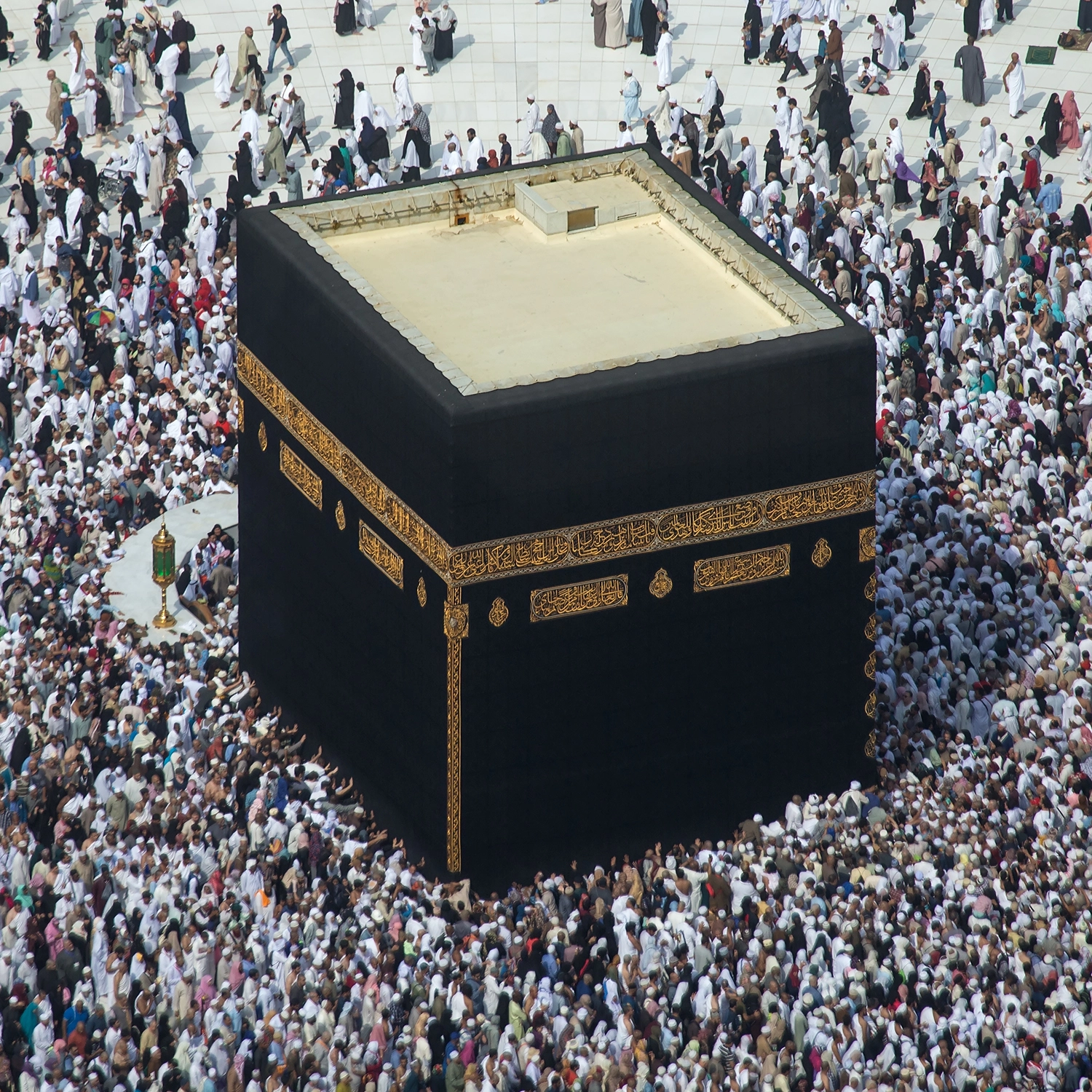
The division between Sunni and Shia Islam represents the most significant and enduring sectarian split in Islamic history, shaping the religious, political, and cultural development of Muslim societies for over fourteen centuries. This division, which originated in disputes over leadership succession following the death of Prophet Muhammad ﷺ in 632 CE, evolved from a political disagreement into distinct theological traditions, legal schools, ritual practices, and communal identities. Understanding the historical origins and development of this division is essential for comprehending Islamic history, the diversity of Muslim religious expression, and the complex dynamics of contemporary Muslim societies.
The Sunni-Shia split did not emerge suddenly as a fully formed sectarian division but developed gradually over several centuries through a complex process involving political conflicts, theological debates, legal developments, and the formation of distinct communal identities. The initial disagreement over who should succeed the Prophet as leader of the Muslim community was primarily political, concerning questions of legitimate authority and proper governance. Over time, however, this political dispute became intertwined with theological questions about the nature of religious authority, the interpretation of Islamic teachings, and the relationship between political power and religious legitimacy.
Today, Sunni Muslims constitute approximately 85-90% of the world's Muslim population, while Shia Muslims comprise approximately 10-15%, with significant populations in Iran, Iraq, Lebanon, Bahrain, Azerbaijan, and parts of South Asia. Despite their numerical difference, both traditions have produced rich intellectual, spiritual, and cultural heritages that have contributed immensely to Islamic civilization. Both traditions share fundamental beliefs in the oneness of God (tawhid), the prophethood of Muhammad ﷺ, the Quran as divine revelation, and the core practices of Islam including the Five Pillars. Their differences, while significant, exist within a shared Islamic framework.
The historical development of Sunni and Shia Islam cannot be understood in isolation from the broader political, social, and intellectual currents of Islamic history. The Rashidun Caliphate, the Umayyad Caliphate, the Abbasid Caliphate, and later Islamic dynasties all played roles in shaping sectarian identities and relations. The tragic events at Karbala, the development of Islamic law and theology, the rise of Sufi mysticism, and the political fortunes of various Muslim dynasties all influenced how Sunni and Shia identities developed and how the two communities related to each other.
The Succession Crisis: Origins of the Division
The origins of the Sunni-Shia division lie in the crisis of succession that emerged immediately after the death of Prophet Muhammad ﷺ in 632 CE (11 AH).
The nature of that crisis is itself understood differently by the two traditions, and the difference has to be stated before the events are narrated, because a neutral account cannot assume either position. In Sunni understanding, the Prophet left no explicit designation of a successor and no fixed mechanism for choosing one, so the community was required to determine the matter itself, and the gathering at Saqifah was a legitimate exercise of that responsibility. In Shia understanding, the Prophet did designate a successor — at Ghadir Khumm on the return from the farewell pilgrimage, and on other occasions — and the question was therefore not open. The reports bearing on this, including the Ghadir Khumm address and the hadith of the two weighty things, are identified in the references to this article, together with the collections in which they appear and the interpretive question on which the traditions diverge.
This article records the events on which the sources agree and attributes the competing readings of them to the traditions that hold them. It does not adjudicate between them, and readers should be aware that many accounts of this period, in both directions, present one tradition's reading as settled fact.
What is not in dispute is that the succession was contested at the time, that the contest was initially framed in terms of legitimate authority rather than doctrine, and that different visions of how the community should be governed set in motion a series of events that would eventually result in the Sunni-Shia split.
On the day of the Prophet's death, while Ali ibn Abi Talib, the Prophet's cousin and son-in-law, was occupied with preparing the Prophet's body for burial, a group of prominent companions gathered at Saqifah Bani Sa'idah, a meeting place in Medina, to discuss succession. The Ansar (Medinan Muslims) initially proposed that leadership should go to one of their own, arguing that they had provided refuge to the Prophet and the early Muslims. The Muhajirun (Meccan Muslims who had migrated to Medina) countered that leadership should remain with the Prophet's tribe, Quraysh.
Umar ibn al-Khattab proposed Abu Bakr, the Prophet's close companion and father-in-law, as the new leader. Abu Bakr was respected for his early conversion to Islam, his unwavering support of the Prophet, and his wisdom and piety. Umar's decisive action in offering bay'ah (pledge of allegiance) to Abu Bakr broke the deadlock, and most of those present followed suit. The next day, the pledge was renewed in the mosque before the entire Muslim community, and Abu Bakr became the first Khalifat Rasul Allah (Successor to the Messenger of God), or Caliph.
However, not everyone accepted this decision immediately. Ali ibn Abi Talib and some of his supporters believed that Ali had a stronger claim to leadership. Ali was not only the Prophet's cousin and son-in-law (married to Fatimah, the Prophet's daughter) but also one of the earliest converts to Islam and a distinguished warrior who had fought in all the major battles. Some supporters of Ali pointed to the event at Ghadir Khumm, where the Prophet had publicly praised Ali and said "Whoever I am his mawla (master/friend/protector), Ali is his mawla." Shia Muslims interpret this statement as the Prophet's designation of Ali as his successor, while Sunni Muslims understand it as an expression of Ali's virtues and close relationship with the Prophet, not as a designation of political succession.
Ali initially withheld his pledge of allegiance to Abu Bakr for several months, though accounts differ on exactly how long and under what circumstances he eventually gave it. This initial hesitation would later be interpreted by Shia Muslims as evidence that Ali believed he had been unjustly passed over for leadership. However, Ali did not actively rebel against Abu Bakr's caliphate, and he eventually reconciled with Abu Bakr and served the Muslim community during the reigns of the first three caliphs.
The succession of Abu Bakr, followed by Umar ibn al-Khattab and Uthman ibn Affan, established a pattern of leadership selection through consultation (shura) and community consensus. Each of these caliphs was chosen through different mechanisms—Abu Bakr through an emergency meeting and subsequent community acclamation, Umar through Abu Bakr's nomination, and Uthman through a consultative council appointed by Umar. This diversity of selection methods reflected the absence of a fixed constitutional procedure for succession, a situation that would contribute to later conflicts.
When Ali finally became the fourth caliph in 656 CE, following Uthman's assassination, his caliphate was immediately contested. Muawiyah ibn Abi Sufyan, the governor of Syria and a relative of Uthman, refused to recognize Ali's authority and demanded that Ali punish Uthman's killers. This led to the Battle of Siffin in 657 CE, a conflict that would have profound consequences for the development of Islamic sectarianism.
The Battle of Siffin ended inconclusively with an agreement to arbitration, a decision that led to the emergence of the Kharijites, a group that rejected both Ali and Muawiyah and developed their own distinct theology. The arbitration failed to resolve the conflict, and Ali's authority remained contested until his assassination in 661 CE by a Kharijite. After Ali's death, Muawiyah established himself as caliph, founding the Umayyad Caliphate and transforming the caliphate from an elective office into a hereditary monarchy.
The Tragedy of Karbala: Crystallization of Shia Identity
The events at Karbala in 680 CE (61 AH) represent the most traumatic and defining moment in Shia history, transforming what had been primarily a political dispute into a profound religious and emotional divide. The Battle of Karbala, in which Husayn ibn Ali, the grandson of Prophet Muhammad ﷺ and son of Ali and Fatimah, was killed along with most of his family and companions by the army of the Umayyad caliph Yazid I, became the central narrative of Shia Islam, shaping Shia theology, ritual practice, and communal identity.
After Muawiyah's death in 680 CE, his son Yazid succeeded him as caliph, consolidating the Umayyad dynasty's hereditary rule. Many Muslims, including Husayn, refused to recognize Yazid's legitimacy, viewing him as unworthy of the caliphate due to his reputation for impiety and his family's history of opposition to the Prophet. When the people of Kufa in Iraq invited Husayn to come to their city and lead a revolt against Yazid, Husayn decided to travel from Medina to Kufa with a small group of family members and supporters.
Yazid's governor in Iraq, Ubayd Allah ibn Ziyad, learned of Husayn's journey and sent an army to intercept him. On the 10th of Muharram (the day known as Ashura), Husayn's small band of approximately 72 men, women, and children were surrounded by a much larger Umayyad force near the town of Karbala. Despite being vastly outnumbered and cut off from water in the desert heat, Husayn refused to pledge allegiance to Yazid. In the battle that followed, Husayn and almost all the men in his party were killed. The women and children, including Husayn's sister Zaynab bint Ali and his son Ali ibn Husayn (later known as Zayn al-Abidin), were taken captive and paraded through various cities before eventually being released.
The martyrdom of Husayn at Karbala became the defining narrative of Shia Islam. For Shia Muslims, Husayn's stand at Karbala represents the ultimate sacrifice in defense of truth and justice against tyranny and oppression. Husayn's refusal to compromise his principles, even in the face of certain death, established a model of righteous resistance that has inspired Shia Muslims throughout history. The tragedy of Karbala is commemorated annually during the month of Muharram, particularly on the day of Ashura, through mourning rituals, passion plays (ta'ziyeh), and processions that reenact the events of Karbala.
The commemoration of Ashura and the mourning for Husayn became central to Shia religious practice and communal identity. These rituals serve multiple functions: they keep alive the memory of Husayn's sacrifice, they express grief and solidarity with the suffering of the Prophet's family, they reinforce Shia identity and community bonds, and they provide a framework for understanding suffering and injustice in the world. The emotional intensity of Ashura commemorations, with their emphasis on grief, sacrifice, and resistance to oppression, distinguishes Shia religious practice from Sunni practice and has been a source of both communal strength and sectarian tension.
The events at Karbala also established the concept of martyrdom (shahadah) as central to Shia theology and identity. While martyrdom is honored in all Islamic traditions, it holds a particularly important place in Shia Islam, where the suffering and martyrdom of the Imams and their followers is seen as redemptive and as a model for believers. The willingness to sacrifice oneself for truth and justice, following Husayn's example, became a defining characteristic of Shia religious consciousness.
The aftermath of Karbala saw the development of a distinct Shia community that viewed the descendants of Ali and Fatimah through Husayn (known as Sayyids or Alids) as the rightful leaders of the Muslim community. This community developed its own understanding of Islamic history, its own interpretation of Islamic teachings, and its own religious practices. While Shia Muslims remained a minority within the broader Muslim community, they maintained their distinct identity and continued to advocate for the rights of the Prophet's family.
Theological and Legal Divergence: Developing Distinct Traditions
As the Sunni and Shia communities developed separately over the centuries following Karbala, they evolved distinct theological doctrines, legal methodologies, and religious practices. While both traditions remained firmly within the Islamic framework and shared fundamental beliefs, significant differences emerged in their understanding of religious authority, their interpretation of Islamic teachings, and their approach to religious law and practice.
The most fundamental theological difference between Sunni and Shia Islam concerns the question of religious authority after the Prophet. Sunni Islam developed the concept of the caliphate as a political institution, with the caliph serving as the political and military leader of the Muslim community but not possessing any special religious authority beyond that of other qualified scholars. Religious authority in Sunni Islam is diffused among the community of scholars (ulama), who interpret Islamic law and theology through consensus (ijma) and analogical reasoning (qiyas) based on the Quran and Hadith.
Shia Islam, by contrast, developed the doctrine of the Imamate, which holds that leadership of the Muslim community should be vested in Imams who are descendants of the Prophet through Ali and Fatimah. According to Shia theology, these Imams possess special knowledge and spiritual authority inherited from the Prophet, making them the only legitimate interpreters of Islamic teachings. The Imams are believed to be divinely appointed and infallible (ma'sum) in matters of religion, though not prophets. This doctrine of the Imamate represents the most significant theological difference between Sunni and Shia Islam.
The largest Shia group, Twelver Shia (Ithna Ashari), recognizes twelve Imams, beginning with Ali ibn Abi Talib and ending with Muhammad al-Mahdi, who is believed to have gone into occultation (ghayba) in 874 CE and will return as the Mahdi to establish justice on Earth. During the period of occultation, religious authority is exercised by qualified scholars (mujtahids or ayatollahs) who serve as representatives of the Hidden Imam. Other Shia groups, such as the Ismailis and Zaydis, recognize different lines of Imams and have developed their own distinct theologies.
In Islamic law (fiqh), Sunni and Shia traditions developed different methodologies and reached different conclusions on various legal issues. Sunni Islam developed four major schools of law (madhahib): Hanafi, Maliki, Shafi'i, and Hanbali, each with its own methodology and body of legal rulings. These schools recognize each other as legitimate and allow Muslims to follow any of them. Shia Islam developed its own legal tradition, with Twelver Shia following the Ja'fari school of law, named after the sixth Imam, Ja'far al-Sadiq.
The differences in legal methodology between Sunni and Shia schools stem partly from different approaches to hadith authentication and different sources of legal authority. Sunni legal schools rely on hadith collections that include reports from all the Prophet's companions, while Shia legal tradition gives priority to hadith transmitted through the Imams and the Prophet's family. Shia law also recognizes the authority of the Imams' teachings and rulings, which Sunni law does not. These methodological differences lead to variations in legal rulings on issues ranging from ritual practices to family law to commercial transactions.
In ritual practice, several differences distinguish Sunni and Shia Muslims. In prayer, Shia Muslims typically combine the five daily prayers into three prayer times (though the five prayers are still performed), while Sunni Muslims perform them at five separate times. Shia Muslims place their foreheads on a small clay tablet (turbah) during prostration, often made from the soil of Karbala, while Sunni Muslims prostrate directly on the prayer mat or ground. The call to prayer (adhan) includes different phrases in Sunni and Shia traditions. These ritual differences, while not theologically fundamental, serve as visible markers of sectarian identity.
The concept of temporary marriage (mut'ah) represents another significant difference. Shia Islam permits temporary marriage contracts with specified duration and compensation, viewing this as a legitimate form of marriage that was practiced during the Prophet's time. Sunni Islam considers temporary marriage to have been prohibited by the Prophet and does not recognize it as legitimate. This difference reflects broader divergences in legal methodology and interpretation of prophetic traditions.
In theology, Shia Islam developed distinct doctrines regarding divine justice, free will, and the nature of faith. Shia theology, influenced by Mu'tazilite rationalism, emphasizes divine justice and human free will, holding that God's justice requires that humans have genuine freedom to choose their actions. Sunni theology, particularly in the Ash'ari school that became dominant, emphasizes divine omnipotence and predestination, though it also affirms human responsibility. These theological differences, while subtle, reflect different approaches to reconciling divine sovereignty with human agency.
Political Developments and Sectarian Consolidation
The political history of the Islamic world played a crucial role in shaping Sunni-Shia relations and in consolidating sectarian identities. Various dynasties and political movements aligned themselves with either Sunni or Shia Islam, and political conflicts often took on sectarian dimensions. The rise and fall of Shia and Sunni dynasties, the persecution and patronage of different sectarian communities, and the use of sectarian identity for political purposes all influenced how Sunni and Shia identities developed and how the two communities related to each other.
The Umayyad Caliphate (661-750 CE) was firmly Sunni in orientation and often hostile to Shia movements. The Umayyads viewed Alid claims to leadership as threats to their rule and suppressed various Shia revolts. The public cursing of Ali from mosque pulpits, a practice instituted by Muawiyah and continued by later Umayyad caliphs, deeply offended Shia Muslims and contributed to sectarian animosity. The Umayyad period saw the consolidation of Sunni political dominance and the marginalization of Shia communities.
The Abbasid Revolution of 750 CE, which overthrew the Umayyads, initially raised hopes among Shia Muslims that the new dynasty would be more favorable to their cause. The Abbasids had gained support by appealing to those dissatisfied with Umayyad rule, including many Shia sympathizers. However, once in power, the Abbasids established their own Sunni caliphate and proved no more willing than the Umayyads to recognize Alid claims to leadership. The Abbasid period saw continued Shia revolts and the development of Shia theology and law, but Shia Muslims remained politically marginalized.
The 10th century witnessed the rise of several Shia dynasties that challenged Sunni political dominance. The Fatimid Caliphate, established in North Africa in 909 CE and later ruling Egypt, was an Ismaili Shia dynasty that claimed descent from Fatimah and Ali. The Fatimids established a rival caliphate to the Sunni Abbasids, ruling over a significant portion of the Islamic world for over two centuries. The Buyid dynasty, which controlled much of Persia and Iraq in the 10th and 11th centuries, was Twelver Shia and effectively controlled the Abbasid caliphs in Baghdad, though they allowed the Sunni caliphate to continue nominally.
The rise of these Shia dynasties led to increased sectarian tensions but also to periods of relative tolerance and intellectual exchange. The Fatimid period in Egypt, for example, saw the establishment of Al-Azhar University, which, though founded by a Shia dynasty, would later become the premier institution of Sunni learning. The Buyid period witnessed flourishing of both Sunni and Shia scholarship, with scholars from both traditions contributing to Islamic intellectual life.
The Safavid dynasty's establishment in Persia in 1501 CE represented a watershed moment in Sunni-Shia history. Shah Ismail I made Twelver Shia Islam the official religion of his empire, forcibly converting the predominantly Sunni population of Persia to Shia Islam. This created, for the first time, a major state with Shia Islam as its official religion and established the geographical basis for the modern Sunni-Shia divide, with Persia (Iran) becoming the heartland of Shia Islam. The Safavid-Ottoman rivalry, which pitted a Shia empire against a Sunni empire, took on strong sectarian dimensions and contributed to the hardening of sectarian boundaries.
The Ottoman Empire, which ruled much of the Arab world from the 16th to the early 20th century, was firmly Sunni and often viewed Shia Muslims with suspicion, particularly given the rivalry with Safavid Persia. However, the Ottomans generally tolerated Shia communities within their empire, and sectarian relations varied depending on time and place. The modern nation-states that emerged after the collapse of the Ottoman Empire inherited complex sectarian demographics and tensions that continue to shape Middle Eastern politics.
Contemporary Sunni-Shia Relations: Challenges and Opportunities
In the contemporary world, Sunni-Shia relations are shaped by a complex interplay of religious, political, social, and geopolitical factors. While the vast majority of Sunni and Shia Muslims live peacefully together and many Muslims emphasize the common ground between the two traditions, sectarian tensions persist in some regions and have been exacerbated by political conflicts, foreign interventions, and the rise of extremist movements that exploit sectarian divisions for political purposes.
The Islamic Revolution in Iran in 1979, which established a Shia Islamic republic, had profound implications for Sunni-Shia relations. The revolution inspired Shia communities throughout the Muslim world and challenged the political dominance of Sunni-ruled states. The rivalry between Iran and Saudi Arabia, which has taken on strong sectarian dimensions, has contributed to sectarian tensions throughout the Middle East. Both countries have supported sectarian movements and parties in other countries, contributing to the sectarianization of regional conflicts.
The Iraq War of 2003 and its aftermath dramatically altered the sectarian balance in Iraq, bringing the Shia majority to power after decades of Sunni-dominated rule under Saddam Hussein. The subsequent sectarian violence in Iraq, including the rise of extremist groups like Al-Qaeda in Iraq and later ISIS, demonstrated how political instability and foreign intervention can inflame sectarian tensions. The Syrian civil war, the conflict in Yemen, and tensions in Bahrain and Lebanon have all taken on sectarian dimensions, though these conflicts are driven by complex political, economic, and social factors rather than purely religious differences.
Extremist groups like ISIS have deliberately sought to inflame Sunni-Shia tensions, attacking Shia civilians and holy sites and declaring Shia Muslims to be apostates. These extremist movements represent a tiny minority of Sunni Muslims and are rejected by mainstream Sunni scholars and institutions, but their actions have contributed to sectarian fear and mistrust. Similarly, some Shia militant groups have engaged in sectarian violence against Sunni civilians, further exacerbating tensions.
Despite these challenges, there are also positive developments in Sunni-Shia relations. Many Muslim scholars and leaders from both traditions emphasize the common ground between Sunni and Shia Islam and call for unity and mutual respect. The Amman Message of 2004, endorsed by hundreds of Muslim scholars from both traditions, affirmed the legitimacy of different Islamic schools of thought and called for mutual recognition and respect. Various interfaith and intra-faith dialogue initiatives bring together Sunni and Shia scholars to discuss theological differences and work toward greater understanding.
In many Muslim-majority countries, Sunni and Shia Muslims live together peacefully, intermarry, and cooperate in various spheres of life. In countries like Lebanon, Iraq, and Bahrain, despite political tensions, many individuals maintain cross-sectarian friendships and business relationships. The emphasis on shared Islamic values, common challenges facing Muslim communities, and the rejection of extremism by mainstream religious authorities provide a basis for improved Sunni-Shia relations.
One observation from the scholarly literature belongs here. Specialists on the region generally assess the sectarian framing of these conflicts as a consequence of political competition rather than its cause: the disputes concern territory, resources and state power, and sectarian identity is mobilised to organise support for them. That does not make the sectarian dimension unreal in its effects, but it bears directly on how the modern period relates to the seventh-century origins with which this article is concerned. The two are connected by a long chain of intervening history rather than by direct continuity, and accounts that read present conflicts straight back onto the succession dispute of 632 CE compress fourteen centuries out of the picture.
The Development of Distinct Religious Practices and Rituals
Beyond theological and legal differences, Sunni and Shia Islam developed distinct ritual practices and religious observances that serve as visible markers of sectarian identity and reflect different understandings of Islamic spirituality and community. These ritual differences, while not fundamental to Islamic faith, have become important aspects of sectarian identity and contribute to the distinctive religious cultures of Sunni and Shia communities. Understanding these ritual differences provides insight into how theological and historical differences manifest in daily religious practice.
The most visible ritual difference concerns prayer practices. While both Sunni and Shia Muslims perform the five daily prayers prescribed in Islam, there are differences in how these prayers are performed and when they are offered. Shia Muslims typically combine the five prayers into three prayer times—performing zuhr and asr prayers together in the early afternoon, and maghrib and isha prayers together in the evening, while fajr is performed separately at dawn. Sunni Muslims typically perform the five prayers at five separate times throughout the day, though combining prayers is permitted in certain circumstances such as travel or illness. This difference in prayer timing reflects different interpretations of prophetic traditions and different legal methodologies.
During prayer, Shia Muslims place their foreheads on a small clay tablet (turbah) during prostration, often made from the soil of Karbala or other holy sites. This practice is based on hadith traditions indicating that the Prophet prostrated on earth or natural materials rather than on carpets or manufactured items. Sunni Muslims typically prostrate directly on prayer mats or on the ground, viewing the use of a turbah as an innovation. While this difference might seem minor, the turbah has become a powerful symbol of Shia identity, and its use in prayer serves as a visible marker of sectarian affiliation.
The call to prayer (adhan) includes different phrases in Sunni and Shia traditions. The Shia adhan includes the phrase "Ashhadu anna Aliyyan waliyyu Allah" (I bear witness that Ali is the friend/guardian of God), reflecting the Shia emphasis on Ali's special status. Some Shia communities also include "Hayya 'ala khayr al-'amal" (Come to the best of deeds) in the adhan. Sunni Muslims do not include these phrases in the adhan, viewing them as innovations not practiced by the Prophet. These differences in the adhan, heard five times daily from mosques, serve as audible markers of sectarian identity and reflect different understandings of Islamic tradition.
The commemoration of Ashura, the 10th day of Muharram, represents perhaps the most significant ritual difference between Sunni and Shia Islam. For Shia Muslims, Ashura is a day of intense mourning for the martyrdom of Husayn at Karbala. Shia communities organize elaborate mourning rituals including processions, passion plays (ta'ziyeh) reenacting the events of Karbala, recitations of elegies (marthiya), and in some communities, acts of self-flagellation or chest-beating (matam) as expressions of grief and solidarity with Husayn's suffering. These Ashura commemorations are central to Shia religious identity and serve to reinforce communal bonds and transmit the narrative of Karbala to new generations.
Sunni Muslims also recognize Ashura as a significant day, but their observance is very different. Based on hadith traditions indicating that the Prophet fasted on Ashura, many Sunni Muslims observe the day through voluntary fasting. Some Sunni communities hold religious gatherings to discuss the significance of Karbala and honor Husayn's sacrifice, but the intense mourning rituals characteristic of Shia observance are not part of Sunni practice. This difference in Ashura observance reflects the different roles that the Karbala narrative plays in Sunni and Shia religious consciousness.
Pilgrimage practices also show some differences between Sunni and Shia traditions. While both communities perform the Hajj pilgrimage to Mecca according to essentially the same rituals, Shia Muslims also place great emphasis on pilgrimage (ziyara) to the shrines of the Imams and other holy figures. The shrines of Ali in Najaf, Husayn in Karbala, and the eighth Imam Reza in Mashhad are major pilgrimage destinations for Shia Muslims, attracting millions of visitors annually. These shrine pilgrimages, while not obligatory like Hajj, are highly meritorious in Shia tradition and serve important spiritual and communal functions. Sunni Muslims generally do not emphasize shrine visitation to the same degree, and some Sunni scholars view elaborate shrine veneration as problematic, though many Sunni Muslims do visit the tombs of saints and holy figures.
The practice of temporary marriage (mut'ah) represents another significant difference. Shia Islam permits temporary marriage contracts with specified duration and compensation, viewing this as a legitimate form of marriage that was practiced during the Prophet's time and never prohibited. Sunni Islam considers temporary marriage to have been prohibited by the Prophet and does not recognize it as legitimate. This difference reflects broader divergences in legal methodology and interpretation of prophetic traditions, and it has social implications for how marriage and family relationships are understood and regulated in Sunni and Shia communities.
Religious leadership structures differ significantly between Sunni and Shia traditions. In Sunni Islam, religious authority is diffused among the community of scholars (ulama), with no single individual or institution possessing supreme religious authority. Religious scholars gain authority through their learning, piety, and recognition by other scholars and the community. In Twelver Shia Islam, religious authority is more hierarchical, with senior scholars (ayatollahs and grand ayatollahs) serving as sources of emulation (maraji' al-taqlid) whose legal rulings are followed by their followers. The most senior grand ayatollahs possess considerable religious authority, and in some cases (as in contemporary Iran) religious scholars exercise direct political power.
The concept of religious dissimulation (taqiyya) is more developed in Shia Islam than in Sunni Islam. Taqiyya permits concealing one's true religious beliefs when under threat of persecution, a practice that developed during periods when Shia Muslims faced persecution from Sunni authorities. While Sunni Islam also recognizes that faith can be concealed under extreme duress, the concept is more systematically developed in Shia jurisprudence and theology. This difference reflects the historical experience of Shia Muslims as a minority often facing persecution, and it has sometimes been misunderstood or misrepresented by critics as permitting deception in general rather than specifically in situations of religious persecution.
Funeral and mourning practices show some variations between Sunni and Shia traditions. Both communities follow Islamic prescriptions for washing and shrouding the deceased and for burial, but there are differences in specific practices and in the duration and nature of mourning periods. Shia communities often hold elaborate mourning gatherings (majalis) that include recitations of elegies and discussions of religious topics, practices that are less emphasized in Sunni tradition. These differences in mourning practices reflect broader differences in religious culture and in the role of communal religious gatherings.
The veneration of the Prophet's family (Ahl al-Bayt) is emphasized more strongly in Shia Islam than in Sunni Islam, though both traditions honor the Prophet's family. Shia Muslims invoke blessings on the Prophet's family in their prayers and religious formulas, celebrate the birthdays of the Imams, and maintain a rich tradition of poetry and literature praising the Ahl al-Bayt. While Sunni Muslims also respect and honor the Prophet's family, this veneration is not as central to Sunni religious practice and identity as it is in Shia Islam. This difference reflects the theological importance of the Imams in Shia Islam and the historical development of Shia identity around loyalty to the Prophet's family.
Intellectual and Scholarly Traditions: Philosophy, Theology, and Mysticism
The intellectual and scholarly traditions of Sunni and Shia Islam, while sharing common foundations in the Quran and prophetic traditions, developed distinctive characteristics in philosophy, theology, and mysticism. These intellectual differences reflect different approaches to reason and revelation, different understandings of religious authority, and different historical experiences. Understanding these intellectual traditions provides insight into the diversity of Islamic thought and the richness of Islamic intellectual heritage.
In Islamic philosophy (falsafa), both Sunni and Shia scholars engaged with Greek philosophical traditions, particularly the works of Aristotle and Plato, and developed sophisticated philosophical systems. However, the relationship between philosophy and theology developed differently in the two traditions. In Sunni Islam, philosophy faced increasing opposition from religious scholars, particularly after al-Ghazali's (1058-1111) critique of the philosophers in his work "The Incoherence of the Philosophers." While philosophical thinking continued in Sunni Islam, it became increasingly marginalized and was often viewed with suspicion by religious authorities.
In Shia Islam, particularly in the Twelver tradition, philosophy maintained a more prominent place in religious intellectual life. Shia scholars developed a distinctive philosophical tradition that integrated Aristotelian philosophy with Islamic theology and mysticism. The School of Isfahan, which flourished in Safavid Persia, created a sophisticated synthesis of philosophy, theology, and mysticism that continues to influence Shia intellectual life. Figures like Mulla Sadra (1571-1640) developed complex philosophical systems that addressed fundamental questions about existence, knowledge, and the relationship between the material and spiritual realms.
In theology (kalam), Sunni and Shia traditions developed different schools and emphases. Sunni theology was dominated by the Ash'ari and Maturidi schools, which emphasized divine omnipotence and predestination while affirming human responsibility. These schools developed in response to the Mu'tazilite emphasis on divine justice and human free will, which was eventually rejected by mainstream Sunni theology. Shia theology, by contrast, was more influenced by Mu'tazilite rationalism and emphasized divine justice and human free will. This theological difference reflects different approaches to reconciling divine sovereignty with human agency and different understandings of God's relationship to creation.
The doctrine of the Imamate, central to Shia theology, has no parallel in Sunni theology. Shia theological works devote extensive attention to explaining and defending the Imamate, arguing for the necessity of divinely appointed Imams to guide the community and interpret Islamic teachings. This theological emphasis on the Imamate shapes Shia approaches to other theological questions, including the nature of religious authority, the interpretation of scripture, and the relationship between reason and revelation. Sunni theology, lacking the concept of the Imamate, developed different frameworks for understanding religious authority and scriptural interpretation.
In mysticism (tasawwuf or Sufism), both Sunni and Shia Muslims have rich traditions, though the relationship between Sufism and mainstream religious practice differs somewhat between the two communities. Sunni Sufism developed elaborate organizational structures through Sufi orders (tariqas), each with its own spiritual lineage, practices, and teachings. These Sufi orders became important institutions in Sunni Islam, providing spiritual guidance, social services, and communal identity. While some Sunni religious scholars viewed Sufism with suspicion, particularly its more ecstatic manifestations, Sufism became deeply integrated into Sunni religious life in many regions.
Shia Sufism, while also present, developed differently due to the central role of the Imams in Shia spirituality. The Imams themselves are viewed as perfect spiritual guides, and devotion to the Imams serves some of the spiritual functions that Sufism serves in Sunni Islam. Nevertheless, Shia Sufism did develop, particularly in Persia, and some Shia scholars integrated Sufi concepts and practices into their spiritual teachings. The relationship between Sufism and Shia Islam has been complex, with some Shia scholars embracing Sufi spirituality while others viewing it as unnecessary given the spiritual guidance provided by the Imams.
The development of Islamic law (fiqh) in Sunni and Shia traditions, while sharing common methodological foundations, produced different legal schools with different rulings on various issues. Sunni Islam developed four major schools of law (Hanafi, Maliki, Shafi'i, Hanbali), each with its own methodology and body of legal rulings. These schools recognize each other as legitimate and allow Muslims to follow any of them. Shia Islam developed its own legal tradition, with Twelver Shia following the Ja'fari school of law. The differences in legal methodology between Sunni and Shia schools stem partly from different approaches to hadith authentication and different sources of legal authority.
The role of reason ('aql) in deriving legal rulings differs between Sunni and Shia legal traditions. Shia jurisprudence gives reason a more prominent role, viewing it as an independent source of legal knowledge alongside the Quran, Sunnah, and consensus. Sunni jurisprudence, while also recognizing the role of reason, generally gives it a more limited role, emphasizing textual sources and analogical reasoning (qiyas) based on texts. This difference in the role of reason reflects broader differences in epistemology and in approaches to religious knowledge.
The concept of ijtihad (independent legal reasoning) developed differently in Sunni and Shia traditions. In Sunni Islam, there was a perception that "the gate of ijtihad" had closed after the formative period of Islamic law, with later scholars expected to follow (taqlid) the established schools rather than engage in independent reasoning. While this perception has been challenged by modern reformers, it influenced Sunni legal development for centuries. In Shia Islam, ijtihad remained open, with qualified scholars expected to engage in independent reasoning rather than merely following earlier authorities. This difference has implications for how the two traditions approach contemporary legal and ethical questions.
The interpretation of Islamic history and the evaluation of historical figures differ significantly between Sunni and Shia traditions. Sunni Muslims regard the first four caliphs — Abu Bakr, Umar, Uthman and Ali — as rightly guided, while acknowledging that serious conflicts occurred during the period. Shia Muslims hold that Ali was the successor designated by the Prophet, and that the caliphates preceding his were therefore not legitimate. These are competing accounts of the same events rather than disagreements about what occurred, and each is held on the basis of reports that the tradition holding it regards as sound.
Conclusion
The Sunni-Shia division began as a dispute over who should lead the Muslim community after the Prophet's death, and the two traditions differ over whether that question was left open or had already been settled by the Prophet himself. It did not begin as a disagreement about God, revelation, or prophethood, and it has never become one: both traditions affirm the oneness of God, the prophethood of Muhammad, the Qur'an as revelation, and the obligations of Islamic practice.
What developed from the original dispute was a divergence in religious authority, and it is there that the substantive differences lie. The Shia doctrine of the Imamate vests authoritative interpretation in designated figures from the Prophet's family; Sunni Islam locates it in the consensus and scholarship of the community as a whole. From that single difference follow most of the others treated above — the extent of the Sunnah, the standing of particular transmitters, the structure of legal reasoning, and the ritual calendar.
The consolidation of the two traditions as distinct communities took centuries and was shaped throughout by political circumstance: the Umayyad and Abbasid settlements, Karbala and its commemoration, the Buyid and Fatimid states, and the Safavid conversion of Iran. Sectarian identity in any given period has generally been sharpened or softened by the political conditions of that period rather than by developments in doctrine, and the same observation applies to the modern era. Understanding the division therefore requires attending to fourteen centuries of intervening history, not only to the events of 632 CE.
The Qur'anic verses most often cited by those seeking to limit the consequences of the division are the injunction to hold together and not become divided (Quran 3:103) and the description of the believers as conducting their affairs by consultation (Quran 42:38). Both traditions cite them.
References and Further Reading
Primary Islamic Sources
- Quran, Surah Al-Imran (3:103) — "And hold firmly to the rope of Allah all together and do not become divided."
- Quran, Surah Ash-Shura (42:38) — "And those who have responded to their Lord and established prayer and whose affair is [determined by] consultation among themselves."
- Sahih al-Bukhari, Book of Virtues of the Companions, Hadith 3659 — "The best of people is my generation, then those who follow them, then those who follow them."
- Sahih al-Bukhari, Book of Merits of the Companions, Hadith 3706 — The Prophet to Ali: "You are to me as Aaron was to Moses, except there is no prophet after me."
- Sahih Muslim, Book of Virtues of the Companions, Hadith 2408 — the Hadith of the Two Weighty Things (thaqalayn), narrated from Zayd ibn Arqam: the Book of God, and the Prophet's charge concerning the people of his household. Delivered on the return from the farewell pilgrimage
- Jami' at-Tirmidhi 3713; also Sunan Ibn Majah and Musnad Ahmad — the declaration at Ghadir Khumm: "Whoever I am his mawla, Ali is his mawla." This report is not in Sahih al-Bukhari or Sahih Muslim, to which it is often attributed. The Arabic mawla carries a range of senses, and Sunni and Shia scholarship read it differently in this setting
- Sahih Muslim, Book of Virtues of the Companions, Hadith 2404 — The status of Ali ibn Abi Talib.
- Nahj al-Balagha (Peak of Eloquence), attributed to Ali ibn Abi Talib. Compiled by al-Sharif al-Radi (d. 1016 CE).
Classical Islamic Sources
- Al-Tabari, Muhammad ibn Jarir. Tarikh al-Rusul wa al-Muluk, sections on the Saqifah conference and early succession. Cairo: Dar al-Ma'arif, 1960. [Original c. 915 CE]
- Ibn Hisham, Abd al-Malik. Al-Sirah al-Nabawiyyah, final sections on the Prophet's death and succession. [Original c. 833 CE]
- Al-Shahrastani, Muhammad ibn Abd al-Karim. Al-Milal wa al-Nihal (Book of Sects and Creeds). Beirut: Dar al-Ma'rifah, 1975. [Original c. 1127 CE]
- Al-Ash'ari, Abu al-Hasan. Maqalat al-Islamiyyin, sections on the early theological-political divisions. Wiesbaden: Franz Steiner, 1963. [Original c. 935 CE]
- Ibn Khaldun, Abd al-Rahman. Al-Muqaddimah, sections on the caliphate and imamate. [Original c. 1377 CE]
Academic and Scholarly Sources
- Madelung, Wilferd. The Succession to Muhammad: A Study of the Early Caliphate. Cambridge: Cambridge University Press, 1997.
- Halm, Heinz. Shi'ism. 2nd ed. Edinburgh: Edinburgh University Press, 2004.
- Lapidus, Ira M. A History of Islamic Societies. 3rd ed. Cambridge: Cambridge University Press, 2014.
- Jafri, S. Husain M. The Origins and Early Development of Shi'a Islam. Oxford: Oxford University Press, 2000.
- Hodgson, Marshall G.S. The Venture of Islam. 3 vols. Chicago: University of Chicago Press, 1974.
- Nasr, Seyyed Vali Reza. The Shia Revival: How Conflicts within Islam Will Shape the Future. New York: W.W. Norton, 2006.
- Dakake, Maria Massi. The Charismatic Community: Shi'ite Identity in Early Islam. Albany: SUNY Press, 2007.
Further Reading
- Hazleton, Lesley. After the Prophet: The Epic Story of the Shia-Sunni Split in Islam. New York: Doubleday, 2009.
- Momen, Moojan. An Introduction to Shi'i Islam. New Haven: Yale University Press, 1985.
- Berkey, Jonathan P. The Formation of Islam: Religion and Society in the Near East, 600–1800. Cambridge: Cambridge University Press, 2003.
- Donner, Fred M. Muhammad and the Believers: At the Origins of Islam. Cambridge: Harvard University Press, 2010.
Mentioned In
9 articles reference this topic
More from Rashidun Caliphate
Ali ibn Abi Talib
The fourth and final Rashidun Caliph (656-661 CE), cousin and son-in-law of Prophet Muhammad. Known for his courage, eloquence, and commitment to justice. His caliphate was marked by civil wars (First Fitna) that led to the permanent division of the Muslim community.
Battle of Nahrawan: Ali's Conflict with the Kharijites
The Battle of Nahrawan (658 CE) was fought between Caliph Ali and the Kharijites who defected after the arbitration at Siffin. This battle marked the emergence of the Kharijite movement and led to Ali's assassination.
Battle of Siffin: The Defining Conflict of the First Islamic Civil War
The Battle of Siffin (657 CE) was a major confrontation between Caliph Ali and Muawiyah that ended with controversial arbitration, marking a turning point that led to the emergence of the Kharijites and deepening sectarian divisions.
Battle of the Camel: The First Islamic Civil War
The Battle of the Camel (656 CE) was the first major military confrontation between Muslims, fought near Basra between Caliph Ali and forces led by Aisha, Talha, and Zubayr. This battle marked the beginning of the First Fitna.