Tipu Sultan: The Tiger of Mysore
Tipu Sultan (1750-1799), the Tiger of Mysore, was a military innovator, administrative reformer, and one of the most formidable opponents of British colonial expansion in India, whose resistance and death at Srirangapatna made him an enduring symbol of defiance.
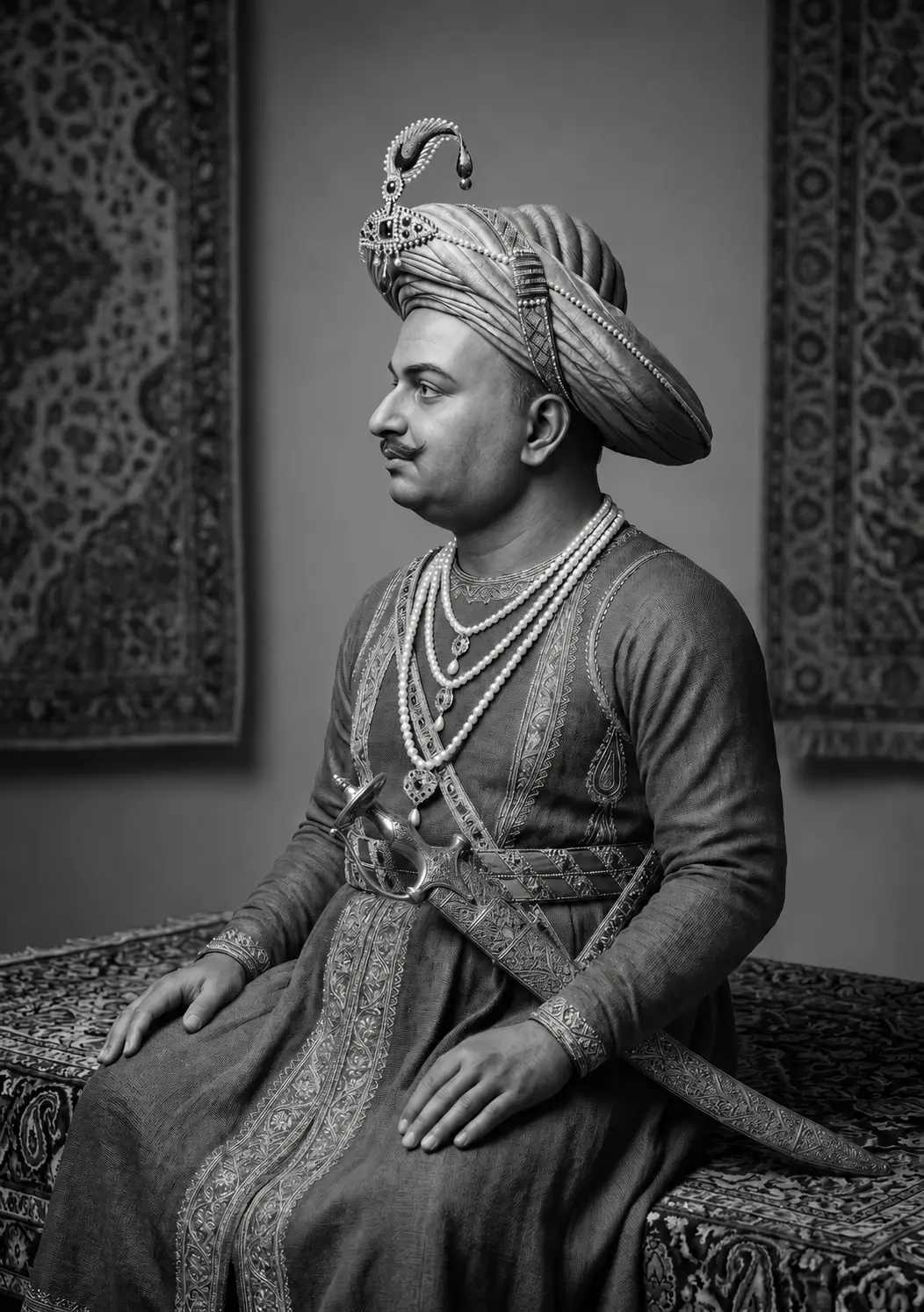
In the turbulent landscape of eighteenth-century India, where the decline of the Mughal Empire had created a patchwork of successor states and where European trading companies were rapidly transforming themselves into territorial powers, few rulers posed as sustained and determined a challenge to British colonial ambitions as Tipu Sultan of Mysore. Born in 1750 at Devanahalli, a fortified town north of modern Bangalore, and killed defending his island capital of Srirangapatna on 4 May 1799, Tipu compressed into his forty-nine years a remarkable career as military commander, administrative innovator, diplomatic strategist, and patron of technology and learning.
Tipu Sultan was the eldest son of Hyder Ali, the brilliant soldier-statesman who had risen from the ranks of the Mysorean military to become the effective ruler of the Kingdom of Mysore by the early 1760s. Where Hyder Ali was largely self-taught and operated through personal charisma and military genius, Tipu received a formal education that combined Islamic learning with practical sciences and multiple languages. This combination of inherited military talent and systematic education produced a ruler who was simultaneously a formidable battlefield commander and an innovative administrator capable of envisioning structural reforms.
The epithet Sher-e-Mysore — the Tiger of Mysore — was not merely a honorific but reflected Tipu's deliberate self-fashioning. The tiger motif pervaded every aspect of his rule: his throne was shaped as an octagonal tiger, his soldiers' uniforms bore tiger stripes, his personal sword carried tiger-headed pommels, and the famous mechanical organ known as Tipu's Tiger depicted a tiger mauling a European soldier. This systematic use of the tiger symbol represented both personal ferocity in warfare and the broader aspiration to protect his realm from colonial predation.
Tipu's significance in Indian and world history rests on several foundations. First, he was among the earliest Indian rulers to grasp fully the existential nature of the British East India Company's threat — understanding that this was not merely another rival power seeking tribute or territory but a fundamentally different kind of entity that aimed at complete domination. Second, his military innovations, particularly the development of iron-cased rockets far in advance of anything available in Europe, represented a genuine contribution to the global history of technology. Third, his administrative reforms — encompassing revenue systems, industrial policy, trade networks, and infrastructure — demonstrated a vision of state modernisation that anticipated many later developments. Fourth, his extensive diplomatic initiatives, reaching from Ottoman Constantinople to Revolutionary Paris to Kabul, revealed an understanding of international politics that was sophisticated by any contemporary standard.
Yet Tipu Sultan remains a contested figure. His military campaigns in Malabar, Coorg, and Mangalore generated lasting controversies. His relations with Hindu subjects and institutions present a complex picture that defies simple characterisation. The British, who were his implacable enemies, produced a vast polemical literature portraying him as a tyrannical bigot — literature that served obvious political purposes but cannot be entirely dismissed. Modern historiography has attempted to move beyond both hagiography and demonisation, examining Tipu within the political and military context of his time rather than through anachronistic moral frameworks.
What is beyond dispute is that Tipu Sultan chose to fight and die rather than submit to a subordinate alliance with the British — a choice that distinguishes him from many contemporary Indian rulers who accepted the Company's overlordship in exchange for nominal sovereignty. His death at the gates of Srirangapatna, sword in hand at the age of forty-eight, marked the end of the most serious indigenous military challenge to British expansion in southern India and opened the way for the Company's unchallenged dominance of the Deccan. Whether one views him primarily as a visionary patriot, a modernising despot, or a complex historical actor who combined genuine innovation with the ruthlessness common to eighteenth-century state-builders, Tipu Sultan remains an inescapable figure in the history of India's engagement with colonialism.
Ancestry and the Rise of the Family
The history of Tipu's family before it rose to prominence with his grandfather, Fath Muhammad, is largely obscure, though a family tradition, recorded by the contemporary court chronicler Kirmani, traced its descent to the Quraish of Mecca, holding that the family had arrived in India by sea at the end of the sixteenth century. Mohibbul Hasan's study of the sources treats this tradition with appropriate caution: he could find it corroborated in no other source, and considers it at least possible that the genealogy was constructed to bolster the dynastic prestige of Haidar and Tipu after the fact, though he does not rule out that it may be genuine. What is comparatively better attested is the family's more recent history. Fath Muhammad, Tipu's grandfather, entered military service first under the Nawab of Arcot, then briefly in Mysore, and finally under the Nawab of Sira, who placed him in command of the fort of Dodballapur; it was there, in 1721, that his son Haidar Ali was born, three years after an elder son, Shahbaz.
Fath Muhammad was killed in an armed conflict over the succession to the governorship of Sira, leaving his young family in difficulty: Haidar, then about five years old, and Shahbaz, about eight, were tortured by a rival claimant seeking to extract their father's debts, until their mother's appeal for help reached a cousin already established in Mysore's service, who intervened to secure their release. The widow and her sons then settled at Seringapatam under this cousin's protection, and it was there that Haidar Ali grew up and first learned the use of arms and horsemanship, before entering, with his brother, the service of a succession of patrons and eventually returning to Mysore, where his courage at the siege of Devanahalli in 1749 won him his first independent command. Later that year he took part in the Mysorean expedition sent to assist Nasir Jung in the succession struggle for the Nizamat of Hyderabad; when Nasir Jung was assassinated in December 1750, Haidar seized a portion of his treasure with the help of his own troops, and used the wealth to augment and begin training his forces with the assistance of French deserters — the beginning of the military and financial base from which he would go on to make himself the effective ruler of Mysore.
Early Life and Education
Tipu Sultan was born on 20 November 1750 (some sources give 10 November) at Devanahalli, a fortified town approximately thirty-five kilometres north of what is now Bangalore. His full name was Sultan Fateh Ali Khan Shahab, though he became universally known as Tipu Sultan — Tipu being a name derived from the Sufi saint Tipu Mastan Aulia of Arcot, at whose shrine Hyder Ali had prayed for a son. His mother was Fatima Fakhr-un-Nisa, a woman of considerable intelligence who exercised notable influence over both her husband and her son throughout her life.
The circumstances of Tipu's birth placed him at the intersection of several social currents. Hyder Ali was at this point still a military commander in the service of the Wodeyar dynasty of Mysore, though already rising rapidly through a combination of martial skill, political astuteness, and sheer ambition. The Devanahalli fort, where Tipu was born, had recently been captured by Hyder Ali's forces and represented the expanding territorial base from which Hyder would soon challenge and supplant the Wodeyar rulers themselves. Tipu thus grew up in a household defined by constant military activity, political manoeuvring, and the transformation of a military adventurer into a sovereign ruler.
Hyder Ali, despite his own limited formal education, was determined that his son should receive the most comprehensive training available. Tipu's education was entrusted to a series of distinguished tutors and covered an unusually broad curriculum. In languages, Tipu achieved proficiency in Kannada (the vernacular of Mysore), Urdu (the lingua franca of north Indian Muslim elites), Persian (the administrative and literary language of the Mughal world), Arabic (essential for Islamic scholarship), and French (increasingly important for diplomatic and military interactions with European powers). This multilingual competence was not merely decorative; Tipu actively used all these languages in governance, correspondence, and scholarship throughout his life.
His Islamic education included the study of the Quran, hadith literature, fiqh (jurisprudence), and Sufi devotional traditions. Tipu's religious formation was rooted in the Hanafi school of Islamic jurisprudence, which was predominant among South Asian Muslims, but he also demonstrated familiarity with other schools and traditions. His personal library, portions of which survived the fall of Srirangapatna, contained works on theology, mysticism, Quranic exegesis, and Islamic history, suggesting a genuinely engaged religious intellectual life rather than mere formal piety.
Beyond languages and theology, Tipu received extensive training in what might be called the practical sciences: mathematics, astronomy, geography, military engineering, horsemanship, and swordsmanship. The military training was naturally paramount. From an early age, Tipu accompanied his father on campaigns, observing the conduct of sieges, the management of cavalry, the deployment of artillery, and the complexities of supply and logistics. This practical education in the field was supplemented by more formal study of military texts and traditions.
Tipu's first significant military experience came remarkably early. At the age of fifteen, in 1766, he accompanied Hyder Ali during the invasion of Malabar on the western coast. By seventeen, he was given independent command of a cavalry detachment during the First Anglo-Mysore War (1767–1769). This conflict, which ended in Hyder Ali's dramatic march on Madras and the humiliating Treaty of Madras imposed on the British, provided the young Tipu with firsthand experience of both victory and the vulnerabilities of European military formations. He observed how the British infantry, for all its discipline, could be outmanoeuvred by mobile cavalry and harassed by irregular forces operating in difficult terrain.
During the 1770s, as Hyder Ali consolidated his control over Mysore and expanded into the Malabar coast, the Coorg highlands, and the Carnatic plain, Tipu served as one of his father's principal lieutenants. He commanded forces in multiple campaigns: against the Marathas in 1771, during the subjugation of various Malabar chiefs between 1773 and 1774, and against the Nizam of Hyderabad's forces in 1775. Each campaign added to his practical military education and established his reputation as a courageous and capable commander in his own right.
The relationship between father and son was complex. Hyder Ali was a dominating personality who demanded absolute obedience, and there is evidence of occasional friction. Yet Hyder also recognized Tipu's talents and progressively entrusted him with greater responsibilities. By the late 1770s, Tipu was effectively functioning as Hyder's chief military deputy, commanding the most important field operations while Hyder directed overall strategy. This apprenticeship under one of eighteenth-century India's most gifted military commanders gave Tipu a practical education that no amount of formal tutoring could have provided.
The cultural environment of Tipu's upbringing also deserves note. Hyder Ali's court, though lacking the refined literary traditions of older Muslim dynasties, was a cosmopolitan space where Hindu officials served alongside Muslims, where French military advisors rubbed shoulders with local generals, and where practical innovation was valued over social pedigree. This environment shaped Tipu's own approach to governance — pragmatic, meritocratic to a degree unusual for the period, and open to technological and institutional borrowing from any source.
Tipu's formative experiences also included direct observation of the devastation caused by warfare. The repeated Maratha raids into Mysore during the 1760s and 1770s — in which villages were burned, crops destroyed, and populations displaced — left a lasting impression on the young prince. These experiences appear to have strengthened his conviction that only a strong, well-organised military state could protect its population from external predation — a conviction that would drive his lifelong commitment to military modernisation and preparedness. The lesson of vulnerability — that weakness invited aggression — was perhaps the most fundamental inheritance from his father's struggles against multiple enemies simultaneously.
Tipu's personal character, as it developed during these formative years, combined several qualities that would define his later rule. He was deeply religious, maintaining regular prayers and religious observances even during military campaigns. He was intellectually curious, reading widely and engaging with new ideas and technologies. He was physically courageous — sometimes to the point of recklessness — and personally led cavalry charges throughout his military career. He was also capable of sustained concentration on administrative detail, as his later correspondence would demonstrate. These qualities, combined with the practical military education received at his father's side, produced a ruler of unusual versatility and determination.
Hyder Ali's Legacy and Tipu's Succession
The event that transformed Tipu from crown prince to sovereign was the death of Hyder Ali on 7 December 1782, during the Second Anglo-Mysore War. Hyder Ali died of a carbuncle — a cancerous tumour on his back — at his camp at Naraspur in the Chitoor district, while actively prosecuting what had become the most ambitious of his many wars. At the time of his death, Hyder was commanding a coalition that included French forces under the Bailli de Suffren at sea and various Indian allies on land, fighting simultaneously against the British, the Marathas, and the Nizam of Hyderabad. The war was at a critical juncture: Mysorean forces had won spectacular victories at Pollilur (1780) and elsewhere, but the British were far from defeated and the coalition against Mysore remained formidable.
Tipu was thirty-two years old when he received news of his father's death. He was at that moment commanding Mysorean forces on the Malabar coast, over three hundred kilometres from his father's camp. The transition of power was neither automatic nor uncontested. Hyder Ali had other sons and relatives, and the Mysorean state, which Hyder had essentially built through personal authority, lacked the established succession mechanisms of older dynasties. However, Tipu's combination of military reputation, his position as the eldest son, and the support of key military commanders enabled him to assume power rapidly and without significant opposition.
The immediate challenge facing the new sultan was the continuation of the Second Anglo-Mysore War. Tipu proved himself an able war leader, conducting campaigns in the Carnatic and along the western coast, and his first major action after his accession was the capture of the British-held hill fort of Bednur, entered on 28 April 1783. When his officials searched the surrendering garrison in the days that followed, having found the treasury already stripped by the British general and distributed among his own troops, they discovered that the soldiers had concealed pagodas by lining their knapsacks with gold, and — according to a captive later held at Tipu's court — that some had thrust coins down the throats of dogs and crammed them even into fowls to smuggle the wealth out; the search recovered some 40,000 pagodas from the officers alone. Tipu, his anger at this and at earlier breaches of the terms by the British commander Matthews aggravated by the discovery, had the garrison placed under guard and marched to Chitaldrug.
Tipu then turned to Mangalore, the principal port of South Kanara, arriving before it on 20 May 1783 and beginning what became one of the longest sieges in Indian military history. Within a week the besiegers had constructed eleven artillery emplacements, maintaining a constant bombardment while hurling stones of up to 150 pounds into the fort; the northern fortifications were entirely dismantled by 4 June, and a practicable breach appeared on the 7th. Two assaults in early July failed, and the monsoon rains further hampered progress, but by the end of July the walls had been destroyed on three sides and the approach trenches carried to the edge of the ditch. At this point news reached the besieging camp of the peace concluded in Europe between Britain and France, and rather than press the siege to a bloody conclusion, Tipu and the British commander, Major Campbell, negotiated a local truce: each side would exchange hostages, restrict the number of men held in the trenches and the fort, and permit provisioning under agreed limits, pending the outcome of wider negotiations. The siege thus ended not by a British relief in the field but by a diplomatic standstill: the truce restricted the garrison's commander to importing no more than ten to twelve days' provisions at a time from the surrounding country, and to no more than a month's supply of goods such as beef, salt, and liquor that could not be obtained locally, leaving the British position inside the fort straitened even as active fighting ceased, pending the peace that followed.
The Second Anglo-Mysore War concluded with the Treaty of Mangalore, signed on 11 March 1784. This treaty was notable as one of the last agreements between an Indian power and the British East India Company negotiated on terms of equality. Both sides agreed to restore conquests and release prisoners. The treaty represented neither victory nor defeat for either party, but it established Tipu's credentials as a ruler capable of fighting the British to a standstill — a significant achievement given that many Indian states had already been reduced to British dependence.
With peace secured, Tipu turned to consolidating his authority and implementing his vision for the Mysorean state. Unlike his father, who had ruled largely through personal authority and informal networks, Tipu sought to create more systematic administrative structures. He reorganised the provincial administration, reformed the revenue system, restructured the military, and initiated diplomatic contacts with foreign powers. These early years of peacetime administration (1784–1790) were among the most productive of his reign, allowing him to implement reforms that would define his legacy as a statesman rather than merely a warrior.
Tipu also worked to establish his legitimacy through both Islamic and local idioms. He assumed the title Padshah (emperor) and Nawab Tipu Sultan Bahadur, adopted grandiose royal titles, introduced a new calendar (the Mauludi calendar dating from the Prophet Muhammad's birth), struck new coinage, and renamed numerous places within his domains. These symbolic acts served both to distinguish his reign from his father's and to assert a sovereignty independent of the nominal Mughal suzerainty that earlier Mysorean rulers had acknowledged.
The question of Tipu's relationship to the Wodeyar dynasty — the Hindu royal house of Mysore that Hyder Ali had effectively supplanted — remained a sensitive issue. Hyder Ali had maintained the fiction that he ruled as the Wodeyar's minister, keeping the nominal king in comfortable captivity. Tipu, more confident and less politically cautious than his father in some respects, gradually dropped even this pretence, though he never formally deposed the Wodeyars. This ambiguous situation — a Muslim ruler exercising sovereign power in a predominantly Hindu kingdom, without clear constitutional basis — required careful political management and contributed to some of the legitimacy challenges Tipu faced throughout his reign.
The inheritance Tipu received from his father was substantial but also fraught. Hyder Ali had built the most powerful state in southern India, with an army of perhaps 80,000 men, sophisticated artillery, a functioning administration, and extensive territorial holdings covering much of modern Karnataka, Kerala, and parts of Tamil Nadu and Andhra Pradesh. But this state rested heavily on military force and personal loyalty rather than institutional foundations, and it faced the implacable hostility of three major powers: the British East India Company, the Maratha Confederacy, and the Nizam of Hyderabad. Tipu's task was to transform this military state into something more durable while simultaneously defending it against enemies who would ultimately prove too numerous and too powerful.
This peacetime interlude was interrupted, in fact, by a substantial war of its own with the Maratha Confederacy and the Nizam of Hyderabad, fought across 1785 and 1786 chiefly in the Kittur, Dharwar, and Lakshmeshwar districts on Mysore's northern frontier. Learning while in Coorg that the two powers were preparing a joint invasion, Tipu hurried back to Seringapatam and made a determined effort to head off the war through diplomacy before it began — sending an agent to Tukoji Holkar with five lakhs of rupees to secure his neutrality, dispatching elephants and jewels worth three lakhs to the Peshwa's minister Nana Phadnavis, and appealing directly to the historical alliance between his father and the Marathas — but the negotiations foundered, in Nana's case over unpaid tribute, and the invasion went ahead regardless. His brother-in-law Burhan-ud-din, left to defend the frontier with a force considerably outnumbered by the combined Maratha armies, was unable to prevent the loss of most of the contested forts, retaining only Kittur and Dharwar by the war's end. It was over the conduct of this war that the Governor-General's covert breach of the Treaty of Mangalore, described above, took place, and the war's inconclusive outcome left the underlying hostility between Mysore and the Marathas unresolved going into the following decade.
The transition from Hyder Ali's more informal style of rule to Tipu's more systematic approach was not without friction. Many of Hyder's old commanders, accustomed to the personal relationships and flexible arrangements of the previous regime, found Tipu's insistence on regularisation and documentation burdensome. Some were replaced; others adapted. The administrative class, particularly the Hindu revenue officials who had served Hyder, generally made the transition successfully — Tipu, whatever his religious aspirations, was practical enough to recognise that competent administrators were not easily replaced.
Tipu's early reforms during the peaceful interlude of 1784–1790 established patterns that would characterise his entire reign. He reorganised the provincial administration into a more uniform system, replacing the patchwork of arrangements his father had tolerated. He reformed the army, introducing standardised training, uniforms (distinctively marked with tiger stripes), and organisational structures that drew on both French and Mughal models. He began the construction programme that would transform Srirangapatna from a strong fortress into a magnificent capital, with palaces, gardens, mosques, and administrative buildings reflecting his aspirations to sovereign grandeur.
Military Innovations and the Mysorean Rockets
Tipu Sultan's most enduring contribution to military history was the development and deployment of iron-cased rockets — the first metal-cylinder rocket weapons used systematically in warfare anywhere in the world. While the use of gunpowder rockets in warfare had a long history in Asia, particularly in China and India, Tipu's innovation lay in replacing the traditional bamboo or paper casings with iron tubes, which allowed far greater internal pressure, longer range, and more destructive power. These Mysorean rockets, as they became known in European military literature, represented a genuine technological breakthrough.
The Mysorean rockets were not Tipu's invention from scratch; rather, they represented the culmination of a development programme that had begun under Hyder Ali. Hyder had employed rocket batteries in his forces from the 1760s onwards, using them with notable effect at the Battle of Pollilur in 1780, where rocket fire panicked the British cavalry and contributed to one of the most devastating defeats the East India Company suffered in the eighteenth century. However, it was under Tipu that the rocket corps reached its peak of development, growing to an estimated 5,000 dedicated rocketmen organised in specialised brigades called cushoons.
The technical specifications of the Mysorean rockets were impressive for their era. The iron cylinders were typically 200 to 250 millimetres in length and 40 to 75 millimetres in diameter, packed with a combustible mixture and attached to bamboo guide sticks of approximately one metre. The largest rockets could achieve ranges of up to two kilometres — a distance that exceeded the effective range of contemporary muskets and rivalled the range of field artillery. Some rockets were fitted with blades that would spin as the rocket flew, creating a slashing weapon effective against massed infantry and cavalry formations. Others carried incendiary materials designed to set fire to enemy camps and supply trains.
The tactical deployment of these rockets was equally innovative. Rather than treating them merely as morale weapons (as earlier rocket users had generally done), Tipu integrated them into his tactical system. Rocket brigades were used to open engagements, disrupting enemy formations before the main infantry and cavalry assault. They were also employed in defensive positions, to break up attacking columns, and in siege warfare, to harass besieging forces and their supply lines. The psychological impact of massed rocket fire — the noise, the unpredictable trajectories, the fire and smoke — was considerable and well documented in British accounts of the Anglo-Mysore Wars.
The manufacturing process for Mysorean rockets involved sophisticated metallurgical knowledge. The iron cylinders were hammered from sheet iron, with the joints sealed to contain the internal pressure of the combustion gases. The propellant mixture — based on saltpetre, sulphur, and charcoal, with various additives to control burn rate — was carefully formulated and packed under pressure. Quality control was essential: a poorly sealed cylinder would burst rather than propel, potentially killing the rocketman rather than the enemy. The existence of dedicated rocket manufacturing facilities, with specialised workers and supervisory structures, indicates an organised industrial approach to weapons production rather than mere artisanal improvisation.
Tipu's rocket corps occupied a distinctive position within the Mysorean military hierarchy. The cushoons of rocketmen were organised into regular units with their own officers, training regimens, and tactical doctrines. They operated in coordination with infantry and cavalry, and their deployment was planned at the command level rather than left to individual initiative. This systematic integration of rocket forces into the broader military structure distinguished Mysorean practice from the more ad hoc use of rockets by other Indian armies of the period.
The British were sufficiently impressed by the Mysorean rockets that after the fall of Srirangapatna in 1799, they shipped numerous examples back to England for study. Colonel William Congreve, working at the Royal Arsenal at Woolwich, studied these captured rockets and used them as the basis for developing the Congreve rocket, which became a standard British military weapon in the early nineteenth century. Congreve rockets were used at the bombardment of Copenhagen in 1807, during the Napoleonic Wars, and in the War of 1812 — most famously at the Battle of Baltimore in 1814, inspiring the reference to "the rockets' red glare" in the American national anthem. This lineage from Mysorean innovation to British military technology and thence to a defining moment in American national mythology represents one of the more remarkable chains of technological transfer in modern history.
Beyond rockets, Tipu's military modernisation programme was comprehensive. He reorganised his army along more European lines, with regular infantry trained in close-order drill and volley fire, while retaining the traditional Mysorean strengths in cavalry and irregular warfare. French military advisors played a significant role in this modernisation, particularly in artillery training and fortification design. Tipu maintained a substantial force of French officers and technicians in his service, even after the official French withdrawal from India following the Treaty of Versailles in 1783.
Tipu's naval ambitions, though ultimately unrealised, demonstrated the breadth of his strategic thinking. Recognising that British power in India rested in part on maritime supremacy, Tipu established dockyards at Wajanabad (on the Malabar coast) and Sadashivgad, where he attempted to build a fleet of warships. He reportedly planned for a navy of twenty large frigates and twenty smaller vessels. While he never achieved this target — his dockyards produced perhaps a dozen seaworthy warships — the attempt itself was significant. Few Indian rulers of this period made any effort to challenge British naval dominance, and Tipu's naval programme, however incomplete, reflected his understanding that India's colonial subjugation was ultimately a maritime phenomenon.
The fortification of Srirangapatna itself represented military engineering of a high order. The island fortress, situated at the confluence of two branches of the Kaveri River, was strengthened with multiple rings of defences, including glacis, covered ways, bastions designed for enfilade fire, and extensive water defences that exploited the island's natural advantages. French engineers contributed to these improvements, and the fortress was considered by contemporary British military observers to be one of the strongest in India. Its fall in 1799 required the commitment of over 50,000 troops and a prolonged siege operation.
The island of Srirangapatna measured approximately five kilometres in length and one and a half kilometres in width, surrounded entirely by the rushing waters of the Kaveri. The fortification system comprised an outer wall with bastions at regular intervals, a deep ditch (largely water-filled from the river), a fausse-braie (a low outer wall providing additional fire positions), and an inner wall of greater height and thickness. The northwest section, which faced the most likely direction of attack from an army approaching from the Carnatic, was particularly heavily fortified, with additional ravelins and outworks. Tipu also maintained an extensive arsenal within the fortress, including foundries capable of casting cannon, powder magazines, and stores of ammunition sufficient for extended sieges.
Tipu's military establishment also included sophisticated support systems: foundries for cannon manufacturing, powder mills, armouries for small arms production, and a logistical apparatus capable of supplying armies in the field over extended campaigns. The technological self-sufficiency of Mysore's military-industrial complex — while never complete (Tipu still imported certain materials and relied on foreign expertise in some areas) — was remarkable for an eighteenth-century Indian state and reflected a deliberate policy of reducing dependence on external suppliers who might be subject to British pressure.
The arms manufacturing capability of Mysorean state workshops extended to the production of muskets, swords, lance heads, and various types of cannon. Tipu established standardised patterns for military equipment, seeking to achieve the uniformity that characterised European armies. His foundries, particularly those at Srirangapatna and Bangalore, employed both Indian and European technicians and were capable of producing iron and brass cannon of various calibres. The quality of Mysorean artillery was acknowledged by British observers, and numerous captured pieces were retained in British service after 1799 — a practical endorsement of their manufacture.
Administrative Reforms and Economic Policies
Tipu Sultan's administrative reforms reveal a ruler who understood that military power ultimately rested on economic foundations. His reforms touched virtually every aspect of governance: land revenue, trade policy, industrial development, coinage, weights and measures, calendar reform, and infrastructure. While not all these reforms were successful, and some created new problems even as they solved old ones, their ambition and systematic character set Tipu apart from most contemporary Indian rulers.
The centrepiece of Tipu's revenue administration was what historians have termed the Marvari system — a land revenue arrangement that sought to replace the traditional intermediary structure of zamindars and amils with a more direct relationship between the state and the cultivator. Under this system, the state assessed land directly, classified soils by productivity, and fixed revenue demands that were intended (at least in theory) to be both predictable and fair. Revenue collectors were state employees rather than tax farmers, and their performance was monitored through a system of reports and inspections.
The practical results of these revenue reforms were mixed. In areas where they were fully implemented — primarily the core Mysorean territories around Srirangapatna and Bangalore — they appear to have produced a more efficient extraction of revenue and provided some protection for cultivators against arbitrary exactions. However, in newly conquered or peripheral territories, implementation was often incomplete, and the old intermediary structures persisted in practice if not in theory. The disruption caused by frequent warfare also limited the system's effectiveness in many areas.
Tipu's industrial policy was notably ambitious for its time. He established state-run factories (karkhanas) for the production of silk, sugar, paper, and various other goods. The silk industry received particular attention: Tipu imported silkworm eggs from China and Bengal, established mulberry plantations, and created a state monopoly on silk production that aimed to produce high-quality textiles for both domestic use and export. While the scale of this industrial activity should not be exaggerated — Mysore remained an overwhelmingly agricultural economy — the state's active promotion of manufacturing represented a mercantilist economic philosophy unusual in contemporary India.
Trade policy under Tipu was characterised by state intervention and the pursuit of favourable terms with external partners. He established trading posts (factories) in several locations and sent trade missions to the Ottoman Empire, Muscat, and other Indian Ocean ports. The Sultan sought to develop Mysore's western coast ports — particularly Mangalore and Calicut — as alternatives to British-controlled Madras and Bombay. He imposed state monopolies on several valuable commodities, including sandalwood, ivory, and pepper, and used these monopolies to generate revenue and to influence the terms of trade.
Tipu's diplomatic trade missions deserve particular attention. He sent embassies to the Ottoman Sultan in Constantinople (1785–1789), to the court of Louis XVI in France (1787–1789), and to various other regional powers. While these missions had primarily diplomatic objectives — seeking alliances against the British — they also carried commercial dimensions. Tipu sought to establish direct trade links that would bypass British maritime control and provide Mysore with access to military supplies, luxury goods, and financial resources. The Ottoman embassy, for instance, carried valuable gifts of Indian textiles, spices, and gems, and returned with Ottoman recognition of Tipu's sovereignty — a diplomatically significant acknowledgment from the premier Muslim power of the era.
The coinage reform was both economically and symbolically significant, and it is documented in unusual detail. Tipu struck gold, silver, and copper coins from his twelve mints in a far greater variety than his father had, and — notably — his own name appears on none of them; instead they generally carry the initial letter of Hyder Ali's name and inscriptions invoking the Prophet. His four gold denominations were named after the Prophet and the first two caliphs: the ahmadi or mohur, the half-mohur sadiqi (after Abu Bakr al-Siddiq, doubling as a name for the sixth Shia imam, Ja'far al-Sadiq), the quarter-mohur faruqi (after Umar, called al-Faruq), and the small fanam. His seven silver denominations ran from the double-rupee haidari, named after Ali, down through the tanki, abidi, baqiri, jafari, kazimi, and khizri — the middle five named in sequence after five of the twelve Shia imams, from the fourth to the seventh, and the smallest after the prophet Khizr — a naming scheme notable in a ruler generally identified with Sunni practice. His copper coins, struck at all twelve mints and bearing the figure of a caparisoned elephant that Hyder Ali had first introduced as a royal emblem, were named after the third caliph, Uthman, and, in the smaller denominations, after the planets: Jupiter, Venus, Mars, and the pole star.
The Mauludi calendar was, in its way, the most radical of Tipu's symbolic innovations, and it went through two distinct versions during his reign. Introduced between January and June 1784 to replace the administratively inconvenient lunar hijri calendar, it dated itself not from the Prophet's flight to Medina but from his birth, which Tipu's calculation placed some thirteen years earlier — reckoning the hijri era from 622 CE and the Prophet's own birth from around 609 CE. To keep the new calendar aligned with the solar year despite retaining twelve lunar months, Tipu adopted, from the Hindu calendar, the device of an intercalary month, though he placed it at the start of the cycle rather than in its ordinary position. The months of this first version — ahmadi, bahari, jafari, darai, hashimi, and others — were named on the abjad system, in which every letter of the Arabic alphabet carries a numerical value, so that a month's name encoded its own place in the calendar; the years followed the same principle over a sixty-year cycle, beginning with Ahad and Ahmad, named for God and the Prophet. In 1787 Tipu revised the calendar a second time, replacing the month and year names with a fresh set built on the related abtath notation, while keeping the underlying mechanics unchanged. His state papers, his coinage, and much of the literature composed at his court were dated by this system throughout the remainder of his reign.
Infrastructure development under Tipu included road construction, the building and maintenance of irrigation works (particularly tanks and canals in the agricultural heartland), the establishment of gardens (both ornamental and productive), and the construction of public buildings, mosques, and fortifications. The road network was primarily military in purpose — designed to facilitate the rapid movement of troops and supplies — but inevitably also benefited civilian trade. Irrigation works were crucial in a region dependent on monsoon rainfall, and Tipu's investment in water management reflected an understanding that agricultural productivity was the foundation of state revenue.
The Lal Bagh (Red Garden) at Bangalore, though originally established by Hyder Ali in 1760, was significantly expanded and developed under Tipu's patronage. Tipu imported plants from various regions and maintained botanical gardens that served both aesthetic and practical purposes — including the cultivation of plants with potential military or medicinal applications. His interest in horticulture was genuine and documented in his correspondence, representing yet another dimension of the intellectual curiosity that characterised his approach to governance.
Tipu also undertook population policies that were unusual for their era. He encouraged settlement of uncultivated lands through grants and tax concessions, attempted to attract skilled artisans and craftsmen to his domains, and in some cases used forced population transfers to settle empty territories or to garrison frontier regions. These policies, while effective in increasing the productive capacity of some areas, also generated resentment when they involved compulsory relocation — a practice that, while common among eighteenth-century Indian rulers, was nonetheless resisted by affected populations.
The administrative apparatus through which these policies were implemented was hierarchical and relatively centralised, and its structure at the capital is recorded in some detail. At Srirangapatna the central government was organised into a series of named departments, or cutchehries, each headed by a darogha and staffed by subordinate officers with fixed salaries paid in pagodas: the Malik-ut-Tujjar Cutchehry, or Commerce Department, which oversaw trade and industry; the Mir Yam Cutchehry, or Marine Department, formed as a separate Board of Admiralty in 1796 after functioning until then as an arm of the Commerce Department; the Mir Khazain Cutchehry, or Treasury and Mint Department, which held the state's bullion and money in one section and its papers, wardrobe, and valuables in another; a Department of Post and Intelligence, which relayed information from a network of spies through official couriers capable, when required, of travelling at five miles an hour; and further departments for public buildings, for temples, and for the state's herds of cattle, sheep, and buffalo — the last a survival of an office established under an earlier Wodeyar ruler, which Tipu renamed and continued to maintain with particular care, since the finest cattle breed in South India, still known as the amrit mahal, descended from his and his father's stock. Beneath the departmental heads at court stood senior officers including the huzur diwan, the arzbeg who presented petitions to the Sultan, the qiladar who commanded the fortress of Srirangapatna itself, and the qazi of Srirangapatna, who stood at the head of the qazis appointed in every town of the kingdom.
Tipu divided his kingdom into provinces, each placed under a civil governor, or asaf, responsible for revenue, and a separate military governor, or faujdar, responsible for law and order — a deliberate separation of civil and military authority intended to prevent either officer from accumulating enough independent power to challenge the centre. The number of these provinces changed repeatedly over the course of the reign: seven immediately after the Treaty of Mangalore, increased to nine in 1784 and to seventeen two years later, and reorganised again after the Third Anglo-Mysore War into thirty-seven provinces and, at the more local level, over a thousand smaller administrative units by 1794 — a rate of restructuring that, whatever its purpose, cannot have made for a settled or predictable government in the provinces. There were, in addition, twelve mints across the kingdom, at Seringapatam, Bednur, Gooty, Bangalore, Chitaldrug, Calicut, Satyamangalam, Dindigul, Gurramkonda, Dharwar, Mysore, and Ferokh, through which the state's gold, silver, and copper coinage was struck and returned to the treasury for distribution. Communication between the capital and the provinces was maintained through an extensive system of correspondence — Tipu was a prolific letter-writer, and his surviving correspondence (much of which was captured by the British in 1799) reveals a ruler who involved himself in administrative details to a remarkable degree.
The centralising tendencies of Tipu's administration were both a strength and a weakness. On one hand, they allowed for more uniform policy implementation and reduced the power of local intermediaries who might divert resources or resist central authority. On the other hand, the system depended heavily on Tipu's personal attention and energy — creating bottlenecks when he was occupied with military campaigns and leaving the administration vulnerable to disruption if the centre was compromised. The British, after capturing Srirangapatna, found mountains of administrative documents — revenue records, military registers, diplomatic correspondence, and personal memoranda — testifying to both the ambition and the limitations of Tipu's centralised governance model. These documents, preserved in British archives, have become invaluable primary sources for historians seeking to understand the internal workings of the Mysorean state.
The Third Anglo-Mysore War (1790–1792)
The Third Anglo-Mysore War was the defining crisis of Tipu's reign — a conflict that, though it did not destroy him, fundamentally altered the balance of power in southern India and set the stage for his eventual defeat seven years later. Understanding this war requires appreciating both the immediate provocations and the deeper structural factors that made conflict between Mysore and the British virtually inevitable.
The six years following the Treaty of Mangalore were not, in fact, without serious strain on the peace it had established, and the strain came from the British side of it. When war broke out between Tipu and the Maratha Confederacy in 1785, the Governor-General, Sir John Macpherson, in violation of the Treaty of Mangalore's own express undertaking that neither party would assist the other's enemies, offered British battalions to support both the Marathas and the Nizam of Hyderabad against Tipu — a decision the Home Government in London subsequently disapproved of, warning that it risked driving Tipu into French arms and turning him permanently hostile to British interests. It was against this background of an already-broken undertaking that Lord Cornwallis arrived in 1786 to replace Macpherson, initially instructed to pursue a more cautious and pacific policy, but inheriting a relationship with Mysore that had already been placed under real pressure well before any new provocation arose.
Immediately before this crisis, Tipu had also been contending with rebellion nearer home, in Coorg and Malabar, and the two risings occupied him through much of 1789. In Coorg, the deposed ruler, known to Mohibbul Hasan's sources as Vir Raja (Vira Rajendra), escaped confinement in December 1788 and, after extorting the return of ceded districts from a neighbouring chief, turned on the Mysorean garrisons, expelling them and the settlers Tipu had placed in the territory, and raiding into Mysore itself for cattle and grain. A succession of forces Tipu sent against him met with mixed success — one column was diverted partway through its campaign to deal with a simultaneous rising in Malabar, and a relief force sent under his own brother-in-law, Burhan-ud-din, was defeated en route to Mercara and driven back to the capital. Tipu himself set out for the region in September 1789, but Coorg was never fully subdued; he was drawn away to deal with Malabar, and from Malabar directly into the outbreak of war with the English, so that Coorg remained in a state of unresolved rebellion through the crisis that followed.
Malabar's disturbances in the same period had older roots. Tipu valued the province for its spice trade and, as the Second Anglo-Mysore War had shown, for the strategic depth it gave Mysore's western flank, but the exactions of his revenue officers, the independent temper of a region long divided among small Nayar and Moplah principalities, and active English encouragement to local chiefs to throw off his authority combined to produce sustained unrest. Tipu had already tried structural reform — separating civil from military authority in the province and appointing two Hindu diwans, Mir Ibrahim and Mir Ghulam Husain, to head the civil administration under Arshad Beg's continuing military command — but discontent persisted among both the Nayars, led by a member of the Zamorin's own house, and the Moplahs of Ernad and Valluvanad, whose rising in 1789 Tipu had to suppress before he could turn to Travancore.
That further provocation came in 1790, when Tipu's invasion of the neighbouring state of Travancore provided the British with a casus belli for the Third Anglo-Mysore War. Travancore, a kingdom on India's southwestern tip, had purchased two Dutch forts in the Cochin region — territories that Tipu claimed as part of his own domains. When Tipu's forces attacked Travancore's defensive lines in December 1789, Governor-General Lord Cornwallis seized the opportunity to assemble a grand coalition against Mysore.
The strategic situation facing Tipu in 1790 was far more dangerous than anything his father had confronted. Cornwallis succeeded where earlier British governors had failed, assembling a Triple Alliance of the East India Company, the Maratha Confederacy (represented primarily by the Peshwa's government and the powerful Maratha chief Hari Pant), and the Nizam of Hyderabad. This coalition brought overwhelming resources to bear against Mysore: British regular troops and sepoys from Madras, Bombay, and Bengal; Maratha cavalry armies approaching from the north; and the Nizam's forces advancing from the east. Tipu, for all his military capability, faced a strategic encirclement that would have challenged any commander.
The war unfolded across multiple theatres. In the east, British forces under General Medows initially made slow progress, hampered by supply difficulties and Tipu's scorched-earth tactics. On the western coast, British and Bombay forces captured several of Tipu's ports and coastal positions. Maratha forces raided into northern Mysore, drawing Tipu's attention and resources in multiple directions. The Nizam's forces, though less aggressive, occupied Tipu's eastern districts and prevented him from concentrating his full strength against any single enemy.
The turning point came in 1791, when Cornwallis himself assumed field command of the eastern army and drove directly toward Srirangapatna. In a remarkable forced march through difficult terrain, Cornwallis advanced to within sight of the island capital by February 1791. However, supply shortages and the strength of Srirangapatna's defences forced him to withdraw — a tactical setback that gave Tipu temporary respite but did not alter the strategic balance. During this withdrawal, Tipu's forces harassed the retreating British columns, inflicting casualties but failing to convert the withdrawal into a decisive victory.
Cornwallis returned in February 1792 with a better-supplied army and, crucially, with Maratha and Hyderabadi forces converging on Srirangapatna simultaneously. The combined allied force now numbered approximately 52,000 men against Tipu's garrison and field army of perhaps 40,000. The siege of the island fortress began in earnest, and after several weeks of operations — including the storming of outlying positions and the breaching of outer defences — Tipu recognised that continued resistance risked the complete destruction of his kingdom. He sued for peace.
The negotiations that followed were conducted in an atmosphere of urgency and mutual distrust. Tipu, knowing that his position weakened with each passing day as his supplies diminished and the allied siege works advanced, needed a quick settlement. Cornwallis, for his part, was aware that his coalition might fracture if the war dragged on — the Marathas and the Nizam each had their own agendas, and a prolonged siege carried risks of disease and supply failure. The result was a treaty whose terms were harsh but not annihilatory — Cornwallis sought to weaken Mysore sufficiently to ensure British security, not to destroy it entirely. This calculation reflected the more cautious imperialism of the 1790s; seven years later, under Wellesley, the calculus would be very different.
The Treaty of Seringapatam (as the British spelled it), signed in March 1792, imposed devastating terms on Mysore. Tipu was required to cede approximately half his territories — including the Malabar coast, Coorg, the Dindigul district, and the Baramahal — divided among the three allied powers. He was required to pay an enormous war indemnity of three crore and thirty lakh rupees (approximately £3.3 million sterling). Most painfully, he was required to surrender two of his sons — Princes Abdul Khaliq and Muiz-ud-Din, aged approximately ten and eight — as hostages to guarantee payment of the indemnity. The image of the two young princes being led away from their father became one of the most emotionally charged episodes of the Anglo-Mysore Wars, and was extensively depicted in both Indian and British art of the period.
The impact of the Third Anglo-Mysore War on Tipu's subsequent policies was profound. The loss of the Malabar coast deprived Mysore of its most valuable western trade routes and much of its pepper and spice revenue. The massive indemnity drained the treasury and required the melting down of royal gold ornaments to meet payment schedules. The cession of territory reduced both the revenue base and the strategic depth available for defence. Most significantly, the war demonstrated that Tipu could not defeat the British and their allies simultaneously — that the Triple Alliance strategy made Mysore's military defeat virtually inevitable regardless of Mysorean courage or tactical skill.
Tipu drew several lessons from this catastrophe. First, he intensified his diplomatic efforts to find foreign allies — particularly France — who might offset the British advantage. Second, he accelerated his military modernisation programme, seeking to qualitatively improve his forces since he could no longer match his enemies quantitatively. Third, he pursued an even more interventionist economic policy, seeking to maximise the resources available from his reduced territories. Fourth, and perhaps most controversially, he adopted more aggressive policies toward potential internal enemies and border populations, motivated by the fear of fifth-column activity during future conflicts.
The period between the Third and Fourth Anglo-Mysore Wars (1792–1799) was thus characterised by frenetic activity on multiple fronts: diplomatic, military, economic, and administrative. Tipu knew that another war with the British was virtually certain — the question was not whether it would come, but when, and whether he could prepare adequately. The answer, tragically for Tipu, was that seven years was not enough time to recover from the disaster of 1792 and prepare for the overwhelming force that would be arrayed against him in 1799.
Diplomatic Initiatives and International Relations
Tipu Sultan's diplomatic activity was arguably the most ambitious and far-reaching undertaken by any Indian ruler of the eighteenth century. Operating in an era when most Indian states had resigned themselves to dealing with the British as the dominant power in the subcontinent, Tipu actively sought alliances with foreign powers that might challenge British hegemony. His diplomatic horizons extended from Ottoman Constantinople to Revolutionary Paris, from the court of Kabul to the sultanate of Muscat, revealing a geopolitical awareness that transcended the regional perspective of most contemporary Indian rulers. This international orientation was not merely reactive — a desperate response to military defeat — but was a consistent feature of Tipu's statecraft from the earliest years of his reign.
The embassy to the Ottoman Empire (1785–1789) was Tipu's first major diplomatic initiative after assuming power, and it was driven by a specific and long-established concern of Muslim rulers in India: the need for an investiture that could legalise a sovereign's position independently of the Mughal emperor. Tipu refused to acknowledge Shah Alam II, the reigning Mughal, as his overlord — not least because the Raja of Mysore whom his own father had supplanted had himself been a Mughal tributary — and so, following a precedent set by earlier Indian Muslim dynasts who had sought investiture from the Abbasid caliphs of Baghdad and Cairo, he turned to the Ottoman Sultan, in whom the caliphate now resided, to confirm his own title. He also hoped for a body of Ottoman troops on the model of the thousand men his father had once obtained from Shiraz, and for commercial privileges and technicians for his industries.
The embassy, led by Ghulam Ali Khan, sailed from Mangalore on 10 March 1786 in four ships bearing spices, sandalwood, gold and silver coin, and elephants intended as gifts for the Ottoman Sultan and the kings of England and France, and travelled via Muscat — where the Imam received them cordially — and Bandar Abbas to Basra, then overland to Constantinople. There the ambassadors were received with public honour, though it took some months before they secured an audience with Sultan Abdul Hamid I himself, who received them courteously but avoided committing to a formal treaty of alliance. In this, the embassy's central purpose failed: no treaty was concluded, and no substantial Ottoman force ever reached Mysore, though one contemporary British report from Mysore claimed that the Caliph had in the event sent a hundred Turks. What the embassy did secure was more limited but still significant — the Caliph's confirmation of Tipu's title to the throne, recognition as an independent king, and permission to have the khutba, the Friday sermon, read in his name and to maintain his own mint: the formal trappings of sovereignty that made his position as ruler independent of Mughal sanction. The Sultan and his vizier sent friendly letters, robes of honour, and a jewelled sword and shield as gifts. Plague broke out in Constantinople during the embassy's stay, claiming a number of its members, and the survivors travelled home by way of Alexandria, Cairo, and Suez, sailing on to Jeddah to perform the pilgrimage to Mecca and Medina before finally reaching Calicut on 29 December 1789 — more than three years after they had first set out.
The French connection was the most consequential of Tipu's diplomatic relationships. France had a long history of involvement in Indian affairs and maintained a residual presence in the subcontinent even after its major defeats in the Seven Years' War. An initial plan to send a separate embassy to Paris, seeking a Treaty of Perpetual Alliance under which France would supply ten thousand troops under Tipu's own command in exchange for a share of any territory won from the English, was abandoned when Tipu recalled his ambassadors from Constantinople before they could proceed further west; the merchant Pierre Monneron, sent by the French authorities at Pondicherry to settle a debt of nineteen lakhs of rupees owed to Tipu from the Second Anglo-Mysore War, later persuaded him to try again by sea.
The embassy that eventually sailed consisted of three ambassadors — Muhammad Darvesh Khan, Akbar Ali Khan, and Osman Khan, the last a long-serving confidant of Hyder Ali's who had once superintended the household's physicians — together with attendants reduced from an initial eighty persons to forty-five. They left Pondicherry on 22 July 1787 aboard the corvette Roy l'Aurore under Monneron's command, and after a passage delayed by unfavourable winds and a prolonged, unauthorised stop at the Isle of France, during which two ambassadors fell seriously ill and three attendants died of scurvy, the ship reached Toulon on 9 June 1788, flying Tipu's own flag as it approached the French coast. Received at Toulon by Piveron de Morlat, the long-standing French agent at the Mysorean court, the ambassadors were honoured with receptions, fireworks, and military reviews as they travelled on to Paris, arriving on 16 July to a warm reception from the towns along their route. By the time they arrived, however, the ministry had changed: the Marquis de Castries, who had favoured continued intrigue against the English in India, had been replaced as Minister of Marine by the Comte de la Luzerne, who judged that French power in India could no longer be reasserted and that French troops should instead be concentrated at the Isle of France — a decision that made the embassy's failure all but certain before the ambassadors ever proposed their alliance.
They were received by Louis XVI in a public audience on 3 August 1788. The king received them with distinction and expressed his desire for continued friendship, and, as a token of goodwill, granted their request to bring back to Mysore a physician, a surgeon, and workmen skilled in metalwork, carpentry, weaving, locksmithing, cutlery, watchmaking, and dyeing, together with two of his own royal gardeners — but on the substance of their mission, an offensive and defensive alliance, he could promise only vague future assistance, explaining that any such treaty would violate the Treaty of Versailles and risk war with England at a moment when France's own internal condition could not sustain it. Having spent the considerable sum Tipu had provided for their expenses and run into debt besides, the ambassadors left Paris on 9 October 1788, reaching Pondicherry the following May and rejoining Tipu, then encamped near Coimbatore, in 1789. He welcomed the artisans they had brought back, but the embassy's central diplomatic purpose — a formal French alliance against the British — had failed, a full year before the Revolution that would, in any case, have transformed the government he had been negotiating with.
A small number of French soldiers in Tipu's service are reported to have formed a club at Srirangapatna in 1797–1798, and the French are said to have addressed Tipu as "Citizen Tippoo." Mohibbul Hasan's study of the episode, drawing on contemporary correspondence, treats the wilder version of this story with considerable scepticism: that a handful of French adventurers formed some kind of club is plausible enough, but the claim that it operated with Tipu's permission and under his patronage, complete with the burning of royal emblems and an oath of hatred toward monarchy, is judged inconceivable, since it would have struck directly at the basis of Tipu's own authority as an absolute ruler. The French nickname for him is no evidence that Tipu understood or shared the revolutionary principles of liberty, equality, and fraternity; Hasan's assessment is that Tipu remained, in outlook, very much the autocrat. The story nonetheless proved useful to Lord Wellesley, who cited it as evidence of Tipu's dangerous radicalism when building the case for war.
Tipu's actual dealings with the French in this period were considerably more tangled, and more thoroughly documented, than a personal correspondence with Napoleon. In 1797 a damaged French privateer under a Captain Ripaud put in at Mangalore; Ripaud represented himself as a senior officer from the French colony of Mauritius (the Isle of France) sent to gauge Tipu's interest in French military cooperation against the British. Several of Tipu's own officers suspected Ripaud of being an impostor, but he was nonetheless sent on to Seringapatam and eventually entrusted with escorting a small Mysorean embassy to Mauritius. The embassy's own conduct did little to inspire confidence — money entrusted to a French intermediary was stolen before the envoys had even sailed — and at Mauritius the French governor, Malartic, issued a public proclamation inviting volunteers to join a supposed alliance between Tipu and the French Republic, an alliance for which no substantial French force ever materialised. Hasan's examination of the episode — including the observation that neither Tipu's own court chronicler nor British intelligence agents active at Seringapatam and Mangalore made any mention of it at the time — concludes that there is no reliable evidence of an actual offensive and defensive alliance, and that the episode was magnified, by the French themselves and then by Lord Wellesley, well beyond what the available correspondence supports.
A letter addressed by Napoleon Bonaparte to Tipu, written from Egypt in February 1798 and proposing cooperation against the British, did exist, but it never reached its intended recipient. What did reach Tipu, in Wellesley's own correspondence, was news of the opposite outcome: the destruction of the French fleet by Nelson at the Battle of the Nile, which Wellesley learned of at the end of October 1798, well before he issued his final ultimatum. Hasan's account draws out the resulting inconsistency directly: by Wellesley's own admission the immediate danger of a French invasion of India had never been substantial, and had certainly passed once the Nile removed any prospect of French naval reinforcement, yet Wellesley pressed ahead with war regardless — a war he had, on this reading, already resolved to fight, with the Mauritius affair supplying a convenient pretext rather than a genuine cause.
Tipu also corresponded with Zaman Shah Durrani, the Afghan ruler in Kabul, urging him to invade northern India and thereby create a second front against the British. This strategy had historical precedent — Afghan invasions had repeatedly disrupted Indian politics throughout the eighteenth century — but Zaman Shah, though he made threatening movements toward the Punjab, never committed to a full-scale invasion. The Sikh confederacies, which controlled the Punjab, and internal Afghan politics both militated against the kind of sustained campaign Tipu envisaged.
Closer to home, Tipu maintained contacts with the Nizam of Hyderabad (though this relationship was primarily hostile), various Maratha chiefs (with varying degrees of success), and smaller Indian states that might be detached from the British alliance system. He also maintained commercial and diplomatic relations with the Sultan of Muscat and other Persian Gulf states, primarily for trade purposes but also as part of his broader strategy of building an international network that might challenge British maritime dominance in the Indian Ocean.
The overall assessment of Tipu's diplomatic strategy must be nuanced. On one hand, his vision was remarkable — he understood, as few Indian rulers did, that the British threat was global in nature and could potentially be countered only by mobilising international opposition. On the other hand, his diplomacy ultimately failed in its primary objective: no foreign power provided the decisive military assistance needed to defeat the British. The Ottoman Empire was too distant and too beset by its own problems; France was internally convulsed and unable to project power into the Indian Ocean; Afghanistan was too politically fragmented to mount a coordinated campaign. Tipu was attempting to create a global anti-British coalition at a moment when no such coalition was feasible, and the gap between his diplomatic ambitions and the practical possibilities available condemns his foreign policy to be judged as heroically futile rather than strategically successful.
Nevertheless, Tipu's diplomatic efforts had real consequences beyond their failure to produce military alliances. They kept the British in a state of perpetual anxiety about potential French intervention in India — anxiety that significantly influenced British strategic calculations and troop deployments. They provided Tipu with access to French military expertise, technology, and advisors who contributed materially to Mysorean military capabilities. They established Mysore's reputation in the broader Islamic world as a Muslim state actively resisting Christian colonial encroachment — a reputation that gave Tipu a degree of prestige and moral authority beyond his material power. And they generated the diplomatic paper trail that Lord Wellesley ultimately exploited as justification for the Fourth Anglo-Mysore War — demonstrating, paradoxically, that Tipu's diplomacy was taken seriously enough by the British to constitute a genuine threat in their perception, even if it failed to produce the concrete results Tipu sought.
The Fourth Anglo-Mysore War and the Siege of Srirangapatna (1799)
The Fourth Anglo-Mysore War was not merely a military campaign but the deliberate execution of a political decision: the British determination to eliminate Tipu Sultan as an independent power and to restructure the political map of southern India permanently. Unlike the earlier Anglo-Mysore Wars, which had been partly reactive and partly opportunistic, the Fourth War was planned from the outset as a war of annihilation — not in the sense of genocide, but in the sense that the independent Mysorean state was to be destroyed and not merely defeated.
By early 1799, the British determination to eliminate Tipu Sultan as an independent power had hardened into a settled policy. The new Governor-General, Lord Wellesley (Richard Colley Wellesley, elder brother of the future Duke of Wellington), was an aggressive imperialist who viewed Tipu's continuing independence and his French connections as intolerable threats to British security in India. Wellesley's strategy was straightforward: assemble overwhelming force, deny Tipu any possibility of diplomatic escape, and destroy his power permanently.
The casus belli was provided by Tipu's reception of Ripaud's French mission at Mangalore in 1797 and the resulting affair at Mauritius, and by his acceptance of a body of French soldiers into his service. Wellesley demanded that Tipu receive a British diplomatic mission, disband his French-trained troops, cede further territory, and accept the effective reduction of Mysore to British dependency. These demands were calculated to be unacceptable — Wellesley wanted war, not negotiation. Tipu's refusal to accept what amounted to surrender without a fight provided the formal justification for military operations.
The military campaign that followed was the most carefully planned and overwhelmingly resourced of the four Anglo-Mysore Wars. An army of nearly 21,000 men under General George Harris assembled at Vellore and marched for the Mysore frontier on 14 February 1799; on the 20th, near Ambur, it was joined by roughly 16,000 troops supplied by the Nizam of Hyderabad and commanded by Colonel Arthur Wellesley, the Governor-General's younger brother and the future Duke of Wellington. A separate Bombay army of 6,420 men under General James Stuart assembled at Cannanore on the western coast, while a further force under Colonels Read and Brown gathered at Trichinopoly to advance on Srirangapatna from the south. Maratha neutrality was secured through diplomatic pressure, leaving Tipu without external support of any kind. The historian James Mill's own comment on the scale of this mobilisation is worth recording: all of it, he observed, was directed against a ruler who, six years earlier, had already been stripped of half his dominions and left with a territory yielding barely a crore of rupees in revenue — a fraction of the resources being brought to bear against him.
Tipu's own forces were substantially smaller — perhaps 30,000 regular troops and an unknown number of irregulars and garrison forces. More critically, he faced attack from two directions simultaneously and lacked any external ally who might create a diversion. The French soldiers in his service numbered only a few hundred — sufficient to provide technical expertise but not to affect the military balance. Tipu's strategic options were limited: he could fight defensively from his fortifications, attempt to defeat one British army before the other arrived, or seek a negotiated settlement. He chose to combine elements of the first two approaches, fighting a series of delaying actions before concentrating his forces at Srirangapatna for a final stand.
The British advance began in February 1799 and proceeded with methodical efficiency. Harris's army moved westward from the Carnatic, brushing aside Mysorean resistance at several points. A significant engagement occurred at Malavalli on 27 March 1799, where a Mysorean force attempting to impede the British advance was defeated and forced to retreat. This action demonstrated that Tipu's field forces, brave as they were, could not match the firepower and discipline of British regular infantry supported by heavy artillery.
By 5 April 1799, Harris's army had reached Srirangapatna and began siege operations. The investment of the fortress was complicated by the need to control both banks of the Kaveri River and by the strength of the fortifications, but the overwhelming British numerical superiority allowed them to establish a complete cordon. Stuart's Bombay army arrived from the west on 14 April, completing the encirclement. Tipu was now trapped on his island fortress with no possibility of retreat or reinforcement.
The siege followed classical European patterns: approaches were dug, batteries established, and a systematic bombardment began to create a practicable breach in the walls. The bombardment was intense — hundreds of cannon and mortars concentrated fire on a selected section of the northwest wall. Tipu's garrison responded with vigorous counter-fire and several sorties against the besieging works, but they could not prevent the progressive degradation of their defences. By late April, a breach was clearly forming in the wall near the northwest angle.
Within the fortress, Tipu's situation was desperate. Several of his generals and ministers urged him to negotiate — pointing out that Cornwallis had offered relatively generous terms in 1792 and suggesting that Wellesley might do the same. Tipu rejected these counsels and chose to continue the fight to its end. A declaration attributed to him on this occasion — that a day's life as a tiger is worth more than a hundred years as a sheep or jackal — circulates widely but does not appear in Mohibbul Hasan's detailed, source-based account of these final days, and is not asserted here as something he is known to have said; what the sources do establish is his refusal to negotiate and his choice to fight rather than accept the subordinate status that survival would have required.
The final assault came on 4 May 1799. At approximately 1:30 in the afternoon, some 4,000 British troops stormed the breach under covering fire from the siege batteries. The assault was fiercely contested — the defenders fought with great determination, and the initial rush through the breach was met with intense musket fire and hand-to-hand combat. British casualties in the assault were significant: approximately 389 killed and wounded. But the weight of numbers and the firepower superiority of the attackers proved decisive. Within hours, British forces had secured the walls and were fighting their way into the interior of the fortress.
Tipu Sultan died in the fighting, and the circumstances are recorded in some detail by contemporary witnesses. He had fought for most of the engagement on foot, alongside his soldiers, and mounted his horse only once his troops began to break. He rode for the water-gate, hoping to escape into the town, but the gate had deliberately been kept shut on his own earlier order, to prevent any commander abandoning the fort in a crisis, and the officer responsible now refused to open it even for the Sultan himself. Turning instead toward the gate leading to the inner fortress, Tipu was wounded twice more before his horse was shot from under him at the gateway, and a third shot struck him through the left breast. His attendants tried to carry him away by palanquin but could not, so choked was the passage with the dead and dying. His personal attendant Raja Khan urged him to declare himself to the approaching English soldiers and surrender, but Tipu refused, preferring death to captivity. When an English soldier tried to seize his valuable sword-belt, Tipu, though fainting from loss of blood, cut at him with a sword that lay within reach; a second soldier then shot him through the temple, and he fell dead. Raja Khan himself was found later, mortally wounded, pinned beneath Tipu's fallen palanquin at the spot where the body was recovered.
His body was found that evening beneath a heap of the dead and wounded at the gateway, identified for the search party by the fort's commandant. Major Allan, who was present with Colonel Arthur Wellesley when the body was uncovered, left an eyewitness account: the body was found still warm, with the eyes open, so that for a few moments the two British officers were uncertain whether Tipu was still alive, until his pulse and heartbeat confirmed otherwise. Allan recorded four wounds in total — three in the body and one through the temple, the ball having entered above the right ear and lodged in the cheek — and described Tipu's dress as a plain white linen jacket and flowered chintz drawers, with a crimson waist-cloth and a pouch on a red and green silk belt, his turban lost in the fall and no ornament on his person beyond a single amulet on his arm. Allan noted that his countenance retained an appearance of dignity that marked him as no common man. He was forty-eight years old.
The aftermath of the fall of Srirangapatna was characterised by extensive looting. British soldiers were given licence to plunder the fortress and palace for several hours — a common practice following a successful storm in eighteenth-century warfare. The treasures accumulated by Hyder Ali and Tipu Sultan over decades — gold, jewels, weapons, textiles, books, and artwork — were systematically stripped. The famous jewelled throne was broken up and distributed as prize money. Tipu's mechanical tiger automaton, his personal library, his correspondence, and numerous other artefacts were shipped to England, where many remain in museums and private collections to this day.
The royal family was treated with relative restraint — Tipu's sons were not killed but were given pensions and eventually settled in Calcutta under British surveillance. The Kingdom of Mysore was reconstituted under a restored Wodeyar prince, but as a fraction of its former size and as a British subsidiary state. The remainder of Tipu's territories was divided between the East India Company, the Nizam of Hyderabad, and the restored Wodeyar state. Mysore's effective independence was extinguished, and British supremacy over southern India was established beyond challenge.
Tipu was buried beside his father Hyder Ali in the Gumbaz mausoleum at Srirangapatna, where their tombs remain to this day — a site of both historical pilgrimage and continuing political symbolism. The Gumbaz itself, a square granite structure surmounted by a dome, is surrounded by a garden with cypress trees and contains the cenotaphs of Hyder Ali, Tipu Sultan, and Tipu's mother Fatima Fakhr-un-Nisa. The black granite tomb of Tipu, covered with a cloth embroidered with gold, lies alongside those of his parents — reunited in death with the father from whom he inherited both a kingdom and an existential struggle.
The fall of Srirangapatna reverberated throughout India. It demonstrated conclusively that the British East India Company could, when it chose to commit sufficient resources, destroy any Indian power that refused to accept subordinate status. Other Indian rulers drew the obvious lesson: the Nizam of Hyderabad accepted increasingly restrictive subsidiary alliance terms; the Marathas were eventually defeated in similar fashion a few years later (1803–1805); and smaller states hastened to make accommodations with British power. Tipu's fall thus marked not merely the end of Mysorean independence but a watershed in the broader process of British territorial conquest of India.
Religious and Cultural Policies
The question of Tipu Sultan's religious policies is perhaps the most contested aspect of his legacy, and any assessment must navigate carefully between hagiographic and polemical accounts. The documentary record — which includes both Tipu's own correspondence and orders, and the observations of contemporaries (both sympathetic and hostile) — presents a complex picture that resists simple characterisation.
On one hand, Tipu was undoubtedly a devout Muslim who took his faith seriously. His personal piety was evident in his regular observance of prayers, his patronage of mosques and Islamic institutions, his correspondence (which frequently invoked divine guidance and Islamic principles), and his personal library's extensive collection of religious texts. He used Islamic titles, adopted Islamic dating, and framed his resistance to the British at least partly in religious terms — as a jihad against Christian invaders. His dream diary (the Khwab Nama), which survived the fall of Srirangapatna, reveals a man for whom divine communication through dreams was a significant part of his decision-making process.
On the other hand, the documentary record also provides substantial evidence of pragmatic religious pluralism in his governance. Continuing a policy his father had begun, Tipu placed Hindus in some of the most senior positions in the state: Purnaiya served as mir asaf, one of the highest offices in the administration, Krishna Rao was Treasurer, and Shama Iyengar was Minister of Post and Police, with his brother Ranga Iyengar and Narsinga Rao also holding senior posts at Srirangapatna. Srinivas Rao and Appaji Ram, two of Tipu's most trusted confidants, were entrusted with important diplomatic missions, while Mool Chand and Sujan Rai represented him at the Mughal court. Hindus held senior military commands as well — Hari Singh led the irregular horse, a Maratha named Sivaji commanded three thousand cavalry and fought at the defence of Bangalore against Cornwallis in 1791, and a Brahmin named Rama Rao also commanded cavalry — and a Brahmin, Nagappaya, was appointed faujdar, or governor, of Coorg itself, one of the very territories where Tipu's religious policy is most contested. Beyond these senior appointments, the administrative records of Mysore under Tipu show continuity in the employment of Hindu scribes, accountants, and lower officials who formed the backbone of the revenue system.
More significantly, Tipu's grants to Hindu temples are well documented. The most famous examples include his patronage of the Sringeri Sharada Peetham — one of the four major monasteries established by the philosopher Shankaracharya. When the Sringeri math was raided in 1791 by Maratha cavalry under Raghunath Rao Patwardhan, who killed and wounded a number of people there, plundered the monastery, and displaced the sacred image, Tipu wrote letters of sympathy to the Swami and provided funds for the restoration of the temple, the reinstatement of its rituals, and the performance of ceremonies for the country's welfare, instructing his officers to supply everything necessary and to feed a thousand Brahmins at his expense. This correspondence was unknown until 1916, when a bundle of Tipu's letters to the Sringeri Swami was discovered at the temple itself by K. Narsimhachar, then Director of Archaeology in Mysore, and it demonstrates a respectful, even cordial relationship. Similar documented grants were made to temples at Melkote, Nanjangud, and other locations within his domains.
However, this picture of tolerance must be qualified. Tipu's military campaigns in Malabar and Coorg were accompanied by allegations of forced conversions, destruction of temples, and harsh treatment of non-Muslim populations. Contemporary accounts from Malabar, particularly from the Nair warrior caste and the Syrian Christian community, describe coercive measures including mass circumcision, destruction of churches and temples, and forced deportation.
Historians have reached genuinely divergent conclusions on this material, and the disagreement is worth setting out rather than resolved by picking one side. Kirkpatrick, an early British commentator, judged Tipu "the intolerant bigot or the furious fanatic," and Wilks, in his own history of Mysore, catalogued the allegations of forced conversion and temple destruction to conclude that Tipu was "an intolerant bigot" who, in an era when such persecution survived only as history, had renewed its worst terrors. Against this, Mohibbul Hasan's academic study argues, at length and by marshalling the extensive record of Hindu appointment and temple patronage set out above, that Tipu never persecuted Hindus as such or forced conversions upon them for religious reasons, and that where non-Muslim subjects were harshly treated it was for disloyalty rather than faith — a reading Hasan notes was shared by other twentieth-century historians including Surendranath Sen and H.H. Dodwell, against the contrary judgement of others such as P.E. Roberts and G.S. Sardesai. The extent and systematic nature of the events in Malabar and Coorg specifically thus remain contested between historians who treat them as religious persecution and those, including Hasan, who read them as the harsh but essentially political conduct of a conquering ruler toward populations that had resisted his authority.
The British, who had strong political motivations for portraying Tipu as a religious bigot (thereby justifying their own wars against him as liberation of his oppressed subjects), produced extensive literature emphasising his religious intolerance, and this literature cannot be accepted uncritically given its obvious propagandistic purposes. Equally, an account that resolves the question entirely in Tipu's favour risks understating what the Malabar and Coorg sources describe. What the documentary record does establish without real dispute is that Tipu, like many eighteenth-century rulers, combined genuine personal piety with political pragmatism — patronising Hindu institutions and employing Hindus at the highest levels of his state, while also being capable, in territories that had resisted him, of harsh and coercive rule whose religious or political character remains a matter of historical judgement rather than settled fact.
Tipu's cultural patronage extended well beyond religious institutions. He was a patron of Persian literature and scholarship, maintaining a court that attracted poets, scholars, and intellectuals. His personal library, portions of which are now preserved in British collections, contained works on subjects ranging from theology and mysticism to military science, medicine, astronomy, and geography. He commissioned historical works documenting his own and his father's reigns, and he maintained an extensive correspondence that demonstrates both literary skill and intellectual curiosity.
The Persian language held a central place in Tipu's cultural world. It served as the language of administration, diplomacy, literature, and high culture at his court — as it did throughout the Persianate world of the eighteenth century. Tipu commissioned translations of technical works into Persian, encouraged Persian poetry, and used elaborate Persian titulature in his official documents. This commitment to Persian culture connected Mysore to the broader Islamic civilisational tradition while also asserting Tipu's status as a cultured sovereign rather than merely a military adventurer.
Tipu's mosque-building programme included the construction of the Masjid-e-Ala (the great mosque of Srirangapatna), the Masjid-e-Aqsa, and numerous smaller mosques throughout his domains. He also established and endowed madrasas (Islamic educational institutions) and supported Sufi shrines and dargahs. The religious endowments (awqaf) he created were intended to provide permanent support for mosques, scholars, and charitable activities — though many did not survive the British conquest and the subsequent confiscation of Mysorean state properties.
A balanced assessment of Tipu's religious and cultural policies must acknowledge their inherent complexity. He was a ruler who simultaneously funded Hindu temples and promoted Islamic institutions; who employed Hindu officials at the highest levels while also framing his rule in Islamic terms; who practiced personal piety while engaging in the realpolitik common to all eighteenth-century state-builders. The attempt to reduce this complexity to a simple narrative — whether of secular tolerance or religious bigotry — does violence to the historical record.
Personal Life and Daily Routine
Tipu's private life is recorded in unusual detail, and the record gives a picture of a disciplined and largely unvarying daily routine. He rose early, exercised, and dressed in a plain white gown with a rosary in hand before proceeding to receive his chief civil and military officers; he then inspected the palace jewellery and stores, took a light breakfast of nuts, fruit, jelly, and milk with two or three of his sons and senior officers — a meal during which he was given to talking about past campaigns and dictating letters to his secretaries — and only afterward changed into the elaborate court dress, turban, and jewelled ornaments in which he held public audience. In the audience hall, secretaries writing in Persian, Kannada, Telugu, and Marathi took his dictation, department heads reported the day's business, and he reviewed monthly accounts before retiring in the afternoon to pray, inspect the foundries and workshops, and review his troops. He generally passed the evening at dinner with his three eldest sons, a handful of senior officers, a qazi, and his chief secretary, in conversation his contemporaries described as lively and instructive, touching on religion and history and sometimes running to recitation of poetry, before retiring to read alone until he fell asleep.
His domestic life was, by the standards of the age and of his own father's household, notably restrained. He married twice: in 1774, on the same night, to a daughter of Imam Saheb Bakhshi and to Ruqayya Banu, sister of his brother-in-law Burhan-ud-din — Ruqayya Banu died the day after Cornwallis's assault on his positions before Srirangapatna in 1792 — and, three years later, in 1795, to Khadija Zamani Begum, whose son by Tipu died in infancy along with his mother in 1797, after which Tipu did not marry again. Unlike his father, he kept no concubines, and Mohibbul Hasan's account describes his personal life as free of the blemishes commonly attributed to rulers of the period. He was survived by twelve sons — among them Fath Haidar Sultan, the eldest, and Abdul Khaliq and Muiz-ud-din, the two princes surrendered as hostages after the Treaty of Seringapatam in 1792 — and one daughter, who married Nawab Husain Ali Khan. His affection for his children is recorded as having directly shaped policy: in 1792 he agreed to end hostilities over Coorg rather than risk any harm coming to the two hostage princes then held in the British camp.
Tipu's loyalty to those he regarded as friends is attested at two critical moments of his reign, separated by sixteen years. In 1783, when the British proposed the surrender of the French officers fighting alongside him as a condition of peace, he refused, holding that he was pledged to protect them and would not act against his own honour; in 1799, with the fall of Srirangapatna imminent, one of his own French officers suggested that his men would raise no objection to being handed over to the English if it eased a peace settlement, and Tipu again refused, saying he would betray his friends under no circumstances. His officers were treated with similar consideration — his surviving correspondence includes personal letters prescribing medicines for officers he heard were unwell — and, with the exception of a small number at the very top who were won over by the English only after the Treaty of Seringapatam, the greater part of his service remained loyal to him to the end. Contemporary British observers who served against him left testimony to the same effect regarding his ordinary subjects: Colin Mackenzie, who accompanied the British armies in the Third Anglo-Mysore War, could recall few instances of Mysoreans defecting to British protection despite every encouragement to do so, and Edward Moor recorded that the inhabitants of territories Mysore lost to the coalition submitted to their new rulers without the relief that might have been expected of a genuinely oppressed population, returning to their old loyalty whenever the chance arose.
Tipu was, by these accounts, personally courageous, an accomplished horseman and marksman who disdained the use of a palanquin as fit only for women and invalids, and calm and deliberate rather than impetuous in temperament: faced with an important decision, he would take a full day to consider it, seek his ministers' written opinions, and weigh these against his own judgement before issuing final orders, remaining gentle in manner and slow to anger except where genuine cause existed, while concealing behind this even exterior a grim determination and constancy of purpose that persisted regardless of circumstance.
Legacy and Historical Assessment
Tipu Sultan's legacy operates across multiple dimensions — military, technological, political, and symbolic — and has been contested from the moment of his death to the present day. Any assessment must distinguish between his historical significance (which is substantial and largely beyond dispute) and his moral evaluation (which remains deeply contested and politically charged).
As a military innovator, Tipu's legacy is secure. The Mysorean rockets represented a genuine advance in military technology, and their influence on subsequent European rocket development (through the Congreve rockets) is well documented. His efforts to build a navy, modernise his infantry, develop fortifications, and create a military-industrial complex capable of producing weapons domestically all demonstrate a systematic approach to military innovation that was unusual among eighteenth-century Indian rulers. The British military establishment, which was not given to praising its enemies, consistently acknowledged the quality and courage of Mysorean forces, and several British officers who fought against Tipu left accounts expressing professional admiration for his military capabilities.
As an anti-colonial figure, Tipu occupies a unique position in Indian history. He was among the first Indian rulers to fully comprehend the existential nature of the British threat — understanding that the East India Company's ambitions extended to complete territorial domination rather than merely the commercial privileges or tributary payments that earlier European and Indian rivals had sought. His refusal to accept subsidiary alliance status — which would have preserved his nominal sovereignty at the cost of real independence — distinguished him from the majority of Indian rulers who made that accommodation with British power. His death fighting at the gates of his capital became a powerful symbol of anti-colonial resistance that resonated through subsequent centuries of Indian history.
However, it is important to note that Tipu's anti-colonialism was not anachronistically nationalist in the modern sense. He fought to preserve his own kingdom's independence, not for an abstract concept of Indian nationhood that did not yet exist. His willingness to make alliances with one European power (France) against another (Britain) demonstrates that his opposition was specifically anti-British rather than anti-European as such. Nonetheless, in the context of the late eighteenth century, his resistance was the most determined and sustained challenge to British expansion in India, and it required the deployment of the largest army the East India Company had yet assembled to finally overcome.
As an administrator and economic reformer, Tipu's legacy is more mixed but still significant. His revenue reforms, industrial policies, trade initiatives, and infrastructure investments demonstrated a vision of state modernisation that went beyond mere military preparedness. The silk industry he promoted, the trade missions he dispatched, the coinage and calendar reforms he instituted, and the administrative centralisation he pursued all represented attempts to transform Mysore from a military state into a more broadly developed polity. Some of these reforms were effective; others were disrupted by warfare before they could mature; still others created new problems (particularly the state monopolies, which sometimes benefited the treasury at the expense of private merchants and cultivators).
The contested legacy requires careful treatment. In modern India, Tipu Sultan has become a politically polarising figure. For some, he represents anti-colonial heroism, Muslim contribution to Indian resistance, and progressive governance. For others, his military campaigns in Malabar and Coorg, allegations of forced conversions, and his Islamic self-identification make him a divisive figure. Annual celebrations of his birth anniversary (Tipu Jayanti) in Karnataka have repeatedly generated political controversy. These contemporary debates, while politically significant, often tell us more about modern Indian politics than about the historical Tipu Sultan — they tend to flatten a complex eighteenth-century figure into a symbol serving present-day ideological purposes.
Scholarly reassessment over the past several decades has moved toward a more nuanced understanding. Historians such as Mohibbul Hasan, Kate Brittlebank, Irfan Habib, and B. Sheik Ali have examined Tipu within the political and military context of his time, avoiding both hagiography and vilification. This scholarship has established several important points: that British colonial-era accounts of Tipu were heavily influenced by propaganda purposes; that the documentary record reveals a more complex figure than either simple hero or simple villain; that Tipu's religious policies must be understood within the context of eighteenth-century state-building rather than judged by twenty-first-century standards of religious tolerance; and that his military and technological achievements were genuine and significant regardless of one's assessment of his political or religious conduct.
Kate Brittlebank's work on Tipu's search for legitimacy has been particularly influential, demonstrating how Tipu navigated the complex challenge of ruling a Hindu-majority kingdom as a Muslim sovereign without the established legitimacy of an ancient dynasty. Her analysis shows how Tipu drew on multiple sources of authority — Islamic sovereignty, military prowess, administrative competence, and patronage of diverse religious institutions — to construct a ruling identity that could command obedience from a diverse population. Irfan Habib's edited volume has been equally important in establishing the economic and technological dimensions of Tipu's rule, moving beyond the purely military narrative that dominated earlier historiography.
International recognition of Tipu's legacy has focused particularly on his technological innovations. The Mysorean rockets have been acknowledged by military historians worldwide as a significant development in the history of rocketry, and Tipu is referenced in histories of missile technology as a pioneer. The Indian Space Research Organisation (ISRO) has acknowledged Tipu's rockets as an early chapter in India's relationship with rocket technology. In military history, the Anglo-Mysore Wars are studied as examples of asymmetric warfare and of the challenges faced by indigenous states confronting technologically advanced colonial powers.
The physical legacy of Tipu Sultan's reign is substantial. The Gumbaz mausoleum at Srirangapatna, the Daria Daulat Bagh (summer palace) with its famous murals depicting the Battle of Pollilur, the remains of the fortress walls, and the various mosques and public buildings he constructed constitute a significant architectural heritage. His personal artefacts — including the famous mechanical tiger automaton (now in the Victoria and Albert Museum, London), his jewelled throne fragments, swords, firearms, and correspondence — are preserved in museums across India and Britain, constituting one of the richest material legacies of any eighteenth-century Indian ruler.
The Daria Daulat Bagh merits particular mention as a cultural artefact. This summer palace, constructed largely of teak wood, features elaborate murals that cover its interior walls. The most famous depicts the Battle of Pollilur (1780), showing Hyder Ali's forces defeating the British in graphic detail — British soldiers fleeing, being captured, or lying dead while Mysorean cavalry and rockets dominate the field. This mural is one of the few visual representations of an Indian military victory over Europeans created from the Indian perspective during the colonial period, and it provides invaluable evidence of Mysorean military tactics, equipment, and self-representation.
The continuing resonance of Tipu Sultan in popular culture — in novels, films, television dramas, and political rhetoric — testifies to the enduring power of his story. The narrative of a ruler who chose death over submission, who fought with technological innovation and diplomatic creativity against overwhelming odds, and who fell sword in hand defending his capital, carries an inherent dramatic force that transcends the specificities of eighteenth-century Indian politics. Whether celebrated or condemned, Tipu Sultan remains impossible to ignore in any serious account of India's encounter with colonialism.
Conclusion
Tipu Sultan's forty-nine years encompassed one of the most consequential careers in eighteenth-century Indian history. From his birth at Devanahalli in 1750 to his death at Srirangapatna in 1799, he combined military innovation, administrative reform, diplomatic ambition, and personal courage in a sustained effort to maintain the independence of his kingdom against the most powerful colonial enterprise the world had yet seen. That he ultimately failed does not diminish the significance of his attempt — indeed, the very scale of the forces required to defeat him testifies to the seriousness of the challenge he posed.
His place in the broader narrative of Indian history is significant in multiple respects. He represents the last chapter of effective indigenous military resistance to British expansion in southern India — after his fall, no power south of the Vindhya Mountains possessed either the will or the capacity to challenge the Company's dominance. He represents also the culmination of the military revolution that his father Hyder Ali had begun — the attempt to match European military technology and organisation while retaining the strengths of Indian military traditions. And he represents the tragic limitations of individual courage and intelligence when confronted by a colonial system that could draw on the resources of a global commercial empire.
His legacy is multifaceted and contested. The iron-cased rockets that his armies deployed remain a genuine contribution to the global history of technology. His administrative reforms, however imperfectly implemented, represented a vision of modernisation that anticipated later developments in Indian governance. His diplomatic initiatives, though ultimately unsuccessful, demonstrated a geopolitical awareness rare among contemporary Indian rulers. His choice to fight and die rather than accept subordination resonated through subsequent generations as a symbol of resistance to foreign domination.
Yet any honest assessment must also acknowledge the darker aspects of his rule: the military campaigns that brought devastation to Malabar and Coorg; the allegations of religious coercion that, even if exaggerated by hostile sources, cannot be entirely dismissed; the autocratic nature of his governance; and the human costs of his endless military preparations and conflicts. Tipu Sultan was a complex historical figure operating in a brutal era, and attempts to reduce him to either a secular hero or a religious bigot do equal disservice to historical understanding.
The Kingdom of Mysore that Tipu and his father Hyder Ali built and defended represented the last significant military challenge to British supremacy in southern India. After its fall, no indigenous power south of the Narmada River was capable of resisting British expansion. The Anglo-Mysore Wars were thus not merely regional conflicts but decisive episodes in the establishment of British colonial rule over the Indian subcontinent — a process that would not be reversed until Indian independence in 1947, nearly 150 years after Tipu's death. The Mughal Empire, already reduced to a shadow of its former power by the time of Tipu's birth, had been unable to provide the umbrella of sovereignty under which Indian states might unite against colonial encroachment; Tipu's attempt to create alternative frameworks of alliance — whether through Islamic solidarity, French partnership, or anti-British coalition — represented creative responses to this vacuum of pan-Indian authority.
In the final analysis, Tipu Sultan stands as a figure whose historical significance is beyond question, even as his moral evaluation remains, and perhaps must remain, a matter of perspective and interpretation. He was simultaneously a visionary and an autocrat, an innovator and a product of his time, a defender of his people's independence and a ruler capable of harshness toward those he perceived as enemies. This complexity is not a defect in historical understanding — it is the nature of historical reality itself. The challenge for historians and students of the past is to hold this complexity in view — neither smoothing it into hagiography nor flattening it into condemnation — and to understand Tipu Sultan within the full context of his turbulent and transformative era.
References and Further Reading
Primary Islamic Sources
- Tipu Sultan. Khwab Nama (Dream Diary). Personal manuscript, c. 1785–1799. Preserved fragments in India Office Library, British Library.
- Tipu Sultan. Fath-ul-Mujahidin (Treatise on military regulations and governance). Composed c. 1785. Multiple manuscript copies preserved in Indian and British collections.
- Quran, Surah Al-Anfal (8:60) — "And prepare against them whatever you are able of power and steeds of war" — cited in Tipu's military correspondence as justification for military preparedness.
- Quran, Surah Al-Imran (3:169) — "And never think of those who have been killed in the cause of Allah as dead" — referenced in Tipu's letters regarding fallen soldiers.
- Kirmani, Mir Hussain Ali Khan. Nishan-e-Haidari (History of Tipu Sultan's Wars). Contemporary chronicle composed by a court historian of Tipu Sultan.
Classical Islamic Sources
- Kirmani, Mir Hussain Ali Khan. Tarikh-e-Tipu Sultan (History of Tipu Sultan). Late 18th century CE. Contemporary account by a court chronicler.
- Mir Hussain Ali Khan Kirmani. Nishan-e-Haidari. c. 1802. Persian chronicle covering the Anglo-Mysore Wars from the Mysorean perspective.
- Zubdat-ut-Tawarikh (selections). Anonymous court chronicles maintained during Hyder Ali and Tipu Sultan's reigns.
- Hukumnamas (Royal Orders) of Tipu Sultan. Administrative correspondence preserved in various Indian archives, particularly the Karnataka State Archives, Bangalore.
- Sultan-ut-Tawarikh. Anonymous. Persian history of Mysore compiled during Tipu's reign, surviving in fragmentary manuscripts.
Academic and Scholarly Sources
- Hasan, Mohibbul. History of Tipu Sultan. Calcutta and Dacca: The Bibliophile Ltd., 1951 (reprinted Delhi: Aakar Books, 2005). The foundational modern scholarly biography, written by a Lecturer in Islamic History and Culture at the University of Calcutta on the basis of archival research in India and Britain.
- Brittlebank, Kate. Tipu Sultan's Search for Legitimacy: Islam and Kingship in a Hindu Domain. Oxford: Oxford University Press, 1997.
- Habib, Irfan (ed.). Confronting Colonialism: Resistance and Modernization under Hyder Ali and Tipu Sultan. New Delhi: Tulika Books, 1999.
- Sen, Amiya P. Tipu Sultan: A Study in Diplomacy and Confrontation. New Delhi: People's Publishing House, 1992.
- Ali, B. Sheik. Tipu Sultan: A Study in Diplomacy and Confrontation. Mysore: Rao and Raghavan, 1982.
- Buddle, Anne, et al. The Tiger and the Thistle: Tipu Sultan and the Scots in India. Edinburgh: National Gallery of Scotland, 1999.
- Forrest, Denys. Tiger of Mysore: The Life and Death of Tipu Sultan. London: Chatto and Windus, 1970.
- Naravane, M.S. Battles of the Honourable East India Company. New Delhi: APH Publishing, 2006.
- Wilks, Mark. Historical Sketches of the South of India. 3 vols. London: Longman, 1810–1817. Contemporary British account.
- Fernandes, Praxy. The Tigers of Mysore: A Biography of Hyder Ali and Tipu Sultan. New Delhi: Viking, 1991.
Further Reading
- Dalrymple, William. "The Tiger of Mysore." The New Yorker, November 2019. Accessible overview of recent scholarship.
- Gommans, Jos. "The Indian Frontiersmen." In Mughal Warfare. London: Routledge, 2002. Contextualises Mysorean military innovation within broader Indian military history.
- Rao, Hayavadana C. History of Mysore (1399–1799 AD). 3 vols. Bangalore: Government Press, 1943–1948. Comprehensive regional history providing context for the Hyder-Tipu period.
- Khan, Syed Maqbul Hussain. Tipu Sultan. Bangalore: Government of Karnataka, 1997. Commemorative volume with scholarly essays.
- Bawa, V.K. The Last Nizam: The Life and Times of Mir Osman Ali Khan. New Delhi: Penguin, 1992. Useful for understanding the Nizam-Mysore rivalry.
- Stein, Burton. "State Formation and Economy Reconsidered." Modern Asian Studies 19.3 (1985): 387–413. Important theoretical framework for understanding eighteenth-century South Indian state-building.
More from South Asian Islam
The Kingdom of Mysore: Dynasty and State
The Kingdom of Mysore, ruled by the Hindu Wodeyar dynasty from 1399, became the most powerful state in southern India under its Muslim rulers Hyder Ali and Tipu Sultan before its defeat by the British in 1799.
Ahmed Raza Khan Barelvi and the Barelvi Movement
Ahmed Raza Khan of Bareilly (1856-1921) was an Indian Hanafi jurist, Sufi of the Qadiri order and prolific writer whose defence of the veneration due to the Prophet and the saints gave rise to the movement known as Barelvi, whose adherents call themselves the ulama of the Ahl-i Sunnat wa Jamaat.
Darul Uloom Deoband: The Seminary and the School of Thought
Darul Uloom Deoband is an Islamic seminary founded in northern India in 1866 or 1867 and the origin of the Deobandi school of thought. Its innovation was institutional: it carried the traditional religious sciences in the form of a modern school funded by public subscription.
Delhi Sultanate: Islamic Rule in Medieval India
The Delhi Sultanate (1206-1526 CE) was a series of five successive Islamic dynasties that ruled northern India for over three centuries, establishing Muslim political power in the subcontinent, creating a unique Indo-Islamic culture, and leaving an enduring architectural and administrative legacy.