Ahmed Raza Khan Barelvi and the Barelvi Movement
Ahmed Raza Khan of Bareilly (1856-1921) was an Indian Hanafi jurist, Sufi of the Qadiri order and prolific writer whose defence of the veneration due to the Prophet and the saints gave rise to the movement known as Barelvi, whose adherents call themselves the ulama of the Ahl-i Sunnat wa Jamaat.
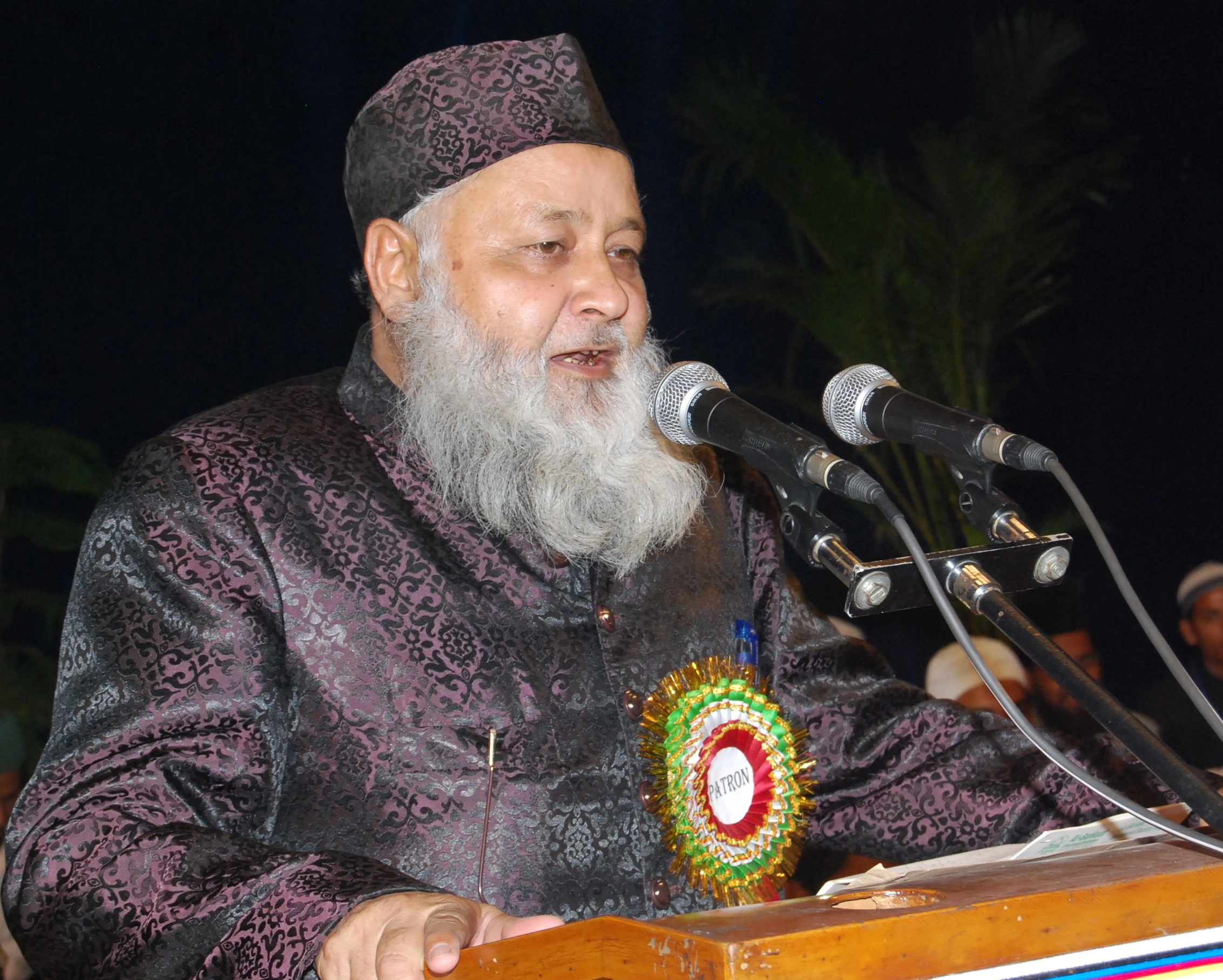
Ahmed Raza Khan (1856–1921) was a Hanafi jurist, Sufi of the Qadiri order, poet and prolific writer of the north Indian city of Bareilly, whose defence of the honour and standing of the Prophet Muhammad against the reformist scholars of his day gave rise to one of the principal tendencies within South Asian Sunni Islam. Among his followers he is known not by his name but by the title A'la Hazrat, "the exalted presence."
The movement associated with him is commonly called Barelvi, after his city, but this is the name used by others. Its adherents call themselves the ulama of the Ahl-i Sunnat wa Jamaat — the People of the Sunnah and the Community — which is the classical designation of the Sunni body as a whole, and the choice of name is itself a claim: that they represent not a party within Sunni Islam but its mainstream. Barbara Metcalf, whose study of the period is the principal source for this article, records that both the Barelvis and their Deobandi opponents insisted that they were not leaders of sects but of the mainstream of Sunni Muslims.
The Nature of the Movement
The Barelvi tendency took shape in opposition. Metcalf's assessment is that the Barelvi ulama did not emerge out of a desire to transform standards of practice and belief but rather out of opposition to the two reformist groups of the period — the Deobandis and the Ahl-i Hadis — and she notes that the group is always described, by supporters and opponents alike, as a reaction to the other two. What it defended was the body of devotional practice that the reformers sought to curtail, and the understanding of the Prophet and the saints on which that practice rested.
The single principle that organises its teaching is hierarchy. Nothing characterised their teaching more, Metcalf writes, than hierarchy — a hierarchy that elevated the Prophet, the saints, and the ulama themselves as benefactors, patrons and intercessors. Where the reformers placed the weight of religion on the individual believer's direct responsibility for correct practice, the Barelvis placed relatively little emphasis on individual responsibility and much more on the intercession of the ulama and the shaikhs. The community they defined was more closely tied to particular shrines and fixed occasions.
Muhammad Qasim Zaman's study of the modern ulama sets out the three-way difference in a form worth stating directly, because it locates the disagreement precisely. All three movements arose in India in the second half of the nineteenth century, and all three are united in their reverence for the teachings of the Prophet; where they part company is on the sources of religious authority. On Zaman's account the Barelvis affirm the authority not only of the Prophet but also of the saints and holy people, whom they revere as sources of religious guidance and as means of mediation between God and human beings. The Deobandis preached against that understanding of religion and against the devotion at shrines that accompanied it. The Ahl-i Hadis went further than either, setting aside not only practices without a scriptural basis but the authority of the classical schools of law as well, and holding the Qur'an and hadith to be the sole and directly accessible sources of guidance. Read this way the Barelvi position is not simply a defence of custom but a distinct account of where religious authority resides.
The movement's own name should also be noted, since readers will meet it. Its adherents call themselves the Ahl-e Sunnat, the people of the Prophet's practice — a designation that states a claim rather than accepting the label of a place or a founder. The term Barelvi, like Deobandi, was applied from outside and derives from a town, in this case Bareilly. In academic writing the name appears variously as Barelvi, Barelwi and Barelawi; Zaman uses the last of these.
A word of caution about the sources is in order. Metcalf writes from within a study of the Deobandi movement and acknowledges her own sympathies, remarking at one point that she and the Deobandis begrudge the Barelvis the title of reformers. Her factual account is nevertheless detailed and, on the crucial question of what the two movements shared, notably generous; this article follows her evidence while leaving her evaluative framing aside. The same discipline is applied to the second source: Zaman writes chiefly about the Deobandi tradition, and what is taken from him here is his description of the positions at issue, not his framing of the rivalry.
Life
Family and city
Ahmed Raza Khan was born at Bareilly in 1856. His family were Pathans or Rohillas, Afghans who had migrated to the Mughal court in search of employment and had obtained land in jagir first near Lahore, then near Delhi, and finally in Bareilly, in the region of Rohilkhand. Members of the family continued in princely service into the nineteenth century. It was, Metcalf observes, a family of scholars, landowners and government servants much like those of many ulama — but unlike many in being prosperous enough for its wealth to attract comment.
His grandfather, Riza Ali Khan, was noted for skill in what Metcalf calls the family's great specialty of fiqh, and for personal piety. His father, Taqi Ali Khan, who died in 1880, was a prolific writer known above all for his opposition to the reformers: he composed a refutation of the reformist tract Taqwiyatul Iman and in 1876 published a work on imkan-i nazir — the question, debated in that generation, of whether God could create an equal to the Prophet. The family's intellectual connections ran less to the hadith scholars of Delhi than to the ulama of Budaun and Khairabad, who specialised in the rational sciences. Fazl-i Rasul Badauni, a scholar of that circle whose principal concern was opposition to the reformers, was an important associate of the family, and his most famous student was to be Ahmed Raza.
Sufi initiation
At about the time of his father's work on imkan-i nazir, father and son were together initiated into the Sufi orders, and particularly into the Qadiri, at the hand of Shah Al-i Rasul of Marahrah. The Marahrah connection mattered: Shah Al-i Rasul's great-grandfather Shah Barkatullah, who died in 1729, had played an active spiritual and political role in the eighteenth century, and his tomb became, according to Ahmed Raza's biographer, the most important centre of the Qadiri silsilah in India in the modern period.
Early career
Accounts of his youth emphasise an extraordinary memory and a delight in mental agility — the instantaneous composition of phrases whose letters carried a required numerical value, an enthusiasm for wordplay, an intuitive facility in mathematics. He knew the books of law by heart, explaining that in the grave he would be asked problems and would have no book then.
At four he read a poem in praise of the Prophet from a mosque pulpit. By fourteen his father had entrusted him with the responsibility of writing legal opinions. At about twenty he accompanied his father on the pilgrimage, where the leader of the Shafi'i school at Mecca is said to have gazed at him, declared that he saw God's light on his face, and granted him authorisation in the Qadiri order. Received at the court of Rampur, he declined the Nawwab's offer of a silver chair but demonstrated his command of the most advanced work of logic before a leading scholar of the Khairabadi school. Asked what he occupied himself with, he replied that he wrote legal opinions and refuted the reformers, adding that he defeated those who denigrated the Prophet.
Standing and manner
His followers, Metcalf records, speak of him never by name but by the title of A'la Hazrat, the exalted or most high presence. His style was aristocratic: he preferred solitude, and when he did appear people would rush to touch him, coming to kiss his hand or feet. He acted as a patron, which Metcalf contrasts with the Deobandi leaders, who had neither the means nor the inclination to dispense largesse — maintaining what was described as a bottomless box for gifts, holding feasts, subsidising students, showing particular generosity to sayyids, and patronising poets.
As a shaikh of the Qadiri order he concentrated, in Metcalf's account, on intercession, divination and amulets rather than on instruction in spiritual development. He was held to be skilled in divination and a master of the numerical charts used as amulets.
Teaching
The Prophet
The doctrines concerning the Prophet are the centre of Ahmed Raza's thought and the ground of the controversy that defined his movement. He wrote some sixteen books on the Prophet's life, composed praises of him in Urdu verse, and wrote also on hadith and on the Prophet's family and Companions.
His teaching held that there exists a light of Muhammad, nur-i muhammadi, derived from God's own light and existing from the beginning of creation, which acted as intermediary in that creation and which enlightens the world as the full moon, reflecting the sun, lights the world. He denied that this compromised the divine unity. The Prophet, on this understanding, was himself light, present and observant — hazir o nazir — in all places; as light he had no shadow. He was human, but his humanity was of a different order from that of other men.
To this was joined a doctrine concerning the Prophet's knowledge. Ahmed Raza believed that the Prophet had unique knowledge of the unknown, of ilm al-ghaib. The reformers, anxious to preserve the uniqueness of Allah, had denied that the Prophet possessed such knowledge except in particular instances when it was granted by God; the Barelvi position was that he had full knowledge of spiritual realities, of the meaning of all the metaphorical passages of the Qur'an, and of past and future. On this basis Ahmed Raza justified calling upon the Prophet as intercessor.
The celebration of the Prophet's birthday, mawlid — precisely the observance the reformers opposed — was accordingly given great importance, and was one of three occasions in the year on which he regularly preached. He preached twice on that day at his brother's house before an audience of the city's notables who had received printed invitations, timing his arrival for the period of standing, qiyam, during which the Prophet was believed to be present. Metcalf notes that not only the ceremony itself — held on a fixed day, with qiyam, with new clothes worn and sweets distributed — but the whole style of a select gathering was markedly different from Deobandi practice.
Other marks of reverence followed. He began letters with a rhyming phrase in praise of the Prophet as well as with the invocation of the divine name; he kissed the feet of returning pilgrims who had been in the mosque where the Prophet is buried; and he showed profound respect for all sayyids as the Prophet's descendants, kissing the hand of the first sayyid to greet him at Eid, giving sayyids a double share of sweets at the reading of birthday poems, and reproving a man who criticised the ruler of Mecca on the ground that he was a sayyid.
The saints
His teaching on the saints extended the same principle. He held that they could not only hear but that their powers of spiritual influence and miracle continued after death as they had in life, and that the saints maintained not only a spiritual but a bodily life after death. In his work Hayat-i Maut he explained that the saints see with the light of God and could be solicited for their help not only at their graves but everywhere, their powers of communication being especially strong on Friday nights. In al-Aman wal-Ala he set out a belief in a hidden hierarchy of saints whose presence in every age sustains the universe.
He observed the death anniversaries of a number of saints, including that of Shah Abdul Qadir Badauni, whom he particularly revered, and that of Shah Barakatullah of Marahrah, which he made the occasion of an annual sermon. Above all he revered Abd al-Qadir al-Jilani, founder of the Qadiri order, celebrating the eleventh of each month in his honour and accepting with reverence the food offered at that observance.
Metcalf makes an observation about this practice that is worth registering, because it complicates the simple contrast between the two movements. Because the monthly commemoration of Abd al-Qadir could be held anywhere and on the eleventh of any month, it bound the believer to a particular time and place much less than the usual annual festival at a shrine; she describes it as analogous in that respect to some of the teachings of the more reformist ulama, in that it focuses on a practice of potentially wide geographic provenance.
Law, weak hadith, and custom
Two jurisprudential arguments underpinned his defence of customary practice. The first concerned the evidentiary weight of weak reports: he held that it was laudable to act not merely on authentic hadith but on weak hadith as well, so long as they were not contradicted by authentic hadith, and that a weak report with at least two chains of transmission could rise in standing if it was regularly acted upon by educated people. On this basis he held laudable the practice of kissing the thumbs and placing them to the eyes on hearing the Prophet's name in the call to prayer.
The second was a presumption in favour of custom: unless a customary practice were specifically opposed by a hadith, it was legitimate. He also claimed that Shah Waliullah had encouraged customary practices.
Religious obligation
It is important to the accuracy of the picture that Ahmed Raza also shared the reformers' concern with instruction in religious duty. Metcalf records that he shared the concern of the reformers for disseminating instruction in the performance of religious obligations, and held that the role of the ulama was to act in accordance with the shariah and to teach Muslims their duties. He urged people to perform the obligatory prayer, would not initiate a man whose beard was not of the appropriate length, and corrected the custodian of the shrine at Marahrah for wearing a gold ring. He thus conveyed, in her phrase, the sense that the sunnah was being seriously followed.
Scholarly Output
Ahmed Raza's productivity was very great. His published legal opinions compose a dozen volumes, each running to a thousand pages, and an answer to a single point often covered a hundred pages with numerous references and citations. He dealt with enquiries in daily afternoon audiences and, with his students and associates, by post. His followers held him to be the outstanding scholar of fiqh of his age, citing his opinions in particular for their extensive discussion of the jurisprudential foundations of the Law.
Beyond the fatawa and the sixteen works on the Prophet's life, Metcalf names his Hayat-i Maut on the hearing and help of the saints, al-Aman wal-Ala on the hidden hierarchy of the saints, and the Husam al-Haramain of 1903, discussed below. He also produced an Urdu translation of the Qur'an; Metcalf lists him among the translators of the period alongside the Deobandi translators Ashraf Ali Thanawi and Mahmud Hasan, though she does not name his translation. One controversy his own scholarship generated concerned his insistence that the call to the Friday prayer be given only outside the mosque and not within it.
The Controversy with the Reformers
The charge
The dispute between Ahmed Raza and the reformist ulama was not merely a disagreement over practice. Its severity followed from his conclusion that his opponents' doctrines placed them outside Islam — his claim, in Metcalf's summary, that his opponents were not Muslims but kafir.
In 1903 he published the Husam al-Haramain as the legitimation for his issuing a formal opinion of unbelief. The opinion was confirmed by supporters in India and, following a campaign he conducted himself, by ulama in the Hijaz.
The work distinguished categories of those he denounced, each associated with a named scholar and a specified doctrine. Muhammad Qasim Nanautawi was named in connection with statements held to compromise the finality of prophethood, on the basis of his treatise Tahzir al-Nas. Rashid Ahmad Gangohi was named in connection with a position on divine speech. And Gangohi, together with Khalil Ahmad and Ashraf Ali Thanawi, was named in connection with the question of knowledge of the unknown — the charge being that they had said the Prophet's knowledge on some points was exceeded by the knowledge of other creatures.
This article reports the fact and the substance of the accusations. The polemic on both sides descended at times into personal mockery, which Metcalf documents; the invective is not reproduced here.
The response
The Deobandi scholars answered each point. On Tahzir al-Nas they held that the work not only confirmed the finality of Muhammad's prophethood but argued that this finality had three dimensions: the perfection of his qualities, the time of his coming, and his presence in Arabia. On the question of knowledge, Khalil Ahmad's position was that he had consistently striven to assert the difference between the knowledge held by man and that held by God, affirming that any knowledge of the unknown was a gift from God, that the Prophet had greater access to it than anyone, but that in secular matters there were others who knew more. On the question of divine speech, Gangohi had declared in a legal opinion the opposite of what was alleged — that anyone who said God was a liar was an unbeliever.
Consequences
The dispute had practical effects. Metcalf records that the campaign caused substantial embarrassment to the Deobandis, because the very name of Wahhabi, whether used legitimately or not, was deeply feared as politically disruptive. When Khalil Ahmad came to Medina in 1906 he was welcomed by some but objected to by others, and after two weeks had to leave. The opinion engendered what Metcalf calls a fatwa war, and in the early twentieth century hundreds of counter-signatures were collected from the ulama and shaikhs of Tonk, Bhopal and Bahawalpur — the three major north Indian Muslim princely states — testifying that the Deobandis were Sunni Hanafi Muslims.
Metcalf's assessment of the exchange as a whole is that the charges and responses rapidly became the standard exchange in their debates, which were more exercises in communal solidarity than intellectual exchanges. The Barelvis preferred written to oral controversy.
Method
Ahmed Raza's chosen instrument was religious rather than legal. He declined to use the British courts, writing to a disciple who wished to litigate that they could not reward or punish, and relied instead on the sanction of exclusion — the refusal to pray together. He would not meet a scholar who omitted certain phrases of praise from the blessing on the Prophet, nor enter a particular congregational mosque because he disagreed with the beliefs of its prayer leader. His paper was the Dabdaba-yi Sikandari of Rampur.
For its part, the Deobandi leadership did not exclude the Barelvis from common prayer, judging them to deviate only in practice and not in belief, and forbade their followers to mock their opponents; Metcalf records that Rashid Ahmad silenced those who delighted in Ahmed Raza's illness.
What the Two Movements Shared
Metcalf's most valuable observation for an accurate understanding of the period is that the polemic conceals a considerable common ground. The Barelvis, she writes, also thought of themselves as reformist — that is, as scholars engaged in tajdid or renewal — and in their self-consciousness and their concern with disseminating familiarity with the Law, they were in the end close to those they opposed.
She develops the point in her chapter on the movement. Ahmed Raza, superficially so unlike the reformers, was at one with them in standing forth against what he perceived as threats, both alien and internal, to Islam; and he too saw that the sphere of religion had of necessity narrowed under colonial rule. The need for sanction and the defensiveness of his thought made him one with the self-conscious reformers, and his followers thought of him as a mujaddid, a renewer, just as the reformers thought of their own leaders. In her conclusion she puts it most compactly: even the Barelvis, who in fact legitimised most of the customary practices the others eschewed, saw their leader as a mujaddid or renewer of the Law. They regarded the great hadith scholar of Akbar's reign, Abdul Haqq Muhaddis, as their precursor.
The convergence extended to institutions. Metcalf notes that the edges between the groups tended to blur: all were popularly based, and all came to share the modern institutional forms that the Deobandis pioneered, so that formal educational institutions, annual conferences and deputations for preaching were standard by the beginning of the twentieth century. Her closing judgement on the three movements is that they perceived themselves as radically different from each other, and that the resulting competition among them provided the motive for what was in fact their common work of religious revitalisation and redefinition.
There were shared positions on other questions too. Like the Deobandis and the Ahl-i Hadis, Ahmed Raza wrote extensively against Shi'i doctrine, and he did not permit his followers to wear the black or green of mourning during Muharram. He published responses to the polemics of the Arya Samaj, though he did not enter the debate with Christian missionaries, which Metcalf attributes to his concern to avoid giving offence to the government.
Institutions and Social Base
Metcalf enters an important caution about the movement's institutional history in this period: in the late nineteenth century, she writes, there do not seem to have been networks of schools or other institutions that were self-consciously Barelvi. Writers focus on Ahmed Raza himself rather than on links to educational centres or Sufi shrines. Many ulama were untouched by the reformist position, but that alone did not make them Barelvi; only identification with Ahmed Raza's oppositional stance did that.
The schools associated with the movement had a mixed history. A school founded at Bareilly in 1872 by Ahmed Raza's father was later renamed and subsequently came under Deobandi control. A second, founded in 1894 under a former Deoband student, drifted back towards Deoband after 1909. A large endowment established a school in 1915, and Ahmed Raza urged care lest it and its finances also pass into Deobandi hands. The institutions that endured were the Jamiat-i Manzar-i Islam at Bareilly and a school at Pilibhit, whose annual meetings he attended; a school founded at Lahore in 1887 with a similar perspective later identified itself as Barelvi, and a further Lahore institution was founded by his disciples in 1920.
The movement's social base was regionally and socially distinct from that of the reformers. The core group of Barelvi ulama were Pathans from the major cities of Bareilly and Budaun in Rohilkhand, and support came primarily from the small towns and rural areas of the United Provinces and the Punjab. Metcalf connects this to the movement's structure of teaching: because it offered a hierarchy of mediators ranging from the Prophet through the saints and the guides of the shrines to the central figure of the movement itself, it made less of a demand for individual responsibility upon its followers, and this, she suggests, may account for its greater appeal among the less well educated.
She is careful to qualify the generalisation, and the qualification deserves recording. Barelvi influence has been regarded as largely rural, but certain of its tenets — reliance on the universally known figure of Abd al-Qadir al-Jilani, together with its insistence on the Law — provided a diverse repertoire of possible emphases, some of which would be meaningful to the more urban and mobile. She notes too that the boundary was porous in both directions: villagers near Deoband regarded its ulama simply as good and holy men, and there were government servants as well as villagers among the supporters of the Barelvis.
Later Years
In politics Ahmed Raza held to a position of distance from anti-colonial mobilisation. True to their concept of hierarchy, Metcalf writes of his movement, they accepted the existence of the colonial authority apparently without question — an aloofness that seemed to some of his opponents to be more than mere quietism. In his final years he opposed the Khilafat movement and cooperation with Gandhi and the Congress, a position he set out in letters to a leading scholar of Farangi Mahall. He died in 1921.
References and Further Reading
Primary Islamic Sources
- The Qur'an — translated into Urdu by Ahmed Raza Khan, one of several such translations produced in the period
- Hadith — central to the controversy of the period, and to Ahmed Raza's argument that weak reports, if uncontradicted by authentic ones and acted upon by the learned, could support devotional practice
- Ahmed Raza Khan, Husam al-Haramain (1903) — the work published as the legitimation of his opinion of unbelief against the reformist scholars
- Ahmed Raza Khan, Hayat-i Maut — on the hearing of the saints and the continuation of their powers after death
- Ahmed Raza Khan, al-Aman wal-Ala — on the hidden hierarchy of saints sustaining the universe
- Ahmed Raza Khan, published fatawa — a dozen volumes of legal opinions, the basis of his followers' claim that he was the outstanding jurist of his age
Classical Islamic Sources
- Abd al-Qadir al-Jilani (1078–1166), founder of the Qadiri order — the saint most revered in Ahmed Raza's devotional practice, commemorated by him on the eleventh of each month
- Abdul Haqq Muhaddis, the hadith scholar of Akbar's reign — regarded by the Ahl-i Sunnat wa Jamaat as their precursor
- Shah Barkatullah of Marahrah (d. 1729) — the forebear of the Qadiri line into which Ahmed Raza was initiated, whose tomb his biographer describes as the most important centre of the order in modern India
- The Hanafi legal tradition — the school within which Ahmed Raza worked and in whose defence he argued against those who rejected the authority of the historic schools
Academic and Scholarly Sources
- Metcalf, Barbara Daly. Islamic Revival in British India: Deoband, 1860-1900. Princeton: Princeton University Press. Chapter VII, on the Ahl-i Hadis and the Barelwis, is the source for this article throughout: for Ahmed Raza's family, education and Sufi initiation, his doctrines concerning the Prophet and the saints, his jurisprudential arguments on weak hadith and custom, his scholarly output, the Husam al-Haramain and the controversy that followed it, the movement's institutions and social base, and the assessment of what it shared with the movements it opposed. Metcalf writes from within a study of the Deobandi movement and acknowledges her own sympathies; her factual account has been followed here and her evaluative framing set aside.
- The Ulama in Contemporary Islam: Custodians of Change by Muhammad Qasim Zaman — consulted for the movement's self-designation as the Ahl-e Sunnat, for the Barelawi form of the name used in academic writing, and for the statement of how the Barelvi, Deobandi and Ahl-i Hadis positions differ on the sources of religious authority. Zaman writes chiefly on the Deobandi tradition, and as with Metcalf his description of the positions has been used and his framing of the rivalry set aside.
Further Reading
- Zafaruddin Rizwi, Hayat-i A'la Hazrat — the biography of Ahmed Raza Khan on which Metcalf draws for the details of his life; not consulted directly for this article.
- Sanyal, Usha. Devotional Islam and Politics in British India: Ahmad Riza Khan Barelwi and His Movement, 1870-1920. Delhi: Oxford University Press, 1996.
- The articles on the Deobandi movement and the Ahl-i Hadis — the two tendencies in opposition to which this movement defined itself.
Mentioned In
4 articles reference this topic
More from South Asian Islam
Mufti Kifayatullah Dehlawi
An Indian Hanafi jurist widely titled Mufti-e-Azam, or Grand Mufti of India. He led Madrasa Aminia in Delhi for nearly half a century, was a founder and twice president of the Jamiat Ulama-i-Hind, and left some four and a half thousand legal rulings collected as Kifayat al-Mufti.
Mufti Muhammad Shafi
A Hanafi jurist who served as head mufti of Darul Uloom Deoband and founded Darul Uloom Karachi in 1951. His Urdu commentary Ma'arif al-Qur'an, which began as a radio programme, became one of the most widely read Qur'anic commentaries in South Asia.
Muhammad Rafi Usmani
A Pakistani Hanafi jurist who led Darul Uloom Karachi as its president from 1986 until his death in 2022. Titled Grand Mufti, he served on Pakistan's Council of Islamic Ideology and wrote on zakat, on Hanafi law, and on the hadith commentary Fath al-Mulhim.
Muhammad Taqi Usmani
A Pakistani Hanafi jurist and writer on Islamic law, trained at Darul Uloom Karachi and in economics and law at Karachi and Punjab. He served on Pakistan's higher courts, completed the hadith commentary Fath al-Mulhim, and shaped the standards of modern Islamic finance.