Umar's Entry into Jerusalem
The historic and humble entry of Caliph Umar ibn al-Khattab into Jerusalem in 638 CE, demonstrating Islamic values of humility, justice, and religious tolerance through his personal conduct and the establishment of the Umariyya Covenant protecting Christian rights.
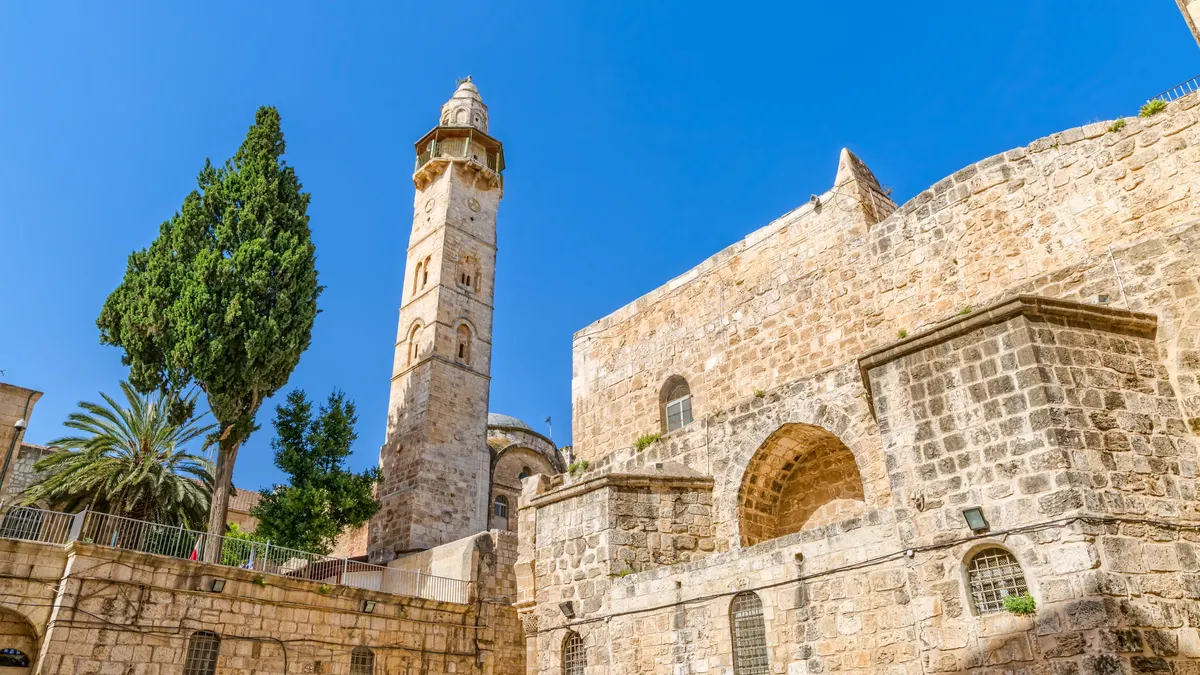
The entry of Caliph Umar ibn al-Khattab into Jerusalem in 638 CE stands as one of the most remarkable examples of Islamic leadership, humility, and religious tolerance in history. This historic event, following the peaceful conquest of the holy city, demonstrated the highest Islamic values through Umar's personal conduct and established precedents for religious coexistence that would influence Islamic governance for centuries. The Caliph's humble approach to the city and his generous treatment of its Christian inhabitants created a model of just rule that contrasted sharply with the often harsh conquests of the era.
Background and Context
The Siege of Jerusalem
By early 638 CE, Muslim forces had successfully conquered most of Syria. Damascus, the Syrian capital, had been under Muslim control since 635 CE, major Byzantine armies had been defeated at Ajnadayn and Fihl, Jerusalem had been isolated and cut off from Byzantine reinforcement, and the holy city was under blockade but still holding out. Jerusalem held immense significance for several reasons: it was the third holiest city in Islam after Mecca and Medina, a major Christian pilgrimage destination and ecclesiastical centre, a strategic control point for southern Syria and Palestine, and a place of symbolic value whose conquest would demonstrate Islamic power and legitimacy.
The Negotiation Request
Sophronius, the Patriarch of Jerusalem, agreed to surrender the city but with one unprecedented condition. He would only surrender to the Caliph himself, declined to negotiate with the military commanders, acknowledged Umar's supreme leadership, and sought a peaceful resolution that would avoid destruction and bloodshed. His insistence reflected several considerations: a desire to protect the city and its inhabitants, the recognition that only the Caliph could guarantee agreements, an understanding of Islamic respect for religious minorities, and the wish to leverage the city's symbolic importance in his negotiating position.
Umar's Decision to Travel
Consultation and Preparation
Umar consulted with senior companions about the journey, weighing a strategic assessment of its risks and benefits, security concerns about the dangers of the Caliph leaving Medina, the symbolic importance of Jerusalem, and the understanding that his decision would establish important precedents. His preparations were deliberately modest: a small, simple travelling party, simple food and basic necessities, minimal but adequate protection, and arrangements for the continuity of governance during his absence.
The Journey from Medina
The route from Medina to Jerusalem covered approximately 1,200 kilometres and took several weeks through desert and settled areas, with brief stays in various towns and military camps and an enthusiastic welcome from Muslim communities along the way. The travelling conditions were simple: Umar travelled on foot and by camel, took turns walking with his servant, slept in simple tents or under the stars, and ate the same simple food as his companions.
The Approach to Jerusalem
The Famous Incident with the Servant
One of the most famous stories of the journey involves Umar and his servant. With only one camel between them, the two alternated riding and walking, and when they approached Jerusalem it was the servant's turn to ride, so that the Caliph walked while his servant rode. This incident demonstrated fundamental Islamic principles: the equality that admits no distinction between ruler and servant in basic needs, the humility of a leader willing to walk while his servant rode, the justice of strictly adhering to the agreed arrangement, and a practical demonstration of Islamic egalitarianism.
Arrival at the City Gates
When Umar arrived at Jerusalem's gates, he was dressed in plain, patched garments, displayed no royal pomp or ceremonial display, entered the city on foot leading his camel, and was accompanied by only a few companions. The Christian inhabitants and clergy were amazed. His arrival contrasted completely with Byzantine imperial ceremonies, surprised them by the Caliph's simple appearance, impressed them by its dignified but humble manner, and reassured them through its peaceful, non-threatening approach.
Meeting with Patriarch Sophronius
The Initial Encounter
The formal introduction consisted of a respectful, courteous exchange between the two religious leaders, a mutual recognition of each other's authority and position, a clear communication of the desire for a peaceful resolution, and the establishment of a framework of terms for discussion. The Patriarch was reportedly struck by Umar's simplicity, so unlike the elaborate ceremonies of the Byzantine rulers; by his respectful manner and courteous treatment despite being the conqueror; by the evidence of his genuine religious conviction; and by the indications of his fairness and integrity.
Tour of the Holy Sites
Sophronius personally guided Umar through the Church of the Holy Sepulchre, Christianity's holiest site. Umar showed appropriate reverence for the sacred space, Sophronius explained the site's significance in an educational exchange, Umar demonstrated cultural sensitivity and an understanding of Christian beliefs, and the visit established a tone of peaceful coexistence for future religious relations. When the time for Muslim prayer arrived during the visit, Sophronius invited Umar to pray inside the church, but Umar wisely declined and explained his concerns: he worried that Muslims might later claim the church as a mosque, and so he prayed outside on the church steps instead. His decision demonstrated long-term thinking in its consideration of future implications, religious respect in its protection of Christian sacred space, practical wisdom in preventing potential future conflicts, and precedent-setting in establishing principles for religious coexistence.
The Umariyya Covenant
Negotiation and Terms
The Umariyya Covenant (Ahd Umariyya) established detailed terms. Its religious guarantees allowed Christians to practise their religion freely, preserved and protected existing churches, permitted Christian clergy to continue their functions, and secured pilgrimage access so that Christian pilgrims could visit the holy sites. Its civil rights guaranteed personal security through the protection of life and property, granted legal autonomy so that personal-status matters were handled by Christian law, secured economic rights to engage freely in trade and commerce, and protected residential rights so that Christians could continue living in their homes. In return, its obligations required the jizya, a poll tax in lieu of military service, respect for Islam with no interference in Islamic practices, loyalty in the form of acknowledgment of Islamic political authority, and cooperation in maintaining peace and order.
The Document's Significance
As a legal precedent, the covenant established important principles: the formal recognition of protected dhimmi minority status, a contractual relationship of clear mutual obligations and rights, the institutionalised protection of religious minorities, and an administrative framework for governing diverse populations. Its historical impact was considerable: it became a template used in subsequent Islamic conquests, a foundation for Christian-Muslim coexistence, a contribution to the development of Islamic jurisprudence on minorities, and a framework for a multicultural Islamic society.
Umar's Actions in Jerusalem
Administrative Arrangements
The governmental structure combined a Muslim governor appointed as the Islamic administrative authority with Christian autonomy through the preservation of the ecclesiastical hierarchy, a dual court system serving the different communities, and an efficient and fair system of tax collection. Urban planning emphasised the maintenance of existing city infrastructure, the regulation of markets to establish fair commercial practices, the continuation of essential public services, and security arrangements to maintain peace and order.
Religious Policies
The establishment of a mosque involved the selection of a site for Muslim prayer, its respectful placement with careful consideration of Christian sensitivities, an architectural plan of simple, dignified design appropriate to the setting, and provision for the community's worship needs. Interfaith dialogue took the form of respectful theological discussions with Christian scholars, efforts to build mutual understanding between the communities, educational exchange in learning about Christian beliefs and practices, and the establishment of a framework for peaceful coexistence.
The Temple Mount Visit
Clearing the Sacred Site
The Temple Mount (Haram al-Sharif) had been neglected. During the Byzantine period the area had been used as a rubbish dump by Christians, a deliberate neglect that symbolically rejected Jewish claims, so that centuries of refuse had accumulated on a site of great sacred significance as the location of Prophet Solomon's Temple and of Prophet Muhammad's Night Journey. Umar took personal action: he began clearing debris with his own hands, led by example in the restoration work, was joined by Muslims in the cleaning effort, and gave careful, respectful attention to the site's sanctity. The site's religious significance lay in its importance in Islamic history, its connection to earlier prophets and revelations, its history as the former direction (qibla) of Muslim prayer before Mecca, and its eschatological importance in Islamic beliefs about the end of times.
Prayer and Worship
The first official Muslim prayer on the Temple Mount was a historic moment: Muslims assembled for congregational prayer, fulfilling the Islamic connection to Jerusalem and marking a peaceful and smooth transfer of religious authority. Looking ahead, plans were made for the construction of a permanent place of worship, with architectural considerations of a respectful design honouring the site's history, provision for the needs of the growing Muslim population, and careful interfaith sensitivity toward Christian and Jewish concerns.
Impact on Christian-Muslim Relations
Immediate Effects
The Christian community responded with relief and gratitude at their generous treatment, continued their religious practices without interruption, retained economic stability in their livelihoods and property, and preserved their traditions and customs. The clergy cooperated through an administrative partnership in city governance, ongoing religious and theological dialogue, a continued leadership role in Christian community affairs, and a peaceful coexistence that became a model for future interfaith relations.
Long-term Consequences
As a precedent for tolerance, the settlement established the dhimmi system as a legal framework, protected minority religious freedom, accepted a culturally diverse society, and modelled the peaceful integration of diverse populations. Its historical legacy included a comparative tolerance that contrasted with contemporary conquest practices, an enduring influence on Islamic political thought, a foundation for centuries of interfaith coexistence, and the beginning of Islamic-Christian cultural synthesis.
Comparison with Other Conquests
Contemporary Practices
Byzantine conquests often required religious conformity through forced conversion, suppressed local traditions in cultural suppression, imposed heavy taxation and resource extraction in economic exploitation, and completely substituted the governing systems in administrative replacement. Persian conquests similarly involved the religious persecution and suppression of non-Zoroastrian religions, cultural assimilation through the forced adoption of Persian customs, administrative control through direct Persian governance, and the economic domination and exploitation of conquered territories.
Islamic Approach
The Islamic approach was distinctive in its religious tolerance, protecting existing religious communities; its cultural respect, preserving local traditions and customs; its administrative continuity, maintaining functional systems; and its economic justice, applying fair taxation and economic policies. Umar's personal example reinforced this approach through his humble leadership, personally demonstrating Islamic values; his direct engagement, involving himself personally in negotiations and governance; his moral authority, leading through character and example; and his long-term vision, considering the lasting consequences of his decisions.
Theological and Legal Implications
Islamic Jurisprudence
The development of dhimmi law brought the formal recognition of protected minority legal status, a clear definition of mutual rights and obligations, a judicial framework serving diverse populations, and a precedent that became a model for future Islamic legal development. In interfaith relations, it provided a framework of theological dialogue for religious discussion, methods of practical coexistence for daily interaction, mechanisms of conflict resolution for addressing disputes, and opportunities for cultural exchange and mutual learning.
Christian Theology
Christian responses to Islamic rule involved theological adaptation of Christian thought under Islamic governance, survival strategies for maintaining Christian identity, interfaith dialogue engaging with Islamic theology, and cultural preservation of Christian traditions. In their historical interpretation, some Christians saw the Islamic conquest as divine providence and the working of divine will, recognised the justice and tolerance of Islamic governance, appreciated the religious freedom that protected Christian rights, and valued the cultural continuity that allowed them to maintain Christian civilization.
Literary and Historical Sources
Contemporary Accounts
Among the Islamic sources, al-Tabari provides a detailed historical account of the conquest and entry, al-Baladhuri a comprehensive description of the terms and negotiations, and Ibn Kathir an account of the religious and historical significance of the events, while the hadith collections preserve Prophetic traditions relevant to Jerusalem. Among the Christian sources, Theophanes offers a Byzantine chronicle describing the conquest, Sophronius the Patriarch's own writings about the negotiations, the Syriac chronicles Eastern Christian perspectives on Islamic rule, and the Armenian sources additional Christian viewpoints on the conquest.
Later Historical Analysis
Among medieval historians, Ibn al-Athir offers a comprehensive analysis of the conquest's significance and al-Maqrizi a detailed study of Islamic governance in Jerusalem, alongside the ongoing perspectives of Christian chroniclers and the Jewish sources recording the Jewish community's responses to the conquest. Modern scholarship contributes academic research analysing the sources and events, interfaith studies offering a contemporary examination of religious coexistence, historical methodology providing a critical evaluation of historical claims, and comparative studies situating the event within broader conquest patterns.
Legacy and Continuing Influence
Historical Precedent
As a model of governance, the event offered a template of religious tolerance for governing diverse populations, administrative efficiency in effective methods of imperial governance, cultural integration through the successful incorporation of different communities, and a legal framework that became a foundation for Islamic minority law. As an example of leadership, it offered a model of humble authority leading through character, personal engagement through direct involvement in important negotiations, moral leadership guiding through example and principle, and long-term vision in the consideration of lasting consequences.
The Journey from Medina: A Study in Humility
Preparations and Departure
Umar's decision to personally travel to Jerusalem, despite the risks and the distance involved, demonstrated his understanding of the historic significance of this moment. The journey from Medina to Jerusalem covered approximately 1,200 kilometers through varied terrain, including desert regions, settled areas, and potentially hostile territories. The preparation for such a journey required careful planning, yet Umar insisted on maintaining the simplicity and humility that characterized his caliphate.
The preparations for the journey were minimal by the standards of imperial travel. Umar refused the elaborate preparations that might have been expected for a caliph traveling to accept the surrender of a major city. He declined suggestions for a large military escort, understanding that such a display would contradict the Islamic values of humility and would send the wrong message to the Christian population of Jerusalem. Instead, he chose a small group of trusted companions to accompany him, sufficient for basic security but not so large as to appear threatening or ostentatious.
Umar's provisions for the journey were equally simple. He took basic food supplies - dates, bread, and water - refusing the luxuries that his position might have afforded. His clothing was plain and patched, the same simple garments he wore in Medina. He carried no special equipment or ceremonial regalia, no symbols of power or authority beyond his position as Caliph. This simplicity was not mere affectation but reflected Umar's genuine commitment to Islamic values of humility and his rejection of worldly pomp and display.
Before departing, Umar made arrangements for the governance of Medina during his absence. He appointed a trusted deputy to handle administrative matters and to maintain order in the capital. He gave instructions for dealing with various situations that might arise and ensured that the mechanisms of government would continue to function smoothly without his physical presence. This attention to administrative continuity demonstrated Umar's understanding that effective governance required systematic organization rather than dependence on a single individual's constant presence.
Umar also spent time in prayer and spiritual preparation before the journey. He understood that he was traveling to one of Islam's holiest cities, a place connected to the Prophet's ﷺ Night Journey and to the earlier prophets of Islam. He sought Allah's guidance for the negotiations ahead and for the establishment of just governance in Jerusalem. His spiritual preparation reflected his understanding that political and military success meant nothing without divine approval and that his primary responsibility was to Allah rather than to worldly power or prestige.
The Journey Itself
The journey from Medina to Jerusalem took several weeks, during which Umar maintained the simple lifestyle he had established at the outset. He traveled sometimes on foot, sometimes on camel, taking turns with his servant in a display of equality that shocked those accustomed to the hierarchical norms of imperial travel. This practice of alternating between riding and walking was not merely symbolic but reflected Umar's genuine belief in the equality of all Muslims before Allah and his rejection of the idea that leadership conferred special privileges in basic matters of comfort and convenience.
Along the route, Umar stopped in various towns and military camps, meeting with local populations and Muslim forces. These stops served multiple purposes: they allowed Umar to assess the situation in different regions, to address local concerns and issues, and to demonstrate his accessibility to ordinary Muslims. He listened to complaints, resolved disputes, and provided guidance on religious and administrative matters. These interactions showed that Umar's caliphate was not distant or removed from the people but was engaged and responsive to their needs and concerns.
The journey also provided opportunities for Umar to observe the conditions in the territories under Islamic control. He noted the state of infrastructure, the treatment of local populations, and the conduct of Muslim administrators and military forces. He asked questions, gathered information, and formed assessments that would inform his future policies and decisions. This attention to detail and his willingness to see conditions firsthand rather than relying solely on reports demonstrated Umar's hands-on approach to governance and his commitment to ensuring that Islamic principles were being properly implemented.
During the journey, Umar maintained his practice of leading prayers and engaging in religious instruction. He would lead the traveling party in the five daily prayers, and he would spend time teaching and discussing religious matters with his companions. These religious observances were not perfunctory but genuine expressions of faith and opportunities for spiritual growth. Umar understood that the journey to Jerusalem was not merely a political or military mission but a spiritual journey to one of Islam's holiest sites, and he approached it with appropriate reverence and devotion.
The simplicity of Umar's travel arrangements created some practical challenges. The small size of his party meant limited security, and the basic provisions sometimes proved inadequate for the journey's demands. However, Umar accepted these inconveniences as part of his commitment to living according to Islamic principles. He believed that leaders should not enjoy comforts and luxuries while ordinary Muslims faced hardships, and he was willing to endure discomfort to demonstrate this principle. His example during the journey reinforced the Islamic teaching that true leadership involves service and sacrifice rather than privilege and comfort.
Encounters Along the Way
As Umar traveled toward Jerusalem, news of his approach spread through the regions he passed. Local populations, both Muslim and non-Muslim, came out to see the Caliph and to witness this historic journey. These encounters provided Umar with opportunities to demonstrate Islamic values and to build relationships with diverse populations. His interactions during the journey helped to establish his reputation for justice and accessibility, qualities that would prove important in his governance of the newly conquered territories.
In Muslim communities along the route, Umar was greeted with enthusiasm and reverence. However, he consistently discouraged excessive displays of honor or ceremony, reminding people that he was a servant of Allah and of the Muslim community rather than a king to be worshipped or glorified. He would dismount from his camel and walk among the people, speaking with them directly and listening to their concerns. This accessibility and humility impressed those who met him and reinforced the Islamic teaching that leadership is a responsibility and a trust rather than a source of personal glory.
Umar's encounters with non-Muslim populations along the route were particularly significant. Christian and Jewish communities in the areas he passed through were curious and sometimes apprehensive about the new Islamic rulers. Umar's simple appearance and respectful manner helped to allay some of these concerns. He demonstrated through his conduct that Islamic rule did not mean oppression or forced conversion but could involve just governance and respect for religious minorities. These early encounters helped to establish patterns of interaction that would characterize Islamic governance in the region.
During these stops, Umar also met with Muslim military commanders and administrators, receiving reports on military operations and administrative matters. He provided guidance on various issues, resolved disputes, and made decisions about resource allocation and strategic priorities. These meetings demonstrated Umar's active engagement in governance and his understanding that effective leadership required constant attention to detail and willingness to address problems as they arose. His accessibility to military and administrative personnel helped to ensure that his policies were being properly implemented and that problems were being addressed promptly.
The journey also provided opportunities for Umar to demonstrate Islamic justice and fairness. On several occasions, he heard complaints about the conduct of Muslim officials or soldiers, and he took immediate action to address these grievances. He removed officials who had abused their authority, compensated those who had been wronged, and made clear that Islamic governance required justice and fairness for all, regardless of religion or ethnicity. These actions during the journey helped to establish Umar's reputation for justice and demonstrated that Islamic rule would be based on principles rather than on arbitrary power.
Implementation of the Umariyya Covenant
Immediate Practical Applications
The Umariyya Covenant was not merely a theoretical document but a practical framework for governance that required immediate implementation. Umar understood that the success of Islamic rule in Jerusalem would depend on how effectively the covenant's principles were translated into daily practice. He therefore devoted considerable attention to establishing administrative structures and procedures that would ensure the covenant's terms were respected and enforced.
One of the first practical steps was the establishment of a clear administrative structure for Jerusalem. Umar appointed a Muslim governor to oversee the city's administration, but he also ensured that Christian ecclesiastical authorities retained their traditional roles in managing Christian community affairs. This dual structure allowed for effective governance while respecting the autonomy of the Christian community in matters of personal status, religious practice, and internal community affairs. The arrangement demonstrated Umar's understanding that effective governance of diverse populations required flexibility and respect for existing social structures.
The implementation of the jizya tax system required careful attention to ensure fairness and to avoid the oppressive taxation that had characterized Byzantine rule. Umar established clear guidelines for tax assessment and collection, ensuring that rates were reasonable and that collection methods were fair and transparent. He prohibited tax collectors from using coercive or abusive methods and established mechanisms for appealing tax assessments. This attention to fair taxation helped to win the support of the Christian population and demonstrated that Islamic rule could be more just than the Byzantine system it replaced.
The protection of Christian churches and holy sites required practical measures to prevent violations. Umar issued clear instructions to Muslim forces and administrators that Christian religious sites were to be respected and protected. He established penalties for anyone who damaged or desecrated Christian property and made clear that such actions would not be tolerated. He also ensured that Christians retained access to their holy sites and could conduct religious ceremonies without interference. These practical protections gave substance to the covenant's guarantees and helped to build trust between the Muslim authorities and the Christian population.
The establishment of Muslim prayer facilities required careful attention to avoid conflicts with Christian sensitivities. Umar's decision to pray outside the Church of the Holy Sepulchre rather than inside it set an important precedent, but practical arrangements still needed to be made for Muslim worship in the city. Umar designated areas for Muslim prayer that did not encroach on Christian sacred spaces, and he began planning for the construction of mosques that would serve the Muslim population's needs while respecting the city's existing religious geography. This careful attention to religious sensitivities helped to prevent conflicts and demonstrated Islamic respect for other faiths.
The integration of Jerusalem into the broader Islamic administrative system required establishing communication and coordination mechanisms with other Islamic territories. Umar ensured that Jerusalem's governor was in regular contact with Medina and with governors of other Syrian cities. He established systems for reporting, for requesting guidance on difficult issues, and for coordinating policies across different regions. This administrative integration ensured that Jerusalem's governance was consistent with Islamic principles and policies while allowing for local adaptation to the city's unique circumstances.
Challenges and Solutions
The implementation of the Umariyya Covenant faced various challenges that required creative solutions and careful management. One significant challenge was managing the expectations and concerns of different groups within Jerusalem's diverse population. Christians worried about their future under Islamic rule, Muslims were eager to establish their presence in the holy city, and Jews hoped for improved treatment compared to Byzantine policies. Balancing these different expectations and concerns required diplomatic skill and careful attention to the needs and sensitivities of all groups.
Another challenge was preventing incidents that could undermine the covenant's guarantees. With Muslim forces in the city and Christian populations uncertain about their new rulers, there was potential for misunderstandings, conflicts, and violations of the covenant's terms. Umar addressed this challenge through clear communication of expectations, strict discipline of Muslim forces, and establishment of mechanisms for addressing grievances. He made clear that violations of the covenant would be punished and that Muslims were expected to treat Christians with respect and fairness.
The economic transition from Byzantine to Islamic rule presented practical challenges. The Byzantine tax system had been oppressive, but it had also been familiar to the population. The introduction of the Islamic jizya system, while more fair, required explanation and adjustment. Umar addressed this challenge through clear communication about the new system, fair assessment of tax obligations, and demonstration that the new system would indeed be more just than the old one. He also ensured that tax revenues were used for public benefit, including maintenance of infrastructure and provision of services, helping to demonstrate the value of the new system.
The question of property rights and ownership required careful attention. Some properties had been abandoned by Byzantine officials or soldiers who fled the city, while others remained in Christian hands. Umar established clear principles for handling these situations, ensuring that legitimate property rights were respected while also making abandoned properties available for Muslim use. This careful attention to property rights helped to prevent conflicts and demonstrated Islamic respect for private property and legal rights.
The integration of Jerusalem into Islamic military defense systems required practical arrangements that did not threaten the Christian population. Muslim military forces needed to be stationed in or near the city for defense purposes, but their presence needed to be managed in ways that did not intimidate or oppress the civilian population. Umar addressed this challenge by establishing clear rules for military conduct, ensuring that soldiers were disciplined and respectful, and by locating military facilities in ways that minimized disruption to civilian life.
Long-term Institutional Development
The Umariyya Covenant's implementation led to the development of institutional structures that would govern Christian-Muslim relations in Jerusalem for centuries. The establishment of the dhimmi system, with its clear definition of rights and obligations for religious minorities, created a legal framework that provided stability and predictability. This institutional framework allowed Christians to plan for their future with confidence, knowing that their rights were legally protected and that they had recourse if those rights were violated.
The development of Islamic judicial institutions in Jerusalem required careful attention to the needs of a diverse population. Umar established Islamic courts to handle matters involving Muslims and disputes between Muslims and non-Muslims, but he also recognized the authority of Christian ecclesiastical courts in matters of Christian personal status. This dual judicial system allowed for effective administration of justice while respecting religious differences and community autonomy. The system demonstrated Islamic flexibility in governance and willingness to accommodate diverse legal traditions.
The establishment of educational institutions helped to ensure the transmission of Islamic knowledge and values to future generations while also allowing Christians to maintain their own educational traditions. Umar supported the establishment of Islamic schools and encouraged the study of the Quran and Islamic law. At the same time, he did not interfere with Christian educational institutions, allowing them to continue teaching Christian theology and traditions. This approach to education helped to maintain both Islamic and Christian intellectual traditions in the city.
The development of economic institutions under Islamic rule created opportunities for prosperity and growth. Umar's policies encouraged trade and commerce, established fair market regulations, and ensured that economic opportunities were available to all residents regardless of religion. The city's position on important trade routes and its religious significance for multiple faiths made it a natural commercial center, and Islamic policies that promoted economic development helped to create prosperity that benefited all residents.
The establishment of charitable institutions reflected Islamic values of social responsibility and care for the vulnerable. Umar supported the development of institutions to care for the poor, the sick, and the elderly, and he ensured that these institutions served all residents regardless of religion. This attention to social welfare helped to demonstrate the benefits of Islamic governance and to build support among the population. The charitable institutions established during this period became models for later Islamic social welfare systems.
Architectural and Urban Development
Early Islamic Construction
Following Umar's entry into Jerusalem, the Muslim community began to establish its physical presence in the city through construction projects that respected the existing urban fabric while creating spaces for Islamic worship and community life. The most significant early project was the construction of a mosque on the Temple Mount, the site that Umar had personally helped to clear of debris. This mosque, though simple compared to later structures, marked the beginning of Islamic architectural development in Jerusalem and established the Temple Mount as a center of Islamic worship.
The initial mosque built during Umar's time was a modest wooden structure, reflecting both the limited resources available and the Islamic emphasis on simplicity and functionality over ostentation. The mosque was designed to accommodate the growing Muslim population of Jerusalem while respecting the sacred nature of the site. Its orientation toward Mecca and its simple design established patterns that would influence later Islamic architecture in the city. The mosque served not only as a place of worship but also as a community center where Muslims could gather for prayer, education, and discussion of community affairs.
The construction of the mosque required careful planning to ensure that it did not encroach on Christian sacred spaces or violate the terms of the Umariyya Covenant. Umar personally oversaw the planning process, ensuring that the mosque's location and design respected Christian sensitivities while meeting Muslim needs. This careful attention to interfaith relations in architectural planning set important precedents for future development and demonstrated that Islamic construction could proceed without threatening other religious communities.
In addition to the mosque, other facilities were needed to support the Muslim community in Jerusalem. Housing for Muslim administrators, soldiers, and settlers needed to be provided, along with markets, schools, and other infrastructure. Umar's approach to this development emphasized using existing structures where possible and building new facilities in ways that integrated with the existing urban fabric rather than disrupting it. This approach helped to minimize conflicts with the existing population and demonstrated Islamic respect for the city's existing character and heritage.
The development of Islamic neighborhoods in Jerusalem proceeded gradually, with Muslim families settling in areas that did not displace existing Christian populations. This gradual, organic growth allowed for the integration of Muslim and Christian communities while maintaining distinct religious and cultural identities. The pattern of development established during Umar's time, with different religious communities living in proximity but maintaining their own spaces and institutions, would characterize Jerusalem's urban geography for centuries.
Urban Planning Principles
Umar's approach to Jerusalem's development reflected broader Islamic principles of urban planning that emphasized functionality, community welfare, and respect for existing structures and populations. Islamic urban planning traditionally emphasized the creation of neighborhoods organized around mosques, with markets, schools, and other facilities located to serve community needs. This approach was applied in Jerusalem in ways that respected the city's existing character while creating spaces for the Muslim community.
The emphasis on public spaces and facilities reflected Islamic values of community and social responsibility. Markets were organized to ensure fair trading and to provide access to goods for all residents. Public fountains and water facilities were maintained and improved to ensure adequate water supply. Streets and public spaces were kept clean and well-maintained. These attention to public welfare demonstrated that Islamic governance was concerned with the practical needs of all residents, not just with religious or political matters.
The preservation of existing infrastructure and buildings reflected both practical considerations and Islamic respect for the achievements of earlier civilizations. Rather than destroying Byzantine structures, Islamic authorities often adapted them for new uses or maintained them as they were. This approach conserved resources, maintained the city's character, and demonstrated that Islamic rule did not require the destruction of pre-Islamic heritage. The preservation of Christian churches and other religious sites was particularly important in demonstrating Islamic tolerance and respect for other faiths.
The development of commercial infrastructure supported economic growth and prosperity. Markets were organized efficiently, with different trades and crafts grouped together to facilitate commerce. Caravanserais and other facilities for merchants were maintained and improved. Banking and financial services were developed to support trade. These commercial developments helped to make Jerusalem a prosperous city and demonstrated that Islamic governance could promote economic development and opportunity.
The attention to defensive infrastructure reflected the need to protect the city from potential threats while avoiding the creation of an oppressive military presence. City walls and fortifications were maintained and improved, but military facilities were located in ways that minimized their impact on civilian life. The balance between security needs and civilian welfare demonstrated sophisticated understanding of urban planning and governance.
Intellectual and Cultural Developments
Scholarly Exchange and Learning
Umar's entry into Jerusalem and the establishment of Islamic rule created new opportunities for intellectual and cultural exchange between Islamic and Christian scholarly traditions. Jerusalem, with its long history as a center of Christian learning and its new role as an Islamic city, became a meeting point for different intellectual traditions. This exchange enriched both Islamic and Christian scholarship and contributed to the development of new ideas and approaches.
Islamic scholars who came to Jerusalem brought with them the Quranic tradition and the developing body of Islamic jurisprudence and theology. They established schools and study circles where Islamic knowledge was taught and discussed. These educational institutions attracted students from across the Islamic world, making Jerusalem an important center of Islamic learning. The presence of Christian scholars and institutions in the city created opportunities for dialogue and exchange that enriched Islamic intellectual development.
Christian scholars in Jerusalem, while maintaining their own theological traditions, were exposed to Islamic ideas and approaches. Some engaged in theological debates with Muslim scholars, defending Christian doctrines while also learning about Islamic beliefs. These exchanges, while sometimes contentious, contributed to mutual understanding and to the development of more sophisticated theological arguments on both sides. The intellectual climate of Jerusalem under early Islamic rule allowed for such exchanges while maintaining respect for religious differences.
The translation movement that would later become so important in Islamic intellectual history had some of its roots in the kind of cultural exchange that occurred in cities like Jerusalem. Christian scholars who knew Greek and Syriac could potentially serve as intermediaries in transmitting Greek philosophical and scientific works to Arabic-speaking Muslim scholars. While the major translation efforts would occur later and in other cities, the groundwork for such exchanges was laid in places like Jerusalem where different linguistic and cultural traditions coexisted.
The development of Islamic legal scholarship was influenced by the practical challenges of governing diverse populations in cities like Jerusalem. Muslim jurists had to develop principles and rulings for dealing with religious minorities, for managing interfaith relations, and for applying Islamic law in contexts where Muslims were a minority or where they governed non-Muslim majorities. The experience of Jerusalem and other conquered cities contributed to the development of Islamic jurisprudence on these matters, creating legal frameworks that would guide Islamic governance for centuries.
Cultural Synthesis and Adaptation
The coexistence of Islamic and Christian communities in Jerusalem led to various forms of cultural synthesis and mutual influence. While both communities maintained their distinct religious identities, they also influenced each other in various ways. This cultural exchange enriched both traditions and demonstrated that religious difference did not preclude cultural interaction and mutual learning.
In architecture, Islamic builders in Jerusalem were influenced by Byzantine and earlier architectural traditions, adapting techniques and styles to Islamic purposes. The use of domes, arches, and decorative elements showed continuity with earlier architectural traditions while also developing distinctively Islamic characteristics. This architectural synthesis created buildings that were recognizably Islamic while also reflecting the city's diverse architectural heritage.
In daily life, Muslims and Christians in Jerusalem developed patterns of interaction and coexistence that allowed them to live together peacefully while maintaining their distinct identities. They traded in the same markets, used the same public facilities, and sometimes participated in each other's celebrations and ceremonies. This practical coexistence, while not eliminating all tensions and conflicts, demonstrated that people of different faiths could live together in relative harmony when governance was just and when mutual respect was maintained.
The development of Arabic as the administrative and scholarly language of Jerusalem created new opportunities for cultural exchange. Christians who learned Arabic to participate in commerce or administration gained access to Islamic texts and ideas. Muslims who learned from Christian scholars gained access to Christian theological and philosophical traditions. This linguistic bridge facilitated intellectual exchange and contributed to the development of a shared cultural space even as religious differences were maintained.
The artistic traditions of Jerusalem reflected both Islamic and Christian influences. Islamic art, with its emphasis on geometric patterns and calligraphy, developed in dialogue with Christian artistic traditions that emphasized figural representation and narrative scenes. While Islamic art maintained its distinctive characteristics, it was also influenced by the artistic environment of Jerusalem and other cities with diverse populations. This artistic exchange enriched both traditions and contributed to the development of new forms and styles.
Conclusion
Umar ibn al-Khattab's entry into Jerusalem in 638 CE stands as one of the most remarkable examples of principled leadership and religious tolerance in world history. The Caliph's humble approach to the holy city, his respectful treatment of its Christian inhabitants, and his establishment of the Umariyya Covenant created a model of just governance that influenced Islamic political thought for centuries.
The contrast between Umar's simple, dignified entry and the elaborate ceremonies typical of imperial conquests demonstrated the distinctive character of Islamic leadership. His personal involvement in clearing the Temple Mount, his respectful refusal to pray inside the Church of the Holy Sepulchre, and his generous terms for the city's surrender all reflected the highest Islamic values of humility, justice, and religious tolerance.
The Umariyya Covenant established legal and practical frameworks for religious coexistence that allowed Christian communities to flourish under Islamic rule while maintaining their religious identity and cultural traditions. This approach created a multicultural society that fostered learning, trade, and cultural exchange while respecting the rights and dignity of all inhabitants.
The legacy of Umar's entry into Jerusalem extends far beyond the immediate historical context to provide enduring lessons about leadership, religious tolerance, and the possibility of peaceful coexistence among diverse communities. In an age often marked by religious conflict and cultural division, the example of Umar's Jerusalem entry offers hope and guidance for building just and inclusive societies that honor both diversity and unity.
The principles established during this historic event - respect for religious minorities, protection of sacred sites, fair governance, and the importance of personal example in leadership - continue to offer valuable insights for contemporary challenges in interfaith relations, political leadership, and the creation of just and peaceful societies.
References and Further Reading
Primary Islamic Sources
- Quran, Surah Al-Isra (17:1) — "Exalted is He who took His Servant by night from al-Masjid al-Haram to al-Masjid al-Aqsa, whose surroundings We have blessed" — foundational to the Islamic sanctity of Jerusalem
- Quran, Surah Al-Baqarah (2:256) — "There shall be no compulsion in [acceptance of] the religion" — the principle underlying Umar's Covenant granting freedom of worship to Jerusalem's Christians and Jews
- Quran, Surah Al-Mumtahanah (60:8) — on just and equitable treatment of non-combatant non-Muslims — the theological basis for Umar's protection of Jerusalem's inhabitants
- Quran, Surah Al-Kafirun (109:6) — "For you is your religion, and for me is my religion" — relevant to Umar's refusal to pray inside the Church of the Holy Sepulchre to protect it from becoming a mosque
- Sahih al-Bukhari, Book of Prayer, Hadith 1189 — on the sanctity of al-Masjid al-Aqsa as one of the three mosques to which travel is prescribed
- Sahih al-Bukhari, Book of Companions (Fadail al-Sahaba), Hadith 3677 — on Umar ibn al-Khattab's piety, justice, and simplicity
- Sahih Muslim, Book of Mosques, Hadith 1067 — the Prophet's establishment of al-Aqsa's special status
- Sunan al-Tirmidhi, Book of the Merits of the Companions, Hadith 3686 — on Umar's character and his standing as a model leader
Classical Islamic Sources
- Al-Tabari, Muhammad ibn Jarir. Tarikh al-Rusul wa al-Muluk. Edited by M.J. de Goeje. Brill, 1879–1901. [Original c. 915 CE]
- Al-Baladhuri, Ahmad ibn Yahya. Futuh al-Buldan. Translated by Philip Hitti. Columbia University Press, 1916. [Original c. 892 CE]
- Ibn Kathir, Ismail ibn Umar. Al-Bidaya wa al-Nihaya. Dar al-Fikr, Beirut, 1986. [Original c. 1373 CE]
- Al-Muqaddasi, Muhammad ibn Ahmad. Ahsan al-Taqasim fi Ma'rifat al-Aqalim. Edited by M.J. de Goeje. Brill, 1906. [Original c. 985 CE]
- Ibn Asakir, Ali ibn al-Hasan. Tarikh Madinat Dimashq. Edited by Umar ibn Gharama al-Amrawi. Dar al-Fikr, Beirut, 1995. [Original c. 1176 CE]
Academic and Scholarly Sources
- Elad, Amikam. Medieval Jerusalem and Islamic Worship: Holy Places, Ceremonies, Pilgrimage. Leiden: Brill, 1995.
- Grabar, Oleg. The Shape of the Holy: Early Islamic Jerusalem. Princeton: Princeton University Press, 1996.
- Peters, F.E. Jerusalem: The Holy City in the Eyes of Chroniclers, Visitors, Pilgrims, and Prophets. Princeton: Princeton University Press, 1985.
- Asali, K.J., ed. Jerusalem in History. New York: Olive Branch Press, 1990.
- Kennedy, Hugh. The Prophet and the Age of the Caliphates. 2nd ed. Harlow: Longman, 2004.
Further Reading
- Theophanes the Confessor. The Chronicle of Theophanes. Translated by Cyril Mango and Roger Scott. Oxford: Oxford University Press, 1997.
- Armstrong, Karen. Jerusalem: One City, Three Faiths. New York: Knopf, 1996.
- Thomas, David, and Barbara Roggema, eds. Christian-Muslim Relations: A Bibliographical History. Vol. 1 (600–900). Leiden: Brill, 2009.
- Gil, Moshe. A History of Palestine, 634–1099. Translated by Ethel Broido. Cambridge: Cambridge University Press, 1992.
Mentioned In
2 articles reference this topic
More from Rashidun Caliphate
Jerusalem (Al-Quds)
The third holiest city in Islam, known as Al-Quds (The Holy). Site of the Al-Aqsa Mosque and Dome of the Rock, and the destination of Prophet Muhammad's Night Journey (Isra and Miraj). Conquered peacefully by Umar ibn al-Khattab in 637 CE.
Rashidun Caliphate
The first four Caliphs of Islam (632-661 CE), known as the 'Rightly-Guided Caliphs,' who succeeded Prophet Muhammad and established the foundations of Islamic civilization through unprecedented territorial expansion, administrative innovation, and preservation of Islamic teachings.
Umar ibn al-Khattab
The second Rashidun Caliph (634-644 CE), known as 'Al-Faruq' (The Criterion). Under his leadership, the Islamic empire expanded dramatically, conquering the Sassanian Empire and much of the Byzantine Empire, while establishing sophisticated administrative and legal systems.
Abu Bakr al-Siddiq
The first Rashidun Caliph (632-634 CE) and closest companion of Prophet Muhammad. Known as 'Al-Siddiq' (The Truthful), he preserved Islamic unity after the Prophet's death, defeated the Ridda rebellions, compiled the Quran, and initiated Islamic conquests beyond Arabia.