Umm Hakim bint al-Harith
Umm Hakim bint al-Harith, of the Banu Makhzum of Quraysh, was the wife of Ikrima ibn Abi Jahl. The sources record that she became a Muslim at the conquest of Mecca, obtained the Prophet's protection for her husband, and later married Khalid ibn Sa'id and fought in Syria.
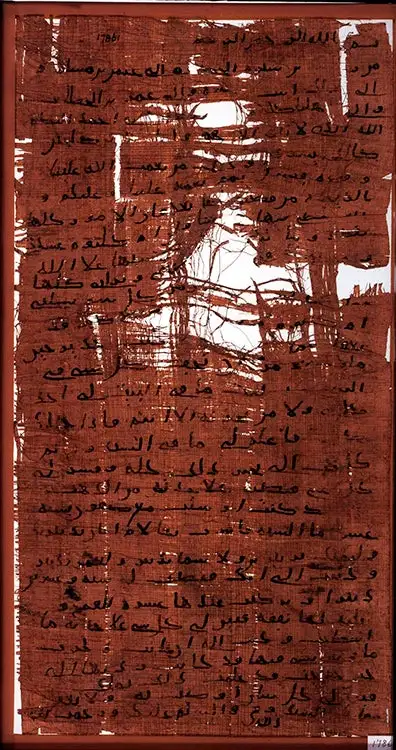
Umm Hakim bint al-Harith was a woman of the Banu Makhzum, the clan of Quraysh to which her father al-Harith ibn Hisham belonged. The biographical dictionaries give her descent as Umm Hakim bint al-Harith ibn Hisham ibn al-Mughira ibn Abd Allah ibn Umar ibn Makhzum.12 Umm Hakim is a kunya, and the TDV İslâm Ansiklopedisi states that her personal name is not known.3 She was married to her cousin Ikrima ibn Abi Jahl, and the sources place her with him on the side of Quraysh at Uhud.45 At the conquest of Mecca in 8 AH (630 CE) she became a Muslim and asked the Prophet Muhammad (Peace Be Upon Him) for a promise of safety for Ikrima, who had fled to Yemen, and she set out, found him and brought him back.63 The sources give two places where she reached him, and they are set side by side below. The Prophet confirmed Umm Hakim and Ikrima as husband and wife.7
After Ikrima was killed in Syria, she married Khalid ibn Sa'id, whom the TDV entry describes as one of the first Muslims. In the accounts of Ibn Sa'd, the TDV entry and the Encyclopaedia of Islam, Khalid was killed in the battle at Marj al-Suffar, near Damascus, soon after their wedding; she went into the fighting, and the bridge there was afterwards called by her name.839 Several sources name Umar ibn al-Khattab as a later husband and give them a daughter, Fatima.1011 Ibn Ishaq, in al-Tabari's account, names her among the women of Quraysh who fought at al-Yarmuk in 15 AH, and that is the latest event in which a source places her.12 The sources read give no year of her birth, and none states where she died or was buried.
The TDV entry classifies her as a woman Companion, and Ibn Asakir's notice says that she had companionship (suhba) with the Prophet.31
The sources
The notices on her are in the biographical dictionaries, in the histories of the early conquests and in modern reference works. Ibn Sa'd (d. 230/845), whose al-Tabaqat al-kubra is a biographical dictionary of the early Muslims, has two passages on her: one in his eighth volume, in the part on women, which records her lineage and her pledge to the Prophet at the conquest, and one in his fourth volume, within the notice of Khalid ibn Sa'id, which tells of her marriages and of the battle.1314 Ibn Abd al-Barr (d. 463/1070–71) in al-Isti'ab, Ibn al-Athir (d. 630/1232–3) in Usd al-ghaba and Ibn Hajar al-Asqalani (d. 852/1448–9) in al-Isaba are later dictionaries of the Companions, and each gives her a notice that draws on earlier books.1552 Ibn Asakir (d. 571/1175–6), the historian of Damascus, gives the longest, with the chains by which each report reached him, and he preserves reports that differ from one another.1
Al-Tabari (d. 310/922–3) tells the conquest of Mecca and the battle of al-Yarmuk in his History, and, in the supplement on the Companions and Successors, gives a report from Abd Allah ibn al-Zubayr on Ikrima's flight.61216 Malik ibn Anas (d. 179/796), the jurist of Medina, gives a report on her in his Muwatta', in the chapter on the marriage of a polytheist whose wife becomes a Muslim before him.17 No entry under her name was found in the Encyclopaedia of Islam, which names her in its entries on Marj al-Suffar and on the Banu Makhzum.918 The TDV İslâm Ansiklopedisi has an entry on her, by Aynur Urarer, published in 2012.3
Many of the reports reach the later books through al-Waqidi (d. 207/822), the early historian of the campaigns, and through Ibn Ishaq (d. 150/767 or 151/768), the biographer of the Prophet.147
Her name and family
Her father was al-Harith ibn Hisham, whom the TDV entry identifies as the brother of Abu Jahl, and her mother was Fatima bint al-Walid ibn al-Mughira, the sister of Khalid ibn al-Walid.35 Ibn Sa'd records that al-Harith married Fatima and that she bore him Abd al-Rahman ibn al-Harith and Umm Hakim.13 Ibn Asakir quotes the genealogist al-Zubayr ibn Bakkar (d. 256/870) for the same two children and adds that al-Harith had children only through them.10 The TDV entry says that her husband Ikrima, the son of Abu Jahl, was her paternal cousin, and the sources that mention the relationship agree.319 The TDV entry adds that they had no children.3
Ibn Sa'd's notice in his fourth volume and the heading of Ibn Asakir's notice write her name Umm al-Hakim; Ibn Sa'd's notice in his eighth volume and the other sources write Umm Hakim.14113 The article uses the second form. Ibn Hajar's al-Isaba gives separate notices to other women of the same kunya, among them Umm Hakim bint Abi Jahl, Umm Hakim bint Haram and Umm Hakim bint al-Zubayr ibn Abd al-Muttalib, and these are different women.220
At Uhud
Al-Tabari, in the narrative of the battle of Uhud in 3 AH (625 CE), records that Quraysh took their women with them to the battle "in the hope that they would be spurred on by zeal to defend these and would not run away", and lists among them the wives who went with their husbands. Of Ikrima he writes that he "had with him Umm Hakim bt. al-Harith b. Hisham b. al-Mughirah".4 Ibn Abd al-Barr, as Ibn Hajar quotes him, says that she was present at Uhud while she was not a Muslim, and Ibn al-Athir says the same.25 The TDV entry states that from the rise of Islam until the conquest of Mecca she and her husband acted against the Muslims, and that she took part in the battle with him; its entry on Ikrima says that he took part in Uhud with his wife Umm Hakim and commanded the left wing of the cavalry.321
The conquest of Mecca
Ikrima's flight and her conversion
When Mecca was conquered, the Prophet ordered that certain men be killed. Al-Tabari lists them on the authority of Ibn Ishaq, and Ikrima ibn Abi Jahl is among them; the TDV entries on her and on Ikrima say the same.6321 Ikrima fled to Yemen, and al-Tabari's text, from Ibn Ishaq, continues: "His wife, Umm Hakim bt. al-Harith b. Hisham, became a Muslim. She asked the Messenger of God to grant 'Ikrimah a promise of safety, and he did so. She set out to find him and then brought him to the Messenger of God."6 A second report in al-Tabari, from Ibn Ishaq through al-Zuhri (d. 124/742), names her together with Fakhita bint al-Walid, the wife of Safwan ibn Umayya, as having become Muslims, and says of her: "She then joined 'Ikrimah in Yemen and brought him back."7
Ibn Sa'd records, in the list of women who pledged allegiance, that she became a Muslim on the day of the conquest and came to the Prophet and gave him her pledge; the report comes through al-Waqidi from Abd Allah ibn al-Zubayr.13 Ibn Hajar, in al-Isaba, gives from Ibn Manda (d. 395/1004–5) the report through Ibn Ishaq, al-Zuhri and Urwa that she and Fakhita both became Muslims and that she sought protection for Ikrima, and from the Maghazi of Musa ibn Uqba (d. 141/758) the report through al-Zuhri that she became a Muslim on the day of the conquest, asked the Prophet's leave to go in search of her husband, received it and obtained safety for him.20 The TDV entry says that after she had pledged allegiance with the other women of Mecca she asked that her husband's life be spared, that the Prophet gave her a guarantee, and that she then took his leave and went to Yemen.3 It also says that she accepted Islam together with her mother and father.3 Of her parents, Ibn Sa'd says in his notice on her mother that Fatima bint al-Walid became a Muslim on the day of the conquest, came to the Prophet and pledged allegiance to him, in a report through the same chain as the one for her daughter.13
The journey
Ibn Asakir gives the fullest account of the journey, through Ibn Ishaq, al-Zuhri and Urwa ibn al-Zubayr: she asked the Prophet's leave to go in search of Ikrima and received it, and a slave of hers, a Roman, went out with her.22 The TDV entry likewise says that she went with her slave.3 The sources differ on where she reached her husband.
Ibn Ishaq's account in al-Tabari says that she joined Ikrima in Yemen, and so do Ibn Asakir's report from Ibn Ishaq, Malik's report in the Muwatta' and the TDV entry.722173 The report from Abd Allah ibn al-Zubayr, which al-Tabari gives through al-Waqidi, tells it differently. In that report Umm Hakim, who had already become a follower of the Prophet, went to him and said that Ikrima had fled to Yemen fearing that he would be killed, and asked for his protection. The Prophet replied, "I grant him the protection of God; whoever meets him must not harm him." She then set out and caught up with Ikrima on the coast of Tihamah, already embarked on a boat. She told him that she had asked the Prophet for his protection and that he had granted it, and, in the translation's words, "So 'Ikrimah went back with her."16
The TDV entry says that she told Ikrima that the Prophet had forgiven all his enemies and had given her a guarantee of safety, and that she persuaded him to return to Medina.3 Malik's report, as Ibn Asakir quotes it, says that she called him to Islam and that he became a Muslim and went to the Prophet in the year of the conquest.22
The Prophet receives Ikrima
Al-Tabari's report from Abd Allah ibn al-Zubayr says that Umm Hakim went in first, after asking permission, and that Umar informed the Prophet that Ikrima had arrived; the Prophet rejoiced and rose to his feet without his cloak. Ikrima then entered and said: "O Muhammad, this woman here informs me that you have granted me protection." The Prophet answered: "So you are protected." Ikrima declared his faith and asked forgiveness for his enmity.1623 Malik's report, as he has it from Ibn Shihab and as Ibn Asakir gives it, says that when the Prophet saw him he sprang up joyfully, without his cloak, until he had taken his pledge, and that they remained married.1722 The TDV entry says that the Prophet received him standing and embraced him.3
The sources on the marriage agree that it continued. Al-Tabari, from Ibn Ishaq through al-Zuhri, writes that when Ikrima and Safwan became Muslims, "the Messenger of God confirmed the two women as wives of the two men as they had been originally."7 Ibn Abd al-Barr and Ibn Asakir say that they remained married, and the TDV entry says that the Prophet did not require them to renew the marriage contract, citing the Muwatta' and giving the case as the example for a marriage in which the wife becomes a Muslim before her husband.15223 Ibn Asakir also gives a report from Ibn Ishaq, through al-Zuhri from Abu Bakr ibn Abd al-Rahman, that the Prophet returned Umm Hakim to Ikrima in their first marriage after nearly a year.10
In Syria: Ikrima's death
After she became a Muslim, the TDV entry says, Umm Hakim fought alongside the Muslims, and she fought the Byzantines with her sword beside her husband.3 Ibn Abd al-Barr, as Ibn Hajar quotes him, says that she went out with Ikrima to the war against the Romans, where he was killed, and Ibn Asakir's heading for her notice says that she went with him to Syria as a fighter and was widowed there.21
The sources give several places and dates for Ikrima's death. Ibn Sa'd, in an account that he takes from al-Waqidi through Abd al-Hamid ibn Ja'far, who has it from his father, says that Ikrima was killed at Ajnadayn, and Ibn Abd al-Barr gives the same account.1415 The TDV entry says that he was killed at Ajnadayn in the caliphate of Abu Bakr, in 13 AH (634 CE).3 In Ibn Asakir's notice on Ikrima, reports from Musa ibn Uqba through al-Zuhri, from Ibn Lahi'a through Urwa and from Abu Zur'a put his death at Ajnadayn, and one report dates Ajnadayn to Jumada I of 13 AH.24 The same notice preserves other reports. One from Ibn Ishaq through al-Zuhri has him killed at Fahl, and Ibn Asakir gives the same place in a report in his notice on Umm Hakim.2519 Further reports have him killed at Marj al-Suffar; at al-Yarmuk, in a report from Ibn Ishaq; and on the day Damascus was taken in Rajab 14 AH, in another report from Ibn Ishaq.2526 In the genealogy that Ibn Asakir quotes from al-Zubayr ibn Bakkar, Ikrima was killed at al-Yarmuk.10
After Ikrima's death she observed the waiting period of a widow, four months and ten days, according to Ibn Sa'd and Ibn Abd al-Barr.1415
Marriage to Khalid ibn Sa'id and the battle at Marj al-Suffar
Ibn Sa'd's account, which Ibn Asakir and Ibn Abd al-Barr repeat, goes as follows. During her waiting period Yazid ibn Abi Sufyan asked to marry her, and Khalid ibn Sa'id sent her an indirect proposal; she inclined to Khalid, and he married her for a dower of four hundred dinars.14827 Khalid had taken part in the battles of Ajnadayn, Fahl and Marj al-Suffar. When the Muslims camped at Marj al-Suffar he wished to consummate the marriage, and she asked him to wait until God had dispersed the enemy armies. He replied that he thought he would be killed among them, and she agreed. He consummated the marriage at the bridge at al-Suffar, which was named the bridge of Umm Hakim, and held a wedding feast the next morning. Before the guests had finished eating, the Romans formed their ranks. Khalid went out to fight and was killed. Umm Hakim tied on her clothes and went into the fighting, and fought on the river, and she killed seven men with the pole of the tent in which Khalid had spent the night with her.828 Usd al-ghaba, al-Isaba and Ibn Asakir tell the same story.5227
The TDV entry gives the outline: Ikrima died at Ajnadayn, she then married Khalid ibn Sa'id, whom the entry describes as one of the first Muslims and a scribe of the Prophet, the wedding was held at Marj al-Suffar during a pause in the fighting, and Khalid was killed on the day of his marriage.3 The Encyclopaedia of Islam places the battle at Marj al-Suffar, near Damascus, after the victory at Ajnadayn: Khalid ibn Sa'id, who had been placed under the command of Shurahbil ibn Hasana, arrived with the advance party and camped there with his troops, and was surprised by Byzantines under Theodore, the brother of Heraclius; he was killed and buried on the spot, and his newly married wife Umm Hakim, the widow of Ikrima, entered the fighting and killed his enemies. The bridge on which she fought was named after her in memory of it.9
The accounts differ on points of detail:
- The date of the battle. The Encyclopaedia of Islam gives Jumada 13 AH (August 634 CE).9 Ibn Sa'd gives Muharram 14 AH, in the caliphate of Umar.8 The TDV entry dates the wedding at Marj al-Suffar to 14 AH (635–36 CE).3
- The number she killed. Ibn Sa'd, Ibn Abd al-Barr, Usd al-ghaba and al-Isaba give seven, and so do Ibn Asakir's reports from Ibn Abi al-Dunya and from Sa'id ibn Abd al-Aziz.828521929 In Ibn Asakir's chapter on the battle of Ajnadayn, however, she kills four Romans with the pole of her tent; the modern editor's note on that passage identifies her as the wife whom Khalid married on the morning of the battle, and names al-Baladhuri's Futuh al-buldan for seven.30 The Encyclopaedia of Islam says only that she killed enemies.9
- How long the marriage lasted. In Ibn Sa'd's account Khalid is killed on the morning after the wedding night, and the TDV entry says on the day he married.83 Ibn Asakir quotes Muhammad ibn Shu'ayb that she stayed with him for only seven days.29
- Where Khalid died. Ibn Asakir's notice on Khalid gives Marj al-Suffar on the authority of Ibn Ishaq and of Sa'id ibn Abd al-Aziz, and Ajnadayn on the authority of Musa ibn Uqba, of Urwa and of al-Waqidi. A remark added to the reports says that the report of Sa'id ibn Abd al-Aziz, which puts the death at Marj al-Suffar, is the sounder.3132
At al-Yarmuk
Al-Tabari, in his narrative of the year 14 and of the battle of al-Yarmuk in Rajab of 15 AH (July–August 636 CE), gives an account from Ibn Ishaq that has no chain of transmitters. In it the fighting was heavy and the camp of the Muslims was entered, and "women from the tribe of Quraysh fought with the swords, competing with the men. Among them was Umm Hakim bint al-Harith b. Hisham."12 Ibn Asakir gives a report from Ishaq ibn Bishr that the women entered the Muslims' camp at al-Yarmuk in 15 AH and that women of Quraysh fought with swords, Umm Hakim among them, vying with the men.29
The note on this passage by the modern translator Yohanan Friedmann says that Umm Hakim was for a time the wife of Umar and bore him Fatima, and that she had also taken part in the battle of Marj al-Suffar, and refers to Ibn Sa'd.12 The note therefore names a different battle from the one in the text it annotates.
Marriage to Umar ibn al-Khattab and her daughter Fatima
Several sources name Umar ibn al-Khattab as a husband of hers. In the genealogy of al-Zubayr ibn Bakkar that Ibn Asakir quotes, she was married first to Ikrima, then to Khalid ibn Sa'id, and then to Umar, to whom she bore Fatima.10 Ibn Asakir gives the same order in another report, which says that Umar married her when her waiting period had ended, and in a report from Abd al-A'la ibn Mushir that Umar married her after Khalid.1929 The TDV entry says that she later married Umar and that they had a daughter, Fatima.3
Al-Tabari's passage on Umar's marriages, which draws on al-Mada'ini (the early historian born in 135/752) and al-Waqidi, reads: "There were also other reports that he married Umm Hakim bt. al-Harith b. Hisham b. al-Mughirah b. 'Abdallah b. 'Umar b. Makhzum after the advent of Islam. She bore him Fatimah, but he divorced her. But al-Mada'ini reported that it was said he did not divorce her."11 The Encyclopaedia of Islam, in its entry on the Banu Makhzum, says that one of Umar's wives, Umm Hakim, was a daughter of al-Harith ibn Hisham.18 The modern biographer Ali Muhammad al-Sallabi states in the first volume of his 'Umar ibn al-Khattab: His Life and Times that Umar married her after Ikrima was killed in Syria, that she bore him Fatima and that he divorced her, and adds that it was also said that he did not divorce her; in his second volume he tells of her marriage to Khalid ibn Sa'id after Ikrima and does not mention Umar.3334 Ibn Sa'd's account, Ibn Abd al-Barr, Usd al-ghaba, al-Isaba and the entry on Marj al-Suffar in the Encyclopaedia of Islam name Khalid and not Umar.828529
Ibn Asakir records that Fatima bint Umar married Abd al-Rahman ibn Zayd ibn al-Khattab, and that their son Abd Allah ibn Abd al-Rahman ibn Zayd left descendants.10 No source read gives a date for the marriage to Umar.1011
What the sources do not give
No source read states the year or place of her birth, and none states where she died or was buried.3 The article gives no year of her death. The latest event in which a source it uses places her is Yarmuk in 15 AH, and the Period at the head of this article, "d. 636 CE or later / 15 AH or later", rests on that account alone.12
The TDV entry says that no hadith is narrated from her.3 The report in Malik's Muwatta' that tells of her conversion and her journey is Ibn Shihab's account of her, with Malik transmitting it from him, and it is not a report she narrates.17
Historiographical Note
The sources agree that the woman treated here is the daughter of al-Harith ibn Hisham and the wife of Ikrima ibn Abi Jahl. They differ on the points below, and the article gives each version with its source.
Her father's name. Ibn Asakir quotes Ibn Manda for a report that the transmitter Ibn Uyayna had from al-Zuhri, which says that some Muslim women became Muslims before their husbands and that the Prophet did not separate them. It lists among them Umm Hakim bint al-Walid ibn al-Mughira, the wife of Ikrima, and Ibn Asakir comments only that this is how the narrator said it.1 Every other source read, including Ibn Asakir's own heading and al-Zubayr ibn Bakkar's genealogy, names her father as al-Harith and her mother as Fatima bint al-Walid, and the article rests on those.11013
Where she reached Ikrima, and where he came to the Prophet. Ibn Ishaq's account in al-Tabari, Ibn Asakir's report from Ibn Ishaq, Malik's report and the TDV entry say Yemen. The report from Abd Allah ibn al-Zubayr says the coast of Tihamah, with Ikrima aboard a boat.72217316 The TDV entry on her says that she persuaded him to return to Medina and that he became a Muslim in the Prophet's presence after reaching Medina; its entry on Ikrima says that he returned to Mecca and became a Muslim; and the report from Abd Allah ibn al-Zubayr brings him to the Prophet at Mecca.32116
Her husbands. Ibn Sa'd, Ibn Abd al-Barr, Usd al-ghaba, al-Isaba, the entry on Marj al-Suffar in the Encyclopaedia of Islam and the second volume of al-Sallabi's biography of Umar name Khalid ibn Sa'id as her husband after Ikrima and do not mention Umar.141552934 The first volume of al-Sallabi's biography names Umar after Ikrima and does not mention Khalid, and al-Tabari, the translator's note in his twelfth volume and the entry on the Banu Makhzum in the Encyclopaedia of Islam name Umar as a husband without saying when.33111218 Ibn Asakir, in three reports, and the TDV entry give all three husbands in the order Ikrima, Khalid, Umar.1019293 No source read says that she was not married to the one it does not mention. On the divorce, al-Tabari says that Umar divorced her and that al-Mada'ini reported that it was said he did not, and al-Sallabi gives the same two statements.1133
The order of the two battles. The Encyclopaedia of Islam puts Marj al-Suffar after Ajnadayn, and the printed text of a report in Ibn Asakir's chapter on Ajnadayn, from Sa'id ibn Abd al-Aziz and Ibn Jabir, says that Ajnadayn came after Marj al-Suffar; the editor notes that the abridgement of Ibn Manzur reads the other way, with Marj al-Suffar after Ajnadayn. The places and dates of the deaths of Ikrima and Khalid, the date of the battle at Marj al-Suffar and the number she killed are set out in the sections above, each with its source.93530
Her death. The article gives no year for it. Ibn Ishaq's account of al-Yarmuk is the latest dated mention of her that it uses.12
See also
- Ikrima ibn Abi Jahl — her first husband
- Conquest of Mecca — the event at which she became a Muslim
- Umar ibn al-Khattab — named by several sources as a later husband
- Khalid ibn al-Walid — her mother's brother
- Battle of Yarmouk — where Ibn Ishaq places her among the women of Quraysh
- Battle of Uhud — where the sources place her with Ikrima before she became a Muslim
References
Citations
Footnotes
-
Ibn Asakir, Tarikh madinat Dimashq, lxx, 223 — the opening of the notice on her: her descent and mother, the bridge, her companionship with the Prophet, her request for Ikrima, her going to Syria, her presence at Uhud, Ibn Manda's report and the report from Ibn Uyayna naming Umm Hakim bint al-Walid; https://shamela.ws/book/71/31696, register entry 4, shamela.ws. ↩ ↩2 ↩3 ↩4 ↩5 ↩6 ↩7
-
Ibn Hajar al-Asqalani, al-Isaba fi tamyiz al-Sahaba, viii, 379 — her notice, with Ibn Abd al-Barr's account of Uhud, the conquest, Ikrima, Khalid ibn Sa'id and Marj al-Suffar, and the neighbouring notices of other women of the same kunya; https://shamela.ws/book/9767/4292, register entry 4, shamela.ws. ↩ ↩2 ↩3 ↩4 ↩5 ↩6 ↩7 ↩8 ↩9
-
Aynur Urarer, 'Ümmü Hakîm', TDV İslâm Ansiklopedisi, vol. 42 (Istanbul, 2012), pp. 319–320 — her family, Uhud, her conversion and request for Ikrima, her journey to Yemen, the continuation of the marriage, her fighting, her marriages to Khalid ibn Sa'id and to Umar, and the statement on her learning; https://islamansiklopedisi.org.tr/ummu-hakim, register entry 2, islamansiklopedisi.org.tr. ↩ ↩2 ↩3 ↩4 ↩5 ↩6 ↩7 ↩8 ↩9 ↩10 ↩11 ↩12 ↩13 ↩14 ↩15 ↩16 ↩17 ↩18 ↩19 ↩20 ↩21 ↩22 ↩23 ↩24 ↩25 ↩26 ↩27 ↩28
-
Al-Tabari, The History of al-Tabari, vol. 7, The Foundation of the Community, translated by M. V. McDonald, annotated by W. Montgomery Watt (Albany: State University of New York Press, 1987), p. 107 (Leiden i 1386), the battle of Uhud — the women taken by Quraysh and Ikrima's wife; https://archive.org/details/tabarivolume07, register entry 12, archive.org. ↩ ↩2
-
Ibn al-Athir, Usd al-ghaba fi ma'rifat al-sahaba, vii, 321 — her notice: her descent and mother, Uhud as a non-Muslim, her conversion at the conquest, her request for Ikrima, and the wedding and battle at Marj al-Suffar; https://shamela.ws/book/1564/3393, register entry 4, shamela.ws. ↩ ↩2 ↩3 ↩4 ↩5 ↩6 ↩7 ↩8
-
Al-Tabari, The History of al-Tabari, vol. 8, The Victory of Islam, translated by Michael Fishbein (Albany: State University of New York Press, 1997), pp. 179–180 (Leiden i 1640–1641) — the list of those the Prophet ordered killed at the conquest, Ikrima's flight and his wife's request; https://archive.org/details/tabarivolume08_201911, register entry 12, archive.org. ↩ ↩2 ↩3 ↩4
-
Al-Tabari, The History of al-Tabari, vol. 8, The Victory of Islam, translated by Michael Fishbein (Albany: State University of New York Press, 1997), p. 185 (Leiden i 1645–1646) — the report from Ibn Ishaq through al-Zuhri on Umm Hakim and Fakhita, Ikrima in Yemen and the confirmation of the marriages; https://archive.org/details/tabarivolume08_201911, register entry 12, archive.org. ↩ ↩2 ↩3 ↩4 ↩5 ↩6
-
Ibn Sa'd, al-Tabaqat al-kubra, ed. Ihsan Abbas (Beirut: Dar Sadir, 1968), iv, 99 — the dower, the wedding at the bridge at al-Suffar, the battle, the seven killed and the date Muharram 14 AH; https://shamela.ws/book/9351/1604, register entry 4, shamela.ws. ↩ ↩2 ↩3 ↩4 ↩5 ↩6 ↩7
-
N. Elisseeff, 'Mardj al-Suffar', The Encyclopaedia of Islam, new edition, vol. 6 — the battle at Marj al-Suffar in Jumada 13/August 634, after the victory of Ajnadayn, the death of Khalid ibn Sa'id there, the fighting of his newly married wife Umm Hakim, the widow of Ikrima, and the name of the bridge. ↩ ↩2 ↩3 ↩4 ↩5 ↩6 ↩7 ↩8
-
Ibn Asakir, Tarikh madinat Dimashq, lxx, 225 — the report from Abd Allah ibn al-Zubayr through Ibn Sa'd, the report that the Prophet returned her to Ikrima after nearly a year, and the genealogy from al-Zubayr ibn Bakkar with her husbands and her daughter Fatima; https://shamela.ws/book/71/31698, register entry 4, shamela.ws. ↩ ↩2 ↩3 ↩4 ↩5 ↩6 ↩7 ↩8 ↩9
-
Al-Tabari, The History of al-Tabari, vol. 14, The Conquest of Iran, translated by G. Rex Smith (Albany: State University of New York Press, 1994), p. 100 (Leiden i 2733) — the list of Umar's marriages and the passage on Umm Hakim bint al-Harith; https://archive.org/details/tabarivolume14, register entry 12, archive.org. ↩ ↩2 ↩3 ↩4 ↩5
-
Al-Tabari, The History of al-Tabari, vol. 12, The Battle of al-Qadisiyyah and the Conquest of Syria and Palestine, translated by Yohanan Friedmann (Albany: State University of New York Press, 1992), p. 133 (Leiden i 2347) and note 449 — Ibn Ishaq's account of the women of Quraysh at al-Yarmuk and the translator's note on Umm Hakim; https://archive.org/details/20191102_20191102_0635, register entry 12, archive.org. ↩ ↩2 ↩3 ↩4 ↩5 ↩6 ↩7
-
Ibn Sa'd, al-Tabaqat al-kubra, ed. Ihsan Abbas (Beirut: Dar Sadir, 1968), viii, 261 — the notices on Fatima bint al-Walid and on Umm Hakim bint al-Harith in the list of women who pledged allegiance: their descent and their conversion and pledge on the day of the conquest; https://shamela.ws/book/9351/3639, register entry 4, shamela.ws. ↩ ↩2 ↩3 ↩4 ↩5 ↩6
-
Ibn Sa'd, al-Tabaqat al-kubra, ed. Ihsan Abbas (Beirut: Dar Sadir, 1968), iv, 98 — the report through al-Waqidi, Abd al-Hamid ibn Ja'far and his father on Khalid ibn Sa'id's battles, Ikrima's death at Ajnadayn, the waiting period and the proposals; https://shamela.ws/book/9351/1603, register entry 4, shamela.ws. ↩ ↩2 ↩3 ↩4 ↩5 ↩6 ↩7
-
Ibn Abd al-Barr, al-Isti'ab fi ma'rifat al-ashab, the edition listed on Shamela as 'ed. al-Turki', viii, 317 — her notice: Ikrima's flight, her bringing him back, their remaining married, and the account from al-Waqidi through Abd al-Hamid ibn Ja'far and his father; https://shamela.ws/book/1499/4367, register entry 4, shamela.ws. ↩ ↩2 ↩3 ↩4 ↩5
-
Al-Tabari, The History of al-Tabari, vol. 39, Biographies of the Prophet's Companions and Their Successors, translated by Ella Landau-Tasseron (Albany: State University of New York Press, 1998), p. 17 (Leiden iii 2306–2307), the notice on Ikrima ibn Abi Jahl — the report from Abd Allah ibn al-Zubayr: Ikrima's flight, her request, the coast of Tihamah and the return; https://archive.org/details/tabarivolume39, register entry 12, archive.org. ↩ ↩2 ↩3 ↩4 ↩5
-
Malik ibn Anas, al-Muwatta', riwayat Yahya al-Laythi, ed. Muhammad Fu'ad Abd al-Baqi, ii, 545, no. 46, chapter on the marriage of a polytheist whose wife becomes a Muslim before him — Malik's report from Ibn Shihab on her conversion on the day of the conquest, her journey to Yemen and the continuation of the marriage (the TDV entry cites it as "Nikah", 46, and Ibn Asakir's editor as no. 1145 of the edition he used); https://shamela.ws/book/1699/1556, register entry 4, shamela.ws. ↩ ↩2 ↩3 ↩4 ↩5
-
'Makhzum, Banu', The Encyclopaedia of Islam, new edition, vol. 6 (the signature of the entry was not read) — the statement that one of Umar's wives, Umm Hakim, was a daughter of al-Harith ibn Hisham. ↩ ↩2 ↩3
-
Ibn Asakir, Tarikh madinat Dimashq, lxx, 226 — Ibn Sa'd's list of the women who pledged allegiance, Abu Nu'aym on her cousin Ikrima, and the report from Ibn Abi al-Dunya on the death of Khalid, her seven killed and the death of Ikrima at Fahl; https://shamela.ws/book/71/31699, register entry 4, shamela.ws. ↩ ↩2 ↩3 ↩4 ↩5
-
Ibn Hajar al-Asqalani, al-Isaba fi tamyiz al-Sahaba, viii, 380 — Ibn Manda's report through al-Sajzi, Ibn Ishaq, al-Zuhri and Urwa, the report of Musa ibn Uqba through al-Zuhri, and the notices of Umm Hakim bint Haram and Umm Hakim bint al-Zubayr; https://shamela.ws/book/9767/4293, register entry 4, shamela.ws. ↩ ↩2
-
Abdullah Aydınlı, 'İkrime b. Ebû Cehil', TDV İslâm Ansiklopedisi, vol. 22 (Istanbul, 2000), pp. 42–43 — Ikrima at Uhud with his wife Umm Hakim, his flight to Yemen at the conquest and his pardon at his wife's request; https://islamansiklopedisi.org.tr/ikrime-b-ebu-cehil, register entry 2, islamansiklopedisi.org.tr. ↩ ↩2 ↩3
-
Ibn Asakir, Tarikh madinat Dimashq, lxx, 224 — the report from Ibn Ishaq through al-Zuhri and Urwa on the journey, with the Roman slave, and the report of Malik from Ibn Shihab; https://shamela.ws/book/71/31697, register entry 4, shamela.ws. ↩ ↩2 ↩3 ↩4 ↩5 ↩6
-
Al-Tabari, The History of al-Tabari, vol. 39, Biographies of the Prophet's Companions and Their Successors, translated by Ella Landau-Tasseron (Albany: State University of New York Press, 1998), p. 18 (Leiden iii 2307) — the same report: the arrival of Ikrima and the Prophet's answer; https://archive.org/details/tabarivolume39, register entry 12, archive.org. ↩
-
Ibn Asakir, Tarikh madinat Dimashq, xli, 71 — the reports placing Ikrima's death at Ajnadayn, with the date Jumada I 13 AH; https://shamela.ws/book/71/18531, register entry 4, shamela.ws. ↩
-
Ibn Asakir, Tarikh madinat Dimashq, xli, 70 — the notice on Ikrima ibn Abi Jahl: the reports placing his death at Fahl, Marj al-Suffar and al-Yarmuk; https://shamela.ws/book/71/18530, register entry 4, shamela.ws. ↩ ↩2
-
Ibn Asakir, Tarikh madinat Dimashq, xli, 72 — further reports on the death of Ikrima, including the report from Ibn Ishaq on the day of the taking of Damascus; https://shamela.ws/book/71/18532, register entry 4, shamela.ws. ↩
-
Ibn Asakir, Tarikh madinat Dimashq, lxx, 227 — Ibn Sa'd's account through al-Waqidi of the waiting period, the proposals, the wedding and the battle at Marj al-Suffar, with the date Muharram 14 AH; https://shamela.ws/book/71/31700, register entry 4, shamela.ws. ↩ ↩2
-
Ibn Abd al-Barr, al-Isti'ab, viii, 318 — the end of the account of the battle, with the seven killed and the pole of the tent; https://shamela.ws/book/1499/4368, register entry 4, shamela.ws. ↩ ↩2 ↩3
-
Ibn Asakir, Tarikh madinat Dimashq, lxx, 228 — the reports from Ibn A'id (the seven days, Umar's marriage and Sa'id ibn Abd al-Aziz's account) and the report from Ishaq ibn Bishr on al-Yarmuk; https://shamela.ws/book/71/31701, register entry 4, shamela.ws. ↩ ↩2 ↩3 ↩4 ↩5
-
Ibn Asakir, Tarikh madinat Dimashq, ii, 102 — the chapter on Ajnadayn: the four Romans killed by Umm Hakim and the editor's note identifying her and citing al-Baladhuri; https://shamela.ws/book/71/558, register entry 4, shamela.ws. ↩ ↩2
-
Ibn Asakir, Tarikh madinat Dimashq, xvi, 84 — the notice on Khalid ibn Sa'id ibn al-As: the reports placing his death at Marj al-Suffar and at Ajnadayn; https://shamela.ws/book/71/6972, register entry 4, shamela.ws. ↩
-
Ibn Asakir, Tarikh madinat Dimashq, xvi, 85 — the reports from Urwa and al-Waqidi for Ajnadayn and the comment on the report of Sa'id ibn Abd al-Aziz; https://shamela.ws/book/71/6973, register entry 4, shamela.ws. ↩
-
Ali Muhammad al-Sallabi, 'Umar ibn al-Khattab: His Life and Times, translated by Nasiruddin al-Khattab, vol. 1 — the list of Umar's marriages: Umm Hakim bint al-Harith ibn Hisham after Ikrima's death in Syria, her daughter Fatima, and the statements on the divorce. ↩ ↩2 ↩3
-
Ali Muhammad al-Sallabi, 'Umar ibn al-Khattab: His Life and Times, translated by Nasiruddin al-Khattab, vol. 2 — her marriage to Khalid ibn Sa'id after Ikrima's death, the wedding at Marj al-Suffar and her fighting. ↩ ↩2
-
Ibn Asakir, Tarikh madinat Dimashq, ii, 101 — the chapter on Ajnadayn: the report on the order of Ajnadayn and Marj al-Suffar and the editor's note on the abridgement of Ibn Manzur; https://shamela.ws/book/71/557, register entry 4, shamela.ws. ↩
Sources
Works in the approved library. Cited by title and author, and by the entry used.
- Bearman, P. J., et al., eds. The Encyclopaedia of Islam, new (second) edition — N. Elisseeff, 'Mardj al-Suffar', and 'Makhzum, Banu' (vol. 6).
- Al-Sallabi, Ali Muhammad. 'Umar ibn al-Khattab: His Life and Times. 2 vols. Translated by Nasiruddin al-Khattab. Classical works and a modern dictionary read at Shamela (register entry 4, shamela.ws).
- Ibn Sa'd. Al-Tabaqat al-kubra. Edited by Ihsan Abbas. Beirut: Dar Sadir, 1968. Vols 4 and 8.
- Ibn Abd al-Barr. Al-Isti'ab fi ma'rifat al-ashab. Vol. 8 of the edition listed on Shamela as 'ed. al-Turki'.
- Ibn al-Athir. Usd al-ghaba fi ma'rifat al-sahaba. Vol. 7.
- Ibn Hajar al-Asqalani. Al-Isaba fi tamyiz al-Sahaba. Vol. 8.
- Ibn Asakir. Tarikh madinat Dimashq. Vols 2, 16, 41 and 70.
- Malik ibn Anas. Al-Muwatta', recension of Yahya al-Laythi. Edited by Muhammad Fu'ad Abd al-Baqi. Vol. 2. Read at archive.org (register entry 12, archive.org).
- Al-Tabari. The History of al-Tabari. Albany: State University of New York Press. Vol. 7, The Foundation of the Community, translated by M. V. McDonald, annotated by W. Montgomery Watt (1987); vol. 8, The Victory of Islam, translated by Michael Fishbein (1997); vol. 12, The Battle of al-Qadisiyyah and the Conquest of Syria and Palestine, translated by Yohanan Friedmann (1992); vol. 14, The Conquest of Iran, translated by G. Rex Smith (1994); vol. 39, Biographies of the Prophet's Companions and Their Successors, translated by Ella Landau-Tasseron (1998). Encyclopaedia entries read at the TDV (register entry 2, islamansiklopedisi.org.tr).
- Urarer, Aynur. 'Ümmü Hakîm'. TDV İslâm Ansiklopedisi, vol. 42. Istanbul, 2012.
- Aydınlı, Abdullah. 'İkrime b. Ebû Cehil'. TDV İslâm Ansiklopedisi, vol. 22. Istanbul, 2000.
Further reading
Offered to the reader for further study. Nothing in this article rests on the works below beyond what the sources above record of them.
- Al-Mus'ab al-Zubayri. Nasab Quraysh — the work in which the editor of Ibn Asakir's Tarikh madinat Dimashq locates the genealogy that Ibn Asakir quotes from al-Zubayr ibn Bakkar for her parents, her husbands and her daughter Fatima.
- Al-Baladhuri. Futuh al-buldan — cited by the editor of Ibn Asakir's Tarikh madinat Dimashq for the figure of seven killed at Ajnadayn.
- Ibn Ishaq. Al-Sira — the source of the account of her conversion and her request for Ikrima that al-Tabari and Ibn Asakir give.
External links
Approved sources only, each with its number on the Register of Approved External Web Sources.
- Ümmü Hakîm — the TDV İslâm Ansiklopedisi, register entry 2, islamansiklopedisi.org.tr: the entry on her, in Turkish
- Ibn Asakir, Tarikh madinat Dimashq, the notice on Umm al-Hakim bint al-Harith — register entry 4, shamela.ws: in Arabic
- Ibn Sa'd, al-Tabaqat al-kubra, the notice on Khalid ibn Sa'id — register entry 4, shamela.ws: in Arabic
- Al-Tabari, The History of al-Tabari, vol. 8 — register entry 12, archive.org: the translation of the account of the conquest of Mecca
Mentioned In
2 articles reference this topic
More from Prophetic Era / Rashidun Caliphate
Abu al-Darda
Abu al-Darda, named Uwaymir in most of the sources, was a merchant of Medina who became a Muslim among the last of his household and left trade for worship. He later served as a judge and taught the Quran at Damascus, where most sources place his death in 32 AH (652 CE).
Al-Shifa' bint Abdullah
Al-Shifa' bint Abd Allah ibn Abd Shams of the Banu Adi was a woman of Mecca who became a Muslim before the Hijra and lived in Medina into the caliphate of Umar ibn al-Khattab. The biographers record her marriages, her sons, the Prophet's instruction to her about Hafsa, and Umar's visits to her.