Zayd ibn Ali
Zayd ibn Ali (born between 75 and 80 AH, died 122 AH) was a son of Zayn al-Abidin who taught and transmitted hadith in Medina and led a rising against the Umayyads at Kufa in 122/740. The Zaydiyya branch of the Shi'a takes its name from him.
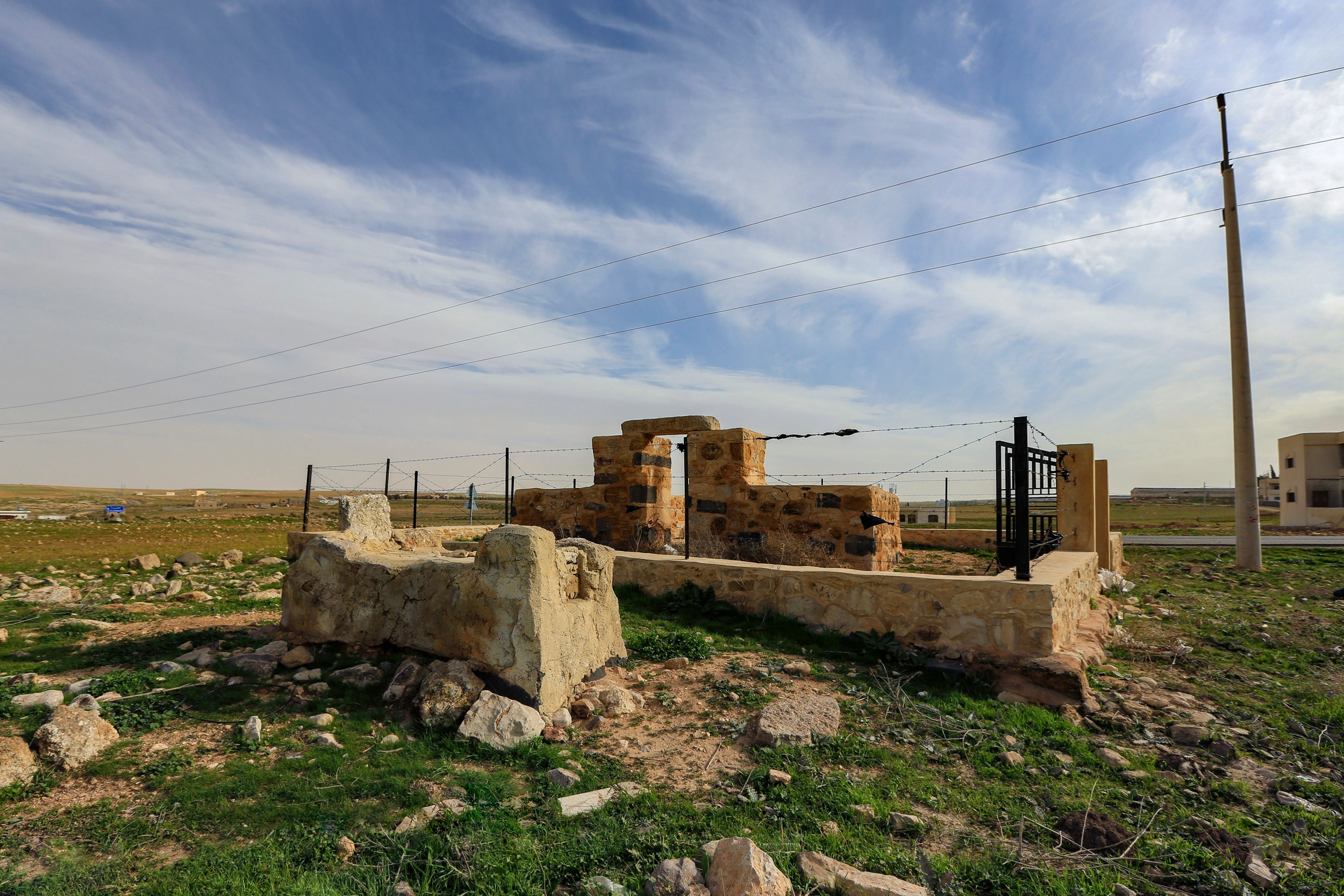
Zayd ibn Ali ibn al-Husayn ibn Ali ibn Abi Talib (born in Medina between 75/694 and 80/699, died at Kufa in 122/740), known by the kunya Abu al-Husayn, was a son of Ali ibn al-Husayn Zayn al-Abidin, a younger brother of Muhammad al-Baqir, and a great-grandson of Ali ibn Abi Talib and of Fatimah, the daughter of the Prophet Muhammad (Peace Be Upon Him).123 He studied in Medina, transmitted hadith from his father, his brother and others, and was reckoned a scholar of the Quran and of law.12 Madelung, a modern scholar, writes in the Encyclopaedia of Islam that he led "the revolt that gave rise to the Zaydiyya", the branch of the Shi'a that takes its name from him.145
His public life began in a lawsuit. His brother al-Baqir, as head of the descendants of al-Husayn, entrusted him with their case against the descendants of al-Hasan over the endowments left by Ali, which was heard before the Umayyad governors of Medina.16 A money claim connected with the deposed governor of Iraq then took him to the court of the caliph Hisham ibn Abd al-Malik and to the new governor, Yusuf ibn Umar, at al-Hira. He remained in Kufa, where men who looked to the family of the Prophet pledged allegiance to him, and he rose against Yusuf's government there in 122/740. Most of those who had pledged were held in the mosque under guard, a few hundred men fought with him, and he died of an arrow wound within days. His body was crucified at Kufa, and his head was sent to Hisham in Damascus.172
The sources agree on the course of the rising and differ on much of the detail: the year of his birth, the day on which he rose, the year of his death, how many pledged to him and how many fought, where he was buried, and why a part of his following left him. Each is told where it arises, and the Historiographical Note explains those that need it. His son Yahya fled to Khurasan and was killed there in 125/743. Madelung records that revenge for Zayd became one of the slogans of the Abbasid revolution.18
The sources
The fullest narrative of the rising is in the Ta'rikh al-rusul wa'l-muluk of al-Tabari (839–923), in the volume for the years 121 to 127 translated by Carole Hillenbrand. Most of it rests on the authority of Hisham ibn Muhammad al-Kalbi from the historian Abu Mikhnaf (d. 157/774), and al-Tabari adds reports from Abu Ubayda, from Ubayd ibn Jannad and from al-Mada'ini (d. 225/839).96 Abu al-Faraj al-Isfahani (d. 356 AH), a compiler, includes Zayd in Maqatil al-Talibiyyin, a book of notices on descendants of Abu Talib who were killed in war, died by poison or in prison, or lived as fugitives; his notice is the fullest on the days of the rising.1011 Ibn Sa'd's al-Tabaqat al-kubra, a biographical dictionary, has a short notice with Zayd's sons and a date of death.12 The later dictionaries of hadith transmitters, al-Mizzi's Tahdhib al-kamal, its abridgement by Ibn Hajar (d. 852 AH), Tahdhib al-tahdhib, and al-Dhahabi's Siyar a'lam al-nubala', record whom Zayd heard and who transmitted from him.31314
Among modern works, Madelung wrote the entries on Zayd, on his son Yahya and on the Zaydiyya in the Encyclopaedia of Islam, and Saffet Köse and Yusuf Gökalp those on Zayd and the Zaydiyya in the TDV İslâm Ansiklopedisi.18425 Ali Muhammad as-Sallabi's biography of Ali and Akbar Shah Najeebabadi's The History of Islam add points on the Rafida and the Zaydis and on the rising.1516
Name, family and birth
Name, kunya and family
His name was Zayd and his kunya Abu al-Husayn. Al-Dhahabi gives his nisbas as al-Hashimi, al-Alawi and al-Madani.3 His father was Ali Zayn al-Abidin, the son of al-Husayn ibn Ali who survived Karbala, and the TDV records that after the killing of their relatives Zayn al-Abidin and his elder son Muhammad al-Baqir withdrew from politics, kept to Medina apart from the pilgrimage, and gave themselves to learning.2 Al-Dhahabi lists as his brothers Abu Ja'far al-Baqir, Abd Allah, Umar, Ali and Husayn; Abu al-Faraj, giving the children of his own mother, names Zayd, Umar, Ali and Khadija.317
Muhammad al-Baqir became head of the Husaynids when their father died in 94/712–13 and was widely recognised by the Shi'a as imam, and Madelung reckons that Zayd was at least eighteen years younger than he was.1 Al-Baqir's son Ja'far al-Sadiq, who was Zayd's nephew, was by the TDV's description of an age close to Zayd's own.2
His mother
His mother was an umm walad, a slave woman who had borne a child to her master. Madelung and the TDV agree that she came from Sind; Madelung gives her name as Jayda and the TDV as Ceyda (Hayda).12 The TDV and Abu al-Faraj state that al-Mukhtar ibn Abi Ubayd gave her to Zayn al-Abidin, and the TDV adds that the sources contain statements in praise of her character.217
Birth
He was born in Medina, and the sources do not agree on the year. Madelung gives 75/694–5 on the authority of Zayd's son al-Husayn and judges that date more reliable than 79/698 or 80/699, which he reports as the years usually given in the Sunni sources.1 The TDV places the birth between 75 (694) and 80 (699) and notes that the statement, found in the sources, that he died in 122 (740) at the age of forty-two supports 80 (699).2 The Muslim 500 gives his dates as 695–740.18 The ages recorded at his death are taken up in the Historiographical Note.
Learning in Medina
Madelung writes that Zayd acquired a high standing in religious learning within his family and in Medina.1 The TDV describes him as a scholar of Quranic exegesis, hadith, jurisprudence, theology and recitation.2 It states that he stayed with his father, learned jurisprudence and hadith from him and memorised the Quran, and that after 94/712 he studied with his brother al-Baqir and with Ja'far al-Sadiq.2
Teachers and pupils
Madelung, the TDV, al-Mizzi and Ibn Hajar name the men from whom Zayd transmitted: his father, his brother Muhammad al-Baqir, Aban ibn Uthman ibn Affan, Urwa ibn al-Zubayr and Ubayd Allah ibn Abi Rafi'; Ibn Sa'd names his father alone.12131419 Those who transmitted from him included Ja'far al-Sadiq, his sons Husayn and Isa, al-Zuhri, al-A'mash, Shu'ba, Isma'il al-Suddi, Zubayd al-Yami and Abu Khalid Amr ibn Khalid al-Wasiti.13319 Al-Mizzi records that his reports are used by Abu Dawud, al-Tirmidhi, al-Nasa'i, in the Musnad of Ali, and Ibn Majah.20 Ibn Hibban, quoted by al-Mizzi and Ibn Hajar, counted him among the trustworthy transmitters.1314 In his life of the Prophet, Ibn Kathir quotes Zayd's statement that, had he been in Abu Bakr's place, he would have reached the same decision over the property at Fadak.21
Travels and the Mu'tazila
Unlike his father and his brother, Zayd did not stay in Medina. The TDV records that he travelled to Mecca, Basra, Damascus and Kufa, met scholars and held discussions with them, and that he lived among the people of those cities.2 At Basra he met Wasil ibn Ata, whom the TDV calls the imam of the Mu'tazila, and learned his ideas from him directly; according to the sources the TDV cites, he adopted some of them and opposed others, among them the view that Ali might have been wrong in the battles of the Camel and Siffin.2
The title halif al-Quran
Madelung records that Zayd bore the honorific halif al-Quran (literally, "ally of the Quran"), and that Sunni works on the variant readings cite numerous readings from his codex, which in Madelung's judgement show no notable Shi'i tendency.1 Abu al-Faraj preserves a report from a man who came to Medina and, asking after Zayd, was told that Zayd was halif al-Quran.22
The dispute over Ali's endowments
Madelung writes that al-Baqir, as head of the Husaynids, entrusted Zayd with the litigation on their behalf in a long-standing dispute between the families of al-Hasan and al-Husayn over the control of the endowments (sadaqat) of Ali ibn Abi Talib.1 The TDV also speaks of a dispute over the administration of Ali's endowed lands, while Abu Mikhnaf's account, as al-Tabari gives it, and Abu al-Faraj name the object as the sadaqa of the Prophet.2923 The case was heard before the Umayyad governors of Medina Ibrahim ibn Hisham (106–114/724–32) and Khalid ibn Abd al-Malik (114–117/732–5).1[a] In Madelung's judgement the case involved the leadership of the descendants of the Prophet through Fatimah and their potential claim on the caliphate.1
Al-Tabari gives a report, from Juwayriyah ibn Asma', that the Hasanids were first represented by Ja'far ibn al-Hasan ibn al-Hasan and, when he died, by his brother Abd Allah ibn al-Hasan, as Madelung also gives it.61 In that report the governor, according to some versions Ibrahim ibn Hisham, summoned Zayd and Abd Allah to hear the dispute afresh. Zayd told him: "I call God to witness that I will not litigate before you again on this matter, either rightly or wrongly, as long as I live."6 Al-Tabari adds that other sources said Zayd kept up the litigation until Hisham made Khalid ibn Abd al-Malik governor of Medina.6 Madelung names Khalid as the governor before whom Zayd broke off the case, on seeing that Khalid was using the dispute to discredit the family of the Prophet in front of the public of Medina.1
Whether the case was carried to Hisham is itself disputed. Madelung judges that reports of its being pursued before the caliph do not seem reliable and gives another report, that Zayd tried in vain to raise it before him and that Hisham refused to receive him.1 Al-Tabari has Zayd go to Hisham after the governor's hearing: Hisham did not at first admit him and wrote at the foot of each of Zayd's written complaints "Go back to your amir"; Zayd answered that he would not return to Khalid, and after a long delay Hisham admitted him.6 The TDV's entry on the Zaydiyya counts a dispute between Zayd and Hisham over the administration of Ali's endowments as one of the two precursors of the revolt.5
The claim in Iraq and the journey to Hisham
The second precursor, the same entry says, was Zayd's summons to Kufa to be confronted with the former governor of Iraq, Khalid ibn Abd Allah, over the Kufans' encouragement of Zayd to rebel.5 The other sources describe the summons otherwise. Madelung dates it to the change of governors: when Khalid al-Qasri was replaced as governor of Iraq by Yusuf ibn Umar in Jumada I 120/May 738, he claimed, under torture by his successor, that Zayd and several other Qurashi men held deposits of his.1[a] The sources differ on who made the claim. Madelung writes that according to some accounts it was Khalid's son Yazid or his client Tarik; Abu Mikhnaf's account, in al-Tabari, names Yazid ibn Khalid, who said he was owed money by Zayd and four other men, and Abu al-Faraj names Khalid himself.1923 Al-Tabari also gives an account from Abu Ubayda in which Khalid, under torture, said he had deposited a large sum with Zayd, Dawud ibn Ali of the Abbasid family and two Qurashi men.9 Al-Tabari reports the episode under the year 121, and his translator notes that Khalid fell from power in 120, so that it must have occurred before then.9
The nature of the charge is also told in two ways. Madelung, Abu Mikhnaf's account and Abu al-Faraj all describe the charge as one of money deposited with the accused.1923 A first account in al-Tabari, and the TDV, put it differently: Yusuf wrote to Hisham listing the men and what Khalid had given them, and added that Khalid had bought land in Medina from Zayd for ten thousand dinars and had then returned it.92
Hisham and Yusuf ibn Umar
Madelung writes that Yusuf informed Hisham, who sent for the Qurashi men. All the accused denied the claims, and Hisham cleared them of suspicion but insisted on sending them to Yusuf at al-Hira to be confronted with their accuser, as Abu al-Faraj and Abu Mikhnaf's account also say.1249 In al-Tabari's version Zayd asked Hisham, in the name of God and of kinship, not to send him to Yusuf, saying he feared that Yusuf would act aggressively towards him, and Hisham wrote to Yusuf that if the men denied the charges and the accuser produced no proof they were to swear and be released.9
What Yusuf did is told in two ways. In al-Tabari's account from Abu Mikhnaf he sat Zayd beside him and questioned him kindly, confronted the accused with Yazid, who said he was owed nothing, had the others flogged after they swore in the mosque, and withheld his hand from Zayd; Abu Ubayda's account in al-Tabari also has him receive them hospitably.925 Al-Dhahabi writes that Yusuf treated Zayd well and sent him back, and Khalifa ibn Khayyat, as al-Mizzi quotes him, that Zayd received a generous allowance.326 Abu al-Faraj tells it differently: Yusuf first treated Zayd courteously, then questioned him about the money and tortured him until he thought he had killed him, and released him when he swore that he owed nothing.24 In each version the accused were released; Madelung writes that the accuser withdrew his charges, and that Zayd's son Isa was born in al-Hira.1 The others returned to the Hijaz, and Zayd stayed in Kufa, together with the Abbasid Dawud ibn Ali according to Madelung and to Abu Ubayda's account.1925
At Hisham's court
The accounts of Zayd's meeting with the caliph differ in where it falls and in what Hisham did. Madelung writes that the reports that Zayd was already present at the court when the claim was made are unlikely.1 The TDV says that after a complaint naming him reached Hisham, Zayd went to the court, that Hisham was impressed by his speech and bearing, and that Hisham then warned Yusuf ibn Umar to be cautious because Zayd could gather people around himself.2 Al-Tabari has, from Umar ibn Shabba, a report from a servant whom Hisham ordered to follow Zayd up the stairs of an upper chamber without being seen: Zayd stopped on the stairs and said, "By God, anyone who loves this world will be humiliated." When Zayd came before him, al-Tabari says, Hisham met Zayd's demands, and Zayd departed for Kufa.27 Al-Tabari gives another report of the audience, in which Hisham, saying that he had heard Zayd wanted the caliphate, belittled his descent through his mother, and Zayd answered that God had chosen Isma'il, whose mother was a slave woman, over his brother and made him the ancestor of the Prophet Muhammad, so that a man descended from the Prophet should not be passed over, whoever his mother was.272 Ibn Sa'd gives a report from Muhammad ibn Umar, who had it from Abd Allah ibn Ja'far, that Zayd came before Hisham with a large debt and requests and that Hisham granted none of them; Salim, Hisham's client and chamberlain, told Abd Allah that as Zayd left he said that no one had ever loved life without being humbled, and that Zayd went on towards Kufa. Salim told Hisham of the words afterwards, and Hisham answered that the sum in question was five hundred thousand, which would have cost less than what followed.1219
Hisham's letter
Hisham then wrote to Yusuf ibn Umar. Madelung writes that the letter told Yusuf to send Zayd to the Hijaz at once and not let him linger, on the ground that Zayd, if he stayed among the Kufans, who believed in the superior religious status of his family, would incite them to rebellion and split the community.1 The text in al-Tabari adds that Yusuf was to threaten the Kufan leaders with flogging and the confiscation of their property if they joined Zayd.28
Kufa, 120–122/738–740
The stay in Kufa and the Kufans' appeal
Madelung writes that Yusuf ordered his deputy in Kufa, al-Hakam ibn al-Salt, to press Zayd to leave, and that Zayd, giving various excuses, stayed four or five months in the town.1 Al-Tabari has the same period and adds that Zayd told the deputy he was in litigation with some of the family of Talha ibn Ubayd Allah over money in Medina, and that Yusuf, who was at al-Hira, then ordered him sent away.25 Al-Tabari also gives an account in which Shi'is in Kufa had begun to rally behind Zayd, saying they hoped he would be "al-Mansur", the one to whom victory is given.29
Zayd set out for the Hijaz. Madelung records that when he reached al-Qadisiyya or al-Tha'labiyya, Kufan Shi'is overtook him and urged him to return, promising massive support, and in al-Tabari's account from Abu Mikhnaf they asked why he should leave when a hundred thousand men of Kufa would fight on his side with their swords against a small number of Syrians.129 Abu al-Faraj and the TDV agree that the appeal came at al-Qadisiyya, and Abu al-Faraj has the promise as a hundred thousand swords from Kufa, Basra and Khurasan.242 In al-Dhahabi's account the Kufans urged Zayd to return so that they could pledge allegiance to him, telling him that Yusuf was of no account.3 Al-Mizzi and Ibn Hajar record a different order, quoting Khalifa ibn Khayyat: Zayd came to Yusuf at al-Hira, received his allowance, went to Medina, and returned to Kufa after the Kufans urged him and pledged to him.2614
Warnings
Several people warned him. Madelung records that Dawud ibn Ali warned him of the fickleness of the Kufans, went on to the Hijaz, and that Zayd decided to return; in al-Tabari's account Dawud reminded him how the Kufans had left Ali, al-Hasan and al-Husayn.125 Al-Tabari then gives Salamah ibn Kuhayl's visit. Salamah asked Zayd how many had given him their oath, and Zayd answered forty thousand; how many had given it to his grandfather, and Zayd said eighty thousand; and how many had remained with al-Husayn, and Zayd said three hundred. Asked whether he expected these men to keep faith when those others had not, Zayd answered that the oath was binding on him and on them, and Salamah, saying he could not answer for himself if anything happened to Zayd, went to al-Yamama.25 Al-Tabari also records a warning from Muhammad ibn Umar ibn Ali, who told Zayd not to trust those inviting him, and Abu al-Faraj gives the same warning from Muhammad ibn Umar.3024
Ten months of preparation
From then until the rising Zayd worked in secret. Al-Tabari, from Abu Mikhnaf, says that the Shi'is rallied to him until his register held fifteen thousand names, and that he spent some ten months in Kufa, about two of them at Basra; Madelung has him moving from tribe to tribe for over ten months, with a two months' visit to Basra, and the TDV has him working secretly and changing residence for about ten months, one or two of them at Basra.3012 Abu al-Faraj says that he remained in Kufa for more than a year.11 Madelung and the TDV list the places that his summons reached, among them the Sawad, al-Mada'in, Basra, Wasit, Mosul, Rayy and Jurjan, with Khurasan and the Arabian Peninsula added in the TDV.3012
The oath he administered, in al-Tabari's text, summoned those who took it "to the Book of God and the sunnah of His Prophet", and to war against those who act tyrannically, to the defence of the oppressed, to the payment of pensions to those deprived of them, to the equal distribution of the booty (fay') among those entitled to it, to restitution for the wronged, to the return of men detained on the frontiers, and to support for the ahl al-bayt, the Prophet's family, against those who opposed them.30 Madelung gives the call as one for jihad against wrongdoers, redress of grievances and support of the family of the Prophet against their enemies, and the TDV adds government by the Quran and the sunna and the fair distribution of state revenues.12
The sources give different numbers for those who pledged. Al-Tabari's register, Abu al-Faraj, Najeebabadi and the TDV give fifteen thousand in Kufa; Zayd's own figure to Salamah ibn Kuhayl in al-Tabari was forty thousand, and the TDV reaches forty thousand by adding those of al-Mada'in, Basra, Wasit, Mosul, Khurasan, Rayy, Jurjan and the Arabian Peninsula; elsewhere Abu al-Faraj says that more than twelve thousand had pledged and then failed him.301116231
Support and the lack of it
Madelung writes that support for Zayd was uneven: some scholars backed him actively, others sympathised but doubted that the Kufans would stand with him, and the Banu Hashim, the Alids and the Abbasids showed no solidarity, in part probably because of the ambitions of others among them.1 Al-Tabari names among those who had given Zayd the oath Salamah ibn Kuhayl, Nasr ibn Khuzayma al-Absi and Muawiya ibn Ishaq ibn Zayd ibn Haritha al-Ansari; Abu al-Faraj names Mansur ibn al-Mu'tamir and Muhammad ibn Abi Layla, and says that al-A'mash, to whom Zayd sent a messenger asking for his support, answered that he respected Zayd but did not trust his supporters, and would have acted had three hundred trustworthy men been found.253233
The TDV states that Abu Hanifa gave Zayd financial support, Abu al-Faraj that Abu Hanifa sent help for mounts and arms, and Najeebabadi that he supported him.23416
The question about Abu Bakr and Umar
In the last days before the rising a part of his following left him, and the accounts of why differ. In the report of Isa ibn Yunus, which al-Dhahabi and al-Mizzi quote, the Rafida came to Zayd and told him to disavow Abu Bakr and Umar so that they could help him; he answered that he took them as friends, and they said they would therefore reject him, from which, the report says, they were called the Rafida; the Zaydiyya adopted his position and fought with him.3526 Al-Tabari, from Abu Mikhnaf, places the question after Zayd learned that Yusuf was inquiring about him. A group of the leaders of those who had pledged asked him what he said of Abu Bakr and Umar. Zayd answered: "May God have mercy on both of them and forgive them both! I have not heard anyone in my family renouncing them both nor saying anything but good about them." They asked why, then, he sought the blood of the family, and he answered that the family had been more entitled to the authority of the Prophet than anyone else and had been deprived of it, but that in his view this was not unbelief on the part of Abu Bakr and Umar, since when they were entrusted with government they had acted justly and by the Quran and the sunna.36
The group then broke their allegiance. Al-Tabari says that they claimed that Abu Ja'far Muhammad ibn Ali, Zayd's brother, had been the imam, and that since he had died his son Ja'far ibn Muhammad was now the person most entitled to rule; this was the group that Zayd called Rafidis.36 Madelung writes that most of Ja'far al-Sadiq's followers withdrew their backing when Zayd refused to condemn the conduct of Abu Bakr and Umar, and that the sources stress this incident as the cause of the schism between the radical Imamiyya and the moderate Zaydiyya.14 The TDV says that some of those who had pledged asked Zayd about the two, that he replied that he had heard only good of them from his ancestors and held the same view, and that those people withdrew; because Zayd described the departing group with the word rafaztumuni (in the TDV's literal rendering, "you left me and went away"), the TDV adds, they became known as the Rafizis and those who stayed with him as the Zaydis.2 Sallabi gives Zayd's words as "You have rejected me (rafadtumoni)" and dates the split to 121; Najeebabadi says that the question led the Kufans to annul their oaths, leaving 220 men with him.1516 The Historiographical Note sets these accounts side by side.
The rising is brought forward
Al-Tabari, from Abu Mikhnaf, says that Sulayman ibn Suraqa al-Bariqi told Yusuf that Zayd was visiting two men and living with them; the two men were seized and brought to Yusuf, from whom he learned how matters stood, and Zayd, afraid of arrest, advanced the date he had fixed with the people of Kufa.36 Abu al-Faraj adds that Yusuf had the two men beheaded, and the TDV that Yusuf ordered the governor of Kufa to gather the people in the main mosque and cut off their communication with Zayd.112 Other reports in al-Tabari say that Yusuf sent a Khurasani mamluk of his, with five thousand dirhams, to pose as a man come out of love for the family of the Prophet; the Shi'is took him to Zayd, and he told Yusuf where Zayd was.7 Madelung writes only that Zayd's presence in Kufa was betrayed to Yusuf and that he was forced to call the revolt before the date originally set.1
The day of the rising is given in two ways. Al-Tabari says that Zayd fixed it with his followers for the night of Wednesday, 1 Safar 122 (6 January 740), and the TDV's entry on Zayd gives the same day, 1 Safar, for the action he told his followers to prepare.362 The TDV's entry on the Zaydiyya says that he moved it one week earlier, to the night of 23 Muharram 122 (29 December 739), because some followers had been imprisoned; Abu al-Faraj says that he had promised his followers the first night of Safar and rose before it, on the night of Wednesday "seven nights remaining of Muharram" (a literal rendering of the Arabic), and a note by al-Tabari's translator records that one report from Abu al-Faraj adds that it was seven nights before the end of Muharram; Madelung's entry on Yahya dates the revolt to Muharram 122, at the end of 739.51137368
The rising and his death, 122/740
Al-Tabari's account of the night begins with the Kufans in the mosque. On the Tuesday, one day before the rising, al-Hakam ibn al-Salt had the people of Kufa gathered in the Great Mosque and detained there, with the tribal officials, the police and the soldiers stationed in it. The rebels raised burning torches and shouted: "O Mansur, kill! Kill, O Mansur!" and kept it up until sunrise. Al-Tabari's translator identifies the cry as the one the Prophet used on the day of the Banu al-Mustaliq, citing Ibn Hisham.36 Abu al-Faraj gives the same cry.37
In the morning, according to al-Tabari, Zayd sent al-Qasim al-Tin'i and one other follower to proclaim their war-cry; they were attacked, and al-Qasim, wounded and taken to al-Hakam, was executed at the gate of the citadel. Al-Tabari calls al-Qasim and his companion the first of Zayd's followers to be killed, and says that al-Hakam then had the entrances to the market shut and the doors of the mosque locked on the Kufans.36 Abu al-Faraj names the first man al-Qasim ibn Umar al-Tabba'i.37
Because most of those who had pledged were held in the mosque, few came out. Al-Tabari, Abu al-Faraj and both TDV entries give 218 men with Zayd on the first morning, and Najeebabadi 220.38392516 Madelung writes that fewer than three hundred men followed Zayd's call, though the number then swelled to around a thousand.1 Abu al-Faraj elsewhere puts Zayd's force at five hundred against twelve thousand Syrians, and the TDV also has about five hundred, after new men joined.312
The fighting
Al-Tabari says that Zayd attacked and routed Syrian troops at the Jabbana of al-Sa'idiyyin, then attacked Syrian groups at al-Kunasa and entered the city; in the course of the day his men killed about seventy Syrians, and Muawiya ibn Ishaq and Nasr ibn Khuzayma were killed fighting beside him.38 Madelung writes that Zayd's men fought mainly Syrians whom Yusuf had brought to Kufa, and the TDV that Zayd advanced towards the mosque where the Kufans were confined but could not overcome the force against him.12
Yusuf sent archers to reinforce the Syrians, and towards nightfall an arrow struck Zayd on the left side of the forehead and lodged in his head.38 He withdrew with his men and was lifted from his horse and taken into a house. In a report from Salamah ibn Thabit al-Laythi, who was with him, a physician named Shuqayr, a client of the Banu Ru'as, took the arrow out of his forehead; Zayd screamed and died soon after.7 Abu al-Faraj says that the physician warned Zayd that extracting the arrow would kill him, that Zayd answered that death was easier than his condition, and that he died when the physician removed it.40 Madelung gives the wound as one that penetrated the brain, received on the third day in the evening, and says that Zayd died when a physician or a cupper extracted it.1
The date of his death
Madelung writes that various dates are given and that the most likely is Thursday, 2 Safar 122; the TDV and al-Dhahabi give 2 Safar 122, which the TDV converts to 7 January 740.1235 Ibn Sa'd, on the authority of Muhammad ibn Umar, gives Monday, 2 Safar 120 and adds 122 as another reckoning; al-Mizzi quotes Mus'ab al-Zubayri for 3 Safar 120 and Khalifa ibn Khayyat for 122; and a report in Abu al-Faraj's notice has him killed on a Friday in Safar 121.192041 The Historiographical Note returns to these.
His body and his head
Al-Tabari's account, from Salamah ibn Thabit, has Zayd's companions dig a grave between two ditches, where there was a good deal of water, bury him there and let the water flow over him; a Sindi slave of Zayd's was with them.7 Abu al-Faraj likewise has two pits and water run over the grave.40 Madelung says that his followers buried him by night in a spot drenched with water and that the place was betrayed the next day, and the TDV that he was buried secretly at Nineveh and the place found out.12 Al-Tabari gives other reports that he lay buried in the river of Ya'qub, in a grave dug in the riverbed, with his clothes on.7
Who revealed the grave is also told differently. In al-Tabari's main account the Sindi slave showed it on the Friday; in the other reports a fuller's slave did so after agreeing a price; in Abu al-Faraj a cultivator who had seen the burial led Yusuf's men to it, and they dug Zayd up and brought him on a camel.742 His head was cut off and taken to Yusuf. Al-Tabari says that it was sent to Hisham, who ordered it put up on the gate of Damascus and then sent to Medina; Madelung agrees that Hisham displayed it in Damascus and sent it on to Medina; Najeebabadi says that Hisham had it hung at the entry gate to Damascus; the TDV adds that it was later hung for a day and a night beside the Prophet's grave and then sent to Egypt, where a group of Egyptians took it from the place where it was displayed and buried it.71162
The body was crucified at al-Kunasa in Kufa, together, according to al-Tabari, with Nasr ibn Khuzayma, Muawiya ibn Ishaq and Ziyad al-Nahdi; Abu al-Faraj names the others Muawiya ibn Ishaq, Ziyad al-Hindi and Nasr ibn Khuzayma.742 The sources give different lengths for the time it stayed there. Al-Tabari says until Hisham died, and Madelung until after Hisham's death about three years later; Abu al-Faraj says until the reign of al-Walid ibn Yazid; al-Dhahabi says that it was crucified for four years, and al-Mizzi that it stayed until 126, when it was taken down after four years; and a note by al-Tabari's translator records al-Mas'udi's figure of five years.7141320 Al-Tabari and Madelung say that al-Walid ordered the body taken down and burned, and Madelung that he told Yusuf to scatter the ashes in the Euphrates; in Abu al-Faraj it is Yusuf who takes it down on al-Walid's order, burns it and scatters it in the Euphrates.7141
Ibn Sa'd records, through Muhammad ibn Umar, that when the Abbasids came to power Abd Allah ibn Ali ibn Abd Allah ibn al-Abbas had Hisham taken from his grave and crucified in retaliation for Zayd; Madelung writes that after the Abbasid revolution succeeded Hisham's remains were unearthed in Damascus, crucified and burned.191
Works attributed to him
Madelung writes that Zaydi tradition has preserved various theological treatises ascribed to Zayd, which are too disparate in style and doctrinal position to be the work of a single author and may mostly be seen to represent currents in the early Kufan Zaydiyya. In them, he writes, Zayd appears as an opponent of the Qadariyya, a supporter of predestination and an upholder of a moderately anti-anthropomorphist concept of God, while late Zaydi tradition describes him as agreeing with Mu'tazili teaching.1
A compendium of religious law attributed to him was collected by the Zaydi Ibrahim ibn al-Zibriqan (d. 183/799) from the transmission of the Kufan Abu Khalid al-Wasiti, who claimed to have heard it from Zayd when visiting Medina as a pilgrim in five different years; it was first published by E. Griffini as Corpus Iuris di Zaid b. Ali (Milan, 1919). Madelung writes that it reflects Kufan legal tradition and that it is unlikely that Zayd had any significant part in it.1 The TDV lists as works attributed to him al-Majmu', a commentary on the unusual words of the Quran (Tafsir gharib al-Quran al-majid), a work on the rites of the pilgrimage, Kitab al-Safwa and al-Wasiyya wa-l-imama; it says that the attribution of the commentary is debated, though the views in favour of it are stronger, and that his method of legal deduction and his opinions were close to the Sunni schools.2
How he is remembered
Madelung writes that Zayd's activity as a scholar and his religious opinions are "largely obscure". The Zaydi, Imami and Sunni traditions remember him differently.1
For the Zaydiyya he is the first imam after al-Husayn, and in Zaydi doctrine neither Zayn al-Abidin nor al-Baqir was an imam.43 In the common Zaydi doctrine Ali, al-Hasan and al-Husayn were imams by the Prophet's designation (nass), and after al-Husayn the imamate is established by an armed rising (khuruj) and the summons (da'wa) of a qualified candidate.4 The TDV, which calls him the imam of the Zaydi school, states what it takes his own teaching to have been: that the Prophet had not appointed an imam by name, that an imam is recognised by his descent from Ali and Fatimah and by learning, virtue and the public declaration of his imamate, that the imamate is the right of qualified descendants of both al-Hasan and al-Husayn, and that the imams are not infallible; he rejected, it adds, inherited special knowledge, the hidden imam, taqiyya (precautionary concealment of belief) and bada'. The TDV says he held the caliphates of Abu Bakr and Umar valid.2 The entry on the Zaydiyya connects the failed rising with the Zaydi doctrine that an imam must himself come out in arms, and Zayd's answer on Abu Bakr and Umar with the doctrine that the imamate of the less excellent is permitted while a more excellent man exists.5
For the Imami side, the sources present the withdrawal of Ja'far al-Sadiq's followers as the cause of the schism with the Zaydiyya, as told above, and al-Tabari gives the group's own claim that al-Baqir had been the imam and Ja'far was now the person most entitled.136
The Sunni sources record him as a transmitter and as a man who spoke well of the first two caliphs. Sallabi, in his biography of Ali, cites Abu al-Hasan al-Ash'ari for the statement that Zayd did not give Ali precedence over the other Companions, loved Abu Bakr and Umar, and held that rising against unjust rulers was a religious duty, and gives words attributed to Zayd: "Abu Bakr was the leader of those who are grateful", and "Disavowing Abu Bakr is disavowing Ali."15
Ibn Hajar, Madelung and the TDV record that the Zaydiyya take their name from him.1445 Madelung writes that revenge for Zayd became one of the slogans of the Abbasid revolution, and the TDV that his revolt and death increased anger against the Umayyad administration and accelerated the process that led to the Umayyad fall; M. Sharon, in the Encyclopaedia of Islam, records that mourning for the dead Alids was especially strong in Khurasan after Zayd's revolt and Yahya's execution, and that newborn children were named Zayd and Yahya.1244
Wives and children
The sources differ on how many marriages Zayd made. Madelung writes that he married two women of the tribes of Sulaym and al-Azd to strengthen his ties with those tribes.1 Al-Tabari names the two as the daughter of Ya'qub ibn Abd Allah al-Sulami, of the Banu Farqad, and the daughter of Abd Allah ibn Abi al-Anbas al-Azdi, and says that the second wife bore him a daughter and afterwards died.30 The TDV counts three marriages, from which he had a daughter and four sons.2
The four sons are Yahya, Isa, al-Husayn and Muhammad. Ibn Sa'd says that Yahya's mother was Rayta, daughter of Abu Hashim Abd Allah ibn Muhammad ibn al-Hanafiyya, and that the others were born to umm walads; Madelung gives Yahya's mother as Rayta, a daughter of Abu Hashim ibn Muhammad ibn al-Hanafiyya.128
His son Yahya
Yahya, Zayd's eldest son, took part in the rising at Kufa and afterwards fled the city.8 He made his way to Khurasan, and in 125/743, after Yusuf ibn Umar learned where he was and wrote to Nasr ibn Sayyar, the governor of Khurasan, Yahya was given up and Nasr held him until al-Walid ibn Yazid ordered his release.845 He then fought Nasr's forces, and an arrow struck him in the forehead at Juzjan; he died at the age of twenty-eight with most of his men, in 125 (743) according to Madelung, the TDV and Najeebabadi.845216 His head was sent to Damascus and his body was crucified at the gate of Anbar, the capital of Juzjan.8 The Zaydis count Yahya among their imams, and Madelung lists the later risings that Kufan Zaydis supported, from that of Muhammad al-Nafs al-Zakiyya and his brother Ibrahim in 145/762–3 to that of Yahya ibn Umar in 250/864.84
Historiographical Note
The sources disagree on several points. Each version is given above where the detail is told; the points that need further explanation are collected here.
Year of birth and age at death. The versions of the birth year are given with their sources in the section on his birth. The ages recorded at his death are forty-two, in Ibn Sa'd, in Abu al-Faraj, and in al-Mizzi's quotation of Mus'ab al-Zubayri, and more than forty in al-Dhahabi.19222035 Ibn Sa'd and Mus'ab tie the age of forty-two to a death in 120, and the TDV to a death in 122, so the ages do not by themselves settle the year of birth.2
Year and day of death. The year 122 is given by Madelung, the TDV, al-Dhahabi, Khalifa ibn Khayyat as al-Mizzi and Ibn Hajar quote him, and by al-Tabari's date for the rising. Ibn Sa'd, on the authority of Muhammad ibn Umar, and Mus'ab al-Zubayri give 120 (Ibn Sa'd adds 122 as another reckoning), and a report in Abu al-Faraj gives 121, beside his own dating of the rising to 122; Sallabi dates the break with the Rafida to 121, and the TDV's entry on the Zaydiyya says Zayd settled in Kufa in 121 (739).123526143619204111155 The TDV converts 2 Safar 122 to 7 January 740, and al-Tabari's translator reckons Wednesday 1 Safar 122 as 6 January 740, which agrees with it.236
The day of the rising. Al-Tabari and the TDV's entry on Zayd give 1 Safar 122; the TDV's entry on the Zaydiyya, Abu al-Faraj and the note of al-Tabari's translator give about 23 Muharram 122; Madelung's entry on Yahya says Muharram 122. The versions are set out in the section on the rising brought forward.3625118
The opponent in the endowment dispute. Madelung and al-Tabari name Ja'far ibn al-Hasan and then Abd Allah ibn al-Hasan as the Hasanid representatives. Abu al-Faraj, in his account of the money claim, says that Zayd was litigating with al-Hasan ibn al-Hasan, whom Madelung gives as the father of Ja'far and Abd Allah; elsewhere he names Abd Allah.162346
The division of his following. The sources differ on whose followers left and on the origin of the name Rafida. Madelung and al-Tabari say that followers of Ja'far al-Sadiq left, Isa ibn Yunus speaks of "the Rafida" without naming Ja'far, and the TDV says that some of those who had pledged left. The name is traced to Zayd's word rafaztumuni in the TDV and rafadtumoni in Sallabi, to the Rafida's answer in Isa ibn Yunus's report, in which they say that they will therefore reject him, and, in another opinion that Sallabi attributes to al-Ash'ari, to their rejection of the right of Abu Bakr and Umar to the caliphate; the group, in al-Tabari's account, traces it to al-Mughira ibn Sa'id.13635215
See also
- Zayn al-Abidin — his father, the son of al-Husayn who survived Karbala
- Muhammad al-Baqir — his elder brother, head of the Husaynids and fifth Imam of the Twelver Shi'a
- Ja'far al-Sadiq — his nephew, whom a part of the Kufan Shi'a took as imam when Zayd rose
- Hisham ibn Abd al-Malik — the caliph against whose governor he rose
- Umayyad Caliphate and Abbasid Caliphate — the dynasty his revolt opposed and the one that took its slogan from his death
- Muhammad al-Nafs al-Zakiyya — the Hasanid whose rising in 145/762 the Kufan Zaydis supported
- Sunni and Shia: Historical Origins — the early divisions of the community
Notes
Explanatory notes
- a. Two men named Khalid appear in this account, and they are not the same. Khalid ibn Abd al-Malik was the Umayyad governor of Medina before whom the endowment case was heard; Khalid ibn Abd Allah al-Qasri was the governor of Iraq, removed in 120/738, whose money claim brought Zayd to Hisham. Madelung names both men in his entry on Zayd. ↩
References
Citations
Footnotes
-
W. Madelung, 'Zayd b. Ali b. al-Husayn', The Encyclopaedia of Islam, new edition, vol. 11 — the dedicated entry: his descent, birth and mother, his standing in learning and the men he transmitted from, the endowment litigation, the money claim and Hisham, the stay in Kufa, the pledge and the support and lack of it, the rising, his death, burial, head and crucifixion, his title halif al-Qur'an, the works ascribed to him, and the Abbasid slogan. ↩ ↩2 ↩3 ↩4 ↩5 ↩6 ↩7 ↩8 ↩9 ↩10 ↩11 ↩12 ↩13 ↩14 ↩15 ↩16 ↩17 ↩18 ↩19 ↩20 ↩21 ↩22 ↩23 ↩24 ↩25 ↩26 ↩27 ↩28 ↩29 ↩30 ↩31 ↩32 ↩33 ↩34 ↩35 ↩36 ↩37 ↩38 ↩39 ↩40 ↩41 ↩42 ↩43 ↩44 ↩45 ↩46 ↩47 ↩48 ↩49 ↩50 ↩51 ↩52 ↩53 ↩54
-
Saffet Köse, 'Zeyd b. Alî', TDV İslâm Ansiklopedisi, vol. 44 (Istanbul, 2013), pp. 313–316 — https://islamansiklopedisi.org.tr/zeyd-b-ali, register entry 2, islamansiklopedisi.org.tr. ↩ ↩2 ↩3 ↩4 ↩5 ↩6 ↩7 ↩8 ↩9 ↩10 ↩11 ↩12 ↩13 ↩14 ↩15 ↩16 ↩17 ↩18 ↩19 ↩20 ↩21 ↩22 ↩23 ↩24 ↩25 ↩26 ↩27 ↩28 ↩29 ↩30 ↩31 ↩32 ↩33 ↩34 ↩35 ↩36 ↩37 ↩38 ↩39 ↩40 ↩41 ↩42 ↩43
-
Al-Dhahabi, Siyar a'lam al-nubala' (Beirut: Mu'assasat al-Risala), v, 389, no. 178 — his kunya and nisbas, his brothers and mother, his teachers and transmitters, Yusuf's treatment of him, the Kufans' appeal, and the crucifixion for four years; https://shamela.ws/book/10906/4161, register entry 4, shamela.ws. ↩ ↩2 ↩3 ↩4 ↩5 ↩6 ↩7 ↩8
-
W. Madelung, 'Zaydiyya', The Encyclopaedia of Islam, new edition, vol. 11 — the opening of the entry: the Zaydiyya as the branch of the Shi'a that arose from the revolt, the withdrawal of Ja'far al-Sadiq's followers over Abu Bakr and Umar, the common Zaydi doctrine of the imamate, and the later risings supported by the Kufan Zaydis. ↩ ↩2 ↩3 ↩4 ↩5 ↩6
-
Yusuf Gökalp, 'Zeydiyye', TDV İslâm Ansiklopedisi, vol. 44 (Istanbul, 2013), pp. 328–331 — the history opening; https://islamansiklopedisi.org.tr/zeydiyye, register entry 2, islamansiklopedisi.org.tr. ↩ ↩2 ↩3 ↩4 ↩5 ↩6 ↩7 ↩8 ↩9 ↩10
-
Al-Tabari, The History of al-Tabari, vol. 26, The Waning of the Umayyad Caliphate: Prelude to Revolution, A.D. 738–745 / A.H. 121–127, translated by Carole Hillenbrand, pp. 8–11 (Leiden ii 1671–1674) — the endowment litigation: Juwayriyah ibn Asma's report, the hearing before the governor, Zayd's oath not to litigate again, the other sources, and Hisham's written reply to Zayd's complaints; https://archive.org/details/tabarivolume26, register entry 12, archive.org. ↩ ↩2 ↩3 ↩4 ↩5 ↩6 ↩7
-
Al-Tabari, The History of al-Tabari, vol. 26, The Waning of the Umayyad Caliphate: Prelude to Revolution, A.D. 738–745 / A.H. 121–127, translated by Carole Hillenbrand, pp. 47–51 (Leiden ii 1709–1713) — the physician and Zayd's death, the burial and the exhumation, the head sent to Hisham, the crucifixion with Nasr ibn Khuzayma and the others, the length of time on the gibbet, al-Walid's order, and the translator's notes; https://archive.org/details/tabarivolume26, register entry 12, archive.org. ↩ ↩2 ↩3 ↩4 ↩5 ↩6 ↩7 ↩8 ↩9 ↩10
-
W. Madelung, 'Yahya b. Zayd', The Encyclopaedia of Islam, new edition, vol. 11 — Yahya's mother, his flight to Khurasan, his arrest and release, his death in 125/743, what became of his head and body, and the date of his father's revolt. ↩ ↩2 ↩3 ↩4 ↩5 ↩6 ↩7 ↩8 ↩9 ↩10
-
Al-Tabari, The History of al-Tabari, vol. 26, The Waning of the Umayyad Caliphate: Prelude to Revolution, A.D. 738–745 / A.H. 121–127, translated by Carole Hillenbrand, pp. 5–8 (Leiden ii 1669–1671), with the translator's note 16 on p. 4 — the money claim in the accounts of Hisham ibn Muhammad al-Kalbi from Abu Mikhnaf and of Abu Ubayda, Yusuf's letter to Hisham and the land sale, the oaths, Yusuf's treatment of the accused, and the translator's note on when Khalid fell from power; https://archive.org/details/tabarivolume26, register entry 12, archive.org. ↩ ↩2 ↩3 ↩4 ↩5 ↩6 ↩7 ↩8 ↩9 ↩10 ↩11
-
Abu al-Faraj al-Isfahani, Maqatil al-Talibiyyin, ed. al-Sayyid Ahmad Saqr (Beirut: Dar al-Ma'rifa), the book card — what the book contains and the date of the author's death, 356 AH; https://shamela.ws/book/12404, register entry 4, shamela.ws. ↩
-
Abu al-Faraj al-Isfahani, Maqatil al-Talibiyyin, ed. al-Sayyid Ahmad Saqr (Beirut: Dar al-Ma'rifa), p. 132 — the register of fifteen thousand, more than a year in Kufa, the agents, the two men beheaded, and the date of the rising; https://shamela.ws/book/12404/128, register entry 4, shamela.ws. ↩ ↩2 ↩3 ↩4 ↩5 ↩6 ↩7
-
Ibn Sa'd, al-Tabaqat al-kubra (Beirut: Dar Sadir), v, 325 — Zayd's mother, his sons and their mothers, and Zayd before Hisham with a debt and requests; https://shamela.ws/book/9351/2211, register entry 4, shamela.ws. ↩ ↩2 ↩3
-
Al-Mizzi, Tahdhib al-kamal, ed. Bashshar Awwad Ma'ruf (Beirut: Mu'assasat al-Risala), x, 96 — those he transmitted from and those who transmitted from him, and Ibn Hibban's statement; https://shamela.ws/book/3722/4869, register entry 4, shamela.ws. ↩ ↩2 ↩3 ↩4
-
Ibn Hajar al-Asqalani, Tahdhib al-tahdhib (Hyderabad: Matba'at Da'irat al-Ma'arif al-Nizamiyya, 1325–1327 AH), iii, 419 — his kunya, teachers and transmitters, Ibn Hibban's statement, the statement that the Zaydiyya take their name from him, and the report of Khalifa ibn Khayyat; https://shamela.ws/book/3310/1387, register entry 4, shamela.ws. ↩ ↩2 ↩3 ↩4 ↩5 ↩6
-
Ali Muhammad as-Sallabi, Ali ibn Abi Talib, vol. 2, translated by Nasiruddin al-Khattab — the Sunni account of the Rafida and the Zaydis, the origin of the name Rafida, and Zayd's views on Abu Bakr and Umar and on precedence. ↩ ↩2 ↩3 ↩4 ↩5
-
Akbar Shah Najeebabadi, The History of Islam, vol. 2, revised by Safi-ur-Rahman Mubarakpuri (Riyadh: Darussalam) — the short account of the oath and the numbers (fifteen thousand pledges, 220 men), the question about Abu Bakr and Umar, Abu Hanifa's support, the head at the gate of Damascus, and Yahya's death in 125. ↩ ↩2 ↩3 ↩4 ↩5 ↩6 ↩7
-
Abu al-Faraj al-Isfahani, Maqatil al-Talibiyyin, ed. al-Sayyid Ahmad Saqr (Beirut: Dar al-Ma'rifa), p. 124 — the opening of the notice on Zayd: his name and kunya, and his mother and her children; https://shamela.ws/book/12404/120, register entry 4, shamela.ws. ↩ ↩2
-
The Muslim 500: The World's 500 Most Influential Muslims, 2026 edition, ed. Tarek Elgawhary (Amman: Royal Aal al-Bayt Institute) — the description of the Zaidi school and the dates 695–740. ↩
-
Ibn Sa'd, al-Tabaqat al-kubra, v, 326 — his saying as he left Hisham, Hisham's later words, the reports on the aftermath, the date of death and his age, and those who transmitted from him; https://shamela.ws/book/9351/2212, register entry 4, shamela.ws. ↩ ↩2 ↩3 ↩4 ↩5 ↩6 ↩7
-
Al-Mizzi, Tahdhib al-kamal, x, 98 — the dates of death given by Ibn Sa'd, Mus'ab al-Zubayri and Khalifa, his age, the crucifixion until 126, and the collections that use his reports; https://shamela.ws/book/3722/4871, register entry 4, shamela.ws. ↩ ↩2 ↩3 ↩4 ↩5
-
Ibn Kathir, Al-Sira al-Nabawiyya, vol. 4, published as The Life of the Prophet Muhammad, translated by Trevor Le Gassick — Zayd's statement on Fadak. ↩
-
Abu al-Faraj al-Isfahani, Maqatil al-Talibiyyin, ed. al-Sayyid Ahmad Saqr (Beirut: Dar al-Ma'rifa), p. 127 — the report on the title halif al-Qur'an, and the age of forty-two at his death; https://shamela.ws/book/12404/123, register entry 4, shamela.ws. ↩ ↩2
-
Abu al-Faraj al-Isfahani, Maqatil al-Talibiyyin, ed. al-Sayyid Ahmad Saqr (Beirut: Dar al-Ma'rifa), p. 130 — Khalid's claim against Zayd and four others, Yusuf's letter to Hisham, and Zayd's litigation with al-Hasan ibn al-Hasan over the sadaqa of the Prophet; https://shamela.ws/book/12404/126, register entry 4, shamela.ws. ↩ ↩2 ↩3 ↩4
-
Abu al-Faraj al-Isfahani, Maqatil al-Talibiyyin, ed. al-Sayyid Ahmad Saqr (Beirut: Dar al-Ma'rifa), p. 131 — Hisham's order to send the accused to Yusuf, Yusuf's treatment of Zayd, the Kufans' appeal at al-Qadisiyya, and Muhammad ibn Umar's warning; https://shamela.ws/book/12404/127, register entry 4, shamela.ws. ↩ ↩2 ↩3 ↩4
-
Al-Tabari, The History of al-Tabari, vol. 26, The Waning of the Umayyad Caliphate: Prelude to Revolution, A.D. 738–745 / A.H. 121–127, translated by Carole Hillenbrand, pp. 14–17 (Leiden ii 1677–1681) — the four or five months in Kufa, Yusuf's orders, the men who gave Zayd the oath, Dawud ibn Ali's warnings, and Salamah ibn Kuhayl's visit; https://archive.org/details/tabarivolume26, register entry 12, archive.org. ↩ ↩2 ↩3 ↩4 ↩5 ↩6
-
Al-Mizzi, Tahdhib al-kamal, x, 97 — the report of Isa ibn Yunus on the Rafida and the Zaydiyya, and the report of Khalifa ibn Khayyat on Yusuf's allowance and the Kufans' pledge; https://shamela.ws/book/3722/4870, register entry 4, shamela.ws. ↩ ↩2 ↩3 ↩4
-
Al-Tabari, The History of al-Tabari, vol. 26, The Waning of the Umayyad Caliphate: Prelude to Revolution, A.D. 738–745 / A.H. 121–127, translated by Carole Hillenbrand, pp. 12–13 (Leiden ii 1675–1676) — Zayd at Hisham's court, the servant's report of his words on the stairs, his departure for Kufa, and the report of Hisham's remark on his mother and Zayd's answer; https://archive.org/details/tabarivolume26, register entry 12, archive.org. ↩ ↩2
-
Al-Tabari, The History of al-Tabari, vol. 26, The Waning of the Umayyad Caliphate: Prelude to Revolution, A.D. 738–745 / A.H. 121–127, translated by Carole Hillenbrand, pp. 17–20 (Leiden ii 1682–1685) — Hisham's letter to Yusuf; https://archive.org/details/tabarivolume26, register entry 12, archive.org. ↩
-
Al-Tabari, The History of al-Tabari, vol. 26, The Waning of the Umayyad Caliphate: Prelude to Revolution, A.D. 738–745 / A.H. 121–127, translated by Carole Hillenbrand, pp. 13–14 (Leiden ii 1676–1677) — the Kufan Shi'is urging Zayd to rebel, the Kufans' appeal to him to return, and the translator's note on the word mansur; https://archive.org/details/tabarivolume26, register entry 12, archive.org. ↩ ↩2
-
Al-Tabari, The History of al-Tabari, vol. 26, The Waning of the Umayyad Caliphate: Prelude to Revolution, A.D. 738–745 / A.H. 121–127, translated by Carole Hillenbrand, pp. 21–23 (Leiden ii 1685–1688) — Muhammad ibn Umar ibn Ali's warning, the register of fifteen thousand, the ten months, the marriages, the agents sent out, and the text of the oath; https://archive.org/details/tabarivolume26, register entry 12, archive.org. ↩ ↩2 ↩3 ↩4 ↩5 ↩6
-
Abu al-Faraj al-Isfahani, Maqatil al-Talibiyyin, ed. al-Sayyid Ahmad Saqr (Beirut: Dar al-Ma'rifa), p. 136 — Zayd's five hundred men against twelve thousand Syrians, and the more than twelve thousand who had pledged; https://shamela.ws/book/12404/132, register entry 4, shamela.ws. ↩ ↩2
-
Abu al-Faraj al-Isfahani, Maqatil al-Talibiyyin, ed. al-Sayyid Ahmad Saqr (Beirut: Dar al-Ma'rifa), p. 140 — Mansur ibn al-Mu'tamir among those who called people to rise with Zayd; https://shamela.ws/book/12404/136, register entry 4, shamela.ws. ↩
-
Abu al-Faraj al-Isfahani, Maqatil al-Talibiyyin, ed. al-Sayyid Ahmad Saqr (Beirut: Dar al-Ma'rifa), p. 142 — al-A'mash's answer to Zayd's messenger, and Muhammad ibn Abi Layla; https://shamela.ws/book/12404/138, register entry 4, shamela.ws. ↩
-
Abu al-Faraj al-Isfahani, Maqatil al-Talibiyyin, ed. al-Sayyid Ahmad Saqr (Beirut: Dar al-Ma'rifa), p. 141 — Abu Hanifa's help with mounts and arms; https://shamela.ws/book/12404/137, register entry 4, shamela.ws. ↩
-
Al-Dhahabi, Siyar a'lam al-nubala', v, 390 — the report of Isa ibn Yunus on the Rafida and the Zaydiyya, his age, and the date of death; https://shamela.ws/book/10906/4162, register entry 4, shamela.ws. ↩ ↩2 ↩3 ↩4 ↩5
-
Al-Tabari, The History of al-Tabari, vol. 26, The Waning of the Umayyad Caliphate: Prelude to Revolution, A.D. 738–745 / A.H. 121–127, translated by Carole Hillenbrand, pp. 36–40 (Leiden ii 1698–1702) — the betrayal and the bringing forward of the rising, the question about Abu Bakr and Umar and the group's withdrawal, the date fixed for the night of Wednesday 1 Safar 122, the Kufans held in the mosque, the cry, and the first of Zayd's followers to be killed, with the translator's notes; https://archive.org/details/tabarivolume26, register entry 12, archive.org. ↩ ↩2 ↩3 ↩4 ↩5 ↩6 ↩7 ↩8 ↩9 ↩10 ↩11 ↩12
-
Abu al-Faraj al-Isfahani, Maqatil al-Talibiyyin, ed. al-Sayyid Ahmad Saqr (Beirut: Dar al-Ma'rifa), p. 133 — the cry of the rebels, the herald, and al-Qasim ibn Umar al-Tabba'i; https://shamela.ws/book/12404/129, register entry 4, shamela.ws. ↩ ↩2 ↩3
-
Al-Tabari, The History of al-Tabari, vol. 26, The Waning of the Umayyad Caliphate: Prelude to Revolution, A.D. 738–745 / A.H. 121–127, translated by Carole Hillenbrand, pp. 41–47 (Leiden ii 1702–1709) — the 218 men, the fighting in Kufa, the seventy Syrians killed, the archers, and the arrow; https://archive.org/details/tabarivolume26, register entry 12, archive.org. ↩ ↩2 ↩3
-
Abu al-Faraj al-Isfahani, Maqatil al-Talibiyyin, ed. al-Sayyid Ahmad Saqr (Beirut: Dar al-Ma'rifa), p. 134 — the 218 men on the first morning and the fighting at al-Jabbana, al-Kunasa and the cemetery; https://shamela.ws/book/12404/130, register entry 4, shamela.ws. ↩
-
Abu al-Faraj al-Isfahani, Maqatil al-Talibiyyin, ed. al-Sayyid Ahmad Saqr (Beirut: Dar al-Ma'rifa), p. 137 — the arrow, the physician, and the burial in two pits with water run over the grave; https://shamela.ws/book/12404/133, register entry 4, shamela.ws. ↩ ↩2
-
Abu al-Faraj al-Isfahani, Maqatil al-Talibiyyin, ed. al-Sayyid Ahmad Saqr (Beirut: Dar al-Ma'rifa), p. 139 — how long the body stayed on the cross, al-Walid ibn Yazid's order, and the report of a death on a Friday in Safar 121; https://shamela.ws/book/12404/135, register entry 4, shamela.ws. ↩ ↩2 ↩3 ↩4
-
Abu al-Faraj al-Isfahani, Maqatil al-Talibiyyin, ed. al-Sayyid Ahmad Saqr (Beirut: Dar al-Ma'rifa), p. 138 — the cultivator who led Yusuf's men to the grave, the exhumation, the crucifixion at al-Kunasa with Muawiya ibn Ishaq, Ziyad al-Hindi and Nasr ibn Khuzayma, and the head sent to Hisham; https://shamela.ws/book/12404/134, register entry 4, shamela.ws. ↩ ↩2
-
W. Madelung, 'Shi'a', The Encyclopaedia of Islam, new edition, vol. 9 — the Zaydi doctrine that neither Zayn al-Abidin nor al-Baqir was an imam and that Zayd was the first imam after al-Husayn, and whom the Zaydiyya at first supported. ↩
-
M. Sharon, 'Khidash', The Encyclopaedia of Islam, new edition, vol. 5 — the mourning for the dead Alids in Khurasan after Zayd's revolt and Yahya's execution. ↩
-
Al-Tabari, The History of al-Tabari, vol. 26, The Waning of the Umayyad Caliphate: Prelude to Revolution, A.D. 738–745 / A.H. 121–127, translated by Carole Hillenbrand, pp. 120–125 (Leiden ii 1770–1775) — Yahya's arrest in Khurasan, Nasr ibn Sayyar and the release, the fighting at Juzjan and Yahya's death; https://archive.org/details/tabarivolume26, register entry 12, archive.org. ↩ ↩2
-
Abu al-Faraj al-Isfahani, Maqatil al-Talibiyyin, ed. al-Sayyid Ahmad Saqr (Beirut: Dar al-Ma'rifa), p. 126 — the dispute over the endowments of Ali between Zayd and Abd Allah ibn al-Hasan; https://shamela.ws/book/12404/122, register entry 4, shamela.ws. ↩
Sources
Works in the approved library. Cited by title and author, and by the entry used.
- Bearman, P. J., et al., eds. The Encyclopaedia of Islam, new (second) edition — W. Madelung, 'Zayd b. Ali b. al-Husayn', 'Zaydiyya' and 'Yahya b. Zayd' (vol. 11); W. Madelung, 'Shi'a' (vol. 9); M. Sharon, 'Khidash' (vol. 5).
- Najeebabadi, Akbar Shah. The History of Islam, vol. 2. Riyadh: Darussalam.
- As-Sallabi, Ali Muhammad. Ali ibn Abi Talib, vol. 2, translated by Nasiruddin al-Khattab.
- Ibn Kathir. Al-Sira al-Nabawiyya (The Life of the Prophet Muhammad), vol. 4, translated by Trevor Le Gassick. The Center for Muslim Contribution to Civilization.
- The Muslim 500: The World's 500 Most Influential Muslims, 2026 edition, edited by Tarek Elgawhary. Amman: Royal Aal al-Bayt Institute.
Classical works read at Shamela (register entry 4, shamela.ws).
- Abu al-Faraj al-Isfahani. Maqatil al-Talibiyyin, edited by al-Sayyid Ahmad Saqr. Beirut: Dar al-Ma'rifa.
- Ibn Sa'd. Al-Tabaqat al-kubra, vol. 5. Beirut: Dar Sadir.
- Al-Dhahabi. Siyar a'lam al-nubala', edited by Shu'ayb al-Arna'ut et al., vol. 5. Beirut: Mu'assasat al-Risala.
- Al-Mizzi. Tahdhib al-kamal fi asma' al-rijal, edited by Bashshar Awwad Ma'ruf, vol. 10. Beirut: Mu'assasat al-Risala.
- Ibn Hajar al-Asqalani. Tahdhib al-tahdhib, vol. 3. Hyderabad: Matba'at Da'irat al-Ma'arif al-Nizamiyya, 1325–1327 AH.
Read at archive.org (register entry 12, archive.org).
- Al-Tabari. The History of al-Tabari, vol. 26: The Waning of the Umayyad Caliphate: Prelude to Revolution, translated by Carole Hillenbrand. Albany: State University of New York Press, 1989.
Encyclopaedia entries read at the TDV (register entry 2, islamansiklopedisi.org.tr).
- Köse, Saffet. 'Zeyd b. Alî'. TDV İslâm Ansiklopedisi, vol. 44. Istanbul, 2013.
- Gökalp, Yusuf. 'Zeydiyye'. TDV İslâm Ansiklopedisi, vol. 44. Istanbul, 2013.
Further reading
Offered to the reader for further study. Nothing in this article rests on the works below beyond what the sources above record of them.
- Griffini, E. Corpus Iuris di Zaid b. Ali. Milan, 1919 — the legal compendium attributed to Zayd, cited by Madelung.
- Strothmann, R. 'Das Problem der literarischen Persönlichkeit Zaid b. Ali'. Der Islam, 13 (1923) — cited in the bibliography of Madelung's entry.
- Madelung, W. Der Imam al-Qasim ibn Ibrahim. Berlin, 1965 — cited in the bibliography of Madelung's entry.
- Van Arendonk, C. Les débuts de l'imamat zaidite au Yémen. Leiden, 1960 — cited in the bibliography of Madelung's entry.
- Al-Baladhuri. Ansab al-ashraf, and al-Mas'udi, Muruj al-dhahab — works that Madelung's bibliography and al-Tabari's translator cite for the rising.
External links
Approved sources only, each with its number on the Register of Approved External Web Sources.
- Zeyd b. Alî — the TDV İslâm Ansiklopedisi, register entry 2, islamansiklopedisi.org.tr: the dedicated entry, in Turkish
- Zeydiyye — the TDV İslâm Ansiklopedisi, register entry 2, islamansiklopedisi.org.tr: the entry on the school, in Turkish
- Abu al-Faraj al-Isfahani, Maqatil al-Talibiyyin, the notice on Zayd ibn Ali — register entry 4, shamela.ws: in Arabic
- Al-Dhahabi, Siyar a'lam al-nubala', the entry on Zayd ibn Ali — register entry 4, shamela.ws: in Arabic
- Al-Tabari, The History of al-Tabari, vol. 26 — register entry 12, archive.org: the translation by Carole Hillenbrand
Mentioned In
6 articles reference this topic
More from Umayyad Caliphate
Battle of Karbala
The Battle of Karbala (680 CE) was a confrontation in which Husayn ibn Ali, grandson of Prophet Muhammad, was killed with his companions by Umayyad forces near the Euphrates. It became one of the most consequential events in Islamic history, shaping the development of Shia Islam.
Al-Aqsa Mosque: The Farthest Sanctuary
Al-Aqsa Mosque in Jerusalem is the third holiest site in Islam, central to the Night Journey (Isra and Miraj) of Prophet Muhammad, and a symbol of Islamic heritage and Palestinian identity for over 1,300 years.
The Battle of Tours - Turning Point in European History
The Battle of Tours (732 CE) between Charles Martel's Frankish forces and the Umayyad army halted Muslim expansion into Western Europe, marking a decisive turning point that shaped the continent's political and religious landscape for centuries.
The Dome of the Rock
Comprehensive history of the Dome of the Rock, one of Islam's most iconic monuments and the oldest surviving Islamic building, built in Jerusalem in 691 CE