Abbas ibn Abd al-Muttalib: The Prophet's Uncle and Patriarch of a Dynasty
Abbas ibn Abd al-Muttalib (c. 566-653 CE) was the Prophet Muhammad's uncle who protected him from within Mecca, facilitated the conquest, and became the ancestor of the Abbasid dynasty that ruled the Islamic world for five centuries.
Al-Abbas ibn Abd al-Muttalib ibn Hashim (c. 566-653 CE / c. 57 BH-32 AH) was the paternal uncle of Prophet Muhammad ﷺ, one of the most prominent members of the Banu Hashim clan of the Quraysh, and the ancestor of the Abbasid Caliphate — the dynasty that ruled the Islamic world from 750 to 1258 CE and that presided over the Islamic Golden Age. His life bridged the pre-Islamic and Islamic eras, the Meccan and Medinan periods, and the transition from prophetic leadership to caliphal governance. He occupied a unique position: the Prophet's uncle who remained in Mecca throughout the years of conflict between the Muslims and the Quraysh, maintaining his position among the Meccan elite while secretly supporting his nephew's cause.
The question of when Abbas formally embraced Islam — whether before the Hijra (as some Shia and pro-Abbasid sources maintain) or only at the conquest of Mecca in 630 CE (as many Sunni sources suggest) — has been debated by historians. What is beyond dispute is that Abbas played a crucial role in facilitating the conquest of Mecca (his encounter with Abu Sufyan ibn Harb on the eve of the city's fall was one of the pivotal moments of the event), that he stood beside the Prophet at the Battle of Hunayn when most others fled, and that his descendants created one of the most significant political dynasties in world history.
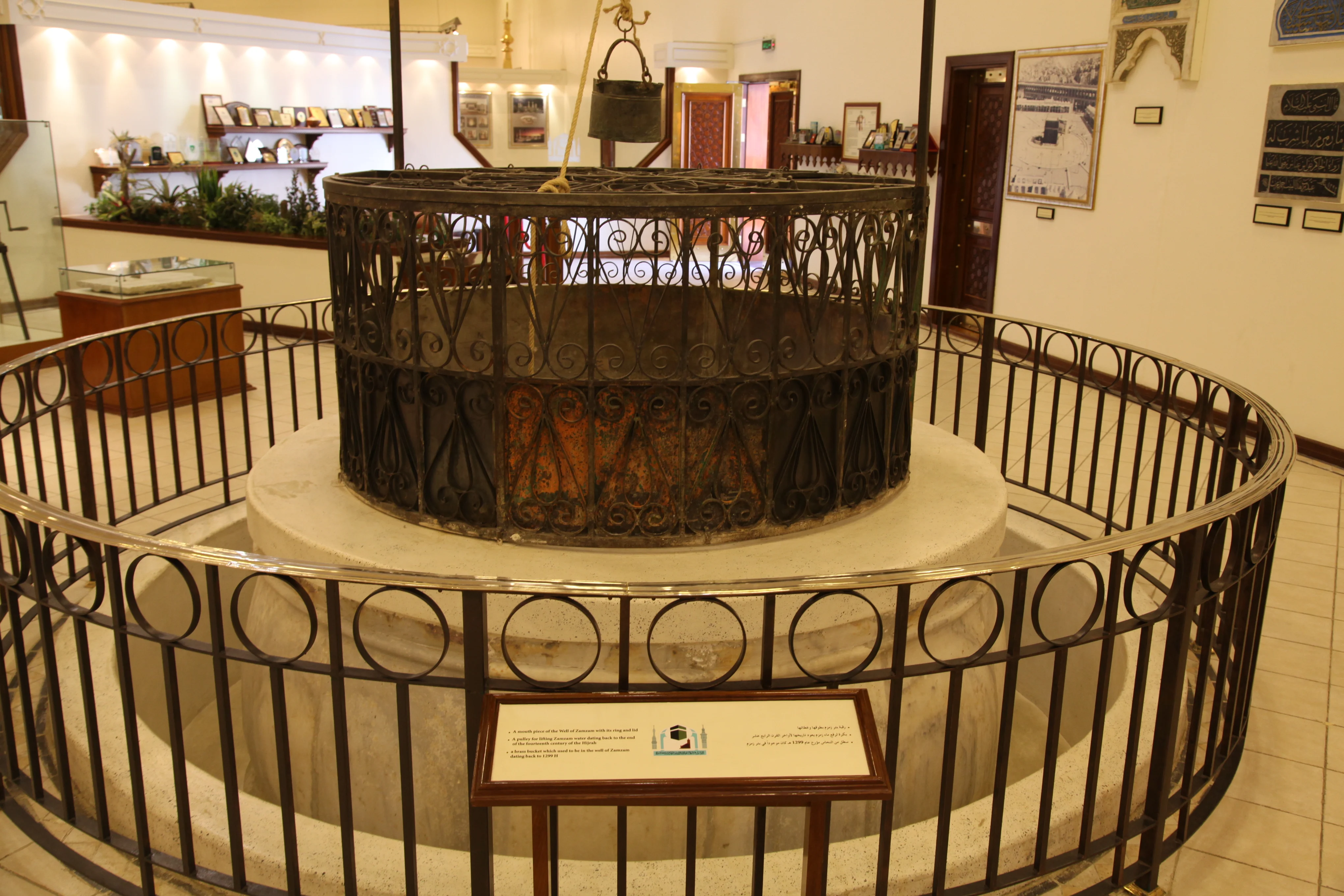
Abbas is also remembered as the custodian of the Zamzam well and the provider of water to pilgrims (siqaya) — a hereditary function of great prestige in Meccan society that he maintained throughout his life and that his descendants held after him. His son Abdullah ibn Abbas became one of the greatest scholars of the Quran and hadith in the first Islamic century, earning the title "the Ocean" (al-Bahr) for the vastness of his knowledge.
Lineage and Family Position
The Banu Hashim
Abbas was born in Mecca approximately two or three years before the Prophet (around 566 CE), making him one of the Prophet's youngest uncles despite being a generation above him. His father was Abd al-Muttalib ibn Hashim — the chief of the Banu Hashim and the custodian of the Kaaba during the event of the Year of the Elephant — and his mother was Nutayla bint Janab, a woman of the Banu Namir. Through his father, Abbas was a full uncle of the Prophet (sharing the same grandfather, Abd al-Muttalib), and the Banu Hashim's dual role as guardians of the Kaaba and providers of water to pilgrims gave the family both religious prestige and practical authority in Meccan society.
Abbas inherited the custodianship of the Zamzam well — the sacred spring that, according to Islamic tradition, God had revealed to Hagar and Ishmael in the desert, and that Abd al-Muttalib had rediscovered after it had been lost for generations. This custodianship (siqaya) was one of the most honored positions in Mecca: the provider of Zamzam water to the pilgrims who came annually to the Kaaba held a role that combined religious service, commercial importance (the pilgrimage trade was Mecca's economic lifeblood), and social prestige. Abbas held this position throughout his life, and the Prophet confirmed it at the conquest of Mecca — declaring that "nothing of the pre-Islamic offices remains except the siqaya and the hijaba [key-keeping of the Kaaba]."
Wealth and Commercial Success
Abbas was among the wealthiest members of the Quraysh. His commercial activities — trading, money-lending, and the pilgrimage-related services connected to the Zamzam custodianship — made him a man of considerable means. His wealth was noted even by the standards of Mecca's merchant aristocracy, and it gave him influence and social standing that extended beyond his clan to the broader Quraysh establishment.
This wealth would later prove significant in multiple ways: it funded his ability to assist the Prophet covertly while maintaining his position in Mecca; it contributed to the ransom arrangements after the Battle of Badr (where Abbas was among the Quraysh captives); and it provided for his large family, including his son Abdullah ibn Abbas, who would grow up to become one of Islam's greatest scholars.
The Pre-Islamic Period and Abbas's Relationship with Muhammad
Growing Up Together
Abbas and Muhammad were close in age — only two or three years apart — and grew up together in the household of Abd al-Muttalib and in the broader Banu Hashim community. Their relationship was more that of brothers or close friends than the typical uncle-nephew dynamic (where the uncle might be a generation older). This closeness shaped their lifelong bond: Abbas knew Muhammad intimately from childhood, had witnessed his character develop over decades, and had a personal attachment to him that went beyond mere family obligation.
When Muhammad declared his prophethood in 610 CE, Abbas was approximately forty-four years old — a mature man of established wealth and position in Mecca. His response to his nephew's claim was complex: the sources do not record him among the early converts who accepted Islam immediately, but neither do they record him among the active persecutors of the Muslims. He occupied a middle position — supportive of his nephew personally, protective of him tribally, but not openly declaring allegiance to the new faith.
The Protector from Within
The role Abbas played during the Meccan period was that of an inside supporter — a man who used his position within the Quraysh establishment to gather intelligence, to warn the Prophet of plots, and to facilitate arrangements that served the Muslim cause, all while maintaining plausible deniability that allowed him to continue operating within hostile territory.
The most significant instance of this inside support was Abbas's role at the Second Pledge of Aqaba (622 CE). When the Medinan converts came secretly to Mecca during the pilgrimage season to pledge their allegiance to Muhammad and to invite him to Medina, it was Abbas who accompanied the Prophet to the meeting — even though, according to many sources, he had not yet formally professed Islam. Abbas reportedly addressed the Medinans directly, warning them of the gravity of what they were undertaking: "You people of Khazraj — you know the position that Muhammad holds among us. We have protected him from our own people, and he is honored and secure among his clan. But he insists on joining you. If you are confident that you will fulfill your pledge and protect him from his enemies, then bear the responsibility you have assumed. But if you intend to betray him after he comes to you, then leave him now."
This speech — the speech of a non-Muslim uncle concerned for his nephew's safety — demonstrated Abbas's primary motivation during the Meccan period: regardless of whether he accepted Muhammad's religious claims, he was determined to ensure his nephew's physical safety. The Medinans confirmed their pledge, and the arrangement was sealed.
The Question of Abbas's Conversion Date
The date of Abbas's formal acceptance of Islam is one of the most debated questions in early Islamic biography. Three positions exist:
-
Early secret conversion: Some sources (particularly those sympathetic to the Abbasid dynasty) maintain that Abbas converted secretly early in the Meccan period but concealed his faith to continue functioning as the Prophet's agent within Mecca. In this reading, his apparent non-Muslim status during the Meccan years was a deliberate cover — taqiyya (dissimulation) in the service of the Muslim cause.
-
Conversion shortly before the conquest: Other sources place his conversion just before the conquest of Mecca in 630 CE — perhaps during his journey to meet the Prophet's army at Marr al-Zahran, or perhaps even earlier during the period of Hudaybiyyah.
-
Conversion at the conquest: The most conservative dating places his formal acceptance of Islam at the conquest itself — making him one of the late Meccan converts, like Abu Sufyan.
The debate matters because the Abbasid dynasty that descended from Abbas based part of its legitimacy on its Hashemite lineage and its closeness to the Prophet. An early conversion date strengthened the Abbasid claim; a late conversion weakened it. Modern historians generally treat the question as unresolvable with certainty but note that Abbas's actions throughout the Meccan period — his support for Muhammad, his role at Aqaba, his provision of intelligence — are more consistent with genuine sympathy for Islam than with mere tribal loyalty.
The Battle of Badr and Its Aftermath
Abbas Among the Quraysh Army
At the Battle of Badr in 624 CE, Abbas was present in the Quraysh army — according to most sources, under compulsion. The Quraysh required the participation of all able-bodied men in their campaign against the Muslims, and Abbas (if he had not yet openly professed Islam) could not refuse without revealing his sympathies. The Prophet, aware that Abbas might be in the enemy force, specifically instructed his soldiers: "Whoever encounters Abbas ibn Abd al-Muttalib should not kill him, for he was brought out against his will."
This instruction — singling out Abbas for protection on the battlefield — is itself evidence of their close relationship and of the Prophet's knowledge that Abbas was not a willing enemy. It also created practical problems: some companions questioned why a relative should be spared when they might face their own relatives on the battlefield. The Prophet's response affirmed the principle while acknowledging its complexity.
Abbas was captured during the battle — taken prisoner along with other Quraysh, including his nephews Aqil ibn Abi Talib and Nawfal ibn al-Harith. The night after the battle, the Prophet could not sleep because of the sounds of Abbas groaning — the prisoner was bound tightly with ropes that caused him pain. When the Prophet mentioned his inability to sleep, the companions loosened Abbas's bonds, and the Prophet was then able to rest. This detail — the Prophet's empathic connection to his uncle's physical discomfort even in the aftermath of battle — reveals the depth of their personal bond.
The Ransom and Its Significance
Two facts about the ransom are established in Sahih al-Bukhari, and together they make the point more sharply than any of the elaborations that later attached to the episode.
The first is that the Prophet refused to remit it. A group of the Ansar came and asked his permission to forgo the ransom due from "our nephew al-Abbas" — the Ansar counted him as such through the maternal ties between his clan and theirs. The Prophet's answer was to leave not a single dirham of it (Sahih al-Bukhari 2537). The captive was the Prophet's own paternal uncle, the ransom was the property of the Muslim community, and it was not the Prophet's to waive as a family courtesy.
The second is that Abbas paid for more than himself. Anas reported Abbas saying that he had paid his own ransom and that of Aqil (Sahih al-Bukhari 2539). Aqil ibn Abi Talib was his nephew, Ali's brother, also taken at Badr.
The decision to take ransom at all, rather than execute the captives, was itself contested at the time. Sahih Muslim preserves Umar's account of the consultation: Abu Bakr argued for ransom on the grounds that the captives were kinsmen and that the money would strengthen the Muslims, while Umar argued that the leaders should be put to death, naming Aqil to be handed to Ali and his own relative to himself. The Prophet accepted Abu Bakr's view. Umar reported finding the Prophet and Abu Bakr weeping the following day over the verses that were then revealed on the matter, Quran 8:67–68 (Sahih Muslim 1763).
The figure sometimes given for Abbas's own payment — twenty uqiya of gold — and the account of the Prophet naming gold that Abbas had secretly left with his wife Umm al-Fadl belong to the sira and tafsir literature rather than to the Sahihayn, and this article does not assert them as established.
Return to Mecca
After paying his ransom, Abbas returned to Mecca. If the "early secret conversion" theory is correct, he resumed his role as an inside agent; if the later conversion theory is correct, the experience of Badr — seeing the Muslim community's military capability and experiencing the Prophet's principled treatment of captives — may have accelerated his eventual acceptance of Islam.
In either case, Abbas continued to operate within Mecca for the remaining six years before the conquest, maintaining his commercial activities, his custodianship of Zamzam, and his social position while the conflict between Mecca and Medina continued through Uhud, the Trench, Hudaybiyyah, and the eventual breach that led to the conquest.
Abbas During the Later Meccan Years (624-630 CE)
The six years between Badr and the conquest of Mecca were a period of intensifying conflict between the Muslim community in Medina and the Quraysh in Mecca. During this time, Abbas — whether a secret Muslim or a sympathetic relative — continued to function as the Prophet's eyes and ears within the enemy camp.
The sources record several specific instances of Abbas providing intelligence to the Prophet:
Before the Battle of Uhud (625 CE): Abbas reportedly sent a letter to the Prophet warning him that the Quraysh were assembling a large force to march on Medina. The letter, sent by a fast messenger, reached the Prophet in time for him to prepare the Muslim community for the Quraysh advance.
During the boycott: During the earlier social and economic boycott that the Quraysh imposed on the Banu Hashim (an attempt to pressure the clan into withdrawing its protection of Muhammad), Abbas — as a member of the Banu Hashim — endured the boycott alongside his clan, suffering its economic hardships while maintaining his position in Meccan commercial life.
The Treaty of Hudaybiyyah (628 CE): While the sources do not record Abbas's specific role during the Hudaybiyyah negotiations, the treaty's provision for a ten-year truce created conditions that would have eased his position — reducing the intensity of hostility between Mecca and Medina and making his dual loyalties less immediately dangerous.
Immediately before the conquest: The most reliable accounts agree that Abbas left Mecca to join the Prophet shortly before the conquest — meeting the Muslim army somewhere on the road between Medina and Mecca. Whether this was a migration (leaving Mecca permanently as a Muslim) or a tactical move to ensure he was on the right side when the army arrived, it placed him with the Prophet at the decisive moment.
The Zamzam Custodianship: Deep Significance
The History of Zamzam
The custodianship of the Zamzam well was not merely an administrative function but a sacred trust with deep roots in the Abrahamic history of Mecca. According to Islamic tradition, the Zamzam spring was miraculously revealed by God to Hagar (Hajar) when she was desperately searching for water for her infant son Ishmael in the desert valley of Mecca. The spring sustained the mother and child, attracted settled communities to the previously uninhabited valley, and became the nucleus around which the city of Mecca eventually grew.
The well was subsequently lost — buried under sand and forgotten for generations — until it was miraculously rediscovered by Abbas's father, Abd al-Muttalib, who was guided to its location through a series of visions. Abd al-Muttalib's rediscovery of Zamzam was itself a significant event in Meccan religious history, and it established the right of the Banu Hashim (and specifically his descendants) to provide its water to pilgrims. This right — the siqaya — passed to Abbas as the most prominent of Abd al-Muttalib's surviving sons in the late pre-Islamic and early Islamic periods.
Abbas as Custodian
As custodian of Zamzam, Abbas was responsible for drawing the water, mixing it with raisins or other sweeteners (to improve its taste for pilgrims who had traveled long distances), and distributing it to the pilgrims who came annually to Mecca for the Hajj. This was both a service (providing drink to the thirsty) and a business (the custodianship carried commercial opportunities related to the pilgrimage trade). Abbas maintained this function throughout the pre-Islamic and Islamic periods — it was one of the few pre-Islamic Meccan institutions that the Prophet explicitly preserved at the conquest.
The Prophet's confirmation of the siqaya at the conquest — "Nothing of the pre-Islamic offices remains except the siqaya and the hijaba" — gave Islamic sanction to Abbas's hereditary role. It meant that even in the new Islamic order, Abbas would continue to serve pilgrims as his family had done for generations. The office remained with Abbas's descendants in subsequent generations, maintaining the family's connection to the holiest site in Islam.
The Spiritual Dimensions
The Zamzam water carried profound spiritual significance in Islamic belief. The Prophet described it as "blessed water" and said: "The water of Zamzam is for whatever purpose it is drunk for" — meaning that one who drinks it with a specific intention (healing, knowledge, provision) will receive what they seek. Abbas, as the custodian and provider of this blessed water, held a position of unique spiritual service — he was not merely a water-bearer but the guardian of a divinely-created spring whose water carried miraculous properties.
This spiritual dimension of the custodianship elevated Abbas's role beyond the merely administrative or commercial. He was, in the Islamic understanding, the human keeper of a divine gift — the man responsible for ensuring that the spring God had created for Hagar and Ishmael continued to serve the believing community. This function, confirmed by the Prophet and inherited by Abbas's descendants, connected the family directly to the Abrahamic origins of Mecca and to the divine providence that had sustained the sacred city since its founding.
Abbas's Wife and Family
Umm al-Fadl: Lubaba bint al-Harith
Abbas's wife was Umm al-Fadl (Lubaba bint al-Harith al-Hilaliyya) — one of the earliest women to embrace Islam and a figure of significance in her own right. She was the sister of Maymuna bint al-Harith, who would later become the Prophet's last wife. Through this connection, Abbas was both the Prophet's uncle (by blood) and his brother-in-law (through the marriage of his sister-in-law to the Prophet) — a double kinship bond that reinforced the closeness between the two households.
Umm al-Fadl is recognized as one of the earliest female converts to Islam — reportedly the second woman after Khadijah to embrace the faith. If this tradition is accurate, it adds complexity to the question of Abbas's own conversion date: his wife was a Muslim from the earliest period, which makes it at least plausible that Abbas himself was sympathetic to Islam (if not formally converted) much earlier than the conquest.
Umm al-Fadl bore Abbas several sons and daughters, among whom the most famous was Abdullah ibn Abbas. The household of Abbas and Umm al-Fadl was thus a nexus of prophetic family connections: tied to the Prophet through Abbas's uncle-nephew bond, through Maymuna's marriage, and through the intellectual legacy that Abdullah would carry forward.
Abbas's Children
Abbas was the father of a large family — the sources record ten sons, among the most notable being:
The most consequential of them was Abdullah (d. 687 CE), the Quranic commentator known as Hibr al-Ummah, the scholar of the community. Al-Fadl was the eldest and died young, and it is his name — fadl, grace — that gave his mother her by-name, Umm al-Fadl. Ubaydullah was remembered for learning and piety, Qutham for a physical resemblance to the Prophet that the sources remark upon, and Ma'bad for his part in the later conquests.
Through Abdullah's line in particular, the Abbasid dynasty traced its descent. Abdullah → Ali ibn Abdullah → Muhammad ibn Ali → Ibrahim ibn Muhammad → Abu al-Abbas al-Saffah (the first Abbasid caliph). This genealogical chain — from the Prophet's uncle through five generations to the founder of a dynasty — demonstrates the enduring power of prophetic kinship in Islamic political legitimacy.
The Conquest of Mecca
The Encounter with Abu Sufyan
Abbas's most famous role in Islamic history came on the eve of the conquest of Mecca in 630 CE. The Prophet was marching on Mecca with ten thousand warriors, and Abbas — who had left Mecca to join the Prophet (whether migrating as a new Muslim or revealing his longstanding secret allegiance) — was concerned about the fate of the Quraysh if they chose to resist.
Abbas rode out from the Muslim camp on the Prophet's white mule, hoping to find a Quraysh messenger whom he could persuade to arrange a peaceful surrender. Instead, he encountered Abu Sufyan ibn Harb himself — the chief of the Quraysh who had come out to reconnoiter the Muslim forces. Abbas brought Abu Sufyan to the Muslim camp, sheltering him with the declaration that he was under Abbas's protection.
The next morning, Abbas brought Abu Sufyan before the Prophet. The encounter between the two men — the Prophet offering Islam and amnesty, Abu Sufyan calculating his options — resulted in Abu Sufyan's acceptance of Islam and the declaration that "whoever enters the house of Abu Sufyan shall be safe." This outcome — a peaceful surrender rather than a bloody conquest — was facilitated in large part by Abbas's role as intermediary. His position as the Prophet's uncle gave him the credibility to guarantee Abu Sufyan's safety, and his former status within the Quraysh establishment made him an acceptable interlocutor for the enemy chief.
Confirmation of the Siqaya
At the conquest, the Prophet confirmed the traditional Meccan offices that would continue under Islamic authority. He declared that "nothing of the pre-Islamic offices remains except the siqaya [water provision for pilgrims] and the hijaba [custodianship of the Kaaba's key]." The siqaya — Abbas's hereditary office — was thus preserved and given Islamic sanction. Abbas continued to provide Zamzam water to pilgrims, now in an Islamic context rather than a pagan one. This confirmation honored Abbas's family tradition while integrating it into the new Islamic order.
The Battle of Hunayn
Standing with the Prophet
Shortly after the conquest of Mecca, the Muslim army faced the Hawazin and Thaqif tribal coalition at the Battle of Hunayn (630 CE). This battle nearly ended in disaster: the Muslim army was ambushed in a narrow valley, and the troops — including many newly converted Meccans — broke and fled in panic. In this moment of supreme crisis, only a handful of companions stood firm beside the Prophet. Abbas was one of them.
The sources describe Abbas's role at Hunayn with particular vividness. He was a man of powerful voice, and the Prophet ordered him to call out to the fleeing soldiers — to shout the rallying cry that would bring them back. Abbas bellowed: "O people of the Ansar! O people of the tree [those who pledged at Hudaybiyyah]! O people of Surah al-Baqarah!" His voice — described as enormously loud, capable of carrying across a battlefield — reached the scattered troops and began to bring them back. The fleeing soldiers heard the call, recognized it as coming from the Prophet's position, and began to return. The rally succeeded, and the battle was won.
Abbas's role at Hunayn — standing beside the Prophet when most others had fled, using his powerful voice to rally the army, and contributing physically to a victory snatched from the jaws of defeat — was one of the most important military contributions of his life. It demonstrated that whatever the ambiguities of the Meccan period, by 630 CE Abbas was unequivocally committed to the Prophet's cause and willing to risk his life for it.
Life in Medina After the Conquest
The Elder Statesman
After the conquest of Mecca and the subsequent campaigns, Abbas settled in Medina, where he spent the final two decades of his life as one of the most honored members of the community. His position was unique: he was the Prophet's surviving uncle (after Hamza's martyrdom at Uhud and Abu Talib's earlier death), a man of great wealth and social standing, and a figure of increasing importance as the Prophet's family grew in significance.
The Prophet treated Abbas with conspicuous respect and honor. He is reported to have said: "Abbas is to me as my father" — a statement that elevated Abbas's status to that of a father figure rather than merely an uncle. He also said: "Whoever harms Abbas has harmed me" — establishing that any offense against Abbas was an offense against the Prophet himself. These declarations gave Abbas a protection and a prestige that extended beyond his tribal and economic standing to a specifically prophetic endorsement.
The Caliphate Period
After the Prophet's death in 632 CE, Abbas continued to live in Medina, honored by the successive caliphs as the senior surviving member of the Prophet's family. Under Abu Bakr and Umar ibn al-Khattab, Abbas was consulted on matters of governance and religion, and his opinions carried weight as those of the Prophet's closest surviving relative.
When Umar established the system of public stipends (diwan), Abbas was given one of the highest allocations — reflecting both his status as the Prophet's uncle and the community's recognition of his contribution. Umar reportedly consulted Abbas on matters concerning the Prophet's family and treated him with marked deference.
Abbas's relationship with Ali ibn Abi Talib — the Prophet's cousin and son-in-law — was complex. Both men had claims to represent the Prophet's family, and their descendants would later compete for political authority (the Abbasid revolution against the Umayyads was initially led in the name of "the family of the Prophet" without specifying which branch). During their lifetimes, however, the sources record cooperation and mutual respect between Abbas and Ali rather than open rivalry.
Abbas's Sons and the Abbasid Legacy
Abdullah ibn Abbas: The Scholar
Abbas's most distinguished son was Abdullah ibn Abbas (d. 687 CE) — known as Hibr al-Ummah (the Learned One of the Community) and al-Bahr (the Ocean, for the vastness of his knowledge). Abdullah became one of the greatest scholars of the first Islamic century: a master of Quranic interpretation (tafsir), a prolific narrator of hadith, and an authority on Islamic law whose opinions influenced all subsequent scholarship.
The Prophet had specifically prayed for Abdullah: "O God, teach him wisdom and the interpretation of the Book" — a prayer that the community understood as divinely answered by Abdullah's subsequent intellectual achievements. Through his aunt Maymuna bint al-Harith (the Prophet's last wife and Abbas's sister-in-law), Abdullah had direct access to a Mother of the Believers and thus to authoritative testimony about the Prophet's private life and practices.
Abdullah ibn Abbas's scholarly legacy was enormous: he founded the Meccan school of Quranic interpretation, trained generations of scholars, and produced a body of exegetical and legal work that influenced every subsequent school of Islamic thought. His authority as an interpreter of the Quran was unmatched in his generation, and his narrations from the Prophet (transmitted through his family connections) became foundational texts in Islamic law.
The Line to the Abbasid Caliphate
Through his other sons — particularly his son al-Fadl (who died young) and his son Abdullah's line, as well as the line through another son Ali ibn Abdullah ibn Abbas — the Abbasid dynasty traced its descent from Abbas. The Abbasid Revolution of 750 CE overthrew the Umayyad dynasty by rallying support around the slogan of restoring authority to "the family of the Prophet" — and when the revolution succeeded, it was the descendants of Abbas (rather than the descendants of Ali) who claimed the caliphate.
The Abbasid caliphs — who ruled from Baghdad for five centuries (750-1258 CE), presiding over the Islamic Golden Age — thus traced their legitimacy directly back to Abbas ibn Abd al-Muttalib. Their claim rested on their descent from the Prophet's uncle, their Hashemite lineage, and the argument that they represented the rightful heirs of the Prophet's family against the Umayyads (who were Banu Umayya, not Banu Hashim).
Whether Abbas himself would have endorsed this use of his lineage — or would have preferred the caliphate to remain with Ali's descendants — is a question that historians cannot answer. But the historical fact remains: through his descendants, Abbas became the patriarch of the longest-lasting and most culturally productive dynasty in Islamic history.
Death and Legacy
Death in Medina
Abbas ibn Abd al-Muttalib died in Medina in approximately 653 CE (32 AH), during the caliphate of Uthman ibn Affan, at approximately eighty-seven years of age. He was buried in the cemetery of al-Baqi — the resting place of so many of the Prophet's family and companions. Uthman led his funeral prayer, and the community mourned the loss of the last of the Prophet's paternal uncles — the final member of the generation that had directly connected the Prophet to the Banu Hashim patriarchy.
His funeral was attended by enormous crowds, reflecting both the honor in which the community held him and the significance of his death as a marker of generational passing. With Abbas's death, the last direct link between the Prophet and the senior generation of the Banu Hashim was severed.
The Loss of Sight and Final Years
In his final years, Abbas lost his eyesight — a disability that did not diminish the respect and deference shown to him by the community. He continued to receive visitors, to be consulted on matters affecting the Prophet's family, and to participate in communal prayers (he was given a prominent place in the mosque despite his blindness). When Uthman went to visit him, Abbas would not allow the caliph to sit below him — insisting on the deference due to the Prophet's uncle despite the difference in political rank.
His death came during a period of growing tension in the community — the opposition to Uthman's caliphate was building, and the First Fitna was approaching. Abbas was spared the agony of witnessing the civil war that would divide the community his nephew had built. He died in peace, mourned by all factions, his memory untainted by the conflicts that would soon tear the community apart.
Abbas and the Prophetic Traditions
Hadith Narration
Abbas transmitted only a small number of hadith directly, which is unsurprising given that he embraced Islam openly late and died early in Uthman's caliphate. His importance to the hadith literature is overwhelmingly indirect, and it runs through his son.
Abdullah ibn Abbas became one of the most prolific narrators among the Companions and the foremost early authority on Quranic commentary. A great many reports in Sahih al-Bukhari and Sahih Muslim carry his name, including material about Badr that concerns his own father: it is Ibn Abbas who transmits Umar's account of the consultation over the captives and the revelation of Quran 8:67–68 (Sahih Muslim 1763), and Ibn Abbas who reports the Prophet's words at Badr about Gabriel (Sahih al-Bukhari 3995).
Umar's regard for the son is itself recorded. Sa'id ibn Jubayr reported that Umar used to favour Ibn Abbas conspicuously, and that when Abd al-Rahman ibn Awf objected that they too had sons of the same age, Umar answered that it was on account of his knowledge — then tested him on the meaning of Surah al-Nasr and accepted his interpretation (Sahih al-Bukhari 3627). The exchange places Abbas's household at the centre of the transmission of religious knowledge in the generation after the Prophet, and it does so in a sahih text rather than in later Abbasid apologetic.
The Prophet's Statements About Abbas
One statement about Abbas is firmly established, and it arose from a dispute over money rather than from any occasion of praise.
The Prophet sent Umar to collect the zakat, and word came back that Ibn Jamil, Khalid ibn al-Walid, and al-Abbas had withheld it. The Prophet answered each case separately. Of Ibn Jamil he said that he had nothing to resent, having been poor before God enriched him. Of Khalid he said that Umar was being unjust to him, since Khalid had set aside his armour and equipment for use in the cause of God. Of Abbas he said that the obligation was his own, and an equal amount with it. Then he said: "Umar, did you not know that a man's paternal uncle is the sinw of his father?" (Sahih Muslim 983; Sunan Abu Dawud 1623). The word sinw denotes two palm trees growing from a single root — not a metaphor of substitution but of shared origin.
The same statement is transmitted on the authority of Ali, who reported that the Prophet said it to Umar concerning al-Abbas and his charity (Jami' at-Tirmidhi 3760, graded sahih).
Two features of the tradition deserve notice. It is the Prophet declaring a family relationship, not a rank in religion, and it is doing so while assuming Abbas's zakat obligation rather than excusing it. Several other sayings are widely attributed to the Prophet about Abbas — that whoever harms Abbas harms him, that Abbas is "from me and I am from him," that Abbas should ask God for well-being. These are not established in the Sahihayn and this article does not carry them. The sinw statement alone is sufficient, and it is the one the later Abbasid claim to legitimacy was built upon.
The Abbasid Revolution: Abbas's Distant Legacy
From Uncle to Dynasty
The most far-reaching consequence of Abbas's life was one he could never have anticipated: his descendants' seizure of the caliphate from the Umayyads in 750 CE — more than a century after his death. The Abbasid Revolution, which replaced the Umayyad Caliphate with the dynasty that would rule the Islamic world for five hundred years, drew its legitimacy directly from Abbas's blood connection to the Prophet.
The revolution was organized clandestinely over several decades, with revolutionary agents (du'at) working across the Islamic world — particularly in Khorasan (eastern Iran and Central Asia) — recruiting supporters under the slogan of restoring authority to "the satisfied one from the family of Muhammad" (al-rida min al Muhammad). This deliberately vague formulation attracted both supporters of Abbas's line (who expected an Abbasid caliph) and supporters of Ali's line (who expected an Alid one). When the revolution succeeded, it was Abbas's descendants who claimed the prize.
The Abbasid Caliphate
The first Abbasid caliph, Abu al-Abbas al-Saffah (r. 750-754 CE), took power after the decisive defeat of the Umayyad army at the Battle of the Greater Zab in 750 CE. He and his successors — most importantly al-Mansur (who built Baghdad) and Harun al-Rashid (under whom the caliphate reached its cultural peak) — presided over the Islamic Golden Age: the period of unprecedented intellectual, scientific, and cultural achievement centered in Baghdad.
The Abbasid caliphs justified their rule through their descent from Abbas — arguing that as the Prophet's uncle (and, they claimed, a closer relative than Ali's descendants through the male line of inheritance), they had the strongest claim to represent the Prophet's family in political authority. This argument was contested by the Alids (who maintained that Ali's descent through Fatimah gave his line a superior claim), but it was sustained by Abbasid political power for five centuries.
The Golden Age Under Abbas's Descendants
Under the Abbasid dynasty that bore Abbas's name, Islamic civilization reached heights that have rarely been equaled:
Under the Abbasid dynasty that bore his name, the House of Wisdom in Baghdad — the capital founded by his great-great-grandson al-Mansur — became the foremost centre of translation and learning in the world, rendering the scientific and philosophical inheritance of Greece, Persia and India into Arabic. Al-Khwarizmi, whose name survives in the word algorithm and whose book gave algebra its own, Ibn Sina and al-Razi worked within that world. So did the hadith scholars: al-Bukhari and Muslim compiled their collections under Abbasid rule, and the legal schools of Abu Hanifa, Malik, al-Shafi'i and Ahmad ibn Hanbal were systematised in the same period. Arabic prose and poetry, architecture and urban life developed on a scale unmatched in the medieval world.
Whether Abbas himself would have recognized or approved the civilization his descendants built is unknowable. But the historical connection is undeniable: the man who provided water to pilgrims at Zamzam became, through the accident of genealogy and the ambition of his descendants, the patriarch of one of the world's great civilizations.
Abbas's Name in Islamic History
The very word "Abbasid" — 'Abbasi — derives from Abbas's name. For five centuries, every caliph who ruled from Baghdad bore his ancestral connection to this seventh-century Meccan merchant and uncle of the Prophet. The dynasty's coins bore Abbas's lineage; its official documents traced authority through him; its poets praised his bloodline; and its propagandists presented him as the legitimate channel through which prophetic authority flowed to the caliphal throne.
This posthumous political career — lasting far longer than Abbas's actual lifetime and extending far beyond anything he could have imagined — makes him one of the most historically consequential figures of the early Islamic period. He lived as a merchant, a tribal elder, and an uncle of the Prophet; he died as an honored companion in Medina; and centuries after his death, his name became synonymous with the most powerful dynasty in the medieval Islamic world.
Historical Assessment
The Complexity of Abbas's Position
Modern historians have recognized the complexity of Abbas's position during the Meccan period. He was neither a committed early Muslim (like Abu Bakr or Hamza) nor an active enemy (like Abu Jahl or Abu Lahab). He occupied a middle ground — protective of Muhammad without fully committing to his cause, supportive without being public, and present without being counted among the believers. This ambiguity was itself a form of service: by maintaining his position within the Quraysh establishment, Abbas could do things (gather intelligence, mediate, facilitate) that open Muslims could not.
The later Abbasid-era sources' tendency to retroject Abbas's conversion to an early date reflects the political needs of the dynasty rather than necessarily the historical reality. But regardless of when exactly Abbas professed Islam, his actions — at Aqaba, at the conquest of Mecca, at Hunayn — demonstrate a man whose loyalty to his nephew and to Islam was genuine and consequential.
Abbas in the Classical Sources
The classical biographical literature — Ibn Sa'd, al-Tabari, al-Dhahabi, Ibn Hajar — all give Abbas substantial entries, reflecting his importance as the Prophet's uncle and as the ancestor of the ruling dynasty (for those writing under Abbasid rule). The challenge for historians is to separate the historical Abbas from the idealized Abbas of Abbasid propaganda — to identify what can be known about the actual man apart from what his descendants needed him to have been.
The essential facts are secure: he was the Prophet's paternal uncle, close in age; he held the Zamzam custodianship; he was at Aqaba; he was captured at Badr; he facilitated the conquest of Mecca; he stood at Hunayn; he lived honored in Medina until his death; and his descendants created the Abbasid dynasty. These facts establish a figure of genuine historical importance whose role in the founding era of Islam — however ambiguous in its early phases — was ultimately significant and consequential.
Abbas and the Caliphs: His Role in the Rashidun Period
Under Abu Bakr (632-634 CE)
After the Prophet's death, Abbas's position in the community was complex. He was the senior surviving male of the Banu Hashim — the Prophet's own clan — and some in the community believed that the caliphate should have remained within the Prophet's family (a position that would later crystallize into Shia Islam). The selection of Abu Bakr as caliph at the Saqifah meeting proceeded without Abbas's direct involvement, though the sources record that he later pledged allegiance to Abu Bakr.
During Abu Bakr's brief caliphate, Abbas remained in Medina, consulted on matters affecting the Prophet's family but not holding political office himself. His status as the Prophet's uncle gave him moral authority that the caliphs recognized, and his wealth and social standing ensured his continued prominence.
Under Umar (634-644 CE)
Abbas's relationship with Umar ibn al-Khattab was particularly well-documented in the sources. Umar showed conspicuous respect for Abbas — publicly deferring to him, seeking his prayers, and treating him with the reverence due to the Prophet's uncle. Several episodes illustrate this relationship:
The prayer for rain (istisqa): This is the best-attested episode of Abbas's later life. Anas reported that whenever drought threatened, Umar ibn al-Khattab would seek rain through al-Abbas ibn Abd al-Muttalib, saying: "O Allah, we used to ask our Prophet to ask You for rain, and You would give us rain. Now we ask the uncle of our Prophet to ask You for rain, so give us rain." And they would be given rain (Sahih al-Bukhari 1010; Sahih al-Bukhari 3710).
Two things are worth drawing out. The report describes a recurring practice rather than a single occasion — Anas's wording is that Umar did this whenever drought came. And what Umar invoked was Abbas's supplication and his kinship with the Prophet, not any quality claimed for Abbas in himself. The additional detail sometimes attached to the account — that Abbas raised his hands while the congregation said "Amin," and that rain fell before the people left the prayer ground — is not in the Bukhari text and is not asserted here.
Stipend allocation: When Umar established the diwan (register of stipends), he allocated Abbas a sum that reflected his status as the Prophet's uncle — among the highest in the community. Umar also consulted Abbas specifically on matters relating to the Banu Hashim and the Prophet's family properties, recognizing his authority as the clan's senior figure.
Public deference: Umar is reported to have said: "By God, the Islam of Abbas on the day he embraced it was dearer to me than the Islam of al-Khattab [Umar's own father] if he had embraced it — because the Islam of Abbas was dearer to the Messenger of God than the Islam of al-Khattab would have been." This statement — valuing Abbas's conversion above a hypothetical conversion of his own father — demonstrated the priority Umar placed on the Prophet's feelings and his recognition that what mattered to the Prophet should matter to the community.
Under Uthman (644-656 CE)
During Uthman ibn Affan's caliphate, Abbas continued as the honored patriarch of the Banu Hashim. His relationship with Uthman appears to have been cordial, and the sources do not record significant conflict between them. Abbas was by this point very elderly — in his eighties — and his role was increasingly that of a venerable elder whose presence lent legitimacy and blessing rather than a politically active figure.
Abbas's death during Uthman's caliphate (approximately 653 CE) meant that he did not live to see the assassination of Uthman or the civil war that followed. He was thus spared the agony of choosing between members of his own extended family (Ali on one side, the Umayyads on the other) in a conflict that tore the community apart.
Abbas's Physical Description and Personal Qualities
Appearance
The sources describe Abbas as a man of imposing physical presence — tall, handsome, and fair-complexioned, with a powerful voice that carried over great distances (his role as the rallying caller at Hunayn depended on this vocal power). He was described as "the most handsome of the Quraysh" in his youth, and his bearing commanded respect throughout his long life. His height is particularly noted — he was reportedly taller than most of his contemporaries, a quality that made him visually prominent in any gathering.
Voice and Personality
Abbas's powerful voice — repeatedly mentioned in connection with the Battle of Hunayn, where he called the fleeing army back to the Prophet — was itself a notable quality. The sources describe his voice as capable of carrying over a mile, and he was reportedly the loudest voice in the Quraysh. This quality was not merely physical but reflects a personality of confidence and authority — a man who was heard when he spoke, whose presence was felt, and whose words carried weight.
His personality combined the qualities of a successful merchant (shrewdness, social skill, the ability to navigate complex relationships) with those of a family patriarch (authority, protectiveness, concern for the collective welfare of his kin). He was neither the warrior that Hamza was nor the scholar that his son Abdullah would become — he was the practical man, the connector, the one who operated in the space between opposing forces and found ways to make things work.
Generosity
Abbas was known for his generosity, particularly after his settlement in Medina. Despite having paid an enormous ransom at Badr (which significantly reduced his wealth), he maintained a large and hospitable household, provided for his extended family, and contributed to the community's collective needs. His wealth, while reduced from its pre-Badr levels, remained substantial enough to support his large family and to fund the charitable activities expected of a man of his status.
The Prophet himself acknowledged Abbas's financial sacrifices — the ransom at Badr had been a test of faith (paying one's enemies from one's own pocket for the privilege of being released), and Abbas had met it without ultimately refusing, even if he protested the principle. In Medina, he rebuilt his commercial activities, maintaining the trade connections that had made him wealthy in Mecca and adapting them to the new political reality of a Muslim-ruled state.
Abbas in the Economic Life of Early Islam
Commerce in Medina
After settling in Medina, Abbas continued his commercial activities — trading, investing, and lending in ways that were consistent with Islamic law. His experience as one of Mecca's leading merchants was an asset to the Medinan economy, which was growing rapidly as the Islamic state expanded and as the proceeds of conquest flowed into the capital. Abbas was among the wealthy companions who helped finance military expeditions, contributed to public works, and supported the community's poor through regular charity.
His commercial skills also made him a natural advisor on economic matters. The early Islamic state was developing its fiscal systems — taxation, distribution of spoils, public expenditure — and the practical experience of men like Abbas (who understood commerce, credit, and finance from decades of practice) was invaluable to the caliphs who were building these systems for the first time.
The Diwan and Abbas's Allocation
When Umar ibn al-Khattab established the diwan — the systematic allocation of stipends from the state treasury to all Muslims based on their precedence in Islam and their service to the community — Abbas's allocation was among the highest. The exact amount varies in the sources, but it reflected Umar's assessment that the Prophet's uncle deserved special recognition. This allocation, combined with his ongoing commercial income and the residual wealth from his Meccan enterprises, made Abbas one of the wealthiest men in Medina until his death.
The stipend system itself — which distributed the revenues of conquest according to a hierarchy of merit and service — placed Abbas near the top of the community's financial hierarchy. This was not merely honor; it was the material expression of the community's recognition that proximity to the Prophet and service to Islam created legitimate claims on the community's collective resources.
Abbas's Role in Dispute Resolution
Mediator and Elder
In the close-knit community of early Islamic Medina, Abbas functioned as a mediator and elder whose opinions carried weight in disputes — particularly those involving the Banu Hashim or the broader Prophet's family. His position as the senior surviving uncle gave him authority in intra-family matters that even the caliphs recognized: questions about the Prophet's family properties, about the distribution of resources among the Hashemites, and about the family's collective interests were naturally referred to Abbas as the family patriarch.
A specific dispute that involved Abbas was the question of the Prophet's estate — particularly the lands of Fadak and Khaybar. When Fatimah had claimed these properties after the Prophet's death, Abu Bakr had ruled that prophets do not leave inheritable property (citing a hadith). After Fatimah's death, Abbas and Ali pressed the claim jointly during Umar's caliphate, arguing that even if the properties could not be inherited, they should be managed by the family rather than by the state. Umar offered to return the properties to their management (not ownership), and Abbas and Ali accepted — though later disagreements between the two about how to manage them led Umar to retain state control. This episode illustrates both Abbas's willingness to advocate for family interests and the complexity of the early community's property disputes.
The Senior Hashemite Voice
As the last surviving male of the Prophet's direct paternal generation, Abbas served as the voice of the Banu Hashim in their dealings with the caliphal establishment and with other clans. When the Hashemites had grievances, it was Abbas who articulated them; when they needed representation in consultative gatherings, it was Abbas who attended; and when decisions affecting the family needed to be made, it was Abbas whose authority was recognized by all parties.
This role — senior Hashemite elder and family spokesman — gave Abbas a quiet but persistent influence over the community's affairs that went beyond any formal office he held. He was not a caliph, not a governor, not a general; but he was the uncle of the Prophet, and in a community that revered the Prophet's family, that was itself a form of authority that could not be gainsaid.
The Theological Status of Abbas
Sunni Veneration
In Sunni Islam, Abbas is honored as a companion of the Prophet, as his uncle, and as a man whose support for Islam — however it began — was ultimately sincere and consequential. He is not counted among the Ten Promised Paradise (that honor belongs to a specific group named by the Prophet), but his status as the Prophet's uncle and the Prophet's specific statements about him ("Abbas is to me as my father"; "whoever harms Abbas has harmed me") place him in a category of high honor.
Sunni scholars have debated the implications of the Prophet's statements about Abbas. Some treat them as specific to Abbas's person (honoring him individually); others see them as establishing a principle about the Prophet's family generally (that the Prophet's relatives deserve special respect). In either reading, Abbas's status is exalted — he is among the most honored companions and his family holds a permanent place of respect in the community.
Shia Perspectives
In Shia Islam, Abbas's status is more complex. He is respected as the Prophet's uncle but not given the theological weight that attaches to Ali, Fatimah, and their descendants. The Shia tradition notes that the Abbasid dynasty — which claimed descent from Abbas — used his name to justify a caliphate that competed with the rightful authority of Ali's descendants (the Imams). This historical reality has led some Shia scholars to be more cautious in their evaluation of Abbas, though none deny his kinship with the Prophet or his basic honorable status.
The question of Abbas's conversion date is treated differently in Shia scholarship: those who argue for early conversion tend to emphasize his role as the Prophet's loyal supporter, while the Shia tradition's general stance is that Abbas, while honorable, did not possess the spiritual authority that belonged exclusively to Ali and his designated successors.
The Abbasid Claim to Legitimacy
The Abbasid dynasty's use of Abbas as its legitimizing ancestor raises interesting theological questions. The Abbasid caliphs argued that as descendants of the Prophet's uncle, they had a stronger claim to the caliphate than the Umayyads (who were not of the Prophet's clan) and even a competitive claim against Ali's descendants (arguing that paternal uncle-nephew relationship created a closer kinship bond than the son-in-law relationship through Fatimah).
This argument was contested by the Alids, who maintained that the Prophet had specifically designated Ali and his descendants as the community's leaders, and that Abbas's kinship — however honorable — did not confer the divine right of political-spiritual leadership that the Imamate required. The debate between Abbasid and Alid claims was one of the central political-theological controversies of the second and third Islamic centuries, and it shaped the development of both Sunni and Shia political thought.
Regardless of how one evaluates the theological arguments, the historical fact remains: Abbas's bloodline produced a dynasty that ruled the Islamic world for five centuries, presided over its greatest cultural achievements, and stamped its name permanently on one of the most celebrated periods in human civilization. Whether Abbas himself would have approved of how his descendants used his lineage is unknowable, but the connection between the seventh-century Meccan uncle and the medieval Baghdadi caliphs who bore his name remains one of the most consequential genealogical chains in world history.
The Abbasid Cultural Achievement: Abbas's Distant Legacy
The Abbasid Name in World History
The word "Abbasid" — derived directly from Abbas's name — appears in every history of world civilization, every account of medieval science, and every discussion of Islam's classical period. It denotes not merely a political dynasty but a cultural epoch: the period when Islamic civilization was the most advanced in the world, when Baghdad was the largest and most cosmopolitan city on earth, and when scholars working under Muslim patronage preserved and expanded the heritage of human knowledge.
This connection — from a single seventh-century individual to a world-historical civilization — is one of the most remarkable genealogical legacies in human history. Abbas did not plan this legacy, could not have imagined it, and bears no personal responsibility for either the achievements or the failures of his distant descendants. Yet his name marks one of the great epochs of human civilization, and the line that connects him to it passes through clearly documented generations of his descendants, making the link both genealogically authentic and historically meaningful.
The ultimate irony is that Abbas — a merchant, a water-provider, an uncle who operated in the shadows during the Meccan period — became through his posterity more historically consequential than many of the companions who were more prominent during their own lifetimes. His legacy was not in what he did but in what his descendants built in his name. And what they built was one of the most extraordinary civilizations the world has ever known.
References and Further Reading
Primary Islamic Sources
- Quran 8:41 — the distribution of spoils, relevant to the post-Badr arrangements
- Quran 8:67–68 — the verses revealed concerning the taking of ransom from the captives of Badr, of whom Abbas was one
- Sahih al-Bukhari 2537 — the Ansar's request to remit the ransom due from "our nephew al-Abbas," and the Prophet's refusal to leave a single dirham of it
- Sahih al-Bukhari 2539, 2540 — Anas's report that Abbas said he had paid his own ransom and that of Aqil
- Sahih al-Bukhari 1010, 3710 — Anas's report that Umar ibn al-Khattab sought rain through al-Abbas whenever drought threatened, invoking the uncle of the Prophet
- Sahih al-Bukhari 3627 — Umar's favour toward Abdullah ibn Abbas on account of his knowledge, and his questioning him on Surah al-Nasr
- Sahih al-Bukhari 3995 — Ibn Abbas's report of the Prophet's words at Badr concerning Gabriel
- Sahih Muslim 983 — the zakat collection episode, in which the Prophet assumed Abbas's obligation and told Umar that a man's paternal uncle is the sinw of his father. Sunan Abu Dawud 1623 carries the same report
- Sahih Muslim 1763 — Umar's account, transmitted by Ibn Abbas, of the consultation over the captives of Badr and the revelation of Quran 8:67–68
- Jami' at-Tirmidhi 3760 — Ali's report of the sinw statement concerning al-Abbas and his charity. Graded sahih (Darussalam)
Classical Islamic Sources
- Ibn Sa'd, Muhammad. Al-Tabaqat al-Kubra. Edited by Eduard Sachau. Leiden: Brill, 1904–1940. [Compiled c. 845 CE] — biography of Abbas
- Ibn Hisham. Al-Sirah al-Nabawiyyah. Cairo: 1955. [Based on Ibn Ishaq] — Abbas at Aqaba and Badr
- Al-Tabari, Muhammad ibn Jarir. Tarikh al-Rusul wa al-Muluk. Leiden: Brill, 1879–1901. [c. 915 CE]
- Al-Dhahabi, Shams al-Din. Siyar A'lam al-Nubala'. Beirut: Mu'assasat al-Risalah, 1981–1988. [c. 1348 CE]
- Ibn Hajar al-Asqalani. Al-Isabah fi Tamyiz al-Sahabah. Beirut: Dar al-Kutub al-Ilmiyyah, 1995. [c. 1449 CE]
- Ibn Kathir, Ismail. Al-Bidaya wa al-Nihaya. Beirut: Dar al-Kutub al-Ilmiyyah, 1994. [c. 1373 CE]
- Al-Zubayr ibn Bakkar. Al-Muwaffaqiyyat. — genealogical and biographical material on the Hashemites
Academic and Scholarly Sources
- Kennedy, Hugh. The Early Abbasid Caliphate: A Political History. London: Croom Helm, 1981.
- Kennedy, Hugh. The Prophet and the Age of the Caliphates. London: Routledge, 2004.
- Madelung, Wilferd. The Succession to Muhammad. Cambridge: Cambridge University Press, 1997.
- Sharon, Moshe. Black Banners from the East: The Establishment of the Abbasid State. Jerusalem: Magnes Press, 1983.
- Lings, Martin. Muhammad: His Life Based on the Earliest Sources. Cambridge: Islamic Texts Society, 1983.
- Watt, W. Montgomery. Muhammad at Medina. Oxford: Oxford University Press, 1956.
Further Reading
- El-Hibri, Tayeb. Parable and Politics in Early Islamic History: The Rashidun Caliphs. New York: Columbia University Press, 2010.
- Hawting, G.R. The First Dynasty of Islam: The Umayyad Caliphate AD 661–750. London: Routledge, 2000.
- Rogerson, Barnaby. The Heirs of the Prophet Muhammad. London: Little, Brown, 2006.
- al-Mubarakpuri, Safi-ur-Rahman. Ar-Raheeq Al-Makhtum (The Sealed Nectar). Riyadh: Darussalam, 1979.
- Qutham ibn Abbas — his son, and a Companion of the Prophet
Mentioned In
24 articles reference this topic
and 12 more articles
More from Prophetic Era
Battle of Hunayn
The Battle of Hunayn (630 CE) was fought a month after the conquest of Mecca between the Muslims and a coalition of the Hawazin and Thaqif tribes. A near-disastrous ambush was reversed into a decisive Muslim victory, followed by the siege of Ta'if and a generous distribution of captives and spoils.
Battle of Khandaq
The Battle of Khandaq (627 CE), also called the Battle of the Trench, was a twenty-seven-day siege of Medina by a coalition of some ten thousand Quraysh and allied tribes. On Salman al-Farsi's advice the Muslims dug a defensive trench, and the coalition withdrew without a decisive battle.
Battle of Uhud
The Battle of Uhud (March 625 CE) was the second major engagement between Medina's Muslims and the Meccan Quraysh. After an early Muslim advantage, archers left their posts, enabling a Qurayshi cavalry attack that wounded the Prophet, killed Hamza, and ended in a strategic draw.
Conquest of Mecca
The conquest of Mecca in 630 CE (8 AH) was the decisive event of the Prophetic era. After eight years of exile, Prophet Muhammad led ten thousand Muslims into the city, declared a general amnesty, purified the Kaaba of its idols, and transformed the Arabian political landscape.