Abd al-Rahman I: The Falcon of the Quraysh
Abd al-Rahman I (731-788) was the Umayyad prince who survived the Abbasid destruction of his family, reached Iberia after five years as a fugitive, and in 756 founded the Emirate of Cordoba. Thirty years of near-continuous revolt shaped the state he built.
Abd al-Rahman ibn Mu'awiya ibn Hisham ibn Abd al-Malik, known to Andalusi tradition as al-Dakhil — "the Entrant", the one who came in — founded the Umayyad emirate of Córdoba in 756 and ruled it until his death in 788. He was a grandson of the caliph Hisham ibn Abd al-Malik and one of the few adult males of his family to survive the Abbasid revolution of 750. The state he established at the western edge of the Islamic world outlasted, by nearly three centuries, the caliphate whose destruction had made him a fugitive.
The bare outline is remarkable enough. He arrived in Iberia in 755 aged twenty-four, with no army, no territory, and no asset beyond the loyalty that some Syrian soldiers there still felt toward his family's name. Within a year he held Córdoba. Over the following three decades he defeated Fihrid loyalists, Yemeni Arab revolts, a long Berber rising led by a self-proclaimed descendant of the Prophet, an Abbasid-sponsored invasion, repeated frontier separatism, an appeal by his own governors to Charlemagne, and challenges from within his own family. He built a professional standing army, regularised taxation, and in 785 began the Great Mosque of Córdoba. The Umayyad dynasty of al-Andalus, which reached its height under his great-great-grandson Abd al-Rahman III, begins with him.
It is equally important to say what he did not do. He never claimed the caliphate, never attempted to recover Syria, and never ruled a contented province. His authority was imposed and re-imposed by force on subjects who rejected it repeatedly, and the Andalusi sources — written by the dynasty's own tradition — do not conceal the severity of the methods.
Origins and Upbringing
Abd al-Rahman was born in Syria, by the usual reckoning on 7 March 731, into the ruling house of the Islamic world at close to the height of its extent. His grandfather Hisham ibn Abd al-Malik was caliph from 724 to 743, and the family's position is described in the article on the Umayyad Caliphate.
His father, Mu'awiya, was one of Hisham's sons and died before his own father, so Abd al-Rahman grew up as a caliph's grandson rather than a caliph's son — close enough to power to be raised in its habits, far enough from the succession to be no one's rival. The sources place his childhood partly at Hisham's residence of al-Rusafa in the Syrian steppe near the Euphrates, a detail that matters later: when he built a country estate outside Córdoba he gave it the same name.
His mother was a Berber woman, a concubine of the household, and the Andalusi sources identify her as belonging to the Nafza, a Berber group of the western Maghrib. This was unexceptional in a dynasty whose princes were routinely born to slave mothers, and it had no bearing on his standing as an Umayyad. It had a great deal of bearing on his survival, because when he needed refuge two decades later, his mother's people took him in.
Nothing else about his early life can be established with confidence. He was about twelve when Hisham died in 743 and the caliphate entered the succession crises and civil conflicts that consumed it over the following seven years.
The Destruction of the Umayyad House
The Umayyad caliphate collapsed between 747 and 750 under a revolutionary movement that gathered in Khurasan and drew on grievances the article on the Umayyad Caliphate sets out: the resentment of non-Arab Muslims at their subordinate standing, the disaffection of Arab settlers in the east, Alid and Hashimite claims to leadership, and the exhaustion of a regime that had spent a decade fighting itself.
The decisive engagement was fought at the river Zab in January 750, where the last Umayyad caliph, Marwan II, was defeated. He fled through Syria and Palestine into Egypt and was hunted down and killed there in August 750.
The new regime then set about eliminating the family. This was policy, not incidental violence: an Umayyad prince at liberty was a permanent focus for revolt, and the Abbasids acted accordingly. The Arabic historical tradition preserves an account of a massacre of Umayyad family members at Nahr Abi Futrus in Palestine, where relatives who had been offered safe conduct were killed. The episode is reported with variation in detail across the sources and has the shape of a story that grew in transmission; modern historians generally treat it as reflecting a real and systematic extermination even where they distrust individual particulars.
Abd al-Rahman was nineteen or twenty. He was in the countryside near the Euphrates when Abbasid troops came for him. The narrative preserved in the Andalusi sources, and repeated by al-Maqqari nearly nine centuries later, has him escaping with a younger brother named Yahya; the brother, according to the account, turned back or was caught at the river and killed, while Abd al-Rahman swam across and went into hiding. The detail is vivid, and it is exactly the sort of detail that a dynasty's foundation narrative supplies. What is not in doubt is that he escaped and that most of his male relatives did not.
Five Years as a Fugitive
What followed was roughly five years of movement across North Africa, and it is the portion of his life about which the least can be established.
He travelled westward through Palestine and Egypt into Ifriqiya, accompanied by a small group of retainers of whom one, the freedman Badr, appears throughout the rest of the story as his most trusted agent. Badr's role is worth noting for what it says about the man's resources: an Umayyad prince in flight had no soldiers and no revenue, but he had mawali — clients and freedmen whose entire standing derived from the family — and they proved to be the most reliable political instrument he possessed. He would build his state on the same principle.
Ifriqiya offered no refuge. Its governor, Abd al-Rahman ibn Habib, was a member of the Fihrid family, and although the Fihrids had their own quarrel with the Abbasids they had no interest in sheltering a claimant whose name might attract a following. The wider Maghrib was in any case in upheaval, detached in large part from caliphal control by the Berber revolts and Kharijite risings of the 740s, and the sources describe Abd al-Rahman moving between local powers under threat.
He eventually reached the Nafza Berbers in what is now Morocco, his mother's people, and it was from there that he turned his attention to al-Andalus.
The reasoning was sound, and it rested on a specific feature of the province's politics. Iberia had been conquered four decades earlier by armies under Tariq ibn Ziyad and Musa ibn Nusayr, but the settlement that followed had left it deeply divided, and among the divisions was one Abd al-Rahman could use. He sent Badr across the strait to find out how much support existed.
Al-Andalus Before 756
To understand what Abd al-Rahman walked into, and the state he later built in reaction to it, the province's condition has to be set out.
Al-Andalus in the early 750s was not a governed territory so much as a set of competing armed communities occupying the same peninsula. Four fault lines ran through it.
The first divided the original conquerors and settlers — the baladiyyun, "men of the country" — from a later body of Syrian troops. Those Syrians had arrived in 741 under Balj ibn Bishr, survivors of an army sent to crush the Berber revolt in North Africa and defeated there. They crossed into Iberia as a desperate expedient, fought the resident Arabs, and were eventually settled by an arrangement that allotted each Syrian regiment — each jund — the revenues of a district.
The settlement is worth stating in detail because it explains where Abd al-Rahman's support came from. The jund of Damascus was assigned to Elvira, that of Jordan to Rayyu around Málaga, that of Palestine to the region of Sidonia and Algeciras, that of Emesa to Seville and Niebla, that of Qinnasrin to Jaén, and that of Egypt to Beja and the territory of Tudmir in the southeast. These men kept their regimental identities, drew income from their assigned districts, and remained a standing military force outside the ordinary provincial structure. Crucially, many of their officers had served the Umayyad state in Syria and retained an attachment to the ruling house.
The second fault line was the old Arab factional split between Qays and Yemen, transplanted intact from the east and pursued in Iberia with the same ferocity.
The third was between Arabs and Berbers. Berbers formed a large part of the conquering armies and of subsequent settlement, held much of the centre and west of the peninsula, and were consistently allotted the poorer land and the lesser share of revenue. Their grievance was durable and it produced repeated revolt.
The fourth, and least visible in the sources, separated all of these from the indigenous population — Christians who retained their religion under the protected status of dhimmis, converts to Islam, and the Jewish communities. These were the majority, and in the 750s they were largely spectators to an Arab and Berber quarrel over the revenues of their own land.
Governing this was Yusuf ibn Abd al-Rahman al-Fihri, a descendant of the conqueror of North Africa, installed in 747 and dependent on the Qaysi leader al-Sumayl ibn Hatim al-Kilabi — a formidable soldier who functioned as the real power behind the governorship. Their authority rested on a factional balance, and by 755 it was failing. A severe famine had emptied districts; Yemeni Arabs and Berbers alike had reason to want a change; and the Umayyad clients among the Syrian junds were being asked by Badr whether they would support a prince of the house.
Enough of them said yes.
The Seizure of Power
Abd al-Rahman crossed from the Maghrib in the late summer of 755 and landed on the coast near Almuñécar. The campaign that followed took less than a year and was settled as much by negotiation as by battle.
He moved first among the junds of the south, gathering the Umayyad clients — the sources name figures such as Abu Uthman Ubayd Allah ibn Uthman and Abd Allah ibn Khalid among the leaders who declared for him — and attracted Yemeni Arabs hostile to al-Sumayl's Qaysi ascendancy, along with Berber contingents. The coalition was assembled out of everyone the existing regime had disappointed, which gave it numbers and no natural cohesion.
Yusuf and al-Sumayl tried negotiation first, offering a marriage alliance and a governorship. The offer was declined, on advice from his own supporters according to the sources, and both sides moved on Córdoba.
The decisive engagement was fought at al-Musara outside the city in the spring of 756. Abd al-Rahman won it. One detail that the sources dwell on is that he exchanged his fine horse for a mule before the battle, so that his followers could see he had no means of flight — the kind of anecdote that belongs to the memory of a founder rather than to documented record, but which is repeated in the tradition as characteristic of him.
He entered Córdoba and was proclaimed amir, with the Friday sermon delivered in his name.
Emir, Not Caliph
The title Abd al-Rahman took, and the one he declined, defined the political position of al-Andalus for the next 170 years.
He ruled as an independent amir. He acknowledged no superior, and he omitted the Abbasid caliph's name from the Friday sermon — the standard public act of sovereignty in Islamic practice, and the point at which al-Andalus ceased to be a province of the caliphate. But he did not claim the caliphate himself, and the omission cut both ways: he asserted no universal authority over the Muslim community, made no claim on Syria, and did not use the caliphal titles.
Modern scholarship generally reads this as a realistic assessment of his position rather than as modesty. A ruler who spent thirty years suppressing revolt in a single peninsula was in no condition to advance a claim to lead the Islamic world, and advancing one would have handed his enemies a religious argument to use against him. The caliphal claim was made 173 years later, by Abd al-Rahman III in 929, when the Andalusi state was strong and a rival caliphate in North Africa made the assertion useful. Janina Safran's study of Andalusi caliphal legitimacy traces how carefully that later claim had to be constructed, which is itself an indication of what the first Abd al-Rahman prudently avoided.
Thirty Years of Revolt
The reign that followed was occupied almost continuously with suppressing rebellion. The pattern of those revolts is the single most important fact about it, because the state Abd al-Rahman built was a response to them.
The Fihrids. Yusuf al-Fihri submitted, then rebelled, and was defeated and killed in 759. Al-Sumayl was imprisoned in Córdoba and died there; the sources report that he was strangled. Yusuf's sons continued resistance from the frontier regions for years afterwards, and Fihrid claimants remained a nuisance into the 770s.
The Yemeni Arabs. The Yemeni faction had helped bring Abd al-Rahman to power and found itself rewarded less than it expected, which is a familiar sequence. Abu al-Sabbah al-Yahsubi, a Yemeni leader who had been instrumental in the victory at al-Musara, was put to death at Seville in the mid-760s, and Yemeni risings followed both then and again in the 770s, when a serious revolt in the Seville region had to be crushed.
The Abbasid invasion of 763. The caliph al-Mansur in Baghdad backed a rising by al-Ala ibn Mughith, who landed and raised the black banners of the Abbasids in the Beja region with a commission from the caliph. Abd al-Rahman shut himself in Carmona, waited, and then broke out and destroyed the rebel force. What he did next was a deliberate piece of political theatre: according to the sources he had the heads of al-Ala and the other leaders preserved, labelled with their names, and conveyed to Ifriqiya or to Mecca so that they would reach al-Mansur's notice during the pilgrimage season. The tradition adds that al-Mansur, on learning of it, gave thanks that a sea lay between himself and this man. Both the delivery of the heads and the caliph's reported remark are anecdote rather than record, and are given here as tradition; what is established is that the Abbasids sponsored the rising, that it failed, and that they never attempted another.
The Berber rising of Shaqya. The longest and most dangerous revolt of the reign began around 768 in the mountainous Santaver region of the central peninsula. Its leader, Shaqya ibn Abd al-Wahid, was a Berber of the Miknasa and by report a schoolteacher, and he claimed descent from the Prophet's family through Fatima and al-Husayn, taking the name Abdallah ibn Muhammad and a title asserting religious authority. The claim is not accepted as genuine by the sources that report it, and it should be understood as what it functioned as: a religious sanction for Berber grievance against Arab rule. The revolt lasted roughly a decade and absorbed repeated campaigns, and Abd al-Rahman never defeated it outright. It ended around 777 when Shaqya was killed by his own followers.
The frontier and the Franks. The Upper March around Zaragoza was the most persistently insubordinate region of al-Andalus, and in 777 its lords appealed to Charlemagne, producing the Frankish expedition of 778. That episode, and the frontier arrangements that followed it, are treated in their own section below.
His own family. Umayyad kinsmen who arrived in al-Andalus expecting a share of authority were a recurring problem, and the sources record attempts on his position by relatives including a nephew. He treated these no more gently than other rebellions.
The Christian North and the Frankish Frontier
Abd al-Rahman's northern frontier is usually treated as a footnote to his internal wars, and it deserves better, because the arrangements settled in his reign lasted for centuries.
The situation he inherited was not a border in any modern sense. Muslim authority ran solidly across the southern two-thirds of the peninsula and thinned progressively northward into a broad zone of intermittent control — the Ebro valley, the upper Duero, the Cantabrian foothills — beyond which lay populations that had never been effectively subdued: the small Asturian kingdom in the mountains of the northwest, the Basque territories in the western Pyrenees, and the Pyrenean valleys and Catalan counties in the east.
During Abd al-Rahman's reign the Asturian kingdom consolidated under Alfonso I and his successors, taking advantage of a Córdoba fully occupied with internal revolt. The Arabic and Latin sources describe a period in which the lands between the Duero and the Cantabrian range became a zone of raiding, withdrawal and depopulation rather than of settled rule by either side. Christian chroniclers later presented this as a deliberate emptying and resettlement of the Duero basin by the Asturian kings, a claim that has been the subject of long scholarly argument; the modern consensus is that the region was thinly held and contested rather than systematically depopulated, and that the later Christian accounts exaggerate for reasons of dynastic legitimation.
What Abd al-Rahman did was organise the frontier for defence rather than conquest. The marches — the thughur — were established as military commands under governors with standing garrisons, based on the fortified towns of the frontier zone: the Upper March around Zaragoza and Tudela, the Middle March based on Toledo and later Medinaceli, and the Lower March in the west toward Mérida and Coria. Each was expected to hold its sector, mount summer raids, and collect tribute from whatever Christian authorities could be reached. The structure endured, with modification, until the collapse of the caliphate in the eleventh century.
The relationship with the Franks was more consequential than the frontier with Asturias, and it turned on the insubordination of the Upper March. The lords of Zaragoza and the eastern frontier were sufficiently distant from Córdoba, and sufficiently well fortified, to treat obedience as negotiable, and in 777 Sulayman ibn Yaqzan al-Arabi al-Kalbi and others made the calculation that a Frankish overlord in the north would be less intrusive than an Umayyad one in the south. Charlemagne's expedition of 778, described above, failed because al-Husayn ibn Yahya al-Ansari held Zaragoza against him — an instructive detail, since it shows the frontier lords playing both powers against each other rather than defecting wholesale.
The consequences ran in both directions. Abd al-Rahman reduced the March by force in the following years, taking Zaragoza and removing hostages to secure it, and mounted further campaigns toward the Basque country and the Pyrenean approaches in the 780s. The Franks, for their part, did not withdraw permanently: Frankish influence advanced into the Catalan counties over the following decades, and Barcelona was taken from Muslim control in 801 under Charlemagne's son. The Spanish March that resulted became the nucleus of medieval Catalonia.
There is a wider point here about the shape of Abd al-Rahman's reign. He fought no successful war of expansion, and the reason is not incapacity but allocation: an army of Berbers and clients built to suppress internal revolt could not simultaneously campaign in the north. The frontier settled where it did because both sides were preoccupied, and the long stalemate that the article on al-Andalus describes was the result of a rough balance rather than of a decision by either party.
Building the State
Abd al-Rahman's answer to permanent insecurity was institutional, and it is his most consequential legacy.
The Arab junds had brought him to power, but their factional loyalties were precisely what made the province ungovernable, and he could not rest his authority on them. He therefore built a standing army of paid professionals: Berbers recruited from North Africa, and mawali — clients, freedmen and their descendants — whose position depended entirely on the ruler's favour and who had no local faction to fall back on. The sources give figures in the tens of thousands, which should be treated as indicative rather than exact.
The consequences ran through everything else. A paid army required regular revenue, which required assessed and collected taxation rather than the informal appropriation of district income by regiments. That required an administration: a treasury, secretaries, appointed provincial governors answerable to Córdoba, and judges. The frontier zones were organised as military commands — the marches — under governors with standing forces. Eduardo Manzano Moreno's work on the formation of al-Andalus traces this shift from a conquest society living off allotted revenues to a state extracting taxes and paying salaries, and identifies it as the decisive institutional change of the eighth century.
The apparatus was modest beside the caliphal bureaucracy of the tenth century, but it was a state rather than a confederation, and the proof came at his death: the succession to his son Hisham I in 788 was contested by two of Hisham's brothers, but the machinery held and the dynasty survived. No previous change of authority in al-Andalus had passed without general collapse.
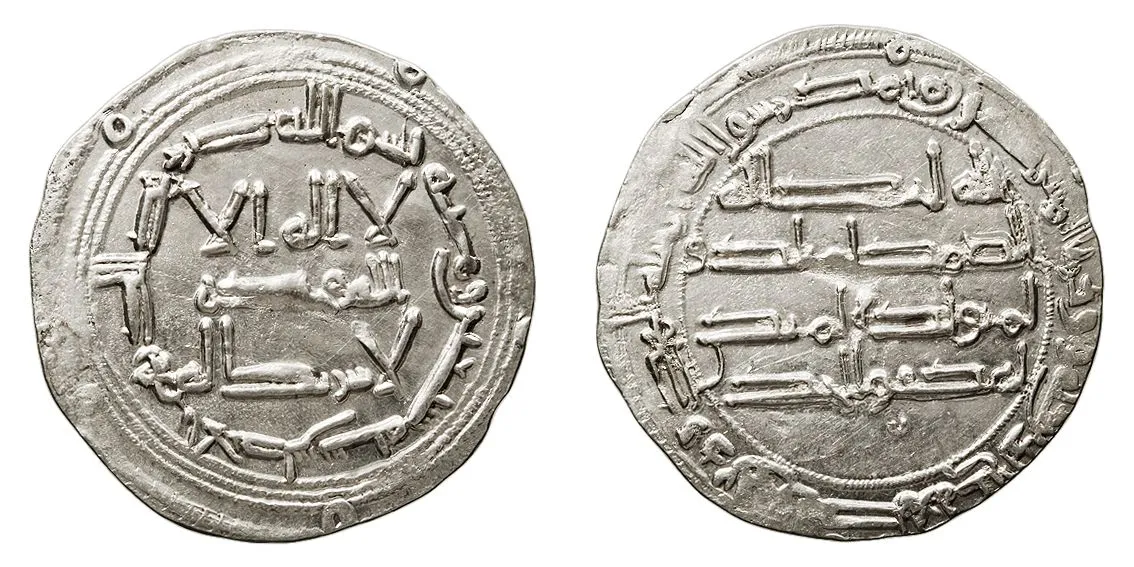
Coinage reflects the same consolidation. Silver dirhams were struck at Córdoba during the reign, carrying religious legends with the mint and date but not the emir's name — a restraint consistent with his avoidance of caliphal pretension, since naming the ruler on the coinage was a caliphal prerogative.
In religious and legal life his reign belongs to the period before the Maliki school became dominant in al-Andalus. Andalusi legal practice in the mid-eighth century still owed much to Syrian jurisprudence, and the general adoption of Maliki law came later, under his successors. This is a point on which the sources are often read backwards, and it is worth stating plainly: the Maliki character of Andalusi Islam was not established by Abd al-Rahman I.
Toward the Christian and Jewish populations his government continued the arrangements inherited from the conquest: protected status in exchange for tribute, communities left to their own religious hierarchies and internal law, and Christian intermediaries dealing with the Muslim administration on their communities' behalf. The pressures that later produced both large-scale conversion and episodes of friction lay in the future.
Revenue, Coinage, and the Machinery of Government
The administrative history of the emirate is poorly documented and can be reconstructed in outline, and the outline matters because a paid standing army is impossible without it.
The fiscal system Abd al-Rahman inherited was a conquest arrangement rather than a state one. Revenue came from the land tax on non-Muslim cultivators, the poll tax on protected communities, the tithe on Muslim-held land, customs and market dues, and the fifth of war booty. Much of it had never reached a central treasury: the Syrian regiments drew the income of their assigned districts directly, provincial governors retained what they collected, and the frontier lords remitted little.
Centralising this was the precondition of everything else. The reign accordingly saw the establishment of a treasury under the emir's control, the appointment of revenue officials answerable to Córdoba rather than to local interests, and the progressive conversion of the jund districts from self-financing military allotments into taxpaying provinces. The sources are not detailed about the mechanics and give no figures worth quoting, but the outcome is visible in the fact that a professional army of tens of thousands was paid in cash for three decades.
Government was conducted through a small household administration. The emir appointed provincial governors, judges, the commander of the guard, and the officials of the treasury and the chancery, and the senior posts went overwhelmingly to mawali — clients and freedmen of the Umayyad house — for the same reason the army did. Eduardo Manzano Moreno's study of the period identifies this reliance on a client élite as the defining feature of early Andalusi government: an administration recruited from men whose entire position derived from the ruler and who had no independent standing in Andalusi society.
Coinage provides the one class of hard physical evidence for the reign. Silver dirhams were struck at Córdoba, carrying religious legends together with the mint name and the date but omitting the ruler's name. The omission is significant and consistent with the political position discussed above: naming the sovereign on the coinage was a caliphal prerogative in the eastern tradition, and Abd al-Rahman's coinage advertises an independent polity without advancing a claim to the caliphate. Gold was not struck in quantity; the Andalusi economy of this period ran on silver, with gold coin arriving through trade.
The one general observation the evidence supports is that the emirate under Abd al-Rahman was a fiscal-military state in miniature — taxes collected to pay soldiers, soldiers used to ensure taxes were collected — and that the sophistication of the tenth-century caliphal administration, with its elaborate departments and enormous revenues, developed from this modest beginning rather than existing from the outset.
Religion and Law in the Early Emirate
The religious character of eighth-century al-Andalus is frequently described in terms borrowed from later centuries, and the distinction is worth drawing carefully.
Al-Andalus is associated in the mature medieval period with the Maliki school of law, to a degree unusual anywhere in the Islamic world. That association did not exist in Abd al-Rahman's lifetime. The legal practice of the early emirate drew substantially on Syrian jurisprudence, and the doctrine associated with the Syrian jurist al-Awzai was influential among Andalusi judges of this period — unsurprisingly, given that the ruling family, its clients and a large part of its army came from Syria. The general adoption of Maliki doctrine came later, under Abd al-Rahman's son and grandson, through Andalusi scholars who travelled east to study with Malik ibn Anas and his circle at Medina and returned with his teaching; the decisive figures belong to the reigns of Hisham I and al-Hakam I rather than to this one.
The scholarly class of the early emirate was correspondingly thin. There were judges, and there were men who had studied in the east, but the dense network of jurists, traditionists and teachers that later made Córdoba a centre of learning — described in the article on intellectual life in al-Andalus — did not yet exist. Abd al-Rahman appointed the judges of Córdoba and the provinces and dealt with religious scholars as officials rather than as an independent estate capable of constraining him.
His own relations with religious authority were shaped by his political vulnerability, and the most revealing episode is the Berber revolt of Shaqya discussed above. That a rebel could gather a following for a decade on the strength of a claimed descent from the Prophet's family indicates both the appeal of religious legitimacy and the weakness of the emir's own claim to it. Abd al-Rahman ruled by conquest and Umayyad descent, not by religious authority, and he did not attempt to construct the latter; the elaborate ideological apparatus of the tenth-century caliphate, examined in Janina Safran's study, was built precisely because his descendants recognised the gap.
The non-Muslim majority lived under the arrangements inherited from the conquest. Christians retained their churches, their bishops and their internal law, paid the poll tax, and dealt with the Muslim administration through their own intermediaries; the Jewish communities held a comparable position. Conversion to Islam proceeded gradually and would transform the peninsula's religious demography over the following two centuries, but in the 780s Muslims were still a minority of the population, and the state was a small Arab and Berber military élite governing a largely Christian countryside. The pressures, accommodations and frictions that this arrangement produced over the longer term are the subject of the article on convivencia, and it is worth stressing that the eighth-century version of it was a matter of tribute and separation rather than of the cultural interpenetration of later periods.
Córdoba, al-Rusafa, and the Great Mosque
Abd al-Rahman found Córdoba a provincial town and left it a capital. The transformation, and its later flowering under his descendants, is the subject of the article on Córdoba.
He repaired the city's walls and the Roman bridge, and outside the city to the northwest he laid out the country estate of al-Rusafa, named for his grandfather Hisham's residence in Syria. The sources describe plants and trees being brought from the east for its gardens, and the estate became the dynasty's retreat.
In 785, in the last years of his life, he ordered the construction of a new congregational mosque for the city, on the site of the church of Saint Vincent. The first phase — a hypostyle prayer hall of eleven aisles running toward the qibla, its arcades carried on columns and capitals largely salvaged from Roman and Visigothic buildings, with the double-tiered horseshoe arches of alternating brick and stone that became the building's signature — was completed within about a year. Every later Umayyad ruler of consequence extended it, and the architectural history is treated in the article on the Great Mosque of Córdoba. What belongs here is the political meaning: a ruler who declined the caliphal title nonetheless built a congregational mosque on a scale that announced a permanent capital and a dynasty settled in it.
Household, Family, and the Succession
The dynastic arrangements of the reign are sparsely recorded and one of them mattered enormously.
Abd al-Rahman maintained a large household in the manner of his family, and the sources credit him with numerous children by several mothers, most of them slave concubines. Among his sons, three figure in the political narrative: Sulayman, Hisham, and Abdallah.
Toward the end of his life he designated Hisham as his successor, passing over the elder Sulayman. The reasons are not recorded and the choice was consequential: on Abd al-Rahman's death in 788 both Sulayman and Abdallah refused to accept it, and Hisham I spent the first years of his reign fighting his brothers before they were defeated and induced to leave for North Africa. That the dynasty survived this is the strongest single piece of evidence that Abd al-Rahman's institutional work had succeeded — a contested succession would have destroyed any previous regime in al-Andalus, and the machinery of the emirate held.
The wider household deserves a word because it was a political institution rather than a domestic one. The mawali of the Umayyad house — the clients and freedmen who had followed the family west, together with those manumitted and recruited later — formed the pool from which the emir drew his generals, governors, treasury officials and personal guard. Badr, the freedman who had gone ahead to al-Andalus in 755 to sound out support, is the type of the class: a man of no independent standing whose loyalty was the ruler's most reliable asset. The household in this sense was the state's core, and its expansion under later rulers into the great establishment of slave soldiers and officials described in the article on Abd al-Rahman III is a development of the same principle.
Character, Poetry, and Memory
The sources give Abd al-Rahman a defined personality, though the material has to be handled with the caution due to a founder remembered by the dynasty he founded.
He is described as tall and lean, fair or reddish-haired, blind in one eye, marked by a mole on his face, and wearing his hair in two locks. He is presented as austere in habit, restless, personally present on campaign, accessible in public, and severe with defeated enemies. The severity is not softened in the Andalusi tradition, which records executions, the killing of allies who became inconvenient, and the display of the heads of rebels as routine instruments of rule.
He was also a poet, and the verses attributed to him are among the most quoted short pieces of Andalusi literature. The best known addresses a solitary palm tree at al-Rusafa, born in the west and far from the land of palms, as a fellow exile — a poem of displacement written, by tradition, by the man who had crossed a continent to escape his family's destruction and never returned. The attribution is traditional rather than documented, and the poem is best read as part of how he was remembered as well as evidence of what he felt.
The byname by which he is known in the eastern sources is Saqr Quraysh, the Falcon of the Quraysh, and the tradition attributes it to the Abbasid caliph al-Mansur, in acknowledgement that a hunted fugitive had built a kingdom beyond Abbasid reach. Like the other anecdotes of the exchange between the two men, it is reported rather than documented.
Abd al-Rahman died at Córdoba on 30 September 788, aged fifty-seven, after thirty-two years of rule. He had never performed the pilgrimage and had never left the peninsula since he entered it.
Historiographical Note
The evidence for this reign is late, thin, and interested, and any confident narrative of it should be read with that in mind.
No contemporary Andalusi chronicle survives. The principal Arabic sources are the anonymous Akhbar Majmu'a, compiled perhaps two centuries later; Ibn al-Qutiyya's history of the conquest, from the tenth century; the partially surviving Muqtabis of Ibn Hayyan, from the eleventh; Ibn Idhari's al-Bayan al-Mughrib, from the fourteenth; and al-Maqqari's enormous seventeenth-century compilation, which preserves much earlier material at the cost of a very long chain of transmission. All of them stand within a tradition that had reason to present the founder of the Andalusi Umayyad state heroically, and much of the anecdotal texture — the escape across the Euphrates, the mule at al-Musara, the labelled heads, al-Mansur's remark, the palm tree — has the shape of narrative rather than record. The Latin chronicles of the Christian north are closer in time but brief, hostile, and concerned with their own affairs, and Frankish sources notice al-Andalus only in 778.
The consequence is a reign whose framework is secure and whose detail is often irrecoverable. The escape from Syria, the crossing of 755, the victory at al-Musara, the sequence and general character of the revolts, the Abbasid-backed rising, the Frankish expedition and its failure, the recovery of Zaragoza, the creation of a paid army, and the foundation of the Great Mosque are all well established. Dates for individual campaigns vary between sources, troop numbers are conventional, dialogue is literary, and motive is usually supplied by the historian rather than the evidence.
Roger Collins's study of the conquest period is deliberately sceptical about how much of the eighth century can be recovered at all, and takes the Arabic narratives to be substantially later constructions. Hugh Kennedy's political history is less austere but consistently distinguishes the documented framework from the anecdotal filling. Readers of this article should assume that where the narrative above is specific about a conversation, a number, or a motive, it is reporting a tradition.
Assessment
Abd al-Rahman I's significance rests on three things of quite different kinds.
The first is the improbability of the achievement itself. A landless prince of nineteen whose family had been systematically hunted down crossed North Africa as a fugitive and, within six years of arriving in a province he had never seen, ruled it. There is no close parallel in the period, and the sheer unlikelihood is why the episode attracted the legendary accretion discussed above.
The second is the institutional choice he made under pressure, which had consequences he could not have foreseen. Unable to trust the Arab settler factions whose quarrels made al-Andalus ungovernable, he built a paid professional army of Berbers and clients loyal to his person, financed by regularised taxation and directed by an appointed administration answerable to Córdoba. This solved his immediate problem and established the shape of Andalusi government for two and a half centuries. It also created a standing dependence on imported Berber troops with no stake in the country, which al-Mansur ibn Abi Amir expanded greatly in the late tenth century and which contributed directly to the disintegration of the caliphate after 1009.
The third is durability. The emirate founded in 756 became the caliphate of Córdoba in 929 and lasted until 1031, and the civilisation it sustained — the mosque, the libraries, the scientific and philosophical work described in the articles on al-Andalus, intellectual life in al-Andalus, and the Islamic Golden Age — was among the major achievements of medieval Europe, and the channel through which a great deal of it reached the Latin West, as the article on Andalusian influence on Europe discusses. That the western Umayyad state outlived the eastern one by almost three hundred years is the most arresting single fact about him.
Against this stand the costs and the limits, and they are real. He governed by force for three decades against populations that rejected his authority repeatedly, and the tradition records the executions, the killings of former allies, and the exemplary cruelties without apology. He achieved no territorial expansion of consequence and lost ground on no front only because he could spare nothing for either. He declined the caliphal title and made no attempt to recover his family's inheritance in the east. And the state he built rested on a balance among Arab settlers, Berber soldiers, Iberian converts and a ruling family dependent on its clients — a balance that functioned while a capable ruler held it and broke badly when one did not, as it did in the years after his death, again in the ninth century, and finally and irreparably in the eleventh.
References and Further Reading
Primary Islamic Sources
- Quran, Surah Al-Imran (3:26) — "You give sovereignty to whom You will and You take sovereignty away from whom You will"; the verse invoked in the Andalusi accounts of the fall of the Umayyads and Abd al-Rahman's rise
- Quran, Surah al-Hajj (22:40) — on those wrongfully driven from their homes, a text applied in the Andalusi tradition to the exiled Umayyads
- Quran, Surah al-Nisa (4:58) — on rendering trusts and judging with justice, the standard applied to rulers in Andalusi juristic writing
- Sahih al-Bukhari, Kitab al-Ahkam (Book of Judgements), and Sahih Muslim, Kitab al-Imarah (Book of Leadership) — the prophetic material on obedience, rebellion, and the obligations of rulers, the framework within which Andalusi jurists assessed a ruler facing continuous revolt
- The verses attributed to Abd al-Rahman I on exile and on the palm tree of al-Rusafa, preserved in the Andalusi literary anthologies
Classical Islamic Sources
- Akhbar Majmu'a. [Anonymous Andalusi chronicle, compiled 10th–11th century] — the earliest surviving connected narrative of the emirate's foundation
- Ibn al-Qutiyya. Tarikh Iftitah al-Andalus (History of the Conquest of al-Andalus). [10th century]
- Ibn Hayyan, Abu Marwan. Al-Muqtabis. [11th century] — partially surviving; the most valuable Andalusi historical source
- Ibn Idhari. Al-Bayan al-Mughrib. [c. 1312] — the fullest medieval narrative of the Andalusi and Maghribi dynasties
- Al-Maqqari, Ahmad ibn Muhammad. Nafh al-Tib min Ghusn al-Andalus al-Ratib. Cairo: Dar al-Kutub al-Misriyyah, 1949. [c. 1629] — a late compilation preserving much earlier material
- Ibn Khaldun, Abd al-Rahman. Kitab al-Ibar, the Andalusi sections. [c. 1377]
- Al-Razi, Ahmad ibn Muhammad. Akhbar Muluk al-Andalus. [10th century] — surviving in later quotation and translation
Academic and Scholarly Sources
- Kennedy, Hugh. Muslim Spain and Portugal: A Political History of al-Andalus. London: Longman, 1996. — the standard political narrative in English
- Collins, Roger. The Arab Conquest of Spain, 710–797. Oxford: Blackwell, 1989. — a deliberately sceptical assessment of the source base for the eighth century
- Manzano Moreno, Eduardo. Conquistadores, emires y califas: los Omeyas y la formación de al-Andalus. Barcelona: Crítica, 2006. — on the emergence of state institutions from a conquest society
- Safran, Janina M. The Second Umayyad Caliphate: The Articulation of Caliphal Legitimacy in al-Andalus. Cambridge, MA: Harvard University Press, 2000.
- Fierro, Maribel. Abd al-Rahman III: The First Cordoban Caliph. Oxford: Oneworld, 2005. — on the dynasty's later development and its foundation narratives
- Chalmeta, Pedro. Invasión e islamización: la sumisión de Hispania y la formación de al-Andalus. Madrid: MAPFRE, 1994.
- Wasserstein, David J. The Rise and Fall of the Party-Kings. Princeton: Princeton University Press, 1985. — on the political structures the Umayyads established and their eventual failure
- Guichard, Pierre. Structures sociales orientales et occidentales dans l'Espagne musulmane. Paris: Mouton, 1977.
Further Reading
- Catlos, Brian A. Kingdoms of Faith: A New History of Islamic Spain. New York: Basic Books, 2018.
- Menocal, María Rosa. The Ornament of the World. Boston: Little, Brown, 2002.
- Jayyusi, Salma Khadra, ed. The Legacy of Muslim Spain. 2 vols. Leiden: Brill, 1992.
- Hillenbrand, Robert. Islamic Architecture: Form, Function, and Meaning. Edinburgh: Edinburgh University Press, 1994. — on the first phase of the Great Mosque
- Marín, Manuela, ed. The Formation of al-Andalus. 2 vols. Aldershot: Ashgate, 1998.
Mentioned In
11 articles reference this topic
More from Al-Andalus
Al-Andalus
Al-Andalus was the Islamic territory in the Iberian Peninsula from 711 to 1492 CE. Over nearly eight centuries it produced major intellectual and architectural achievements, and its mix of Muslim, Christian, and Jewish communities left a lasting mark on European and Islamic civilization.
Convivencia in Al-Andalus: Interfaith Coexistence and Cultural Synthesis
Convivencia, meaning living together, describes relations between the Muslim, Christian and Jewish communities of Al-Andalus between 711 and 1492. Distinct in identity but joined in commerce and learning, they produced a common Andalusi culture.
Córdoba
Córdoba was the capital of Muslim Spain from the eighth century to the eleventh, and for much of that time the largest and most cultivated city of the western Mediterranean. This article follows the city itself: its Roman origins, its rise under the Umayyads, its court and learning, and its fall.
Great Mosque of Córdoba (Mezquita)
The Great Mosque of Córdoba (Mezquita) is one of the most magnificent examples of Islamic architecture. Built over two centuries by Umayyad rulers, it features horseshoe arches and represents the pinnacle of Moorish achievement in Spain.