Tariq ibn Ziyad: The Conqueror of Al-Andalus
Tariq ibn Ziyad (c. 670-720 CE) was the Berber commander who led the Muslim crossing of the Strait of Gibraltar in 711 CE and defeated the Visigothic kingdom of Spain, establishing Al-Andalus and giving his name to Gibraltar (Jabal Tariq).
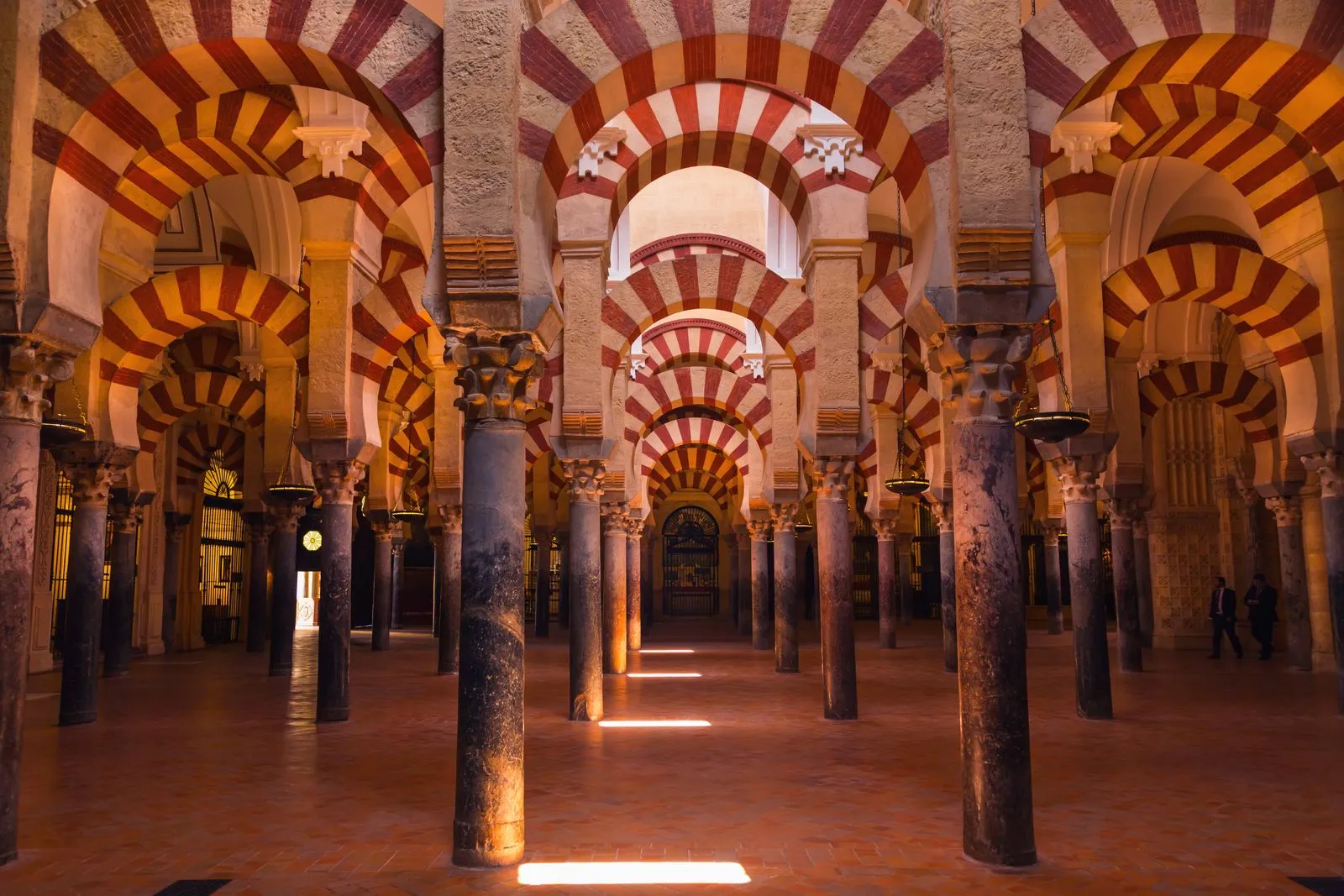
Tariq ibn Ziyad (c. 670-720 CE) was the Berber Muslim commander whose crossing of the strait between North Africa and the Iberian Peninsula in April 711 CE (Rajab 92 AH) initiated the Islamic conquest of Spain and the establishment of Al-Andalus — the Islamic civilization in Iberia that would endure for nearly eight centuries (711-1492 CE). His decisive victory over the Visigothic King Roderic at the Battle of Guadalete (or Wadi Lakka) in July 711 CE destroyed the Visigothic kingdom and opened the peninsula to Muslim rule, transforming the religious, cultural, and political landscape of Western Europe.
The strait he crossed — known in Arabic as Jabal Tariq (the Mountain of Tariq) — became Gibraltar in European languages, permanently inscribing his name into the geography of the world. His campaign, undertaken with approximately 7,000 Berber fighters (later reinforced), was one of the most consequential military operations in medieval history: it brought Islam to Western Europe, created the conditions for the remarkable civilization of Al-Andalus, and set in motion a process of cultural exchange between Islam and Christendom that would shape both civilizations for centuries.
Origins and Background
Berber Identity
Tariq ibn Ziyad was a Berber — a member of the indigenous North African peoples who had been conquered by the Arab-Muslim armies in the seventh century and who had embraced Islam in significant numbers during the decades that followed. His specific tribal affiliation is debated in the sources: some identify him as belonging to the Nafza tribe, others to the Zanata or other Berber groups. His father's name, Ziyad, is Arabic, which has led some scholars to suggest that his family had already been Arabized to some degree, while others maintain his purely Berber origin.
The Berbers of North Africa had been among the most resistant peoples to Arab conquest — their resistance under leaders like Kusayla and al-Kahina had delayed the complete subjugation of the Maghreb for decades. Yet once they embraced Islam (by the early eighth century, conversion was widespread), the Berbers became some of Islam's most enthusiastic warriors and its most effective agents of further expansion. Tariq represents the first generation of Berber Muslim commanders — men who combined the martial traditions of their own people with the religious motivation and organizational discipline of the Islamic military system.
Service Under Musa ibn Nusayr
Tariq served as a subordinate of Musa ibn Nusayr, the Umayyad governor of North Africa (Ifriqiya and the Maghreb), who had completed the conquest of the western Maghreb (modern Morocco) and had appointed Tariq as the governor of Tangier — the northernmost point of Muslim Africa, directly facing the Iberian Peninsula across the narrow strait.
From Tangier, Tariq could see the southern coast of Spain on clear days. The proximity of the two continents — separated by only 14 kilometers at the strait's narrowest point — made the peninsula a natural target for further expansion. The Umayyad Caliphate under al-Walid ibn Abd al-Malik was at the height of its expansionist energy, simultaneously pushing into Central Asia, the Indian subcontinent, and now Western Europe.
The Crossing and the Conquest
The Decision to Invade
The decision to cross into Spain was prompted by a combination of factors. There was a strategic opportunity, for the Visigothic kingdom of Spain was weakened by internal divisions: a civil war between factions supporting different claimants to the throne had left the country divided and its military dispersed. There was also an invitation, as Count Julian (or Ilyan), the Visigothic governor of Ceuta who had grievances against King Roderic, reportedly invited the Muslims to cross and offered intelligence about the peninsula's defenses. Reconnaissance had already been carried out: Tariq had sent a small force under Tarif ibn Malik across the strait in 710 CE, which raided successfully and returned with encouraging reports. And there was imperial ambition, since the Umayyad caliphate's expansionist momentum made further conquest the expected norm rather than the exception.
Musa ibn Nusayr authorized the crossing, and Tariq assembled an army of approximately 7,000 men — predominantly Berber warriors, with perhaps a small contingent of Arabs. This was not a massive army by the standards of the era, but it was well-motivated, disciplined, and led by a commander who understood that boldness in the initial strike could compensate for numerical inferiority.
The Landing at Gibraltar (April 711 CE)
In April 711 CE (Rajab 92 AH), Tariq's army crossed the strait in a fleet of small boats (reportedly provided or facilitated by Count Julian) and landed at the base of the rocky promontory that would thereafter bear his name: Jabal Tariq — the Mountain of Tariq — Gibraltar. The choice of landing site was strategic: the rock provided a defensible position from which to establish a beachhead, and its height allowed observation of the surrounding countryside.
The famous speech attributed to Tariq at the landing — "The sea is behind you, and the enemy is before you; there is nothing for you except sincerity and patience" (or, in more dramatic versions, that he burned the boats to prevent retreat) — is probably legendary rather than historical. The boat-burning story in particular is likely borrowed from earlier military traditions. But the speech captures the psychological reality of the situation: a relatively small force, far from reinforcement, facing an entire kingdom. Whatever Tariq actually said to his men, the message was clear: there was no option but victory.
The Battle of Guadalete (July 711 CE)
The decisive engagement came in late July 711 CE at the Battle of Guadalete (also called the Battle of Wadi Lakka or the Battle of the Barbate River) in southern Spain. King Roderic, having gathered his forces from across the peninsula (a process that took several months, giving Tariq time to consolidate his position), marched south with an army reported at anywhere from 25,000 to 100,000 men (the sources' figures are unreliable; modern estimates suggest perhaps 20,000-40,000).
The battle was decided by treachery within the Visigothic ranks: supporters of the rival claimant to the throne (the sons of the previous king Witiza) defected to Tariq's side during the battle, or at minimum refused to fight. With his army fragmenting around him, Roderic was overwhelmed. He disappeared during the battle — his body was never found, though his horse and royal regalia were discovered at the river's edge. The Visigothic army was destroyed as a fighting force in a single engagement.
The Advance Through Spain
After Guadalete, organized resistance to the Muslim advance largely collapsed. Tariq did not pause to consolidate but pushed rapidly northward, capturing the major cities of southern and central Spain in quick succession. Córdoba, the former Visigothic capital, was captured with minimal resistance, and Toledo, the reigning capital of the Visigothic kingdom, was entered without a siege after its garrison fled. Guadalajara, Alcalá, and other central cities were taken in a rapid sweep that gave the Visigoths no time to regroup.
By the end of 711 CE, Tariq controlled most of southern and central Spain — a territory larger than he could garrison, conquered in less than a year with fewer than 12,000 men (his original 7,000 having been reinforced by additional Berber contingents). The speed and completeness of the conquest has few parallels in military history.
Musa ibn Nusayr's Arrival and the Aftermath
The Governor Crosses
In 712 CE, Musa ibn Nusayr crossed into Spain himself with a larger Arab army (approximately 18,000 men), ostensibly to reinforce Tariq's conquest but also — according to most sources — motivated by jealousy of his subordinate's extraordinary success. Musa took a different route through the peninsula, capturing cities that Tariq had bypassed, including Seville and Mérida.
When Musa and Tariq met — reportedly at Toledo or Talavera — the encounter was tense. The sources describe a confrontation in which Musa rebuked Tariq for exceeding his orders (Tariq had been authorized for a raid, not a full conquest) and possibly even struck or humiliated him. The precise nature of the interaction varies across sources, but the pattern is clear: the governor resented being upstaged by his subordinate.
The Recall to Damascus
In 714 CE, both Musa and Tariq were recalled to Damascus by the Umayyad caliph al-Walid ibn Abd al-Malik (or his successor Sulayman ibn Abd al-Malik — the timing is debated). The reasons for the recall are disputed: some sources suggest the caliph was concerned about the independence of his commanders; others that internal court politics demanded their presence.
After their recall, both men disappear from the historical record. Tariq's fate is unknown — he may have lived out his life in obscurity in Damascus, or he may have died shortly after the recall. His disappearance from history after such an extraordinary achievement is one of the ironies of his story: the man who conquered a peninsula and gave his name to a geographic feature known worldwide died in circumstances that history did not record.
The Legacy of the Conquest
The Birth of Al-Andalus
Tariq's conquest created Al-Andalus — the Islamic civilization in Iberia that would endure for nearly eight centuries and that produced some of the medieval world's greatest achievements in science, philosophy, architecture, poetry, and interfaith coexistence. The Great Mosque of Córdoba, the Alhambra of Granada, the philosophical works of Ibn Rushd, the poetry of the Andalusian tradition, and the convivencia of Muslim, Christian, and Jewish communities all trace their origins to the moment when Tariq's forces crossed the strait in 711 CE.
Gibraltar: A Name Inscribed in Geography
The name Gibraltar — derived from Jabal Tariq (جبل طارق, the Mountain of Tariq) — is one of the most enduring geographical legacies of the Islamic expansion. Fourteen centuries after Tariq's landing, his name remains attached to one of the world's most strategically important waterways. The Strait of Gibraltar, the Rock of Gibraltar, and the territory of Gibraltar all bear his name — a permanent inscription of Islamic history into the geography of Western Europe.
The Historical Debate
Modern historians have debated various aspects of Tariq's conquest. One question concerns the role of internal Visigothic divisions: was the conquest primarily a military achievement or primarily the exploitation of a civil war? Another concerns the treatment of the conquered population, where the sources suggest generally tolerant treatment, with churches preserved and sometimes shared and conversion not compelled. A third concerns Tariq's independence versus his subordination: did he exceed his orders, or was the full conquest authorized from the beginning? A fourth concerns the relationship between Arab and Berber, for the conquest was achieved primarily by Berber fighters, but the subsequent governance of Al-Andalus was dominated by Arabs — a tension that would generate revolts in later decades.
These debates reflect the complexity of the event and its lasting significance for the history of both the Islamic world and Europe.
The Visigothic Kingdom: What Tariq Conquered
The State of Visigothic Spain
To appreciate the magnitude of Tariq's achievement, one must understand what the Visigothic kingdom was: not a backward or insignificant state but one of the major kingdoms of early medieval Europe. The Visigoths had ruled the Iberian Peninsula since the fifth century CE — roughly three hundred years of unbroken Gothic kingship. Their kingdom encompassed all of modern Spain and Portugal, with a population of several million, a functioning administrative system inherited from Roman structures, a Romanized urban network, and a military tradition that had produced capable armies for centuries.
The kingdom's weakness in 711 CE was not structural but political: a succession crisis between factions supporting different claimants to the throne had divided the nobility and dispersed the military. King Roderic (Rodrigo in Spanish) had seized the throne from the sons of the previous king Witiza, and the Witiza faction — which controlled significant portions of the military establishment — was more willing to see Roderic defeated than to unite against an external threat. This internal division was the essential precondition for Tariq's success: without it, a force of 7,000-12,000 men could never have conquered a kingdom of millions.
The Religious Landscape
Visigothic Spain was officially Catholic (the Visigothic kings had converted from Arianism to Catholicism in 587 CE under King Reccared), but its society contained significant religious minorities. A large Jewish population — economically important but subject to increasingly severe persecution under late Visigothic legislation — had every reason to welcome the Muslim conquerors, who offered them religious tolerance under the dhimmi system. The sources record that Jewish communities actively assisted the Muslim advance, opening city gates and providing intelligence — a collaboration born of desperation after decades of Visigothic anti-Jewish legislation.
The Christian population itself was divided between supporters of the existing church hierarchy (which was closely allied to the Visigothic monarchy) and ordinary believers whose religious life might not have been greatly affected by a change of rulers. The Muslim conquerors offered Christians the same dhimmi status as Jews: protection of person, property, and worship in exchange for payment of jizya.
The Campaign in Detail
The Initial Beachhead (April-June 711 CE)
After landing at Gibraltar in April 711 CE, Tariq spent approximately three months consolidating his position in the southernmost portion of the peninsula. He captured the town of Carteya (or Carteia, near modern Algeciras), established a base of operations, and sent reconnaissance parties to assess the disposition of Visigothic forces. He also received intelligence from Count Julian (who had facilitated the crossing) and possibly from Jewish communities in the south.
During this period, Tariq's force may have been reinforced — some sources suggest that additional Berber contingents crossed the strait to join him, bringing his total strength to perhaps 12,000 men by the time the main battle occurred. He used the time to familiarize himself with the terrain, to identify the routes northward, and to allow word of his arrival to reach and alarm King Roderic — drawing the Visigothic army southward to confront him on ground of his choosing.
The Battle of Guadalete: A Detailed Account
The Battle of Guadalete (late July 711 CE) — also called the Battle of the Rio Barbate or the Battle of the Laguna de la Janda — was fought in the southernmost portion of Spain, near the Strait. The exact location has been debated by historians (several sites near the Guadalete River, the Barbate River, or the Laguna de la Janda have been proposed), but the southern Spanish coastland is certain.
Roderic's army: The Visigothic king assembled his forces from across the peninsula — a process that took weeks and that explains the three-month gap between Tariq's landing and the battle. His army was reportedly large (the medieval sources give numbers up to 100,000, which modern historians reduce to perhaps 20,000-40,000), but its cohesion was questionable: it included factions loyal to the Witiza family who had no interest in fighting for Roderic.
The battle's course: The engagement lasted several days (some sources say up to a week), with initial skirmishing followed by a decisive engagement. The critical moment came when the wings of Roderic's army — commanded by nobles of the Witiza faction — defected or withdrew, either refusing to fight or actively switching sides. With his flanks collapsing, Roderic's center was overwhelmed. The king himself disappeared — killed or drowned while trying to cross the river.
The aftermath: The destruction of the Visigothic army at Guadalete was so complete that no subsequent organized military resistance could be assembled. The kingdom lost not only its king but the bulk of its military manpower in a single engagement. The remaining Visigothic nobles fled northward, and the cities of southern Spain — left without defenders — surrendered to Tariq's advance one after another.
The Race Northward
After Guadalete, Tariq displayed the quality that most distinguished him as a commander: strategic audacity — the willingness to press his advantage immediately rather than pausing to consolidate. Rather than methodically reducing every southern city, he pushed his cavalry northward at speed, aiming for the political heart of the kingdom:
Écija — a city that attempted resistance and was defeated in a secondary battle
Córdoba — the largest city of southern Spain, captured when its garrison fled and the inhabitants (including the Jewish community) opened the gates. Tariq left a garrison and continued northward.
Toledo — the capital of the Visigothic kingdom, reached in late 711 CE. The city had been largely abandoned by the fleeing Visigothic elite, and Tariq entered it without a siege. The capture of Toledo — the symbol of Visigothic royal power, the location of the treasury and the crown jewels — was the symbolic completion of the conquest. When Tariq took Toledo, the Visigothic kingdom effectively ceased to exist.
The Extent of Tariq's Personal Conquests
By the end of 711 CE, before Musa ibn Nusayr's arrival, Tariq personally controlled the entire southern coast from Gibraltar to the borders of the Byzantine-held Balearics, the Guadalquivir valley (Córdoba, Écija, and surrounding areas), central Spain (Toledo and its hinterland), and the routes connecting these areas.
This represented approximately half the Iberian Peninsula — conquered in less than a year by a force that never exceeded 12,000 men. The speed and completeness of the achievement has few parallels in military history and reflects both Tariq's tactical and strategic gifts and the extraordinary internal weakness of the Visigothic state.
The Establishment of Al-Andalus
The Administrative Framework
The conquest of 711-714 CE (combining Tariq's and Musa's campaigns) created the territorial framework of what would become Al-Andalus — Islamic Iberia. The initial administrative arrangements were simple: major cities received Muslim garrisons; local populations (Christian and Jewish) were granted dhimmi status; and land was distributed to the conquering soldiers (both Berber and Arab) as a reward for military service.
The territory was initially governed as a province of the North African administration (under the authority of the governor of Ifriqiya), but it quickly developed its own identity. Within a generation, Al-Andalus was governed by its own appointed emir, and by 756 CE — when the Umayyad prince Abd al-Rahman I established an independent emirate — it was fully autonomous from the eastern Islamic world.
The Cultural Consequences
The civilization that grew from Tariq's conquest produced significant achievements across many fields. In architecture there was the Great Mosque of Córdoba and, later, the Alhambra of Granada. In philosophy there was the tradition of Al-Andalus, including Ibn Rushd (Averroes), Ibn Tufayl, and others who transmitted Greek philosophy to Europe, and in science there were astronomers, mathematicians, and physicians whose works were translated into Latin and shaped European science. Its literary tradition produced Arabic poetry comparable to that of the eastern Islamic world, and its tradition of religious coexistence (convivencia) — imperfect but real — produced a society where Muslim, Christian, and Jewish scholars could collaborate.
All of this — eight centuries of Islamic civilization in Europe — began with Tariq's crossing of the strait in April 711 CE.
The Long Aftermath: Reconquista
The Christian kingdoms of northern Spain — the small remnants that survived in Asturias, Navarre, and other mountainous refuges — eventually launched the Reconquista: the centuries-long process of Christian reconquest that would gradually push the Islamic frontier southward until the fall of Granada in 1492 CE. This process took nearly eight hundred years — testimony to the depth and durability of the Islamic presence that Tariq had established.
The Reconquista was not a continuous war but an intermittent process punctuated by long periods of coexistence, alliance, and cultural exchange between Christian and Muslim states. The Islamic civilization of Al-Andalus was not simply conquered and destroyed; it was gradually absorbed, influencing Christian Spanish culture in architecture, language, science, agriculture, and cuisine in ways that persist to the present day.
Tariq in Islamic Memory and Modern Culture
The Symbol of Islamic Valor
In Islamic historical memory, Tariq ibn Ziyad represents the archetype of the Muslim conqueror — a man of faith and military genius who, with limited resources and against overwhelming odds, achieved one of the most spectacular victories in Islamic history. His youth (he was probably in his forties, but the tradition sometimes portrays him as younger), his Berber origin (demonstrating that Islam valued merit over ethnicity), and the audacity of his campaign have made him an enduring symbol of Islamic martial virtue.
The Famous Speech
The speech attributed to Tariq — "The sea is behind you, the enemy before you" (or variants thereof) — has become one of the most famous military speeches in Islamic literature, comparable to Henry V's St. Crispin's Day speech in English tradition. Whether historical or literary invention, the speech captures the psychological reality of Tariq's situation and has been recited, quoted, and adapted across the centuries as a model of leadership rhetoric in the face of danger.
Modern Commemorations
In the modern world, Tariq is commemorated in various ways. The name Gibraltar (Jabal Tariq) itself is his most enduring monument, and streets, squares, and institutions across the Muslim world — particularly in Morocco, where he is claimed as a national hero — bear his name. He appears in popular culture, including films, television series, novels, and educational materials, across the Arab and Muslim world, and in Morocco and North Africa particularly he is remembered as the Berber commander whose achievement is cited as evidence that the Muslim world's accomplishments were not exclusively Arab.
The Berber Dimension: Identity and Legacy
Tariq as a Berber Hero
Tariq ibn Ziyad's Berber identity is central to his significance in North African historical memory. The conquest of Spain — one of the most celebrated achievements in Islamic military history — was accomplished not by Arabs from the heartlands of the caliphate but by Berber soldiers from North Africa under a Berber commander. This fact challenges any narrative that reduces early Islamic civilization to an exclusively Arab achievement and demonstrates that Islam's expansion was a collaborative enterprise that incorporated diverse peoples from the moment they embraced the faith.
For the Berbers of the Maghreb — historically marginalized within the broader Arab-Islamic narrative — Tariq represents proof that their people were central participants in the making of Islamic civilization, not merely its passive recipients. The Berber tribes had been conquered by the Arabs only decades before Tariq's campaign, yet they immediately became Islam's most effective agents of further expansion. This rapid transformation — from conquered to conqueror, from recipient of Islam to its most dynamic vector of spread — is one of the remarkable features of the early Islamic expansion and finds its supreme expression in Tariq's career.
The Arab-Berber Tension in Al-Andalus
The conquest of Spain was achieved by a predominantly Berber army, but the subsequent governance of Al-Andalus was dominated by Arabs — a disparity that generated resentment and eventually revolt. The Berber soldiers who had risked their lives at Guadalete found themselves assigned to less fertile frontier lands (particularly in the north and the central meseta), while the Arab aristocracy that arrived later claimed the rich territories of the south (Andalusia, the Guadalquivir valley, the coastal cities).
This inequity led to the Great Berber Revolt of 740 CE — a massive uprising that shook Al-Andalus and North Africa simultaneously. While the revolt was eventually suppressed, it demonstrated the fundamental tension inherent in the conquest's legacy: the Berbers had done the fighting but the Arabs reaped the rewards. Tariq himself — a Berber who had been recalled and possibly humiliated by his Arab superior Musa — embodied this tension in his own person.
The tension was eventually resolved (imperfectly) through intermarriage, shared Islamic identity, and the passage of generations. By the ninth and tenth centuries, the distinction between Arab and Berber in Al-Andalus had become less rigid, and a mixed Andalusian identity had emerged. But the original injustice — Berber fighters conquering a land that Arabs then governed — remained part of the historical memory.
Berber Identity in Modern North Africa
In modern North Africa — particularly in Morocco and Algeria — Tariq ibn Ziyad has become a symbol of Berber (Amazigh) cultural pride. The Amazigh cultural revival of the late twentieth and early twenty-first centuries has reclaimed Tariq as a Berber hero, emphasizing his North African origins and his achievement as evidence that Berber civilization produced figures of world-historical significance.
This reclamation has sometimes generated tension with Arab nationalist narratives that claimed the conquest of Spain as an Arab achievement. The historical reality — that it was accomplished primarily by Berbers under a Berber commander, authorized by an Arab governor, within an Arab-led caliphal framework — does not lend itself to simple nationalist appropriation by either side. Tariq belongs to both traditions: he was Berber by blood and Muslim by faith, serving an Arab-led state but achieving what no Arab army had achieved.
The Visigothic Collapse: Historical Analysis
Why Did the Kingdom Fall So Quickly?
The rapid collapse of the Visigothic kingdom — a state that had existed for three centuries — remains one of the great questions of medieval history. A kingdom of millions, with a functioning army and a Roman-era administrative infrastructure, was destroyed in a matter of months by a force of fewer than 12,000 men. Historians have identified several factors:
Internal division: The succession crisis between supporters of Roderic and the Witiza faction meant that the kingdom was effectively fighting a civil war at the moment of the Muslim invasion. The defection of Witiza's sons at Guadalete was not merely treachery but a calculated political act by a faction that preferred Muslim victory to Roderic's continued rule.
The concentration of power: Unlike the decentralized feudal systems that would later develop in medieval Europe, the Visigothic kingdom concentrated military power in the king's army. When that army was destroyed at Guadalete, there was no secondary layer of defense — no local lords with their own armies who could continue resistance independently. The destruction of the central army meant the collapse of the entire military system.
The Jewish factor: The severe persecution of Jews under late Visigothic legislation (particularly the laws of King Egica in 694 CE, which effectively enslaved the entire Jewish population) had created a disaffected minority with every motivation to assist the Muslim conquerors. Jewish communities reportedly opened city gates, provided intelligence, and served as garrison troops in cities the Muslims had captured — a collaboration that significantly eased the conquest.
The speed of advance: Tariq's decision to push northward immediately after Guadalete — rather than pausing to consolidate — prevented the Visigoths from regrouping. Each city that fell further demoralized those that remained, and the snowball effect of rapid success made resistance seem increasingly futile.
Religious tolerance as a weapon: The Muslim offer of dhimmi status to Christians and Jews — allowing them to keep their property, their worship, and their internal governance in exchange for payment of jizya — removed the motivation for desperate resistance. For ordinary Christians, Muslim rule meant a tax increase but not the loss of their faith, their homes, or their lives. This made surrender rational in a way that fighting to the death was not.
The European Perspective
From the European perspective, the Muslim conquest of Spain was a catastrophe — the loss of an entire Christian kingdom to Islam. It prompted alarm across Christian Europe and contributed to the militarization of Christianity that would eventually produce the Crusades (though the Crusades were directed at the eastern Mediterranean rather than at Spain). The Fall of Spain also generated a counter-narrative — the Reconquista mythology — that portrayed the Christian kingdoms of northern Spain as the legitimate heirs of the Visigothic state, destined to reconquer the peninsula for Christendom.
This Reconquista narrative — which began in the early medieval period and culminated in the fall of Granada in 1492 — treated the Muslim conquest as an illegitimate occupation to be reversed. From the Muslim perspective, of course, the conquest was a legitimate expansion of God's religion into new territory, accomplished through just warfare and followed by tolerant governance. These competing narratives — Islamic legitimacy vs. Christian reconquest — coexisted for eight centuries and shaped the identities of both civilizations.
The Strait of Gibraltar in World History
A Crossing Point Between Civilizations
The Strait of Gibraltar — the narrow passage between Africa and Europe that Tariq crossed in 711 CE — has been one of the most significant geographic features in world history. Only 14 kilometers wide at its narrowest point, it separates two continents and two civilizations, yet its narrowness has made it a bridge as much as a barrier. Tariq's crossing was not the first time armies had used the strait (the Romans had crossed in the opposite direction centuries earlier), but it was the crossing that had the most lasting cultural consequences.
The strait that bears Tariq's name has remained a point of contact between the Islamic world and Europe ever since. Through it flowed not only armies but ideas, technologies, agricultural products, artistic styles, and scholarly texts. The transmission of Greek philosophy to medieval Europe — through Arabic translations made in Al-Andalus and then rendered into Latin — passed conceptually if not always physically through this narrow strait. The strait is thus not merely a geographic feature but a cultural hinge — a point where civilizations met, clashed, and ultimately enriched one another.
The Name That Endures
The fact that a geographic feature of such global significance bears the name of a seventh-century Berber Muslim commander is itself remarkable. Most geographic features named after historical individuals eventually lose the association — the person is forgotten while the name persists as a mere label. But in the case of Gibraltar, the association remains alive: educated people across the world know that Gibraltar means "the Mountain of Tariq" and can connect the name to the historical event of 711 CE. This persistence — fourteen centuries of unbroken naming — makes Tariq one of the very few medieval figures whose name is encountered daily by millions who have never studied Islamic history, simply because they look at a map or read a news report about the strait.
Historiographical Note
The Sources for the Conquest
The historical sources for Tariq's conquest present challenges. The earliest Arabic account — Ibn Abd al-Hakam's Futuh Misr wa al-Maghrib wa al-Andalus (9th century CE) — was written approximately 150 years after the events. Earlier accounts exist only in fragmentary form or as citations in later works. The Latin/Christian sources from the Iberian side are even later and are colored by the Reconquista ideology that treats the Muslim conquest as a disaster to be reversed.
The most comprehensive Arabic account is that of al-Maqqari (17th century CE), whose Nafh al-Tib compiled earlier sources (many now lost) into a comprehensive history of Al-Andalus. Modern historians — including Hugh Kennedy (Muslim Spain and Portugal), Roger Collins (The Arab Conquest of Spain), and Brian Catlos (Kingdoms of Faith) — have sifted these sources critically, attempting to reconstruct the most probable version of events while acknowledging the gaps and contradictions in the record.
What We Know and What We Don't
We know that a Berber Muslim force crossed the strait in 711 CE; that it defeated the Visigothic king Roderic in a decisive battle; that the peninsula was largely conquered within three years; and that the commander's name was Tariq ibn Ziyad.
We don't know with certainty: Tariq's precise tribal affiliation; whether the famous speech is historical; the exact number of his troops; the precise location of the battle of Guadalete; what happened to Roderic; or what ultimately became of Tariq after his recall. These uncertainties are typical of early medieval history, where the sources are limited, often contradictory, and always shaped by the interests of those who wrote them.
What is beyond dispute is the consequence: the creation of Al-Andalus, one of the most remarkable civilizations of the medieval world, born from a single daring military operation conceived and executed by a Berber commander whose name is still spoken fourteen centuries later.
The Military Art of Tariq's Campaign
Speed as a Weapon
The defining characteristic of Tariq's campaign was speed — the relentless forward momentum that gave the Visigoths no time to regroup, no opportunity to fortify, and no space to organize secondary resistance. After the decisive battle at Guadalete, Tariq's cavalry covered the distance from southern Spain to Toledo (approximately 500 kilometers) in a matter of weeks, capturing the kingdom's capital before the Visigoths could organize a defense.
This emphasis on speed reflected a deliberate tactical philosophy: that in a campaign against a numerically superior enemy on their own territory, the attacker's greatest advantage is initiative and momentum. By moving faster than the enemy could react, Tariq prevented the consolidation of resistance that might have made the conquest impossible. Each city that fell before it could prepare increased the demoralization of those that remained, creating a cascading collapse of will that was as much psychological as military.
The speed was also necessitated by practical constraints: Tariq's small army could not afford prolonged sieges that would give the Visigoths time to assemble a second army. He had to either take cities quickly (through shock, negotiation, or treachery within the walls) or bypass them entirely. His decision to leave some southern cities uncaptured while racing toward Toledo — the political and symbolic heart of the kingdom — demonstrated strategic judgment: he understood that capturing the capital would make resistance elsewhere seem pointless.
The Use of Intelligence
Tariq's campaign was supported by excellent intelligence — information about Visigothic dispositions, loyalties, and weaknesses that allowed him to exploit internal divisions with precision. The sources identify several intelligence sources. Count Julian, the Visigothic governor of Ceuta (or a Byzantine official, his exact identity being debated), provided information about Spanish defenses, the locations of garrisons, and the internal politics of the Visigothic kingdom. The Jewish communities, who had reason to assist the Muslims against their Visigothic persecutors, reportedly provided information about city defenses and garrison strengths. And disaffected Visigothic nobles — members of the Witiza faction — communicated with the Muslims before and during the campaign, providing intelligence about Roderic's army and facilitating the defection that decided the battle of Guadalete.
This intelligence network — assembled before the campaign began and maintained throughout it — was essential to Tariq's ability to make correct strategic decisions with limited forces. He knew where to strike, whom to approach for negotiation, and where resistance would be fierce versus where it would crumble. This knowledge, as much as his personal courage, explains the campaign's extraordinary efficiency.
The Integration of Berber and Arab Military Traditions
Tariq's army combined elements of two military traditions: Berber light cavalry tactics (speed, mobility, raids, ambushes) and Arab military discipline (organization, command structure, logistics). The Berber warriors who formed the bulk of his force were superb horsemen and fighters — products of a martial culture that valued individual combat skill and group mobility. The Arab military system that organized them provided the structure (chains of command, division into units, strategic planning) that transformed individual warriors into a coordinated army.
This synthesis — Berber martial prowess organized by Arab military science — was one of the distinctive features of the North African Muslim armies and was a key factor in their effectiveness. It allowed them to combine the mobility and aggression of nomadic cavalry with the discipline and coordination of a state army — a combination that the Visigothic forces (organized on a different model, with heavy cavalry and infantry formations) were unable to match.
The Treatment of the Conquered Population
Religious Tolerance in Practice
The Muslim treatment of Spain's Christian and Jewish populations after the conquest was, by the standards of the era, remarkably tolerant. The fundamental principle was the dhimmi system: non-Muslims could retain their property, their worship, their internal governance, and their personal law in exchange for the payment of jizya (poll tax) and acknowledgment of Muslim political authority.
In practice, this meant that churches remained open — some were shared between Muslims and Christians, as in Córdoba, where the church was initially divided, though forced conversion of sacred buildings was the exception rather than the rule in the early period. Property was preserved, for those who submitted without fighting kept their lands and possessions and only those who resisted militarily lost their property to the conquerors. Local administration continued, as Christian and Jewish officials went on managing local affairs under Muslim oversight, and conversion was not compelled: the sources are clear that forced conversion was not a feature of the early conquest, though social and economic incentives gradually encouraged voluntary conversion over the following centuries.
This tolerance was not merely idealistic — it was pragmatic. A force of 12,000-30,000 men could not govern a population of millions through terror alone. The dhimmi system provided a framework for stable governance that served both parties: the Muslim conquerors received revenue and political authority; the conquered populations received peace, protection, and the preservation of their way of life.
The Jewish Experience
For Spain's Jewish communities, the Muslim conquest was experienced largely as a liberation. Under the late Visigothic kings (particularly Erwig and Egica in the 680s-690s), Jews had been subjected to increasingly severe persecution: forced conversion, enslavement, confiscation of property, and prohibition from commercial activity. The Muslim conquest replaced this regime with the dhimmi system — which, while not equality, was an enormous improvement over the Visigothic persecution.
Jewish communities reportedly assisted the Muslim advance — opening gates, providing intelligence, and serving as garrisons in captured cities (freeing Muslim troops to continue the advance). This collaboration reflected rational self-interest: the Muslims offered a better deal than the Visigoths had provided, and the Jewish communities chose accordingly. The subsequent centuries of Jewish life under Muslim rule in Al-Andalus — while not without difficulties — produced the "Golden Age of Jewish culture" in Spain, with scholars like Maimonides, poets like Judah Halevi, and philosophers like Solomon ibn Gabirol flourishing under Muslim governance.
The Christian Adaptation
For the Christian majority, the transition to Muslim rule required adaptation but not catastrophe. Most Christians experienced the conquest as a change of tax collector and political authority rather than a transformation of their daily lives. They continued to attend their churches, to follow their religious calendar, to maintain their language (a Romance language that would eventually become Spanish), and to govern their communities internally under their own bishops and judges.
Over the following centuries, a process of gradual acculturation occurred: Christians living under Muslim rule (Mozarabs) adopted Arabic language and customs while maintaining their Christian faith, creating a hybrid culture that was neither purely Islamic nor purely Christian. This process — slow, voluntary, and driven by social rather than coercive pressures — demonstrated that the Muslim conquest created conditions for cultural exchange rather than cultural destruction.
Tariq's Disappearance and the Question of His Fate
The Circumstances of the Recall
In 714 CE, both Tariq and Musa ibn Nusayr were recalled to Damascus by the Umayyad caliphate — probably by the dying al-Walid I or by his successor Sulayman. The reasons for the recall are debated: concern about the independence of distant commanders, court politics, desire to receive the spoils of conquest directly, or suspicion that Musa (and through him Tariq) was becoming too powerful.
What Happened to Tariq?
After the recall, Tariq disappears from the historical record. No source provides a reliable account of what happened to him after he reached Damascus. The silence is remarkable given the magnitude of his achievement: the conqueror of a European kingdom simply vanishes from history.
Various theories have been proposed. One holds that he lived out his life in obscure retirement in Damascus, stripped of command and forbidden from returning to his conquest; another that he was punished or imprisoned by the new caliph Sulayman, as Musa was; another that he died shortly after the recall, either from natural causes or from the disgrace that accompanied Musa's fall; and another that his fate was deliberately suppressed from the historical record by those who wished to diminish the Berber contribution to the conquest.
The question of Tariq's fate — a commander of his prominence disappearing from history — has generated speculation across the centuries but no definitive answer. It remains one of the unsolved questions of early Islamic history.
The Geography of Tariq's Conquest
The Terrain of Southern Spain
The landscape that Tariq's army traversed in 711 CE shaped the campaign at every stage. Southern Spain (Andalusia) is characterized by several distinct zones. The Guadalquivir Valley is a broad, fertile river plain running east-to-west that constituted the agricultural heartland of Visigothic Spain; control of this valley meant control of the region's food production and its major cities (Córdoba, Seville, Écija), and Tariq's army passed through it on its northward advance. The Sierra Morena is the mountain range separating Andalusia from the central Meseta, and crossing it required finding passes — Tariq's successful passage demonstrating either good intelligence about the routes or good fortune in finding them through reconnaissance. The Meseta, or Central Plateau, is the high, flat interior of Spain where Toledo was located; this terrain favored cavalry, which the Muslim forces had in abundance, and was traversable year-round, unlike mountainous terrain that could block armies in winter. Finally, the Cantabrian and Pyrenean Mountains are the northern chains where the last remnants of Visigothic and Christian resistance would shelter, eventually forming the nucleus of the kingdoms — Asturias, Navarre — that would begin the Reconquista.
The Muslim advance followed the natural corridors of the landscape: up the Guadalquivir to Córdoba, through the Sierra Morena passes to the Meseta, and across the plateau to Toledo. The speed of the advance (approximately 500 km from Guadalete to Toledo in weeks) was possible because the terrain between the battle site and the capital presented no major obstacles to cavalry — only the cities themselves needed to be taken, and most surrendered without siege.
The Cities and Their Fates
The major cities captured by Tariq in 711 CE each had a distinct experience of the conquest:
Écija: Attempted resistance and was defeated in a secondary battle (sometimes called "the second Guadalete"). The city's garrison — a remnant of the Visigothic army — fought but was overwhelmed. This was the last significant military resistance Tariq faced before Toledo.
Córdoba: The largest city of southern Spain and a former Roman provincial capital. Its garrison fled rather than face Tariq's approaching army, and the remaining inhabitants — guided by the Jewish community, who reportedly showed the Muslims a weak point in the walls — opened the gates. The ease of Córdoba's fall demonstrated the psychological impact of Guadalete: once the royal army was destroyed, individual cities had no expectation that resistance would be effective.
Toledo: The Visigothic capital and the greatest political prize of the conquest. By the time Tariq reached it, the city had been largely abandoned by the Visigothic elite (who fled northward toward Asturias and the mountains). Tariq entered the capital of the defeated kingdom without a fight — capturing the royal treasury, the Visigothic crown jewels, and the symbolic seat of power. The fall of Toledo represented the definitive end of the Visigothic kingdom as a political entity.
Guadalajara and the northeastern cities: Tariq reportedly pushed beyond Toledo toward the northeast, capturing additional cities and extending his control toward the Ebro valley. The extent of this northeastern advance varies in the sources, but it demonstrates that even after capturing the capital, Tariq's momentum was not exhausted — he continued to expand until either his forces were overextended or (more likely) the approach of Musa ibn Nusayr's army from the south shifted the political dynamics.
The Aftermath: What Tariq Created
The Foundation of a Civilization
The territory that Tariq conquered in 711 CE — and that was consolidated by Musa in 712-714 CE — became the foundation of one of the most remarkable civilizations of the medieval world. Over the eight centuries of its existence (711-1492 CE), Islamic Spain (Al-Andalus) produced:
In science and medicine, its output included the astronomical tables of al-Zarqali (Arzachel), the surgical encyclopedia of al-Zahrawi (Albucasis), the agronomical innovations that reshaped Iberian agriculture (irrigation systems, new crops, and intensive cultivation techniques), and mathematical and astronomical works that would later influence European science through Latin translations.
In philosophy, it produced Ibn Rushd (Averroes), whose commentaries on Aristotle became foundational for both Islamic and Christian European philosophy; Ibn Tufayl, whose philosophical novel Hayy ibn Yaqzan influenced European thought; and Ibn Hazm, whose works on logic, ethics, and comparative religion were early contributions in those fields.
In architecture, it produced the Great Mosque of Córdoba and the Alhambra of Granada, along with the Giralda of Seville, the Alcázar of Seville, and many other buildings that still define the Spanish landscape.
In literature, it produced a tradition of Arabic poetry comparable to that of the eastern Islamic world, the muwashshah and zajal poetic forms that influenced European troubadour poetry, and prose works in history, geography, and belles-lettres.
In interfaith relations, there was the convivencia — the coexistence of Muslim, Christian, and Jewish communities that, while imperfect and periodically disrupted by violence, produced instances of cultural exchange and collaboration — as well as the Jewish "Golden Age" in Spain, when Jewish philosophy, poetry, and scholarship developed under Muslim governance, and the translation movement, through which Greek, Arabic, and Hebrew texts were rendered into Latin, transmitting the accumulated knowledge of the Islamic world to medieval Europe.
All of this — the civilizational output of Islamic Spain — followed from the events of April 711 CE, when Tariq ibn Ziyad's forces crossed the strait and landed on the Iberian Peninsula. The distance between that moment and the poetry of Ibn Hazm, the philosophy of Ibn Rushd, or the arches of the Alhambra is eight centuries, but the chain of causation runs directly from the one to the others.
The Transformation of European History
Tariq's conquest did not merely create Al-Andalus; it also affected the wider trajectory of European history. It introduced Islam as a lasting presence in Western Europe for nearly eight centuries, and it created the conditions for the transmission of knowledge from the Islamic world to Christian Europe through the Andalusian translation schools of Toledo and other centers. It stimulated the development of the Spanish and Portuguese national identities, defined in large part by the Reconquista struggle against Muslim rule, and it contributed to the events surrounding the discovery of the Americas, since the Reconquista's completion in 1492 freed Spanish resources for overseas exploration and Columbus sailed in the same year Granada fell. It also shaped European perceptions of Islam for centuries, producing a complex mix of fear, admiration, and cultural exchange that persists to the present day.
The historian who traces the chain of consequence from Tariq's landing at Gibraltar in 711 CE to Columbus's landing in the Americas in 1492 CE — from the creation of Al-Andalus to its destruction and the reorientation of Spanish energy toward the Atlantic — is following a thread that connects the early medieval Islamic world to the creation of the modern global order. Tariq ibn Ziyad, the Berber commander who crossed a narrow strait with a few thousand men, set in motion events whose consequences are still unfolding fourteen centuries later.
The Logistical Achievement
Crossing the Strait
The Strait of Gibraltar — fourteen kilometers of open water at its narrowest point — presented a significant logistical challenge for a seventh-century army. Tariq's force of approximately 7,000 men (with their weapons, equipment, and horses) had to be transported by sea in vessels that were, by the standards of the era, relatively small. The sources describe the crossing as taking place in multiple waves (the available ships could not carry the entire army at once), with Tariq himself reportedly crossing in the first wave to secure the beachhead before bringing the rest across.
The ships used for the crossing were probably a mix of merchant vessels from the North African coast, trading ships adapted for troop transport; purpose-built transports that Musa ibn Nusayr had constructed as part of his naval development program; and vessels provided by Count Julian from Ceuta, whose cooperation included logistical as well as intelligence support.
The logistics of maintaining an army across a strait — with supply lines running across open water — required ongoing naval capability throughout the campaign. Unlike a purely overland invasion (where supply lines could be secured by garrisons along the route), Tariq's position in Spain depended on keeping the strait open for reinforcements, supplies, and communications with the North African base. This naval dimension — less dramatic than the land battles but equally essential — was one of Musa's most important contributions to the campaign.
Supply and Sustainability
Once in Spain, Tariq's army faced the challenge of sustaining itself in enemy territory. A force of 7,000-12,000 men required daily supplies of food, water, and fodder for horses — quantities that could not be carried from North Africa and that had to be obtained locally. Tariq addressed this in several ways. He lived off the land, requisitioning food from the agricultural population of southern Spain, which was productive enough to support an army of this size, and he captured city granaries, each city taken providing stored food that could sustain the army for the next phase of the advance. He drew on local cooperation, as the Jewish communities and disaffected Visigothic factions who assisted him also provided food, guides, and local knowledge, and he relied on speed, moving fast enough that the army never remained in one area long enough to exhaust local resources.
The sustainability of the campaign — maintaining an army thousands of kilometers from its base for months on end, in hostile territory, without a pre-existing supply system — was itself a significant military achievement. Many historical campaigns have been defeated not by enemy armies but by logistics (Napoleon's Moscow campaign, for example). Tariq's ability to sustain his force throughout the rapid advance from Gibraltar to Toledo testifies to both good planning and good fortune.
Tariq and the Concept of Jihad
The Religious Dimension of the Conquest
For Tariq and his soldiers, the invasion of Spain was not merely a military campaign but a religious obligation — an act of jihad (struggle in the path of God) that carried both worldly rewards (spoils, land, prestige) and spiritual merit (divine reward in the afterlife). The Islamic framework within which the campaign was conceived gave the soldiers a motivation that transcended mere material interest: they believed they were doing God's work by carrying His message to new peoples and by establishing His law in new territories.
This religious dimension shaped the campaign's character in several ways. The sources describe pre-battle prayer and invocation, the army performing prayer before engagements and invoking God's assistance. The treatment of the conquered — the offer of dhimmi status rather than forced conversion or enslavement — reflected Islamic legal principles about the treatment of non-combatant populations. The distribution of spoils, with the one-fifth (khums) share reserved for the state and the remainder distributed among the fighters, followed Quranic prescriptions (Quran 8:41). And the motivation for risk was shaped by the promise of Paradise for those who died in jihad, which gave soldiers a willingness to face death that purely material incentives could not provide.
The Limits of the Jihad Framework
Modern historians have debated how much the jihad framework actually motivated rank-and-file soldiers versus the more prosaic motivations of material gain, tribal solidarity, and adventure. The Berber soldiers who formed the bulk of Tariq's army were recent converts — some possibly converted only months before the campaign. Their understanding of Islamic theology was probably limited, and their motivations likely combined religious zeal with the desire for booty, land, and social advancement.
This does not make the religious dimension less real — it merely places it within a more complex motivational landscape. The campaign was simultaneously a jihad (in the theological framework of its leaders), a raid for spoils (in the practical calculations of its soldiers), a strategic expansion (in the political framework of the Umayyad caliphate), and an expression of Berber martial culture (in the anthropological context of the army's ethnic composition). All these dimensions coexisted without contradiction, and any account that reduces the motivation to a single factor oversimplifies the historical reality.
The Comparison with Other Great Crossings
Military Crossings That Changed History
Tariq's crossing of the Strait of Gibraltar belongs to a category of military crossings that significantly altered the course of history. Hannibal's crossing of the Alps (218 BCE) brought the Carthaginian army into Italy, changing the course of the Second Punic War, and Caesar's crossing of the Rubicon (49 BCE) initiated the Roman civil war and the end of the Republic. William the Conqueror's crossing of the English Channel (1066 CE) brought Norman rule to England and transformed English civilization, and Tariq's crossing of the Strait of Gibraltar (711 CE) brought Islam to Western Europe and led to the establishment of Al-Andalus.
What distinguishes Tariq's crossing from most of these parallels is the permanence of its consequences. Hannibal ultimately failed; Caesar's crossing led to a political change within an existing civilization rather than the introduction of a new one; William transformed England's ruling class but not its religion or fundamental culture. Tariq's crossing introduced an entirely new civilization — a new religion, a new language, a new political system, new arts, new sciences, new architecture — that endured for eight centuries and that continues to shape Spanish and European culture to this day.
In terms of lasting civilizational impact, only William's crossing (which created Anglo-Norman England and eventually the English-speaking world) rivals Tariq's in its long-term consequences for global history. And even William's impact, while enormous, was confined to reshaping an existing Christian European civilization rather than introducing a fundamentally new one. Tariq's achievement — bringing Islamic civilization to Western Europe — was qualitatively more transformative.
Conclusion: The Man and the Moment
Tariq ibn Ziyad was the right man at the right moment — a Berber warrior of proven ability who found himself at the geographic and strategic intersection where North African Islam met European Christendom across a narrow strait. His campaign of 711 CE was one of those rare events in history where individual action produced consequences far beyond what any single person could have anticipated: a military crossing of fourteen kilometers that initiated eight centuries of Islamic civilization in Europe and permanently altered the relationship between Islam and Christendom.
He possessed the qualities that the moment demanded: tactical audacity (the willingness to advance with speed rather than caution), strategic vision (the understanding that capturing Toledo mattered more than reducing every southern city), personal courage (leading from the front in an era when commanders fought alongside their men), and the ability to inspire a diverse army of recent converts to fight far from home against a numerically superior enemy.
Yet the same system that elevated him also destroyed him — recalled to Damascus by political forces beyond his control, stripped of his command, and erased from the subsequent history of the land he conquered. The civilization he created forgot its creator. The name Gibraltar endures as his monument, but the man himself — his final years, his death, his burial place — is lost to history.
This erasure is perhaps the final irony of Tariq's story: that a man whose achievement was so permanent, so consequential, and so clearly documented should himself be so impermanent, so disposable, and so thoroughly forgotten. The strait that bears his name is crossed daily by thousands who know nothing of the commander it commemorates. The civilization he founded produced masterpieces of philosophy, science, architecture, and poetry — none of which bear his name or acknowledge his role. History gave him a continent to conquer; politics gave him obscurity in return. But the achievement remains — and as long as there is a place called Gibraltar, the name of Tariq ibn Ziyad will endure in the geography of the world, even if the memory of the man has faded from all but the historical record.
References and Further Reading
Primary Islamic Sources
- Quran, Surah al-Anfal (8:60) — "And prepare against them whatever you are able of power and of steeds of war" — cited in the context of Islamic military expansion
- Sahih Muslim, Book of Jihad — traditions on the conduct of warfare and the treatment of conquered peoples
Classical Islamic Sources
- Ibn Abd al-Hakam. Futuh Misr wa al-Maghrib wa al-Andalus. [9th century CE] — the earliest Arabic account of the conquest of Spain
- Al-Tabari, Muhammad ibn Jarir. Tarikh al-Rusul wa al-Muluk. Leiden: Brill, 1879-1901. [c. 915 CE]
- Al-Maqqari, Ahmad ibn Muhammad. Nafh al-Tib min Ghusn al-Andalus al-Ratib. [17th century CE] — the most comprehensive classical Arabic history of Al-Andalus
- Ibn al-Athir. Al-Kamil fi al-Tarikh. [c. 1231 CE]
- Anonymous. Akhbar Majmu'a fi Fath al-Andalus. [11th century CE] — early account of the conquest
Academic and Scholarly Sources
- Kennedy, Hugh. Muslim Spain and Portugal: A Political History of al-Andalus. London: Longman, 1996.
- Collins, Roger. The Arab Conquest of Spain, 710-797. Oxford: Blackwell, 1989.
- Chejne, Anwar G. Muslim Spain: Its History and Culture. Minneapolis: University of Minnesota Press, 1974.
- Lévi-Provençal, Evariste. Histoire de l'Espagne Musulmane. Paris: Maisonneuve, 1950-1953.
Further Reading
- Menocal, María Rosa. The Ornament of the World: How Muslims, Jews, and Christians Created a Culture of Tolerance in Medieval Spain. New York: Little, Brown, 2002.
- Fletcher, Richard. Moorish Spain. Berkeley: University of California Press, 1992.
- Catlos, Brian A. Kingdoms of Faith: A New History of Islamic Spain. New York: Basic Books, 2018.
Mentioned In
14 articles reference this topic
and 2 more articles
More from Umayyad Caliphate
The Battle of Tours - Turning Point in European History
The Battle of Tours (732 CE) between Charles Martel's Frankish forces and the Umayyad army halted Muslim expansion into Western Europe, marking a decisive turning point that shaped the continent's political and religious landscape for centuries.
Umayyad Caliphate
The Umayyad Caliphate (661-750 CE) was the first major Islamic dynasty, ruling from Damascus and expanding the Islamic empire from Spain to Central Asia through unprecedented territorial growth and administrative innovation.
Al-Aqsa Mosque: The Farthest Sanctuary
Al-Aqsa Mosque in Jerusalem is the third holiest site in Islam, central to the Night Journey (Isra and Miraj) of Prophet Muhammad, and a symbol of Islamic heritage and Palestinian identity for over 1,300 years.
Battle of Karbala
The Battle of Karbala (680 CE) was a confrontation in which Husayn ibn Ali, grandson of Prophet Muhammad, was killed with his companions by Umayyad forces near the Euphrates. It became one of the most consequential events in Islamic history, shaping the development of Shia Islam.