Addas: The Christian of Nineveh Who Recognised the Prophet at Ta'if
Addas was a Christian slave from Nineveh, owned by one of the sons of Rabi'a of Mecca, who served grapes to Prophet Muhammad in an orchard outside Ta'if and recognised his prophethood from his knowledge of Jonah.
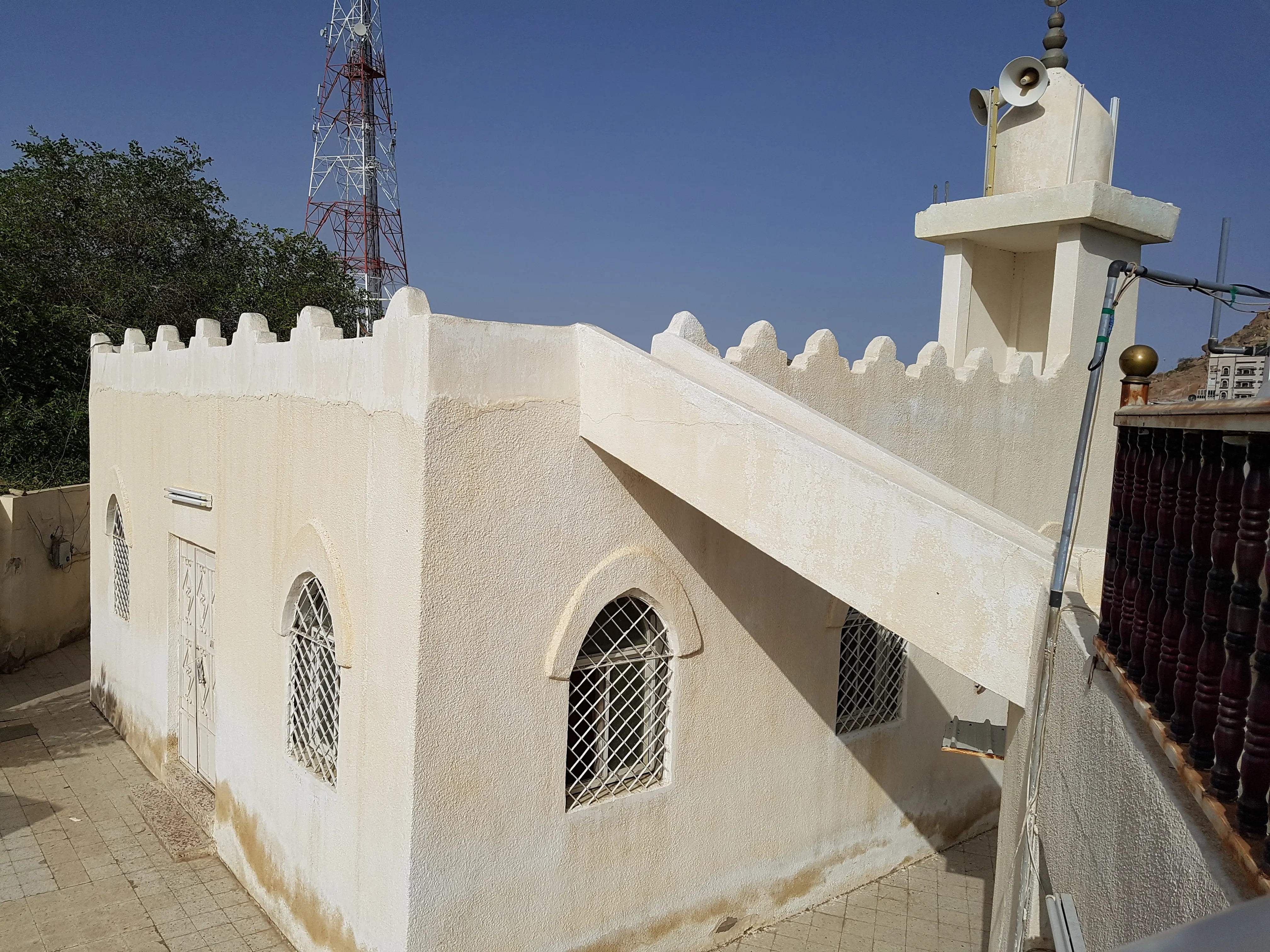
Addas (Arabic: عَدَّاس, ʿAddās) was a Christian slave from Nineveh, in Mesopotamia near Mosul, who belonged to one of the sons of Rabi'a among the leading men of Mecca. He appears in the biography of Prophet Muhammad ﷺ at a single decisive moment: sent with a plate of grapes to a wounded stranger resting in his masters' orchard outside Ta'if, he heard the man say "In the name of God", questioned him, and found that he knew of Jonah son of Amittai — the prophet of Addas's own city. On that recognition he bent down and kissed the Prophet's head, hands and feet, and told his masters afterwards that there was no finer man on earth.
The encounter is preserved in the earliest layer of the sira, transmitted by Ibn Ishaq and recorded by Ibn Hisham, and it is retold in substantially the same words by every later biographer. It matters for two reasons. It is the one moment of welcome in a journey that was otherwise a complete failure, since the notables of Ta'if had refused the Prophet and their townspeople had driven him out with stones. And the ground of the recognition is unusual: Addas did not respond to an argument or a miracle but to the fact that a man in the Hijaz knew the name of a prophet remembered in Nineveh.
Origins and Status
The entry on Addas in the Diyanet İslâm Ansiklopedisi states that he was originally a Christian of the city of Nineveh, near Mosul, and that he was the slave of Shayba ibn Rabi'a, or of Shayba's brother Utba ibn Rabi'a, both of them among the foremost of the Meccan leadership. Which of the two brothers owned him is not settled: Ibn Ishaq's narration speaks throughout of "the two sons of Rabi'a" acting together, while History of Islam attributes the orchard itself to Utba alone.
His origin is the hinge of the whole episode. Nineveh, on the Tigris opposite modern Mosul, was the city to which Jonah had been sent, and its Christian population preserved his memory. A slave from that city, serving in an Arabian household several weeks' travel to the south, carried with him a body of scriptural knowledge that nothing in his position at Ta'if would have led anyone to expect him to use.
In Mecca, After the First Revelation
The Diyanet entry records an earlier appearance, placing Addas in Mecca at the time of the first revelation. According to the report it cites, Khadijah bint Khuwaylid related what had happened to her husband both to her cousin Waraqah ibn Nawfal and to Addas, who was then in the city, and both men consoled her by telling her that the angel who had come to Muhammad was Jibril.
If the report is accepted, Addas had already given a judgement on the Prophet's experience years before he met him, which places him beside Waraqah as one of the Christians of the Hijaz consulted on the question. The material in the approved library on the first revelation names only Waraqah in that role, so the detail rests on the Diyanet entry and the earlier sources it draws on rather than on the sira narratives recorded here.
The Journey to Ta'if
The setting of the encounter was the bleakest period of the Meccan years. Ibn Ishaq relates that after the death of the Prophet's uncle Abu Talib the Quraysh treated him worse than they had ever done in his uncle's lifetime; Khadijah had died within days of Abu Talib, and the two losses came together. With no protector left in Mecca, the Prophet travelled to Ta'if, some sixty miles to the south-east, to seek help from the tribe of Thaqif and their protection against his own people, hoping they would accept the message he brought.
Ibn Ishaq's narration states that he went to them alone. The Sealed Nectar, following Ibn Hisham, has Zayd ibn Harithah with him and wounded in the head while trying to shield him, and this is the form in which the journey is usually told.
He spent ten days at Ta'if, putting his case to the notables one after another, and was refused by all of them. To hasten his departure the townspeople set their servants and the foolish among them to chase him through the lanes and pelt him with stones, pursuing him two or three miles across the sandy plain to the foot of the hills. Blood ran down both his legs. Exhausted, he took shelter in one of the fruit orchards at the edge of the cultivated land and sat down in the shade of a wall. History of Islam places the orchard three miles from Ta'if.
A supplication is attributed to him at this wall and is among the most widely quoted passages in Islamic devotional literature. Its chain of transmission runs through Abdullah ibn Ja'far and is graded weak by hadith scholars, and it is therefore not reproduced here as a record of what was said, though it remains in wide devotional use.
The Encounter in the Orchard
The orchard belonged to Utba and Shayba, the sons of Rabi'a, and they were present. Ibn Ishaq's account, as Ibn Kathir preserves it, is that when they saw what had happened to the Prophet they felt compassion for him, and summoned their Christian servant Addas:
"Take a cluster of grapes, place it on a plate, then go over to that man and tell him to eat it."
Addas did so, setting the plate before him and telling him to eat. As the Prophet put out his hand he said, "In the name of God", and ate. Addas looked into his face and said:
"By God, people of this land do not say these words."
The Prophet asked him, "Where are you from, Addas, and what is your religion?" He replied, "I am a Christian, and I come from Nineveh." The Prophet then asked, "You mean from the village of that pious man Jonah, son of Amittai?" Addas asked in return, "How do you know of Jonah, son of Amittai?" The Prophet answered:
"That man was my brother; he was a prophet and I am a prophet."
At this Addas bent low over him, kissing his head, his hands and his feet. History of Islam adds that the Prophet invited him to accept Islam.
The Prophet's words place Jonah within the single line of prophecy that the Qur'an describes, and the same equality of standing appears in a hadith transmitted from both Abdullah ibn Mas'ud and Abu Hurayrah, in which the Prophet said that no servant of God should claim to be better than Jonah son of Matta (Sahih al-Bukhari 4603 and 3416; Musnad Ahmad 3695). What Addas heard was therefore not a courtesy but a claim to stand in the same succession as the prophet of his own city.
"There Is None Finer Than This Man"
The two brothers watched from a distance. Ibn Ishaq records one saying to the other, "He's already corrupted our servant!" — in Haykal's rendering, that they were surprised at what they saw and yet remained unmoved by it. When Addas came back they asked him what had possessed him to kiss that man's head, hands and feet. He answered:
"On all earth there is none finer than this man; he has told me of something that no one but a prophet could know."
They warned him against it, telling him to take care that the man did not turn him from his religion, and that his own religion was in any case better. The Diyanet entry states that Addas accepted the Prophet's prophethood and became a Muslim notwithstanding his masters' displeasure. The sira narrations in the approved library carry the episode only as far as his homage and his answer to his masters, and do not describe a formal profession of faith; his inclusion in the classical biographical dictionaries of the Companions — Ibn al-Athir's Usd al-Ghaba and Ibn Hajar's al-Isaba, both cited in the Diyanet bibliography — indicates that the tradition counted him among those who believed.
The Return from Ta'if
The Prophet left the orchard and turned back towards Mecca. Ibn Ishaq relates that on the way he halted at Nakhla, between Mecca and Ta'if, and rose in the latter part of the night to pray; a company of the jinn, seven in number, overheard his recitation there. The Qur'an refers to the episode in the verse beginning "And when We dispatched towards you a group of jinn" (Quran 46:29), and Ma'ariful Quran connects the halt at Nakhla with the revelation of Surah al-Jinn.
It was also on this journey that Gabriel appeared with the Angel of the Mountains, who offered to crush the people of Ta'if between the two hills, and the Prophet answered that he hoped instead that God would bring forth from their descendants those who would worship Him alone. Thaqif entered Islam some ten years later, after the siege of Ta'if in 9 AH, when a delegation of the tribe came to pledge allegiance.
Badr
Addas appears once more, and again in the household of his masters rather than in the Muslim community. The Diyanet entry records a report that when the Meccan polytheists were preparing for the expedition that became the Battle of Badr, Addas pleaded with Shayba and Utba and tried to turn them from fighting against Muhammad.
They went out with the Quraysh army. Utba and Shayba, together with Utba's son al-Walid, were the three who stepped forward to open the battle in single combat, and were met by Hamza ibn Abd al-Muttalib, Ubayda ibn al-Harith and Ali ibn Abi Talib. Al-Bukhari's narration, quoted by Ibn Kathir, names the six men and records that a Qur'anic verse about adversaries who dispute concerning their Lord was held to refer to them. None of the three Meccans survived the encounter. Where and when Addas himself died is not known.
The Place of the Episode in the Sira
Addas is a minor figure by any measure of the sources: he is named in a single scene, with one earlier report attached to him and one later one, and no account of his life before or after. The classical tradition nevertheless kept him. His name occurs in Ibn Hisham's recension of Ibn Ishaq, in al-Waqidi's Maghazi, in al-Baladhuri's Ansab al-Ashraf, in al-Tabari's Tarikh, and in the two great biographical dictionaries of the Companions, according to the references assembled in the Diyanet entry. The Sealed Nectar reproduces a photograph captioned as the mosque of Addas on the road to Ta'if, indicating that his name remained attached to a site on that road.
The reason for the attention is the contrast the episode carries within the narrative. The tafsir tradition, as set out in the Atlas of the Quran, understood "the two towns" of the verse in which the polytheists asked why the Qur'an had not been sent down to a great man of one of them (Quran 43:31) to mean Mecca and Ta'if, and identified the man they had in mind at Ta'if as Urwah ibn Mas'ud al-Thaqafi. The notables of the town whose leading citizen the Quraysh thought worthier of revelation heard the Prophet for ten days and sent him away under a shower of stones; the person there who recognised him was a foreign slave with no standing in the town at all, and he recognised him on a point of scriptural knowledge rather than of argument or status.
Historiographical Note
Three points in the account above rest on ground worth stating plainly.
Which brother owned him. The Diyanet entry gives Shayba ibn Rabi'a or Utba ibn Rabi'a without deciding between them. Ibn Ishaq's narration consistently has the two brothers acting jointly and calls Addas the servant of both, while History of Islam attributes the orchard to Utba alone. The difference does not affect the substance of the episode, and no source resolves it.
Whether the Prophet travelled to Ta'if alone. Ibn Ishaq, in Ibn Kathir's recension, states flatly that "he went to them alone". The Sealed Nectar and the common later telling have Zayd ibn Harithah accompanying him and wounded in the head while shielding him. Both readings are transmitted; the article reports the variance rather than choosing.
Whether he was the first person of Ta'if to accept Islam. This is sometimes said of Addas, and it is not what the approved sources state. The Diyanet entry records that he became a Muslim but makes no claim about precedence, and no source in the approved library ranks him. The claim is also awkward in substance: Addas was a Christian foreigner resident at Ta'if rather than a member of Thaqif, and the tribe itself accepted Islam only after the siege of 9 AH. The article therefore records that he believed, and does not assert that he was the first there to do so.
References and Further Reading
Primary Islamic Sources
- Quran, Surah al-Zukhruf (43:31) — the objection of the polytheists that the revelation should have come to a great man of one of "the two towns", understood in the tafsir tradition as Mecca and Ta'if.
- Quran, Surah al-Ahqaf (46:29) — "And when We dispatched towards you a group of jinn", referred to the halt at Nakhla on the return from Ta'if.
- Quran, Surah al-Jinn (72) — the sura connected by the commentators with the same halt.
- Sahih al-Bukhari 4603 and 3416 — the Prophet's words that no servant of God should claim to be better than Jonah son of Matta, transmitted from Abdullah ibn Mas'ud and from Abu Hurayrah.
- Musnad Ahmad ibn Hanbal 3695 — the same report.
- Sahih al-Bukhari, on the opening duels at Badr — the naming of Utba and Shayba ibn Rabi'a and al-Walid ibn Utba against Hamza, Ubayda ibn al-Harith and Ali ibn Abi Talib.
Classical Islamic Sources
- Ibn Ishaq, Sirat Rasul Allah, in the recension of Ibn Hisham — the original narration of the journey to Ta'if and of the encounter in the orchard, on which all later accounts depend.
- Ibn Kathir, Al-Sira al-Nabawiyya — the fullest form of the episode available in the approved library, together with the return by way of Nakhla and the Badr duels.
- Al-Waqidi, al-Maghazi; al-Baladhuri, Ansab al-Ashraf; al-Tabari, Tarikh al-Rusul wa'l-Muluk — further early notices of Addas, cited here through the references assembled in the Diyanet İslâm Ansiklopedisi rather than consulted directly.
- Ibn al-Athir, Usd al-Ghaba, and Ibn Hajar al-Asqalani, al-Isaba fi Tamyiz al-Sahaba — the biographical dictionaries of the Companions in which Addas has an entry, likewise cited through the Diyanet references.
Academic and Scholarly Sources
- ÖNKAL, Ahmet. "ADDÂS." TDV İslâm Ansiklopedisi, vol. 1. Istanbul: Türkiye Diyanet Vakfı, 1988, pp. 355-356. The only dedicated encyclopaedia treatment consulted, and the source for his origin, his ownership, the report of Khadijah's consultation, his acceptance of Islam, and his plea before Badr.
- Al-Mubarakpuri, Safi-ur-Rahman. The Sealed Nectar — the Ta'if journey and the encounter, drawn from Ibn Hisham.
- Haykal, Muhammad Husayn. The Life of Muhammad — the encounter treated under its own heading, with attention to the brothers' reaction.
- Usmani, Mufti Muhammad Shafi. Ma'ariful Quran, vol. 8 — the parallel narration, and the halt at Nakhla in connection with Surah al-Jinn.
- History of Islam, vol. 1 — the location of the orchard and its attribution to Utba ibn Rabi'a.
Further Reading
- Ibn Kathir. Stories of the Prophets — the chapter on Jonah, for the prophet whose memory at Nineveh Addas carried.
- Guillaume, Alfred, trans. The Life of Muhammad: A Translation of Ibn Ishaq's Sirat Rasul Allah. Oxford: Oxford University Press, 1955. The standard English translation of the narration in which the episode originates.
- Watt, W. Montgomery. Muhammad at Mecca. Oxford: Clarendon Press, 1953. For the Meccan years and the standing of Ta'if and Thaqif in relation to the Quraysh.
Mentioned In
1 article references this topic