Zayd ibn Harithah: The Companion Named in the Qur'an
Zayd ibn Harithah (d. 8 AH / 629 CE) was enslaved as a boy, raised in the household of Prophet Muhammad (Peace Be Upon Him) and adopted by him, and known as Zayd ibn Muhammad until the Qur'an ended adoptive lineage. He is the only Companion named in the Qur'an, and died at Mu'tah.
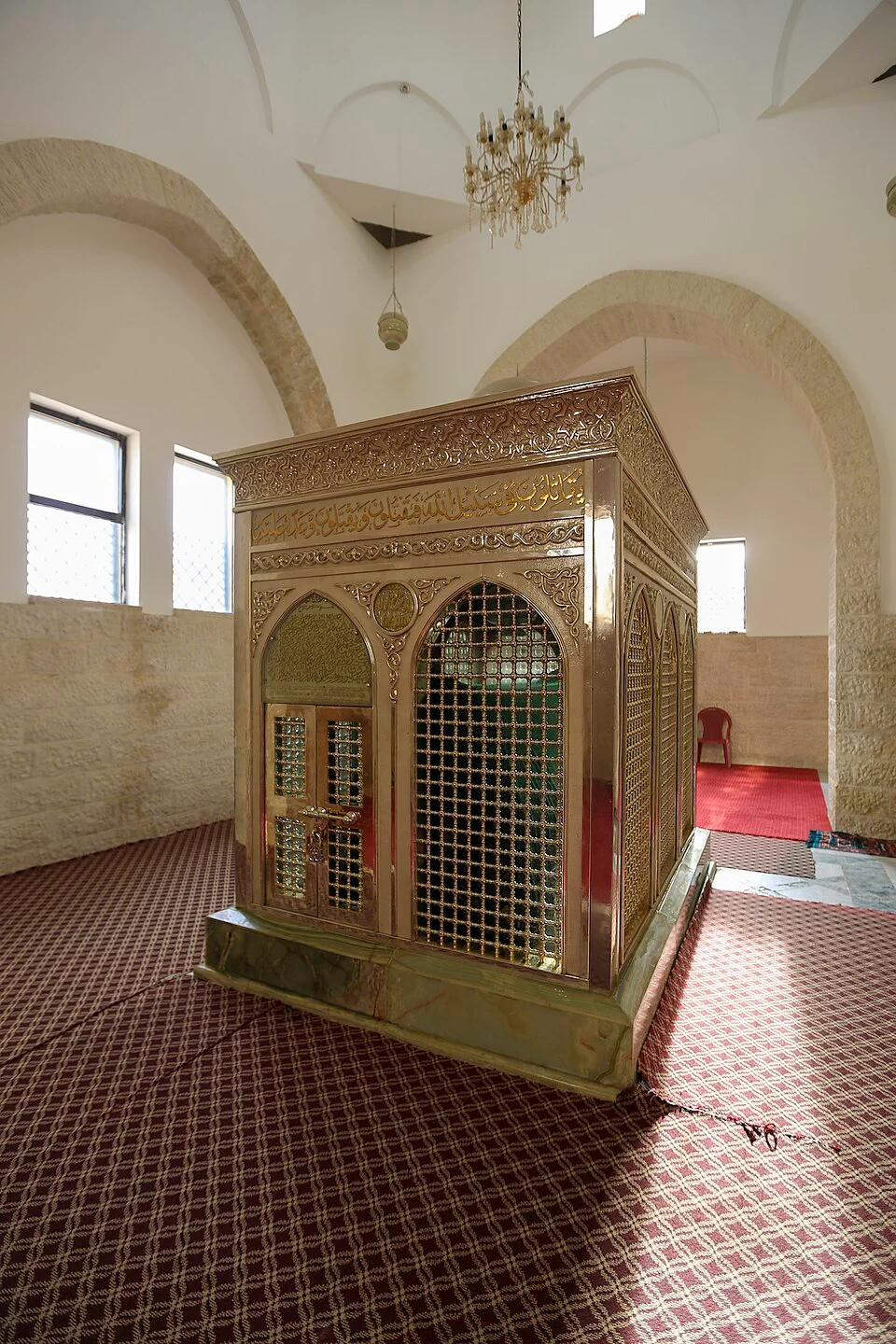
Zayd ibn Harithah (d. 8 AH / 629 CE) occupies a position in the early history of Islam that belongs to no one else. Enslaved as a boy and brought into the household of Prophet Muhammad (Peace Be Upon Him) before the revelation, he was freed and then adopted, and for years was known publicly as Zayd ibn Muhammad — Zayd, son of Muhammad. He is the only Companion of the Prophet mentioned by name in the Qur'an. And the verses that name him, together with those immediately preceding them in the same chapter, abolished the institution through which he had acquired that name.
His life therefore sits at the centre of a legal and social transformation rather than beside it. He was among the earliest Muslims, he commanded more expeditions from Medina than any other Companion, and he was killed at the head of the Muslim force at Mu'tah in 8 AH. His son Usama was raised in the same household and was entrusted with command of an army while still a young man.
Origins and Enslavement
Family and tribe
Zayd was born into the Banu Kalb, a large tribal confederation of northern Arabia. The early sources do not establish the year of his birth. The sources name his father as Harithah ibn Sharahil and his mother as Su'da bint Tha'labah, of the Banu Ma'n of Tayyi'. He was born free, into a family of standing within its tribe — a point the early biographers record deliberately, since his later enslavement was a reversal of status rather than an inherited condition.
Capture
The accounts in Ibn Sa'd and in the sirah literature relate that Zayd was taken as a boy in a raid while travelling with his mother's kin, and was carried off and sold.
He was brought to the market at Ukaz, the great periodic fair of the Hijaz, and purchased there, and came into the household of Khadijah bint Khuwaylid and Muhammad. All of this precedes the beginning of the revelation.
In the household
What the sources agree on is that Zayd was treated in the household as something other than a servant, and that this was evident to those outside it. He was a boy in a house without surviving sons: al-Qasim and Abdullah, the two sons born to Khadijah, had both died in infancy. The details of his upbringing are not preserved, and the elaborate descriptions of it found in later devotional literature are not traceable to early attestation.
The Choice and the Adoption
His father's search
Harithah did not abandon the search for his son. The accounts describe him seeking news of Zayd over a period of years, and eventually learning from pilgrims of his own tribe that a boy answering to the description was in Mecca in the house of Muhammad ibn Abdullah.
Harithah came to Mecca with Zayd's uncle and offered a ransom.
The choice
The Prophet's response, as the sirah literature records it, was to decline the ransom and to put the matter to Zayd himself: if he wished to go with his father, he was free to go, without payment; if he wished to stay, he was free to stay.
Zayd chose to stay. The accounts preserve the substance of his answer — that he would not choose anyone over the man who had raised him. Harithah accepted the decision.
Adoption before Islam
The Prophet then took Zayd to the assembly at the Kaaba and declared publicly that Zayd was his son and that they were heirs to one another. This was adoption in the pre-Islamic Arabian form, and it carried the full consequences that form entailed: the adopted son took the adoptive father's name, inherited from him, and was treated in matters of lineage as a natural son. From that point Zayd was known in Mecca as Zayd ibn Muhammad.
Two things should be noted about this. The adoption took place before the revelation began, within the customary law of the society. And it was public and formal: Meccan society knew Zayd by that name, which is precisely why its later revocation was socially significant rather than a private matter.
Among the Earliest Muslims
When the revelation began, Zayd was a member of the household and accepted Islam in its first days. The sources place him among the earliest believers. The precise order of the first conversions is not established, and none is stated here.
He remained in Mecca through the years of persecution and migrated to Medina with the community. Of his activity in the Meccan period the sources record little beyond his presence.
The Qur'anic Reform of Adoption
Surah al-Ahzab 33:4–5
The relevant legislation came in Surah al-Ahzab. Verses 4 and 5 state that God has not made adopted sons into sons, that this is merely something said with the tongue, and they direct that such children be called by the names of their own fathers, as being more just in the sight of God. Where a father is unknown, they are to be treated as brothers in faith, and no sin attaches to error made in good faith.
Zayd accordingly reverted to Zayd ibn Harithah. The relationship of care and affection was untouched; what was abolished was the legal fiction that adoption creates descent, with its consequences for lineage, inheritance, and the prohibitions of marriage that follow from kinship.
Surah al-Ahzab 33:40
Later in the same chapter, verse 40 states that Muhammad is not the father of any of the men among the believers, but the Messenger of God and the seal of the prophets. Read alongside verses 4 and 5, this closes the question of the Prophet having a son through adoption.
Adoption in pre-Islamic Arabia
To understand what the reform changed, the prior institution needs describing. Adoption in pre-Islamic Arabia was not primarily a provision for children in need. It was a mechanism for acquiring kin.
A man without sons faced a practical problem in a society where security, standing and inheritance ran through the male line. Adoption supplied what nature had not: the adopted son took the father's name, entered his lineage for all purposes, inherited alongside natural sons, and counted as a blood relative for the purposes of marriage prohibition. The practice was public and formally declared, as Zayd's adoption was declared at the Kaaba. It could also be used to attach able men to a household, and freedmen were among those adopted.
The institution therefore rested on a legal fiction of descent, and it is precisely that fiction the Qur'an addresses when it says that God has not made adopted sons into sons, and that this is merely something said with the tongue. Ella Landau-Tasseron's study of paternity and genealogical claims in Arabian and Islamic societies examines the range of such devices and the Islamic response to them.
Why the reform mattered
Islamic law preserved the substance of care for children while removing the fiction of descent. The Qur'an is emphatic and repeated on the duty owed to orphans, and the institution that developed — later termed kafala, guardianship — provides for a child's maintenance, upbringing and protection without altering their lineage. The distinction has practical consequences that persist in Islamic family law to the present: a child raised in this way retains their own name and parentage, inherits from their birth family rather than the guardian, and is not treated as a blood relative for the purposes of marriage prohibition.
Marriages
Umm Ayman and Usama
Zayd married Umm Ayman, whose name is given as Barakah, an Abyssinian woman who had been a servant in the household of the Prophet's family and had cared for him in his childhood. She was freed and held a position of particular regard in the household.
Their son Usama ibn Zayd was born in Medina and grew up close to the Prophet. Reports of the Prophet's affection for him are numerous in the canonical collections, including reports of him holding Usama and Hasan together and praying for them. Usama's later career is treated below.
Zaynab bint Jahsh
Zayd also married Zaynab bint Jahsh, the Prophet's paternal cousin, of the clan of Asad. The marriage was made at the Prophet's urging, and the sources indicate that Zaynab and her family were initially reluctant, on grounds of social standing: she was a Qurayshi woman of noble descent, and Zayd, whatever his position in the Prophet's household, had been a slave. The marriage went ahead.
It did not succeed. The sources do not give a detailed account of why, and the descriptions of incompatibility that appear in later literature are inference. What they record is that Zayd came to the Prophet intending to divorce her, that the Prophet counselled him to keep her, and that the marriage ended in divorce notwithstanding.
The Verse That Names Him
Surah al-Ahzab 33:37 is the only verse of the Qur'an in which a Companion of the Prophet is named. It addresses the Prophet directly, recalling that he said to the man upon whom God had bestowed favour and upon whom the Prophet himself had bestowed favour — Zayd — to keep his wife and fear God, while concealing within himself what God would bring to light, and fearing the people when God has more right to be feared. It states that when Zayd had no further need of her, God joined her in marriage to the Prophet, and it gives the purpose: so that there should be no difficulty for the believers concerning the wives of their adopted sons once those marriages have ended.
The Prophet's marriage to Zaynab followed. Its legal function is stated in the verse itself: it established in practice that a woman divorced by an adopted son is not forbidden to the adoptive father, because the adoption never created the kinship that would have forbidden it. The abolition announced in verses 4 and 5 was thereby demonstrated in the most publicly consequential way available.
A report transmitted from Aisha in Sahih al-Bukhari, in the Book of Divine Unity, observes that if the Prophet had been going to conceal any part of the revelation, he would have concealed this verse — a comment on the difficulty of the matter, and on the fact that it was nevertheless proclaimed.
Military Command
Expeditions from Medina
Zayd was among the most frequently appointed commanders of the Medinan period. Ibn Sa'd's biographical notice places him at the head of a series of expeditions, and al-Waqidi's Kitab al-Maghazi records several in detail. The best attested include the raid at al-Qarada in 3 AH, which intercepted a Quraysh trading caravan on the route to Syria, and expeditions to Hisma, to Wadi al-Qura, and to al-Is and al-Taraf.
The number of commands is itself the point the sources are making. Appointing Zayd repeatedly, over Companions of longer Qurayshi lineage and higher birth, is presented in the biographical literature as a mark of the confidence placed in him.
Mu'tah
In Jumada al-Awwal 8 AH the Prophet dispatched a force of about three thousand men north toward Syria, to the region of Mu'tah in what is now southern Jordan. They faced a substantially larger Byzantine and allied Arab force.
The expedition marked a change in scale and direction. Until this point the Medinan campaigns had been directed at the Quraysh, at tribes of the Hijaz, and at the settlements of the north-western Arabian trade route. Mu'tah brought a Muslim army into contact with the frontier forces of the Byzantine empire and its Arab clients, the Ghassanids — a state system rather than a tribal confederation.
The numbers reported for the opposing force are very large and are not reliable; the early Muslim accounts of enemy strength in this period tend to inflation, and modern scholarship treats such figures with caution. What is not in question is that the Muslim force was heavily outnumbered and that the Prophet's provision of a chain of command reflects an expectation of severe loss.
The Prophet appointed a chain of command in advance: Zayd first; if Zayd fell, Ja'far ibn Abi Talib — Ali's brother — and if Ja'far fell, Abdullah ibn Rawahah. The provision is recorded in Sahih al-Bukhari in the Book of Military Expeditions, and it is unusual: a stated succession of commanders indicates an expectation of heavy loss.
Zayd was killed first, carrying the standard. Ja'far took it and was killed. Abdullah ibn Rawahah took it and was killed. The army then chose Khalid ibn al-Walid, who extricated the force and withdrew it to Medina.
The report in Sahih al-Bukhari states that the Prophet announced the deaths of the three commanders in Medina before news arrived by ordinary means, and that his eyes filled with tears as he did so. The report is graded sahih.
He was buried at Mu'tah.
Usama ibn Zayd
Zayd's son Usama was a young man at his father's death. Two matters connected with him bear on Zayd's legacy.
The first is the standing Usama held with the Prophet, attested across the canonical collections, and the report — preserved in Sahih al-Bukhari and Sahih Muslim — of the Prophet's response when Usama attempted to intercede in a case where a punishment prescribed by God was due, a report cited in legal literature on the impermissibility of intercession in such matters.
The second is the command. In the last days of his life the Prophet appointed Usama to lead an expedition northward, over men considerably his senior. The appointment drew comment on account of his youth. The army had not departed when the Prophet died; Abu Bakr insisted on sending it out as the Prophet had ordered, at a moment when the community faced revolt on several fronts. That decision is treated in the article on the Ridda wars.
The Legal Afterlife of Zayd's Case
The verses occasioned by Zayd's circumstances produced a settled body of law, and it is worth setting out what that law holds, since the subject is frequently misunderstood.
Lineage is not transferable. A child's parentage is a matter of fact, not of declaration. No form of words attaches a child to a man who did not father him. The practical corollary is that a child raised by others keeps their own name and known parentage, and where the parentage is unknown the child is not given a false one.
Care is obligatory and highly commended. The same body of revelation that abolished adoptive descent is emphatic on the duty owed to orphans and dependent children. Surah al-Nisa devotes extended attention to their property and protection, and Surah al-Duha addresses the Prophet's own orphanhood. The institution that developed to give effect to this, later termed kafala, provides for maintenance, custody, education and protection.
Inheritance follows lineage, with provision available by other means. A child under guardianship does not inherit from the guardian as a son inherits from a father. Islamic law supplies alternative routes — bequest within the permitted share, gift during life, endowment — so that provision can be made without falsifying descent.
Marriage prohibitions follow lineage and fosterage, not guardianship. This is the point on which 33:37 turned. Because adoption created no kinship, the former wife of an adopted son was never within the prohibited degrees. Separately, Islamic law does recognise milk kinship, created by suckling, which produces marriage prohibitions of its own; that is a distinct doctrine, resting on other texts, and it is not what the Zayd verses address.
The distinction between guardianship and adoptive descent continues to shape family law in many Muslim-majority jurisdictions, and it is the reason that legal systems drawing on the Islamic tradition typically provide for kafala rather than for adoption in the sense used in European and American law. Zayd's case is the origin of that distinction.
Assessment
What the sources establish
Zayd's historical importance rests on three things, all firmly attested. He is the only Companion named in the Qur'an. His adoption and its revocation are the occasion of Qur'anic legislation that reshaped the law of lineage, inheritance and marriage prohibition, and that legislation remains in force in Islamic family law. And he was the Prophet's most frequently appointed field commander, killed at the head of the army at Mu'tah.
The sources also make a social point without labouring it. A man captured and sold as a child, of no Qurayshi lineage, was placed in command of expeditions over men of the highest birth in Mecca, and his son was appointed over the senior Companions. The early biographers record this as evidence of the confidence he held rather than as a thesis about social equality, and it is more useful to the reader stated in those terms.
What they do not
Zayd's own words are barely preserved. He is not a significant transmitter of hadith. His inner life, his feelings on the change of his name, his account of the failed marriage — none of this survives, and reconstructions of it are modern additions. The early tradition preserved what he did and what was legislated through his circumstances, not what he thought.
The Limits of the Record
Several details commonly attached to Zayd's life are not established by the early sources and are therefore not stated in this article. His year of birth and his age at death are not recorded; the figures given elsewhere are inferences. The precise order of the earliest conversions to Islam is not fixed, so no ranking is given. Zayd's own words are barely preserved: he is not a significant transmitter of hadith, and no account of his feelings on the change of his name or on the end of his marriage survives.
Where later literature supplies such material, it is elaboration rather than evidence, and readers should treat it accordingly.
References and Further Reading
Primary Islamic Sources
- Qur'an, Surah al-Ahzab 33:4–5 — the abolition of adoptive lineage: "Call them by the names of their fathers; that is more just in the sight of God"
- Qur'an, Surah al-Ahzab 33:37 — the only verse naming a Companion, addressing the end of Zayd's marriage and its legal purpose
- Qur'an, Surah al-Ahzab 33:40 — "Muhammad is not the father of any of your men, but the Messenger of God and the seal of the prophets"
- Qur'an, Surah al-Nisa 4:2–10 and Surah al-Duha 93:9 — the duty owed to orphans, the positive counterpart to the abolition of adoptive descent
- Sahih al-Bukhari, Kitab al-Maghazi (Book of Military Expeditions) — the appointment of the three commanders at Mu'tah and the Prophet's announcement of their deaths; graded sahih
- Sahih al-Bukhari, Kitab al-Tawhid — the report from Aisha concerning 33:37; graded sahih
- Sahih al-Bukhari and Sahih Muslim, Kitab al-Fada'il and the chapters on prescribed punishments — reports on Usama ibn Zayd's standing and on the refusal of intercession in a prescribed punishment; graded sahih
Classical Islamic Sources
- Ibn Sa'd, Muhammad. Kitab al-Tabaqat al-Kubra. Vol. 3. Edited by Eduard Sachau. Leiden: Brill, 1904–1940. [Compiled c. 845 CE] — the principal early biographical notice, including the expeditions
- Ibn Hisham. Al-Sirah al-Nabawiyyah, recension of the Sirah of Ibn Ishaq. Edited by Mustafa al-Saqqa et al. Cairo: Mustafa al-Babi al-Halabi, 1955. — the enslavement, the father's search, the choice and the adoption
- Al-Waqidi, Muhammad ibn Umar. Kitab al-Maghazi. Edited by Marsden Jones. London: Oxford University Press, 1966. [Original c. 823 CE] — the expeditions and Mu'tah
- Al-Tabari, Muhammad ibn Jarir. Tarikh al-Rusul wa al-Muluk. Edited by M.J. de Goeje. Leiden: Brill, 1879–1901. [Completed c. 915 CE]
- Al-Qurtubi, Muhammad ibn Ahmad. Al-Jami' li-Ahkam al-Qur'an. Cairo: Dar al-Kutub al-Misriyyah, 1935–1950. [Compiled c. 1265 CE] — the exegesis of 33:37 and the rejection of weakly transmitted material
- Ibn Kathir, Ismail. Tafsir al-Qur'an al-Azim and Al-Bidaya wa al-Nihaya. Beirut: Dar al-Kutub al-Ilmiyyah, 1994. [Compiled c. 1373 CE]
- Ibn Hajar al-Asqalani. Al-Isabah fi Tamyiz al-Sahabah. Beirut: Dar al-Kutub al-Ilmiyyah, 1995. [Compiled c. 1449 CE] — entries on Zayd and Usama
- Al-Dhahabi, Shams al-Din. Siyar A'lam al-Nubala'. Beirut: Mu'assasat al-Risalah, 1981–1988. [Compiled c. 1348 CE]
Academic and Scholarly Sources
- Watt, W. Montgomery. Muhammad at Medina. Oxford: Clarendon Press, 1956. — the expeditions and Mu'tah
- Landau-Tasseron, Ella. "Adoption, Acknowledgement of Paternity and False Genealogical Claims in Arabian and Islamic Societies." Bulletin of the School of Oriental and African Studies 66, no. 2 (2003): 169–192.
- Donner, Fred M. The Early Islamic Conquests. Princeton: Princeton University Press, 1981.
- Stowasser, Barbara Freyer. Women in the Qur'an, Traditions, and Interpretation. New York: Oxford University Press, 1994. — on the Zaynab bint Jahsh episode in the exegetical tradition
- Encyclopaedia of Islam, 3rd edition. Leiden: Brill — entries on Zayd b. Haritha and Usama b. Zayd
Further Reading
- Lings, Martin. Muhammad: His Life Based on the Earliest Sources. Cambridge: Islamic Texts Society, 1983.
- Ibn Kathir, Ismail. Al-Sira al-Nabawiyya. Translated by Trevor Le Gassick as The Life of the Prophet Muhammad. Reading: Garnet Publishing, 1998–2000.
- Bewley, Aisha, trans. The Men of Madina (from Ibn Sa'd's Kitab al-Tabaqat al-Kubra). London: Ta-Ha Publishers, 1997.
- Ramadan, Tariq. In the Footsteps of the Prophet: Lessons from the Life of Muhammad. Oxford: Oxford University Press, 2007.