Asiya bint Muzahim - Wife of Pharaoh
Asiya bint Muzahim, wife of Pharaoh during Prophet Musa's time, is revered in Islam as a model of faith. She secretly embraced belief in Allah and chose martyrdom over renouncing it, and the Qur'an preserves her prayer for a house in Paradise.
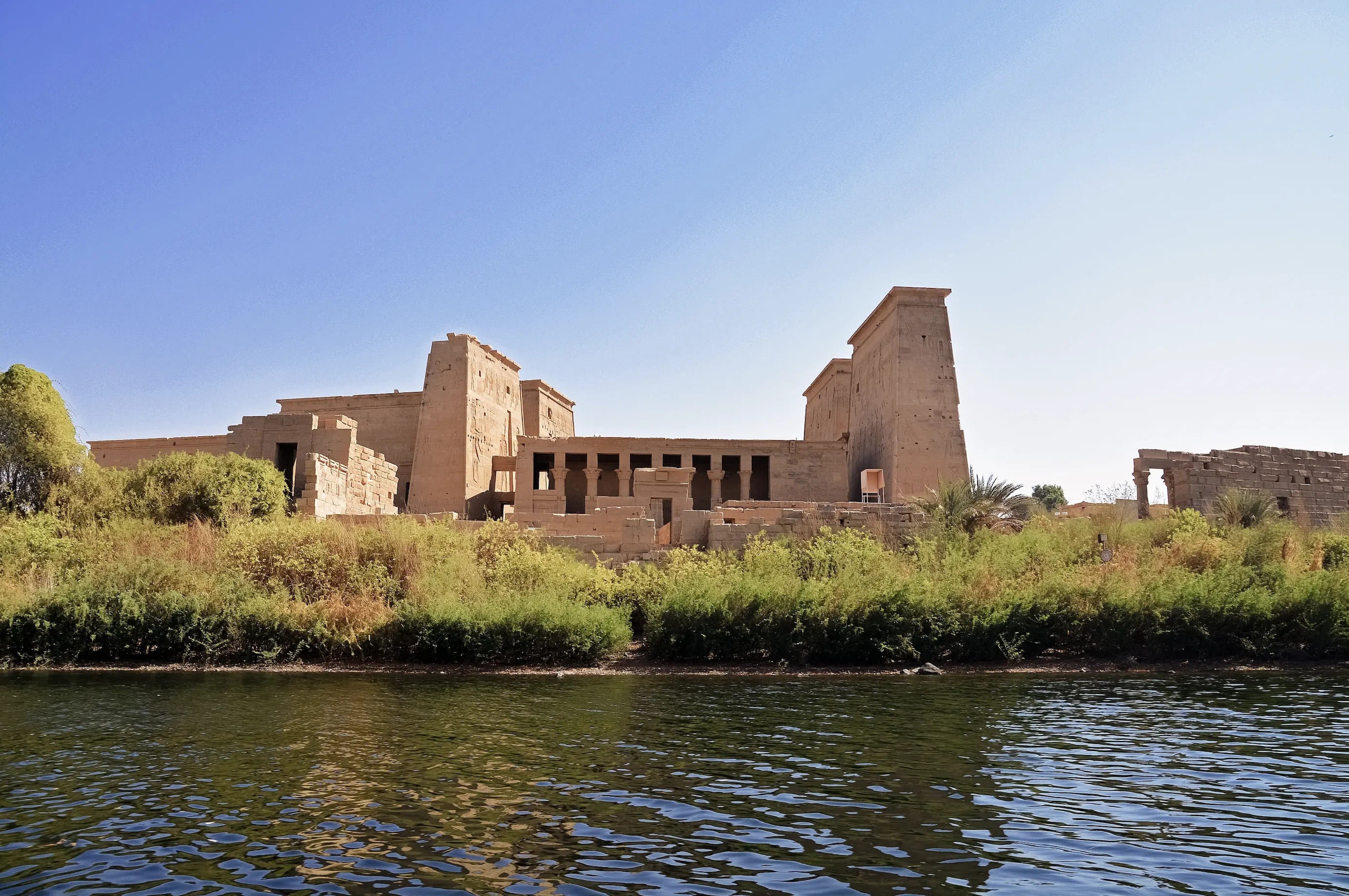
Asiya bint Muzahim is honoured in Islam as a woman whose faith withstood the power of the tyrant she was married to. Named in the Qur'an only by circumstance, as "the wife of Pharaoh," she is presented as an example for all believers: someone who lived at the centre of the ancient world's most absolute power, recognised the truth brought by Prophet Musa (Moses), and held to it even under torture. Her story, brief in scripture and elaborated in the classical commentaries and stories-of-the-prophets literature, turns on a single reported choice — faith over comfort, and Paradise over the palace.
Historical Context and Identity
Asiya lived during the time of Prophet Musa in ancient Egypt, during the reign of the Pharaoh who enslaved the Children of Israel and claimed divinity for himself. Islamic tradition names her Asiya bint Muzahim, though some commentators note that "Muzahim" may be a descriptive title rather than her father's name. As Pharaoh's wife she was queen of Egypt, one of the most powerful women of the ancient world.
The Qur'an gives few biographical details, but her mention in Surah al-Tahrim establishes her as an exemplar of faith. Allah presents her as a model for believers: "And Allah presents an example of those who believed: the wife of Pharaoh, when she said, 'My Lord, build for me near You a house in Paradise and save me from Pharaoh and his deeds and save me from the wrongdoing people'" (Quran 66:11).
The Prophet Muhammad singled her out among women of the highest rank. According to Sahih al-Bukhari, "Many among men reached perfection, but among women none reached perfection except Maryam bint Imran and Asiya the wife of Pharaoh" (Sahih al-Bukhari 3411). A separate tradition names the foremost women of Paradise as Maryam, Asiya, Khadijah bint Khuwaylid, and Fatimah bint Muhammad — the grouping often summarised as the "four perfect women," though the two named in the Bukhari report are Asiya and Maryam alone.
Early Life and Marriage to Pharaoh
Islamic tradition describes Asiya as a woman of noble Egyptian family, though the details of her lineage are not securely established. The marriage placed her in a position of immense privilege: as queen she had access to unlimited wealth, servants, and luxury, and could have lived a life of complete material ease.
Living in Pharaoh's palace also meant witnessing his tyranny at close range. The Qur'an describes Pharaoh as one who "exalted himself in the land and made its people into factions, oppressing a sector among them" (Quran 28:4). The oppressed sector was the Children of Israel, enslaved and brutally treated. Pharaoh's fear of a prophecy that an Israelite boy would overthrow him led to one of history's most terrible decrees: the systematic killing of newborn Israelite boys.
The court was one of idolatry and false worship. Pharaoh claimed divinity, declaring, "I am your most exalted lord" (Quran 79:24), and the whole court was expected to treat him as a god. Islamic tradition holds that Asiya, though outwardly part of this world, was troubled by the injustice around her and drawn toward the belief of the enslaved Israelites in one God. Tradition also relates that she was childless — a circumstance the commentators connect to the events that followed, since it left her heart open to the infant who would enter her life.
The Discovery of Baby Moses
The pivotal moment came when a basket was found floating in the Nile. The Qur'an narrates how Musa's mother, following divine inspiration, placed her son in a waterproofed basket in the river when she could no longer hide him: "And We inspired to the mother of Moses, 'Suckle him; but when you fear for him, cast him into the river and do not fear and do not grieve. Indeed, We will return him to you and will make him [one] of the messengers'" (Quran 28:7).
The basket came to rest near the palace, where Pharaoh's household took the child in. The Qur'an notes the irony: "And the family of Pharaoh picked him up [out of the river] so that he would become to them an enemy and a [source of] grief. Indeed, Pharaoh and Haman and their soldiers were deliberate sinners" (Quran 28:8). The very household killing Israelite infants would raise the child destined to challenge Pharaoh's power.
When the basket was brought before Pharaoh, Asiya intervened to save the child's life. The Qur'an records her plea: "And the wife of Pharaoh said, '[He will be] a comfort of the eye for me and for you. Do not kill him; perhaps he may benefit us, or we may adopt him as a son.' And they perceived not" (Quran 28:9). Her phrase "a comfort of the eye" (qurrat 'ayn) conveys not just an infant's beauty but a source of joy, and her suggestion to adopt the child offered Pharaoh a reason to spare him that appealed to his own interest. The closing words, "and they perceived not," mark that neither understood the child's future significance.
Islamic tradition holds that Asiya, childless until then, felt an immediate and divinely placed love for the infant, and that she raised Musa in the palace as her own. There remained the problem that the baby refused every Egyptian wet nurse brought to him. Musa's sister, watching from a distance, offered to find a nurse and brought the child's own mother, who was accepted — so that, as the Qur'an relates, Allah returned Musa to his mother while he was raised under the protection of the palace.
Growing Faith and Secret Worship
As Musa grew in the palace, Islamic tradition describes Asiya's own faith developing. The commentators connect this to her contact with Musa's mother, who served as his nurse and was a woman of firm belief in the God of Ibrahim, Ishaq, and Yaqub. The claim of Pharaoh's divinity, set against this, came to seem hollow to her.
Asiya is said to have begun worshipping Allah in secret, praying alone and seeking guidance. This was dangerous: Pharaoh demanded absolute loyalty, and discovery would mean death. Her position required a double existence — outwardly the queen, participating in court ceremony, while inwardly holding to belief in one God. Tradition presents this period as one of patience under strain, sustained by the conviction she could no longer set aside.
The Declaration of Faith and Martyrdom
The classical accounts differ on exactly how Asiya's faith came to light, but agree on the essentials: she openly affirmed her belief in one God, Pharaoh discovered it, and she was tortured for refusing to renounce it. One account holds that she witnessed Pharaoh torturing a believing woman among his servants and, unable to stay silent, spoke out and declared her own faith. Another holds that she was found in prayer and, when confronted, affirmed rather than denied her belief and rejected Pharaoh's claim to godhood.
Pharaoh's reaction was fury. That his own wife had accepted the message of Musa, the man he saw as his chief enemy, was both a personal betrayal and a public challenge to his claimed divinity. According to Islamic tradition he had her stretched out under the burning sun, with heavy stones placed on her body, and ordered the torture continued until she recanted or died.
Asiya did not recant. The Qur'an preserves the prayer she made under torture: "My Lord, build for me near You a house in Paradise and save me from Pharaoh and his deeds and save me from the wrongdoing people" (Quran 66:11). She asked not for relief from pain but for an eternal home near her Lord; to be saved "from Pharaoh and his deeds" marked her rejection of his tyranny, and to be saved "from the wrongdoing people" set her apart from all who enabled it. The commentators relate that Allah answered by showing her a vision of her house in Paradise, and that she died at peace.
Her martyrdom is read in Islamic tradition as the triumph of faith over worldly power. Pharaoh, with armies and a claim to divinity, could kill her body but could not force her to deny Allah or keep her from Paradise. The Qur'an presents her example for all believers, and particularly for those facing persecution, and her prayer has been recited by Muslims across the centuries as they meet their own trials.
Theological Significance
Asiya's story carries several strands of meaning in Islamic teaching. The Qur'an's framing is explicit: in Surah al-Tahrim she is set as an example "of those who believed," in a chapter addressed to men and women alike, so that the model is offered to all believers rather than to women only.
Her example turns first on individual responsibility. Married to one of history's great tyrants and surrounded by idolatry, she still chose belief in Allah — faith determined by her own choice rather than by her circumstances, her husband, or her society. The Qur'an sharpens this by pairing her, elsewhere, with the wives of the prophets Nuh and Lut, who are cited as disbelievers married to righteous men (Quran 66:10). The two cases together make the point that proximity to righteousness does not save, and proximity to evil does not condemn: what counts is the person's own faith.
Her story also sets worldly status against faith. She had wealth, power, and position, and gave them up; the palace she left is measured in the tradition against the house in Paradise she asked for. And her steadfastness under torture is read as a statement about power itself — that the tyrant's apparent might was temporary and could not reach her faith, while what she held to proved lasting.
Historical and Interfaith Context
The Qur'an does not name which Pharaoh Asiya was married to. Islamic tradition generally associates her story with the Pharaoh of the Exodus, which historians who accept the broad framework have variously placed in Egypt's New Kingdom. A queen's conversion and martyrdom of this kind cannot be independently confirmed from Egyptian records, which would be unlikely to preserve material reflecting badly on Pharaoh's authority; Muslims accept the Qur'anic account as revealed. What can be said is that the story is consistent with what is known of ancient Egyptian royal courts, where queens held real influence and where religious and political authority were bound together, so that a queen's turn to a foreign faith would indeed have been read as a threat to the throne.
Asiya's story is distinctive to Islamic tradition and does not appear in the Hebrew Bible or the Christian scriptures. The Bible mentions Pharaoh's daughter, who draws Moses from the Nile, but does not identify her as Pharaoh's wife or describe a conversion and martyrdom. The episode is one of several where Islamic tradition supplies a name and a role for a figure who remains anonymous in the biblical account.
Legacy
Asiya remains a central figure in Islamic devotion and teaching. Her prayer, preserved in Surah al-Tahrim and recited whenever the chapter is read, keeps her example present for each generation, and it is often invoked by Muslims — women in particular — facing persecution or pressure to compromise their beliefs. Classical and later scholarship has consistently held her up as evidence that spiritual excellence is open to women in the fullest measure, placing her among the foremost women of faith in Islamic memory. Her inclusion in that company rests not on worldly rank but on the steadfastness the Qur'an records.
Conclusion
Asiya bint Muzahim is remembered in Islam as a woman who had everything the world could offer and chose faith over it. Living at the heart of a power that claimed to be divine, she recognised the truth brought by Musa, protected him as a child, held to her belief in secret, and finally affirmed it at the cost of her life. The Qur'an preserves her prayer for a house in Paradise near her Lord as an example for all believers, and Islamic tradition has honoured her ever since as a model of courage and conviction under the hardest circumstances imaginable.
References and Further Reading
Primary Islamic Sources
- Quran, Surah At-Tahrim (66:11) — "And Allah presents an example of those who believed: the wife of Pharaoh, when she said, 'My Lord, build for me near You a house in Paradise and save me from Pharaoh and his deeds and save me from the wrongdoing people.'"
- Quran, Surah At-Tahrim (66:10) — the wives of Nuh and Lut cited as disbelievers married to righteous men.
- Quran, Surah Al-Qasas (28:8-9) — the family of Pharaoh takes in the infant Moses, and the wife of Pharaoh pleads that he be spared.
- Sahih al-Bukhari, Book of the Stories of the Prophets, Hadith 3411 — "Many among men reached perfection, but among women none reached perfection except Maryam bint Imran and Asiya the wife of Pharaoh."
- Jami' al-Tirmidhi, Book of Virtues, Hadith 3878 — the standing of Asiya among women.
Classical Islamic Sources
- Ibn Kathir, Ismail ibn Umar. Qisas al-Anbiya, section on Moses and the wife of Pharaoh. [Original c. 1370 CE]
- Al-Tha'labi, Ahmad ibn Muhammad. Qisas al-Anbiya, section on Asiya. [Original c. 1035 CE]
- Al-Tabari, Muhammad ibn Jarir. Tarikh al-Rusul wa al-Muluk, on Pharaoh's household. [Original c. 915 CE]
- Al-Qurtubi, Muhammad ibn Ahmad. Al-Jami' li Ahkam al-Quran, commentary on Surah At-Tahrim 66:11. [Original c. 1273 CE]
Academic and Scholarly Sources
- Stowasser, Barbara Freyer. Women in the Quran, Traditions, and Interpretation. Oxford: Oxford University Press, 1994.
- Wheeler, Brannon M. Prophets in the Quran: An Introduction to the Quran and Muslim Exegesis. London: Continuum, 2002.
- Tottoli, Roberto. Biblical Prophets in the Quran and Muslim Literature. London: Routledge, 2002.
- Schimmel, Annemarie. My Soul Is a Woman: The Feminine in Islam. New York: Continuum, 1997.
- Ahmed, Leila. Women and Gender in Islam. New Haven: Yale University Press, 1992.
Further Reading
- Renard, John. Friends of God: Islamic Images of Piety, Commitment, and Servanthood. Berkeley: University of California Press, 2008.
- Thackston, Wheeler M., trans. The Tales of the Prophets of al-Kisa'i. Boston: Twayne Publishers, 1978.
- Newby, Gordon Darnell. The Making of the Last Prophet. Columbia: University of South Carolina Press, 1989.
- Glassé, Cyril. The New Encyclopedia of Islam. 4th ed. Lanham: Rowman & Littlefield, 2013.
Mentioned In
2 articles reference this topic
More from Age of the Prophets
Maryam bint Imran (Mary, Mother of Jesus)
Maryam bint Imran (Mary), mother of Prophet Isa (Jesus), holds a uniquely exalted place in Islam as the only woman named in the Quran. Revered for her purity, devotion, and the miraculous virgin birth of Jesus, she is regarded as one of the greatest women and a model of faith.
Prophet Dhul-Kifl عَلَيْهِ ٱلسَّلَامُ (Ezekiel)
Dhul-Kifl is a prophet mentioned in the Quran, traditionally identified with the biblical Ezekiel. Known for his patience, righteousness, and devotion to worship, he is praised in the Quran alongside other righteous prophets for his steadfastness in faith.
Prophet Harun عَلَيْهِ ٱلسَّلَامُ (Aaron)
Known as Harun in Arabic, Aaron was the brother and companion of Prophet Moses, blessed with eloquent speech and appointed as a prophet to assist Moses in his mission to Pharaoh and the Israelites.
Prophet Musa عَلَيْهِ ٱلسَّلَامُ (Moses)
Prophet Musa (Moses), the most frequently mentioned prophet in the Quran, was the liberator of the Israelites from Pharaoh's tyranny, the recipient of the Torah on Mount Sinai, and the prophet honoured as Kalim Allah — the one to whom God spoke directly.