Prophet Ishaq عَلَيْهِ ٱلسَّلَامُ (Isaac)
Known as Ishaq in Arabic, Isaac was the second son of Abraham, born to Sarah in her old age, a prophet who continued the Abrahamic covenant and became the father of Jacob and grandfather of the twelve tribes of Israel.
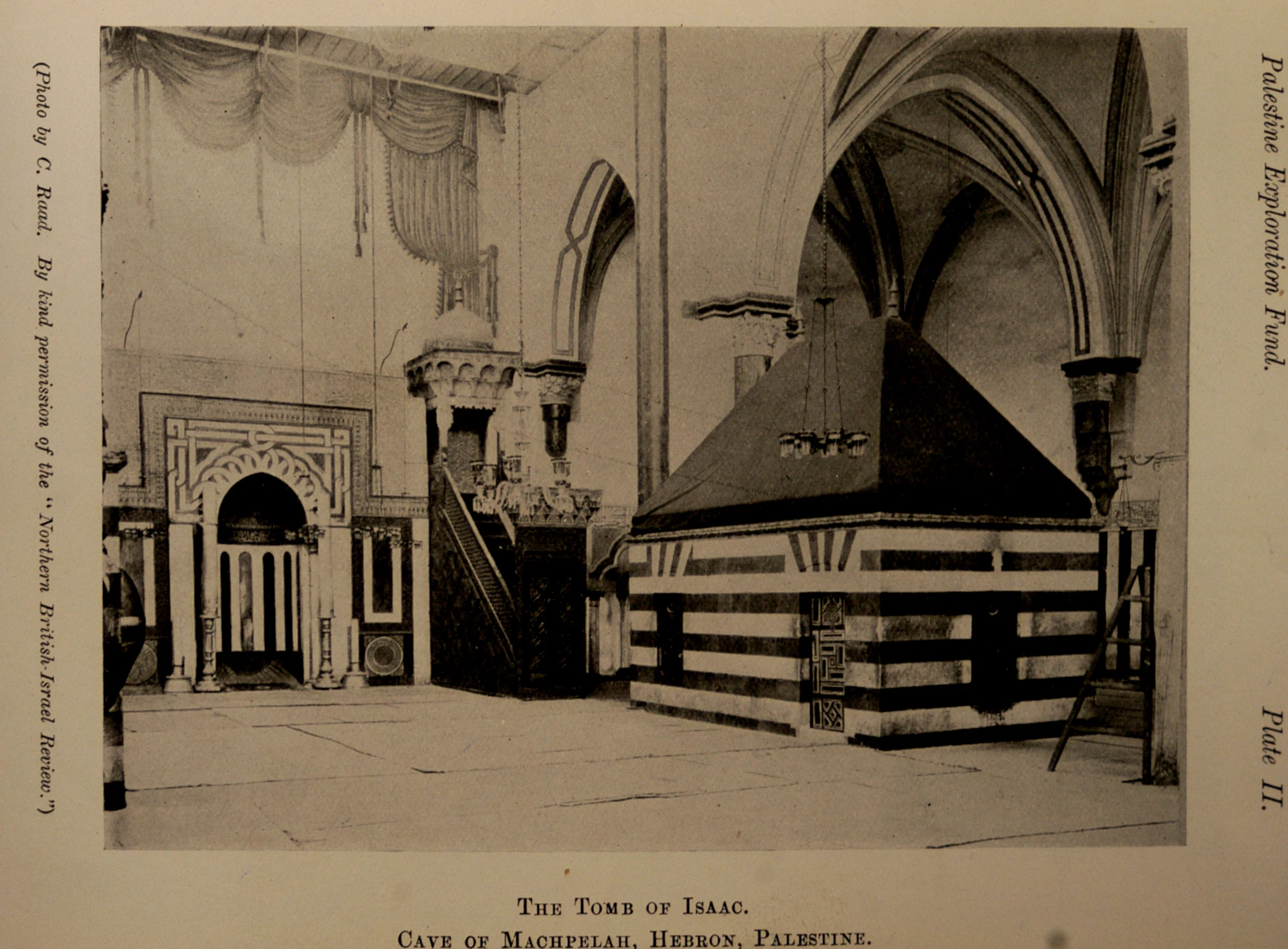
Prophet Isaac (Arabic: إسحاق, Ishaq) holds a distinguished place in Islamic tradition as the second son of Prophet Abraham, born miraculously to Sarah in her old age, and a prophet who continued the Abrahamic covenant. His life exemplifies divine promise fulfilled, patient faith, and the continuation of prophetic lineage through the generations.
The Miraculous Birth
The Divine Promise
Isaac's birth was the fulfillment of a divine promise made to Prophet Abraham and Sarah. The angels announced it directly: "And his wife was standing, and she smiled. Then We gave her good tidings of Isaac and after Isaac, Jacob." (Quran 11:71) Sarah's initial reaction expressed her astonishment: "She said, 'Woe to me! Shall I give birth while I am an old woman and this, my husband, is an old man? Indeed, this is an amazing thing.'" (Quran 11:72) The angels responded: "They said, 'Are you amazed at the decree of Allah? May the mercy of Allah and His blessings be upon you, people of the house. Indeed, He is Praiseworthy and Honorable.'" (Quran 11:73)
The Miracle of Advanced Age
Both Sarah and Abraham were well beyond normal childbearing years when Isaac was born, so his birth came through Allah's direct action in creating new life, ensuring the continuation of the covenant through Isaac. The miracle demonstrated Allah's power to do anything, kept the promise made to Abraham, prepared Isaac for his future mission, and brought joy and completion to Abraham and Sarah's family.
Early Life and Education
Growing Up in Abraham's Household
Isaac's childhood was marked by spiritual education and divine blessing. He learned about the worship of Allah alone, observed Prophet Abraham's faith and devotion, developed the qualities needed for prophethood, and grew up under Allah's special protection and guidance. Raised by Abraham and Sarah with deep affection, in a household dedicated to Allah, he was prepared for his future role as a messenger and learned the traditions and values of his family.
The Relationship with Ishmael
Despite being born to different mothers, Isaac and Prophet Ishmael maintained a relationship as brothers. Both were sons of Prophet Abraham, united by paternal love yet chosen for specific roles in Allah's plan, honoring each other despite following different paths, and both becoming prophets and servants of Allah. Their missions were complementary: Isaac continued the covenant in Palestine and the surrounding regions, while Ishmael established monotheism in Arabia. Each served Allah in a different territory, yet both called people to worship Allah alone.
Prophetic Mission and Ministry
Continuing Abraham's Legacy
Isaac inherited both the spiritual and temporal aspects of Prophet Abraham's mission. The covenant continued through him, as the Quran affirms: "And We gave him Isaac and Jacob in addition, and all [of them] We made righteous." (Quran 21:72) His spiritual inheritance included continuing the call to worship Allah alone, receiving divine revelation and guidance, guiding the growing community of believers, and maintaining the special relationship with Allah.
The Message of Monotheism
Isaac's prophetic message focused on fundamental spiritual truths: the worship of Allah alone and the rejection of all idolatry and polytheism, moral excellence and good character, social justice and compassion for all, and the purification of hearts from corruption. In his methods of da'wah he lived according to the principles he taught, used his household as a model of righteous living, actively participated in the life of his people, and guided them patiently toward truth and righteousness.
Marriage and Family Life
Marriage to Rebekah
Isaac's marriage was arranged through divine guidance and family wisdom. His wife shared his commitment to monotheism, possessed the qualities needed for a prophet's wife, contributed to the continuation of the prophetic lineage, and their union was blessed by Allah for His purposes. Together they worked to serve Allah and guide others, encouraged each other in faith and righteousness, created a household dedicated to divine service, and raised children who would continue the covenant.
The Birth of Jacob and Esau
Isaac and Rebekah were blessed with twin sons who would play significant roles in history. Jacob (Yaqub) was selected to continue the prophetic covenant; naturally drawn to worship and contemplation, he was blessed with prophethood and a special mission, destined to become the father of the twelve tribes. Esau, the elder twin, was born first but was not chosen for the covenant; more inclined toward worldly pursuits, he followed a different path from his brother, part of Allah's plan for the development of different peoples.
The family faced dynamics and challenges around these differing callings. Isaac had a natural affection for Esau on account of his hunting skills, while Rebekah understood Jacob's spiritual calling, and Allah's choice fell upon Jacob for the continuation of the covenant, which gave rise to tension within the family. The story of Jacob receiving Isaac's blessing demonstrates Allah's plan being fulfilled despite human preferences, Isaac's eventual recognition of Allah's choice, the ultimate acceptance of divine wisdom, and the passing of the promise to the chosen heir.
Spiritual Qualities and Character
Faith and Trust in Allah
Isaac exemplified the spiritual qualities essential for prophethood. He placed complete trust in Allah's wisdom and guidance, maintained his faith through various trials, was grateful in recognizing and appreciating Allah's blessings, and submitted humbly to Allah's will in all circumstances. His prophetic wisdom showed in his insight into Allah's plans and purposes, his discernment of truth and righteousness, his compassionate and patient guidance of people, and his consistently high standards of conduct.
Leadership and Community Service
As a spiritual leader, Isaac instructed people in divine law and worship, demonstrated righteous living through his personal conduct, fostered unity and cooperation among believers, and helped resolve disputes with wisdom and fairness. His contributions extended to the economic and social life of his people: he promoted farming and land cultivation, established beneficial trade relationships, cared for the needs of the poor and disadvantaged, and maintained the traditions and values of his people.
Trials and Tests
Personal Challenges
Like all prophets, Isaac faced trials that tested and strengthened his faith. Within his family he managed the rivalry between Jacob and Esau, balanced love and divine guidance in raising his children, ensured that the covenant passed to the chosen heir, and met the needs and expectations of his people. Externally he navigated relationships with neighboring peoples, managed resources during times of scarcity, faced resistance to his monotheistic teachings, and maintained his faith traditions in a polytheistic environment.
Divine Wisdom in Trials
These tests served to build patience, wisdom, and spiritual strength, to remove doubts and strengthen trust in Allah, to develop the skills needed for guiding others, and to show Allah's power and mercy through difficulty. Through them Isaac recognized his total reliance on Allah for success, understood that Allah's timing is perfect, found meaning and growth in difficult circumstances, and trusted that Allah's plan is always best.
Legacy and Impact
Immediate Influence
Isaac's impact on his immediate family and community was profound. He established the line that would produce many prophets, created a strong spiritual foundation for future generations, established practices that would endure for centuries, and ensured the divine promise passed to his descendants. In his community he built institutions for worship and education, created systems for justice and welfare, promoted prosperity and development in the region, and shaped the values and practices of his people.
Long-term Impact
Isaac's influence extended far beyond his lifetime. His descendants became prophets and leaders, his teachings and example were recorded in divine revelation, he contributed to the development of the monotheistic tradition, and his legacy affected multiple religious communities. Historically, he played a crucial role in Allah's plan for humanity, connected different periods and peoples in religious history, provided an example of faithful service and divine blessing, and continued to encourage believers throughout history.
Isaac in Islamic Tradition
Quranic Recognition
The Quran honors Isaac as a prophet and righteous servant: "And We gave him Isaac and Jacob in addition, and all [of them] We made righteous. And We made from them leaders guiding by Our command when they were patient and were certain of Our signs." (Quran 21:72-73) He is recognized for his moral excellence and spiritual devotion, appointed as a guide for his people, praised for maintaining faith through trials, and commended for his unwavering belief in Allah's signs.
Prophetic Traditions
The hadith literature contains references to Isaac, honoring him as part of the blessed family of Abraham, recognizing his role in maintaining the divine covenant, praising his character and spiritual excellence, and celebrating him as a source of prophetic descendants.
Popular Devotion
Isaac is respected by Muslims worldwide, revered as one of Allah's chosen messengers, admired for his role as husband and father, studied for his approach to community guidance, and looked to as an inspiration in the journey of faith.
Conclusion
Prophet Isaac stands as a remarkable example of divine promise fulfilled, faithful service, and generational blessing. His miraculous birth to elderly parents demonstrates Allah's power to overcome any obstacle, while his life of righteous service shows how divine blessings are used for the benefit of others.
From his spiritual education under Abraham to his role as father of Jacob and grandfather of the twelve tribes, Isaac's life was marked by consistent faithfulness and divine favor. He navigated family challenges while maintaining spiritual focus, and the continuation of the prophetic covenant through him reflects the importance of generational faithfulness and spiritual inheritance in Islamic tradition. His life stands as a record of divine blessing, faithful service, and the lasting influence of those who dedicated their lives to Allah's purposes.
References and Further Reading
Primary Islamic Sources
- Quran, Surah Hud (11:69–73) — The angels giving glad tidings of Isaac to Abraham and Sarah.
- Quran, Surah As-Saffat (37:112–113) — "And We gave him good tidings of Isaac, a prophet from among the righteous."
- Quran, Surah Maryam (19:49) — "So when he had left them and those they worshipped other than Allah, We gave him Isaac and Jacob."
- Quran, Surah Al-Anbiya (21:72) — "And We gave him Isaac and Jacob as an additional gift, and all [of them] We made righteous."
- Quran, Surah Al-Baqarah (2:133) — Jacob's testament to his sons referencing the God of Abraham, Ishmael, and Isaac.
- Quran, Surah Sad (38:45–47) — "And remember Our servants, Abraham, Isaac, and Jacob — those of strength and [religious] vision."
- Sahih al-Bukhari, Book of the Stories of the Prophets, Hadith 3353 — The noble lineage: "The most honorable of people is Joseph son of Jacob son of Isaac son of Abraham."
- Sahih Muslim, Book of Virtues, Hadith 2378 — The Prophet's description of the noble chain of prophets.
Classical Islamic Sources
- Ibn Kathir, Ismail ibn Umar. Qisas al-Anbiya (Stories of the Prophets), Chapter on Ishaq. Beirut: Dar al-Kutub al-Ilmiyyah, 2003. [Original c. 1370 CE]
- Ibn Kathir, Ismail ibn Umar. Al-Bidaya wa al-Nihaya (The Beginning and the End), Vol. 1. Beirut: Dar al-Fikr, 1986. [Original c. 1370 CE]
- Al-Tabari, Muhammad ibn Jarir. Tarikh al-Rusul wa al-Muluk (History of the Prophets and Kings), Vol. 1. Cairo: Dar al-Ma'arif, 1960. [Original c. 915 CE]
- Al-Tha'labi, Ahmad ibn Muhammad. Qisas al-Anbiya (Tales of the Prophets), section on Ishaq. Beirut: Dar al-Kutub al-Ilmiyyah, 2004. [Original c. 1035 CE]
- Al-Qurtubi, Muhammad ibn Ahmad. Al-Jami' li Ahkam al-Quran, commentary on Surah Hud 11:69–73. Cairo: Dar al-Kutub al-Misriyyah, 1964. [Original c. 1273 CE]
Academic and Scholarly Sources
- Wheeler, Brannon M. Prophets in the Quran: An Introduction to the Quran and Muslim Exegesis. London: Continuum, 2002.
- Tottoli, Roberto. Biblical Prophets in the Quran and Muslim Literature. London: Routledge, 2002.
- Firestone, Reuven. Journeys in Holy Lands: The Evolution of the Abraham-Ishmael Legends in Islamic Exegesis. Albany: SUNY Press, 1990.
- Brinner, William M., trans. The History of al-Tabari, Vol. II: Prophets and Patriarchs. Albany: SUNY Press, 1987.
- Peters, Francis E. The Children of Abraham: Judaism, Christianity, Islam. Princeton: Princeton University Press, 2004.
- Kuschel, Karl-Josef. Abraham: Sign of Hope for Jews, Christians and Muslims. New York: Continuum, 1995.
Further Reading
- Renard, John. Friends of God: Islamic Images of Piety, Commitment, and Servanthood. Berkeley: University of California Press, 2008.
- Newby, Gordon Darnell. The Making of the Last Prophet: A Reconstruction of the Earliest Biography of Muhammad. Columbia: University of South Carolina Press, 1989.
- Levenson, Jon D. Inheriting Abraham: The Legacy of the Patriarch in Judaism, Christianity, and Islam. Princeton: Princeton University Press, 2012.
- Thackston, Wheeler M., trans. The Tales of the Prophets of al-Kisa'i. Boston: Twayne Publishers, 1978.
Mentioned In
8 articles reference this topic
More from Age of the Prophets
Maryam bint Imran (Mary, Mother of Jesus)
Maryam bint Imran (Mary), mother of Prophet Isa (Jesus), holds a uniquely exalted place in Islam as the only woman named in the Quran. Revered for her purity, devotion, and the miraculous virgin birth of Jesus, she is regarded as one of the greatest women and a model of faith.
Prophet Adam عَلَيْهِ ٱلسَّلَامُ
The first human being and the first Prophet in Islam, created by Allah as His khalifah (vicegerent) on Earth. Father of humanity, Adam's story encompasses creation, paradise, the fall, repentance, and the beginning of human civilization.
Prophet al-Yasa عَلَيْهِ ٱلسَّلَامُ (Elisha)
Known as Al-Yasa in Arabic, Elisha was the successor of Prophet Elijah, blessed with a double portion of his spirit and known for numerous miracles of healing, provision, and resurrection during his ministry to Israel.
Prophet Ayyub عَلَيْهِ ٱلسَّلَامُ (Job)
Ayyub, the Job of the Bible, is named in four passages of the Qur'an and is the Islamic tradition's standing example of patience under trial. The Qur'an records his loss of wealth, family and health, his supplication, and his restoration, while naming no specific illness.